Yes, you should seal your concrete patio after pressure washing, but not right away. Wait at least 24 to 48 hours after washing before applying any sealer, and make sure the surface passes a simple moisture test first. If you used any acid-based cleaner or bleach, you also need to neutralize and rinse the slab before the clock even starts on that drying window. Seal too soon and you risk peeling, cloudiness, trapped moisture, and a sealer that bonds poorly and fails within a season.
Should I Seal My Concrete Patio After Pressure Washing?
Dylan Hale
18 Jun 2026
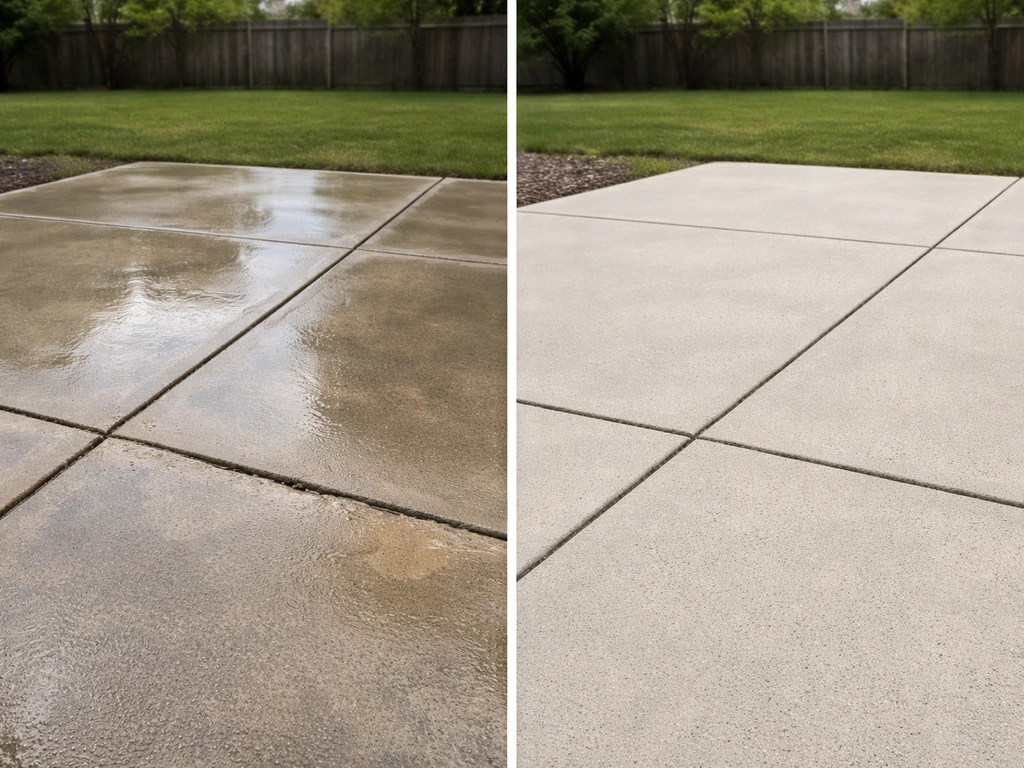
Seal now or wait? The quick answer
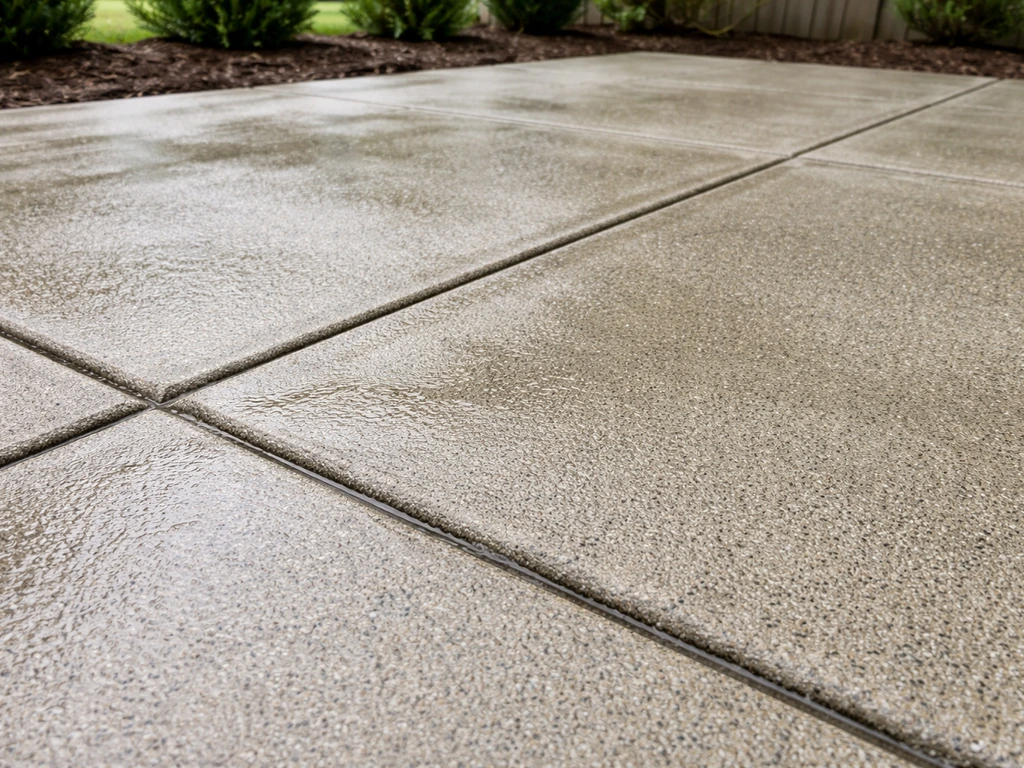
If you pressure washed today, do not seal today. Concrete looks dry on the surface within an hour or two, but moisture is still sitting deep inside the pores. Film-forming sealers trap that moisture under the surface, which pushes against the bond and causes whitening, bubbling, and peeling. Penetrating sealers need dry, open pores to absorb and react chemically, so wet concrete blocks them too. The minimum wait is 24 hours in warm, dry weather. In humid conditions or after a heavy wash, 48 hours is safer. If you used muriatic acid or an acid-based efflorescence remover, you must neutralize the slab with a baking soda solution and rinse thoroughly before you even start the drying clock. Here is the practical decision tree: wash, neutralize if needed, let it dry completely, run a moisture check, fix any cracks or problem spots, then seal.
What pressure washing actually does to your concrete
Pressure washing is genuinely good preparation for sealing, but it does a few things that matter for what comes next. First, it strips off the loose surface layer, called laitance, which is a chalky, weak skin of cement paste that forms on top of concrete over time. Removing laitance is actually required for good sealer adhesion, so the wash helps. It also blasts out dirt, algae, mold spores, grease, and old staining from the pores. The problem is that it also drives water deep into those same pores, and if any soap, chemical residue, or mineral deposits from your water supply are left behind, they will interfere with how the sealer bonds.
Mineral deposits and hard water residue are a real issue if you are on well water or live in a hard-water area. That white, powdery film is essentially calcium and mineral salts sitting on the surface. If you seal over them, they can migrate under the sealer as moisture moves through the slab and cause a white haze or efflorescence bloom. I have seen this happen on patios that looked perfectly clean to the eye after washing. A good rinse with clean water and a final pH-neutral rinse will catch most of it, but if your slab had visible efflorescence before washing, you need to deal with that specifically before sealing.
How long to wait, and how to know the concrete is actually ready
The 24 to 48 hour rule comes directly from sealer manufacturers. Ghostshield's product instructions, for example, specify waiting at least 24 to 48 hours after rain or pressure washing before applying sealer. Foundation Armor requires the surface to be completely clean and dry. SikaCem requires the surface to be completely dry so the sealer can absorb properly. In humid climates or shaded patios where air flow is limited, those surfaces can hold moisture for days, so do not go by the calendar alone. Use a test.
The plastic sheet moisture test (ASTM D4263)
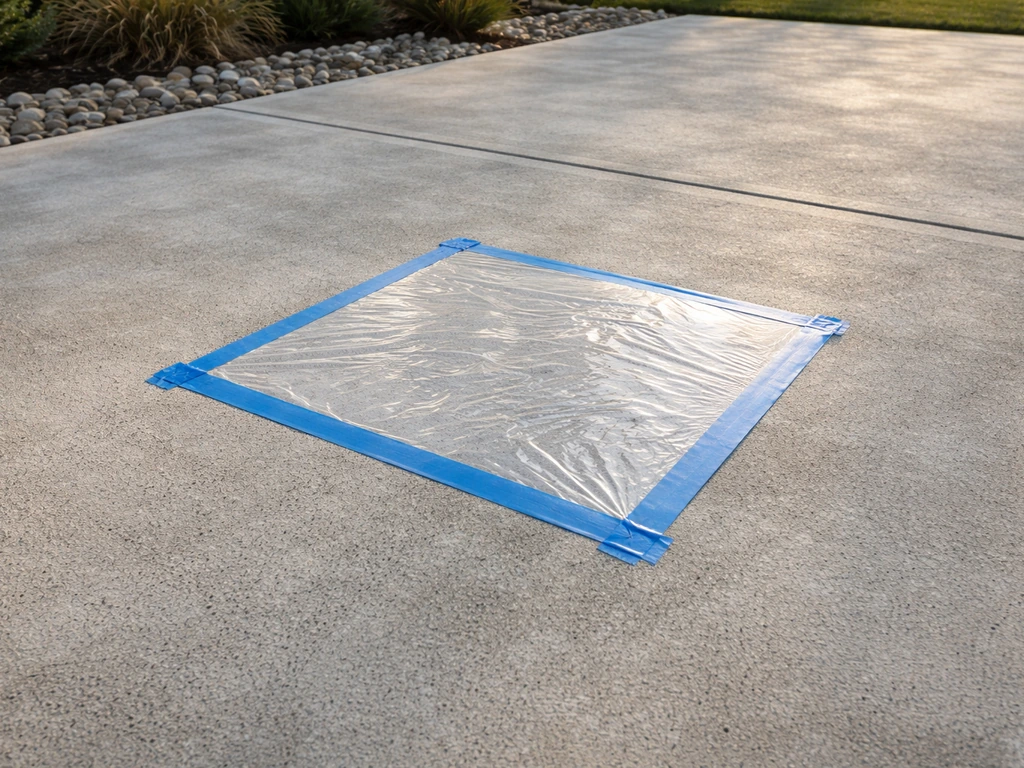
This is the simplest test you can do at home. Cut a piece of heavy plastic sheeting or a plastic bag to about 12 inches by 12 inches. Tape all four edges tightly to the dry-looking concrete so no air can get in or out. Leave it for 16 to 24 hours, or up to 48 hours if you want more certainty. If you peel it up and see condensation or moisture droplets on the underside of the plastic, or if the concrete under it looks darker or damp, the slab is not ready. If the plastic is dry underneath and the concrete looks the same color as the rest of the slab, you are clear to seal. This method is referenced in ASTM D4263 and is commonly cited by sealer manufacturers as a reliable DIY check.
The water absorption test
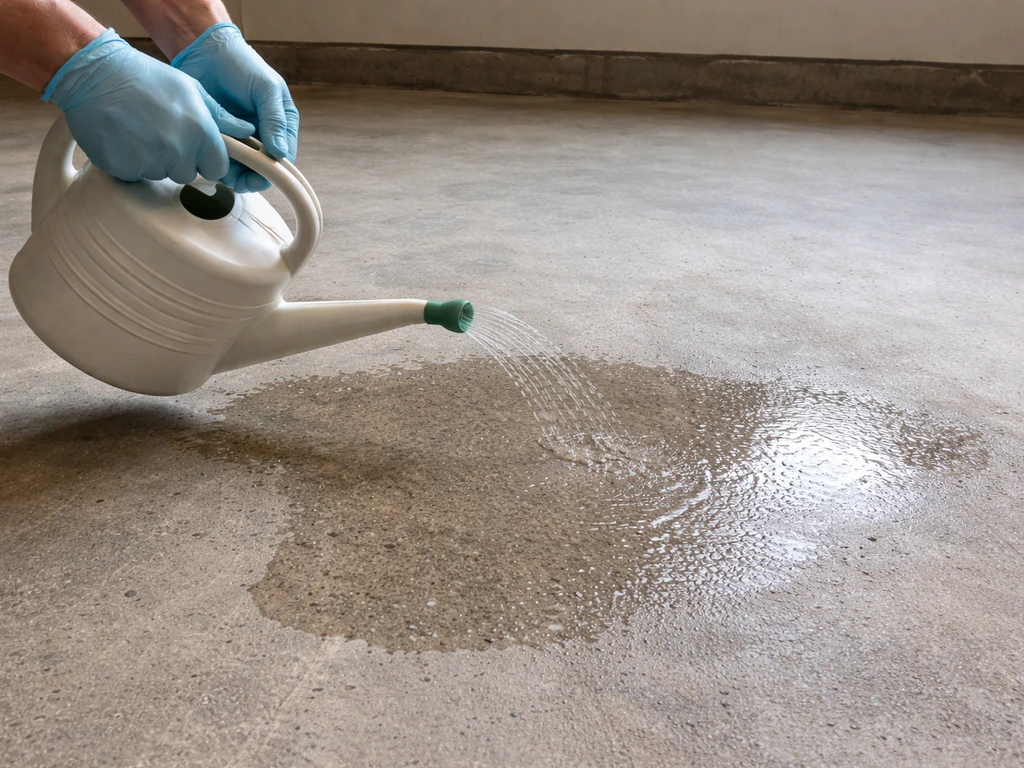
Sprinkle a small amount of water on the surface. If it soaks in within a few seconds, the concrete is clean, open, and dry enough to accept a penetrating sealer. If it beads up and sits on top, either the slab is still wet or there is residual sealer, wax, or chemical film blocking the surface. Both scenarios mean you need to wait longer or do more prep. This test is especially useful if you are not sure whether old sealer was fully stripped during washing. If the old sealer is still there, you will need to know how to remove sealer from a stamped concrete patio before you reseal.
Surface prep after washing: the steps most people skip
Washing is only part of the prep. There are four additional steps that make the difference between a sealer that lasts years and one that peels by next spring.
Neutralize acid or bleach residue
If you used muriatic acid, an acid-based cleaner, or even a heavy bleach solution during your wash, you need to neutralize the slab before sealing. Acid residue left on the surface causes adhesion loss, appearance defects, peeling, and delamination. blank" rel="noopener noreferrer">Mix about a cup of baking soda per gallon of water, apply it across the slab, let it fizz and work for a few minutes, then rinse thoroughly with clean water. Repeat the rinse at least twice. For bleach, a thorough rinse with clean water is usually sufficient, but I always do two full passes to be safe. After neutralizing, reset your 24 to 48 hour drying window.
Remove efflorescence completely
Efflorescence is that white, salty powder that appears on concrete when moisture carries soluble salts to the surface. If your patio has it, pressure washing alone often does not fully remove it, and sealing over it makes it worse because you trap the source inside. Use a diluted acid wash or a dedicated efflorescence remover, then neutralize and rinse as described above. The slab should be visually clean and uniform in color before you apply sealer.
Repair cracks and spalled areas
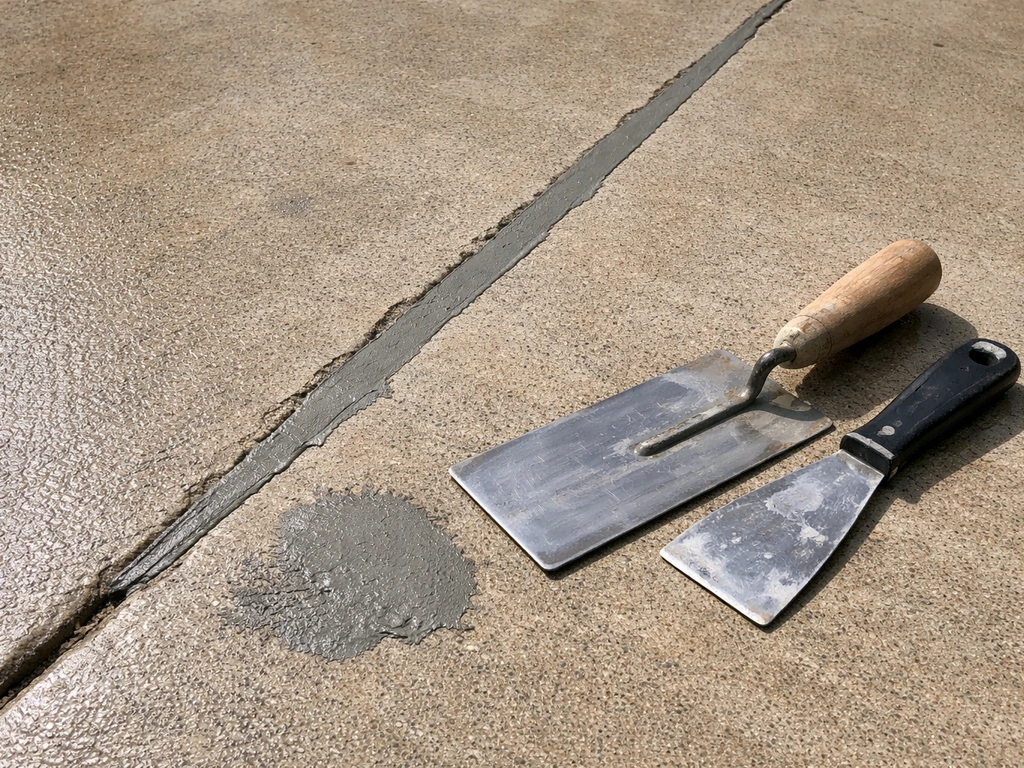
Pressure washing sometimes reveals cracks and surface spalling that were hidden under dirt and staining. Now is the time to fix them, not after sealing. Fill cracks with a concrete crack filler or polyurethane caulk rated for concrete. Patch spalled areas with a concrete patching compound and let it cure fully, ideally 24 to 48 hours for patches, before applying sealer over them. Sealing over unrepaired cracks still lets water in from the edges.
Final dust and debris sweep
After the slab dries, sweep it or blow it off with a leaf blower. Fine dust and concrete powder that settles back on the surface after washing will block sealer penetration and cause patchy coverage. This sounds obvious but it is easy to skip when you are eager to get the sealer down.
Choosing the right sealer: penetrating vs film-forming
The two main categories of concrete sealer behave very differently, and which one you need depends on what you are trying to accomplish. Here is a straight comparison.
| Feature | Penetrating Sealer (Silane/Siloxane) | Film-Forming Sealer (Acrylic/Epoxy) |
|---|---|---|
| How it works | Absorbs into pores and reacts chemically with concrete | Forms a protective coating layer on the surface |
| Appearance | Invisible or very low sheen; looks natural | Can add a wet look, high gloss, or satin sheen |
| Slip resistance | No change to surface texture | Can make surface slippery; use non-slip additive outdoors |
| Breathability | Allows moisture vapor to escape | Traps moisture if applied too soon; can cloud/peel |
| Lifespan | Up to 7 to 10 years with products like silane-siloxane | Typically 1 to 3 years before recoating needed |
| Best for | Freeze/thaw climates, natural look, low maintenance | Color enhancement, stamped concrete, stain resistance |
| Effort to apply | Usually one coat by sprayer or roller | Often one to two coats with roller or brush |
| New concrete wait | 28 days minimum cure before sealing | 28 days minimum cure before sealing |
Which one should you pick?
For a plain concrete patio in a freeze/thaw climate, I always recommend a silane-siloxane penetrating sealer like Foundation Armor SX5000 WB. It protects against freeze/thaw damage and salt without changing the look, lasts up to 7 to 10 years per the manufacturer, and because it does not form a film on top, you do not have to worry as much about moisture vapor causing failure if your timing is slightly off. It also does not make the surface slippery, which matters for an outdoor patio exposed to rain.
For stamped or decorative concrete where you want to enhance the color and get a wet or glossy look, a film-forming acrylic sealer makes sense. Just be extra strict about drying time and the plastic sheet test, because the film will trap any moisture that is still in the slab. If you have stamped concrete specifically, the cleaning and sealing process has some extra considerations that are worth reviewing in more detail.
If you are a renter and can only do one cleaning treatment without a follow-up visit, a single-coat penetrating sealer is the safer bet. It is more forgiving, does not require annual reapplication, and if something goes wrong it does not peel off in sheets the way a film sealer can.
How to seal after pressure washing: step by step
- Confirm the slab has dried for at least 24 to 48 hours after washing and any rain. Run the plastic sheet test overnight to verify no moisture is present.
- Sweep or blow off any dust, debris, or particles that settled on the surface after washing.
- Do the water absorption test: sprinkle a small amount of water on the surface. It should absorb within a few seconds. If it beads, the surface is not ready or has residue blocking the pores.
- Check the weather forecast. Do not apply sealer if rain is expected within 12 hours, or if temperatures will drop below 50°F within 24 hours after application.
- Stir or shake the sealer per product instructions. Do not shake penetrating sealers that can foam.
- Apply the first coat with a garden sprayer (for penetrating sealers) or a 3/8-inch nap roller (for acrylic film sealers), working in small sections so you can spread any pooling before it dries.
- For penetrating sealers: apply until the surface is saturated but not pooling. Back-roll or spread pooled areas. Let it absorb for 5 to 10 minutes, then remove any excess before it dries.
- For film-forming acrylics: apply an even coat and let it dry to touch (typically 45 minutes to 1 hour) before adding a second coat if the product calls for one. Recoat windows vary, usually 2 to 24 hours.
- Keep foot traffic off for at least 24 hours. Avoid wheel traffic or furniture for 48 to 72 hours. Full cure typically takes 5 to 7 days depending on the product.
- Ventilate the area during application. Many sealers, especially solvent-based versions, have strong fumes. Work in sections, wear gloves, and avoid applying in direct midday sun which causes the sealer to dry too fast and bubble.
When you should not seal yet (and common mistakes that cause failures)
There are specific situations where sealing right after washing is a bad idea, even if the surface looks dry and clean.
- Active mold or mildew: If you still see black or green organic growth after washing, do not seal over it. Sealer will not kill mold, and trapping it under a film sealer gives it a dark, moist environment to keep growing. Treat with a diluted bleach solution (1 cup bleach per gallon of water), let it dwell for 10 to 15 minutes, scrub, and rinse thoroughly before sealing.
- Visible efflorescence: Those white, chalky patches are salt deposits being driven by moisture from inside the slab. Sealing over efflorescence does not solve the moisture source and will cause the salts to continue migrating, pushing the sealer off from underneath. Eliminate the efflorescence fully first.
- Slab is still wet: This is the most common mistake. If the patio has any dark wet patches or feels cool and damp to the touch, wait. The plastic sheet test will catch moisture even when the surface looks dry.
- Acid residue still present: If you used any acid-based product and did not neutralize and rinse, sealing will cause adhesion failure and appearance defects. The W. R. Meadows guidance is clear on this: failure to remove acid residue causes peeling, delamination, and reduced durability.
- Newly placed concrete under 28 days old: Fresh concrete needs a full 28 days to cure before sealing. Sealing too early traps water that is chemically bound up in the curing process.
- Sealing in extreme heat or full sun: Applying sealer on a 90°F day in direct sunlight causes it to dry too fast, trapping bubbles and creating an uneven, hazy finish. Apply in the early morning or on a cloudy day.
- Applying over old incompatible sealer: If the old sealer was not fully stripped by washing (you will know because water still beads), applying a new sealer on top, especially a different type, creates adhesion problems. Strip the old sealer first.
A note on slip safety for outdoor patios
Film-forming sealers, especially high-gloss acrylics, can make a concrete patio significantly more slippery when wet. If you are going with a film sealer on an outdoor patio, mix a non-slip additive (typically a fine silica or polymer grit) into the final coat. Most sealer manufacturers offer a compatible product. Penetrating sealers do not change the surface texture, so slip resistance stays the same as your bare concrete.
Maintenance and when to re-seal your concrete patio
Sealing is not a one-and-done job, but how often you need to reseal depends heavily on which type of sealer you used and what the patio goes through each year. If you need to re-stain an existing concrete patio, start by cleaning and checking adhesion, then choose a compatible stain and reapply according to the drying times re-seal your concrete patio.
| Sealer Type | Typical Reapplication Interval | Signs It Is Time to Reseal |
|---|---|---|
| Silane-siloxane penetrating | 7 to 10 years | Water no longer beads on the surface; increased staining |
| Acrylic film-forming | 1 to 3 years | Sealer looks chalky, flaking, or worn in traffic areas |
| Epoxy or polyurethane coat | 3 to 5 years | Visible peeling, chips, or loss of gloss |
| Waterproofing-type (DRYLOK-style) | 1 to 2 years (heavy use) | Surface feels rough or shows water intrusion signs |
Before resealing, always do another pressure wash and surface prep cycle. The same rules apply: let the slab dry completely, neutralize any chemical residue, run the moisture test, and reseal only when everything passes. Once the patio is fully dry, you can apply the sealer in thin, even coats, then let it cure according to the product label reseal only when everything passes. If you had a film sealer that is flaking or peeling, you may need to strip it before applying a fresh coat, which is worth knowing before you assume resealing is a quick job.
For routine maintenance between seal coats, a simple wash with a garden hose and a mild pH-neutral cleaner is enough to keep the surface clean without stripping the sealer. Avoid strong degreasers or acid-based cleaners on sealed concrete unless you are prepared to reseal afterward, as they will degrade the sealer over time. If you are also interested in applying a stain or decorative finish to the concrete, it is worth reviewing your options there before sealing, since most stains need to penetrate bare concrete and cannot go over a sealed surface. If you plan to stain instead of only sealing, choosing the best stain for concrete patio depends on whether you want a penetrating look or more color saturation, and whether the slab is fully bare and dry.
The bottom line: pressure washing is excellent preparation for sealing, but it is the start of the process, not the finish line. Give the slab time to dry, check it with the plastic sheet test, clean up any chemical or organic residue, and pick the right sealer for your climate and goals. Do those things and a sealed concrete patio will look better, resist staining, and hold up to weather for years longer than an unsealed one. If you want long-lasting results, the same timing, cleaning, and moisture-check steps apply when you care for a stamped concrete patio how to care for stamped concrete patio.
FAQ
How can I tell if my patio is “dry enough” before sealing besides the timing rule?
Use the plastic-sheet test, and then do a quick surface wetting check (water droplet behavior). If droplets bead and stay beaded for more than a few seconds, you likely still have moisture or residue blocking absorption, wait longer and re-rinse. If you see darker patches under the plastic or condensation on the underside, do not seal yet.
What happens if I accidentally sealed 6 to 12 hours after pressure washing?
Most of the damage shows up later as hazing (whitening), bubbling, or peeling, especially with film-forming sealers. The safest next step is to stop adding layers, let the sealer fully cure, then assess bond. If it is flaking or hazy and you can scrape it, you may need to strip the failed film before reapplying a properly timed coat.
Can I seal a patio that has visible efflorescence (white powder) after washing?
No. Efflorescence usually means soluble salts are still active in the slab, and sealing traps that source so the white bloom can return and worsen. Remove the salts specifically, neutralize if acids were used, rinse well, and wait until the concrete passes the moisture and plastic-sheet checks.
If I used bleach or an algae killer, do I still need the baking soda neutralization step?
Usually you need thorough rinsing with clean water for bleach, but it depends on the product chemistry and concentration. Acid-based cleaners and muriatic-type products typically require neutralization. If you are unsure what was used, err on the side of extra rinses and run the pH-neutral rinse plus moisture tests before sealing.
Does it matter whether I pressure washed with soap, and can I just seal after rinsing?
Yes. Surfactants and soap residues can interfere with adhesion, causing patchy coverage or premature failure. Rinse until runoff does not smell soapy and the surface feels squeaky clean, then perform the water droplet and plastic-sheet tests before sealing.
Should I sweep or blow the patio before sealing, and what about fine dust?
Yes, do it right before sealing. Fine dust and powder can settle back after washing, and it can block penetration or create dull spots under a film. Use a broom or leaf blower, then visually inspect for chalky residue, especially around edges and low spots.
Can I seal over old sealer I already had on the concrete?
Sometimes, but you must confirm compatibility and adhesion. If the old coating is still present, a new sealer may not bond and can peel or haze. Do an adhesion check (for example, tape test or scrape test after curing) and if it fails, you will likely need to strip before reapplying.
Is a penetrating sealer always better if I’m worried about moisture trapping?
Penetrating sealers generally have more forgiveness because they do not form a film that traps vapor, but they still require clean, open pores and the slab must be adequately dry. If your concrete is still very wet or blocked by residue, even penetrating products can fail or look blotchy.
How soon can I walk on the patio after sealing?
It depends on the sealer’s cure time on the label, but waiting at least 24 hours for light foot traffic is common, with full cure often longer. Avoid bringing furniture or applying tape right away because soft curing sealers can mark or transfer.
What weather conditions should I avoid when sealing after a pressure wash?
Avoid sealing before rain, heavy dew, or low temperatures that extend drying. Also consider humidity and shaded areas where moisture holds longer. If you have to choose, extend the drying window toward 48 hours or more and re-run the plastic-sheet test.
Can I add non-slip grit to a film-forming sealer after it’s already mixed?
Usually yes, but follow the manufacturer’s recommended additive and mixing instructions, and keep the final coat consistent. Over-adding or using incompatible grit can change the sheen and may make coverage uneven. Test a small inconspicuous area if you have not used that product before.
Next Articles
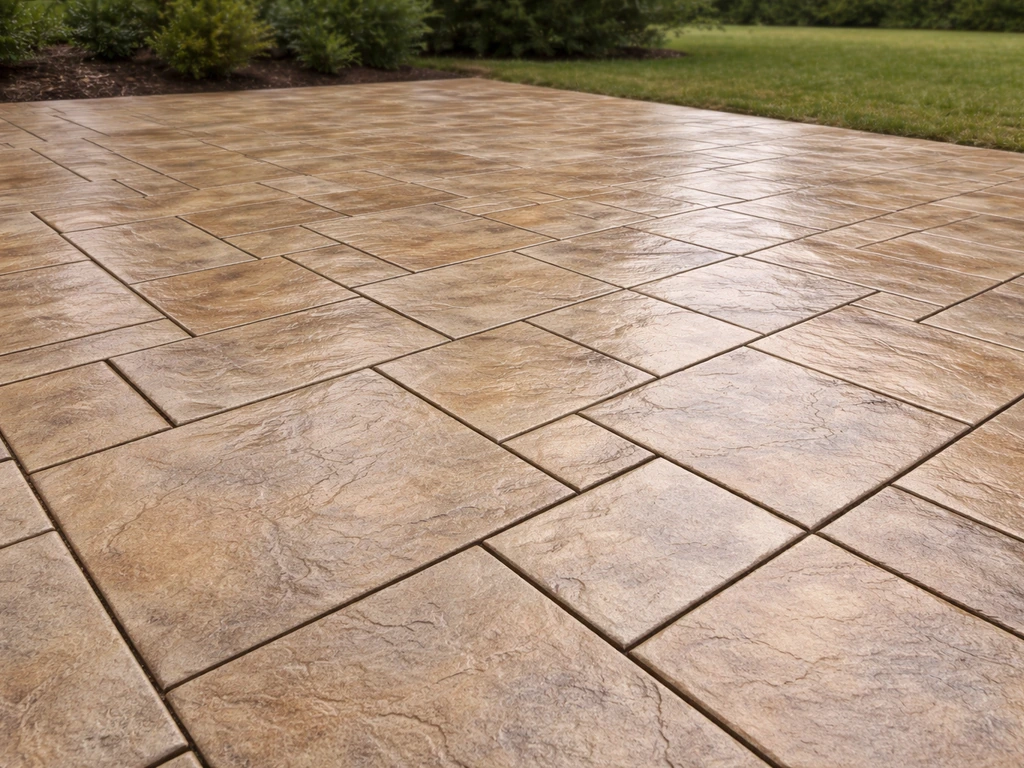
How to Clean and Seal a Stamped Concrete Patio
Step-by-step guide to clean grime, mildew and stains, then seal stamped concrete for lasting color and texture protectio
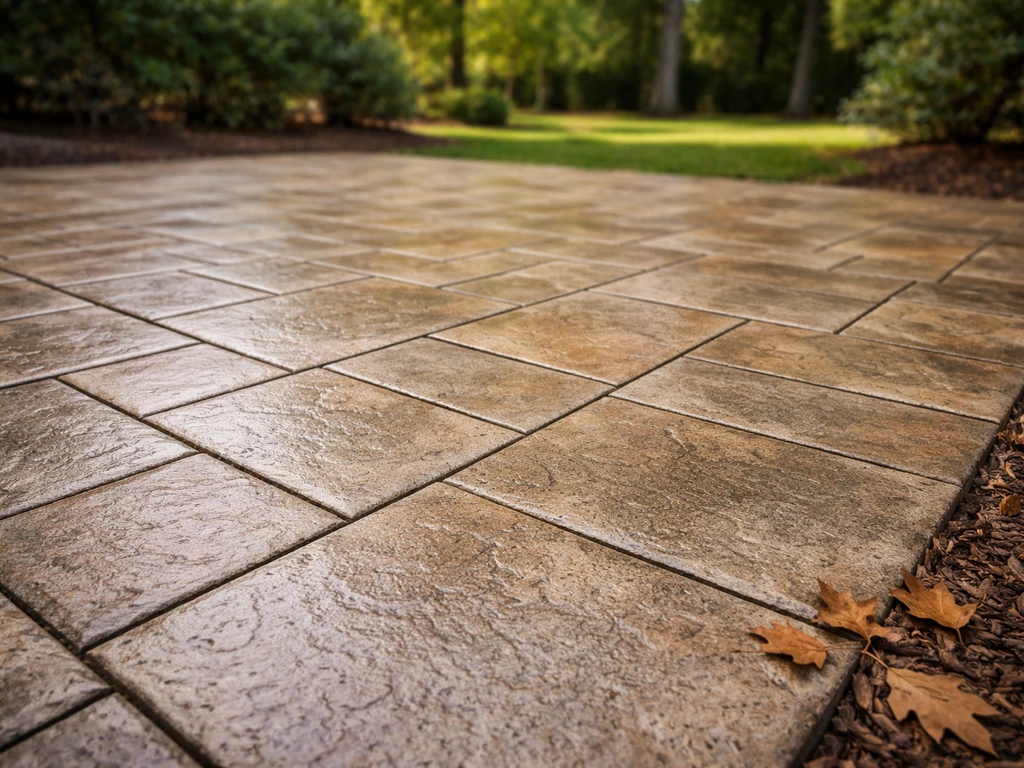
How to Care for a Stamped Concrete Patio: Cleaning, Sealing
Learn how to care for stamped concrete patio: cleaning, stain removal, sealing timing, repairs, and safe seasonal mainte
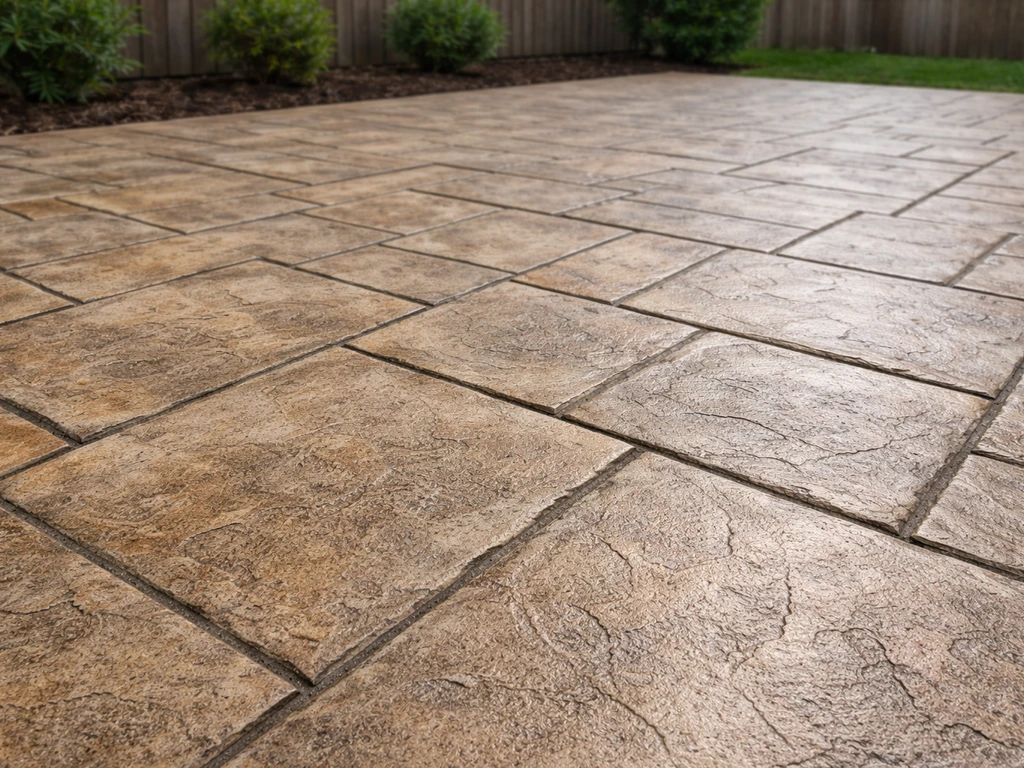
How to Clean a Stamped Concrete Patio: Step-by-Step Guide
Step-by-step how to clean a stamped concrete patio, from daily wash to deep stain removal with safe cleaner choices.