
For most outdoor concrete patios, a water-based acrylic stain with UV protection and mildew resistance is the best all-around choice. It goes on easier than acid stain, doesn't require neutralization, holds color well in sun and rain, and is forgiving enough for a first-time DIY job. If you want rich, variegated, earthy tones that look almost like natural stone, acid stain is worth the extra prep work. And if you need to hide serious surface damage or want a very specific color match, a solid-color concrete stain (sometimes called a stain-sealer) gives you the most coverage. The right pick really comes down to what your patio looks like now and what you want it to look like when you're done.
Best Stain for Concrete Patio: Choose, Prep, and Apply
Dylan Hale
1 May 2026
Stain vs. paint: which one actually belongs on your patio
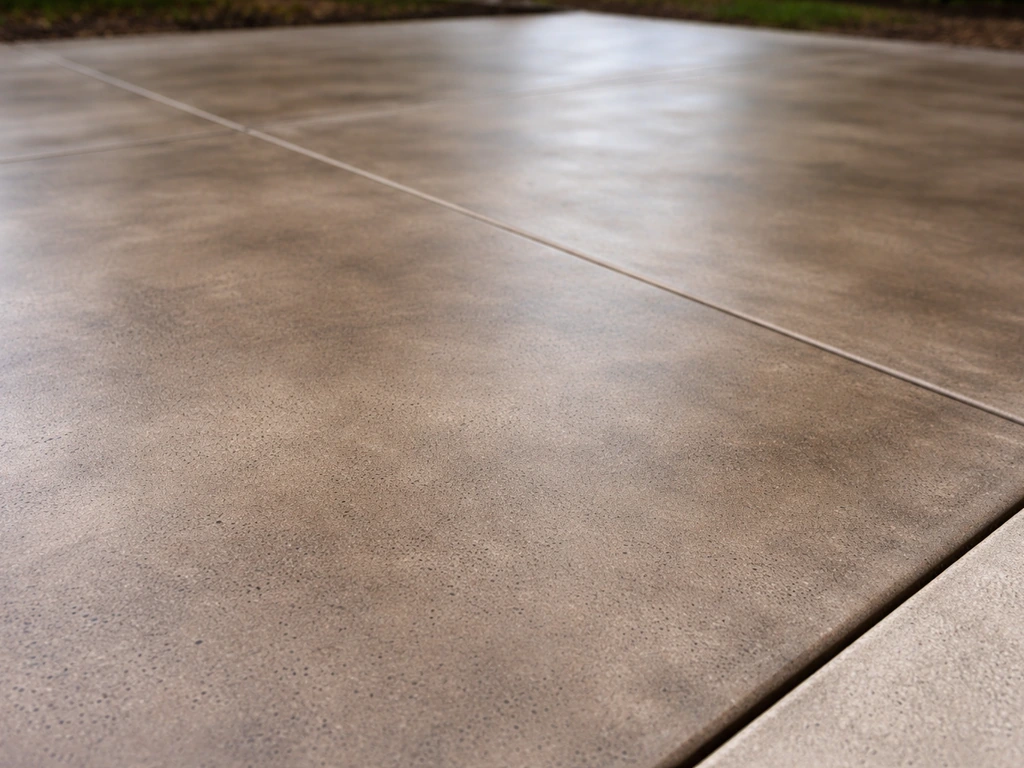
This is the first thing people get confused about, so let's sort it out quickly. Concrete stain soaks into the surface or bonds tightly to it, which means it can't peel the way paint does. Paint sits on top as a film, which looks great for the first season but eventually lifts, chips, and leaves you with a flaking mess that's a nightmare to strip. For a patio that gets foot traffic, furniture dragged across it, and freeze-thaw cycles, stain almost always outlasts paint and needs less maintenance.
That said, paint has its place. If your concrete is badly pitted, patched in multiple spots, or has surface imperfections you want to hide completely, a solid-color concrete paint or coating can mask all of that. Just understand that you're committing to repainting every few years. Stain, by contrast, ages more gracefully because there's no film to crack. If you're on the fence, I'd lean toward a solid-color stain-sealer product as the middle ground: it covers like paint but bonds like a stain, giving you a durable, low-maintenance finish without the peeling risk.
The three stain types and when to use each
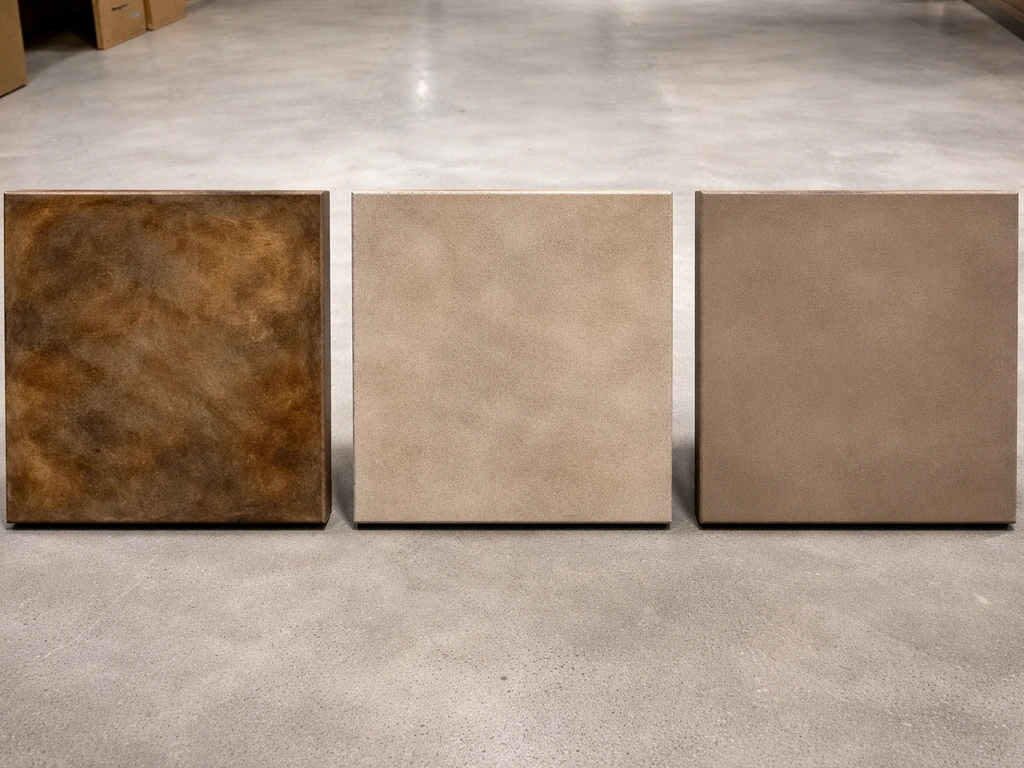
Understanding how each type works makes the product label a lot less confusing when you're standing in the aisle.
Penetrating acid stain
Acid stain (like Euclid's INCRETE STAIN-CRETE) reacts chemically with the minerals already in the concrete, creating translucent, mottled color that looks genuinely unique because no two slabs react identically. The results are beautiful but require more work: you have to neutralize the acid residue after application, rinse thoroughly with clean water multiple times until the surface stops fizzing, and then wait a full 24 hours before sealing.
Crafting with Concrete recommends rinsing or neutralizing until the runoff is neutral at pH 7, and then waiting at least 24, 48 hours before sealing depending on humidity wait a full 24 hours before sealing. Skip the neutralization step and the leftover residue will actually prevent your sealer from bonding properly. This is the right choice if you want a high-end, natural-looking finish and you're willing to follow the process carefully.
Water-based acrylic stain
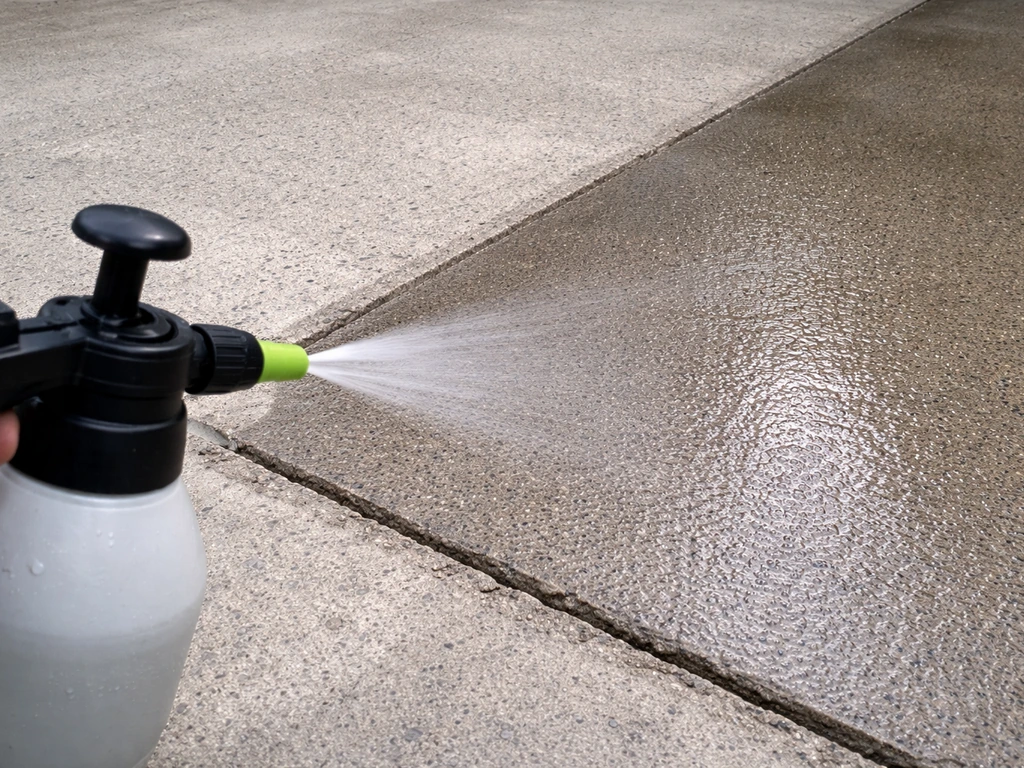
Water-based stains are the easiest to work with and the best starting point for most homeowners. Products like KILZ Semi-Transparent Concrete Stain or Euclid's INCRETE CONCRETE STAIN SEALER WB are designed specifically for outdoor applications including patios, driveways, and pool decks. They dry in roughly 1 to 2 hours at normal temperatures (around 73°F and 50% humidity), don't require neutralization like acid stains do, and many come with built-in UV protection. The color is more uniform and predictable than acid stain, which is actually a plus if you want a consistent look across a large area.
Solid-color stain-sealers
These are film-forming products that combine pigment and sealer in one coat. They offer the most color coverage and are great for disguising worn or uneven concrete. The trade-off is that film-forming finishes can make surfaces slightly slippery when wet and may eventually peel if moisture gets underneath. Products like CHEM-CRETE STAINIX are marketed as UV-stable and tested to ISO 4892-2 weather standards, covering around 150 to 200 square feet per gallon in a single coat. If you go this route, make sure the surface is bone dry before application and that any existing sealer is fully removed first.
| Type | Look | Durability | DIY Difficulty | Best For |
|---|---|---|---|---|
| Acid stain (penetrating) | Mottled, variegated, natural | Very high (no film to peel) | Moderate to hard | New or clean slabs, decorative finish |
| Water-based acrylic | Semi-transparent to solid, consistent | High with UV protection | Easy | Most outdoor patios, first-timers |
| Solid-color stain-sealer | Opaque, paint-like | Good but can peel if wet | Easy to moderate | Damaged or patched concrete |
What to look for on the product label
Don't just grab whatever's on sale. Here's what actually matters on the label when you're shopping for an outdoor patio stain:
- UV protection or UV-stable color: Sun fades concrete stain fast. Look for explicit language like "UV safe color fastness" or ISO 4892-2 test references. This is non-negotiable for an exposed patio.
- Mold and mildew resistance: Patios stay damp, especially in shaded spots. TEX-COTE's RAINSTOPPER, for example, is formulated specifically to resist mildew as well as alkali and calcium chloride. Any product marketed for patios or pool decks should include this.
- Moisture/vapor transmission: A sealer that traps moisture leads to bubbling and peeling. Breathable or vapor-permeable formulas (like silicone-acrylic blends) let moisture escape from below while still protecting the surface.
- Coverage rate: Most products cover 150 to 300 square feet per gallon, but this drops significantly on rough or porous concrete. Check the label's "porous surface" coverage figure, not just the standard rate.
- Semi-transparent vs. solid color finish: Semi-transparent lets the concrete texture show through; solid hides it. Choose based on whether your slab looks good or needs concealing.
- Minimum concrete age: Many products require concrete to be at least 28 days old before staining. If you have a newly poured slab, wait before you apply anything.
Cleaning and prepping the patio before you stain
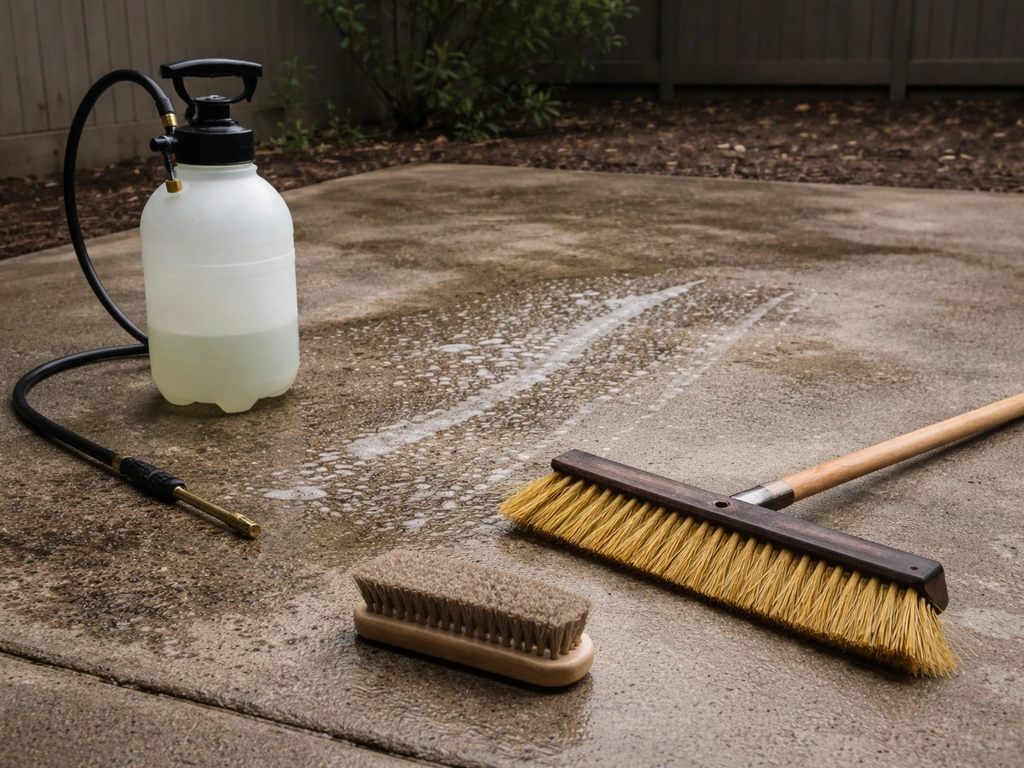
This is where most DIY stain jobs go wrong. The surface has to be clean, dry, and free of anything that would block the stain from penetrating or bonding. For stamped concrete patios, the same idea applies: keep the surface clean and dry so the finish can adhere and last clean, dry, and free. I've seen people skip this step and end up with blotchy, uneven color that starts lifting within a season. Don't rush it.
Removing common patio stains before you stain
Existing organic stains, rust, and grease need to come off completely before you apply any stain or sealer. For stamped concrete patios, cleaning thoroughly and sealing promptly helps protect the texture and keep the color looking fresh for longer stain or sealer. Here's how to handle each one:
- Mold and algae: Mix 1 part household bleach (sodium hypochlorite) with 3 parts water, apply to the affected area, let it dwell for 10 to 15 minutes, then scrub with a stiff brush and rinse thoroughly. If you prefer a gentler approach (especially around plants or pets), undiluted white vinegar works but takes longer: apply, let sit 20 to 30 minutes, scrub hard, and rinse. Repeat if needed. Vinegar is slower but safe for surrounding vegetation.
- Rust stains: Use a commercial oxalic acid-based rust remover formulated for concrete. Apply according to the product directions, scrub with a stiff brush, and rinse well. Don't use bleach for rust; it won't remove it and can actually set the stain deeper.
- Grease and oil: Apply a degreaser or a paste of baking soda and dish soap directly to the stain, let it sit for at least 15 minutes to break down the oil, then scrub and rinse. For heavy motor oil stains, a commercial concrete degreaser or trisodium phosphate (TSP) solution is more effective. Rinse multiple times to remove all residue.
- General dirt and weathering: A good all-over scrub with a stiff deck brush and a diluted all-purpose cleaner handles this. Follow with a thorough rinse.
Pressure washing vs. hand scrubbing
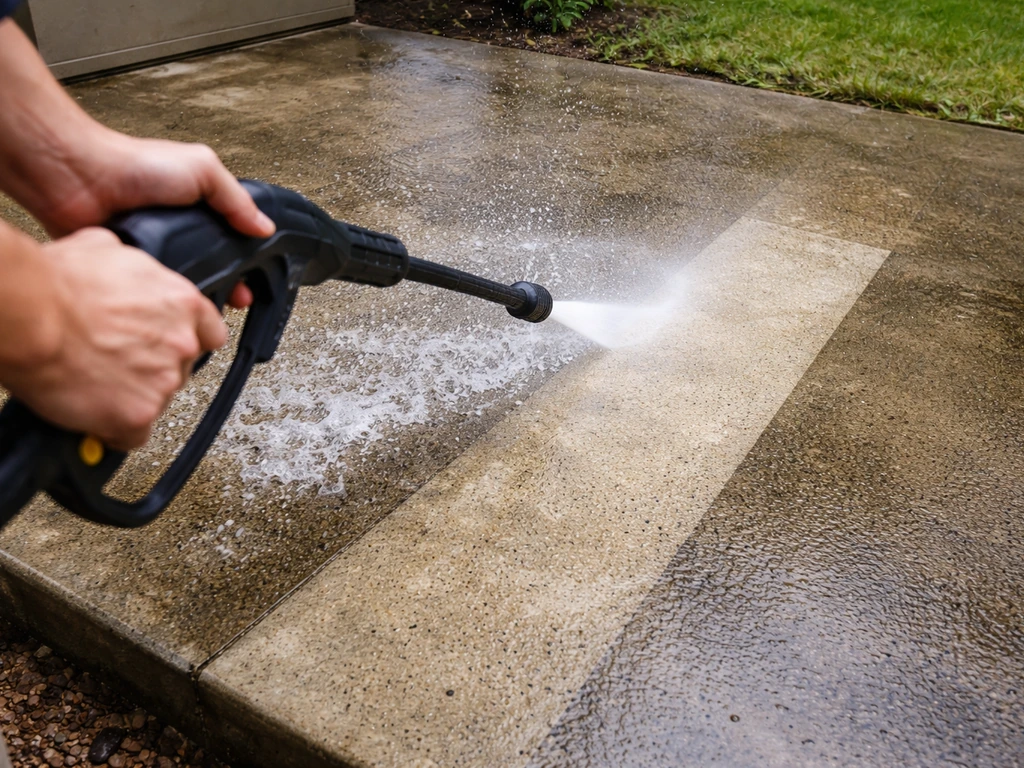
If you have a pressure washer, use it after the cleaning steps above to blast away all loosened debris and cleaning residue. A 2,500 to 3,000 PSI setting works well on standard concrete without etching the surface. If you don't have one, a garden hose with a high-pressure nozzle and thorough hand scrubbing will do the job, it just takes more elbow grease. The goal is the same either way: a surface that looks clean, has no standing residue, and lets water bead and run off rather than soak in dark patches.
Drying time: don't rush this part
After washing, the concrete needs to be completely dry before you apply any stain. For water-based stains, allow at least 24 hours of drying in good weather. For solvent-based products, overnight drying is the standard minimum, but if you've had heavy rain or the slab is in shade, give it longer. A damp surface will cause the stain to blotch or not penetrate evenly. If you used an acid stain in a prior step and are now sealing, the same rule applies: a full 24-hour dry after the final neutralization rinse before you put down any sealer.
How to apply concrete stain for a smooth, even result
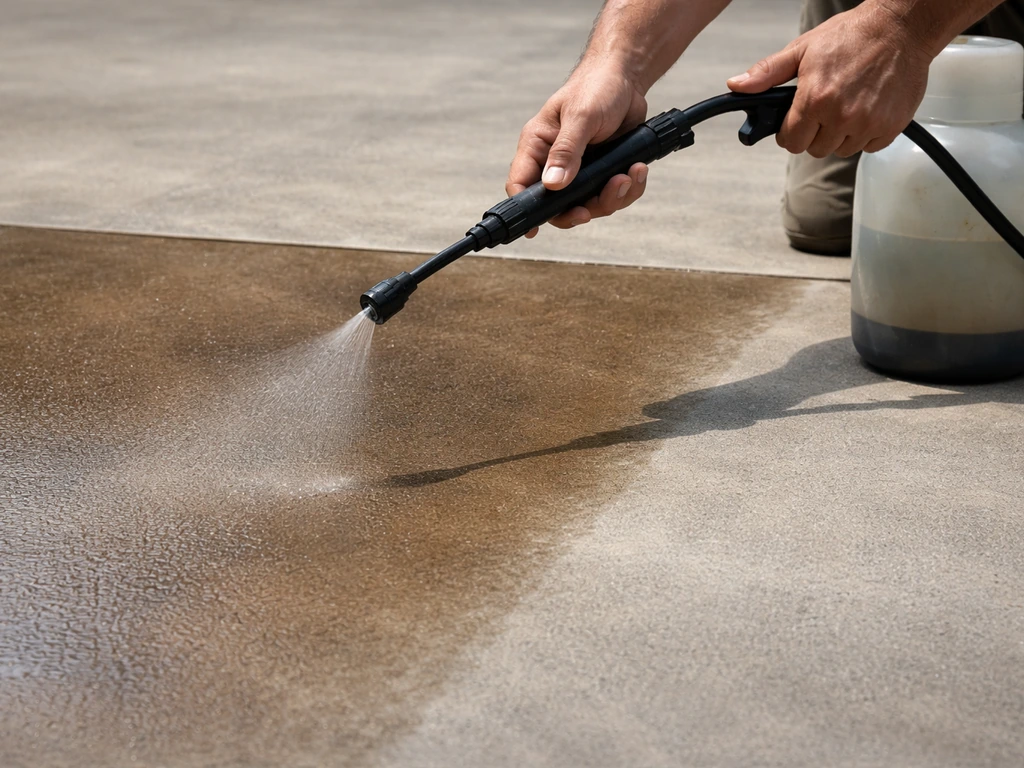
Application technique makes a bigger difference than most people expect. Even a great product will look streaky if you apply it wrong.
Tools
- Pump garden sprayer: The recommended method for most water-based and semi-transparent stains. It gives a consistent coat and lets you cover large areas quickly. Overlap each pass slightly to avoid dry edges.
- Paint roller with a 3/8-inch nap: Good for solid-color stains and stain-sealers on smooth concrete. Roll in one direction to maintain a wet edge.
- Natural-bristle brush: Use this for cutting in along edges, expansion joints, and corners where a sprayer or roller won't reach cleanly.
Application steps
- Work in sections rather than trying to coat the whole patio at once. This keeps the stain from drying unevenly and gives you control over color consistency.
- Maintain a wet edge at all times. If one section dries before you overlap into it, you'll see a line. Keep a steady pace and don't stop mid-section.
- Apply in thin coats. Two thin coats always look better than one thick coat. Thick coats pool in low spots and dry unevenly.
- Let the first coat dry to touch (typically 2 hours for most acrylic products at normal temperatures) before applying the second coat. Full recoat time for solid stains is usually 2 to 4 hours, but check your specific product's TDS.
- Avoid applying in direct midday sun, above 90°F, or when rain is forecast within 24 hours. Heat causes the stain to dry before it can penetrate properly.
Sealing after staining
If your stain doesn't include a built-in sealer (and many semi-transparent stains don't), apply a blank" rel="noopener noreferrer">clear concrete sealer once the stain has fully cured. This is especially important for patios that see heavy foot traffic, furniture, or poolside splash. If you're also sealing after pressure washing as a routine maintenance step, the same sealer compatibility rules apply: the surface must be clean, dry, and the stain fully cured before anything goes on top. This connects closely to the broader question of when and how to seal concrete after any major cleaning or restoration job.
Troubleshooting after staining and keeping it looking good
Blotchy or uneven color
The most common cause is uneven surface prep: a spot that still had grease, old sealer residue, or wasn't fully dry absorbed the stain differently than the rest. Minor blotchiness on a semi-transparent stain can sometimes be corrected by applying an additional coat over the whole surface to blend things out. For acid stains, blotching is often part of the natural look and is harder to correct after the fact. If it's a water-based stain and the blotch is severe, you may need to lightly sand the problem area, re-clean, and spot-reapply.
Peeling or flaking
Peeling is almost always a prep or moisture problem. In an r/Concrete thread about waiting to seal, commenters emphasize letting moisture or water residue from surface prep dissipate first, because anything left behind can interfere with sealing let moisture or water residue dissipate before sealing.
If the concrete was damp, if there was old sealer that wasn't removed, or if the stain was applied over a surface the manufacturer's minimum concrete age requirement (commonly 28 days for new slabs), adhesion will fail. To fix it, you'll need to strip the peeling sections, re-clean, and reapply. If you are dealing with peeling after an earlier application, learning how to re-stain concrete patio correctly will help the new coat adhere and look even.
If your patio has stamped concrete with existing sealer, removing that sealer completely before restaining is critical. If you are dealing with stamped concrete, take extra care to remove the old sealer completely before restaining remove sealer from a stamped concrete patio. If your stamped concrete has an existing sealer, you must remove it completely before restaining so the new product can bond and you avoid peeling.
With stamped concrete patio surfaces, that prep and moisture control step is just as critical for keeping your finish from peeling. If your stamped concrete patio already has a sealer, you will need to clean and remove it completely before applying a fresh coating or stain. This is a whole process on its own and worth addressing carefully before you start.
When to recoat
Most water-based acrylic stains on a patio need a fresh maintenance coat every 2 to 3 years depending on sun exposure and foot traffic. You'll know it's time when the color starts to look dull or patchy, water stops beading on the surface, or you notice the texture of the concrete showing through in worn spots. Before recoating, clean the surface thoroughly again, address any new stains (mold, rust, or grease), and lightly scuff the old stain with a broom or light scrub to help the new coat bond. You don't need to strip everything back to bare concrete for a routine maintenance recoat.
Ongoing maintenance
Keep the patio clean year-round and you'll extend the life of any stain significantly. Sweep off debris regularly so it doesn't hold moisture against the surface, rinse off pooled water after rain, and clean up any spills (especially oils and fertilizers) as soon as you notice them. If mold or algae starts to creep back in shaded corners, a diluted bleach spray or vinegar treatment catches it early before it becomes a full cleaning project. Staying on top of small cleaning jobs means you push back that next full restain by another year or two.
FAQ
What’s the best stain for a concrete patio if I want low maintenance and the most even color across the whole slab?
Choose a water-based acrylic stain with UV protection and mildew resistance, then use a stain roller or sprayer with consistent application passes. Even with the “most forgiving” stains, you can get banding if you apply too dry or let areas flash before you blend them.
Do I need to seal after using a semi-transparent concrete stain?
If the product label says it has no built-in sealer, you should plan on a separate clear sealer after the stain cures. The key is timing, let the stain fully cure before sealing, otherwise trapped moisture can lead to cloudy patches or early peeling.
Can I stain concrete that’s not fully cured or is it too soon to apply?
For new concrete, most systems require waiting until it is fully cured (often 28 days). Staining earlier can cause uneven penetration and poor adhesion, even if the surface looks dry on top.
Why does my stained patio look blotchy after drying?
Blotches usually come from blocked pores (dust, cleaning residue, or old sealer), or from moisture trapped during prep. A simple check is to sprinkle water on the slab, if water immediately beads everywhere, the surface may be too sealed or dirty, if it soaks unevenly, you likely need more cleaning and drying before staining.
Is acid stain or water-based stain better if I have slight surface damage or patched areas?
If the damage is limited and you want natural variation, acid stain can visually blend minor differences, but patched areas still need full preparation to avoid “lighter spots.” If you need to disguise unevenness more than you want mottling, a solid-color stain-sealer (film-forming or color-stronger system) usually hides patches better.
What happens if I don’t neutralize acid stain properly before sealing?
Residual acid can interfere with bond strength and can cause coating failures like peeling, pinholes, or persistent discoloration under a sealer. If fizzing stopped during rinsing but the label’s neutralization steps were skipped, treat it as an unsafe surface and re-rinse and neutralize per the product instructions.
How do I avoid streaks and lap marks when applying stain?
Work in small sections and keep a wet edge, load the tool evenly, and overlap each pass lightly while the product is still workable. Stopping mid-slab, applying too thick in one area, or working in direct hot sun can cause visible lines that are hard to correct later.
Can I restain over an existing sealer without removing it?
Usually no. If there is an existing sealer or stain-sealer, the new coating needs a clean, bondable surface. In practice, that often means mechanical removal (or stripping) plus thorough cleaning and dry time, otherwise you can get peeling or a “spotty” finish.
My patio peeled after staining, what’s the most likely cause and what should I do first?
Peeling is most often from moisture, insufficient drying, or leftover sealer that prevented adhesion. Before you reapply anything, strip the peeling sections, remove contaminants, confirm the slab is dry enough, and verify you meet the product’s minimum concrete age requirement.
How often should I recoat a stained concrete patio?
A common expectation for water-based acrylic stains is every 2 to 3 years, but sun intensity and foot traffic can shorten or extend that window. You’re typically ready to recoat when water no longer beads, color looks dull or patchy, or high-traffic areas start showing through the texture.
What’s the safest way to clean the patio before a maintenance recoat?
Remove debris first by sweeping, then clean stains (mold, algae, rust, grease) before scuffing the surface lightly. The goal is clean and dry, do not leave behind detergents or rinse residues, and scuffing should be light enough to promote bonding without gouging the surface.
Can I apply stain right after pressure washing?
Only if the concrete is completely dry and you have no cleaning residue left. Many DIY failures happen because the slab still holds moisture in pores, plan for longer dry time if it is shaded, humid, or if rain occurred after washing.
Next Articles
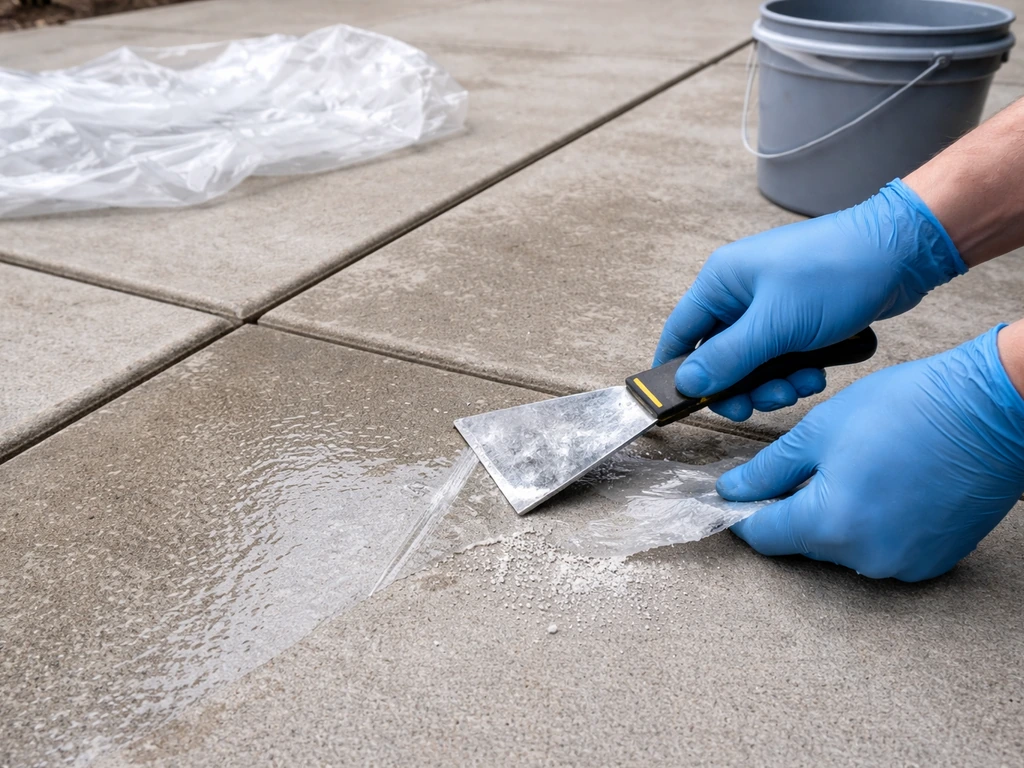
How to Remove Thompson’s Patio Sealer Step by Step
Step-by-step removal of Thompson’s patio sealer on concrete, brick, pavers, and stone, with safety, tests, and cleanup.
Can You Remove Patio Sealer? How to Strip It Safely
Learn if you can remove patio sealer and how to strip it safely by type, material, and method.
How to Remove Resin From Patio Safely by Surface Type
Step by step guide to remove resin from patio by surface type with safe scraping, softening and solvent methods.