
To remove sealer from a stamped concrete patio, your best approach is a chemical stripper applied with a brush or roller, left to dwell for 15 to 20 minutes, then scrubbed and rinsed off thoroughly. If you want the full process, follow this guide on how to clean a stamped concrete patio safely and effectively. Chemical stripping consistently outperforms scraping or grinding alone on stamped surfaces because the texture makes mechanical-only removal nearly impossible without damaging the pattern. That said, the exact product and process depend on whether you're dealing with a film-forming sealer (like an acrylic, urethane, or epoxy) or a penetrating sealer, so the first step is always figuring out which one you have.
How to Remove Sealer From a Stamped Concrete Patio
Dylan Hale
8 Jul 2026
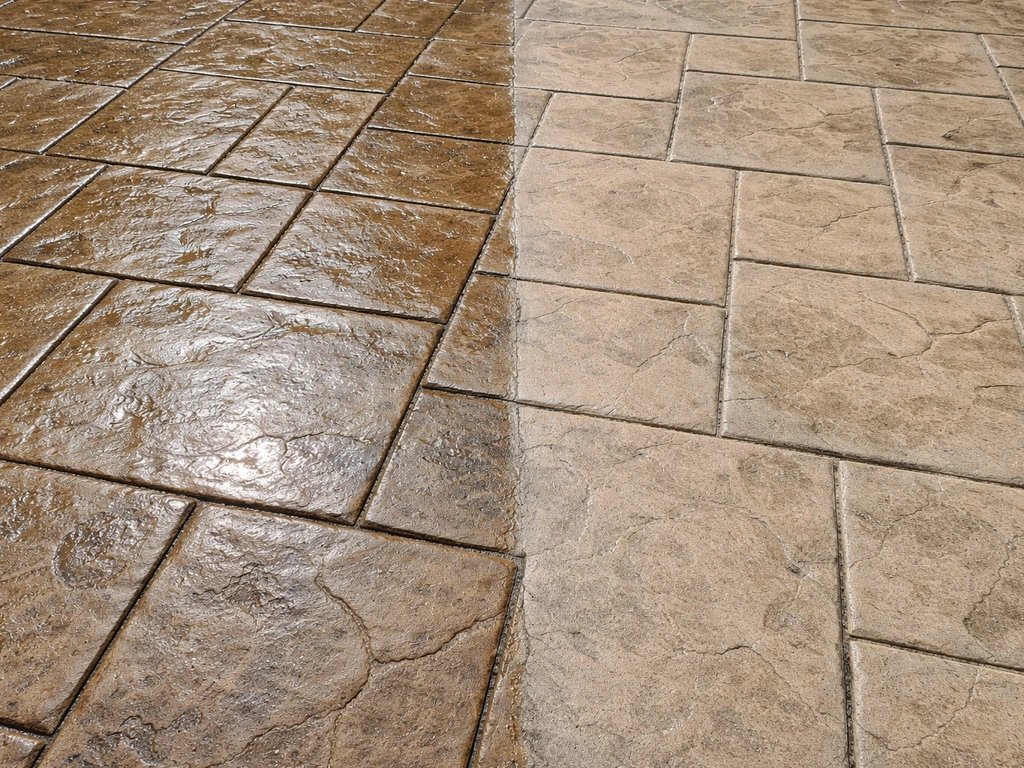
Figure Out What Kind of Sealer You're Dealing With
This step matters more than people realize. Film-forming sealers sit on top of the concrete as a visible coating layer. Penetrating sealers chemically bond inside the concrete's pores and don't leave a surface film. The removal method is completely different for each, so misidentifying the sealer type will cost you time and money.
The fastest way to tell them apart is a water test. Splash a small amount of water on the patio and watch what happens. If the water beads up on the surface, you almost certainly have a film-forming sealer still intact. If the water soaks in slowly but the surface still resists absorption compared to bare concrete, you're likely dealing with a penetrating sealer. If water is absorbed quickly and evenly with no beading at all, the sealer may already be mostly worn off, in which case you might only need a thorough cleaning rather than a full strip.
You can also look for visual clues. Film-forming sealers often show peeling, flaking, or a whitish haze when they're failing. Penetrating sealers never peel because there's no surface film. If your patio looks like it's shedding a skin, you're dealing with a film former. If it just looks dull and tired but isn't flaking, it could be either type, and the water test is your clearest signal.
| Sealer Type | What It Looks Like | Water Behavior | Removal Method |
|---|---|---|---|
| Film-forming (acrylic, urethane, epoxy) | Glossy or satin sheen; may peel or flake | Water beads on surface | Chemical stripper; some mechanical assist |
| Penetrating (silane, siloxane, silicate) | No visible film; matte or natural look | Slow absorption but no beading | Diluted acid wash or aggressive mechanical; much harder to fully remove |
| Worn/minimal sealer | Dull, faded, no sheen | Water absorbs quickly | Cleaning may be enough before resealing |
One honest caveat: penetrating sealers are genuinely hard to fully remove because they're locked into the pores of the concrete. In most cases, you can't strip a penetrating sealer down to bare concrete the way you can with an acrylic film. What you can do is improve the surface enough for a new application to adhere. If you have a failing film-forming sealer, on the other hand, a good chemical stripper will handle the job cleanly.
Prep and Protect the Patio Before You Start
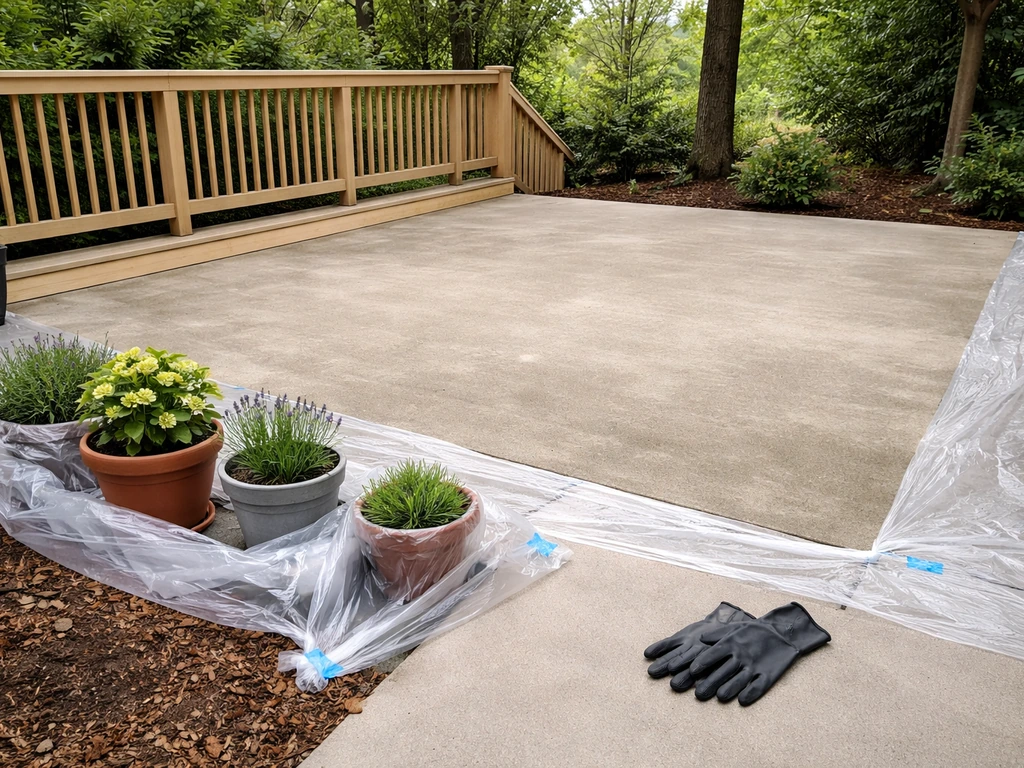
Don't skip this step just because you're eager to get going. Strippers are caustic and will damage plants, stain wood furniture, and irritate your skin on contact. Spending 20 minutes prepping correctly saves you a lot of cleanup headaches later.
- Move all furniture, planters, grills, and anything else off the patio completely.
- Cover nearby plants, grass, and garden beds with plastic sheeting or drop cloths. Secure the edges so runoff can't flow underneath.
- Tape plastic sheeting over any wood trim, fence posts, or siding that's adjacent to the patio.
- Wet down the surrounding landscaping before you apply stripper. This creates a dilution buffer in case of overspray.
- Check the weather. Most chemical strippers need to stay wet during the dwell time. A hot, windy day will dry out the product too fast and reduce effectiveness. Aim for a mild day with temperatures between 50 and 85°F.
- Do a quick sweep to remove loose dirt, leaves, and debris. You want the stripper making contact with the sealer, not sitting on top of grime.
If your patio has a floor drain or connects to a storm drain, think about runoff containment before you start. I'll cover the environmental and disposal side in more detail later, but it's worth knowing upfront that stripper-laden rinse water shouldn't run freely into street drains in most areas.
Mechanical Removal: What It Can and Can't Do on Stamped Concrete
I want to be direct here: mechanical removal methods alone almost never work well on stamped concrete. The whole problem is the texture. Scraping, grinding, and pressure washing are effective on smooth flat concrete, but stamped surfaces have deep recesses and detail work that scrapers and grinders can't reach without destroying the pattern. That said, mechanical methods are still useful as a secondary tool to support chemical stripping, so it's worth understanding what each one does.
Scraping
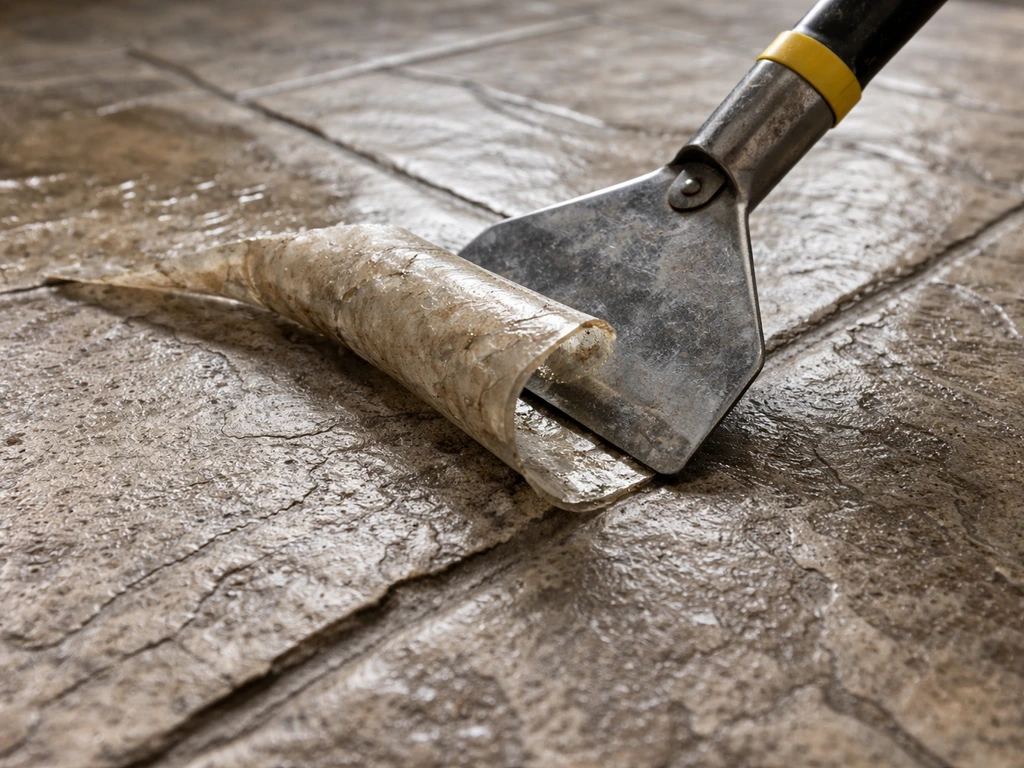
A floor scraper or hand scraper is sometimes useful for lifting large peeling sections of a failing acrylic sealer before you apply chemical stripper. It removes the thickest buildup and gives the stripper better direct contact with the remaining sealer layer. On anything but a flat, raised area though, scraping does almost nothing for the recessed parts of the stamp pattern. Use it for the easy wins, but don't count on it as your primary method.
Grinding and Sanding
Angle grinders and floor grinders with diamond cup wheels can strip film-forming sealers fast on smooth concrete. On stamped concrete, they're risky. The raised areas will get stripped but the texture pattern can be scuffed and permanently altered, especially on intricate brick or cobblestone stamps. I've seen homeowners sand off the top of a stamp pattern trying to rush the job. Unless you're a contractor comfortable with angle grinding around detailed texture work, skip grinding as a primary method on stamped surfaces.
Pressure Washing
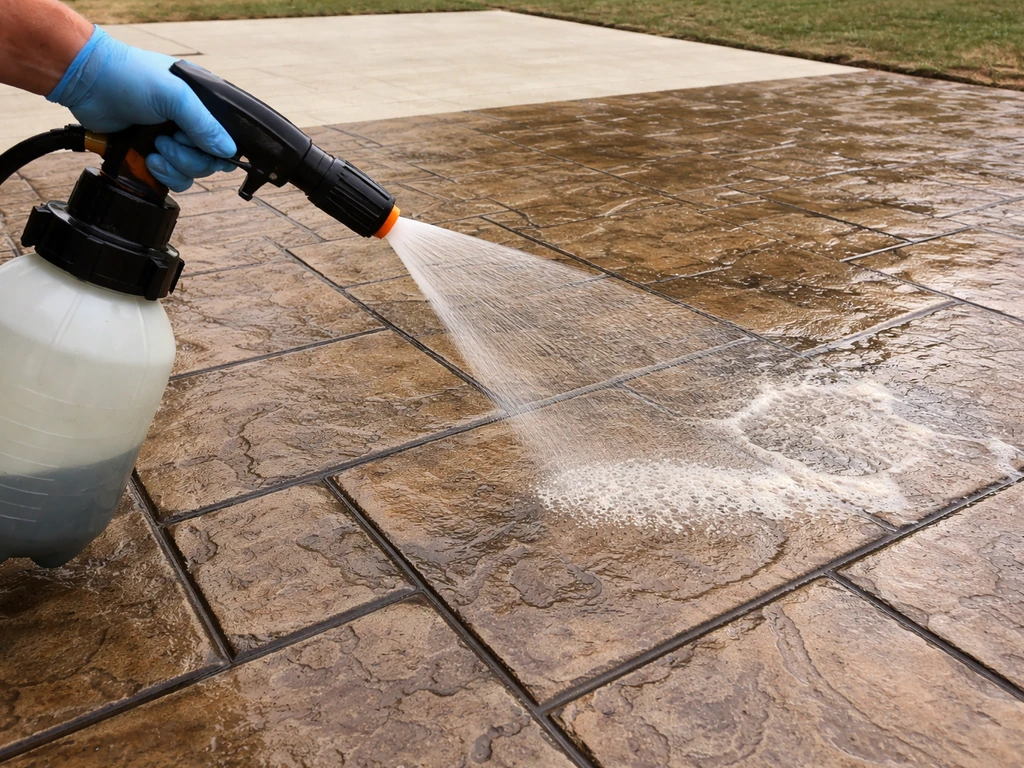
Pressure washing is genuinely useful on stamped concrete, but only as a rinsing and assisting tool rather than a standalone stripping method. Use a pressure washer at 1,500 to 2,000 PSI with a 25-degree or 40-degree nozzle. Go higher in pressure and you risk etching or pitting the surface. Keep the wand at least 12 inches from the surface and work in consistent passes rather than hovering in one spot. Community advice on avoiding etching emphasizes blank" rel="noopener noreferrer">using an appropriate nozzle type and starting farther away, then increasing proximity and pressure only until cleaning is effective without surface damage. A pressure washer is excellent for rinsing stripper residue out of the recesses after chemical treatment, and it will remove loosened sealer material efficiently. In general, after pressure washing you should let the concrete dry completely and then decide whether sealing is appropriate based on the sealer type and condition. Start on a hidden area to check that your PSI and distance aren't causing any damage before working on the main patio.
Chemical Strippers: Choosing, Applying, and Rinsing
Chemical stripping is the most effective primary method for stamped concrete. The product gets into every recess and crack that a scraper can't reach, softens the sealer from underneath, and lifts it cleanly when you scrub and rinse. Here's how to pick the right product and use it properly. After the old sealer is stripped and the surface is clean, follow a routine on how to care for stamped concrete patio so the next sealant lasts longer.
Choosing a Stripper
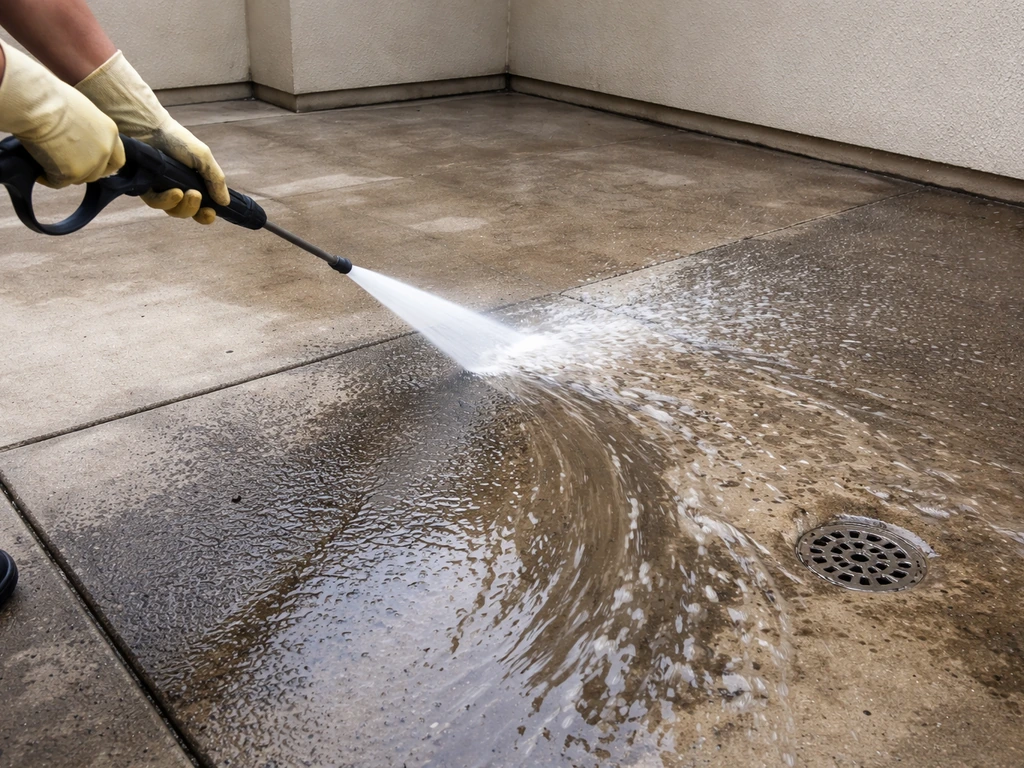
For film-forming sealers (acrylics, urethanes, epoxies), look for products specifically labeled for concrete or masonry sealer removal. Brickform Strip-It, Rust-Oleum RockSolid Sealer Stripper, Walttools Tru-Strip, and Euclid Chemical's Euco Clean & Strip are all commonly used options that work on water-based and solvent-based sealers. Some, like EasyStrip 1000, are marketed as low-VOC and biodegradable if you want a more environmentally friendly option. For penetrating sealers or heavy residue buildup, you may need a stronger product or a diluted acid wash (more on acid below).
Caustic (alkaline) strippers are the most common type and handle most acrylic and urethane sealers well. Solvent-based strippers are more aggressive and better for thicker coatings or epoxies, but they come with more fumes and handling requirements. If you're working outdoors with good airflow, either type works. I'd lean toward a water-based low-VOC product for most homeowners because it's easier to manage, safer to handle, and easier to rinse out of the stamped texture.
How to Apply It
- Apply the stripper generously using a wide brush, roller, or pump sprayer. You want a thick, even coat that covers the entire surface including the recesses.
- Let it dwell. Most products need 15 to 20 minutes, but check the label. The sealer should start bubbling, wrinkling, or lifting visibly as the stripper does its work.
- Keep it wet during the dwell time. If it starts drying out before the dwell period is done, apply more stripper. On hot or windy days, mist it lightly with water.
- Agitate with a stiff-bristle brush or deck brush after the dwell time is up. Scrub in circular motions, working the loosened sealer out of the stamp recesses.
- Remove the slurry. Use a floor squeegee to collect the loosened sealer material, then scoop it into a bucket for disposal.
- Rinse with warm water and scrub with soap to remove residue. Rinse at least three times to make sure no stripper remains in the texture. White suds or film after rinsing means you need another pass.
- If significant sealer remains, apply a second coat of stripper and repeat.
For penetrating sealers or surfaces with heavy mineral contamination, a diluted muriatic acid wash can help open the pores. Mix one part muriatic acid to ten parts water (always add acid to water, never the other way around), apply it to a pre-wetted surface, let it dwell for about five minutes, then scrub and rinse very thoroughly. Muriatic acid is powerful and warrants full PPE: chemical-resistant gloves, eye protection, and acid-rated respiratory protection. Always neutralize with a baking soda and water solution after the acid wash before rinsing. This is a method I'd reserve for situations where standard strippers haven't worked rather than a first step.
Dealing With Rust, Mildew, and Organic Growth Underneath
Once the sealer comes off, it's common to find issues hiding underneath. Old sealer traps moisture, dirt, and organic material against the concrete surface. Don't reseal until these are addressed or you'll just be locking the problems back in.
Mildew, Algae, and Organic Staining
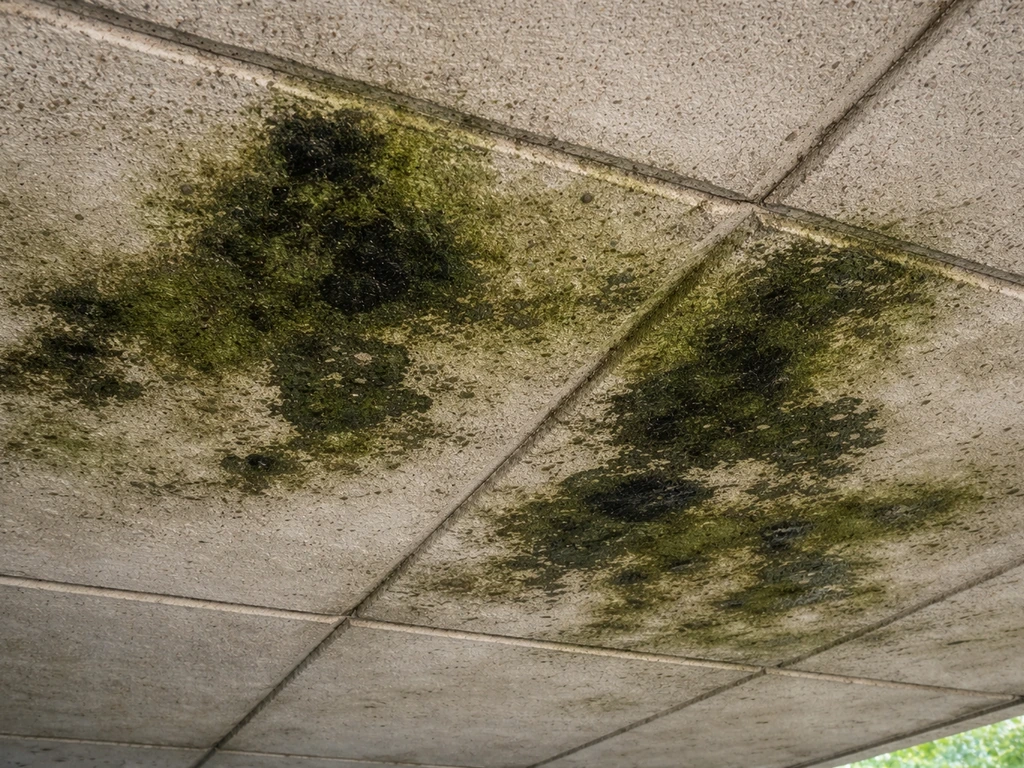
Green, black, or gray organic staining is the most common thing you'll find after stripping. A sodium hypochlorite solution (regular household bleach diluted 1:10 with water) is effective and widely available. Apply it to the damp surface, let it sit for about 10 minutes, then scrub and rinse thoroughly. Don't let bleach sit longer than necessary, and rinse it off completely before it dries. This is safe for concrete at that dilution but will absolutely damage nearby plants and bleach any fabric it contacts. If you have pets or kids around the area, a white vinegar solution (undiluted or mixed 1:1 with water) is a gentler option that still handles light mildew, though it takes longer and requires more scrubbing. It's also worth noting that bleach is not appropriate for certain natural stone pavers, so if your patio transitions into stone, keep the bleach solution on the concrete only.
Rust Stains
Rust stains under old sealer usually come from iron in the concrete mix, nearby metal furniture, or rebar close to the surface. Oxalic acid-based rust removers work well on concrete and are far less aggressive than muriatic acid. Apply according to the product instructions, dwell for the recommended time, scrub, and rinse thoroughly. For light staining, a paste of lemon juice and salt applied and left for 30 minutes can work as a gentler starting point before moving to a commercial oxalic acid product.
Efflorescence (White Powdery Deposits)
If you see a white, chalky, powdery deposit after stripping, that's efflorescence. It's mineral salt migration from inside the concrete and it's very common on patios that have had trapped moisture under old sealer. A diluted muriatic acid wash at a 1:10 ratio handles efflorescence effectively. Wet the surface first, apply the acid solution, let it fizz for a few minutes, scrub with a stiff brush, then neutralize with a baking soda rinse and follow with multiple clean water rinses. Collect your rinse water so you're not sending acid-laden runoff into drains or soil.
Safety, Environmental Responsibility, and Disposal
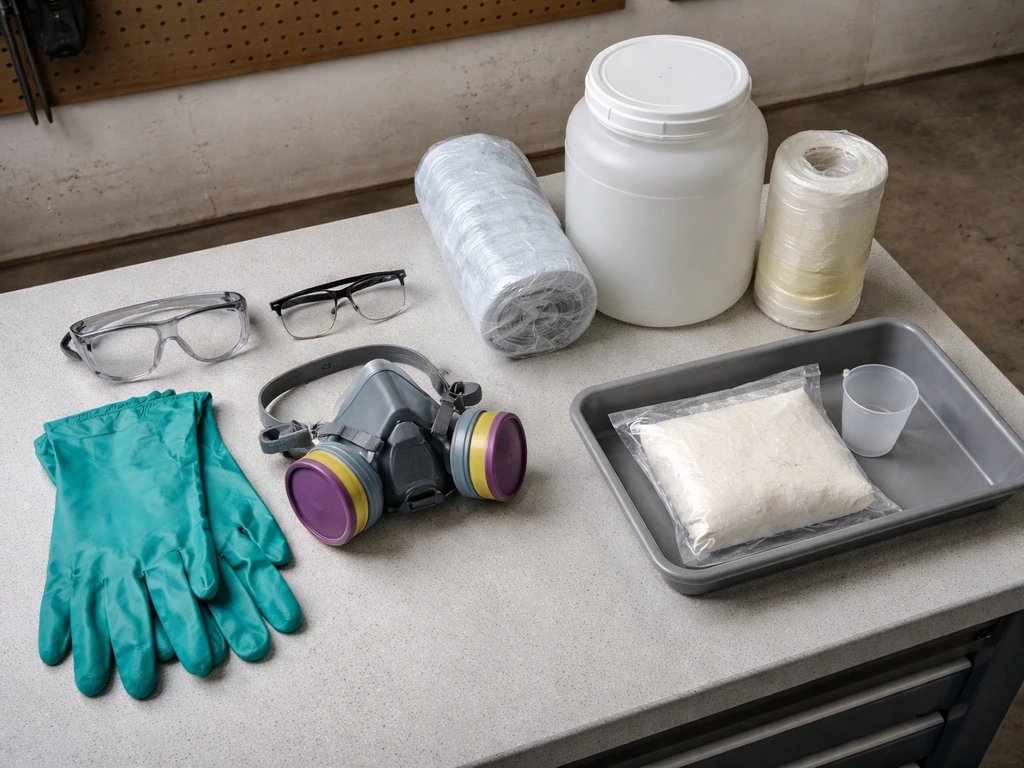
Sealer strippers and concrete cleaning chemicals are not things to handle casually. Here's the minimum PPE setup I'd recommend for any chemical stripping job, and what to do with the waste.
- Chemical-resistant gloves (nitrile at minimum; neoprene for solvent-based strippers or muriatic acid).
- Safety glasses or goggles (splash-proof for anything with acid).
- Old clothes you don't mind ruining. Strippers and bleach will spot any fabric instantly.
- Rubber-soled footwear. The patio surface gets slippery when wet with stripper.
- An N95 respirator for solvent-based products or any acid use. For water-based low-VOC strippers outdoors, good airflow is usually sufficient, but a respirator is cheap insurance.
- Have a garden hose running nearby for immediate skin or eye contact rinsing.
On the environmental side: most chemical strippers are toxic to aquatic life and many are not safe to pour down storm drains. The stripped sealer slurry you collect in buckets should be treated as chemical waste. Check with your local municipal hazardous waste disposal program for drop-off options. For rinse water, directing it to a grassy, absorbent area rather than a hard runoff path toward a drain is the better approach, especially after a muriatic acid wash where you've already neutralized with baking soda. If you used a biodegradable, low-VOC water-based stripper, the diluted rinse water is generally lower risk, but check the product SDS to be sure.
Hot or windy conditions make stripper dry out faster, shortening your dwell time and making fumes more concentrated at nose level. On those days, work in sections and plan to reapply as needed. Early morning is usually the best time to strip a patio, when it's cooler and calmer.
Step-by-Step Plan Based on Your Skill Level and Tools
If You Have a Pressure Washer and Moderate DIY Experience
- Do the water bead test to confirm you have a film-forming sealer.
- Clear and cover the patio area. Wet down nearby plants.
- Pre-rinse the patio with the pressure washer at low pressure to remove surface dirt.
- Apply chemical stripper generously with a brush or roller. Work in sections of about 50 to 100 square feet so you can manage the dwell time.
- Wait 15 to 20 minutes (or the time your product specifies). Keep the surface wet.
- Scrub the surface with a stiff deck brush to break up the loosened sealer.
- Use the pressure washer at 1,500 to 2,000 PSI with a 25-degree nozzle to rinse, working the slurry off the surface. Stay at least 12 inches from the surface.
- Squeegee and collect the slurry from a central point into a bucket.
- Scrub with soap and warm water, then rinse three times with clean water.
- Inspect for remaining sealer and repeat if needed.
- Address any mildew, rust, or efflorescence you find before allowing the patio to dry.
- Allow 24 to 48 hours of drying before resealing or re-staining.
If You're Working by Hand Without a Pressure Washer
- Apply chemical stripper and let it dwell as directed.
- Scrub aggressively with a stiff-bristle scrub brush, working in sections.
- Use a wet/dry shop vac or mop to remove the loosened slurry.
- Rinse repeatedly with a garden hose on a jet setting, scrubbing between rinses to work out the residue from stamp recesses.
- Expect to spend more time and potentially do two to three applications compared to pressure washing.
- Inspect carefully in the textured recesses, as residue builds up there and is harder to flush without a pressure washer.
- Address stains and allow to dry fully before any resealing.
Without a pressure washer, the job is doable but physically harder and takes more time. A water-based stripper with a longer dwell time (some products can stay active for 30 to 45 minutes) helps compensate when you're relying on manual scrubbing to do the work that water pressure would otherwise do.
How to Confirm the Sealer Is Actually Gone
Before you reseal, re-stain, or call the job done, confirm the old sealer is fully removed. After the patio is fully clean and the old sealer is gone, you can seal stamped concrete properly for long-lasting protection how to clean and seal stamped concrete patio. If you reseal over residual old sealer, you'll get adhesion problems, peeling, and a patchy finish within a season or two.
The simplest confirmation test is the water absorption test again. Splash water on several areas of the dry patio. On bare concrete, water should soak in evenly within a few seconds with no beading or extended standing. If water still beads in spots, sealer remains in those areas.
A more precise method is the ASTM D3359 tape test, which pros use to check coating adhesion. Score a small X or cross-hatch with a utility knife in a discreet area, press a piece of strong tape (packing tape works) firmly over the score, then peel it back sharply. If coating material lifts off with the tape, sealer remains. If the tape comes off clean with only concrete dust, the sealer is gone.
Also look visually at the stamp recesses in raking light or with a flashlight. Remaining sealer often appears slightly shiny or waxy in the low spots even when the raised areas look clean. If you see that, do another application of stripper focused on those areas and rinse again.
When to Call a Professional Instead
Most homeowners can handle film-forming sealer removal on a standard residential stamped patio without professional help. But there are a few situations where calling in a concrete restoration contractor makes more sense than grinding through a frustrating DIY job.
- The sealer is a thick multi-coat epoxy or polyurethane system that hasn't responded after two or three chemical stripper applications.
- The patio is large (over 500 square feet) and the scope of the hand work or chemical cost isn't practical for a DIY approach.
- There's significant concrete damage underneath (deep cracks, spalling, or delamination) that needs to be assessed before any resurfacing or resealing decision.
- You have a penetrating silicate or silane/siloxane sealer and you're trying to apply a different sealer type on top. A pro can advise whether preparation or a different sealer system makes more sense.
- The patio is colored or integrally stained, and there's a real risk that aggressive chemical or mechanical stripping will alter the color. Getting a professional assessment before stripping protects a bigger investment.
If you're planning to re-stain after removal, or you're thinking about cleaning and resealing the whole patio as part of broader maintenance, it's worth reading up on compatible stain and sealer products before you get to that stage. Choosing the best stain for concrete patio depends on whether you want a penetrating or film-forming finish re-stain. The stripping work you do now directly affects how well the next coat bonds, so it's worth confirming the surface is fully clean and cured before moving on. Concrete typically needs 24 to 48 hours after stripping and cleaning before it's dry enough to accept a new sealer or stain application.
FAQ
Can I remove sealer from stamped concrete with just a pressure washer or scraper?
Usually not as a complete solution. Stamped texture traps sealer in recesses, so pressure washing works mainly to rinse and remove loosened residue after chemical stripping. Scraping can help only with thick, peeling film areas, not the embedded coating in detailed low spots.
How do I know whether to use an alkaline stripper, a solvent stripper, or acid for my patio?
Start with the water test, then look at condition. If you see beading and peeling, it likely needs a film-forming sealer stripper (often alkaline for many acrylic or urethane types). If water readily soaks in and the surface is still coated or stained heavily, you may be dealing with penetrating sealer or mineral contamination, which sometimes calls for a stronger product or a controlled muriatic acid wash after standard stripper attempts.
What dwell time should I use, and what if the product dries out before I’m done scrubbing?
Follow the label, but the common range is about 15 to 20 minutes for many removers. If it dries early due to heat or wind, it may lose effectiveness and become harder to rinse, so work in sections and plan to reapply to the areas that dried out.
Will chemical strippers harm the stamp pattern or change the look of the concrete?
They can, if you overwork an area or use the wrong product for the sealer type. The risk is higher when someone uses aggressive mechanical methods or repeatedly scrubs too hard. Using the correct stripper, the recommended dwell time, and thorough rinsing helps prevent uneven texture and patchiness.
Is the muriatic acid method safe for stamped concrete, and when should I use it?
It can be effective for penetrating sealer residue or efflorescence, but it’s also more hazardous and needs strict PPE and neutralization. Use it only after standard sealer stripping and only when you need to open pores or address mineral deposits, since acid can etch if you don’t control dilution, dwell, and rinsing.
Do I need to neutralize after stripping and after muriatic acid?
After muriatic acid, yes, neutralization is important, typically with a baking soda and water solution followed by multiple rinses. For chemical strippers, some products require extra rinsing but not a baking-soda step, so follow the specific product instructions to avoid leaving residue that can block adhesion.
How do I dispose of stripper sludge and rinse water safely?
Collect the sealer slurry and treat it as hazardous chemical waste, usually via local hazardous waste drop-off. For rinse water, avoid sending stripper-containing water to storm drains, and route it to an absorbent area when permitted. If you used acid, you should neutralize first, then rinse, and still prevent runoff into drains or soil.
Can I reseal immediately after stripping if the patio looks clean and dry?
Not usually. Even after the surface feels dry, concrete often needs time to fully dry and off-gas before coatings. Plan on about 24 to 48 hours after stripping and cleaning, then do a final water beading or absorption check to confirm sealer is gone before resealing.
What’s the most reliable way to confirm all sealer is removed, not just the top layer?
Run the water absorption test again on several spots, especially in recesses. For a more precise check, use a tape adhesion test after making a discreet cross-hatch cut, and verify that nothing lifts with the tape. Also inspect in raking light, remaining sealer can look slightly shiny or waxy in low areas.
Why do I see staining, mold, or discoloration right after stripping?
Sealer removal often reveals trapped organic material or minerals that were previously locked under the coating. Organic staining can be treated with a diluted bleach solution on concrete at the recommended strength, while lighter mildew may respond to vinegar but takes more scrubbing. Always protect plants and fabrics from bleach contact.
How can I remove rust stains without damaging the concrete or the rest of the patio?
Use an oxalic acid-based rust remover, which is typically less aggressive than muriatic acid. Apply as directed, dwell for the recommended time, scrub, and rinse thoroughly. For very light rust, a lemon-and-salt paste can be a gentle first try, but you may need the commercial oxalic product if staining persists.
What if I still have white powder or haze after stripping, is it leftover stripper?
If it’s a chalky, powdery deposit, it’s commonly efflorescence, mineral salts migrating from inside the concrete, not stripper residue. A diluted muriatic acid wash with neutralization and multiple clean water rinses usually resolves it, and it’s important to collect rinse water to avoid sending salts or acid into drains.
How do I avoid uneven resealing or peeling after I remove the old sealer?
The main causes are residual sealer and poor surface prep. Confirm removal with water or tape testing, clean thoroughly, and do not reseal over any remaining shiny or waxy areas. Also ensure the surface is fully dry, and address moisture trapped underneath before applying the next sealer.
Next Articles
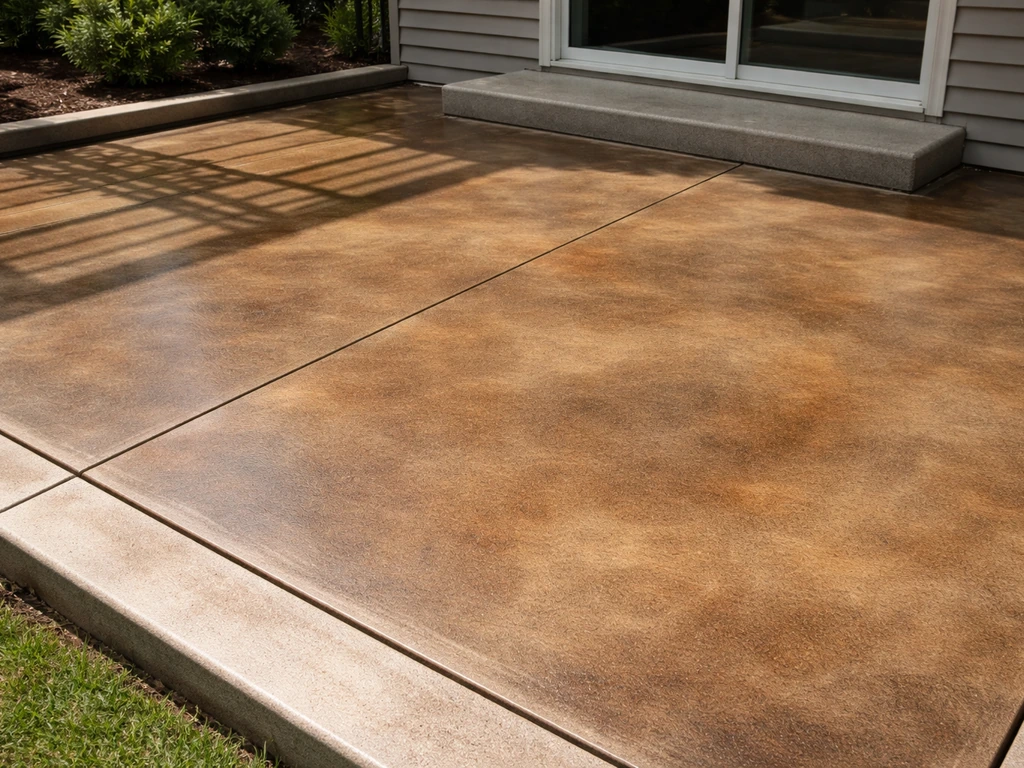
How to Re-Stain a Concrete Patio Step by Step
Step-by-step guide to re-stain a concrete patio, including prep, cleaning, repair, acid vs water-based, and sealing tips
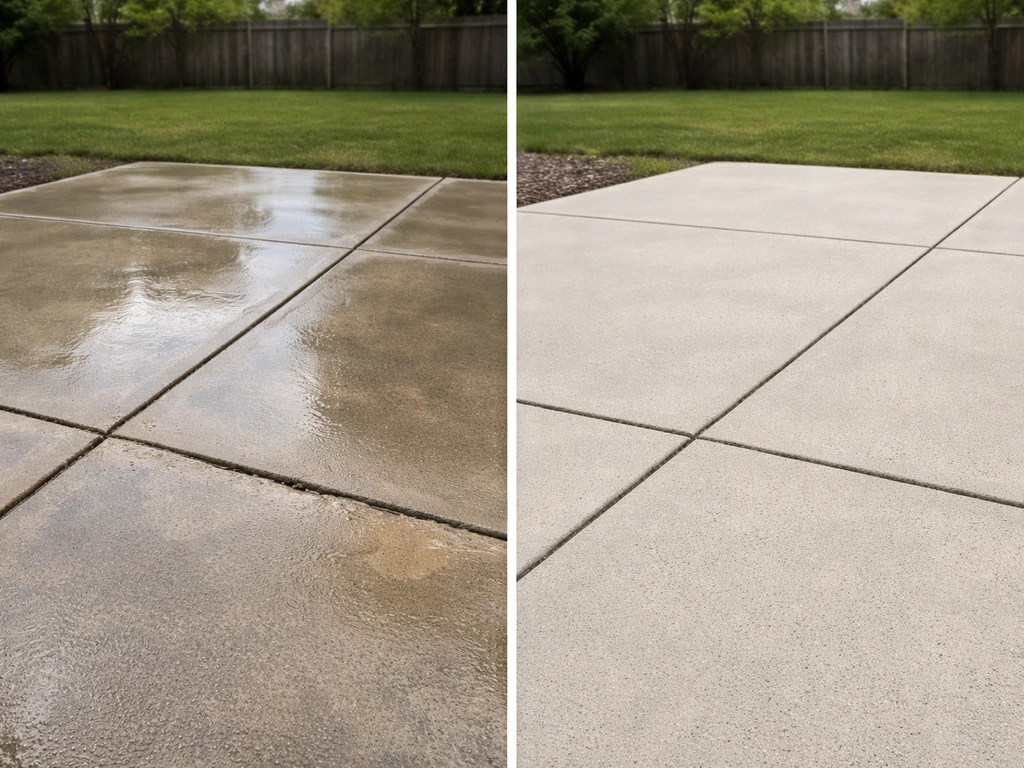
Should I Seal My Concrete Patio After Pressure Washing?
Learn if you should seal a concrete patio after pressure washing, when to wait, and how to prep for lasting protection.
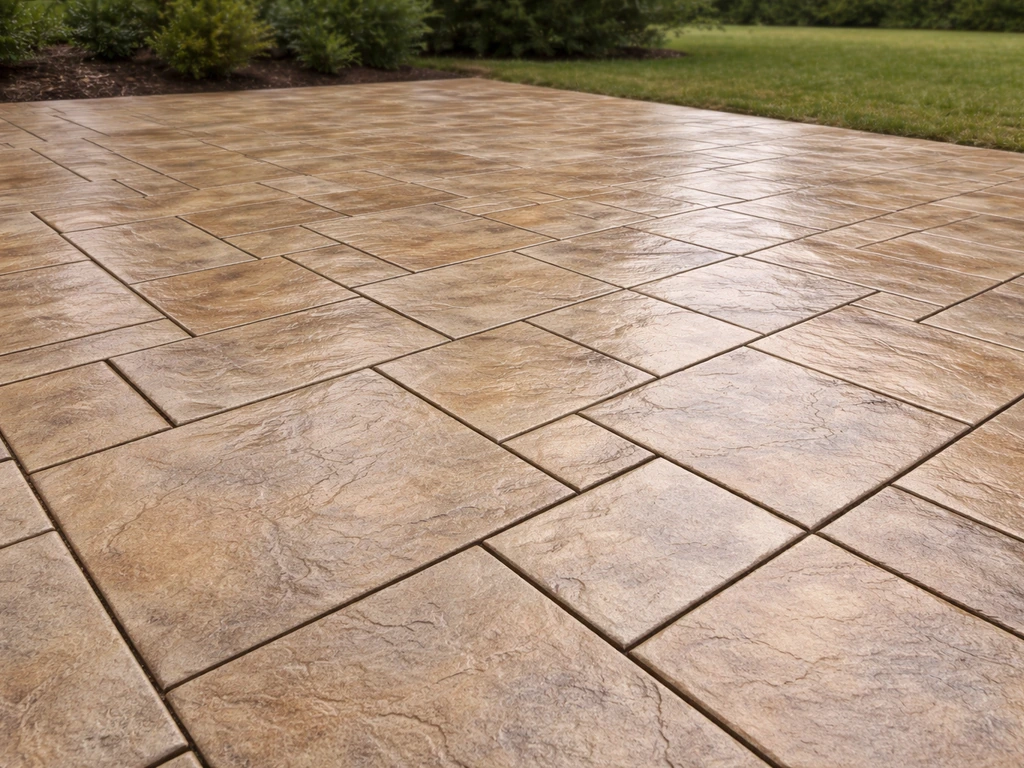
How to Clean and Seal a Stamped Concrete Patio
Step-by-step guide to clean grime, mildew and stains, then seal stamped concrete for lasting color and texture protectio