Rust marks on patio slabs almost always come from something metal sitting or draining onto the surface: garden furniture legs, a steel planter base, a rusty screw in a fence post, or a leaking tap. The iron oxidises, bleeds onto the slab, and leaves an orange or brown stain that plain washing won't shift.
How to Remove Rust Marks From Patio Slabs Safely
Dylan Hale
30 Jun 2026
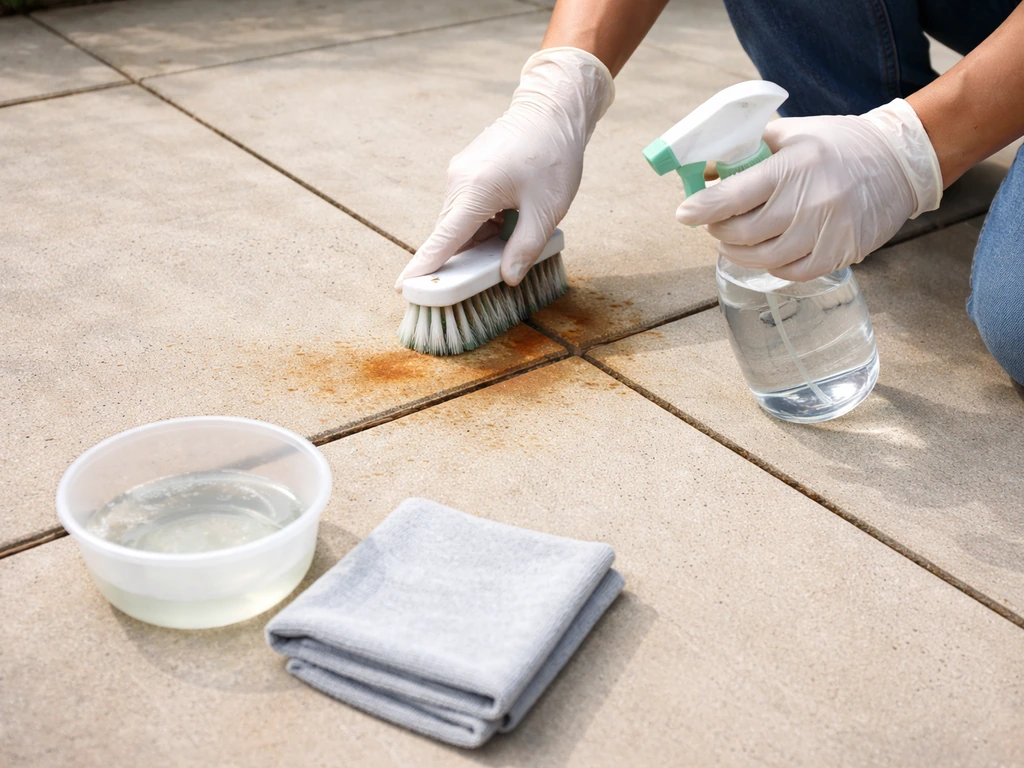
The good news is that most rust marks respond well to an acid-based treatment, whether that's a dedicated rust remover, oxalic acid, or even citric acid from your kitchen cupboard. If you want to focus specifically on how to get rust off of a concrete patio, the steps above can be followed for both fresh and set-in marks how to get rust off of concrete patio.
The key is matching the method to your slab material, because the same product that cleans concrete brilliantly can permanently damage certain natural stones.
Work out where the rust is coming from (and how bad it is)
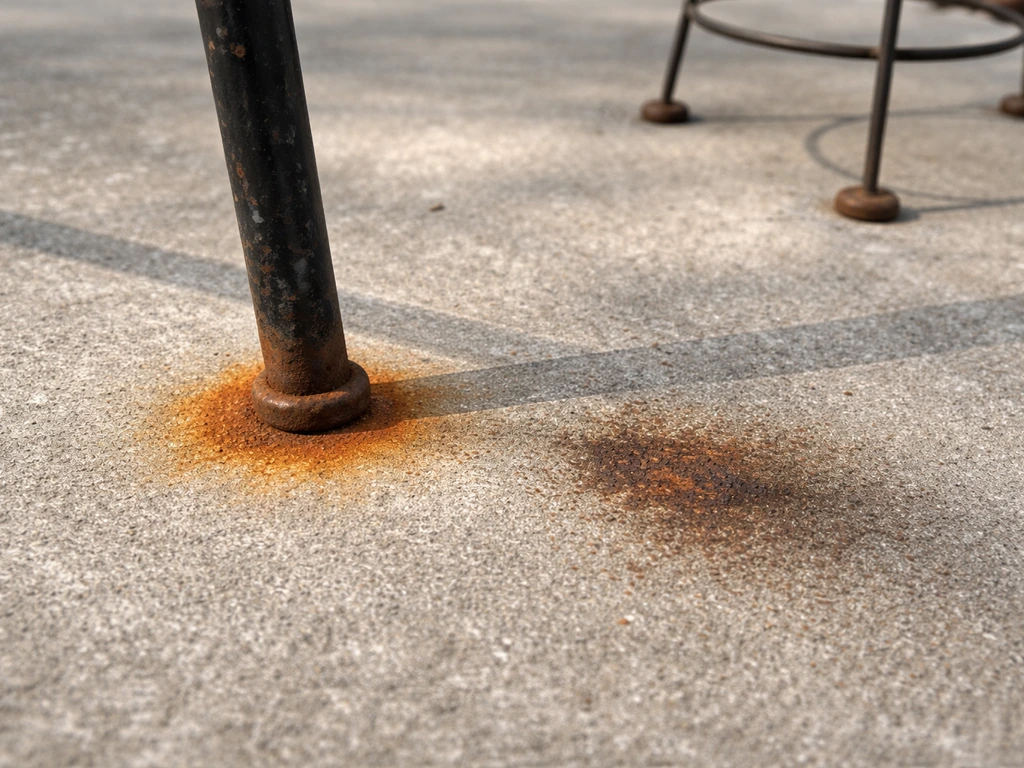
Before you reach for a cleaner, spend two minutes identifying the source. Fresh rust marks are light orange and haven't soaked deep into the slab surface yet. Set-in stains are darker, often brown or red-brown, and have bonded with the porous top layer of the material. Fresh marks need much less effort and even a mild citric acid soak will often clear them. Set-in stains may need a stronger chemical or multiple applications.
The most common sources are metal furniture legs (especially cheap powder-coated steel that's started to rust through), rusty bolts or brackets on pergola posts, steel-framed raised beds, metal edging strips, and barbecue bases. Occasionally rust marks come from the slabs themselves, if they contain iron-bearing aggregate or reinforcement that's started to oxidise underneath. That last scenario is trickier and worth noting: if the stain reappears from the same spot within days of cleaning, the iron contamination is coming from inside the slab, not from above it.
Pre-clean steps and safety before you start
Prep matters more than most people think. Skipping it usually means wasting product and getting patchy results. Here's what to do before you apply anything:
- Clear the area completely. Remove furniture, pots, and anything else that could get splashed.
- Wet the surrounding slabs and any nearby grass or plants thoroughly. This dilutes any overspray and reduces the chance of chemical damage to vegetation.
- Pre-wet the stained slab itself with clean water. This stops the cleaner from soaking too fast and concentrating in the wrong place.
- Sweep off any loose dirt, leaves, or debris first. Organic matter can neutralise acid-based cleaners before they reach the rust.
- Put on nitrile or rubber gloves and safety glasses. This is non-negotiable with any acid-based or oxidising product.
What not to mix, ever
There's one safety rule that's worth burning into your memory: never mix bleach (sodium hypochlorite) with any acid-based cleaner. Combining them produces chlorine gas, which causes serious eye and airway irritation, chest tightness, coughing, and in an enclosed space, worse. Bleach isn't a rust remover anyway, so there's no scenario where you'd need both at once on a rust stain. If you've used a bleach-based patio cleaner recently, rinse the area thoroughly with water and let it dry before applying anything acidic. Similarly, don't mix bleach with ammonia-based products. Keep things simple: one product at a time, rinse between different treatments.
Manual scrubbing method for fresh or light rust marks
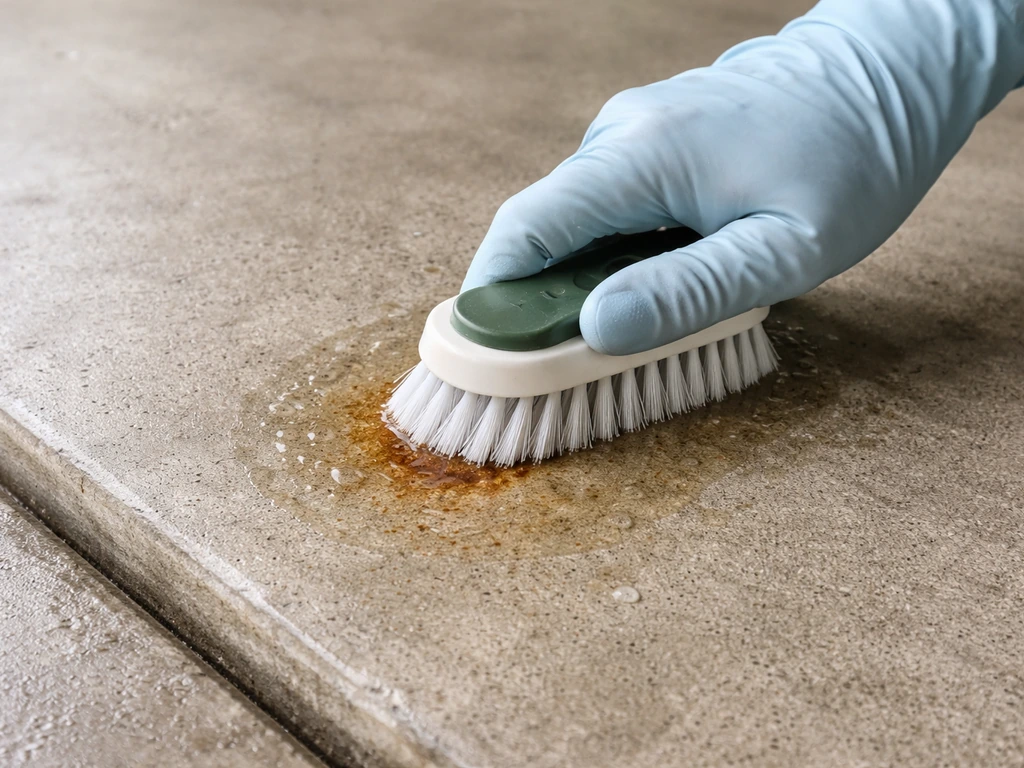
For fresh stains on concrete or porcelain slabs, I'd always start with the mildest approach. It takes a bit of elbow grease but it's safe for almost all slab types, and you won't risk damaging anything.
- Mix a citric acid solution: dissolve two to three tablespoons of citric acid powder (cheap from baking supply shops or online) in about 500ml of warm water.
- Pour or spray it directly onto the wet stained area, making sure it covers the whole mark.
- Leave it to dwell for 10 to 15 minutes. You may see light bubbling or fizzing on concrete, which is normal.
- Scrub firmly with a stiff-bristled brush. A deck scrub brush works well for larger areas; an old grout brush is good for getting into textured surfaces.
- Rinse thoroughly with clean water, working the rinse water away from plants.
- Repeat if the stain has lightened but not cleared completely. Fresh marks usually clear in one or two rounds.
Baking soda and dish soap as a paste is another option some people swear by for very light surface marks, but in my experience it doesn't do much for actual rust, it just cleans the surrounding grime and makes the rust look slightly less obvious. Save it for general cleaning, not real rust stains.
Stronger chemical options for set-in rust stains
When the gentle approach hasn't shifted the stain after a couple of attempts, or when you're dealing with a mark that's been there for months, you need something with more chemical weight behind it.
Dedicated rust removers (the easiest option)
Products like Whink Rust Oxy or Extreme Clean Advanced Rust Treatment are formulated specifically for this job. If you're after a straightforward, purpose-made route, compare the dedicated products rather than mixing your own chemicals, like the best rust remover for patio slabs. They're available from builders' merchants, hardware shops, and online. The process is straightforward: dampen the stained area, apply the product directly, leave it for between 5 and 30 minutes depending on the severity of the stain, give it a gentle agitation with a soft brush, and rinse off thoroughly. Always read the specific product's instructions, as dwell times vary and leaving some products on too long can itself cause a secondary stain on lighter coloured slabs.
Oxalic acid for stubborn concrete rust stains
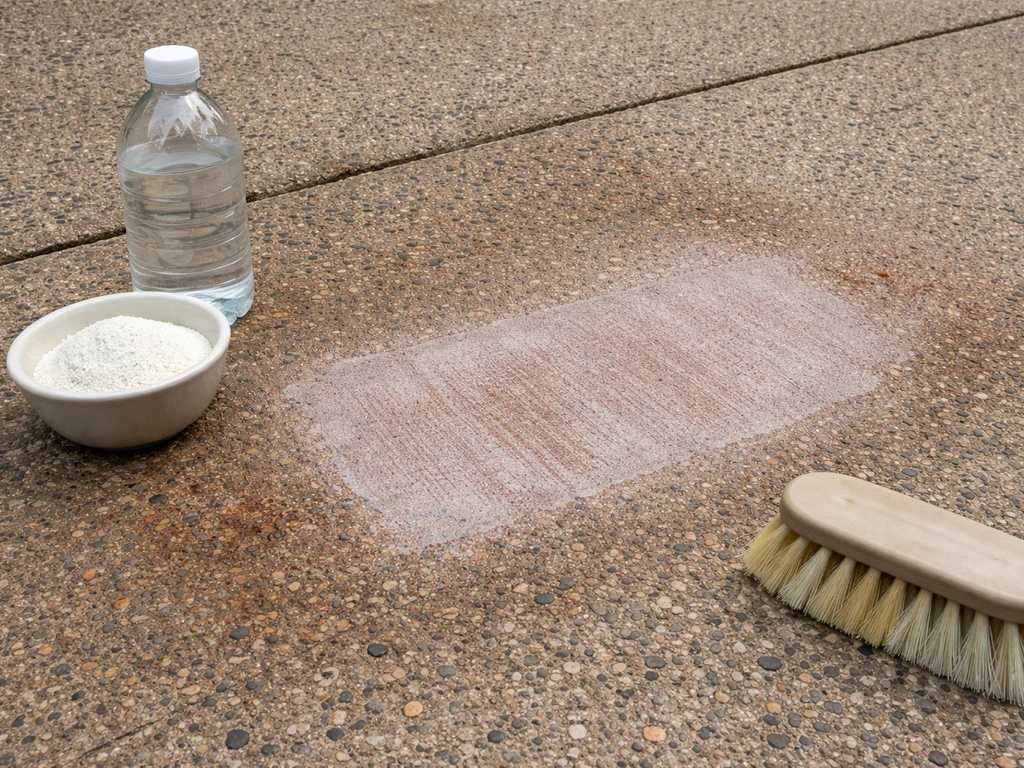
Oxalic acid is considered one of the most effective treatments for rust-type stains on concrete and exposed aggregate surfaces. It's available as a powder from specialist cleaning suppliers and some hardware shops. Mix it to a solution following the product guidance (typically around 30 to 60 grams per litre of water), apply to the pre-wetted stained area, leave for 10 to 20 minutes, scrub with a stiff brush, and rinse very thoroughly. Oxalic acid is more aggressive than citric acid so always wear gloves and glasses, work in a ventilated area, and keep children and pets away until the surface is fully rinsed and dry.
Muriatic acid (hydrochloric acid), use with real caution
Muriatic acid (sold as brick acid or hydrochloric acid cleaner in the UK) is the heavy-duty end of the spectrum. It works on concrete, but it's aggressive enough to permanently damage many natural stones, and it needs to be handled with serious care. Always add acid to water, never the other way around. Dilute it to roughly 1 part acid to 10 parts water for rust work on concrete.
Apply to a pre-wetted surface, leave no more than a few minutes, scrub lightly, and rinse extensively. Keep it away from any metal fixings, adjacent brickwork, and plant areas. I'd only reach for this if nothing else has worked, and I'd do a test patch in a hidden corner first. The damage it can do to certain stones is irreversible, so if you're not on plain concrete, skip this one entirely.
Sodium dithionite poultice for deep stone stains
For rust stains on natural stone slabs that won't budge with surface treatment, a sodium dithionite (sodium hydrosulphite) poultice is worth considering. Mix the powder with water to form a paste, apply it over the stain, cover it with plastic sheeting to keep it moist, and blank" rel="noopener noreferrer">leave it in place for no longer than 30 minutes before removing and rinsing. This is more of a specialist technique but it's effective on deeper iron contamination in stone because blank" rel="noopener noreferrer">sodium dithionite works as a reducing agent that increases iron solubility, essentially making the rust lift out of the stone's pores. It's a good option for historic or decorative natural stone where acid is too risky.
Gentler, eco-friendlier options
If you have pets that use the patio, or you're gardening right next to the stained area, or you'd just rather avoid harsh chemicals, there are genuinely effective lower-impact alternatives.
- Citric acid solution (as described above): mild, biodegradable, widely available, works well on fresh and moderate stains on most slab types.
- White vinegar: weaker than citric acid but useful for very light surface marks. Pour it undiluted onto a damp surface, leave for 20 to 30 minutes, scrub, and rinse. Don't use on natural limestone or marble, as it will etch the surface.
- Acid-free rust removers: products like EZ4Rust use chelating chemistry rather than acid to lift iron stains. They're gentler on sensitive surfaces and safer around plants. The trade-off is they often need a longer dwell time or repeat application on stubborn stains, and leaving them on too long can cause secondary marks, so follow timing instructions carefully.
- Bar Keepers Friend (powder): contains oxalic acid in a mild abrasive form. Make a paste with water, apply, scrub gently, rinse. Better for smaller areas and contained stains rather than large spread marks.
These gentler methods take longer but if you're not in a rush they're a reasonable starting point, and safer if you have pets around. This takes longer but it's the approach I'd use first if the patio is next to a vegetable patch.
Matching your method to the slab material
The biggest mistake I see people make is treating all patio slabs as if they're the same. They're not. What works perfectly on concrete can cause serious, sometimes irreversible damage on certain natural stones. Here's a practical breakdown:
| Slab Type | Safe Options | Avoid | Notes |
|---|---|---|---|
| Concrete | Oxalic acid, citric acid, dedicated rust removers, muriatic acid (carefully) | Bleach (ineffective), overlong acid dwell times | Most forgiving surface. Still test in a corner first. |
| Porcelain / ceramic tiles | Citric acid, dedicated rust removers, acid-free chelators | Muriatic acid, prolonged strong acid contact | Non-porous so stains are usually surface-level and easier to remove. |
| Sandstone (especially imported) | Citric acid (diluted), acid-free rust removers, sodium dithionite poultice | Hydrochloric/muriatic acid, strong oxalic acid, brick acid | Acid damage on sandstone is often irreversible. Test any product first. |
| Limestone / travertine | Sodium dithionite poultice, acid-free chelators | All acid-based products including vinegar and citric acid | Acid etches calcium carbonate stone. Even mild acids can cause permanent dullness. |
| Granite | Citric acid, dedicated rust removers, oxalic acid | Muriatic acid (can discolour) | Granite is durable but darker granites can show bleaching from strong acids. |
| Brick / clay pavers | Citric acid, mild rust removers | Muriatic acid (test first), strong acids | Can cause blotching on certain bricks. Always do a small test patch first. |
| Flagstone / bluestone | Acid-free rust removers, sodium dithionite poultice | Strong acids, brick acid | Similar caution to sandstone applies. |
If you're not sure what material your slabs are, do a simple test: put a few drops of white vinegar on an inconspicuous area. If it fizzes, the slab contains calcium carbonate (limestone, travertine, or some sandstones) and you should avoid acids entirely. No fizzing means it's safer to try a diluted acid-based product, but still do a proper test patch first. If you’re dealing with granite patio slabs, the safest approach and product choices can be different, so use a granite-focused guide for how to get rust marks off granite patio.
Rust removal on stone patios, pavers, and tiles each have their own quirks worth reading into separately if your surface is anything other than plain concrete. If you need a step-by-step plan, this guide explains how to remove rust from a stone patio without damaging the surface Rust removal on stone patios. The material distinction really does change the entire approach.
When to call it and strip or re-coat instead
If you've tried two or three treatments and the stain is barely shifting, or if it keeps coming back within days because iron is leaching from beneath the slab, it's worth having an honest conversation with yourself about whether cleaning is the right solution. If you still see rust on your patio pavers after the first round, jump to the dedicated rust-remover steps for getting rust stains off patio pavers. Stains caused by iron within the slab aggregate or reinforcement may need a surface coating or impregnating sealer to block further migration rather than more cleaning attempts. If the slab has visible cracks near a rust mark, internal reinforcement corrosion may be the cause, and that's a structural issue that needs professional assessment, not a cleaning job.
Neutralising, rinsing, and finishing properly
After any acid-based treatment, rinse the surface thoroughly with plenty of clean water. This isn't optional. Residual acid left on a slab will keep reacting, can weaken the surface over time, and may cause white salt deposits (efflorescence) to appear. For muriatic acid treatments on concrete specifically, it's worth applying a neutralising rinse of diluted baking soda solution (a few tablespoons per litre of water) before the final water rinse, to make sure the pH is brought back to neutral.
- Rinse the treated area with a generous amount of clean water, working from the centre of the stain outward to avoid spreading residue.
- For acid treatments: apply a diluted baking soda rinse (especially after muriatic acid), then follow with a final clean water rinse.
- If you have a pressure washer, a low-pressure wide-fan rinse is ideal at this stage. If not, a garden hose with a jet nozzle works fine.
- Direct the runoff away from planted areas and drains where possible, particularly after strong acid treatments.
- Let the slab dry fully before assessing whether the stain has cleared. Wet concrete always looks darker and more stained than it is when dry.
Stopping rust marks from coming back
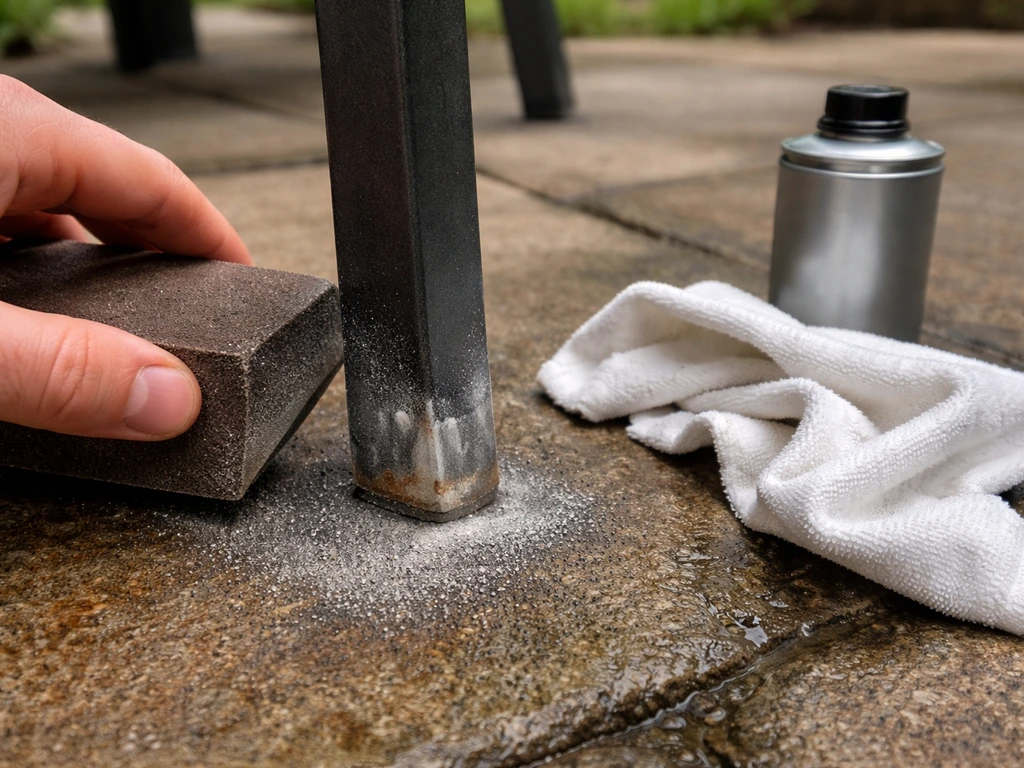
The stain is gone, but if you don't address the source, it'll be back by next summer. This is the part most guides skip, and it's the most useful thing I can tell you. If you need a step-by-step guide for your specific patio, follow these rust-removal methods for outdoor slabs.
- Treat the metal source: sand back any rust on furniture legs, brackets, or fixtures and apply a rust-inhibiting primer and paint. Don't just clean the slab and leave the rusting metal in place.
- Use rubber or plastic feet or caps on metal furniture legs. These cost almost nothing and completely prevent the rust transfer problem.
- Move steel planters onto saucers or wooden slats so they're not sitting directly on the slab in damp conditions.
- Apply a penetrating slab sealer to concrete or stone after cleaning. A good sealer reduces porosity so any future iron contact doesn't absorb as deeply and is easier to clean off.
- Clear standing water quickly after heavy rain. Rust transfer happens fastest when there's persistent moisture sitting between a metal object and a porous surface.
- Check annually: a quick look at furniture feet, post bases, and any metal fixings near the patio at the start of each season lets you catch rust early before it transfers to the slabs.
Dealing with a rust stain once is frustrating. Dealing with it every year from the same source because nothing was done about it is genuinely avoidable. Spending twenty minutes treating and capping the rusting metal leg is the best cleaning tip I can give you. After you remove the rust, seal the cement patio so the metal source can’t start oxidising into the surface again.
FAQ
How can I tell if the rust stain is coming from the slab itself or from something metal above it?
Clean the mark fully, then rinse and leave it dry. If the stain reappears in the same exact spot within a few days, the iron is likely migrating up from inside the slab (aggregate or reinforcement), not from an external item. In that case, you will usually need source control like repairing cracks and using an impregnating sealer, not repeated acid scrubbing.
Will repeated acid treatments damage my patio even if the rust comes out?
Yes. Even when the stain lifts, acid can gradually etch and weaken many surfaces, especially over time with multiple applications. If you have to repeat, switch to lower dwell times, consider oxalic or a purpose-made rust remover rather than escalating to stronger acids, and always do thorough neutralising rinses and final water rinses between steps.
What should I use for rust removal if I have limestone, travertine, or other calcium-carbonate stone?
Avoid acids entirely if a white vinegar test fizzes, because those stones react to acid. Instead, use mechanical cleaning and, if needed, a specialist non-acid rust treatment suitable for carbonate stone, or sodium dithionite poulticing for deeper iron, after testing in a hidden area.
Can I use a pressure washer after rust treatment?
You can rinse with a hose, but pressure washing immediately after an acid treatment can drive residue deeper into pores or under edges, and it can also damage some joints and surfaces. Use a thorough but gentle rinse first, let the slab dry, and only then use a pressure washer on a conservative setting if the stain area remains slightly discoloured.
How long should I leave rust remover on the slab?
Stay within the product’s stated dwell time, because longer exposure can create secondary spotting on lighter or more porous surfaces. If the stain is still there after the max dwell time, it is usually better to repeat the process after a full rinse and re-wetting rather than exceeding the recommended soak.
Do I need to neutralise oxalic acid or citric acid after treatment?
The safest default is a very thorough water rinse until runoff is clear and there is no lingering chemical smell. Neutralising steps are most commonly discussed for muriatic or strong acids, but with oxalic and citric you should still rinse very well and do a small test patch first to confirm your slab reacts as expected.
What if the rust keeps returning even after I seal the patio?
Sealing helps, but it only works if the rust source is actually controlled. First, address the metal causing the problem, for example by removing the offending leg or bracket, treating it, and using non-rusting components. If the stain keeps returning from beneath, you may need crack repair and an impregnating sealer designed to block iron migration, not just a surface coating.
Is it safe to use baking soda paste to remove rust marks?
Baking soda with dish soap can help with light surface grime, but it often does not meaningfully dissolve true iron rust. If the stain stays orange or brown after gentle paste cleaning, move to a rust-specific treatment rather than continuing to scrub, because you can end up spreading contamination.
What’s the safest way to clean up after using muriatic (brick) acid?
Make sure it never touches plants, adjacent masonry, or metal fixings, and after you scrub and rinse, do an additional neutralising rinse with diluted baking soda solution (then a final water rinse). Keep children and pets off the area until everything is fully rinsed and dry, and test the approach in a hidden corner if there is any chance your slab is natural stone.
Can I mix different rust removers to make them work faster?
No. Even if both are marketed for rust, mixing chemicals increases risk and can create unwanted reactions or leave residues that cause spotting. Use one product at a time, rinse thoroughly between treatments, and only repeat with the same category of cleaner if the first application did not fully lift the stain.
Next Articles
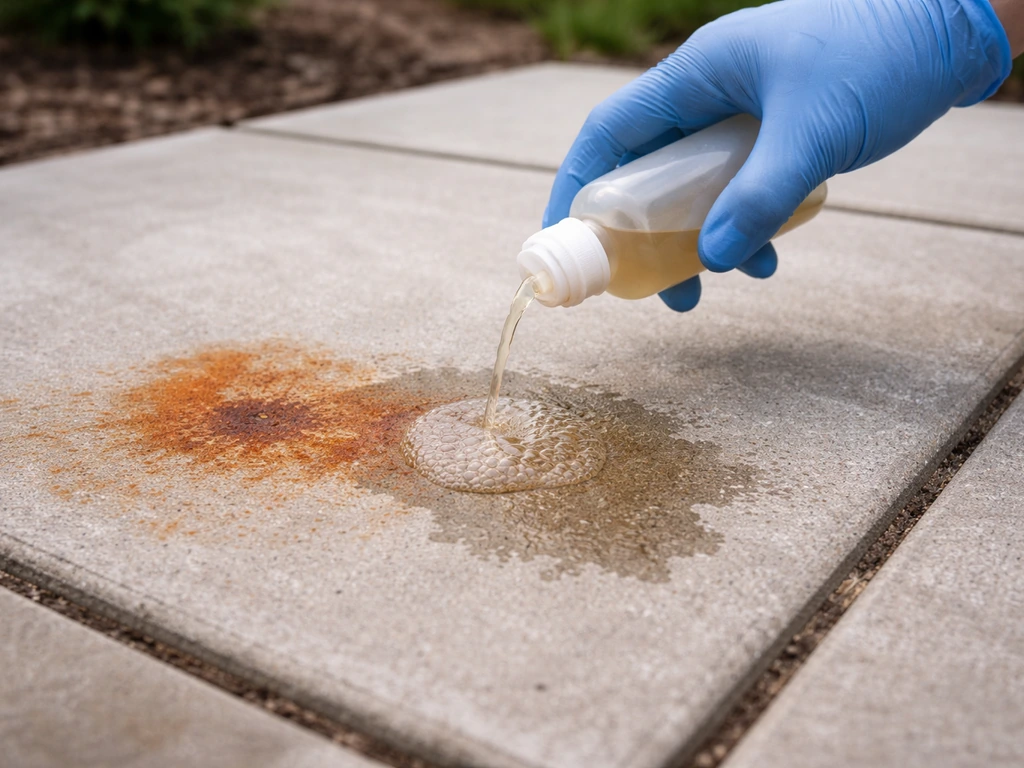
Best Rust Remover for Patio Slabs: Step-by-Step Guide
Choose the best rust remover for patio slabs with safe chemical or vinegar steps for concrete, brick, stone and pavers.
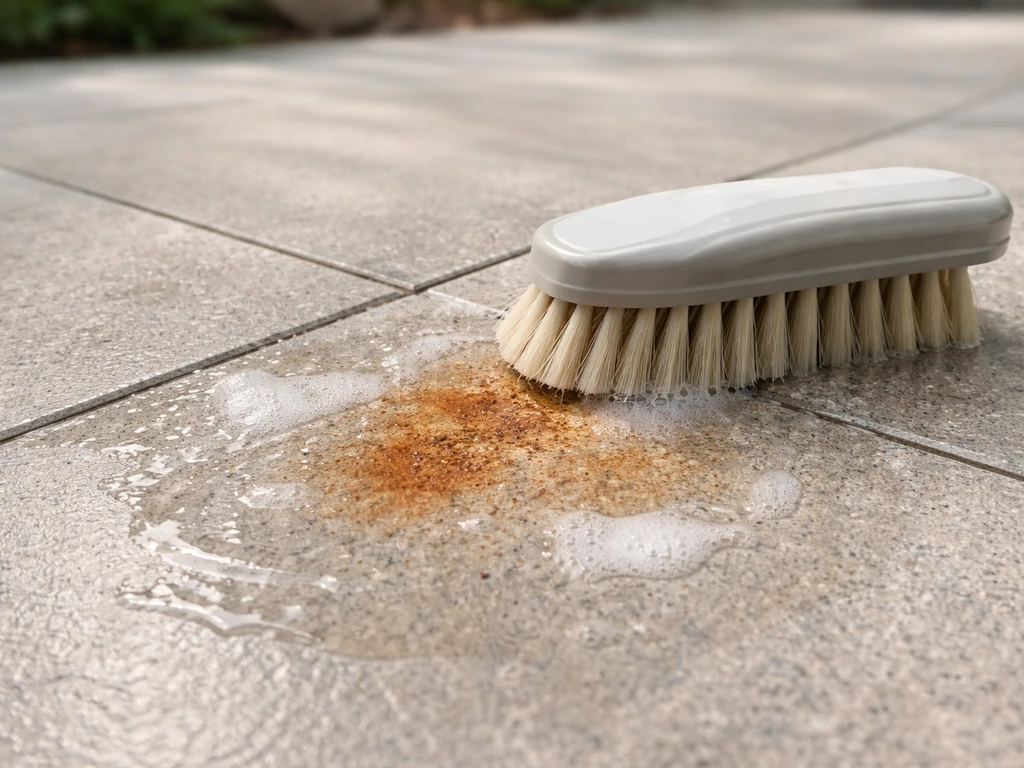
How to Get Rust Off Patio Tiles, Including Porcelain
Step by step rust stain removal for patio tiles, including porcelain, with safe acids, dwell times, grout care, and prev
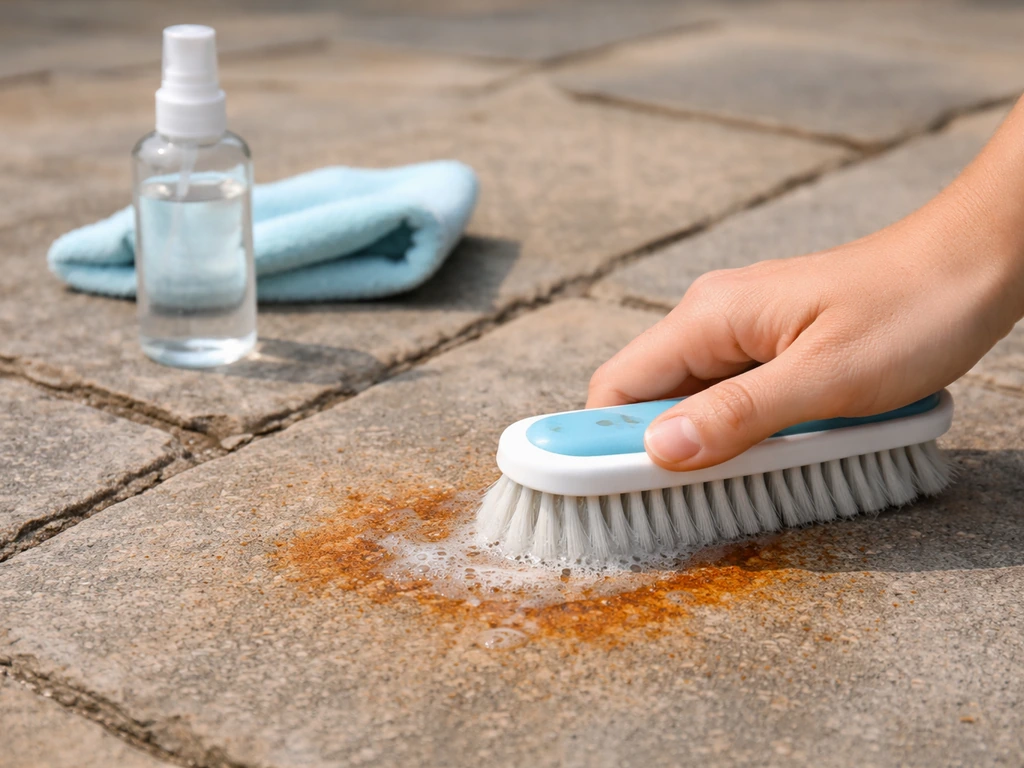
How to Remove Rust From Stone Patio: Step by Step
Step-by-step methods to get rust stains out of stone or flagstone patio safely, using cleaners, oxalic options, and caut