Rust stains on a patio are almost always caused by something metal sitting on the surface: a furniture leg, a grill base, a planter ring, a stray bolt, or even iron particles leeching out of the paving material itself. The good news is they come off. Start with undiluted white vinegar or an oxalic acid solution for most surfaces. If that doesn't fully clear it, step up to a stronger acid-based remover. The key is matching the method to your surface material so you clean the rust without damaging what's underneath.
How to Get Rust Off Patio: Step-by-Step Methods by Surface
Dylan Hale
21 May 2026
Is that actually rust, or something else?
Before you grab a cleaner, make sure you're actually dealing with rust. It sounds obvious, but a few other common patio stains look similar and respond to completely different treatments.
| Stain type | Color/appearance | Common cause | Quick test |
|---|---|---|---|
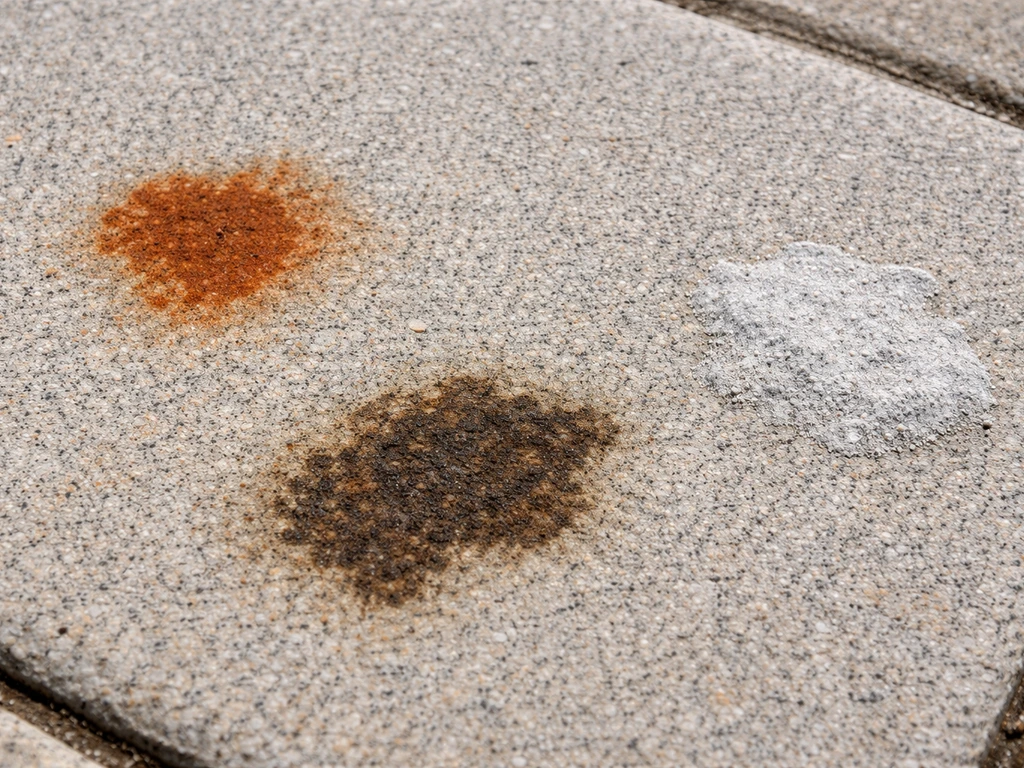
| Rust | Orange, reddish-brown, or yellowish-brown blotch | Metal furniture, tools, rebar, iron in aggregate | Sits where metal object was; spreads slightly outward |
| Efflorescence | White or grayish powdery crust | Salt minerals migrating through concrete or masonry | Wipes off partially when dry; not stained into surface |
| Tannin stain | Brown or tan, often leaf-shaped | Leaves, bark, or organic debris decomposing | Usually follows leaf or wood shape; no metal source nearby |
| Mold/algae | Green, black, or dark gray film | Moisture and shade | Slippery to the touch; spreads in damp areas |
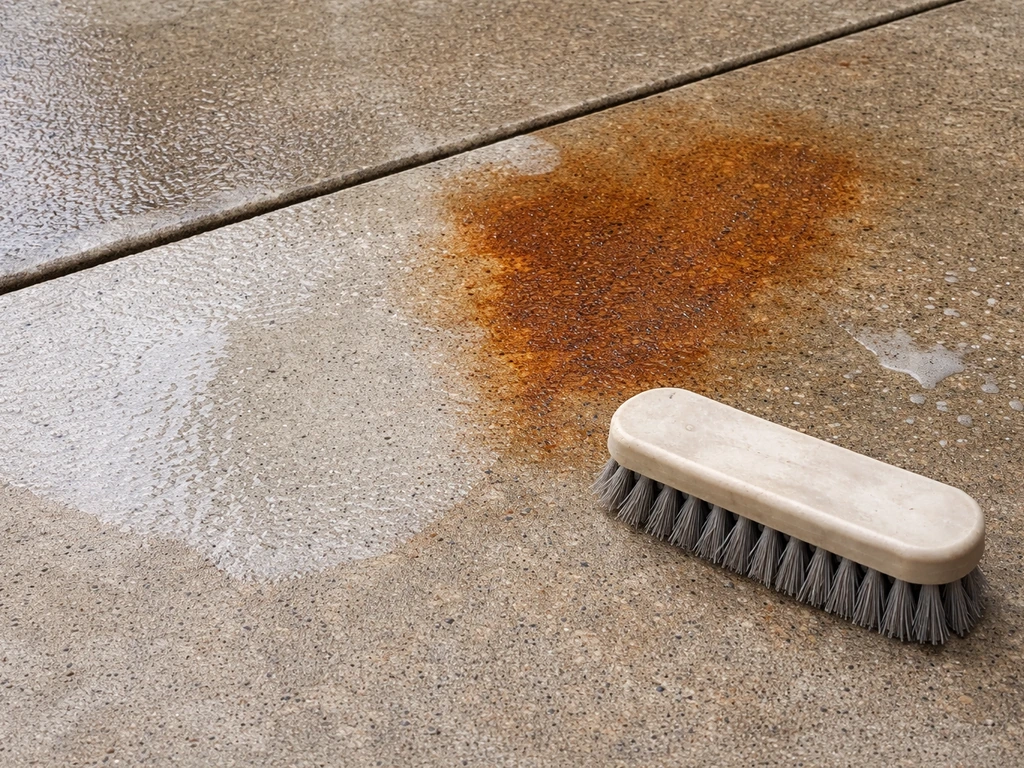
Rust stains are almost always located exactly where a metal object was resting. They may have an orange halo that fans out slightly in the direction water drains. If you can point to a metal chair leg, planter, or grill foot as the culprit, you've got rust. One important note: rust can also come from iron-rich particles inside the paving aggregate itself, which shows up as scattered reddish spots rather than a defined shape. Both types respond to the same treatments.
Prep and safety before you start
A few minutes of prep saves you from accidents and protects your patio surface. If you have to disinfect, ATSDR warns that sodium hypochlorite can release dangerous amounts of chlorine or chloramine when mixed with acids or ammonia. This applies whether you're using mild vinegar or stronger acid-based cleaners.
- Wear nitrile or chemical-resistant gloves for anything stronger than vinegar. For oxalic acid or muriatic acid, use chemical-resistant gloves (not just rubber dish gloves) and safety glasses.
- Move or cover nearby plants. Even diluted acid runoff can burn grass and garden beds. Wet the surrounding soil with plain water before you start so any runoff is diluted further.
- Keep pets and kids away until the surface is fully rinsed and dry.
- Clear loose debris from the stained area first. Sweep or rinse off dirt so your cleaner makes direct contact with the rust.
- Never mix rust removers, acids, or any cleaning chemicals together. Critically: never mix bleach (sodium hypochlorite) with any acid-based rust remover. That combination releases toxic chlorine gas. Use one product at a time, rinse thoroughly before switching.
- Do a patch test in a hidden corner when using any new product on natural stone, travertine, or polished surfaces.
- Work on a dry or lightly damp surface for best results. Avoid applying cleaners just before rain.
Start here: gentle rust removal with vinegar and oxalic acid
I always recommend starting with the mildest option that has a real chance of working. For fresh or light rust stains, white vinegar or an oxalic acid solution will clear things up without any risk of damaging your patio surface. Use clear or white vinegar only, not colored vinegar like apple cider, which can leave its own stain.
White vinegar method (mild stains)
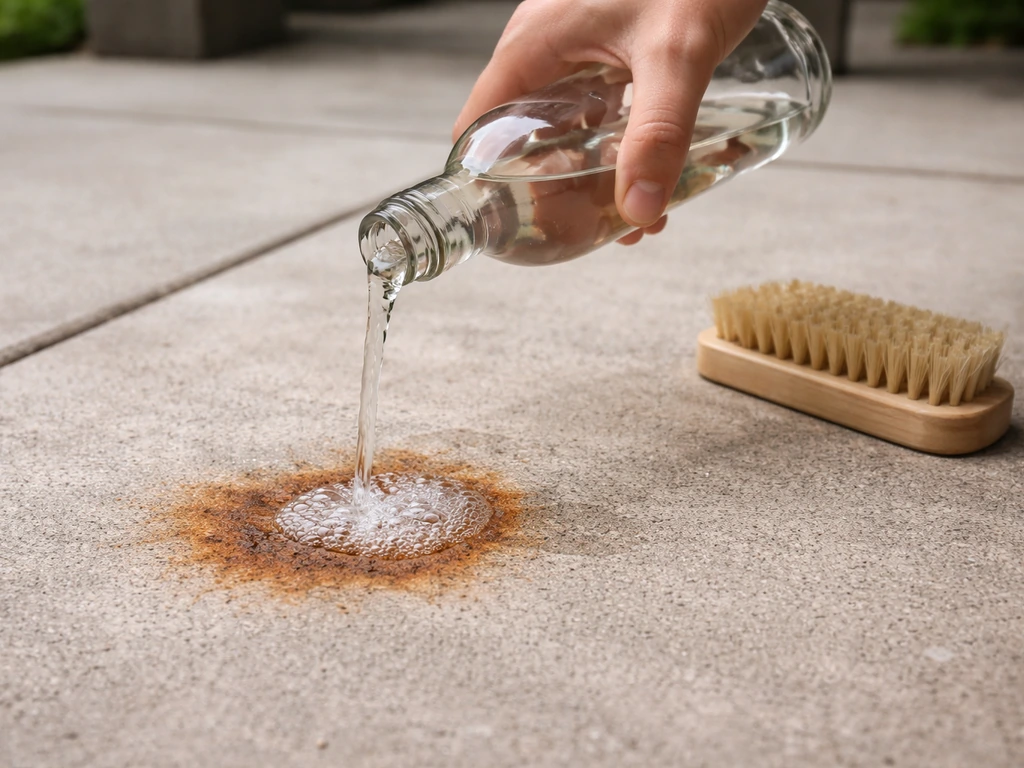
- Pour undiluted white vinegar directly onto the rust stain. Don't dilute it.
- Let it sit for 10 to 15 minutes. You may see some light fizzing, which is normal.
- Scrub firmly with a stiff nylon brush. Avoid wire brushes on most patio surfaces since they can leave metal bristle fragments that rust themselves.
- Rinse with clean water from a garden hose.
- Repeat if the stain has lightened but not fully cleared. Vinegar works by gently dissolving the iron oxide, so a second application often finishes the job.
Oxalic acid method (moderate stains, professional standard)
Oxalic acid is the go-to for professionals dealing with concrete and stone rust stains. It's more effective than vinegar on set-in stains and still safer than muriatic acid when used correctly. You can find it as a powder (wood bleach) or in specialty rust remover products.
- Mix approximately 3 to 4 tablespoons of oxalic acid powder per liter of warm water in a plastic bucket. Never use metal containers.
- Apply the solution to the stained area and let it dwell for 15 to 20 minutes. Don't let it dry out; reapply if needed.
- Scrub with a stiff nylon brush.
- Rinse thoroughly with plenty of clean water.
- Wear chemical-resistant gloves and safety glasses throughout. Oxalic acid can etch surfaces and irritate skin and eyes if handled carelessly.
- Don't leave oxalic acid on natural stone or travertine longer than recommended. It can etch the surface if it sits too long or is mixed too strong.
Lemon juice is sometimes suggested as an alternative to vinegar and works on the same principle (citric acid). It's fine for very minor surface staining, but it's less concentrated and more expensive than vinegar, so it's really only worth it if that's all you have on hand.
Stronger options: acid-based rust removers
If vinegar and oxalic acid haven't fully cleared the stain after two attempts, it's time to step up. For most patios, a dedicated phosphoric acid or sulfamic acid rust remover is the next sensible step before going to muriatic acid. Sulfamic acid products (sometimes marketed as efflorescence removers or masonry cleaners) are less aggressive than muriatic acid and easier to control.
Muriatic acid (hydrochloric acid): last resort for concrete only
Muriatic acid is powerful and genuinely risky. I'd only use it on concrete, and only when milder options have failed. It should never be used on natural stone, travertine, marble, brick, or pavers, where it will etch and discolor the surface. A common starting dilution for cleaning purposes is roughly 1 part muriatic acid to 10 parts water (more dilute than etching applications). Always add acid to water, never water to acid.
- Read the Safety Data Sheet (SDS) for your specific product before starting. The hazards are real: fumes are corrosive, and contact with skin or eyes causes serious injury.
- Work outdoors with good airflow. Wear chemical-resistant gloves, safety glasses, and old clothes you don't mind ruining.
- Pre-wet the concrete surface with water before applying diluted acid.
- Apply the diluted solution carefully to the stain only, using a plastic watering can or brush.
- Allow a very short dwell time, around 3 to 5 minutes. Watch it closely. Rinse off with plenty of water before it can damage the surrounding concrete.
- Neutralize the surface after rinsing: mix about 1 pound of baking soda (sodium bicarbonate) per 5 gallons of water and apply it to the treated area, scrubbing it in. This stops any remaining acid action.
- Rinse again thoroughly. Collect rinse water if there are nearby drains or garden beds at risk, and dispose of it responsibly.
- Never combine muriatic acid with bleach or sodium hypochlorite-based cleaners under any circumstances. The resulting chlorine gas is immediately dangerous.
A note on generic retail patio cleaners: many of them are hydrochloric acid based and, counterintuitively, can have minimal effect on rust specifically and sometimes make stains darker. Check the active ingredient before buying something marketed as a general patio cleaner for rust work.
Surface-specific instructions
Not all patio surfaces respond the same way to rust removers. Here's what works and what to avoid on each common material. The sibling guides on this site go deeper on individual surfaces, including getting rust off concrete patios specifically, stone patios, patio tiles, and pavers.
Concrete
Concrete is the most forgiving surface for rust removal. Vinegar and oxalic acid both work well here. If needed, you can use muriatic acid on concrete as a last resort. Scrub with a stiff nylon or natural-bristle brush. Rinse thoroughly and neutralize if using any acid-based product. Avoid wire brushes since any metal fragments left behind will create new rust spots.
Brick
Brick is porous and absorbs stains deeply, which can make rust stubborn. Oxalic acid works well on brick. Avoid muriatic acid if you can: it can eat into brick mortar and discolor some brick types. A poultice approach (paste of oxalic acid mixed with an absorbent material like diatomaceous earth or flour, applied and left for a few hours before scrubbing off) works well for deep stains. Rinse extremely thoroughly since brick holds residue.
Concrete and clay pavers
For concrete pavers, the approach is similar to concrete slabs. For clay or natural pavers, test any acid-based product in a hidden spot first since some clay pavers are sensitive to stronger acids. Oxalic acid at the recommended dilution is generally safe. Avoid harsh acids on clay pavers. Be careful not to blast joint sand out of the gaps if you're pressure washing afterward.
Natural stone (flagstone, slate, bluestone)
Natural stone is where you need to be most careful. Vinegar can work for very light surface rust if you keep the dwell time short (under 10 minutes) and rinse immediately. Oxalic acid is generally safe on most natural stone when used at the correct dilution, but do a patch test first. Never use muriatic acid on natural stone.
It will etch and permanently damage the surface. Specialty stone rust removers that use iron chelators or reducing agents are a better choice for stubborn stains on natural stone. If you’re specifically working on a stone patio, use the stone-safe approach and avoid harsh acids that can etch or discolor the surface Specialty stone rust removers. These convert the iron oxide into water-soluble compounds without attacking the stone.
Travertine and marble
Travertine and marble are calcium-based stones that react strongly with any acid, including vinegar and oxalic acid. Use only a purpose-made rust remover specifically labeled as safe for calcium-based stone. These are typically chelator-based or poultice products. Apply as a paste, cover with plastic wrap to slow drying, leave for several hours, then remove and rinse. Do not use any acid-based product on travertine or marble.
Granite
Granite is more acid-resistant than travertine or marble, but polished granite can still be dulled by strong acids. Oxalic acid at the standard dilution is generally safe, but keep the dwell time to the lower end (around 15 minutes) and rinse well. Avoid muriatic acid. A chelator-based or oxalic-acid stone rust remover is your safest route for granite patio surfaces.
Pressure washing vs. scrubbing by hand
Pressure washing doesn't remove rust stains on its own. The water pressure doesn't dissolve iron oxide, so you still need a chemical treatment first. Where a pressure washer earns its place is in the rinse-off phase: it clears cleaner residue, loosened rust particles, and neutralizing solution faster and more completely than a garden hose.
Pressure settings by surface
| Surface | Recommended PSI | Nozzle tip | Notes |
|---|---|---|---|
| Concrete | Up to 3,000 PSI | 25-degree fan tip | Concrete handles higher pressure well for rinsing |
| Concrete/clay pavers | 1,200–1,800 PSI | 25- or 40-degree fan tip | Watch joint sand; don't aim directly at gaps |
| Brick | 1,200–1,500 PSI | 25- or 40-degree fan tip | Keep wand moving to avoid concentrated impact on mortar |
| Natural stone (flagstone, slate) | 800–1,100 PSI | 40-degree fan tip | Softer stones can pit or spall above this range |
| Travertine/marble | 500–800 PSI max | 40-degree fan tip | Avoid pressure washing if possible; hand rinse is safer |
| Granite | 1,000–1,500 PSI | 25- or 40-degree fan tip | Polished surfaces: stay at the lower end |
The biggest mistakes people make with pressure washers on patios: using a zero-degree (pinpoint) nozzle, standing too close, and staying in one spot. All three will etch, pit, or discolor the surface, and can blast joint material out of pavers. Keep the nozzle at least 12 inches from the surface and always use a fan-tip nozzle. Going above about 1,200 PSI on natural stone risks blasting away the surface or blowing out the joints.
When to skip the pressure washer
If you don't have a pressure washer, a garden hose with a spray nozzle and a stiff nylon scrub brush handles most rust removal jobs just fine. Scrubbing actually does more of the work than the water pressure anyway. Soak the treated area, scrub in circular motions with firm pressure, and rinse several times until the water runs clear. This is the safer route for travertine, marble, and polished stone regardless.
Rinse, neutralize, and stop rust from coming back
Rinsing and neutralizing
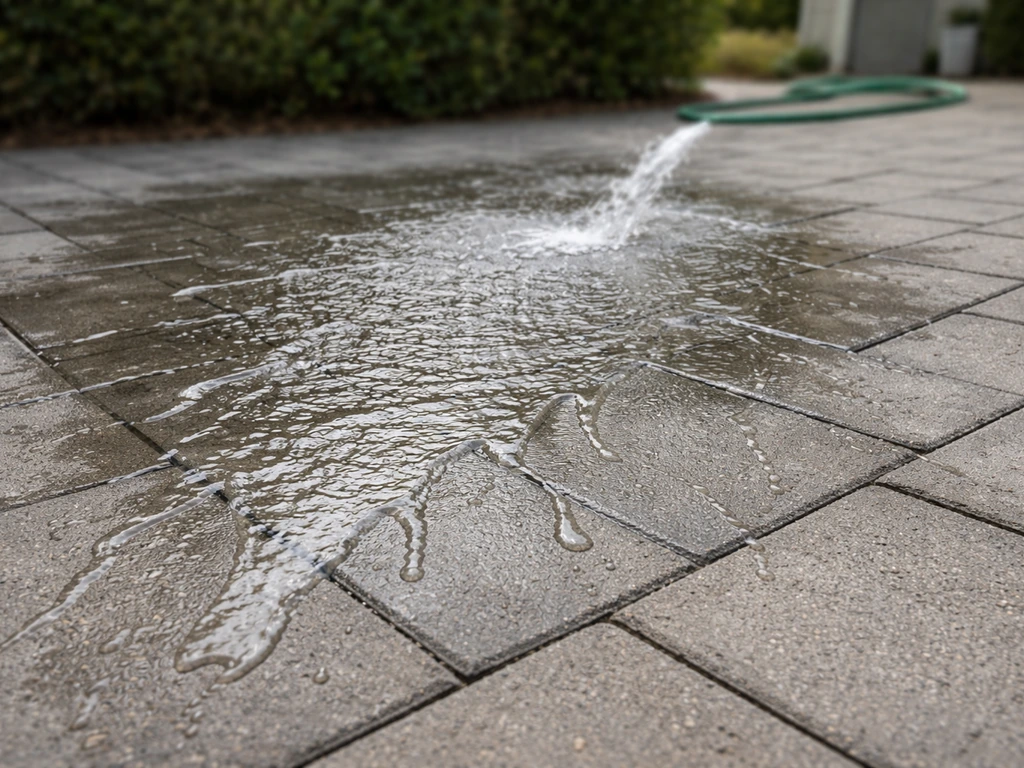
Rinsing is not optional and not just a quick splash. After any chemical treatment, rinse the area with large amounts of clean water, working outward from the treated zone so you're not just pushing residue around. If you used muriatic acid or another strong acid, follow up with a baking soda neutralizing solution (around 1 pound of baking soda per 5 gallons of water), scrub it across the treated area, then rinse again. The neutralization step stops the acid from continuing to work on the surface and any surrounding materials. Collect runoff if you're near planted beds or a storm drain.
Checking your work
Let the surface dry fully before deciding if the stain is gone. Wet concrete and stone always look darker and can hide remaining discoloration. Check again when dry. If a faint shadow remains, repeat the gentler treatment (oxalic acid or vinegar) rather than immediately escalating to stronger chemicals. Stubborn or very old stains sometimes need two or three treatment cycles.
Preventing rust from coming back
Cleaning the stain is only half the job. If the rust keeps coming back, focus on preventing new iron exposure by lifting and protecting metal planters and furniture, and keeping the area dry between cleanings preventing rust from coming back. If you put the same metal furniture or planter back in the same spot without any changes, you'll be back here next season.
- Use rubber or plastic furniture feet or caps on all metal patio furniture legs. These cost almost nothing and eliminate the direct metal-to-surface contact that causes staining.
- Raise metal planters and decorative objects on pot feet or rubber risers so water doesn't pool between the metal and the patio surface.
- Wipe up any moisture or water that pools around metal items quickly, especially after rain.
- Inspect furniture and grill legs at the start of each season. Touch up any rust spots on the metal itself with a rust-inhibiting spray paint before they get worse and transfer to the patio.
- Improve drainage if you have a low spot where water sits. Standing water accelerates rust transfer dramatically.
- Consider a penetrating concrete or stone sealer on your patio surface. Sealers don't prevent rust from forming if metal sits on top, but they do make stains much easier to clean because they reduce absorption into the surface material.
- Clean up any rust stains as soon as you notice them. Fresh stains take minutes to treat. Stains that have been sitting for a season may need multiple treatments or professional help.
If you're dealing with a specific surface type, the material-specific guides on this site go into more detail: there's dedicated coverage for rust on concrete patios, cement patios, stone patios, patio tiles, patio slabs, pavers, and granite surfaces, each with surface-specific product recommendations and technique notes. For more targeted steps, see our guide on how to get rust off of a cement patio, including which products to use and what to avoid cement patios. Start with the mildest method, follow the dwell times, rinse well, and you'll have most rust stains cleared within an afternoon.
FAQ
How can I tell if my patio stain is rust or something else?
Yes, but it depends on what’s causing the discoloration. If the spot is true rust (usually tied to a metal object or scattered iron-rich aggregate), chemical rust removers work. If it is efflorescence or mineral spotting, acids can worsen it. A quick check is to wipe the area with water, if the color doesn’t improve at all and it looks like an iron-related orange/brown stain, treat it as rust; if it looks chalky or powdery, switch to a mineral-cleaning approach instead of rust chemicals.
Can I reuse the same brush and tools after rust removal on a different patio surface?
Do not. If you used vinegar, oxalic acid, phosphoric acid, sulfamic acid, or muriatic acid and you want to reuse the same tools, rinse thoroughly first, then wipe the area and tools until there is no slippery or chemical residue. For brush tools, keep separate brushes for stone versus concrete if possible, since tiny leftover metal or acid residue can create new staining or spotting.
How long should I leave rust remover on the patio before rinsing?
For light rust, limit dwell time. Vinegar should stay under about 10 minutes on natural stone, and for stronger stone-safe removers follow the product’s labeled dwell time closely. Longer contact increases risk of discoloration and etching on sensitive surfaces, especially travertine, marble, and polished granite.
What should I do if vinegar or oxalic acid does not fully remove the rust stain?
If the stain has not faded after two rounds of vinegar or oxalic acid (as a reasonable starting point), escalate once rather than repeatedly soaking with the same mild product. Use a dedicated phosphoric or sulfamic acid rust remover next, then only consider muriatic acid if you are on concrete and the milder options truly failed. Frequent reapplication of mild acid without dwell and proper rinsing is a common reason rust seems “stubborn.”
Do I really need to patch test acid-based rust removers?
Patch testing is essential for any surface you are unsure about, especially clay pavers, natural stone, travertine, marble, and polished granite. Pick a hidden 2x2 inch area, apply at the intended dilution, keep the same dwell time, then rinse and check after drying (some damage only shows when dry). Wait for full cure of any paste-based product before evaluating the final color.
Can I use a pressure washer after applying rust remover?
Yes, and it matters. If you use a pressure washer after treating with chemicals, do it primarily for rinsing and residue removal. Use a fan-tip nozzle, keep the nozzle at least 12 inches away, and avoid concentrating the spray in one spot. This reduces the risk of etching and also helps prevent blowing out joint sand between pavers.
Why doesn’t pressure washing remove rust by itself?
Pressure washing alone usually will not lift rust because iron oxide is not removed by water pressure. Pressure helps with the rinse-off phase, it clears loosened residue and residual solution, but you still need a chemical treatment to convert or dissolve the rust first.
Do I need to neutralize the patio after using an acid rust remover?
Neutralization is especially important after stronger acids. If you used muriatic acid or another strong acid, follow with a baking soda neutralizing solution (about 1 pound baking soda per 5 gallons of water), scrub gently to spread it, and rinse again. Skipping neutralization can leave active acid behind, which can keep damaging the surface and can cause secondary staining.
When is the best time to judge whether the rust stain is fully gone?
Not always, and it can be misleading. Wet patios look darker, so a stain that seems gone might return as it dries. Wait until fully dry, then evaluate. If a faint shadow remains, repeat the gentler treatment cycle rather than jumping immediately to muriatic acid.
Why does rust keep coming back after I clean it?
Rust can come back if the same iron source remains in contact or if iron particles keep feeding the area. Lift and protect metal furniture and planters (use non-rusting pads or bases), avoid placing metal directly on the same damp spot, and improve drainage so the area dries between cleanings. If the patio is over iron-rich aggregate, scattered reddish points can return and may require a longer-term prevention plan.
Should I clean only the center of the rust spot, or the whole halo too?
Yes. If you see rust halos spreading with water runoff direction, it often indicates metal contact plus drainage movement. Move furniture off, clean the full halo area (not just the center), and inspect underneath the typical contact points for any remaining metal chips or fasteners.
Next Articles
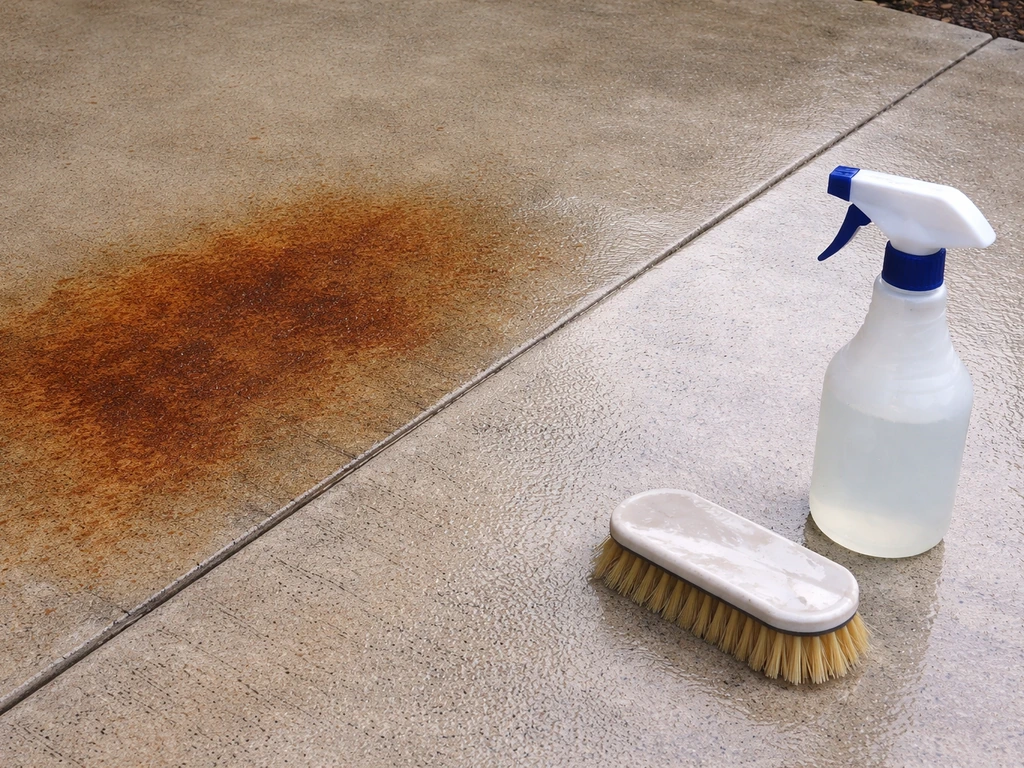
How to Get Rust Off a Cement Patio Without Damage
Step-by-step ways to remove rust stains from a cement patio safely, using scrubbing, vinegar, oxalic acid, or careful mu
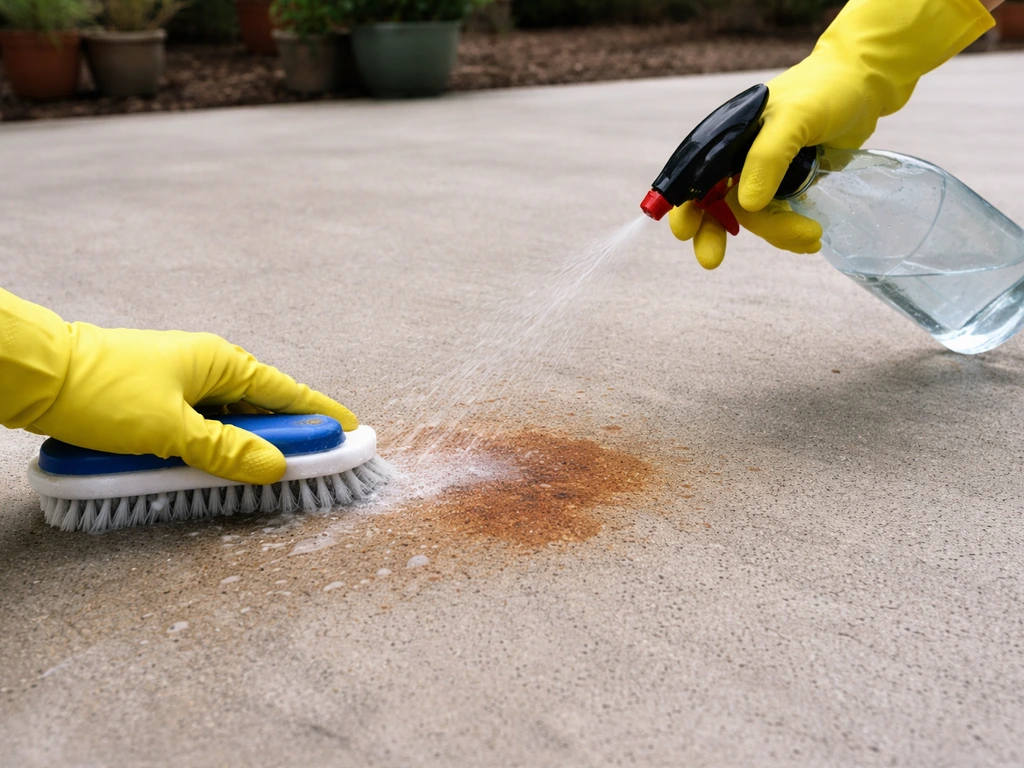
How to Get Rust Off a Concrete Patio: Step-by-Step
Step-by-step methods to remove rust stains from concrete patio safely, using acids or vinegar, scrubbing, rinsing, and p
How to Remove Thompson’s Patio Sealer Step by Step
Step-by-step removal of Thompson’s patio sealer on concrete, brick, pavers, and stone, with safety, tests, and cleanup.