
You can get rust off a cement patio with an oxalic-acid based rust remover in most cases. Apply it to a wet surface, let it dwell for 5 to 10 minutes, scrub with a stiff brush, then rinse thoroughly. For lighter stains, white vinegar or a paste of baking soda and dish soap will do the job without any harsh chemicals. For very stubborn or deep stains, diluted muriatic acid is the heavy-hitter, but it needs careful handling.
How to Get Rust Off a Cement Patio Without Damage
Dylan Hale
13 May 2026
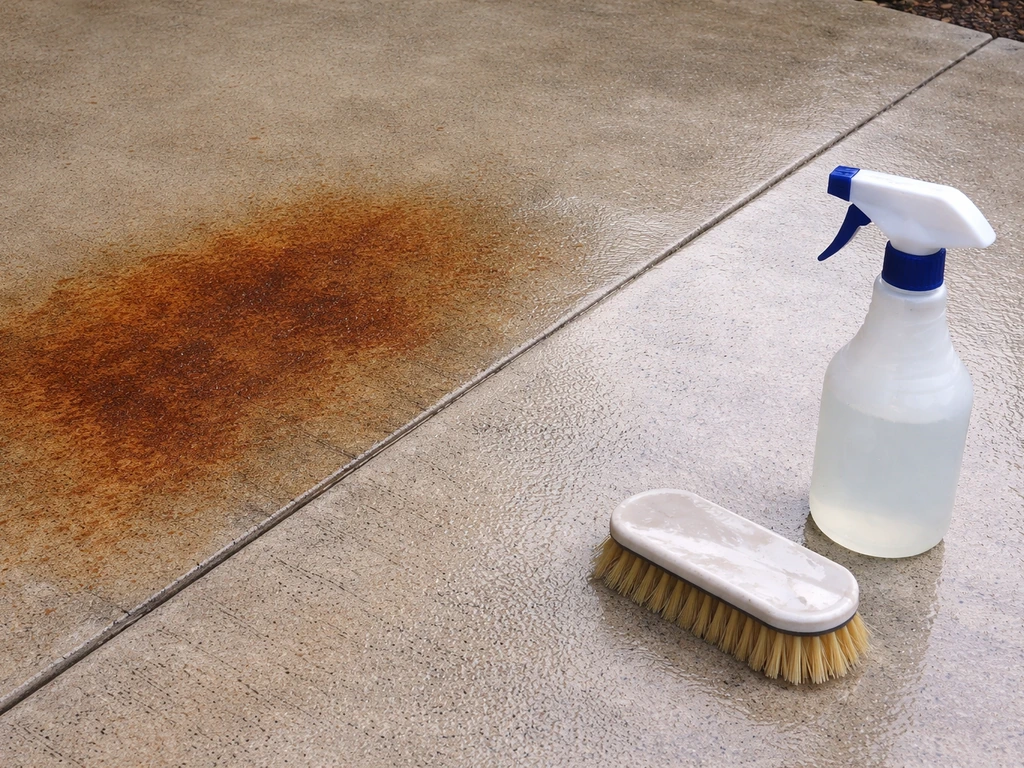
Here's exactly how to work through each option, from mildest to strongest, so you pick the right one for what you're dealing with. For patio pavers specifically, the process is similar, but you also need to account for grout lines and porous joints where rust can hide.
Why rust stains show up on cement patios
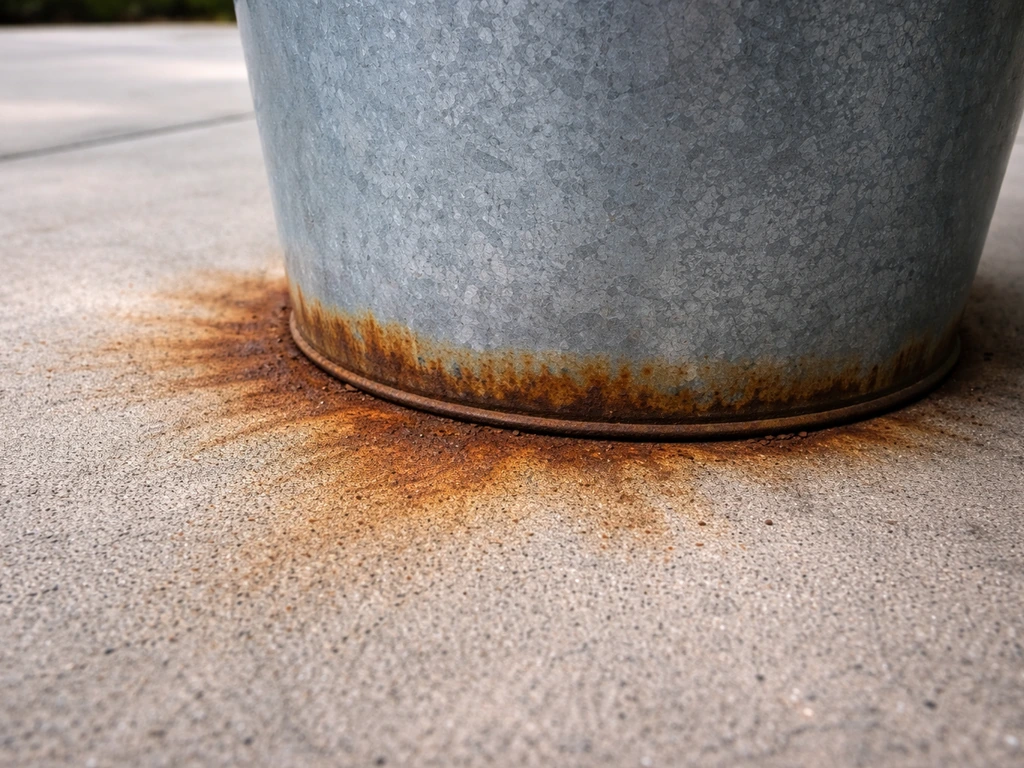
Rust is hydrated ferric oxide, which is what happens when iron or steel reacts with oxygen and moisture. On a patio, the usual suspects are metal patio furniture, steel planters, rebar, and tools or nails left sitting on the surface. Even a single wet season is enough for a chair leg or a forgotten bolt to leave a distinct orange-brown ring behind.
There's also a less obvious source: the rebar inside your concrete itself. Concrete is normally alkaline enough to protect embedded steel, but once cracks form or the concrete cover is too thin, moisture and chlorides (from road salt or a nearby pool) can penetrate and trigger corrosion. Rebar corrosion is triggered when protective concrete is compromised, such as when cracks form or chlorides penetrate, allowing moisture to drive corrosion [moisture and chlorides can penetrate and trigger corrosion](https://www. structuralrn.
com/common-issues/seawall-retaining-wall-failures/corrosion-and-rebar-exposure). Rusting rebar expands as it oxidizes, sometimes up to several times its original volume, which is why you'll see brown seepage lines coming out of cracks in older patios. That kind of staining is surface-level at first, but the underlying structural problem needs to be dealt with separately from just cleaning the stain.
Knowing the source matters because it tells you whether you're dealing with a simple surface stain (metal furniture left out) or a recurring one that will come back until you fix or remove the source. If the stain keeps returning in the same spot near a crack, suspect rebar and get that crack inspected before you spend time cleaning.
Quick prep and safety before you start cleaning
A little prep makes the cleaning faster and protects you and your yard. Skipping it is how people end up burning their hands or killing the plants next to the patio.
- Move the rust source first. Flip over furniture, remove planters, pick up any tools or metal objects so they don't re-stain while you work.
- Wet the concrete thoroughly before applying any cleaner. Dry concrete soaks up chemicals unevenly and can cause streaking.
- Protect nearby grass and plants by wetting them down and covering with plastic sheeting. This is especially important if you're using acid-based products.
- Put on nitrile or rubber gloves and safety glasses for any chemical method, even vinegar. Muriatic acid requires acid-resistant gloves, old clothes, and eye protection without exception.
- Work in a well-ventilated area and avoid windy days when using acids so fumes don't blow back toward you.
- Keep a bucket of plain water nearby to immediately rinse any product that gets on your skin or nearby surfaces.
Gentle options: what to try first
If the stain is relatively fresh or not too deep, start here. These methods are safe for pets, plants, and most cement finishes, including stamped or decorative concrete where you really don't want to risk etching.
White vinegar
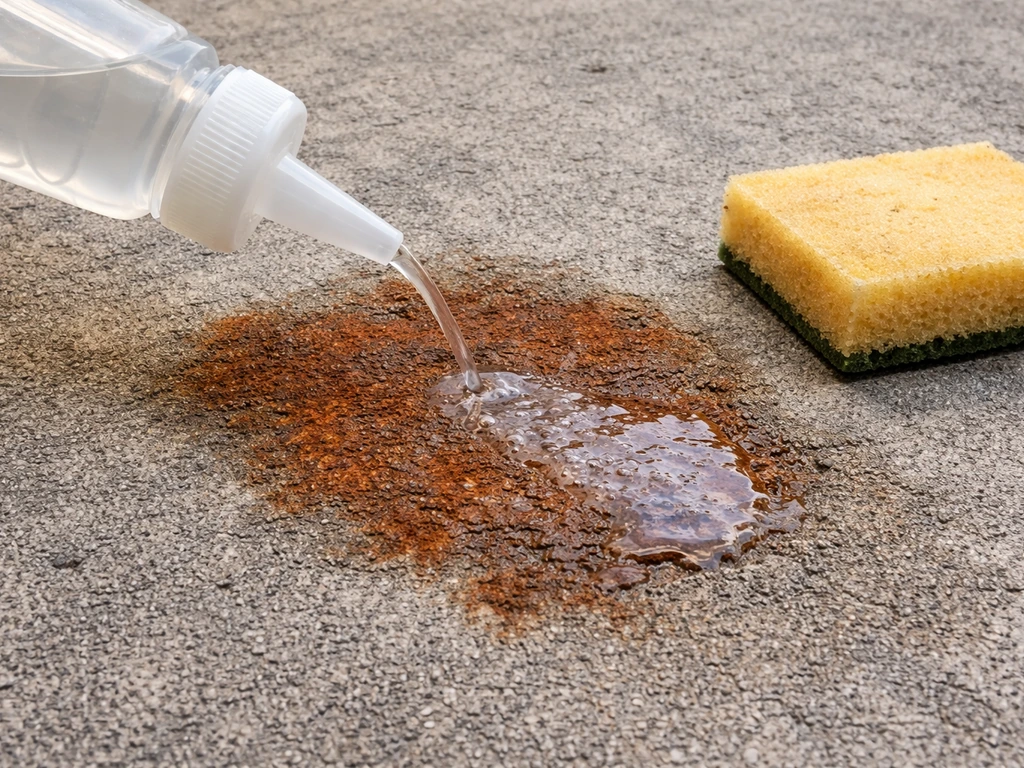
Undiluted white vinegar (5% acidity, the standard grocery store kind) works surprisingly well on light rust stains. Pour it directly onto the stain and let it sit for 10 to 15 minutes. Scrub with a stiff-bristled brush, then rinse with water. You might need two or three rounds on older stains. I've found this takes longer but is the right call if you have pets that use the patio or if you're renting and want to avoid anything that could damage the surface.
Baking soda paste or dish soap scrub
Mix baking soda with just enough dish soap and water to make a thick paste. Apply it to the stain, let it sit for 10 minutes, then scrub and rinse. This is more of a light-duty polish than a rust dissolver, so it works best on very fresh, faint staining. Don't expect it to lift stains that have been sitting for months.
Lemon juice and salt
Sprinkle a generous amount of table salt on the stain, then squeeze lemon juice over it so the salt is saturated. Let it sit in the sun for 30 to 60 minutes. The citric acid in the lemon juice starts dissolving the iron oxide while the salt acts as a mild abrasive when you scrub. Rinse thoroughly afterward. This works well for small rust rings from furniture legs.
Rust-specific removers: the oxalic acid approach
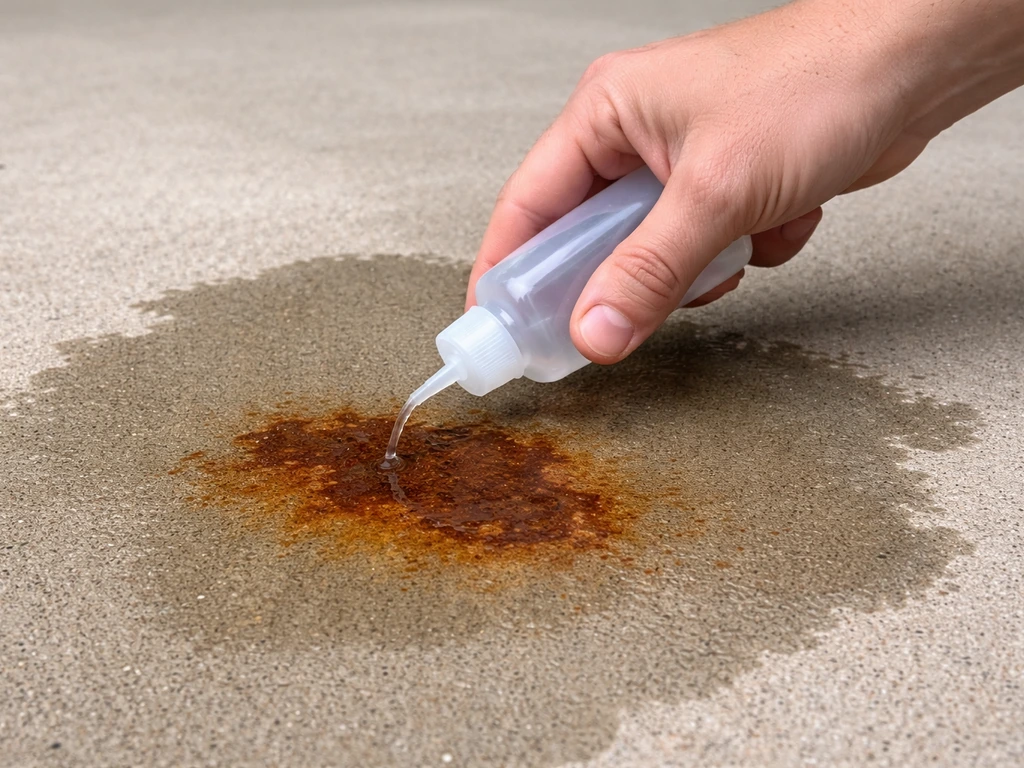
For stains that laugh at vinegar, an oxalic-acid based rust remover is your next step and, honestly, what I reach for most of the time on moderate-to-heavy rust staining. Oxalic acid chemically reacts with iron oxides to form a water-soluble compound that rinses away cleanly. Products like Bar Keepers Friend (powder form), Iron Out, or dedicated concrete rust removers from brands like Rust-Oleum, Zep, or CLR fall into this category. Check the label before buying since formulas vary, but anything listing oxalic acid or a chelating agent is targeting rust specifically.
- Wet the stained area first with plain water.
- Apply the product according to the label. For powder products like Bar Keepers Friend, make a paste with water and spread it over the stain.
- Let it dwell for 5 to 10 minutes. Don't let it dry out on the surface; mist with water if needed.
- Scrub vigorously with a stiff nylon or natural-fiber brush. Avoid wire brushes on smooth concrete finishes as they can scratch.
- Rinse thoroughly with plenty of water, working the rinse water away from plants and grass.
- Inspect the stain. Repeat once or twice if needed, allowing the concrete to dry between passes so you can see the true result.
These products are generally safe on standard concrete and cement patios. If you're hunting for the best rust remover for patio slabs, oxalic-acid products are one of the most reliable options for most cement surfaces. That said, if you have colored or stamped concrete, test in a hidden corner first. Some rust removers can lighten pigmented concrete if left on too long.
When to use muriatic acid and how to do it safely
Muriatic acid (hydrochloric acid, usually sold at hardware stores in 20% to 31.5% concentration) is the strongest option available to homeowners. I'd call it a last resort rather than a go-to, because it will etch cement if you use it too strong or leave it too long, and it can damage surrounding grass, stone, or tile. British Standards recommends treating acids such as muriatic acid as a last resort and following careful safety precautions because they can etch or damage surrounding materials if misused muriatic acid ... will etch cement if you use it too strong or leave it too long. But for deep, old rust stains that haven't responded to oxalic acid products, it works when nothing else does.
Before using muriatic acid on a cement patio, be aware that the same approach is not appropriate for natural stone surfaces like granite, travertine, or limestone, where acid will permanently damage or etch the surface. Because granite is natural stone, choose non-acid rust removal methods and avoid muriatic acid when learning how to get rust marks off a granite patio how to get rust marks off granite patio. On a standard cement or concrete patio it's usable, but with strict precautions.
- Put on acid-resistant gloves (not just nitrile), safety glasses or a face shield, and old clothes you don't mind ruining.
- Dilute the muriatic acid: start with a 1:10 ratio (one part acid to ten parts water). Always add acid to water, never water to acid.
- Wet the patio surface generously before applying.
- Apply the diluted solution to the stain using a plastic (not metal) watering can or pump sprayer rated for acids. Work in small sections.
- Let it dwell for no more than 2 to 3 minutes. You'll see fizzing, which is normal.
- Scrub lightly, then rinse immediately and thoroughly with large amounts of water.
- Neutralize any residual acid by applying a diluted baking soda solution (about 1 cup baking soda per gallon of water) over the treated area, then rinse again.
- Dispose of any leftover diluted acid by further diluting with water and checking your local regulations for disposal.
If the stain still isn't fully gone after one round, let the surface dry completely, reassess, and consider a second application rather than increasing the acid concentration. Going stronger faster is how you end up with etched, pitted concrete.
Pressure washing vs. manual scrubbing
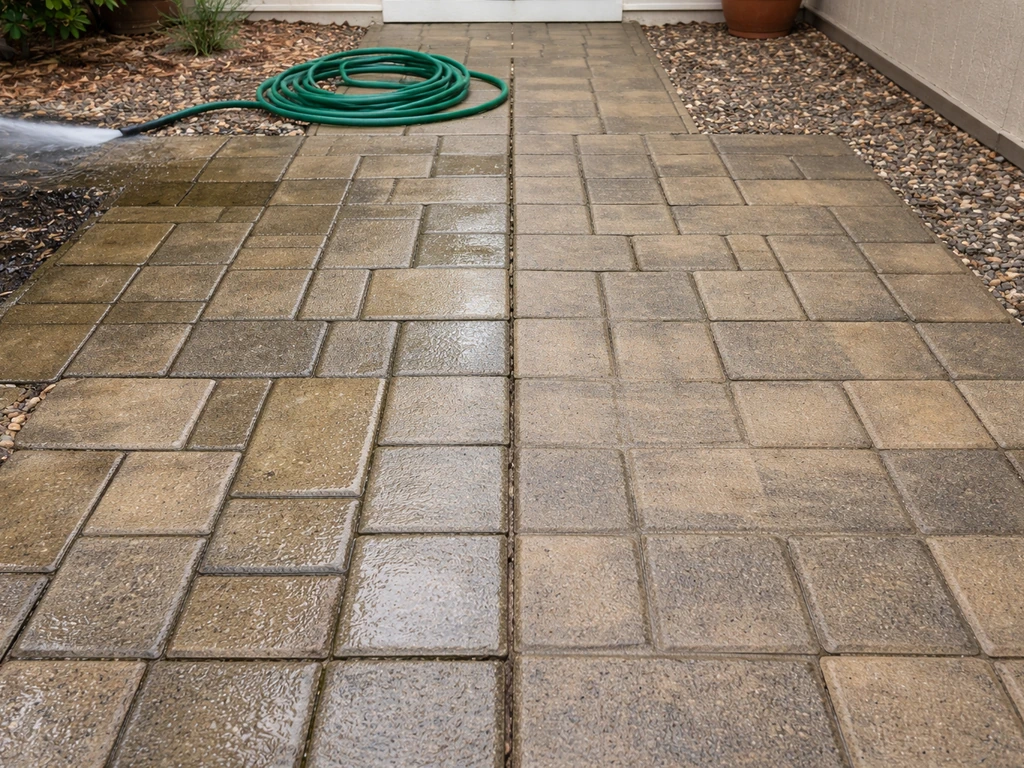
Both methods work, and the right choice depends on what you have available and the size of the stain. Here's what I've found works best in practice.
| Method | Best for | Main advantage | Watch out for |
|---|---|---|---|
| Manual scrubbing | Small stains, targeted treatment, renters, delicate finishes | Precise control over where the cleaner goes; no equipment needed | Physically demanding for large areas; slower on big patios |
| Pressure washing | Rinsing after chemical treatment, large patio areas, heavy surface buildup | Faster rinse, removes loosened rust particles more completely | High pressure can drive staining deeper if used before chemical treatment; can damage old or cracked concrete |
| Pressure washing + chemical | Most practical all-around approach for moderate to heavy rust staining | Chemical does the dissolving work; pressure washer handles the rinse efficiently | Still need dwell time before washing; don't skip the chemical step |
If you're using a pressure washer, keep it at 1,200 to 2,000 PSI for concrete, use a 25-degree or 40-degree nozzle (never a zero-degree), and hold the wand at least 6 to 8 inches from the surface. The key rule: apply your rust remover first, let it dwell, then use the pressure washer to rinse rather than blasting a dry, untreated stain and hoping the pressure alone removes it. That rarely works and can spread the rust particles across a wider area.
For renters or anyone without a pressure washer, a regular garden hose with a strong nozzle setting combined with a stiff scrub brush is completely adequate for most jobs. The scrubbing is what lifts the stain, not the water pressure.
Stubborn stains and what to do when the first treatment doesn't work
Some rust stains have been sitting for years and have penetrated deeper into the concrete's pore structure. Don't be discouraged if your first pass doesn't clear it completely. Here's how to approach repeat treatments without damaging the surface.
- Let the concrete fully dry between treatments (at least a few hours in warm weather) so you can accurately see how much stain remains. Wet concrete always looks darker and can make partial results look worse than they are.
- Increase dwell time before increasing product strength. If a 5-minute dwell produced partial results, try 10 to 15 minutes on the next pass before stepping up to a stronger product.
- For stains that won't move with oxalic acid after two to three rounds, consider a dedicated professional-grade rust remover like F9 BARC (Batch Applied Rust and Corrosion), which is a stronger chelating formula used by cleaning contractors. It's available to homeowners and significantly outperforms standard consumer products on deep staining.
- If the stain originates from rusting rebar (you can tell because it follows a crack or appears to seep from inside the concrete), no surface cleaning will permanently fix it. The rust will return. Have a contractor evaluate the crack and underlying rebar before investing more time in cleaning.
- Very old, deeply set stains on rough or porous concrete may never fully disappear. In that case, a concrete stain or sealant applied after your best cleaning effort can visually even out the surface. This isn't giving up; it's a practical finish line.
It's also worth noting that rust staining on other patio materials follows different rules. To learn the safest method for stone, see our guide on how to remove rust from a stone patio how to remove rust from stone patio. What works on cement doesn't automatically transfer to stone, pavers, or tile surfaces. If you're dealing with staining on different materials around your patio, the approach for removing rust from stone patios, patio pavers, or patio tiles each has its own set of cautions, particularly around acid use.
How to stop rust from coming back
Once you've got the stain out, keeping it gone is mostly about managing iron and moisture contact with your cement surface. If you want rust to stay off longer, focus on preventing new iron and moisture contact on the patio surface rust from coming back. A few simple habits make a real difference.
- Put rubber or plastic caps or felt pads on all metal furniture legs. These are cheap and available at any hardware store, and they're the single most effective prevention step if furniture is the culprit.
- Move metal objects off the patio before rain or watering. Tools, plant cages, iron decorations, and steel-wheeled grills are all common offenders.
- Seal your concrete patio every 2 to 3 years with a penetrating concrete sealer. Sealing closes the pores that allow rust stains and other staining agents to penetrate deeply, which makes future stains much easier to clean off the surface rather than out of it.
- Inspect the patio for cracks each spring. Seal small cracks with a concrete caulk or filler before water gets in and starts working on any rebar underneath.
- Store fertilizers, pesticides, and anything in metal containers away from the patio surface. Fertilizer bags in particular often contain iron compounds that can leach rust-like stains onto concrete.
- After cleaning your patio, do a quick visual check of anything metal that sits on or near it. Catching a just-starting rust ring when it's faint means you only need vinegar and a brush, not an acid treatment.
The combination of physical barriers (pads, caps), a sealed surface, and quick action when you spot new staining keeps almost all rust staining manageable. You shouldn't have to go through the full cleaning process more than once if you stay on top of the prevention side.
FAQ
Will rust remover ruin the finish on stamped or decorative concrete?
Oxalic-acid based removers are generally low risk for common cement patios, but decorative coatings can vary. Test in a hidden corner and do not leave the product on longer than the label or your initial dwell time, then rinse very thoroughly to prevent residue dulling.
Can I mix vinegar, baking soda, or lemon with an oxalic-acid rust remover?
No. Do not combine cleaners. Acidic products like vinegar or lemon can interfere with oxalic-acid chemistry, and baking soda is alkaline. Clean with one method, fully rinse, let the surface dry, then move to the next product if needed.
What should I do if rust keeps returning in the same spot?
A recurring stain near a crack usually means the source is below the surface, often embedded rebar or ongoing moisture intrusion. Before repeating treatments, inspect the crack for seepage and consider a concrete repair plan rather than only cleaning the surface.
Is it safe to use muriatic acid if my patio plants are nearby?
Be very cautious. Muriatic acid can burn grass and other plants. Protect surrounding vegetation with physical barriers, keep runoff contained, and rinse with lots of clean water right after the dwell time so acid does not migrate into soil.
Can I use a wire brush or metal scraper to remove rust rings?
It can scratch cement and make the area more prone to staining later. Use a stiff nylon or bristle brush for cleaning, and save scraping for stubborn deposits only if it does not gouge the surface. If you already see pitting, switch to chemical removal and gentle scrubbing.
How do I know whether the rust is just on the surface or deeper in the concrete?
If the stain returns after rinsing and drying, it is often deeper. Also, deep rust around cracks or along edges that gradually widens suggests penetration. For deeper cases, plan for a second treatment after the first fully dries rather than increasing strength.
What rinsing method prevents rust from spreading to other parts of the patio?
Rinse with clean water using a hose or pressure washer only after the chemistry has done its job. Work from the outer edge of the stain toward the center, then immediately rinse the surrounding area to keep loosened particles from redepositing.
Does soaking the patio overnight help rust removers work better?
It can help, but the key is controlled wetness at application. Follow the product instruction, apply to a wet surface as directed, and avoid letting puddles sit for long periods with strong chemicals. After treatment, rinse thoroughly to remove dissolved iron compounds.
Can pressure washing alone remove rust from cement patio surfaces?
Usually not. Water pressure can lift some surface debris, but rust particles and soluble compounds often remain embedded. The better approach is rust remover first, dwell time, then rinse. If you blast a dry stain first, you may spread staining outward.
What PPE and safety steps should I take when using oxalic acid or muriatic acid?
Wear eye protection and chemical-resistant gloves, and ensure ventilation when working outdoors. Avoid breathing mist, keep children and pets off the patio during dwell time, and have plenty of water ready for immediate rinsing if splashes occur.
Are there any signs I used too-strong acid for my cement patio?
Watch for an etched, rough, or dull surface, especially if it feels more porous than the surrounding concrete. If you notice texture changes, stop increasing concentration. Next steps should be switching to oxalic-acid or non-acid methods and preventing further exposure.
How can I prevent new rust stains without sealing the whole patio?
You can reduce risk by removing metal items promptly, using plastic or rubber pads under planters and furniture, and keeping sprinklers from constantly wetting the slab. If you seal, follow cure time recommendations, but even without sealing, quick cleanup of wet, iron-bearing debris helps.
Next Articles
How to Get Rust Off a Concrete Patio: Step-by-Step
Step-by-step methods to remove rust stains from concrete patio safely, using acids or vinegar, scrubbing, rinsing, and p
How to Remove Thompson’s Patio Sealer Step by Step
Step-by-step removal of Thompson’s patio sealer on concrete, brick, pavers, and stone, with safety, tests, and cleanup.
Can You Remove Patio Sealer? How to Strip It Safely
Learn if you can remove patio sealer and how to strip it safely by type, material, and method.