
You can get rust off patio tiles using a dedicated tile-safe rust remover, white vinegar, or oxalic acid-based cleaner, applied directly to the stain for 10 to 15 minutes before scrubbing and rinsing. If you want an easy walkthrough, follow the steps for getting rust off patio tiles using the gentle vinegar option first, then move up if the stain persists how to get rust off patio. Porcelain tiles respond best to purpose-built rust removers (like FILA NO RUST) that are pH-balanced for glazed surfaces. Standard ceramic or natural-stone tiles can handle slightly stronger acids, but you always need to protect the grout and rinse thoroughly. Most surface rust stains lift in one or two applications if you use the right product and give it enough dwell time. If your patio is granite, use an acid-sensitive approach so you lift the rust marks without damaging the stone finish how to get rust marks off granite patio.
How to Get Rust Off Patio Tiles, Including Porcelain
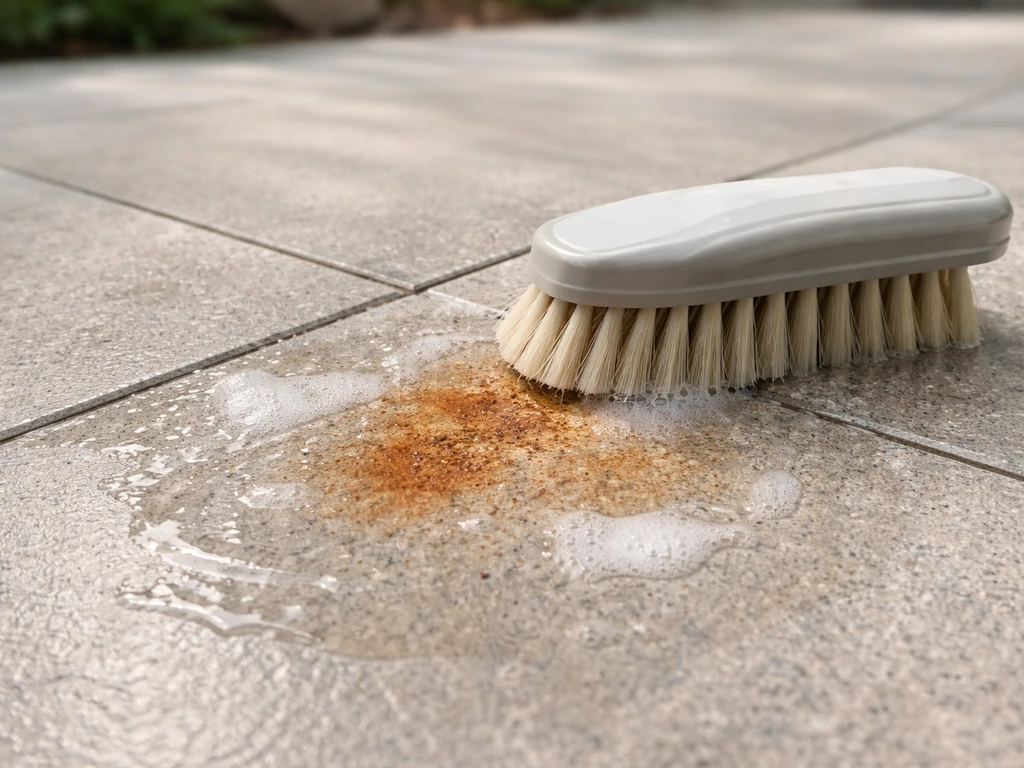
Figure Out Your Tile Type and Where the Rust Is Coming From
Before you reach for any cleaner, spend two minutes identifying your tile material and the rust source. These two things determine which method to use and how aggressive you can be without causing damage.
Identify the tile material
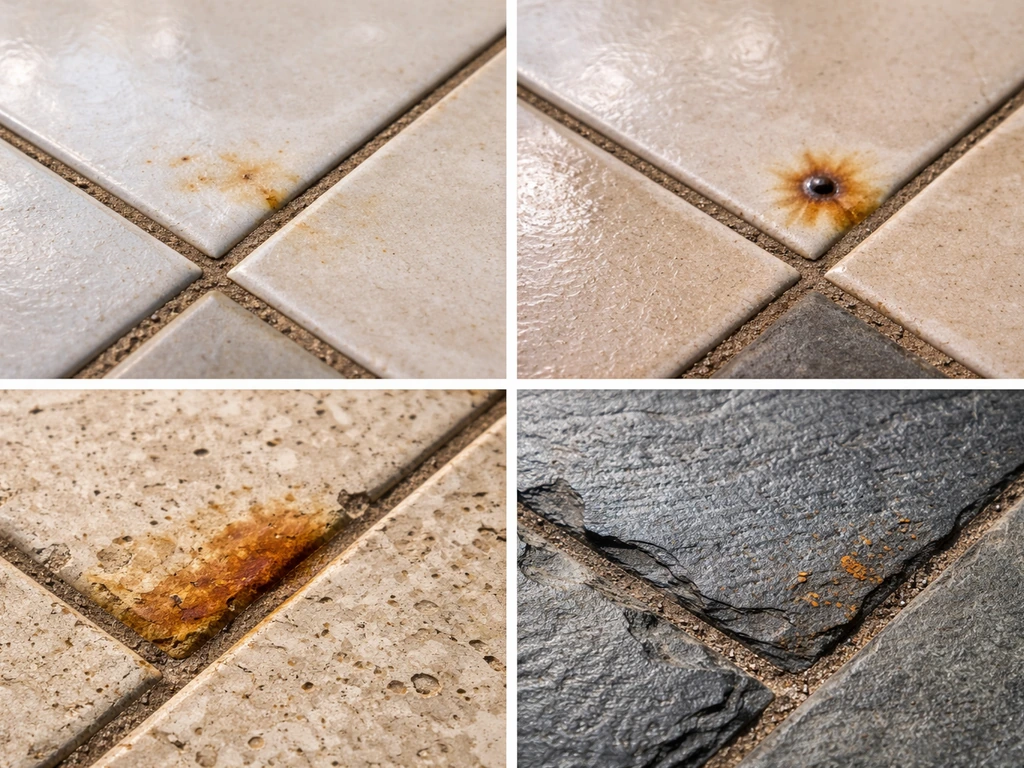
Patio tiles generally fall into a few categories: porcelain, glazed ceramic, natural stone (like travertine, slate, or granite), and unglazed quarry tile. Porcelain is the most common for modern outdoor patios. The technical definition of porcelain is a tile with water absorption of 0.5% or less per ASTM C373 testing, which means it is very dense and relatively non-porous. In practice, you can usually check the box the tile came in, the back-stamp of a loose tile, or the spec sheet from your installer. If the tile has a smooth, almost glass-like surface and the back looks uniformly gray or white and very tight-grained, it is almost certainly porcelain. Glazed ceramic looks similar on the surface but the body of the tile is more porous and often a different color on the back edge. Natural stone tiles (travertine, slate, granite) have visible crystal structure or veining. Knowing this matters because porcelain requires a gentler, pH-appropriate rust remover, while some stone types like travertine are extremely acid-sensitive and need even more care.
Track down the rust source
The shape and location of the stain usually tells you exactly what caused it. Circular or ring-shaped stains typically come from metal planters or pot bases. Rectangular or leg-shaped stains point to patio furniture. Long streaks radiating from a spot usually mean a metal anchor, bolt, or rebar beneath the surface is corroding and bleeding through. Orange-tinted staining across a wide area with no obvious metal contact is almost always from iron-rich irrigation or well water, where sprinkler overspray hits the tile and the iron oxidizes as it dries. Identifying the source is not just academic: if you clean the stain but leave the rusting furniture leg sitting in the same spot, the stain will be back within weeks.
Surface rust vs. embedded staining
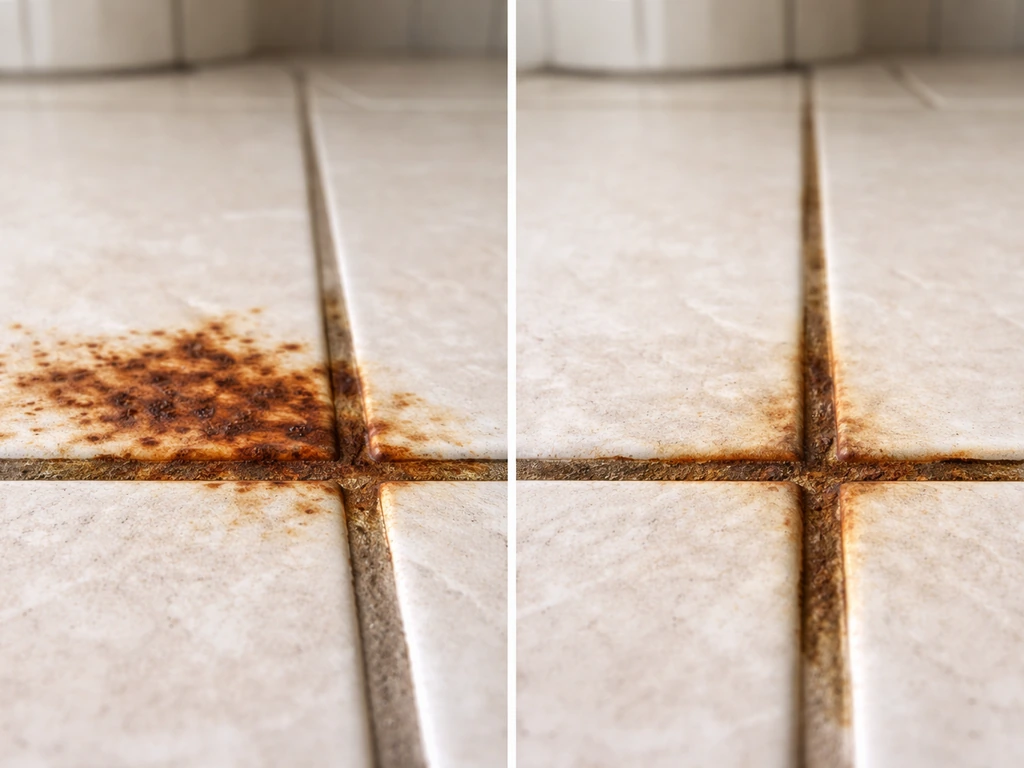
Surface rust is a deposit sitting on top of the tile that you can sometimes feel as a rough or slightly raised texture. Embedded staining has soaked into the grout joints or, on more porous tiles, partially into the tile body itself. Surface rust usually lifts faster, often in one treatment. Embedded staining in grout may need repeat applications or a poultice approach. If the stain is mostly in the grout lines rather than on the tile face, that changes your strategy slightly, as described below.
Prep the Area Before You Apply Anything
Good prep takes five minutes and prevents a lot of problems. Start by sweeping or blowing off any loose debris from the tile surface. Then wet down the surrounding grout joints and any adjacent materials (like concrete borders, brick edging, or nearby pavers) with plain water before you apply any cleaner. This dilution barrier slows the spread of acidic rust remover into areas you don't want treated. If you have plants, potted herbs, or grass right up against the patio, cover them with plastic sheeting or move them temporarily. Rust removers containing oxalic acid or other acids are not friendly to plant tissue. I'd also recommend wearing nitrile gloves and eye protection, especially with any product stronger than straight vinegar.
- Sweep the tile surface clear of leaves, grit, and loose debris.
- Pre-wet the surrounding grout, edges, and adjacent hardscape with plain water.
- Cover or relocate any plants within 18 inches of the treatment area.
- Put on nitrile gloves and safety glasses before opening any rust remover.
- Have a garden hose or bucket of clean water ready for rinsing.
Gentle Rust Removal Methods That Work on Most Patio Tiles
Start gentle. These methods are safe for porcelain, glazed ceramic, and most stone tiles (except marble and travertine, which need extra caution with acids). If the stain is relatively fresh or light, one of these approaches will likely clear it without any risk of etching or grout damage.
White vinegar soak
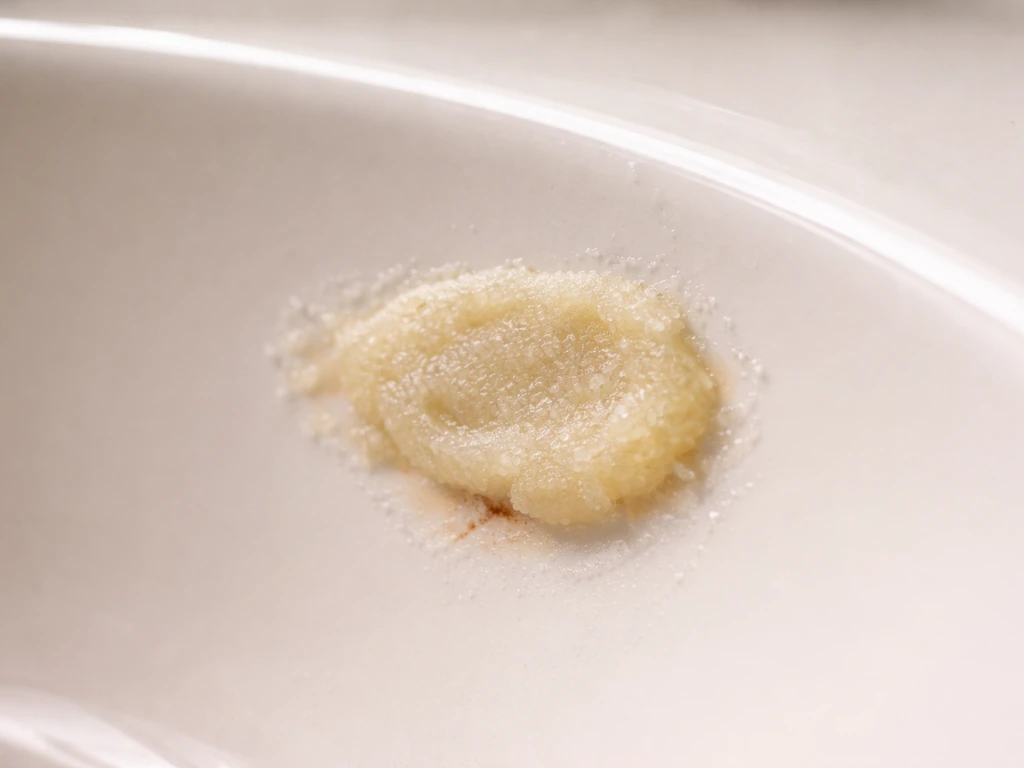
Pour undiluted white vinegar directly onto the rust stain and let it sit for 10 to 20 minutes. The acetic acid in vinegar dissolves light iron oxide deposits without being aggressive enough to etch glazed tile. After soaking, scrub with a stiff-bristled nylon brush (not wire, which can leave its own metal deposits) and rinse thoroughly with clean water. I've found this works well on stains from metal furniture legs that have been sitting for a week or two. For stains that have been there for months, vinegar alone usually isn't enough, but it's a completely safe starting point, especially if you have pets or kids who use the patio regularly.
Lemon juice and salt paste
Mix enough lemon juice with table salt to form a thick paste, spread it over the stain about a quarter-inch thick, and leave it for 15 to 20 minutes. The citric acid acts similarly to vinegar but the salt gives you mild abrasive action when you scrub. This is particularly useful for smaller, localized stains on glazed tile where you want precise application. Scrub with a nylon brush and rinse well.
Dedicated tile rust remover (the most reliable gentle option)
Products formulated specifically for rust on porcelain and ceramic, such as FILA NO RUST, are the most consistently effective starting-point option for tile surfaces because they are pH-balanced to clean the stain without attacking the glaze or grout. These come ready to use with no dilution needed. Apply enough product to fully cover the stain, leave it for 15 minutes, then remove the residue and rinse thoroughly. For stubborn stains, the process can be repeated. The advantage of using a product designed for tile is that it removes the guesswork about compatibility, and the risk of grout discoloration or gloss dulling is significantly lower than with general-purpose rust removers. Some manufacturers and technical guides warn that acidic cleaners can erode or affect grout and degrade protection over time, so use only cleaners designed for tile and grout and follow the stated timing blank" rel="noopener noreferrer">acidic cleaners can erode/affect grout or degrade protection over time.
Rust Removal on Porcelain Tiles Specifically
Porcelain needs a slightly more careful approach than unglazed or natural-stone tiles because the glazed surface can be dulled by aggressive acids, and the grout joints are usually the most vulnerable part of the tile installation. The tile body itself is dense and resistant, but the glaze is glass-like and can lose its sheen if you use an acid that's too strong or leave it on too long.
The recommended approach for porcelain is to use a rust remover that explicitly states compatibility with porcelain and ceramic. Apply it directly to the stain, do not spread it unnecessarily across the surrounding tile. Set a 15-minute timer and do not let the product dry on the surface. If it starts to dry before your 15 minutes are up, mist it lightly with water to keep it active. After the dwell time, use a soft-to-medium nylon brush and scrub in small circular motions. Rinse with plenty of clean water, making sure to flush the grout joints thoroughly.
Avoid wire brushes, steel wool, or abrasive pads on porcelain. They can scratch the glaze and leave tiny metal particles that will rust themselves, creating new stains. Also avoid letting any acidic cleaner sit on grout longer than necessary. The Tile Council of North America specifically flags that acidic cleaners can affect grout color, so precision and rinsing speed matter here. If your grout is already sealed with a penetrating sealer, that will give you some extra protection, but don't rely on it as an excuse to be sloppy with timing.
| Method | Best for tile type | Dwell time | Grout risk | Safe for porcelain glaze |
|---|---|---|---|---|
| White vinegar | Porcelain, glazed ceramic | 10-20 min | Low | Yes |
| Lemon juice + salt paste | Porcelain, glazed ceramic | 15-20 min | Low | Yes |
| Tile-specific rust remover (e.g., FILA NO RUST) | Porcelain, ceramic | 15 min | Low if rinsed promptly | Yes |
| Oxalic acid cleaner | Unglazed tile, concrete-adjacent | 5-10 min | Moderate | Use with caution |
| Muriatic acid (diluted) | Concrete, unglazed quarry tile only | 2-3 min max | High | No |
When the Stain Won't Budge: Stronger Options
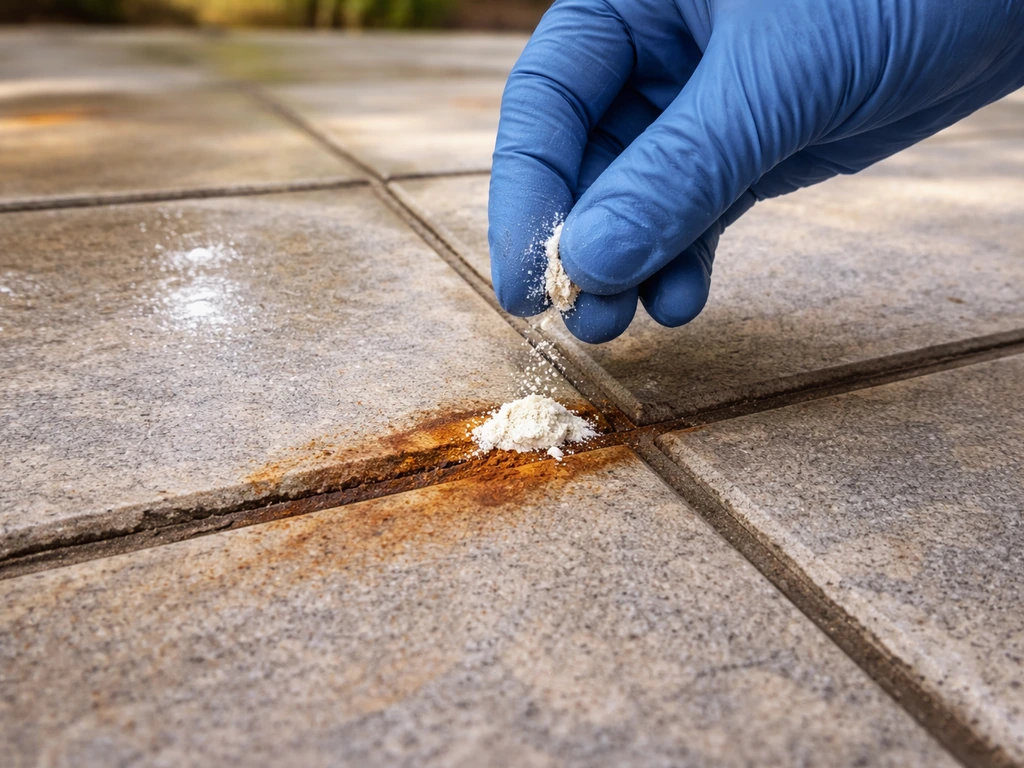
If two rounds of the gentler methods haven't made a visible dent, it's time to escalate. Old or deeply set rust stains, especially those that have soaked into porous grout, need a more aggressive approach. Here's how to move up the ladder without wrecking your tile.
Oxalic acid-based cleaners
Oxalic acid is stronger than vinegar and very effective on iron oxide staining. Products like Bar Keepers Friend (powder form) contain oxalic acid and are suitable for ceramic and unglazed tile. Make a paste with a small amount of water, apply it to the stain, let it sit for 5 to 10 minutes (no longer), then scrub with a nylon brush and rinse completely. On porcelain, use this with caution and only if the tile-specific rust remover hasn't worked: keep the dwell time short and rinse aggressively. Do not use oxalic acid on marble or travertine, where it will etch the surface immediately.
Rust remover poultice for grout-embedded staining
When rust has soaked into the grout joints rather than sitting on the tile face, a liquid cleaner applied to the surface often can't reach it effectively. A poultice pulls the stain out by absorption. Mix a rust-removing chemical (oxalic acid solution works well here) with an absorbent powder like diatomaceous earth or fine kaolin clay to make a thick paste. Pack the paste into the grout joint and over the surrounding stain, cover with plastic wrap, tape the edges down, and leave it for 8 to 12 hours or overnight. Remove the dried poultice, rinse thoroughly, and assess. This is slower but often the only method that genuinely clears staining from within the grout body. You may need to reseal the grout after this treatment.
Muriatic acid as a last resort (non-porcelain tiles only)
Muriatic acid is the nuclear option and I'd only recommend it for unglazed quarry tile or concrete-adjacent surfaces, never on porcelain or glazed ceramic where it can permanently dull the finish. If you're dealing with rust on concrete areas next to tile, the guide on how to get rust off of concrete patio covers this in more detail. For concrete patios, follow the concrete-specific approach and compatibility guidance so you remove the rust without damaging surrounding materials how to get rust off of concrete patio. If you do use muriatic acid on appropriate surfaces, dilute it at a ratio of 1 part acid to 10 parts water, apply with a brush, limit contact time to 2 to 3 minutes, then neutralize with a baking soda and water solution before rinsing. Always add acid to water, never the reverse. Wear chemical-resistant gloves, eye protection, and work in a ventilated area. Keep it completely off grout joints.
Rinsing, Repeating, and Keeping Rust Away for Good
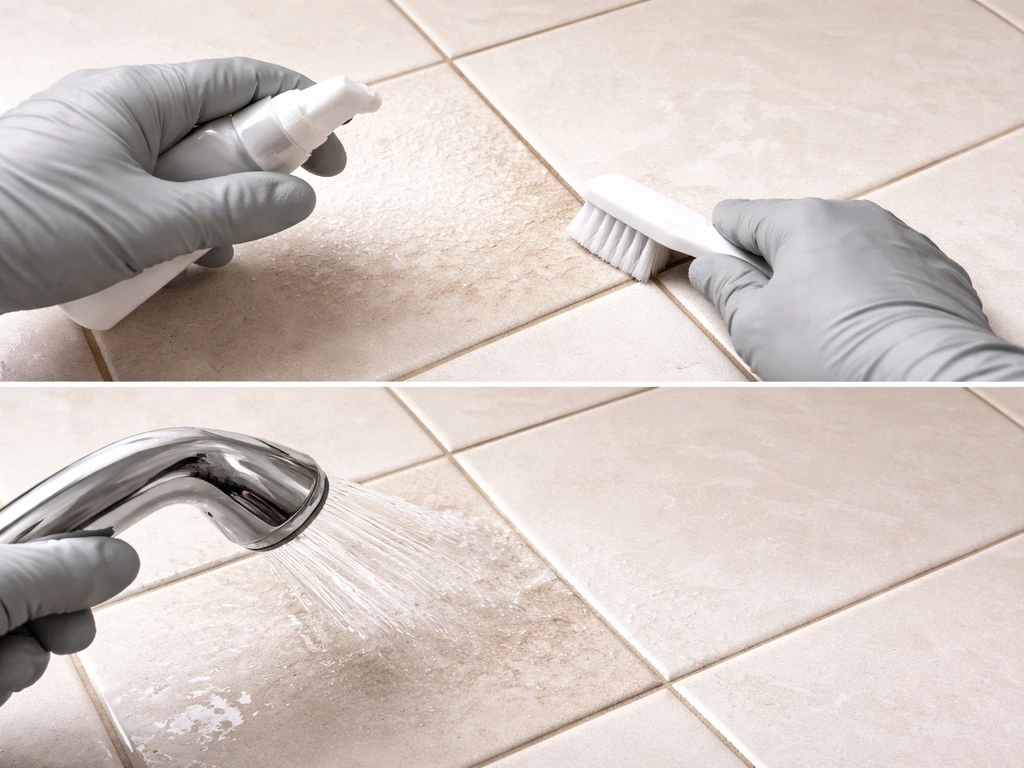
Rinsing is not a formality. Any residual acid left in grout joints continues working after you walk away, which is how you end up with bleached or discolored grout lines. After scrubbing, flush the entire treated area with a strong stream of clean water for at least 60 seconds. If you have a garden hose with a spray nozzle, use it at a medium-high pressure setting. A pressure washer on a low-to-medium setting (1200 to 1500 PSI with a fan tip) is ideal for flushing grout joints completely. Pat the area dry with an old towel or let it air-dry and then inspect the stain in good lighting.
If the stain has faded but is still visible, repeat the same method rather than immediately jumping to something stronger. Multiple applications of a safe, appropriate cleaner are almost always better than one application of something too harsh. Wait at least 30 minutes between applications to let the surface dry enough for you to assess how much stain remains. Most stains clear within two to three rounds if you're using the right product.
Preventing rust from coming back
Once the tiles are clean, the obvious next step is making sure you don't end up back in the same spot in three months. Here's what actually works: Tile sealing guidance defines sealing as applying a penetrating or surface-film barrier to tile and grout to reduce porosity and help resist contaminant absorption, which can limit rust/iron staining from water carryover.
- Put rubber or plastic glides on all metal furniture legs. These caps isolate the metal from the tile surface and prevent the wet-metal-on-tile contact that starts corrosion staining.
- Move planters onto pot feet or non-metal saucers. Terracotta saucers are a cheap fix; they won't rust.
- Seal your grout joints with a penetrating sealer after cleaning. This reduces porosity so iron from water can't soak into the grout body as easily. Reapply sealer every one to two years depending on foot traffic.
- If your irrigation water is iron-rich and you're getting widespread orange staining, look into iron sequestering treatments for your irrigation system. These keep iron dissolved rather than letting it oxidize on the tile surface.
- Improve drainage around the patio so water doesn't pool for extended periods, especially near metal anchors or railing posts. Standing water accelerates the rust cycle.
- Inspect metal chair legs, table bases, and railings annually. Touch up any chipped paint or exposed metal with a rust-inhibiting primer before it gets a chance to stain the tile below.
If you're dealing with rust on other outdoor surfaces beyond tile, the approaches differ by material. Rust on pavers, stone, or concrete each has its own compatibility rules and product considerations, since what's safe on dense porcelain tile may not be appropriate for more porous or acid-sensitive surfaces. If you are wondering about how to remove rust marks from patio slabs on outdoor slab surfaces, the same compatibility logic applies, but the safest cleaner and dwell time depend on whether the slabs are sealed or porous. If your goal is specifically how to get rust stains off patio pavers, choose a rust remover that matches your paver material and test it in a small hidden spot first. Getting the right match between your surface material and your cleaner is the single biggest factor in whether the job goes smoothly or causes new problems.
FAQ
How can I tell if the rust stain is on the tile surface or embedded in the grout joints?
Run a white paper towel over the area when the surface is dry and check whether the towel picks up orange residue. Then inspect grout closely with bright, angled light. Surface rust usually looks confined to the tile face and feels slightly rough, grout-embedded rust looks concentrated in the lines and often stays after rinsing.
Will vinegar or lemon juice damage grout or discolor it?
They can, especially on unsealed grout and in higher dwell times. Keep dwell times within the stated windows, wet surrounding grout first with plain water, and always rinse aggressively. If your grout has visible cracks or already looks chalky, use a pH-balanced rust remover designed for tile instead of home acids.
What should I do if my porcelain tile stays slightly dull after cleaning?
Gloss dulling can happen when strong acid contacts the glaze too long or dries. Next time, use a porcelain-compatible remover, apply only to the stain, set a timer, and prevent drying by misting lightly with water. For a one-off dullness, avoid more acid and test a small area with a neutral tile cleaner and thorough rinse to remove residue.
Can I use a pressure washer to remove rust, or will it spread the stain?
A pressure washer is mainly useful for rinsing, not scrubbing. Use it after the chemical dwell time so it flushes grout joints, and keep pressure moderate with a fan tip to avoid eroding grout or forcing contaminants deeper. Do not blast directly at the stain before treatment, since it can spread surface rust into cleaner-free areas.
Is it safe to combine rust removers (like vinegar with oxalic acid) if the first one fails?
No, do not stack acids or cleaners back-to-back. Residual chemicals can react and increase grout damage or leave uneven discoloration. Let the area dry fully, rinse thoroughly, and only then switch to a compatible product, ideally after a small test spot.
How do I protect plants and nearby landscaping while cleaning patio rust?
Cover plants with plastic sheeting and keep edges sealed so splashes cannot reach leaves or soil. Wet the surrounding ground lightly before treatment so acidic runoff is less likely to concentrate, and use targeted application only to the stain. If you have edible herbs close by, move them temporarily if possible.
Can rust come back even after the stain is removed, and how do I prevent that?
Yes, if the source metal continues corroding underneath or is still in contact with the tile. Identify the pattern (leg-shaped, ring-shaped, or streaking from a spot), remove or replace the rusty metal, and use protective pads or sealants between metal and tile. Otherwise the stain can reappear within weeks.
What if the rust stain is recurring in the same grout line after it clears?
That often indicates ongoing moisture and iron exposure rather than just a one-time spot. Check irrigation overspray, sprinkler heads, and drainage so water does not repeatedly wet the same area. If the grout is porous and unsealed, consider sealing after the area is fully cured and rust-free.
Should I use steel wool or a wire brush if the stain is stubborn?
Avoid them on porcelain and glazed surfaces. They can scratch the glaze and embed metal particles, which then rust again and create new stains. Use nylon brushes only, and escalate chemical strength rather than abrasive strength once gentle methods fail.
How long should I wait between treatment rounds?
Let the surface fully rinse and dry, then wait at least 30 minutes before applying another round so you can accurately judge what remains. If you see fading but not full removal, repeat the same method rather than moving immediately to a stronger acid.
Do sealed grout and sealed tiles change what I should use?
Sealing can slow penetration, which may reduce embedded grout staining, but it does not make acidic products risk-free. You still need precise application, dwell time control, and thorough rinsing. If the sealer is unknown or damaged, test in a hidden spot first.
Can I treat rust on patio tiles if they are wet or during rain?
Try to avoid it. Wet conditions dilute cleaners, shorten dwell time effectiveness, and can increase runoff into grout or adjacent areas. Plan for dry weather, and after rinsing, allow full drying before evaluating results.
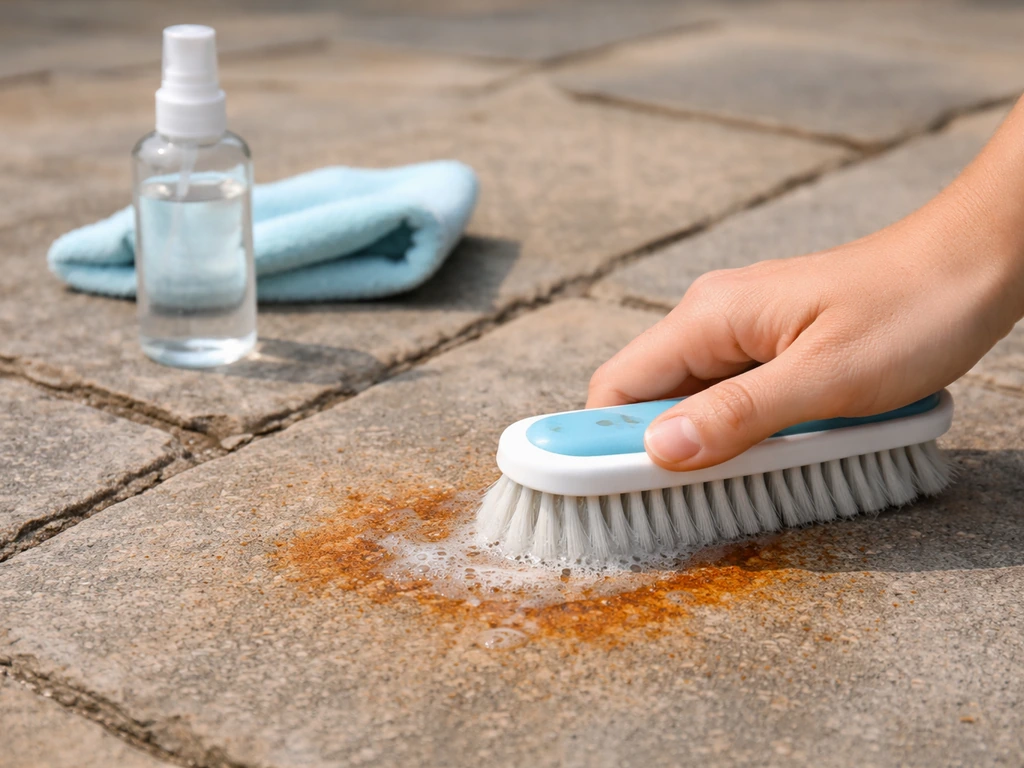
Step-by-step methods to get rust stains out of stone or flagstone patio safely, using cleaners, oxalic options, and caut
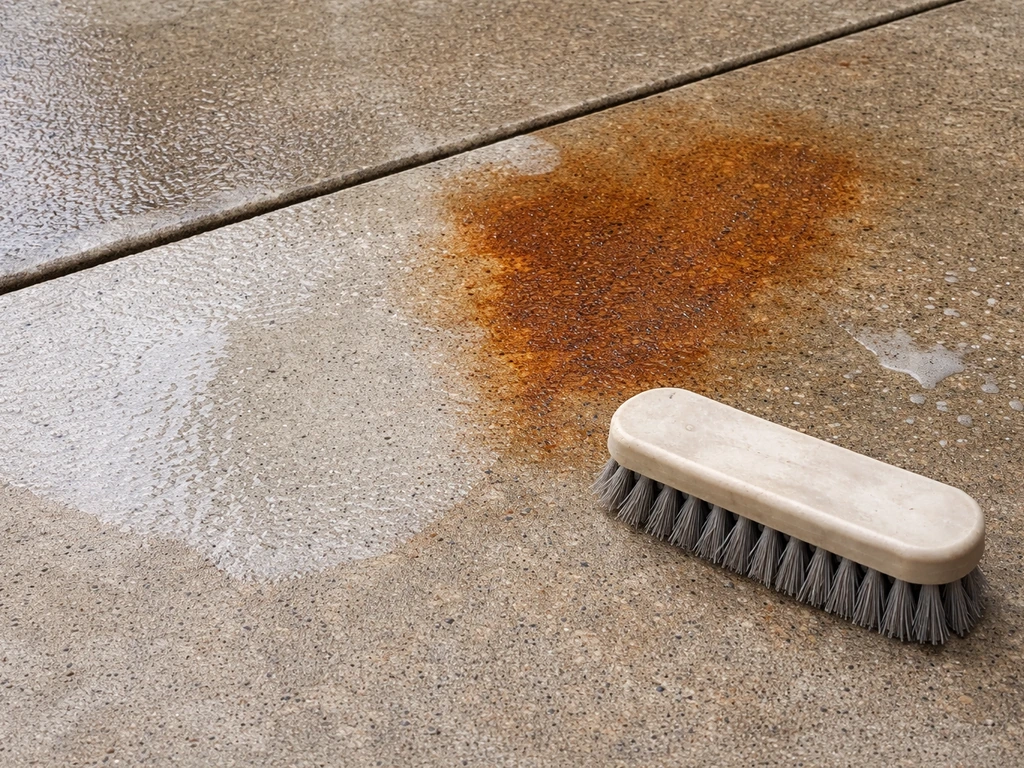
Step-by-step ways to remove rust stains from patio concrete, brick, pavers, and stone with safe acids, scrubbing, and pr
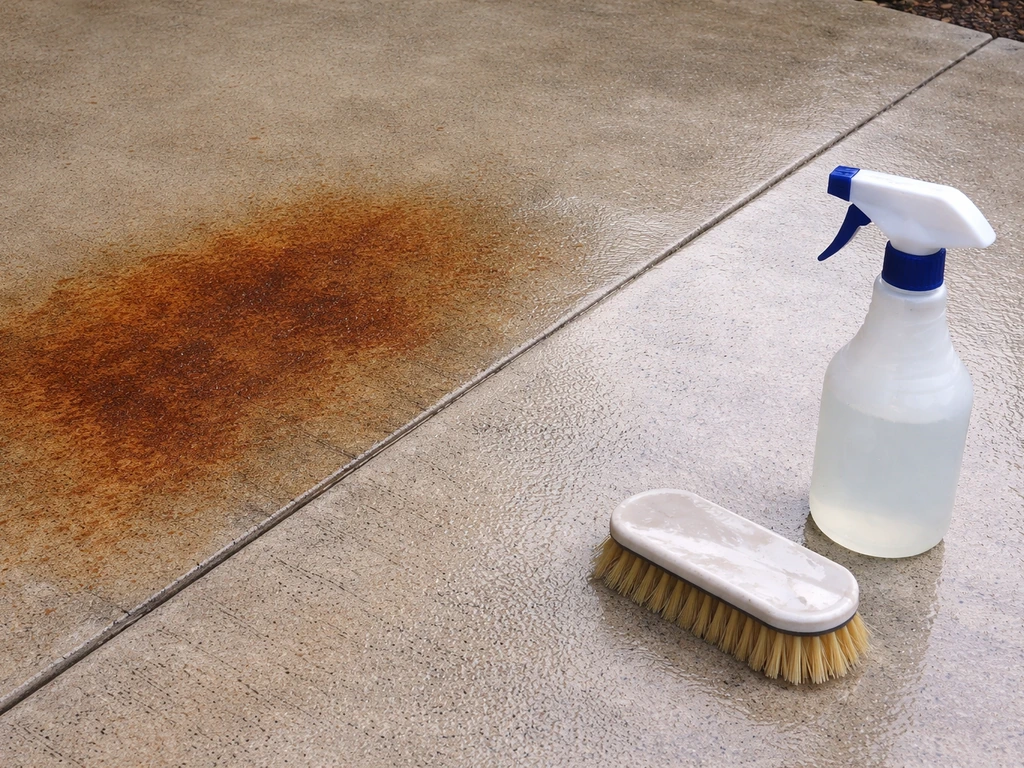
Step-by-step ways to remove rust stains from a cement patio safely, using scrubbing, vinegar, oxalic acid, or careful mu