For most patio slabs, a dedicated oxalic acid-based rust remover is the best all-around choice. Products like Rust-B-Gone, Iron Out Outdoor, or any cleaner labeled specifically for masonry rust stains will lift orange and brown rust marks from concrete, pavers, and many stone surfaces without eating into the material the way muriatic acid can. If you want the gentler route, white vinegar or a citric acid paste works on light surface staining.
Best Rust Remover for Patio Slabs: Step-by-Step Guide
Dylan Hale
8 Jun 2026
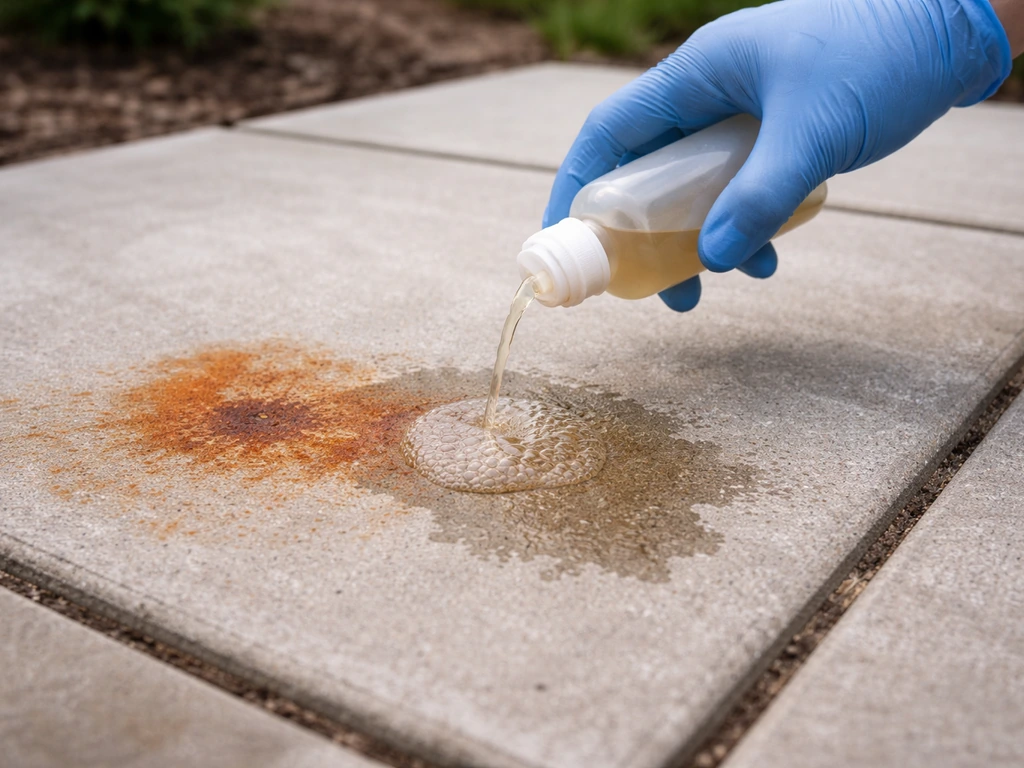
The real key is matching the product to your specific slab material, because what clears rust off concrete in 10 minutes can permanently etch travertine or polished limestone. This guide walks you through that decision, then gives you the actual steps. If you are specifically looking for how to remove rust marks from patio slabs, start with the right rust remover for your slab material and then follow the rinse and neutralizing steps carefully.
How to identify rust on patio slabs (and why it's there)
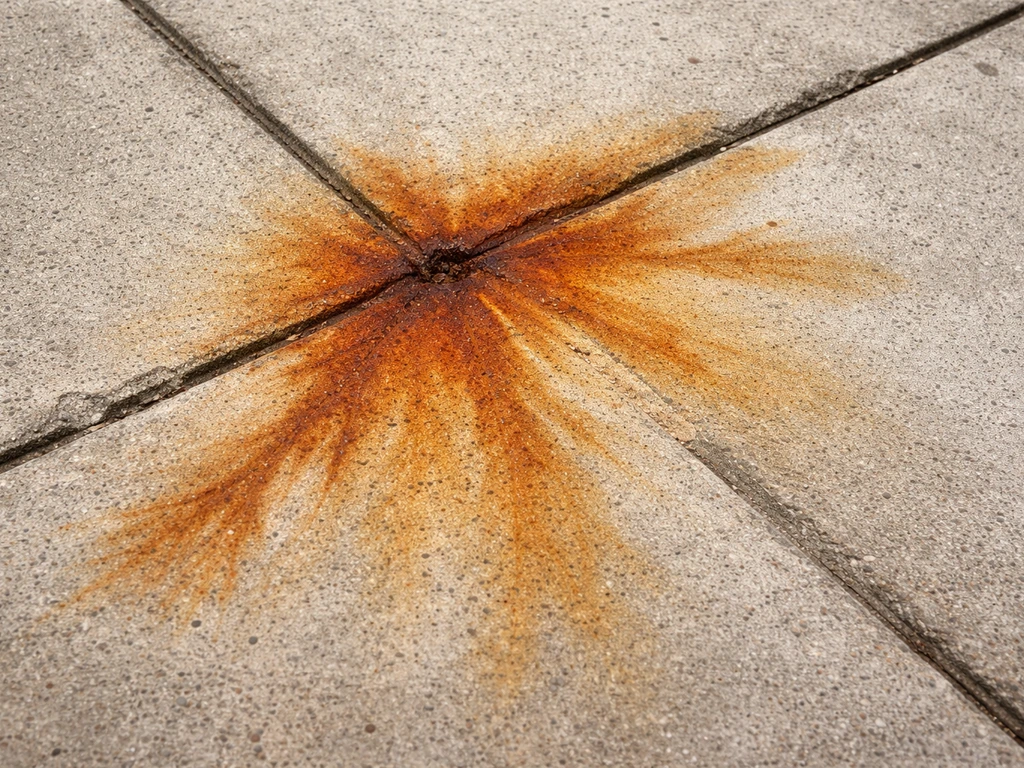
Rust stains show up as orange, reddish-brown, or yellow-brown discoloration on the slab surface. The edges are usually irregular and fan out from a point source, like a furniture leg, a pot with a metal base, or a bolt. If your stain is white and powdery or chalky, that is efflorescence (salt migration from inside the concrete), not rust. Knowing the difference matters because efflorescence cleaners and rust removers are completely different products, and using the wrong one wastes time or makes things worse. For more details on identifying rust stains versus other concrete discoloration, see the section on spotting rust on patio slabs and why it happens identify rust on patio slabs.
The iron particles causing the rust almost always come from one of four sources: metal patio furniture legs or hardware that sit in standing water, nails or steel reinforcement rods near the surface leaching through, railings or brackets where rainwater runs down and carries dissolved iron onto the slab, or irrigation sprinklers hitting the patio with iron-rich well water. Sprinkler rust is particularly common and shows up as a repeated pattern of faint orange spots where water consistently lands. Once you identify the source, you can fix the cause after you deal with the stain, which I will cover at the end.
One thing worth noting: if you see rust staining on a concrete slab alongside visible cracking, spalling, or dark moisture streaks, there is a chance the staining is coming from corroding steel reinforcement inside the slab itself. The IFTI visual guide notes that rust staining can coincide with visible moisture issues, including white powdery efflorescence and persistent dark spots. That is a structural issue, not just a cosmetic one, and no surface rust remover will fix the underlying problem. For most residential patio situations, though, the rust is purely surface-level from an external iron source.
Best rust removers by slab type
Not every rust remover is safe for every surface. Here is a breakdown of what works best and what to avoid for each common patio material.
Concrete and cement slabs
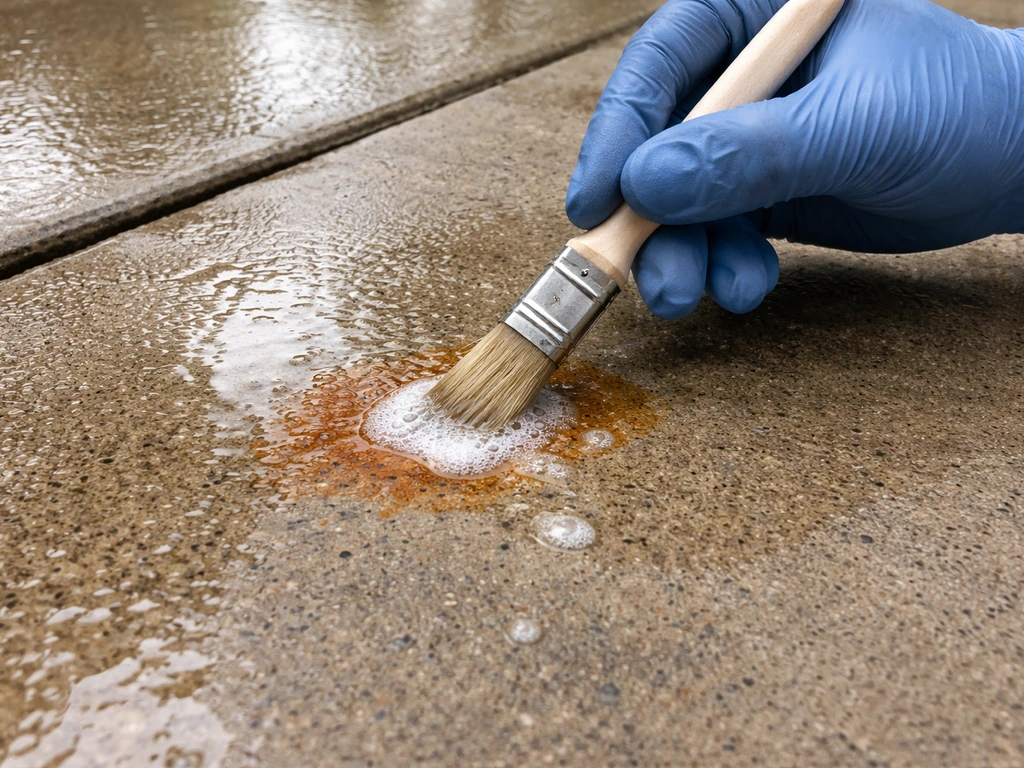
Concrete is the most forgiving surface for rust removal. Oxalic acid-based products are the gold standard here: they react with iron oxide and convert it to a soluble compound that rinses away cleanly. Iron Out Outdoor Rust Stain Remover, F9 BARC (Battery Acid Rust Cleaner), and similar oxalic or phosphoric acid blends all work well on concrete. For light staining, a thick paste of citric acid powder mixed with water is surprisingly effective and much safer to handle. I have also used straight white vinegar on very fresh, light rust spots on concrete with decent results, though it takes longer and may need two or three applications.
What to avoid on concrete: plain muriatic acid (hydrochloric acid) sold as a general patio cleaner. It can technically remove rust, but Pavingexpert's guidance is clear that acid-based DIY patio cleaners often make rust stains darker or create secondary discoloration on masonry surfaces. Muriatic acid is better reserved for stripping efflorescence and mineral deposits, not iron rust.
Brick and clay pavers
Brick and clay pavers respond well to the same oxalic acid products used on concrete, but they are more porous, so dwell times need to be watched carefully to prevent the acid from driving further into the material. Phosphoric acid-based products (like many "rust and stain" masonry cleaners) are a good fit here because they are gentler than oxalic at the same concentration and leave a light phosphate residue that actually inhibits future rusting. Avoid anything with a very low pH (under 2) on unsealed brick, as it can bleach the surface unevenly.
Natural stone: flagstone, granite, travertine, limestone
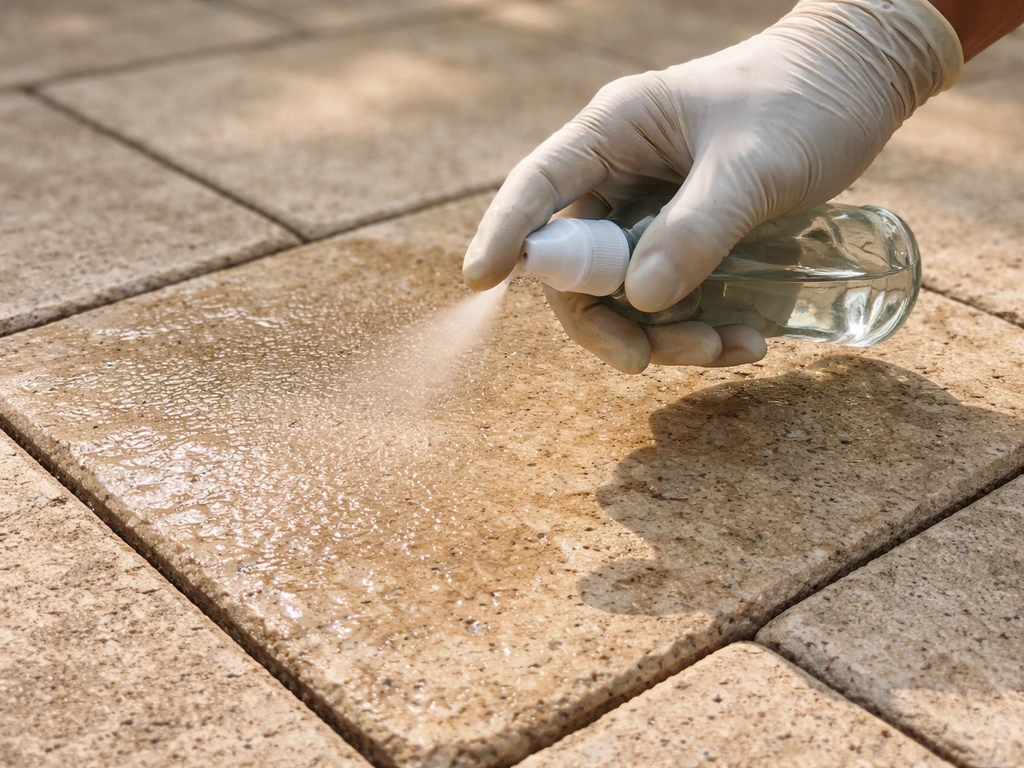
This is where you have to be careful. Acid of any kind, including vinegar, citric acid, and oxalic acid, will etch calcium-based stones like travertine, limestone, and marble. You will remove the rust stain and leave a dull, pitted spot in its place, which is much harder to fix. For those stones, use an alkaline or pH-neutral rust remover specifically labeled as safe for natural stone.
For detailed steps on how to remove rust from a stone patio, use a rust remover that is specifically labeled for natural stone and consider a poultice method for the best results. Products with EDTA (ethylenediaminetetraacetic acid) or certain chelating agents lift iron stains without an acid reaction. If you have a granite patio, you have a bit more flexibility since granite is acid-resistant, but always check the product label and do a spot test.
For specific guidance on granite, the process for removing rust marks from granite patios is worth reading separately. For step-by-step instructions specific to granite, follow the guide on removing rust marks from a granite patio removing rust marks from granite patios.
For travertine and limestone specifically, I have had the best results with a poultice method using a non-acid iron stain remover mixed with diatomaceous earth or white paper towels. It draws the iron out of the stone slowly without chemical etching.
Concrete pavers and porcelain pavers
Concrete pavers (like those used in most residential driveways and patios) handle oxalic and phosphoric acid products well, similar to poured concrete. Porcelain pavers are essentially non-porous fired ceramic and are the easiest to clean: a mild oxalic acid solution or even a citric acid paste will lift rust with minimal dwell time, and there is very little risk of etching. Do not use wire brushes on porcelain, as they can scratch the glaze.
| Slab Type | Best Rust Remover Type | Avoid |
|---|---|---|
| Concrete / cement | Oxalic acid, phosphoric acid, citric acid paste | Muriatic acid (can darken stains) |
| Brick / clay pavers | Phosphoric acid, dilute oxalic acid | Very low pH products (under 2) |
| Travertine / limestone | EDTA-based or chelating, pH-neutral stone-safe products | All acids including vinegar and citric |
| Granite | Oxalic acid, citric acid (spot test first) | Prolonged acid exposure |
| Concrete pavers | Oxalic acid, phosphoric acid | Wire brushes on sealed surfaces |
| Porcelain pavers | Mild oxalic or citric acid paste | Wire brushes (scratches glaze) |
| Flagstone (sandstone/slate) | Phosphoric acid at low dilution, pH-neutral options | Strong acids; test first, varies by type |
Choosing safely: pH, sealers, and surface reactions
Before you open any bottle, run through this checklist. It takes five minutes and will save you from an expensive mistake.
- Identify your slab material. If you are not sure whether your stone is calcium-based, pour a drop of white vinegar on an inconspicuous spot. If it fizzes, it is acid-sensitive (travertine, limestone, marble). No fizz means it is likely granite, slate, or a silica-based stone.
- Check whether the surface is sealed. Sealed surfaces often repel water and cleaning products, reducing effectiveness. If water beads up on the slab, it is sealed. Most acid-based rust removers will also strip or damage many penetrating sealers, so you may need to reseal after treatment.
- Do a spot test. Apply a small amount of your chosen product in a hidden corner, wait the full dwell time, then rinse and dry completely before judging the result. This is non-negotiable on natural stone.
- Check the product pH. Anything below pH 3 is aggressive. For sensitive stones or sealed surfaces, aim for pH 4 to 6 if possible. The product label usually states this, or you can test with pH strips.
- Protect adjacent metal and grout. Acid-based rust removers can react with aluminum furniture frames, galvanized metal, or even the stainless steel on some pressure washer wands left resting nearby. They can also lighten or soften grout lines. Rinse any incidental contact immediately.
- Never mix rust removers with bleach-based products. Bleach is sometimes used for mold on patios. Using it in the same session as an acid rust remover creates hazardous chlorine gas.
Step-by-step application for each remover type
Oxalic acid products (concrete, brick, granite, concrete pavers)
- Prep: Sweep the area clean of loose debris. Pre-wet the slab around the stain with plain water. This prevents the surrounding dry concrete from absorbing the rust remover too aggressively and causing a tide-mark ring.
- Protect: Lay plastic sheeting or wet burlap over any adjacent plants within about 3 feet. Put on chemical-resistant gloves and eye protection. If working in an enclosed space, ensure ventilation.
- Mix or apply: Follow the product label for dilution. Most ready-to-use sprays can go on directly. Powder products typically mix at 1 to 2 tablespoons per quart of warm water. Apply to cover the stain fully, extending about an inch beyond the stain edges.
- Dwell: Leave the product on the surface for 5 to 15 minutes. You should see the stain begin to lighten or turn a slightly greenish color as the iron is chelated. Do not let it dry on the surface.
- Agitate: Scrub with a stiff nylon brush in circular motions. For larger stains, a deck brush on a long handle works well. Avoid steel-bristled brushes, which can deposit new iron particles.
- Rinse: Flush thoroughly with clean water, working away from plant beds. A garden hose with good pressure is usually sufficient. For stubborn stains, repeat the process rather than extending dwell time on the first pass.
- Assess: Once dry (allow 30 to 60 minutes), check the result. A single pass removes most light to moderate rust. Heavy staining from years of furniture contact may need two or three treatments.
Citric acid paste (light stains on concrete, porcelain, cautious use on granite)
- Mix: Combine food-grade citric acid powder with just enough warm water to make a thick paste, roughly the consistency of peanut butter.
- Apply: Spread directly onto the stain, covering it fully, about a quarter-inch thick.
- Dwell: Leave for 20 to 30 minutes. Cover with plastic wrap if it is sunny or windy to stop the paste drying out.
- Scrub and rinse: Work the paste in with a nylon brush, then rinse completely with water.
- Repeat if needed: Citric acid is gentler, so two or three passes on older stains is normal. This takes longer but is safer if you have pets or kids using the space.
White vinegar (very light, fresh rust on concrete only)
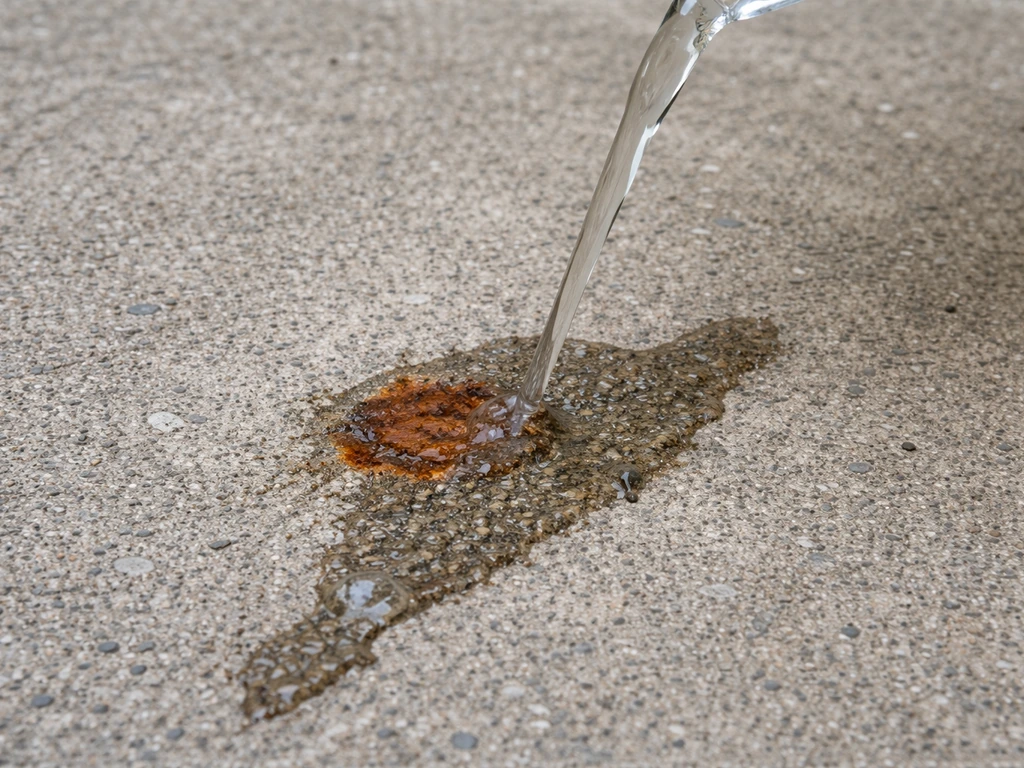
- Pour undiluted white vinegar directly onto the stain and let it soak for 15 to 20 minutes.
- Scrub with a stiff nylon brush.
- Rinse with water.
- Repeat up to three times if needed. If you see no improvement after two rounds, the stain is too deep or set for vinegar and you need an oxalic or phosphoric acid product. Do not use vinegar on travertine, limestone, or marble.
EDTA or chelating-agent products (travertine, limestone, sensitive stone)
- Pre-wet the stone surface with clean water.
- Apply the stone-safe rust remover per label directions, typically by spraying or brushing on a thin coat.
- Allow a longer dwell time than you would for acid products, often 20 to 45 minutes, since the chelation process is slower.
- For deep staining, use a poultice: mix the product with an absorbent material like diatomaceous earth or torn white paper towels, apply the paste to the stain, cover with plastic wrap, and leave for 8 to 12 hours or overnight. This draws the iron out of the stone's pores rather than just treating the surface.
- Rinse thoroughly with clean water. Do not scrub hard on polished or honed stone finishes; use a soft cloth or soft-bristle brush only.
Scrubbing vs pressure washing: what actually works
Both methods work, but they serve different purposes in the rust removal process. The chemical product does the actual stain removal. Mechanical action (scrubbing or pressure washing) removes the loosened iron residue and helps the product penetrate. You cannot skip the chemistry and just blast the stain off with water pressure alone.
Hand scrubbing with a stiff nylon deck brush is more controlled and is the right call for natural stone, pavers with sand joints, and any surface where you are worried about etching or joint erosion. It also lets you feel when you are hitting the stain versus just abrading the surface. Use circular motions with moderate pressure, not aggressive downward force.
Pressure washing after a rust remover treatment speeds up the rinse phase considerably and helps flush the loosened iron out of porous surfaces. If you go this route, use a 25-degree or 40-degree fan tip (not the 0-degree red tip, which can cut into concrete and etch stone). Keep the nozzle at least 12 inches from the surface, and work in consistent overlapping passes rather than hovering in one spot. For concrete pavers or brick with polymeric sand joints, be careful with pressure washing as it can displace the joint filler. Keep the pressure at or below 1500 PSI for jointed surfaces.
One mistake I see often: people pressure wash before applying the rust remover, thinking it will open up the surface. It does not really help, and the high-pressure water can spread the iron particles further across the slab, creating a larger faint stain that is harder to treat. Always apply the chemical first, let it dwell, then use the pressure washer for the rinse phase.
Rinsing, neutralizing, and protecting what's nearby
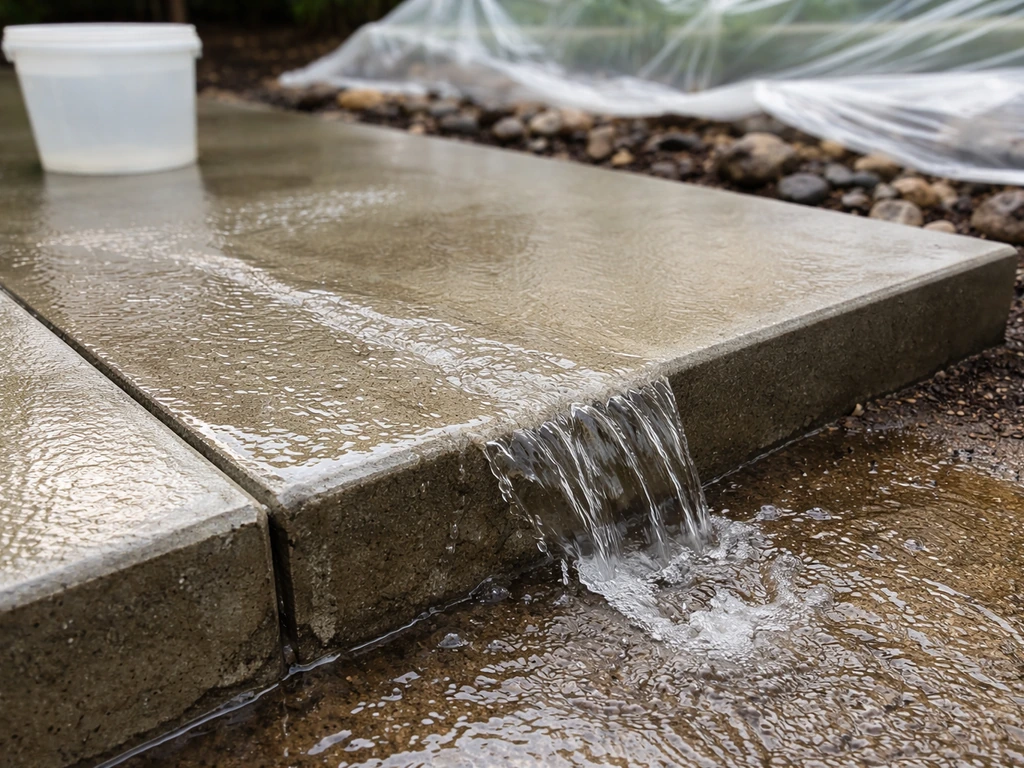
After the rust remover has done its job, a thorough rinse is not optional. Acid-based products left on the surface will continue reacting, eventually bleaching or etching the slab. Rinse with a garden hose using a strong flow (not a pressure washer at this point) and work from the center of the treated area outward, pushing the rinse water away from plant beds and drains where possible.
For acid-based products, a light neutralizing rinse helps stop the reaction completely. Mix one tablespoon of baking soda into a gallon of water and pour it over the treated area after the main rinse. It will fizz slightly if there is residual acid present, which is fine. Follow with another clean water rinse. This step is especially important if you are treating near grout lines or if the slab is close to aluminum framing, since even diluted acid residue can corrode aluminum over time.
Before you start, lay plastic sheeting or wet towels along the border of any plant beds adjacent to the slab. If your rust remover gets onto nearby grass or garden plants, rinse the foliage immediately with plenty of plain water. Oxalic acid is toxic to plants at any meaningful concentration. After the job, dilute and dispose of any rinse water pooling near plants by flushing with additional clean water.
- Grout lines: rinse immediately if product contacts them; acid can lighten or soften grout, particularly cement-based grout
- Metal furniture legs or frames: move them off the slab before you start, or cover with plastic bags secured with tape
- Aluminum gutters, downspouts, or railings: flush immediately if splashed; even diluted acid causes pitting on aluminum
- Pets and children: keep them off the treated surface until it is fully dry and has been rinsed at least twice
Stopping rust from coming back
Getting rid of the stain is the easy part. Keeping it from coming back is where most people fall short. The first step is always dealing with the iron source. Put rubber or plastic furniture feet caps on every metal patio chair and table leg.
These cost almost nothing and make an immediate difference. If the rust is coming from a railing or wall bracket, treat the metal with a rust-inhibiting primer or paint. For sprinkler-based rust staining on concrete or pavers, this is a very common issue in areas with iron-rich well water. If your patio rust keeps coming back, learn how to remove the iron staining safely and thoroughly the first time rust on concrete or pavers.
The fix is either adding an iron filter to the irrigation system or simply adjusting sprinkler heads so they do not spray directly onto the slab.
Sealing the slab creates a physical barrier that prevents iron particles from bonding directly with the porous slab surface. A penetrating silane or siloxane sealer works well on concrete, brick, and most pavers. It allows moisture vapor to escape while blocking liquid water and dissolved minerals. For natural stone, use a sealer specifically labeled for that stone type. Reapply every two to four years depending on foot traffic and climate. On a sealed surface, fresh rust staining from a new incident often wipes off with just water and a brush, before it has a chance to penetrate.
Routine maintenance is the other half of prevention. If you know iron-rich water is hitting the patio, or if furniture has been sitting in one spot after rain, a quick rinse with the garden hose within a day or two of the exposure will often prevent any staining from setting. Rust stains that have been sitting for only a few hours can usually be removed with a citric acid paste in one pass. The same stain left for a month may need three rounds of oxalic acid treatment. Acting fast is always easier than treating old, deeply set staining.
If you are dealing with rust on a specific surface type, the removal process has some meaningful differences depending on whether you are working on concrete, stone, pavers, or tiles. The core chemistry described in this guide is the same, but dwell times, scrubbing technique, and sealer compatibility all shift by material, which is worth checking when you move from one surface type to another. To get rust off patio tiles safely, choose a remover that matches the tile material and follow the rinse and neutralizing steps so you do not damage the surface how to get rust off patio tiles.
FAQ
Can I use vinegar instead of the best rust remover for patio slabs?
Yes, but only if you confirm the stain is true rust (orange-brown, irregular fan shape, not chalky white). If the affected area is only light surface rust, a citric acid paste often works in one treatment when applied and kept wet for the recommended dwell time. If the area has been stained for weeks, switch to an oxalic-acid product rather than repeating vinegar, since vinegar usually needs multiple applications.
What should I do if my patio looks worse after using rust remover?
If you see darkening or whitening right after treatment, stop and rinse immediately, then reassess the substrate. That behavior can mean you used an acid on a surface that can etch (common with travertine or limestone) or you left the cleaner on too long. Do not reapply the same product until you spot-test in an inconspicuous area and follow the label dwell time.
Do I need to spot test rust remover before treating the whole patio?
Do a small spot test even on concrete, especially if the slab is sealed. Apply the product to a hidden section, wait the specified dwell time, then rinse thoroughly and check the color after it dries for at least a few hours. Sealed slabs may need a different approach, and some cleaners can temporarily alter sheen or create patchy lightening if left too long.
How long can rust remover sit on the slab, and do I need to keep it wet?
For many oxalic acid products, you do not want to let the paste dry out. Keep the area visibly wet during the dwell period (reapply solution or cover with plastic if the label allows). Drying can reduce performance and increase the chance of uneven light spots.
Is it better to pressure wash before applying rust remover?
No, chemical first then rinse. Pre-wetting or pressure washing can spread loose iron particles across the surface, creating a larger faint stain pattern that is harder to remove. Apply the rust remover, allow full dwell time, then rinse once to flush out loosened residue.
What brush should I use, and can I use a wire brush?
Use the mildest mechanical method that matches the surface. Nylon brushes are safer than metal on pavers and any surface with a glaze. On porous surfaces, avoid aggressive scraping that can open pores or dislodge polymeric sand joints, which can later look like new staining.
Can I use a pressure washer on paver patios with polymeric sand joints?
For polymeric sand joints (common on paver patios), keep pressure lower and consider hand scrubbing for the chemistry phase, then gentle rinsing for cleanup. High pressure can wash out joint filler, leaving gaps where dirt and dissolved minerals collect, which can mimic recurring rust staining.
If rust comes back after I remove it, is my only option to use a stronger rust remover?
Often you should repeat the chemistry rather than increasing pressure or switching to a stronger acid. If the rust is still visible, apply the same appropriate product again after a full rinse and neutralizing step (when the product label indicates acid residue control). For stubborn, long-set stains, multiple rounds with proper dwell time are usually more reliable than one aggressive pass.
How do I prevent rust from returning if it keeps showing up in the same pattern?
If rust keeps reappearing in the same landing spots or forms a repeating pattern where water hits, suspect sprinkler or runoff carrying dissolved iron. Fix the cause by adjusting sprinkler heads away from the slab, and if you use well water, consider an iron filter or water treatment. Also treat or coat nearby metal brackets so iron does not continue leaching.
How can I tell if it is rust or efflorescence before buying the best rust remover for patio slabs?
If the stain is white and powdery, it is likely efflorescence, not rust, and oxalic or phosphoric rust products may not help. Efflorescence usually needs cleaning and, in many cases, addressing moisture migration and curing salts rather than removing iron chemistry. Confirm the appearance before buying a rust remover.
How do I know I rinsed well enough after using an oxalic or phosphoric rust remover?
Not necessarily. Even if the stain disappears, incomplete rinsing or missing neutralization can leave acid residue that can later cause lightening or renewed etching. If you used an acid-based product, do the full rinse, then apply the baking-soda neutralizing rinse (if compatible with the product) and rinse again with clean water.
Will sealing the patio stop rust even if the metal source or sprinkler issue isn’t fixed?
Don’t rely on sealing alone if the iron source is ongoing. Sealers help by blocking new bonding, but active corrosion from metal hardware, irrigation, or reinforcement must be corrected first. After sealing, fresh, newly formed rust from a one-time exposure may lift more easily, but recurring source problems will continue through or around any barrier if not fixed.
Next Articles
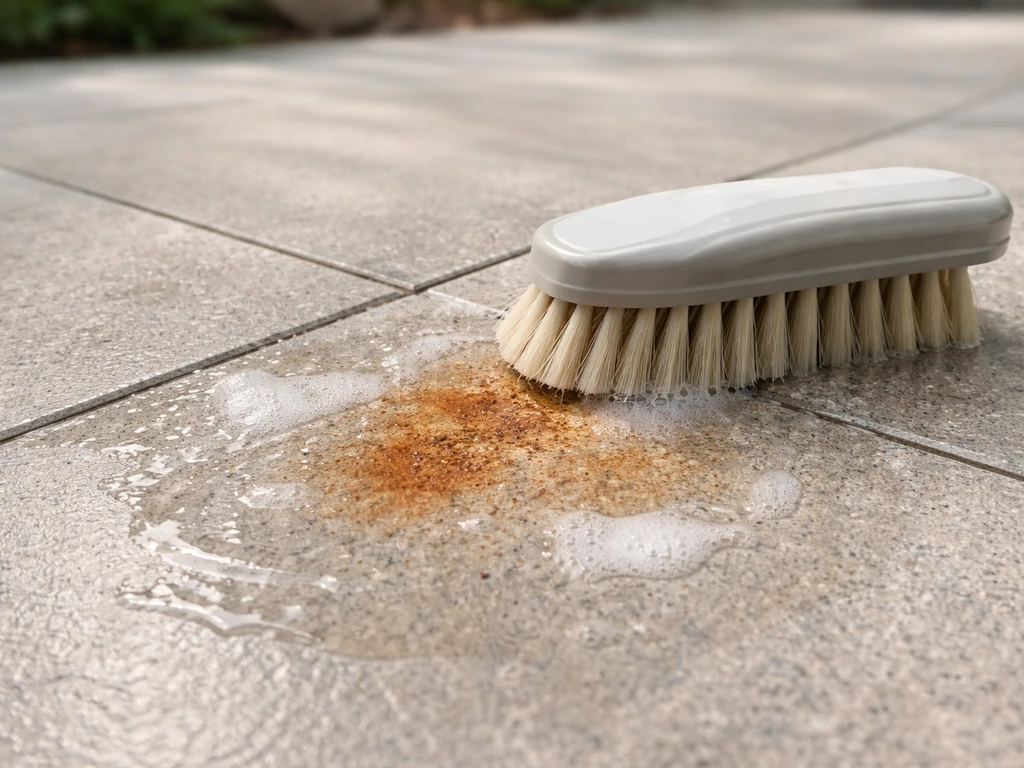
How to Get Rust Off Patio Tiles, Including Porcelain
Step by step rust stain removal for patio tiles, including porcelain, with safe acids, dwell times, grout care, and prev
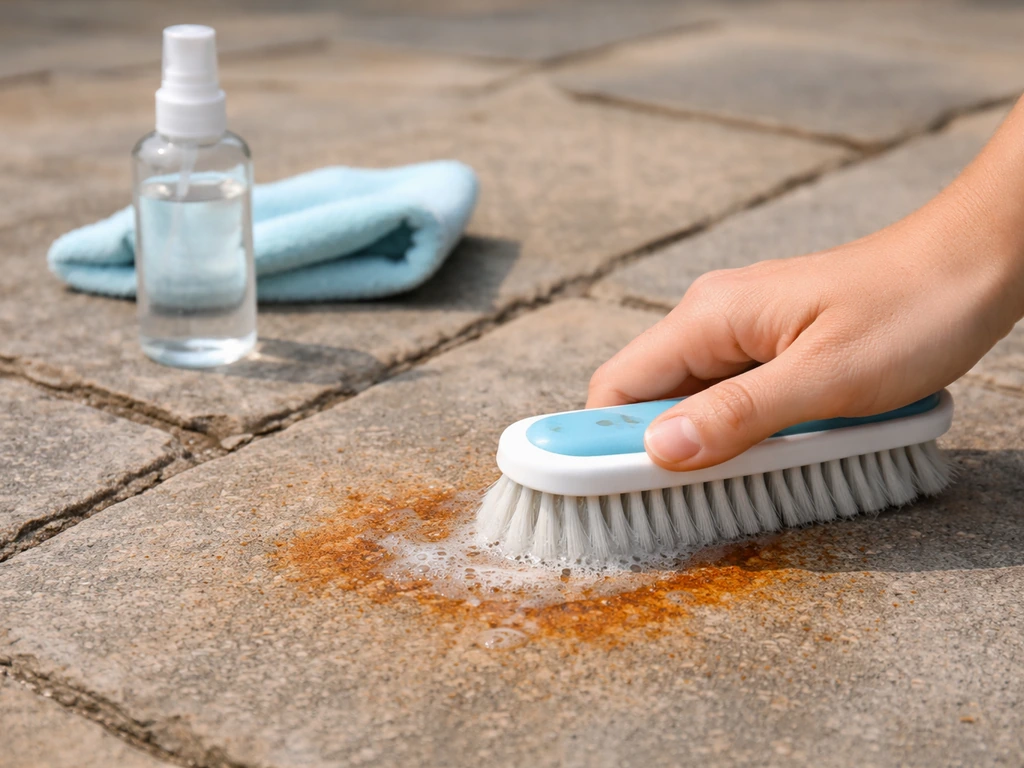
How to Remove Rust From Stone Patio: Step by Step
Step-by-step methods to get rust stains out of stone or flagstone patio safely, using cleaners, oxalic options, and caut
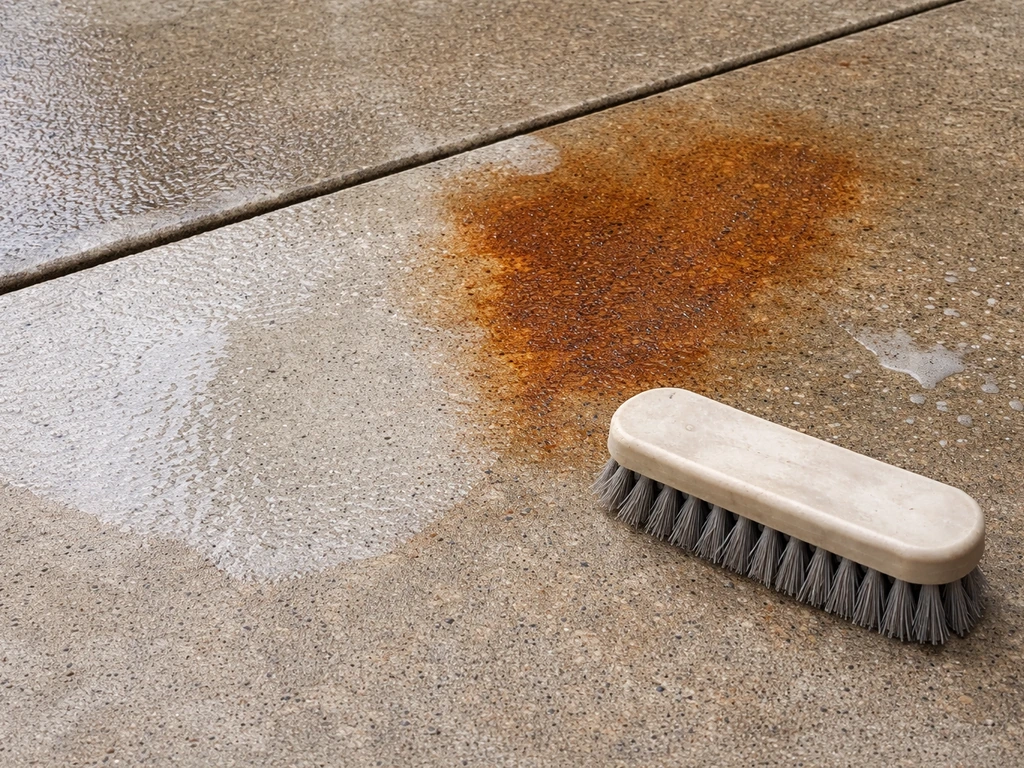
How to Get Rust Off Patio: Step-by-Step Methods by Surface
Step-by-step ways to remove rust stains from patio concrete, brick, pavers, and stone with safe acids, scrubbing, and pr