
Rust stains on a natural stone patio lift best with an oxalic-acid-based rust remover, applied as a liquid soak or a paste poultice, left to dwell for 10 to 30 minutes on surface stains or up to 24 hours for deeper ones, then rinsed thoroughly with clean water. For light staining on acid-resistant stone like flagstone or sandstone, white vinegar can work as a starting point. The key rule with natural stone: never reach for muriatic acid or bleach, never assume pressure washing alone will handle rust, and always test any product on a hidden spot first.
How to Remove Rust From Stone Patio: Step by Step
Dylan Hale
27 May 2026
Figure Out Where the Rust Is Coming From
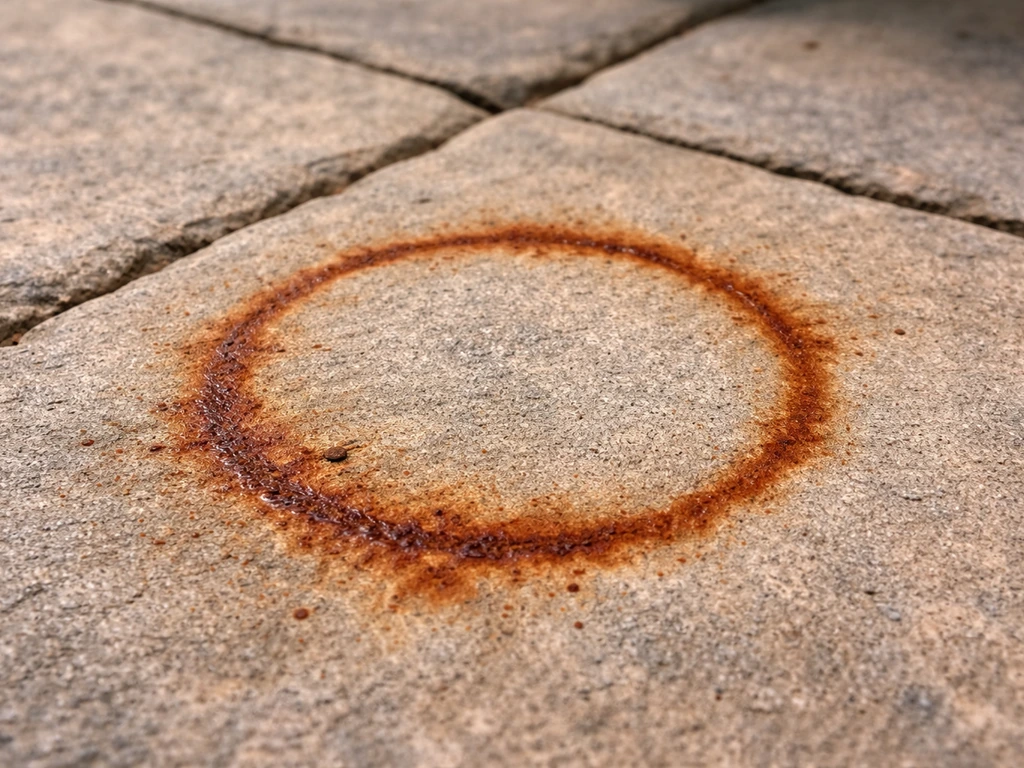
Before you mix anything, take a close look at the stain. Rust on a stone patio almost always follows the shape of whatever metal object caused it. A circular ring usually points to a planter with a metal base or a can of fertilizer left sitting out. A rectangular smear matches patio furniture legs. A drip pattern down a vertical face suggests a rusting railing, screw, or bolt. Orange-brown streaks near irrigation heads often come from iron-rich water or metal fittings.
Identifying the source matters because if you clean the stain but leave the metal object in place, the rust will return within weeks. That rusting railing, old grill, metal-legged chair, or forgotten planter will keep depositing iron oxide every time it rains. Address the stain and the source at the same time.
Also confirm you are actually dealing with rust and not something else. Rust stains are typically orange to reddish-brown, somewhat translucent, and don't scrub off with plain water. Tannin stains from wet leaves look similar but tend to be darker and more uniform. Efflorescence is white and chalky. If your stain is rust-colored and matches the shape of a metal object, you are almost certainly dealing with iron oxide and the methods below will work.
Prep the Area Before You Put Anything on the Stone
Stone patios vary a lot: flagstone, slate, sandstone, bluestone, travertine, limestone, and granite all behave differently when exposed to acids or harsh chemicals. The single most important prep step is identifying your stone type, because it changes which products are safe. Calcite-based stones like limestone, travertine, and marble are acid-sensitive. Acids will etch them, leaving dull spots that are worse than the original rust stain. Silica-based stones like granite, slate, sandstone, and most flagstone tolerate mild acids much better. If you are working specifically with a granite patio, choose an oxalic-acid-based rust remover labeled safe for granite and follow the soak or poultice dwell time.
Once you know what you are working with, here is how to prep:
- Clear the area: move furniture, planters, and anything else off the patio so you have full access and nothing gets splashed.
- Protect plants and grass: rust removers, even gentler ones, can harm plants. Wet down surrounding soil and cover nearby plants with plastic sheeting before you start.
- Pre-wet the stone: dampen the stained area and the surrounding stone with clean water before applying any product. This slows absorption into the stone and helps the cleaner work at the surface rather than racing deep into pores.
- Test in a hidden spot: apply a small amount of your chosen product to an inconspicuous corner or the underside of a loose paver. Wait the full dwell time, rinse, and let it dry before committing to the whole stain. This is especially critical on limestone, travertine, or polished stone.
- Gear up: wear chemical-splash goggles (not just sunglasses), chemical-resistant gloves, and old clothes. Check the product's safety data sheet for any specific hazards.
Start Gentle: Vinegar and Manual Scrubbing for Light Stains
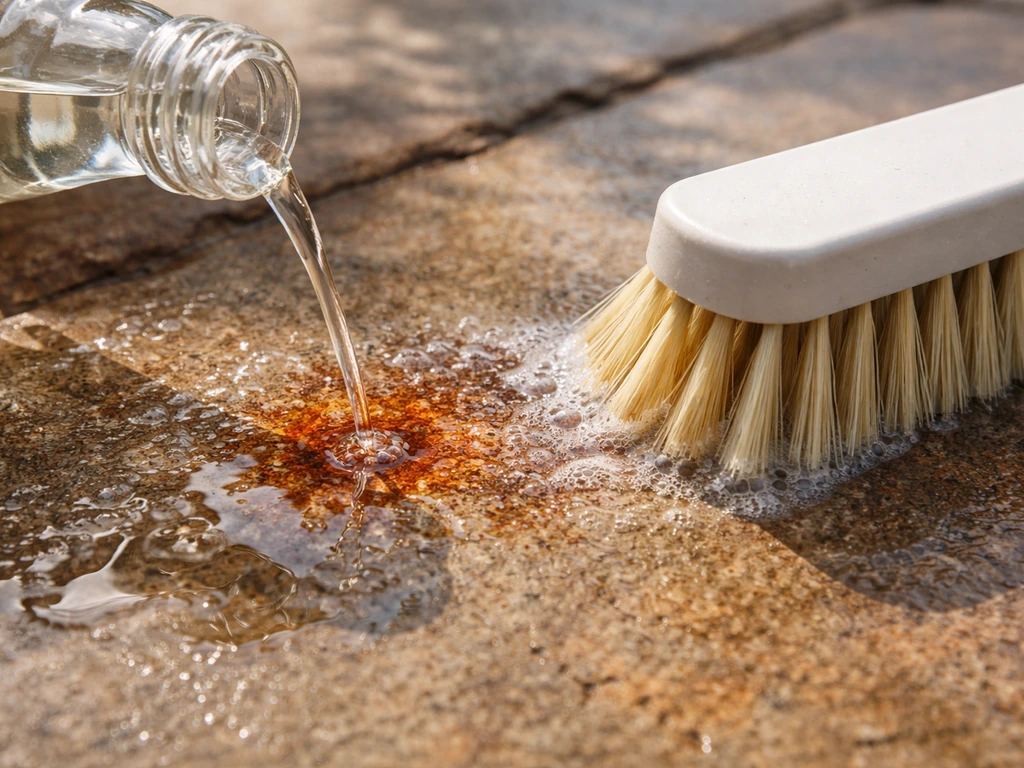
If the rust stain is fresh, light, and on an acid-resistant stone like flagstone, sandstone, or slate, it is worth trying white vinegar before reaching for stronger chemistry. If you are dealing with how to get rust off of a concrete patio, vinegar is only a mild starting point, so move to an oxalic-acid rust remover when the stain does not lift white vinegar. Vinegar will not touch embedded or old rust, and you absolutely cannot use it on limestone, travertine, or marble, but on a surface-level stain on the right stone it can save you time and money.
- Pre-wet the stained area with plain water.
- Pour undiluted white vinegar directly onto the stain and let it sit for 5 to 10 minutes. Do not let it dry on the surface.
- Scrub with a stiff-bristled nylon brush. Avoid wire brushes or metal scrubbers — they leave tiny iron particles in the stone that will rust and create new stains.
- Rinse thoroughly with clean water, working from the outer edges inward so you are not pushing loosened staining into clean stone.
- Repeat once or twice if you see the stain lightening but not fully lifting.
I have found vinegar works well enough on a light rust ring from a planter on bluestone or flagstone, but it rarely does much on stains that have been sitting for a season or longer. If you have done two rounds and the stain has barely budged, move on to a proper rust remover rather than keep acidifying your stone.
The Right Rust Remover for Natural Stone, and How to Use It
Rust stains require iron-chelating chemistry, specifically products based on oxalic acid or EDTA. Generic deck cleaners, all-purpose degreasers, and standard patio cleaners will not work on rust. They are not formulated to break the bond between iron oxide and stone. You need a product labeled specifically as a rust remover, and ideally one labeled safe for natural stone.
Oxalic Acid: the Go-To for Most Stone Types
Oxalic acid is the workhorse for rust on stone. It reacts with iron oxide to form a water-soluble compound that can then be rinsed away. Products like Catalina Chemical Stone Safe Rust Remover and similar oxalic-acid powders give you consistent results when mixed and applied correctly. For acid-sensitive stones like limestone or marble, a poultice approach (described below) is the safer method because it draws the stain out rather than flooding the surface with acid.
Liquid Application for Surface Stains
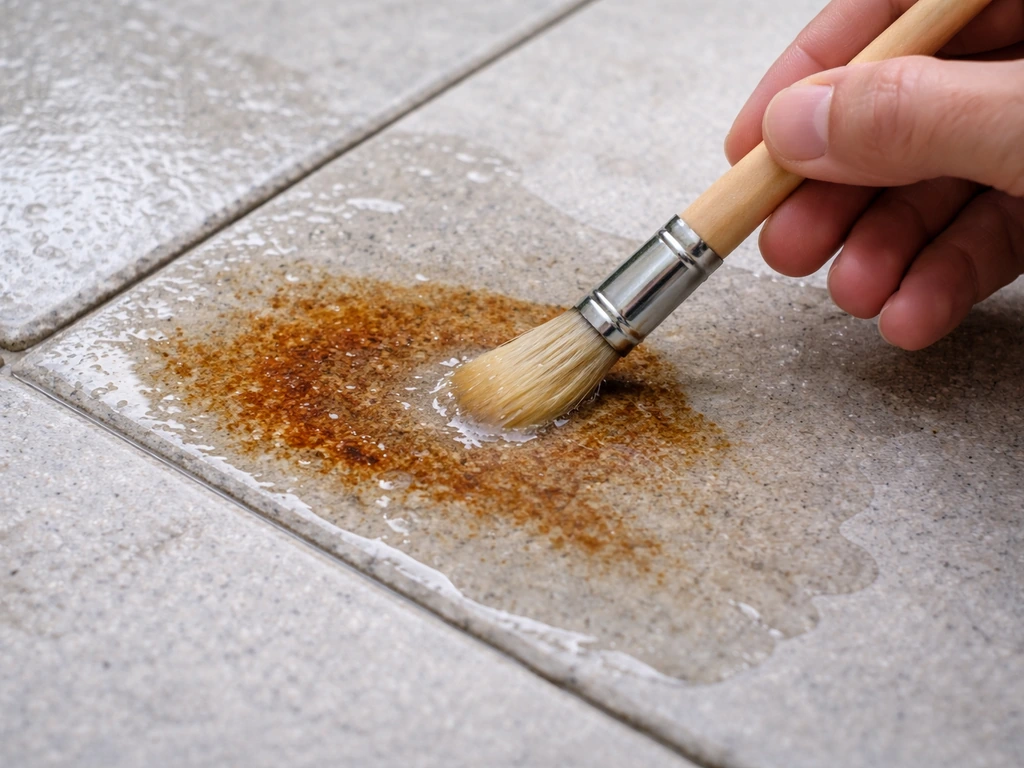
- Mix oxalic acid powder into warm water at about 8 oz per gallon, or follow your specific product's directions exactly.
- Pre-wet the stained area.
- Apply the solution to the stain with a brush, sponge, or spray bottle. Make sure coverage extends slightly beyond the visible stain edges — this prevents you from pushing iron ions into clean stone at the margins.
- Allow 10 to 20 minutes dwell time. Watch the stain: if it is actively lightening, you can extend the dwell slightly. Do not let the solution dry on the surface.
- Agitate gently with a nylon brush.
- Rinse thoroughly with clean water. Rinse again. Residue left behind will cause problems.
- Repeat the treatment if the stain is lighter but still visible. Most stains need two rounds.
Poultice Method for Deep or Stubborn Stains
If the stain has been sitting for months, or if you are working on a porous stone where the iron has migrated below the surface, a poultice gives you much better results. A poultice is essentially a paste that you leave on the stain, and as it dries it draws the stain up out of the stone. For rust, you need a rust-specific poultice, not a generic stain-removal paste.
- Mix oxalic acid powder with water (using the 1 part acid to 10 parts water by weight ratio recommended for limestone and marble applications, or follow your product label) into a thick paste with a peanut-butter-like consistency.
- Pre-wet the stain.
- Apply the paste about a quarter-inch thick, extending coverage well beyond the stain edges in all directions.
- Cover with plastic wrap and tape down the edges so it dries slowly. Slow drying improves draw.
- Leave for up to 24 hours for deep stains.
- Remove the dried poultice, rinse the area thoroughly with clean water, and evaluate the result.
- Repeat if necessary. Deeply embedded stains may need two or three applications.
A note on what not to use: muriatic acid (hydrochloric acid) is too aggressive for natural stone. It will strip surfaces, dissolve calcite-based stones instantly, and can permanently damage the finish. Bleach does not work on rust at all and can discolor stone. Stick to oxalic-acid-based or EDTA-based rust removers labeled safe for stone.
For patio slabs, the best rust remover is usually an oxalic-acid-based product labeled safe for natural stone, applied with the dwell time the label recommends oxalic-acid-based rust removers. Products like HG Rust and Oxidation Stain Remover or Whink Rust Oxy are worth considering, but always verify the label says safe for your specific stone type. For example, Techniseal's rust remover explicitly states it should not be used on acid-sensitive natural stone.
Pressure Washing vs. Hand Scrubbing on Stone
Pressure washing a natural stone patio is not the same as blasting a concrete driveway. Stone is more vulnerable, and the approach needs to be more restrained. Here is the honest breakdown:
| Factor | Pressure Washing | Hand Scrubbing |
|---|---|---|
| Rust removal effectiveness | Low on its own — water pressure does not dissolve iron oxide | Good when combined with the right rust remover chemistry |
| Risk to stone surface | Moderate to high — can remove protective patina, erode grout, and damage polished surfaces | Low when using nylon brush and correct products |
| Best use case | Rinsing off loosened staining and cleaner residue after chemical treatment | Applying and agitating rust removers during treatment |
| Lance/narrow jet setting | Avoid completely on natural stone | Not applicable |
| Safe PSI range | Below 1,200 PSI for most natural stone; use a wide fan tip | Not applicable |
| Pre-wetting required | Yes, always | Yes, always |
Pressure washing is most useful as a rinse tool after your chemical treatment has done the actual work. After you have applied a rust remover and agitated with a brush, a gentle pressure wash with a wide fan tip at low PSI will clear residue more effectively than a garden hose. What it will not do is remove rust stains by itself. You can use these same rust removal steps to remove rust marks from patio slabs safely. High-pressure water does not react with iron oxide.
If you do use a pressure washer, start at the lowest setting and keep the nozzle at least 12 inches from the surface. For pressure washing stone, the U.S. General Services Administration recommends using the simplest and least aggressive methods, testing cleaning methods first, and taking care to avoid scratching or damaging polished surfaces use the simplest and least aggressive methods, test cleaning methods first, and avoid scratching or damaging polished surfaces. Never use a lance or pinpoint jet on natural stone. Always pre-wet, always rinse from the outside of the treated area inward, and rinse a second time to make sure no cleaner or loosened staining gets left behind.
For most homeowners dealing with rust on a stone patio, hand scrubbing with the right rust remover gets better results with less risk of damage than leading with a pressure washer. If you do not own a pressure washer, do not feel like you need one for this job.
After the Stain Is Gone: Seal the Stone and Stop Rust Coming Back
Once the rust stain is lifted, let the stone dry completely before you do anything else. Porous stones like sandstone or some flagstones may need 24 to 48 hours of drying time before they are ready for sealer. Applying sealer to damp stone traps moisture and causes problems.
Rust removal treatments, especially repeated applications, can strip existing sealer from the stone surface. After the stone is dry, apply a penetrating stone sealer appropriate for your patio material. Sealer will not prevent rust stains indefinitely, but it slows the penetration of iron oxide into the stone and makes future stains easier to clean.
Preventing rust from returning means dealing with the source. Go through this checklist:
- Metal patio furniture: add rubber or plastic feet caps to all chair and table legs. If the furniture itself is rusting, sand it back and apply a rust-inhibiting primer and paint, or replace it.
- Planters: use saucers with rubber feet under any metal-based planter. Better yet, switch to plastic, ceramic, or powder-coated containers.
- Railings, screws, and bolts: check all metal fasteners and railings around the patio. Treat any visible rust with a rust converter product and seal or repaint exposed metal.
- Grills: make sure the grill is not sitting directly on the stone or draining grease and rust onto the surface. Use a grill mat underneath.
- Irrigation systems: iron-rich water from irrigation systems is a common cause of orange staining on patios. If your water has high iron content, consider installing an iron filter or redirecting spray heads so overspray does not hit the stone.
- Fertilizers: some granular fertilizers contain iron and will rust if they sit on wet stone. Sweep any stray fertilizer granules off the patio immediately after application.
If you have treated the stain two or three times with a proper oxalic-acid rust remover and it is still clearly visible, the rust has likely penetrated deeply into the stone. At that point, standard DIY methods have reached their limit. For limestone rust that does not lift with standard poultice applications, Surface Care Pros suggests extending the poultice approach and/or seeking professional stone restoration standard DIY methods have reached their limit. A professional stone restoration service can use more aggressive poultice chemistry or mechanical polishing to address embedded stains without damaging the stone. It is worth getting a quote before writing off the stone entirely.
The same general approach applies whether you are dealing with rust on pavers, patio tiles, or concrete surfaces, though the chemistry and risk levels vary by material. If your situation is specifically patio pavers, focus on the safest paver-compatible rust remover and dwell time for your exact stone or concrete type how to get rust stains off patio pavers.
To get rust off patio tiles, start by confirming it is iron oxide, then use a stone-safe rust remover like an oxalic-acid product and rinse thoroughly after dwell time rust on patio tiles. If you are actually dealing with rust on a concrete patio, use a rust remover formulated for concrete and follow the dwell and rinse steps carefully.
Natural stone demands the most careful product selection compared to concrete or cement patios, which can tolerate a broader range of rust removers. If you are working on a mixed patio with different surface types, treat each material according to its own specific requirements.
FAQ
How many times should I repeat the rust-removal treatment before I give up?
Start by rinsing thoroughly after every dwell period, then re-check the color change in daylight. Oxalic- and EDTA-based removers can lighten rust without fully removing it, so if the stain looks lighter but still visible, do another correctly applied rust-specific treatment rather than switching to a stronger acid. If it stays the same after two or three proper applications, the rust is likely embedded and you should stop and consider professional stone restoration or a targeted poultice/polishing approach.
Does weather or temperature affect how well rust remover works on stone patio?
Yes, for oxalic-acid products, temperature and drying conditions matter because the chemistry needs time to react and moisture to stay in contact with the stain. Work in mild conditions (avoid direct scorching sun and freezing temperatures) and keep the poultice wet or damp during the dwell if the label allows it. If the paste fully dries too quickly, the reaction can stop early and you may need to reapply.
What should I do if white vinegar does not remove my rust stain?
Do not rely on vinegar as a repeat strategy. If you already tried vinegar twice and the ring is barely changed, move to a labeled rust remover with oxalic acid or EDTA, because vinegar mainly helps light, surface-level discoloration and will not break the iron oxide bond once rust has had time to embed.
Can I make oxalic-acid rust remover stronger by using hotter water or higher concentration?
If you mixed an oxalic-acid product with hot water, it can react faster but it can also make the solution evaporate quicker and leave residue. Use the exact dilution and water temperature specified on the label, and mix only what you can apply within the recommended working time. When in doubt, err on the label dilution rather than making it stronger.
How long should I leave rust remover on the stone patio?
Pick the dwell time based on label instructions, but also adjust to the stone and stain depth. Shallow surface rings may need the shorter window, while deeply stained, older rust often needs the longer soak or a poultice approach. Overextending dwell beyond the label does not guarantee better results and can increase risk of dulling, especially on acid-sensitive stones like limestone or travertine.
Why does the rust stain come back after I clean it?
Treat the source metal as well. If the rusting object (planter base, grill foot, railing post hardware) is still in place, you may see the stain return or darken after rain even after a perfect cleaning. Remove, replace, or coat the metal, and if it cannot be moved, you may need to address corrosion protection before the stone cleaning fully “sticks.”
What kind of brush should I use, and can scrubbing too hard damage my stone?
Scrub gently enough to avoid abrading the surface texture. Use a soft or medium brush for most stones, and avoid aggressive wire brushes that can scratch, especially on softer stones like limestone or worn flagstone surfaces. After agitation, rinse well, and if residue remains in pores, re-treat with the right dwell and poultice rather than increasing scrubbing force.
How do I know a rust remover is safe for my specific stone (including sealed vs unsealed)?
Yes, but choose carefully. Only use products that the label explicitly says are safe for your stone type, and verify compatibility for the exact finish (honest honed, tumbled, sealed, or unsealed). Many “stone” labels exclude calcite-based stones for certain acids, so do not assume that “stone safe” means safe for all stone categories.
What if the stain looks like rust but the cleaner does not work?
Sometimes the stain is rust-like but not iron oxide. Tannin stains tend to be darker and more uniform from leaf or organic contact, efflorescence is white and chalky and comes from salts, and some mineral spotting can look orange-brown. If it does not match the shape of a metal object and your first oxalic- or EDTA test area does not improve it, pause and confirm the stain type before continuing.
Is it okay to use a pressure washer first, to remove the rust faster?
You can, but only as a rinse step after chemical action. Use low pressure, a wide fan tip, and keep distance from the surface. Pinpoint nozzles, high PSI, or pressure blasting can erode mortar joints, lift surface fines, or force residue deeper into pores, making the stain harder to fully remove.
When can I apply sealer after rust removal, and how do I know the stone is dry enough?
After rinsing, let the patio dry completely before sealer. For porous stones, drying often takes longer (commonly 24 to 48 hours) and humidity can extend it. Sealing damp stone can trap moisture and promote recurring spotting, so check dryness by feeling and, for best results, wait until the surface is uniformly dry and not cool to the touch.
Will rust removal harm an existing sealer, and do I need to re-seal afterward?
If your stone is already sealed, the remover can dull or disrupt the sealer layer because rust treatments often pull out contaminants and may strip some protective coatings. Plan to do a small inconspicuous spot test and expect that you may need to re-seal afterward once the stone is fully dry.
What signs mean the rust is embedded and I should call a professional?
If there are rust spots that refuse to lift after correct chemistry, that often means penetration below the surface. In that situation, repeated chemical soaks can waste time, and a professional approach may be faster and safer, using deep poultices and, if appropriate, controlled mechanical polishing. Getting a quote is especially worthwhile for decorative stones or textured surfaces where grinding risk is higher.
How can I stop rust streaks from returning when the culprit is nearby hardware or irrigation?
For metal that causes ongoing drips, you can reduce return by preventing contact and sealing the metal. Remove the rusting item if possible, replace it with corrosion-resistant hardware, and use coatings like exterior-rated rust-inhibiting primers where appropriate. Also check nearby irrigation heads, because iron-rich water can create repeating orange streaks even if there is no visible metal object.
Next Articles
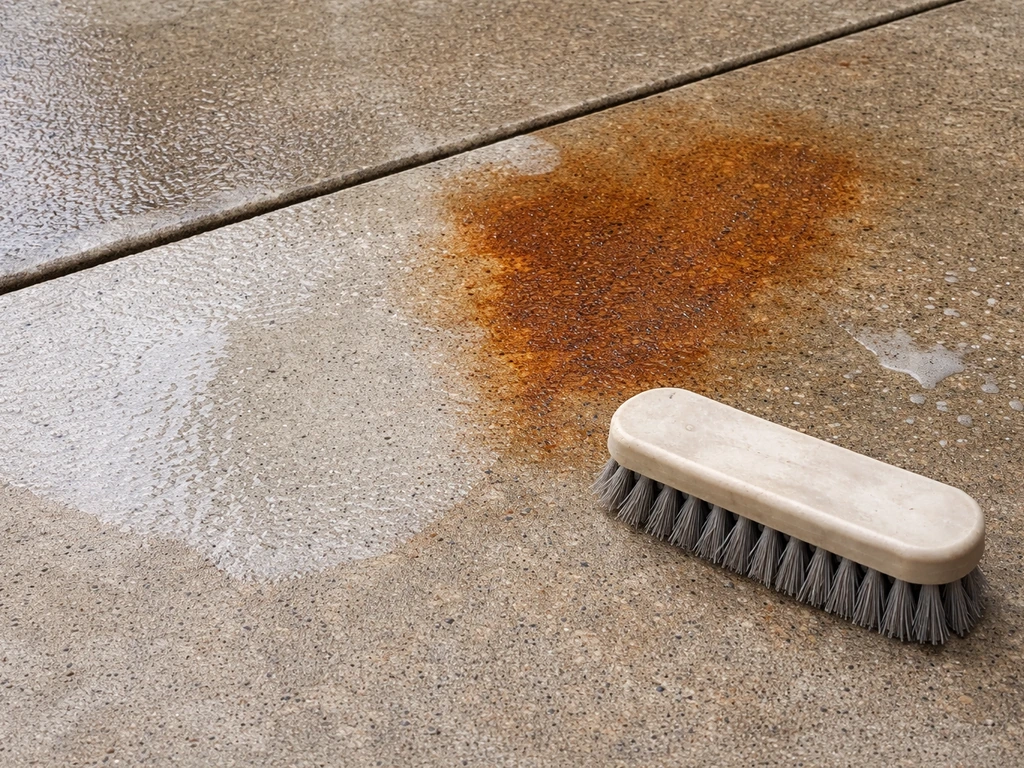
How to Get Rust Off Patio: Step-by-Step Methods by Surface
Step-by-step ways to remove rust stains from patio concrete, brick, pavers, and stone with safe acids, scrubbing, and pr
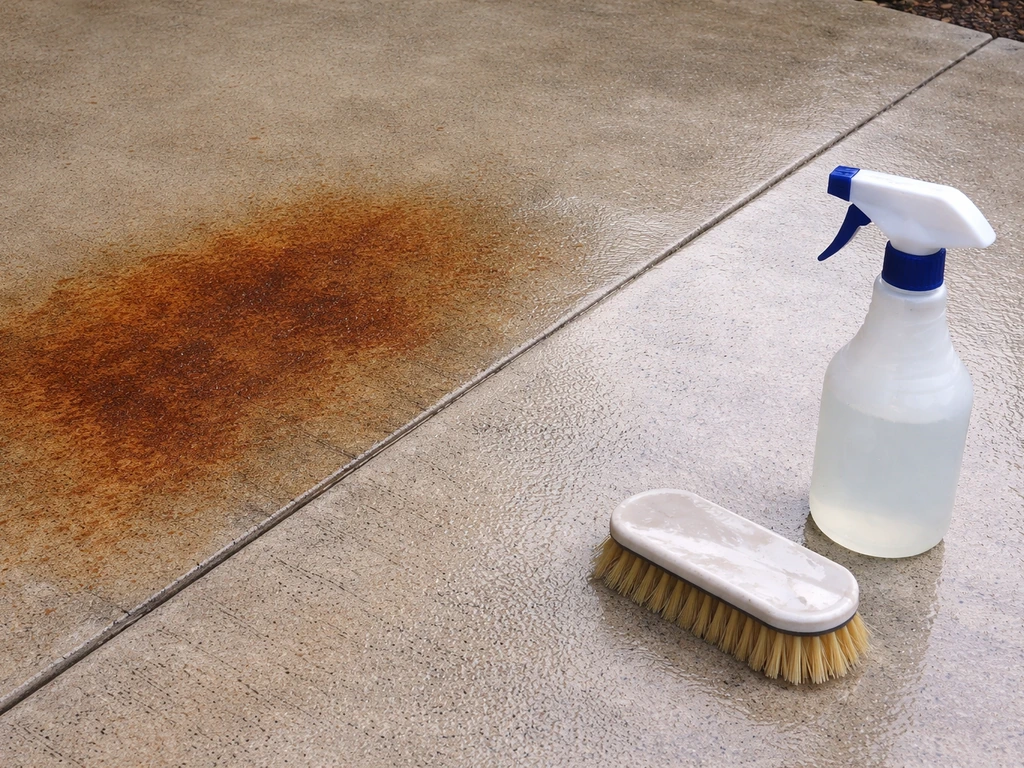
How to Get Rust Off a Cement Patio Without Damage
Step-by-step ways to remove rust stains from a cement patio safely, using scrubbing, vinegar, oxalic acid, or careful mu
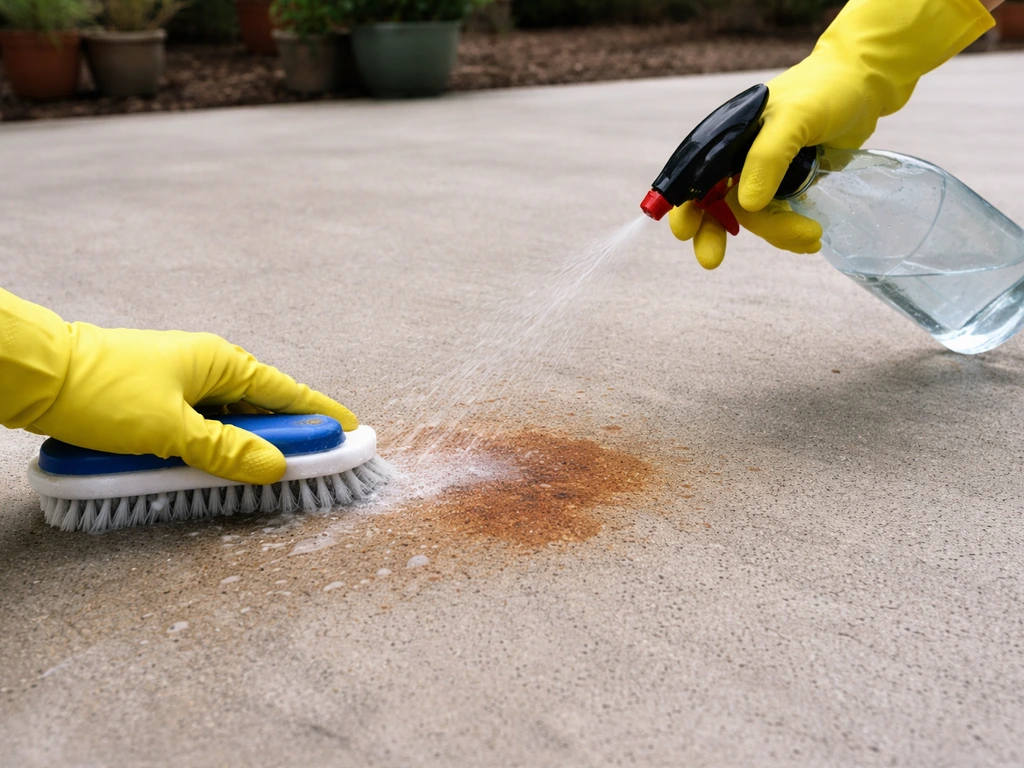
How to Get Rust Off a Concrete Patio: Step-by-Step
Step-by-step methods to remove rust stains from concrete patio safely, using acids or vinegar, scrubbing, rinsing, and p