Rust stains on patio pavers come off best with an oxalic-acid-based rust remover or a dedicated masonry rust remover product. Apply it to a wet surface, let it dwell for the time the label specifies (usually 5 to 15 minutes), scrub with a stiff nylon brush, then rinse thoroughly. For lighter stains, white vinegar works and won't risk etching your stone. For the toughest, ground-in marks, a stronger acid-based cleaner gets the job done, but you need to know your paver type first because some materials can't handle strong acids at all.
How to Get Rust Stains Off Patio Pavers Step by Step
Dylan Hale
30 Jun 2026
What you're actually looking at (and where rust on pavers comes from)
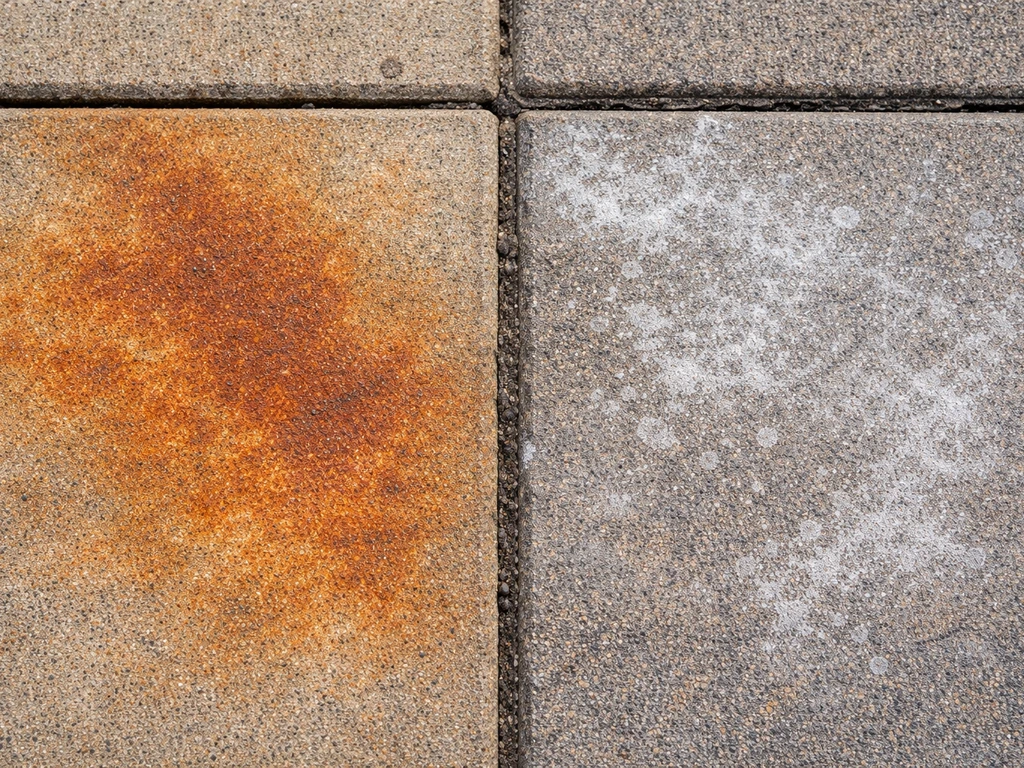
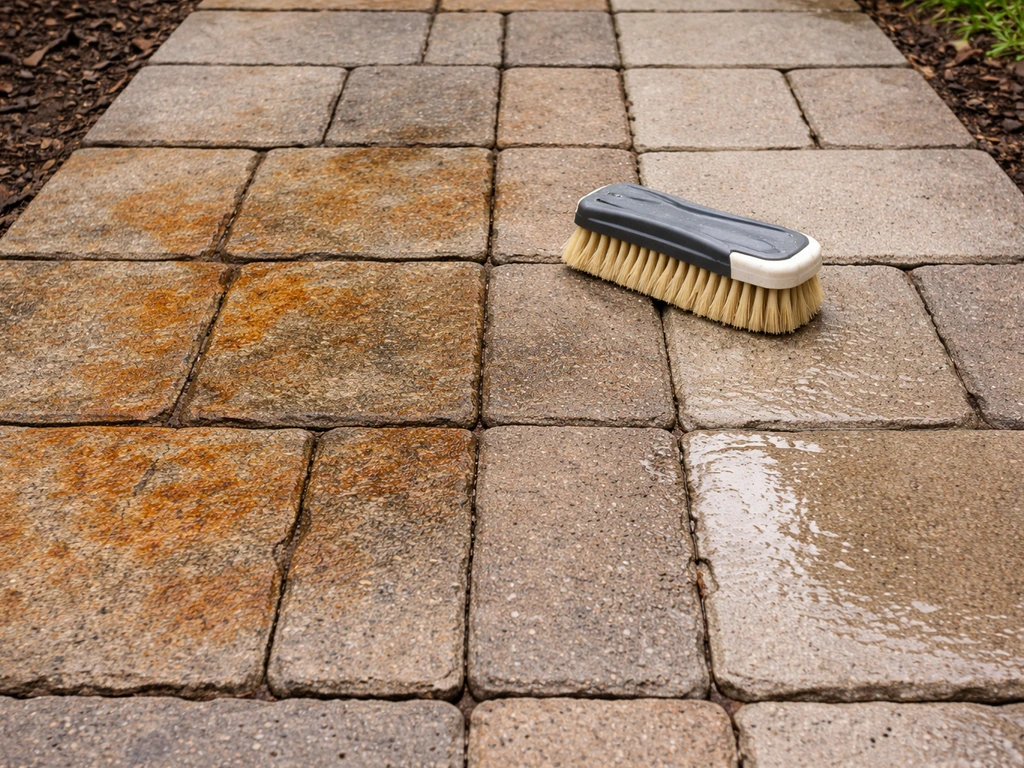
Before you buy anything, make sure what you're dealing with is actually rust. Rust stains are orange, reddish-brown, or yellowish-brown, and they tend to match the shape of whatever metal object caused them: round rings from furniture legs, elongated drips from a railing, or scattered spots from nails and screws. They won't scrub off with water alone and they don't look fuzzy or powdery.
Don't confuse rust with efflorescence, which shows up as white or grey chalky deposits and is caused by mineral salts migrating to the surface as moisture evaporates. That's a completely different problem. Mold and algae are another mistaken identity: they're typically green, black, or dark grey and often have a slightly slimy or fuzzy texture. Rust is always that distinctive warm reddish-brown color.
The most common culprits I see are: metal patio furniture with bare steel legs, nails or screws dropped and left on the surface, rebar or metal aggregate inside the pavers themselves oxidizing from the inside out, decorative iron railings and planters that shed rust when wet, and iron-heavy irrigation water. That last one is sneaky because the stains build up slowly and form patterns that follow your sprinkler spray arcs. If your rust stains come back every summer and line up with your sprinkler heads, your water supply is the source.
The paver material matters a lot for choosing your removal method. Concrete pavers and brick are relatively forgiving with acid-based cleaners. Natural stone pavers like flagstone, slate, travertine, limestone, and granite require much more caution. Travertine and limestone are calcium carbonate-based, which means strong acids will etch and permanently dull the surface. If you have stone pavers and need more detail on those specific materials, the guides covering how to remove rust from stone patios and how to get rust marks off granite go deeper on those surfaces.
Safety and containment before you open anything
Even the gentler rust removers are acidic enough to irritate skin and eyes, and the stronger ones can damage plants and nearby surfaces if you're not careful. Take five minutes to set this up properly before you start.
- Wear nitrile or rubber gloves and safety glasses whenever you're working with any rust remover, including vinegar-based DIY options.
- Wet down any plants, grass, or soil adjacent to your work area before you apply any chemical. This dilutes any runoff that reaches them.
- If you're working next to a lawn or garden bed, lay plastic sheeting along the edges to catch drips.
- Keep pets and kids away from the area until you've completed the final rinse and the surface is dry.
- Work on a dry, calm day. Wind can drift product onto nearby surfaces. Direct sun speeds up evaporation and can reduce dwell time unexpectedly.
- If you're using a product with muriatic (hydrochloric) acid, work with adequate ventilation. Don't use it in an enclosed patio or covered area without strong airflow.
- Never mix rust removers with bleach or sodium hypochlorite. The combination can release toxic chlorine gas and won't improve results. Bleach also shouldn't be used on most paver rust stains anyway since it doesn't break down iron oxide and can potentially worsen discoloration on certain stone types.
- Before applying anything to a visible area, test the product in a small, inconspicuous spot and wait for it to dry completely to check for discoloration or etching.
What you'll need: tools and products
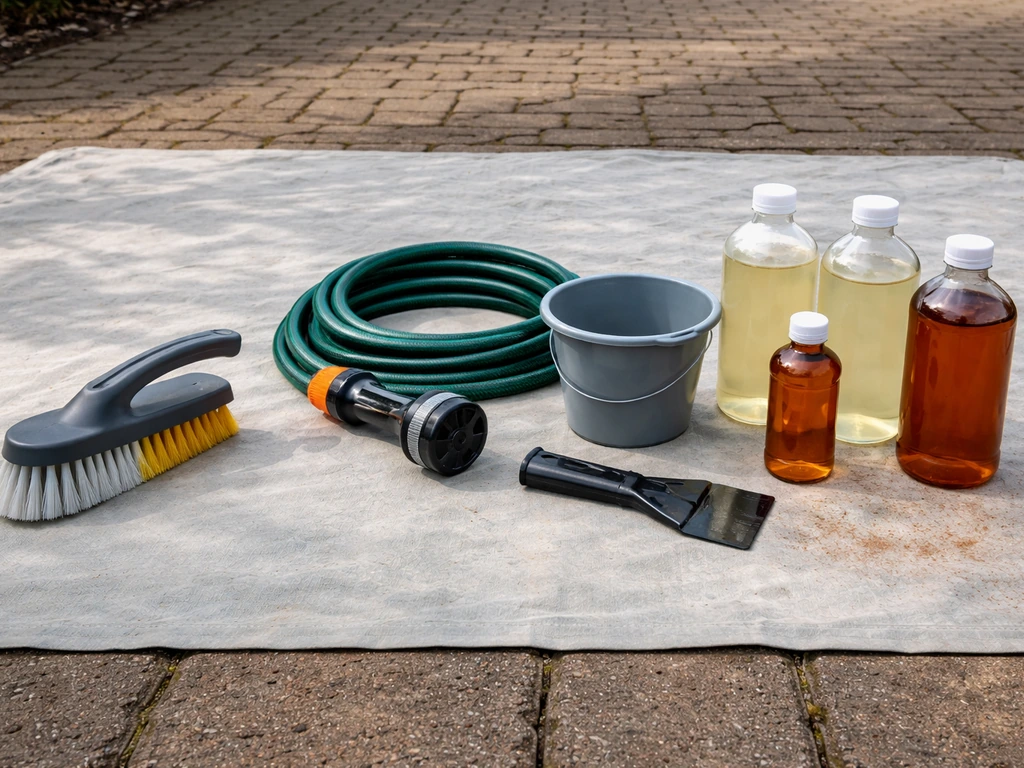
You don't need professional equipment for most paver rust jobs. Here's what to gather before you start.
Tools
- Stiff nylon scrub brush (not wire — wire bristles can break off and leave metal particles that create new rust spots later)
- Garden hose with a spray nozzle, or a pressure washer set to low (under 1,200 PSI for pavers with sand joints)
- Plastic bucket
- Plastic sheeting or drop cloths for protecting adjacent plants/surfaces
- Measuring cups if mixing powdered products
- Safety glasses and chemical-resistant gloves
Products: matching the remover to your situation
| Product Type | Best For | Works On | Avoid On | Strength |
|---|---|---|---|---|
| White vinegar (5% acetic acid) | Light, fresh rust stains; environmentally-conscious readers; homes with pets | Concrete pavers, brick, most stone | Travertine, limestone, marble (any carbonate stone) | Gentle |
| Oxalic acid powder (mixed per instructions) | Moderate rust on concrete and brick; embedded stains | Concrete pavers, brick | Travertine, limestone, marble | Moderate |
| Dedicated masonry rust remover (e.g., Techniseal, Chemique) | Most paver rust jobs; safer than DIY acid mixes | Concrete pavers, brick; check label for stone | Wet-cast pavers, stamped concrete, non-acid-resistant natural stone (per TDS) | Moderate to strong |
| Muriatic (hydrochloric) acid diluted | Severe, old rust on concrete or brick only | Concrete pavers, brick | ALL natural stone, any acid-sensitive surface | Strong |
| Bleach / sodium hypochlorite | Not recommended for rust removal | N/A | Natural stone; doesn't remove rust effectively | Not suitable |
A quick note on commercial rust removers: products like Techniseal Rust Remover contain no muriatic acid and are formulated specifically for pavers, which makes them a safer starting point than mixing your own acid. But read the product's technical data sheet before you buy. Techniseal's product, for example, explicitly warns against using it on non-acid-resistant natural stone, wet-cast pavers, or poured/stamped concrete. If you need to remove rust marks from a granite patio, the safest approach is to use a natural-stone-friendly rust remover and avoid harsh acids natural stone. Chemique's masonry rust remover specifies using it full strength with no dilution. Every product is different.
Pressure washer considerations
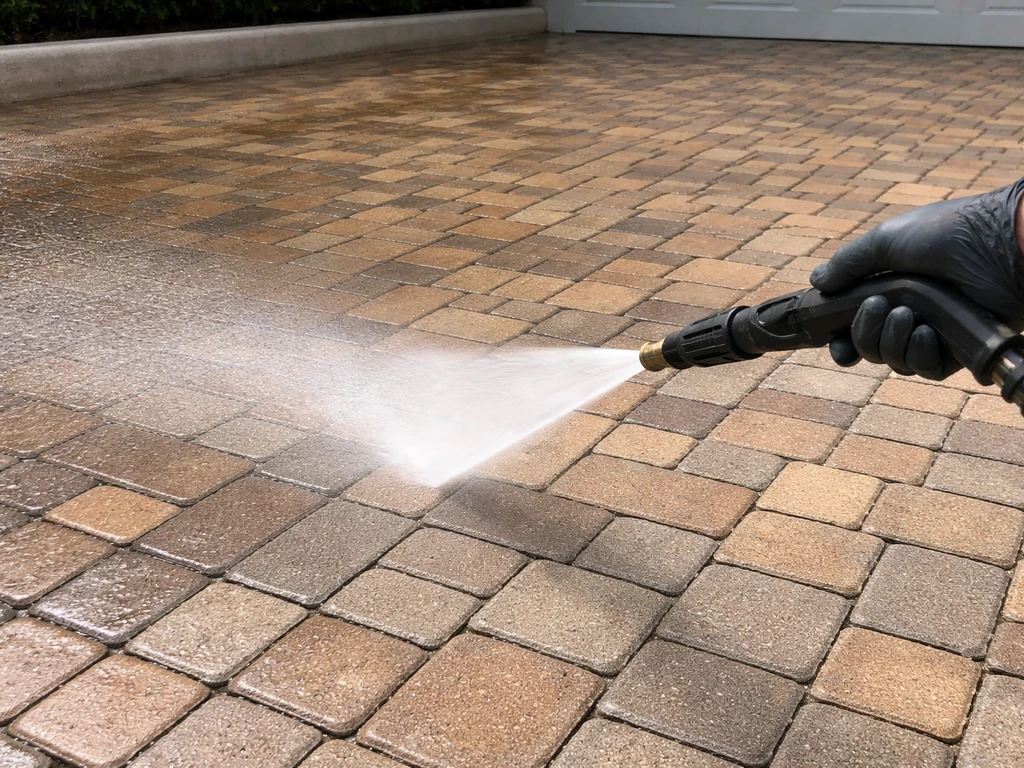
A pressure washer can be useful for the rinse stage, but don't rely on it to remove rust on its own. More importantly, if your patio has interlocking pavers with sand-filled joints, high-pressure water aimed directly at those joints will wash out the jointing sand fast. That leads to paver shifting and instability. If you use a pressure washer, keep it under 1,200 PSI, use a wide fan tip (25 to 40 degrees), and keep the nozzle at least 12 inches from the surface. Spray at an angle that avoids blasting joints directly. If you'd rather avoid the risk entirely, a garden hose with good pressure and a stiff brush gets the job done without the sand-loss problem.
Step-by-step rust removal: two methods
Method 1: Vinegar for light rust stains (non-acid-sensitive pavers)
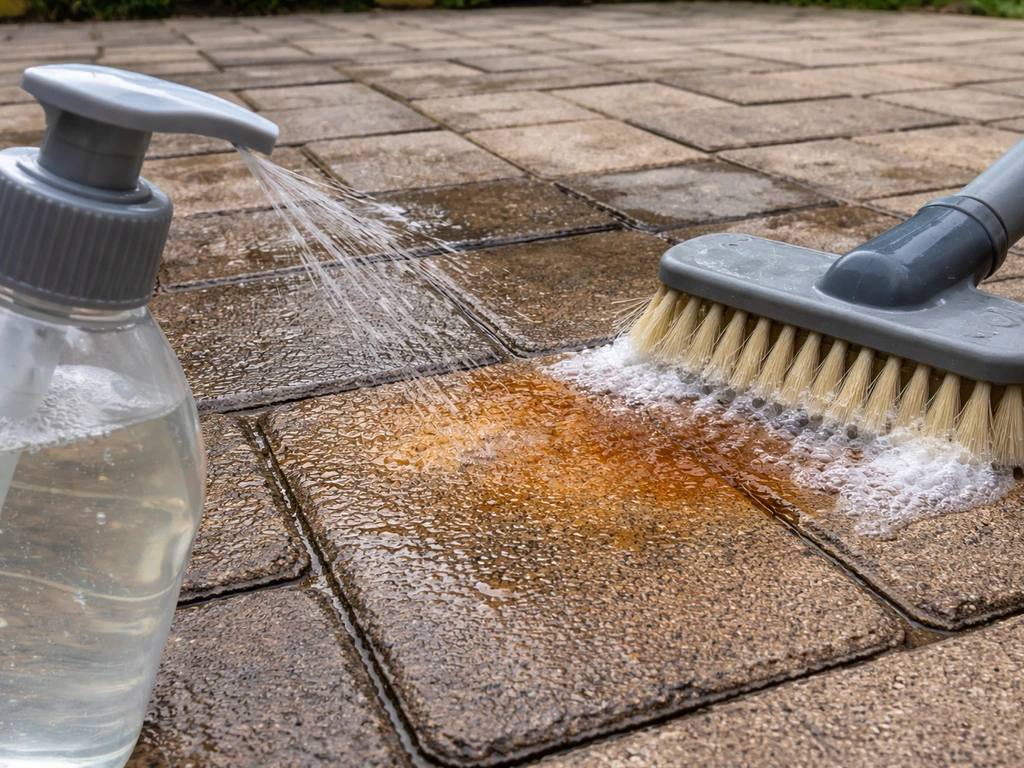
This is the right starting point if the stain is relatively fresh, not deeply set, and you want to avoid stronger chemicals. It's also a good option if you have pets or young kids who use the patio regularly. It takes longer but is genuinely effective on light rust. Don't use this on travertine, limestone, or marble.
- Pre-wet the stained area with your hose. You want the paver surface damp but not pooling with water.
- Pour undiluted white vinegar directly onto the rust stain, enough to cover it generously.
- Let it sit for 10 to 20 minutes. For stubborn stains, go closer to 30 minutes but don't let it dry out — reapply vinegar if needed.
- Scrub vigorously with your stiff nylon brush using circular motions. You should see the stain start to lift.
- Rinse thoroughly with your hose. Check the stain.
- Repeat the application if needed. Light stains often come up in one pass; older ones may need two or three.
Method 2: Dedicated masonry rust remover or oxalic acid (moderate to heavy stains)
This is what I'd reach for on any stain that vinegar hasn't shifted after two attempts, or on a stain that's clearly been there through at least one winter. If you're wondering what the best rust remover for patio slabs is, dedicated masonry rust removers or oxalic acid are usually the go-to for moderate to heavy stains Dedicated masonry rust remover or oxalic acid. Always read your specific product's label first since dwell times vary, but the process is consistent.
- Clear the area and protect adjacent plants and surfaces as described in the safety section above.
- Wet the stained paver surface with clean water. This helps the product penetrate evenly and prevents it from drying too fast.
- Apply the rust remover generously to cover the entire stained area. For liquid products, pour directly. For powder products like oxalic acid, the standard mix is roughly 1 part powder to 10 parts water by weight — but follow your product's label over any general guidance.
- Use a small nylon brush to work the product into the stain, especially around textured or porous surfaces where rust has penetrated deeply.
- Allow the product to dwell for the time specified on the label. This is typically 5 to 15 minutes. Don't let it dry completely on the surface.
- Scrub again with the nylon brush using firm, circular motions.
- Rinse the area thoroughly and completely with your hose or pressure washer (using the settings described above). Make sure all product residue is gone.
- Inspect the stain. If it's mostly gone but a faint shadow remains, let the surface dry fully and do a second application. Don't try to rush a second pass onto a wet surface.
Using muriatic acid on concrete or brick pavers (heavy staining only)
I'd only go here on concrete or brick pavers with severe, long-standing rust that hasn't responded to the above methods. Muriatic acid is effective but it's genuinely harsh stuff and should never be used on natural stone. The fumes are strong, so you need good ventilation, full eye protection, acid-resistant gloves, and old clothes.
- Mix one part muriatic acid with ten parts water in a plastic bucket. Always add acid to water, never water to acid.
- Pre-wet the paver surface thoroughly.
- Apply the diluted solution to the stained area only, not the surrounding surface.
- Allow it to dwell for no more than 5 minutes. Watch for fizzing, which is normal, but pull back immediately if the surface seems to be etching or discoloring in an unwanted way.
- Scrub with the nylon brush, then rinse immediately and thoroughly.
- Neutralize the surface after rinsing: apply a diluted baking soda solution (about 1 cup of baking soda per gallon of water) to the treated area, let it sit for 2 minutes, then rinse again. This step is important for concrete pavers to neutralize acid residue.
Stubborn stains, repeat treatment, and flash rust
Some rust stains, especially ones from rebar oxidizing inside the paver itself or from years of iron-heavy irrigation water, are genuinely difficult. A few things to know when you're fighting a persistent stain.
First, repeat applications work. Don't double the dwell time on a single pass trying to force the chemistry. Instead, do two or three separate applications with full rinses between them. Each pass lifts a layer of the stain, and you'll often see meaningful improvement by the third round even when the first seemed to barely touch it.
Second, watch for flash rust. This is where you clean the stain away, and within hours or days, a faint rust shadow reappears in the same spot. Flash rust usually means one of two things: the iron source is still present (a fastener buried in a joint, rebar very close to the surface, or ongoing iron-heavy water contact), or there are iron particles embedded deeper in the paver that the first cleaning didn't fully reach. If this is happening, treat it again immediately rather than waiting for it to fully oxidize. If you want a deeper clean after rust starts to return, focus on the underlying iron source and repeat treatment as needed. Then address the source.
For stains that genuinely won't move despite multiple acid treatments, the rust may have penetrated deeply into very porous pavers. At that point, a poultice approach can help. GSA recommends that you carefully examine the masonry to determine what is causing the staining before attempting removal, and to do any needed special prep, such as coating nearby metal, before using oxalic-acid-based poulticing carefully examine the masonry to determine the cause of staining. Mix oxalic acid powder with an absorbent material like diatomaceous earth or white chalk powder into a paste (approximately 1 part acid to 10 parts filler, mixed with water to a peanut-butter consistency). Apply a thick layer over the stain, cover it with plastic film, tape the edges down, and let it sit for 24 to 48 hours. The poultice draws the iron compounds out as it dries. Remove, rinse, and assess.
One thing to never do when trying to scrub harder: wire brushes. It feels like it should help, but wire bristles leave behind microscopic metal particles that oxidize and become new rust stains on your freshly cleaned pavers.
Rinsing, neutralizing, and getting an even finish
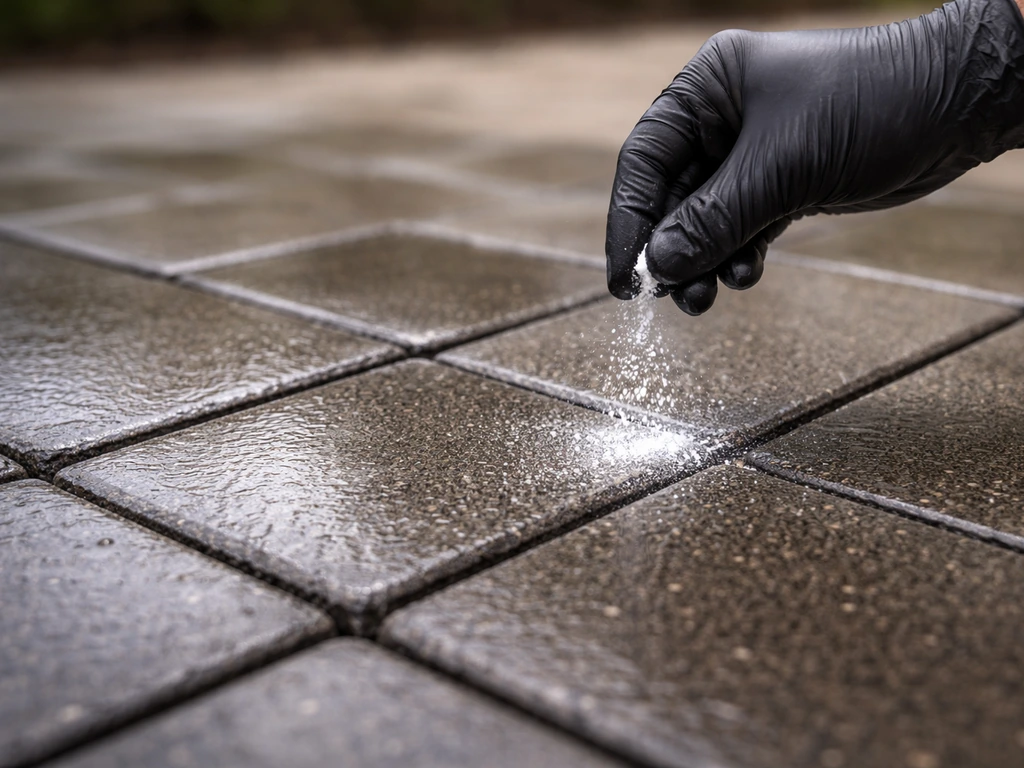
Rinsing isn't just the last step, it's part of the treatment. Acid residue left on pavers continues to react with the surface, can lighten the color unevenly, and can interfere with any sealer you apply later. Rinse more thoroughly than you think you need to.
After any acid-based treatment (including oxalic acid and commercial rust removers), neutralize the treated area. Mix about one cup of baking soda into a gallon of water, apply it generously to the treated area, let it bubble for a minute or two, then do a final rinse. This is especially important on concrete pavers where acid residue can continue breaking down the surface chemistry.
For an even-looking finish, consider doing a light clean of the entire surrounding paver area, not just the stained spots. Treating isolated patches can sometimes leave a slight lightening or color shift on the treated pavers compared to the untreated surrounding surface. A light overall clean with a mild masonry cleaner after the rust treatment can even things out. Let the pavers dry completely (24 to 48 hours in dry weather) before evaluating the final appearance or applying any sealer.
Aftercare: stopping rust from coming back
Removing the stain is only half the job. If the iron source is still sitting on or near your pavers, you'll be back here doing this again next season. If you want to prevent the rust from returning, fix the source first, since the iron can keep coming back through the pavers how to get rust off patio.
Remove or protect the metal source
- Put rubber, plastic, or felt caps on the feet of all metal patio furniture. These are inexpensive and available at any hardware store. They prevent wet metal from sitting directly on the paver surface.
- Inspect and remove any nails, screws, or fasteners that have been dropped and left on the patio. Check the sand-filled joints too; fasteners can settle into them.
- If a decorative iron railing, planter, or fixture is shedding rust, clean and repaint it with a rust-inhibiting primer and paint before putting it back near your pavers.
- If rebar inside your concrete pavers is the source (you'll know because the stain bleeds up from below the surface with no obvious external source), that's a structural issue that may require professional assessment.
Fix your irrigation if that's the cause
If your stains pattern-match to your sprinkler heads, iron-rich irrigation water is the source. You can install an iron filter on your irrigation line, adjust sprinkler heads to avoid spraying directly onto your patio pavers, or reduce the frequency of irrigation cycles that hit the patio area. This one takes some setup but it makes a dramatic difference if it's the root cause.
Sealing your pavers
Sealing pavers doesn't make them rust-proof, but it significantly reduces the porosity that allows iron particles to penetrate deeply. A sealed surface is much easier to clean when rust does appear. The timing matters: make sure your pavers are completely clean (any remaining staining will be locked in and actually look worse under a sealer), and allow 24 to 48 hours of dry time after your final rinse before applying any sealer. If your pavers were recently installed, wait 60 to 90 days before cleaning and sealing to allow full curing.
Apply paver sealer in thin coats, waiting about two hours between coats for proper adhesion. Don't apply it in direct midday sun or when rain is forecast within 24 hours. A penetrating sealer works well for natural stone and textured pavers; a film-forming sealer gives concrete and brick a more polished look but requires reapplication every few years.
Ongoing maintenance to catch rust early
The easiest rust stain to deal with is a fresh one. A quick sweep and visual check every few weeks lets you catch new rust spots before they bond deeply into the paver surface. At that stage, vinegar and a scrub brush is often all you need. Plan a proper paver cleaning once or twice a year, and re-evaluate your sealer every two to three years. If you stay ahead of it, rust stains on patio pavers are a minor annoyance rather than a major project.
FAQ
Can I use vinegar or rust remover on natural stone pavers like travertine or limestone?
Yes, but only if you use an approach compatible with your paver type. For concrete and brick, vinegar or an oxalic-acid-based remover can work when the product label allows it. For travertine, limestone, and marble (calcium carbonate stone), vinegar and stronger acids can etch, so skip them and use a natural-stone-friendly rust remover instead.
Is it okay to combine different rust removers to speed things up?
Do not mix rust chemicals together. Even if both are labeled as “rust removers,” combining them can create dangerous fumes or reduce effectiveness. Choose one product (oxalic-acid-based or a dedicated masonry rust remover, for example), follow its dwell time, then rinse and neutralize before deciding on a second round.
What should I do if the rust is still visible after the first treatment?
If the rust is still reddish-brown after your first pass, it usually means either (1) the dwell time was too short, or (2) the stain is deeper or still receiving iron from underneath. Instead of increasing dwell time on the same application, do another full application after a thorough rinse. If you see rust reappearing within hours, treat again immediately and address the source (fastener, rebar, or iron-rich water).
How can I tell whether what I’m seeing is efflorescence instead of rust?
If you notice white chalky deposits after cleaning, you may be seeing efflorescence rather than rust. Efflorescence does not lift off like rust and usually signals mineral salts moving through the paver as moisture changes. In that case, focus on improving drainage and letting the area dry thoroughly rather than repeating acid cleaning.
Will pressure washing damage sand-filled joints between interlocking pavers?
If you have sand-filled joints, you can still use a pressure washer, but you must avoid blasting the joints directly. Keep pressure under 1,200 PSI, use a wide fan tip, hold the nozzle at least about 12 inches away, and spray at an angle that does not force water into the gaps. Otherwise, you can wash out jointing sand, causing paver shifting and instability.
Why does rust return even after I removed it successfully?
Yes, sometimes the stain comes back even after it looks “gone.” That typically indicates flash rust or an ongoing iron source. Flash rust reappears within hours or days, and you should treat it again promptly. If the stains return seasonally, especially in patterns matching sprinkler arcs, the source is often iron-rich irrigation water.
What should I do if rust won’t come out after multiple treatments?
If your first attempts were only on the surface, the stain may have penetrated into porous pavers. A poultice approach can help when multiple acid treatments do not move the rust. Apply a thick paste of oxalic acid with an absorbent filler, cover with plastic, let it dwell for 24 to 48 hours, then remove and rinse.
Do I need to neutralize after using oxalic acid or a commercial rust remover?
You should neutralize after any acid-based rust remover, not just for safety but to prevent ongoing surface reaction. A simple method is baking soda dissolved in water, applied generously to the treated area, then rinsed after bubbling stops. Skipping this step can lead to uneven lightening and can affect how well you seal the pavers later.
When is it safe to apply sealer after removing rust?
Wait for full dryness before sealing. After your final rinse, allow 24 to 48 hours in dry weather, and if the pavers were newly installed, wait about 60 to 90 days before cleaning and sealing. Applying sealer over residual moisture or staining can lock in discoloration and reduce adhesion.
Why did my pavers rust again after scrubbing?
Wire brushes are a common mistake. They can leave behind tiny metal fragments that later oxidize, creating new rust spots right where you cleaned. A stiff nylon brush is the safer scrub option for most rust-removal routines.
How do I identify what is causing the rust stains?
If you can match the stain shape to a specific item, removal gets easier and prevents recurrence. Round rings often come from furniture legs, elongated drips from railings, and scattered dots from nails or screws. If the pattern lines up with sprinkler spray, test and adjust irrigation since the “source” may be the water rather than a visible metal object.
Next Articles
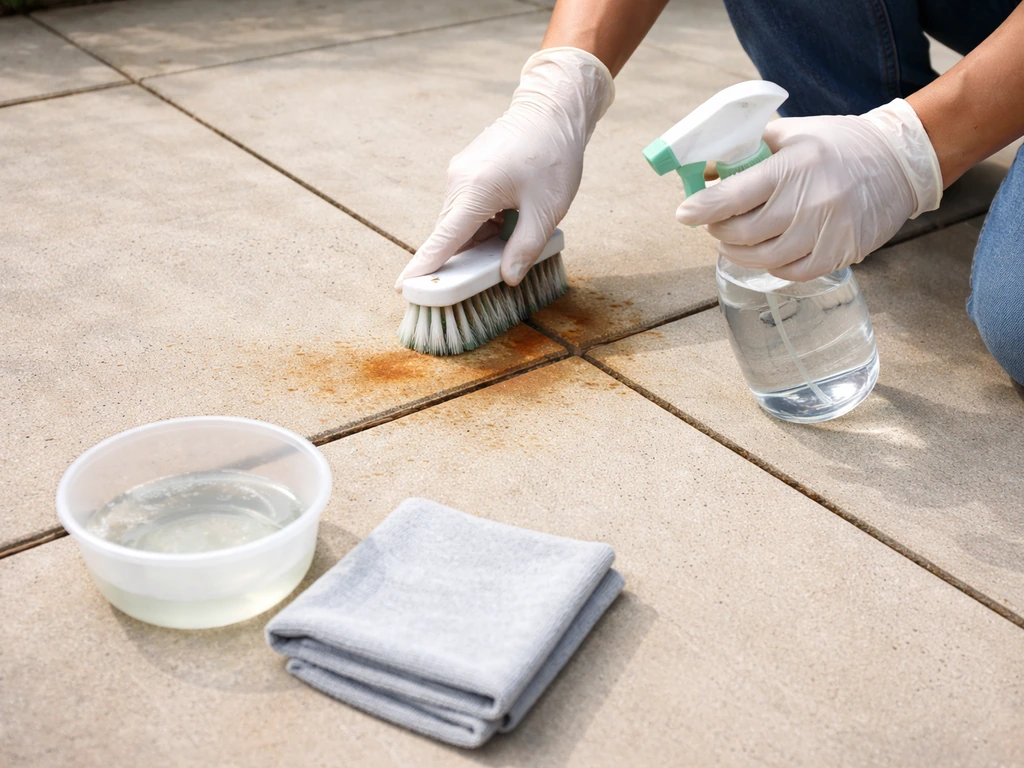
How to Remove Rust Marks From Patio Slabs Safely
Step-by-step safe rust stain removal from patio slabs, with prep, dwell times, scrubbing, rinsing, and prevention tips.
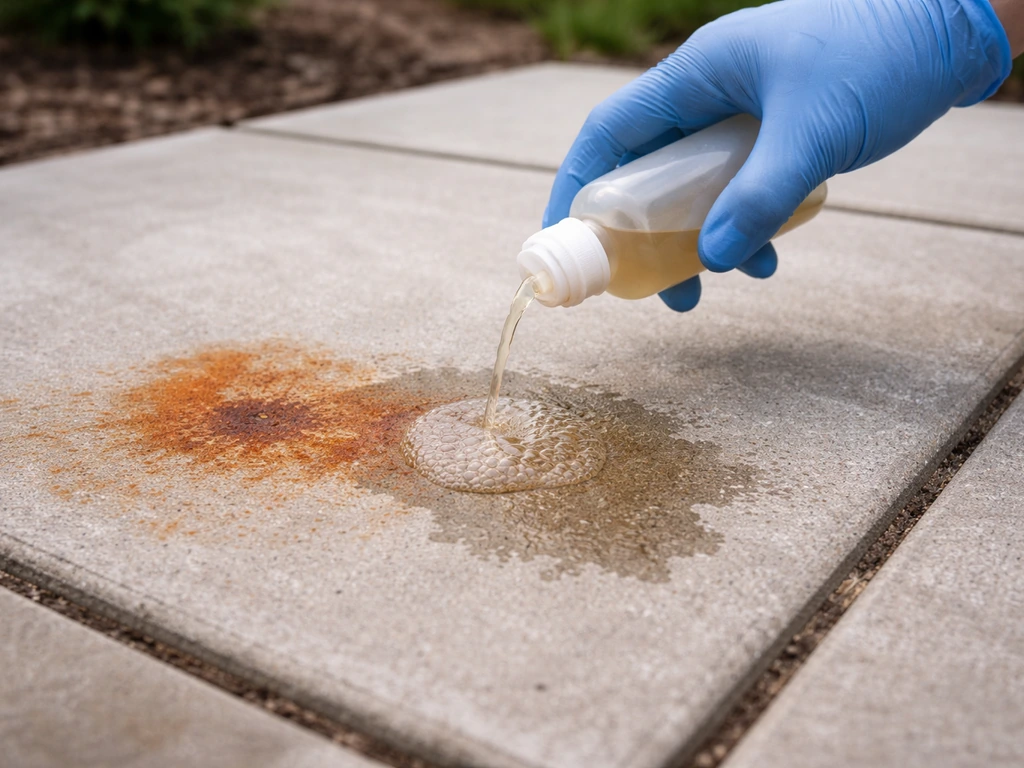
Best Rust Remover for Patio Slabs: Step-by-Step Guide
Choose the best rust remover for patio slabs with safe chemical or vinegar steps for concrete, brick, stone and pavers.
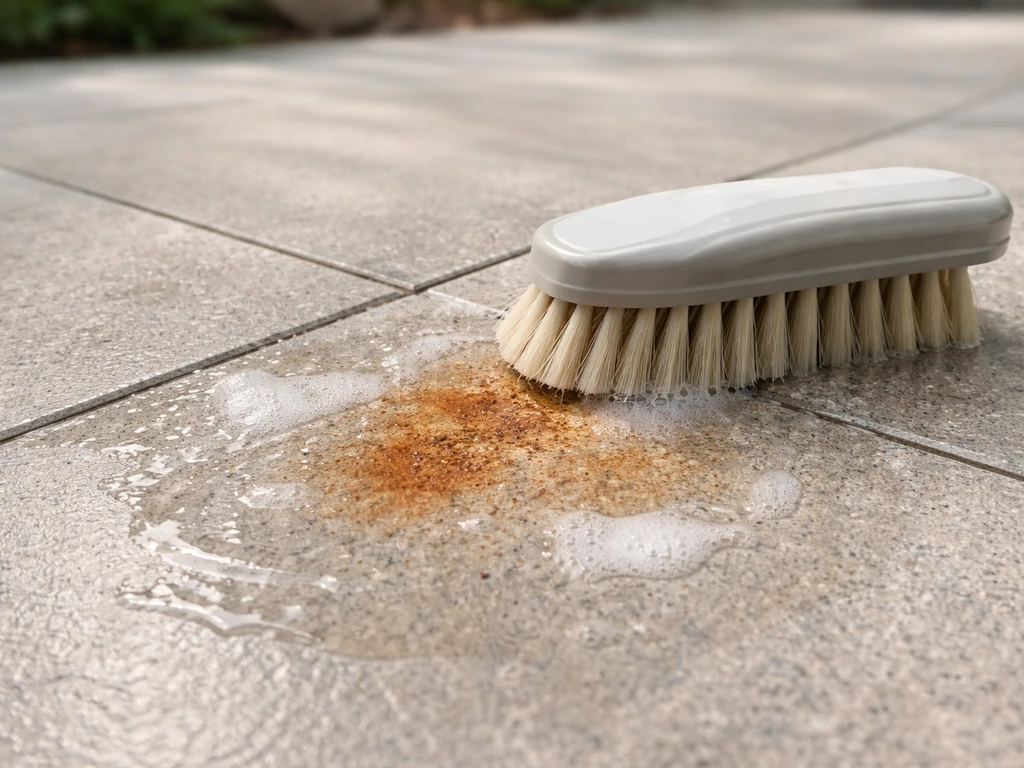
How to Get Rust Off Patio Tiles, Including Porcelain
Step by step rust stain removal for patio tiles, including porcelain, with safe acids, dwell times, grout care, and prev