
You can remove candle wax from a stone patio safely without damaging the surface. The core method is the same whether the wax is fresh or hardened: chill and harden it first, scrape off the bulk with a plastic scraper, then use mineral spirits or a gentle degreaser to dissolve the oily residue left behind. For wax that has soaked into porous stone, a poultice treatment pulls it out from deeper in.
How to Remove Candle Wax From Stone Patio Safely
Dylan Hale
8 Jun 2026
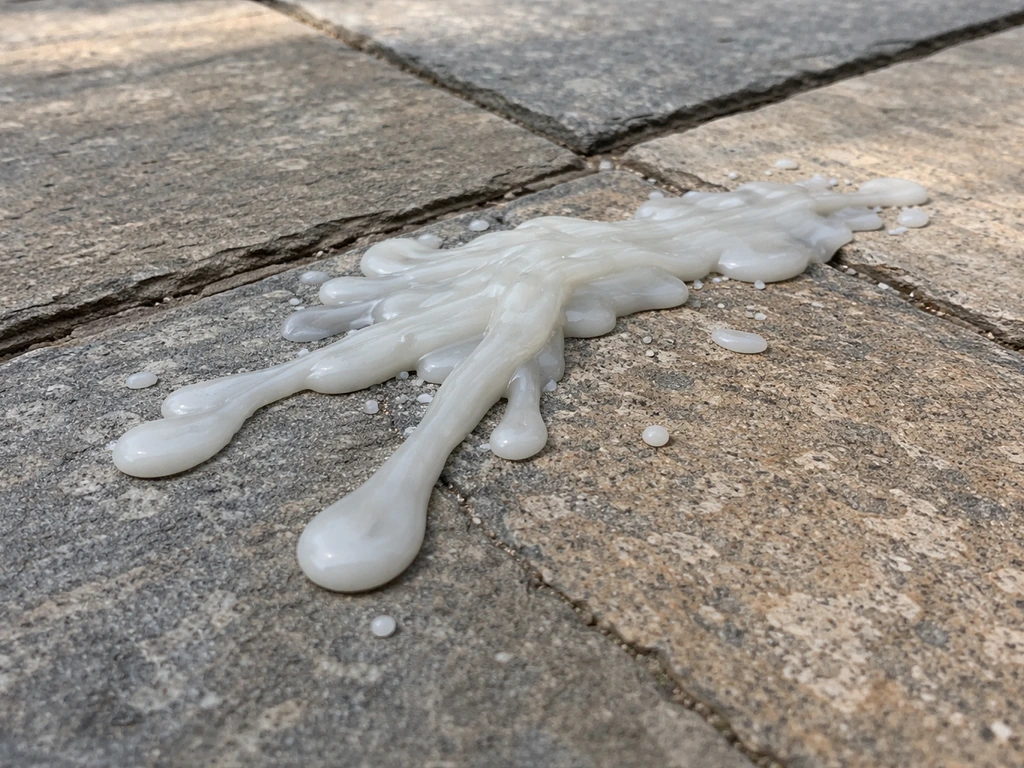
The steps below walk you through the whole process, from quick assessment to final rinse, so you can finish the job today with tools you probably already have. If you’re wondering how to get candle wax off patio slabs, follow these steps to freeze, remove, dissolve residue, and finish with a thorough rinse.
First: size up what you're dealing with
Before you grab a scraper, take 30 seconds to assess the situation. Two things matter most: whether the wax is fresh or fully hardened, and whether your stone is sealed or unsealed. Getting this right saves you from spreading the stain or damaging a polished finish.
Fresh vs. hardened wax
If the wax is still soft or tacky, do not try to wipe it up. Wiping warm wax pushes it deeper into the pores of natural stone and makes the stain much harder to remove. Instead, let it cool completely, or speed that up with ice. If the wax is already fully hard and opaque, you're in better shape. Hard wax is brittle and lifts cleanly from the surface instead of smearing.
Sealed vs. unsealed stone
Run a quick water test: drop a few drops of water on the stone next to the wax. If the water beads up, the stone is sealed and wax penetration is likely minimal. If the water soaks in within a minute or two, the stone is unsealed and porous. Unsealed flagstone, travertine, and sandstone are the ones that can trap wax deep in their surface.
Sealed stone is more forgiving and usually cleans up with just scraping and a solvent wipe. Keep this in mind because it determines whether you'll need a poultice step later. Also note that acid-sensitive stones like marble, limestone, and travertine should never be cleaned with vinegar or any acidic product, no matter what you've read elsewhere.
Gather your tools and protect the area
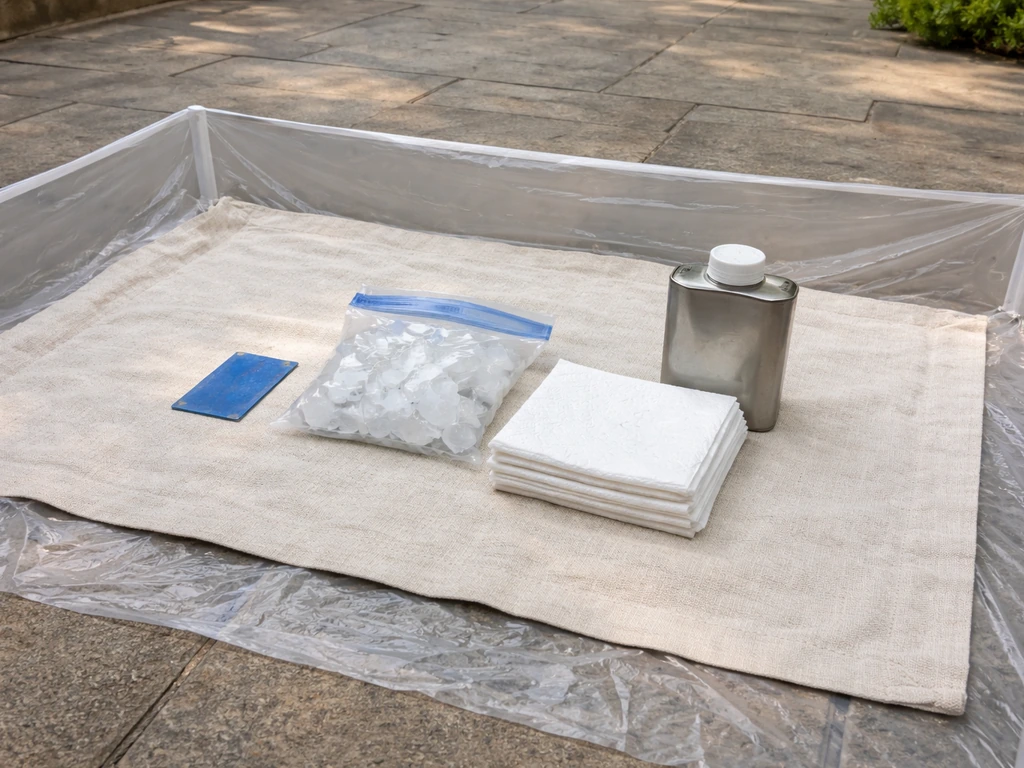
You don't need specialized equipment for this job. Here's what to pull together before you start:
- Plastic scraper or old plastic gift card (never metal on natural stone)
- Ice cubes in a zip-lock plastic bag
- White paper towels or plain white cloth rags
- Mineral spirits or naphtha (available at any hardware store)
- Dish soap or a pH-neutral stone cleaner
- A clothing iron or heat gun (optional, for the heat method)
- Warm water and a soft-bristle brush or non-abrasive sponge
- Rubber gloves and safety glasses
- Plastic sheeting or old towels to protect surrounding plants and stone
Before you apply any solvent or cleaner, lay plastic sheeting or damp towels over nearby plants and any adjacent stone or pavers you want to keep clean. Mineral spirits won't harm most stone, but runoff can damage soil and nearby vegetation. If you're working in a tight or partially enclosed patio space, make sure you have good airflow before opening any solvent.
Hydrocarbon solvents like mineral spirits and naphtha produce vapors that build up quickly in enclosed areas, so work with a breeze or use a fan to keep air moving. Wear gloves and eye protection any time you're handling solvents. One more safety note: [if you plan to use a heat gun, keep it moving constantly over the wax and never point it at wood, cushions, or anything fabric nearby. ](https://ehs.
okstate. edu/site-files/documents/ptipowertool_safety. pdf) Burns happen fast with heat guns.
Remove the bulk of the wax without spreading it
This is the most important step to get right. Rushing it or using the wrong tool is how you end up with a thin wax film smeared across a much bigger area.
The cold method (recommended starting point)
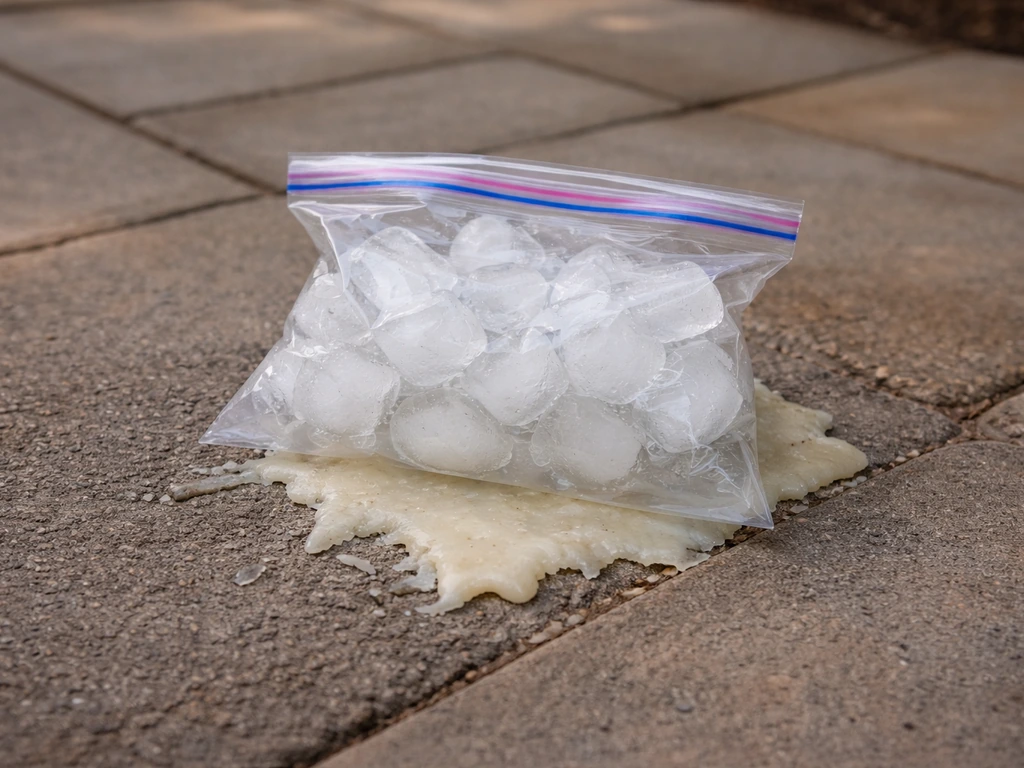
Place a zip-lock bag filled with ice cubes directly over the wax and hold it there for 5 to 10 minutes. The wax will harden and become brittle. Once it's fully hard, use your plastic scraper held at a low angle (about 30 degrees) and push under the edge of the wax with short, controlled strokes. Work from the outside edges toward the center to avoid spreading any softened wax outward. The wax should pop off in chips and flakes. Collect them as you go rather than leaving them on the stone where they can re-melt if the sun hits your patio. I've found this method works on roughly 80 percent of the wax in one pass.
The heat method (best for thick pooled wax)
If the wax has pooled into a thick layer in a textured or rough stone surface where the scraper can't get under it cleanly, the heat method can help. Set your clothing iron to its lowest heat setting and place two or three layers of white paper towels over the wax. Press the iron gently onto the paper towels for about 10 seconds. The wax melts and gets absorbed into the paper towels.
Lift, move to a fresh section of paper towel, and repeat until no more wax is transferring. Use white paper towels specifically so you can see the wax coming up, and replace them often to avoid redepositing wax back onto the stone. A heat gun works the same way but is harder to control, so go slowly and keep the nozzle moving if you use one.
Dissolve and lift the remaining waxy residue
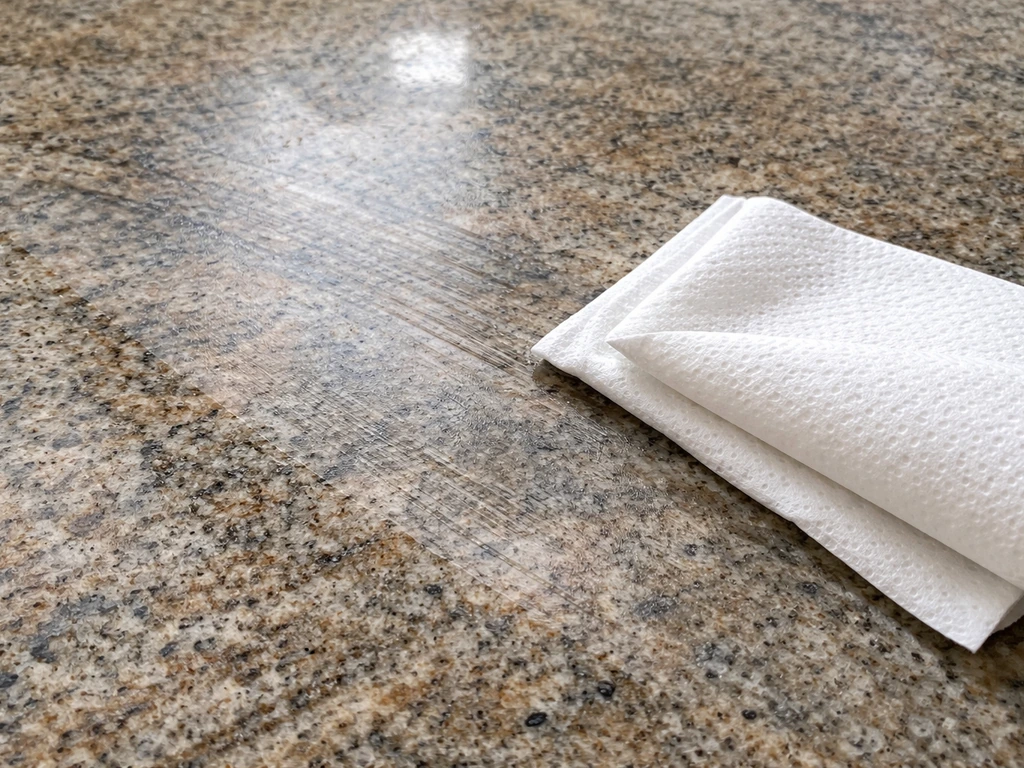
After scraping, you'll almost always have a hazy, oily film left on the stone. That's the petroleum component of the wax, and it needs a solvent, not just soap and water, to come off properly.
Mineral spirits: the go-to choice
Mineral spirits (also called white spirit) is the most effective and safest solvent for wax residue on stone. It dissolves the oily binders in candle wax without etching or discoloring most natural stone surfaces. Dampen a white cloth or paper towel with a small amount of mineral spirits and press it onto the residue for about 30 seconds, then wipe gently. Don't scrub aggressively. Let the solvent do the work. Naphtha is another good option from the same family of petroleum-distillate solvents and works slightly faster. Both are widely available at hardware stores. After the residue is gone, wipe the area with a clean damp cloth to remove any solvent traces before moving to the rinse step.
Gentler alternatives if you prefer to avoid solvents
If you want to avoid mineral spirits, a concentrated dish soap or citrus-based degreaser diluted in warm water can handle light surface residue on sealed stone. Apply it, let it sit for 5 minutes, and scrub with a soft brush. This takes a few more passes but is a reasonable option if you have pets or kids on the patio and want to minimize chemical exposure. Just know it's less effective on wax that has penetrated into the stone's pores.
What to avoid on stone
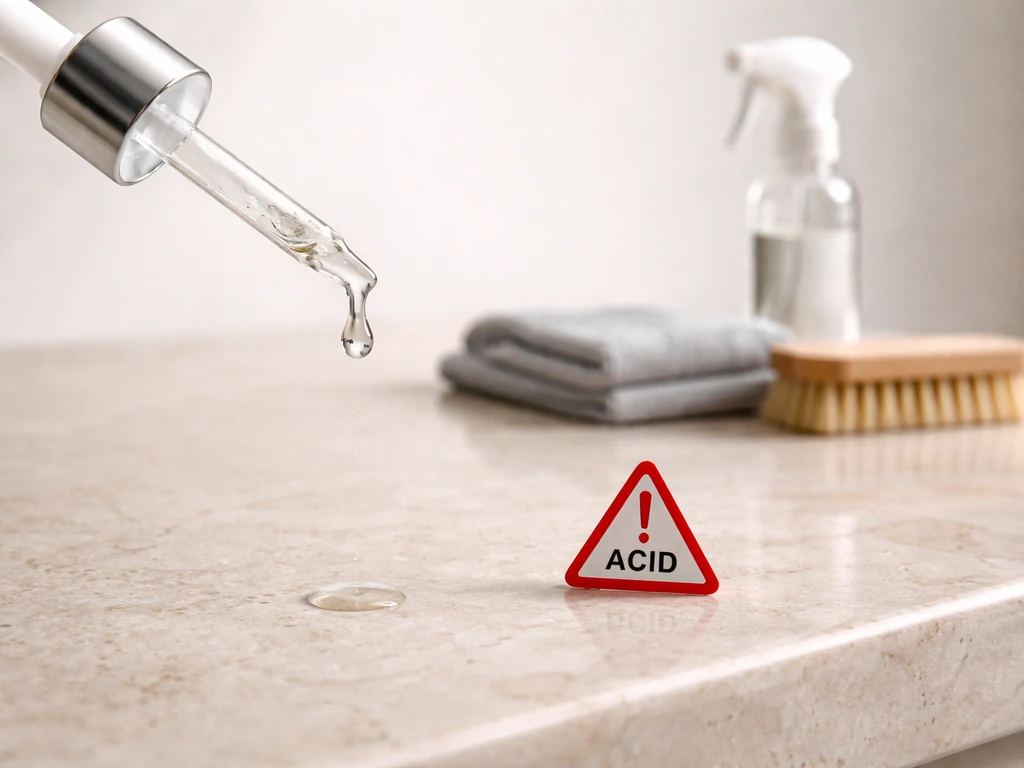
- Vinegar or any acidic cleaner on marble, limestone, or travertine (it etches the surface permanently)
- Bleach mixed with ammonia or any other cleaner (produces toxic chloramine gas)
- Wire brushes or metal scrapers (leave scratches that trap future stains)
- Acetone on polished or sealed stone (can strip sealers and dull finishes)
Rinse and finish the area cleanly
Once the wax residue is gone, mix a small amount of pH-neutral dish soap or stone cleaner into a bucket of warm water. Scrub the cleaned area with a soft-bristle brush using circular motions, then rinse thoroughly with clean water. If you have a garden hose, use it at normal pressure.
If you have a pressure washer, keep it at low pressure (under 1,200 PSI) and use a wide fan tip to avoid forcing water into any existing cracks in the stone. The goal here is to flush away all solvent traces and soap residue, because either one left on the surface can create a dull film once it dries. Dry the area with a clean cloth or let it air dry in sunlight before inspecting the result.
If you notice streaking after it dries, that usually means solvent or soap wasn't fully rinsed. A second pass with clean water and a light scrub with a damp cloth normally resolves it. Take your time with the rinse, it's the step most people rush.
If there's still a stain after all that
If you've gone through the scraping and solvent steps and there's still a faint shadow or discoloration in the stone, the wax has likely soaked into the pores. This is especially common with unsealed flagstone, sandstone, and travertine. The fix is a poultice treatment.
How to make and apply a poultice
A poultice is a paste that draws the stain out of the stone as it dries. For wax and oil-based stains, mix an absorbent powder (diatomaceous earth, talc, or even plain baking soda) with enough mineral spirits to form a thick paste, about the consistency of peanut butter. Apply it over the stained area about a quarter inch thick using a wooden or plastic spatula. Cover the paste tightly with plastic wrap and tape down the edges to seal it.
Leave it in place for 24 to 48 hours. The poultice works by drawing the oil and wax up into the powder as the solvent evaporates. After the dwell time, remove the dried paste with a wooden or plastic scraper, rinse the area with clean water, and allow it to dry completely before evaluating. You may need to repeat the process once more for deep-set stains.
Pre-made poultice products worth knowing
If you'd rather buy a ready-made product, there are a few that work well on patio stone. Products like Miracle Sealants Liquid Poultice and PROSOCO Marble Poultice are formulated specifically for porous and polished stone surfaces, including acid-sensitive stones. HMK R152 is another option marketed for oil, wax, and grease removal that penetrates up to about 2 centimeters into the stone. These are worth the investment if you have expensive or delicate stone like marble or polished travertine where a DIY mix feels risky.
After the poultice: re-cleaning and sealing
Once the stain is gone, clean the whole area one more time with your pH-neutral stone cleaner and rinse well. If the stone was previously sealed and the cleaning has dulled or disrupted the sealer in that spot, this is a good time to re-apply a stone sealer to that section so the surface is protected evenly before your next outdoor gathering. Wax stains on unsealed stone are a strong reminder that sealing your stone patio dramatically reduces how much any spill, including wax from citronella candles or dripping pillars, actually penetrates. If your patio stone isn't sealed and you deal with candles regularly, sealing it is the single best prevention step you can take.
| Situation | Best First Method | Follow-up if Needed |
|---|---|---|
| Fresh soft wax, sealed stone | Let harden, then plastic scraper + ice bag | Mineral spirits wipe, then rinse |
| Hardened wax, sealed stone | Plastic scraper + ice bag | Mineral spirits wipe, then rinse |
| Thick pooled wax in textured stone | Heat iron + white paper towels | Mineral spirits wipe, then rinse |
| Wax film remaining after scraping | Mineral spirits on cloth | pH-neutral soap scrub, rinse |
| Wax soaked into unsealed porous stone | Scrape bulk first, then poultice | Repeat poultice, then re-seal stone |
| Stubborn shadow/discoloration remains | Commercial stone poultice | Professional stone cleaner if stain persists |
FAQ
Can I remove candle wax from a stone patio without using mineral spirits at all?
Yes, but expect slower results. Use the ice-and-scrape steps first, then try a concentrated citrus-based degreaser or a stronger dish soap solution only after the wax residue is removed. If the stone is unsealed or the wax soaked in, a poultice is usually necessary, and many poultice recipes still rely on an oil-dissolving solvent to lift wax from pores.
What if the wax is on sealed stone, but the area still looks darker after cleanup?
That often means residue is still present, or the seal temporarily looks blotchy from solvent. Re-rinse thoroughly with clean water and a light soft-bristle scrub, then dry completely before judging. If it still appears uneven after drying, consider reapplying sealant to that section so the sheen matches the surrounding stone.
Is it safe to use a pressure washer to clean after removing the wax?
Use low pressure only (under about 1,200 PSI) and a wide fan tip. High pressure can drive oily residue into cracks or force water into existing gaps, which can worsen staining later. If you see cracks or loose grout lines, skip the pressure washer and rely on bucket washing and thorough rinsing instead.
Can I use vinegar or an acidic cleaner on wax residue?
Avoid acids on stone, especially marble, limestone, and travertine. Candle wax removal relies on dissolving oily components, not neutralizing minerals, and acids can etch or dull sensitive stone surfaces. Stick to mineral-spirits-based removal, pH-neutral cleaners, and non-acidic degreasers only.
Will heat from a hair dryer work instead of an iron or heat gun?
Usually, it helps soften wax but is harder to control, and it can smear wax if it warms too much. If you try it, keep the airflow moving, work in short bursts, and place paper towels immediately over the softened wax to blot it. If smearing starts, stop and return to the ice-and-scrape method.
What’s the best way to prevent redepositing wax while using paper towels or poultice?
Use fresh sections frequently. With the iron method, replace towels as soon as they start picking up wax so you are not dragging melted wax back onto the stone. With poultice, seal the plastic wrap tightly so the poultice dries evenly and does not spread or drip while it is working.
How long should I wait before applying sealant after the wax is removed?
After you do the final rinse, let the stone dry fully (often at least 24 hours, longer if humidity is high). Test for dryness by waiting for no visible dampness and confirming the surface is cool and not tacky. Applying sealer over residual solvent can cause cloudiness or uneven penetration.
Can I walk on the patio right after cleaning?
Avoid foot traffic until the area is fully rinsed and dry, especially if solvent was used. Solvent traces and any remaining oily film can transfer to shoes and create streaking or re-smearing. If kids or pets will be nearby, use the lowest-odor approach (dish soap for light residue) only after scraping and follow up with thorough rinsing.
What if wax is embedded in a deeply textured stone where scraping barely works?
Prioritize the poultice option. If the residue remains after mineral spirits and scrubbing, it suggests penetration into pores or micro-grooves. A thick poultice (about a quarter-inch layer) with proper coverage and 24 to 48 hours dwell time typically pulls wax up from deeper within the stone.
Next Articles
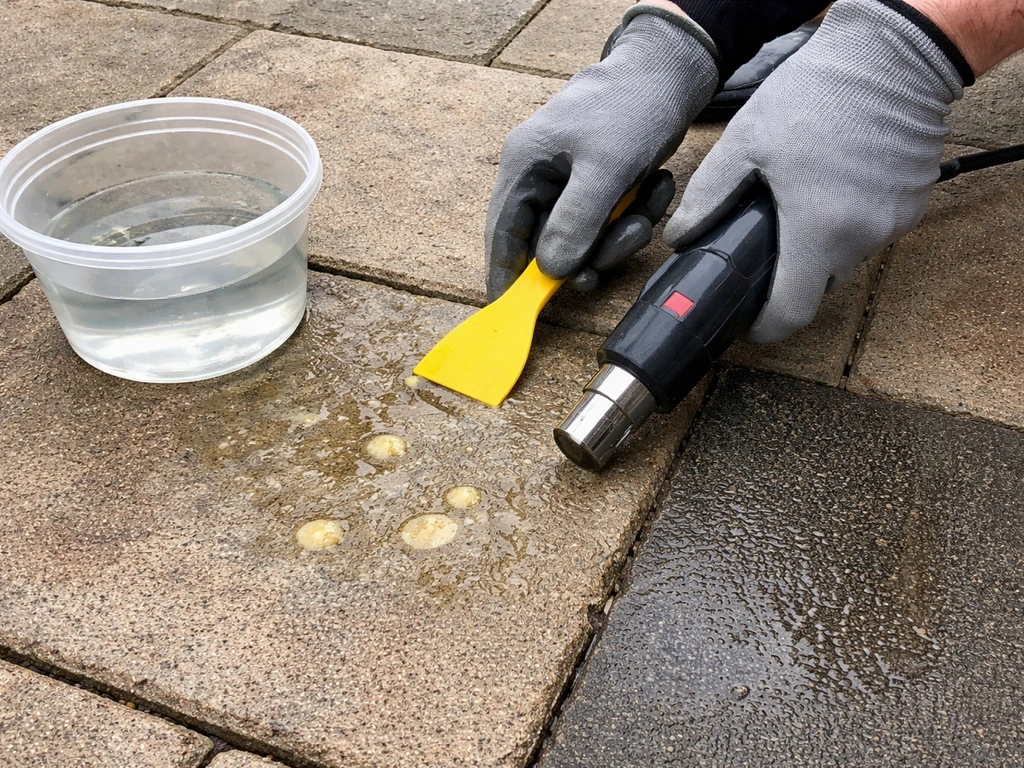
How to Get Citronella Wax Off Patio Stone Safely
Remove citronella wax and oily film from patio stone safely using freezing, scraping, targeted heat, and residue cleanin
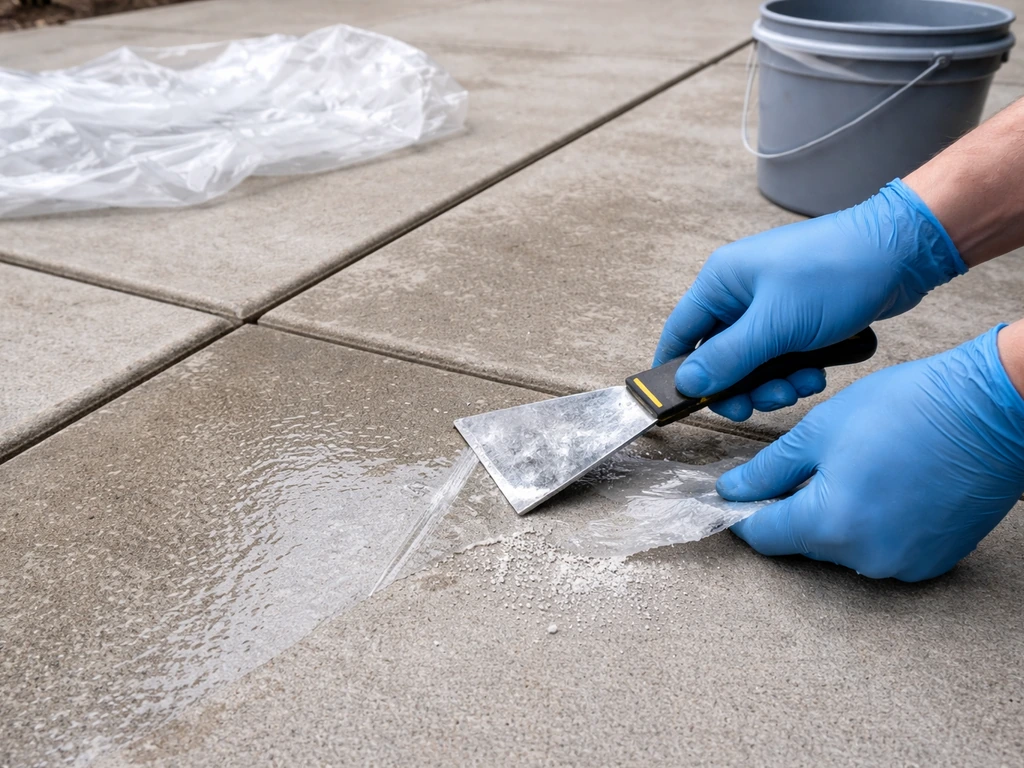
How to Remove Thompson’s Patio Sealer Step by Step
Step-by-step removal of Thompson’s patio sealer on concrete, brick, pavers, and stone, with safety, tests, and cleanup.
Can You Remove Patio Sealer? How to Strip It Safely
Learn if you can remove patio sealer and how to strip it safely by type, material, and method.