
You can remove candle wax from a concrete patio in two stages: first freeze or heat the wax to pull it off in bulk, then use a solvent like mineral spirits or a poultice to lift the greasy residue that scraping leaves behind. Most jobs are completely fixable without professional equipment, and the biggest mistake people make is skipping that second stage and wondering why there's still a dull, waxy film on the concrete. If you need help with a specific wax spill type, use this guide to remove candle wax from patio pavers safely.
How to Remove Candle Wax From a Concrete Patio
Dylan Hale
22 Jun 2026
Start here: figure out what you're dealing with
Before you grab a scraper, take thirty seconds to assess the situation. The type of wax and the condition of your concrete surface will change which method you reach for first.
What kind of wax is it?
Most outdoor candles use paraffin wax, which is a hydrocarbon-based wax that responds well to mineral spirits and naphtha. Soy and beeswax candles are a little softer and easier to scrape clean, but they still leave an oily film. Citronella candles (common on patios) have an added oil component that can make the residue slightly stickier. If you're specifically dealing with citronella wax on patio stone, you can use the same bulk wax removal idea and then switch to a residue cleaner that won't damage the stone finish Citronella candles (common on patios). If you're not sure what the candle was made of, treat it as paraffin and you'll be covered.
Is your concrete sealed or unsealed?
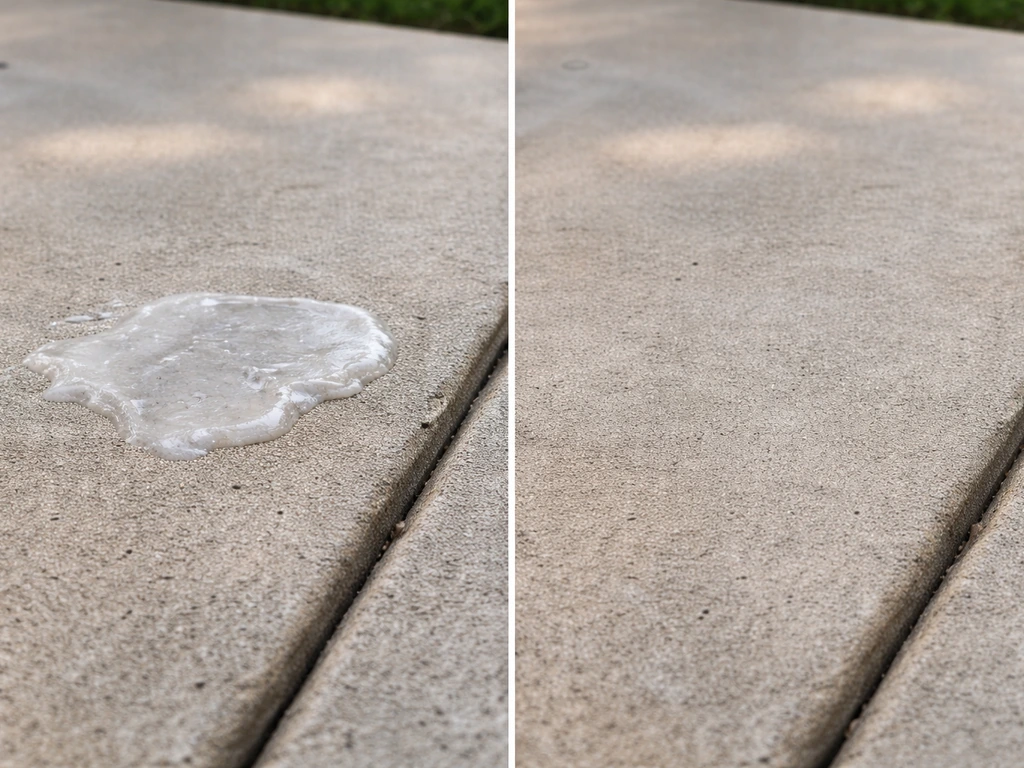
This matters more than most guides admit. Sealed concrete has a protective coating that stops wax from soaking in, which means the wax is mostly sitting on top and stage one (scraping) does most of the work. Unsealed or porous concrete is a different story: liquid wax can wick into the surface before it hardens, leaving a ghost stain even after you've removed everything visible. If your patio looks matte and slightly rough, assume it's unsealed. If it has a slight sheen or was professionally finished, it's likely sealed. You can also drop a few water droplets on the surface: if they bead up, it's sealed; if they absorb quickly, it's unsealed and more absorbent.
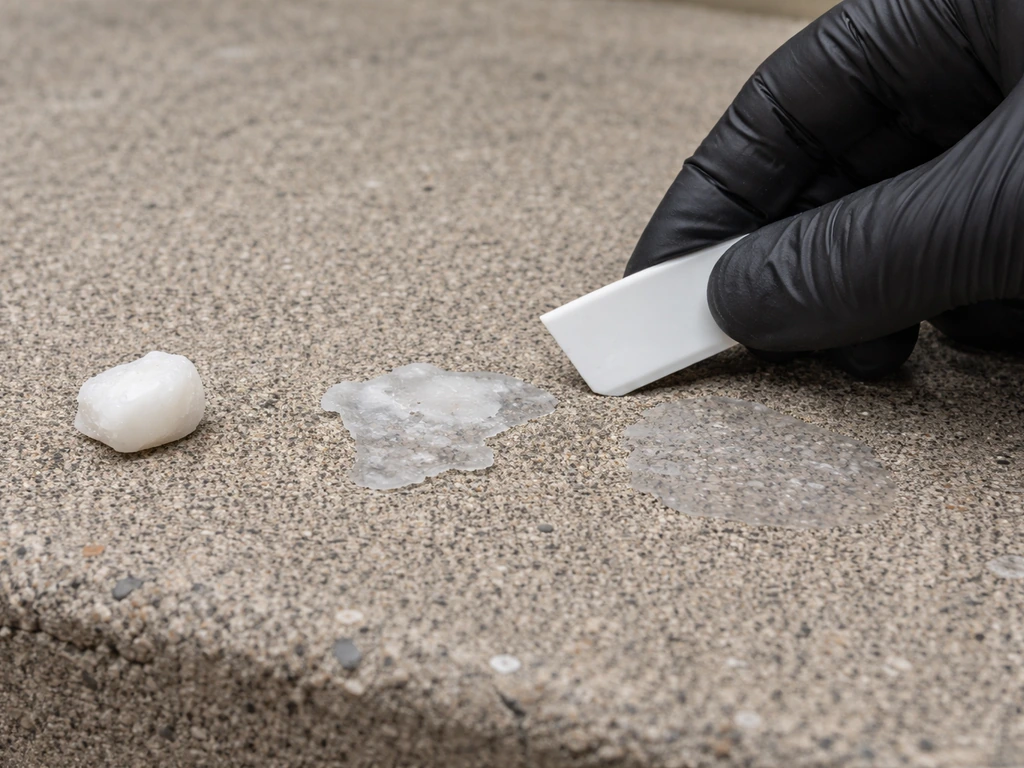
Also check whether the wax is still a solid chunk, a hardened flat smear, or just a faint oily film at this point. Each of those needs a slightly different starting move, which is what the next section covers.
Get the bulk wax off first
Do not apply any cleaner or solvent to a concrete surface that still has a thick wax layer on it. Solvents need direct contact with residue, and pouring them over a wax block just wastes product and risks spreading the stain. Remove as much solid wax as you can mechanically before you reach for a bottle of anything. If you’re still dealing with wax smear or residue after the bulk is removed, use the freeze-and-scrape or heat-release steps to finish getting candle wax off patio slabs how to get candle wax off patio slabs.
The freeze-and-scrape method (best starting point)
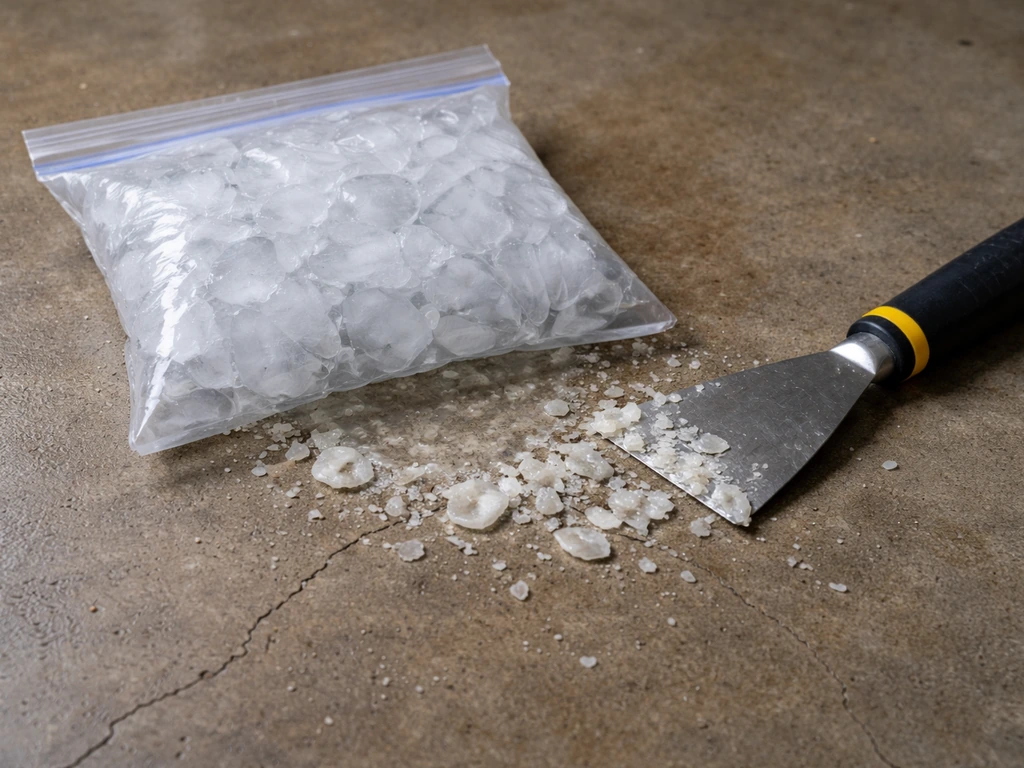
This is what I recommend first for any wax that has already hardened. Cold makes wax brittle, so it snaps away from the concrete cleanly instead of smearing. Pack a zip-lock bag with ice cubes and hold it directly on the wax for 5 to 10 minutes until the wax feels hard and solid all the way through. Then use a plastic scraper, an old credit card edge, or a dull putty knife to chip it off. Work from the outside edges inward to avoid pushing wax into the concrete pores. You're not trying to scrub or grind here. Lift and flick. A plastic scraper is safer than a metal one on finished concrete because metal can leave scratches, especially on sealed surfaces.
Reddit users dealing with wax on concrete porches consistently back up this approach as a first step, and I've found it removes 70 to 90 percent of the bulk wax with zero risk to the concrete. Whatever remains after scraping is residue, which you'll handle in the next stage.
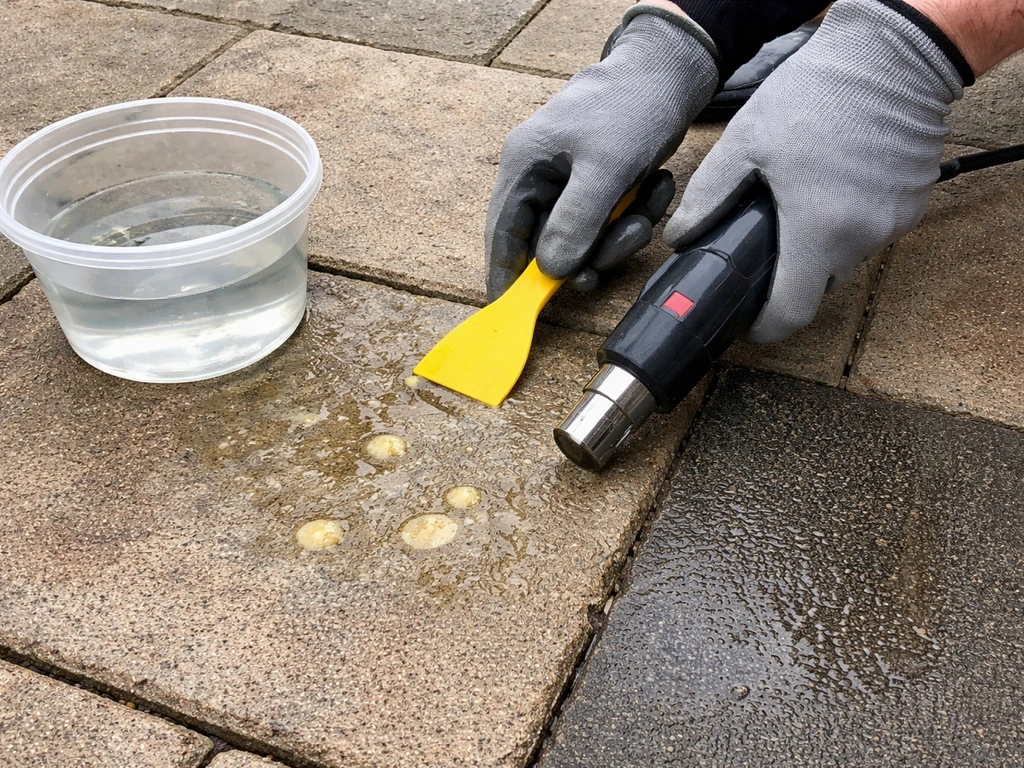
The heat-release method (for flat smears and stuck wax)
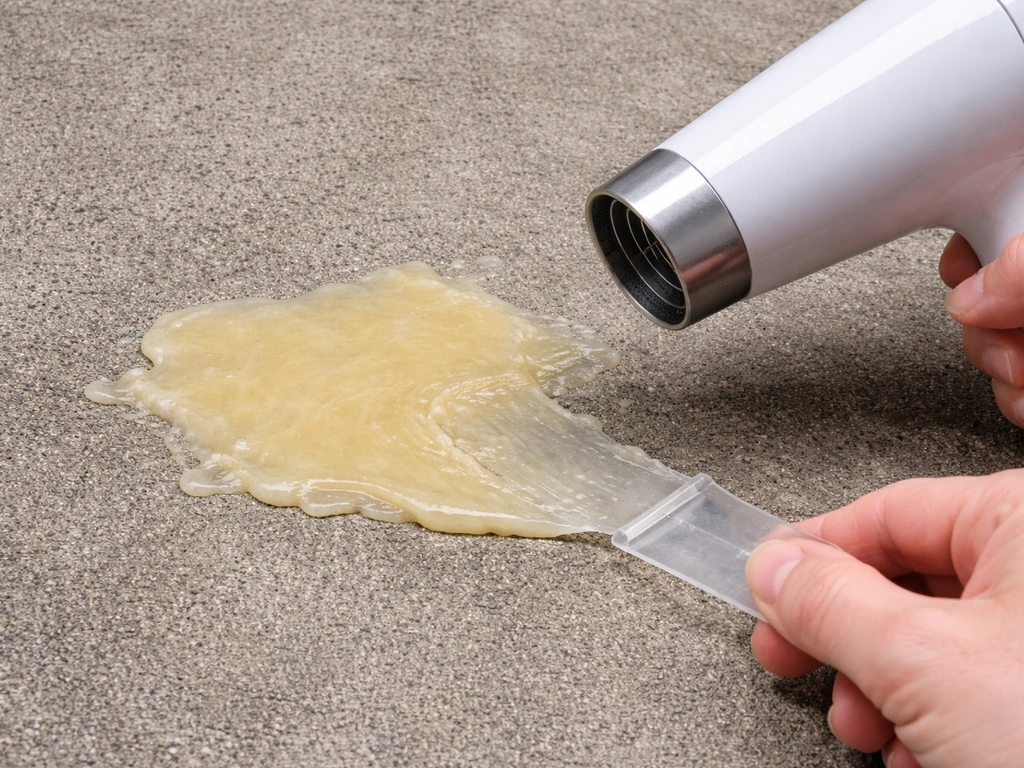
If the wax has been ground into the surface a bit, or if you're dealing with a thin smeared layer rather than a thick chunk, gentle heat works better than freezing. Use a hair dryer on medium heat (not a heat gun on high, which risks cracking a sealed finish or scorching the surface). Hold it 3 to 4 inches above the wax and move it in slow passes until the wax softens and becomes slightly glossy. Then blot it up immediately with a folded paper towel or an old rag. Don't rub, just press and lift, otherwise you spread the wax into a larger area. Repeat with fresh paper towels until you're not picking up any more visible wax.
A note on the iron-and-paper-towel trick you may have seen online: it works on some hard floors, but I'd skip it on concrete. The pressure and direct heat contact is harder to control, and on unsealed concrete it can push soft wax deeper into the surface rather than pulling it out.
Dissolving the residue that scraping leaves behind
After the bulk is gone, you'll almost always be left with a slightly cloudy, dull, or greasy-looking patch. That's the wax residue that soaked in or just bonded to the surface, and scraping won't touch it. This is the stage most people skip, and it's why their patio still looks off afterward. You have several options depending on what you have at home and how aggressive you need to be.
Mineral spirits or naphtha (most reliable for paraffin)
Mineral spirits is my go-to for paraffin wax residue on concrete. It's the method recommended by UGA Extension for masonry and concrete surfaces, and it works because paraffin is a hydrocarbon and mineral spirits dissolves hydrocarbons. Pour a small amount onto a clean rag (don't pour directly onto the concrete, which risks spreading the stain) and rub the residue in a circular motion. You'll see the wax film start to transfer onto the rag within a minute or two. Swap to a fresh section of rag as it picks up wax and keep going until the area looks clean. Naphtha (sometimes sold as VM&P Naphtha at hardware stores) works on the same principle and is slightly faster, but it's more volatile, so make sure you're working with ventilation and away from any open flames.
Important: both of these solvents can interact with concrete sealers. If your patio is sealed, do a spot test in a hidden corner first. Apply a small amount, wait a minute, and wipe. If the sealer looks cloudy or tacky, switch to rubbing alcohol or the poultice method instead.
Rubbing alcohol (gentler option, good for light residue)
Isopropyl alcohol at 70% or 90% concentration works well on light wax films and is safer around sealed concrete surfaces than mineral spirits. Apply it to a cloth and scrub the area. It evaporates quickly, which is both a plus (less risk of spreading the stain) and a minus (you may need multiple applications on heavier residue). This is a solid choice if you're dealing with a small wax spot or a drip rather than a full candle pour.
The poultice method (for wax that soaked into unsealed concrete)
If you have unsealed concrete and the wax had time to soak in before hardening, a poultice is the most effective option. The idea is simple: you mix an absorbent powder with a solvent to make a paste, apply it over the stain, cover it with plastic wrap, and let it sit. As the solvent dries slowly, it draws the dissolved wax up into the paste rather than letting it migrate sideways or deeper. Here's how to do it:
- Mix a small amount of mineral spirits with an absorbent powder like diatomaceous earth, talc, or even plain flour to form a thick peanut-butter consistency paste.
- Lightly pre-wet the stained concrete with water. This helps the poultice pull material out rather than pushing it further in.
- Spread the paste about a quarter-inch thick directly over the wax stain, extending about an inch beyond the stain edges.
- Cover with plastic wrap and tape the edges down to slow evaporation. Leave it for 12 to 24 hours.
- Remove the plastic and let the paste dry completely (another few hours). As it dries, it draws the dissolved wax into itself.
- Scrape off the dry paste with a plastic scraper and dispose of it. Scrub the area with dish soap and warm water.
You may need two applications for a heavy stain. The GSA cautions that solvents applied too liberally to porous concrete can drive stains deeper instead of pulling them out, which is exactly why the poultice approach is smarter than just pouring mineral spirits and hoping for the best on unsealed surfaces.
Citrus degreaser (a lower-odor alternative worth knowing)
Concentrated citrus-based concrete degreasers are sold at most home improvement stores and work reasonably well on wax residue because the d-limonene in citrus products is a natural solvent for waxy, oily deposits. Apply it diluted per the product label, let it dwell for 5 to 10 minutes (don't let it dry), and scrub with a stiff-bristle brush before rinsing. This is a good option if you have pets or kids around and want to avoid the fumes of mineral spirits. The tradeoff is that it's less aggressive, so you may need a second pass on heavier stains.
A quick comparison of residue-removal options
| Method | Best for | Safe on sealed concrete? | Effort level |
|---|---|---|---|
| Mineral spirits | Heavy paraffin residue, unsealed concrete | Spot test first | Low |
| Naphtha | Heavy residue, fast results needed | Spot test first | Low |
| Rubbing alcohol | Light residue, drips, sealed surfaces | Yes | Low |
| Poultice (mineral spirits + powder) | Deep absorption in unsealed concrete | Not needed | Medium |
| Citrus degreaser | Moderate residue, low-fume preference | Yes (diluted) | Medium |
| Hot water + white vinegar (3:1) | Very light film after heat removal | Yes | Low |
Clean up, rinse, and restore the surface
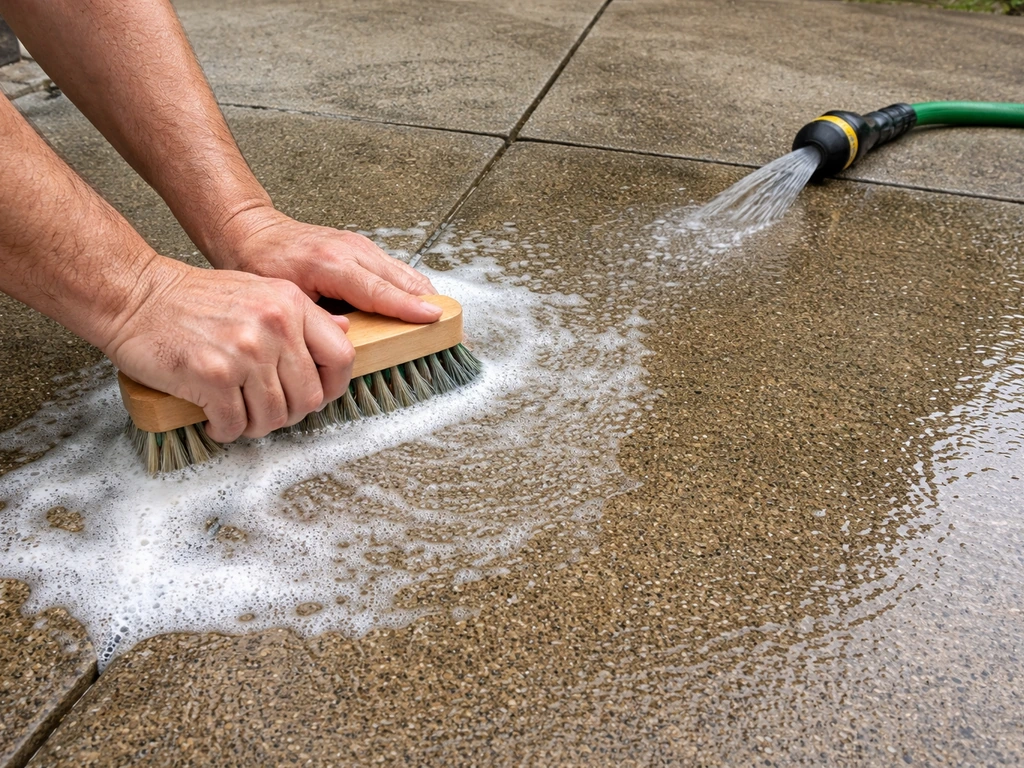
Once the wax and its residue are gone, you're not quite done. Any solvent or cleaner left on the concrete can dry and leave its own discoloration or a tacky patch, so a proper rinse and wash is essential. Follow these steps:
- Scrub the treated area with a stiff-bristle brush using dish soap and warm water. This removes any solvent film, loosened wax particles, and poultice residue.
- Rinse thoroughly with clean water. If you have a garden hose with a jet nozzle, use it. If you have a pressure washer, a low setting (1,200 to 1,500 PSI) is fine and will do a cleaner job, but it's not required.
- For any area treated with mineral spirits or naphtha, do a second rinse with a solution of 3 parts hot water to 1 part white vinegar. This helps neutralize any oily residue and reduces the chance of a dull patch appearing as the concrete dries.
- Let the concrete dry fully (at least a few hours in sun, longer in shade) before evaluating whether any stain remains. Wet concrete looks darker and can mask how clean the surface actually is.
If there's still a faint shadow after the concrete is fully dry, repeat the residue-removal stage with fresh mineral spirits or a second poultice application. Heavy wax spills on unsealed concrete sometimes need two or three rounds, and that's normal. Don't be tempted to try something more aggressive on the first pass.
Dealing with discoloration after cleaning
If the cleaned patch looks lighter or slightly different from the surrounding concrete after drying, the most common cause is that the solvent stripped a thin layer of the existing sealer. If your patio is sealed, you may need to reapply a coat of concrete sealer to the affected area once it's fully clean and dry. Match the existing sealer type (penetrating vs. film-forming) as closely as possible. On unsealed concrete, slight tone variation usually evens out over a few weeks of weathering and sun exposure.
Reducing the chances of this happening again
The single most effective thing you can do is put a tray, tile, or dedicated candle holder with a drip-catching base under any outdoor candle on your concrete patio. It sounds obvious, but most wax stains happen when a candle tips over or the flame burns down to the base in a pool of liquid wax. If you have an unsealed patio, consider applying a penetrating concrete sealer. It won't make the surface stain-proof, but it dramatically slows the absorption rate, which means you have more time to blot a spill before it soaks in.
What about wax on other patio materials?
The freeze-and-scrape plus solvent approach covered here is specific to concrete. If you're also dealing with wax on stone slabs, natural stone, or brick pavers in the same outdoor space, those materials are more porous and often more sensitive to solvents, so the process is a bit different. If your candle wax is on a stone patio, use the same bulk-removal approach first, then choose a residue method that is safe for natural stone. Stone in particular can be damaged by acids and some solvents that concrete handles without issue, and pavers with sand joints need careful rinsing to avoid washing out the joint filler. The core principles overlap, but it's worth following material-specific guidance for each surface type.
FAQ
Can I clean candle wax off concrete with just soap and water?
Yes, but only after you remove the hard wax layer. Pouring cleaner or solvent over an intact smear or wax chunk can spread the oily residue wider and make a larger stain. Start with freeze or heat to lift bulk wax, then treat the remaining film.
What household cleaners should I avoid for wax on concrete?
Avoid bleach, ammonia, and acid-based cleaners. They can discolor concrete or react with residue and sealer, and they usually do not dissolve wax. Use the residue-removal options (mineral spirits, naphtha, rubbing alcohol, poultice, or citrus degreaser) after bulk wax is removed.
What if the wax is still soft and hasn't hardened yet?
If the wax is still soft or has recently fallen, freezing usually works fastest, even on a large area. Ice directly on the wax for several minutes, chip up what turns hard, then switch to a solvent or poultice for any remaining dull or greasy patch.
What scraping tool is safest for sealed or finished concrete?
Use plastic tools, not metal. A plastic scraper or old credit card edge helps prevent scratches, especially on sealed or smooth-finished concrete. Metal putty knives can leave marks that look like permanent scuffs once the area is cleaned and dried.
Why does the cleaned area look lighter or cloudy after the wax is gone?
If you see a cloudy, lighter spot after drying, the solvent may have stripped or dulled a thin layer of the existing sealer. On sealed patios, do a small spot test with your chosen cleaner first, and if the difference persists, reapply a sealer that matches whether your original is penetrating or film-forming.
How do I know if my solvent choice is damaging my concrete sealer?
Try a smaller application first and stop if you notice tackiness or haze in the spot test. Mineral spirits and naphtha can react with some sealers, and too much liquid can also drive residue into porous concrete. If the sealer seems affected, switch to rubbing alcohol for light films or use a poultice on deeper absorption cases.
Which method should I pick for a small wax drip versus a large spill?
For a small drip or faint film, rubbing alcohol on a cloth is often the least risky and fastest cleanup since it evaporates quickly. For larger spills or sticky residue that won't lift after a couple rounds, move to mineral spirits or a citrus degreaser, and for unsealed concrete that absorbed wax, use a poultice.
Can I use a heat-and-wipe approach instead of solvents for residue?
Yes, but only for the residue phase, not the bulk. Make sure the wax is already removed and the surface is dry. Use absorbent wrapping for a poultice-style approach, not open scrubbing with heat, and avoid pouring solvent into puddles.
Does the iron-and-paper-towel method work on concrete patios?
No, ironing or direct heat-through-paper tricks are harder to control on concrete and can push softened wax into the surface, especially if it's unsealed. Concrete has more variable pores and thermal behavior than flooring, so sticking to controlled hair-dryer blotting and then residue treatment is safer.
Are mineral spirits or naphtha safe to use outdoors?
Plan on ventilation and flame safety whenever using mineral spirits, naphtha, or VM&P naphtha. Keep windows open, avoid smoking or open flames, and wear gloves. If you cannot ensure safe ventilation, choose rubbing alcohol or a citrus-based degreaser instead.
How many times should I expect to repeat the residue removal step?
It depends on whether the wax soaked in. Sealed concrete often cleans in one bulk removal plus one residue pass, while unsealed concrete frequently needs two applications (sometimes more) using poultice or repeated residue removal with fresh cloth portions.
What can I do to prevent wax stains from coming back after I clean it?
Place a drip-catching tray or dedicated holder every time, especially where candles can tip. If you deal with unsealed concrete, add a penetrating sealer to slow absorption so you can blot spills before they wick in, reducing the chance of ghost staining.
Next Articles
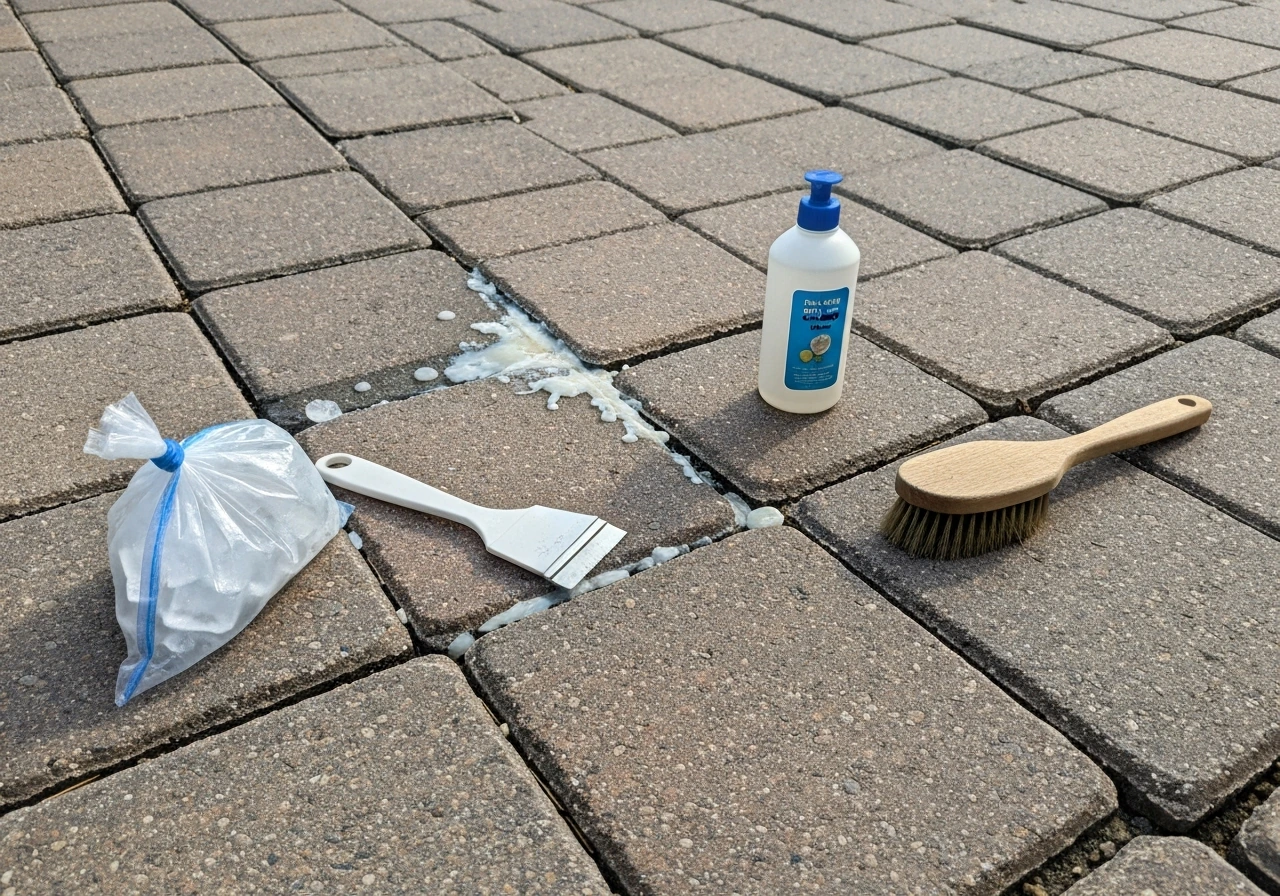
How to Remove Candle Wax from Patio Pavers Safely
Step-by-step methods to remove fresh and ground-in candle wax from patio pavers, including joint cleanup and safe afterc
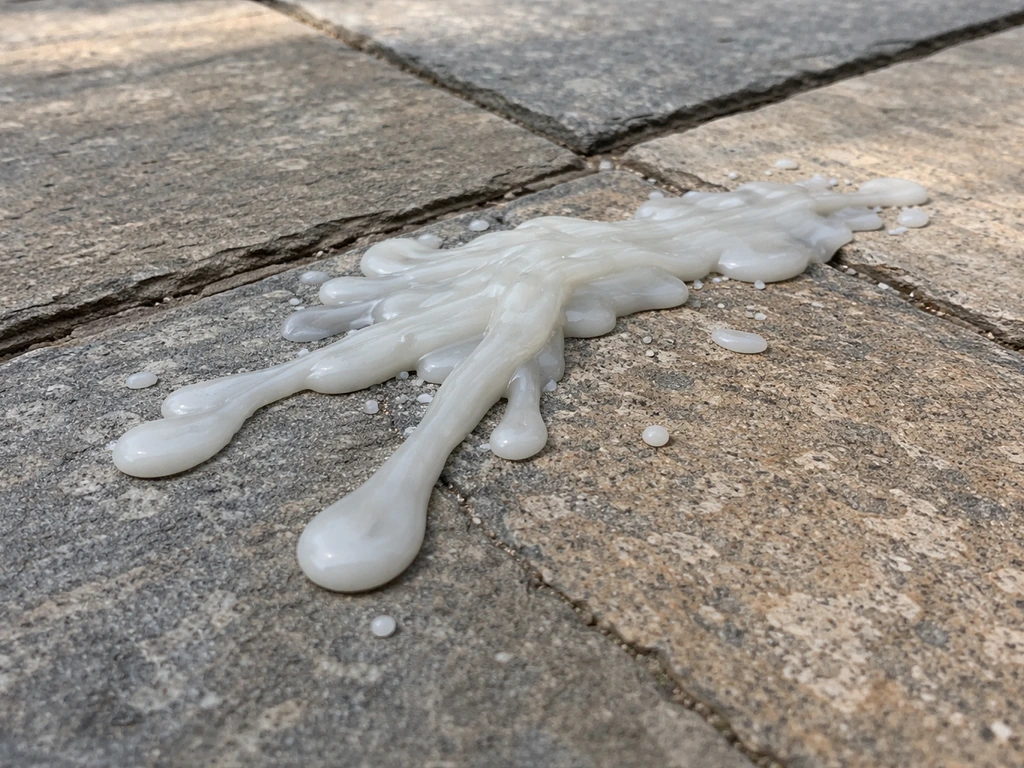
How to Remove Candle Wax From Stone Patio Safely
Step-by-step safe removal of fresh or hardened candle wax from stone patios, with heat and chemical options and stain cl
How to Get Citronella Wax Off Patio Stone Safely
Remove citronella wax and oily film from patio stone safely using freezing, scraping, targeted heat, and residue cleanin