Citronella wax comes off patio stone in two stages: first you remove the bulk of the solid wax mechanically, then you deal with the oily, slightly yellow residue it leaves behind in the stone's pores. Do both steps and your stone looks clean. Skip the second step and you'll have a greasy film that attracts dirt and holds that citronella smell for weeks. The good news is you can do this today with basic household tools, and the riskiest part isn't the wax itself but choosing the wrong cleaner for your particular stone.
How to Get Citronella Wax Off Patio Stone Safely
Dylan Hale
5 May 2026
What you're actually dealing with (wax type and how it gets into stone)
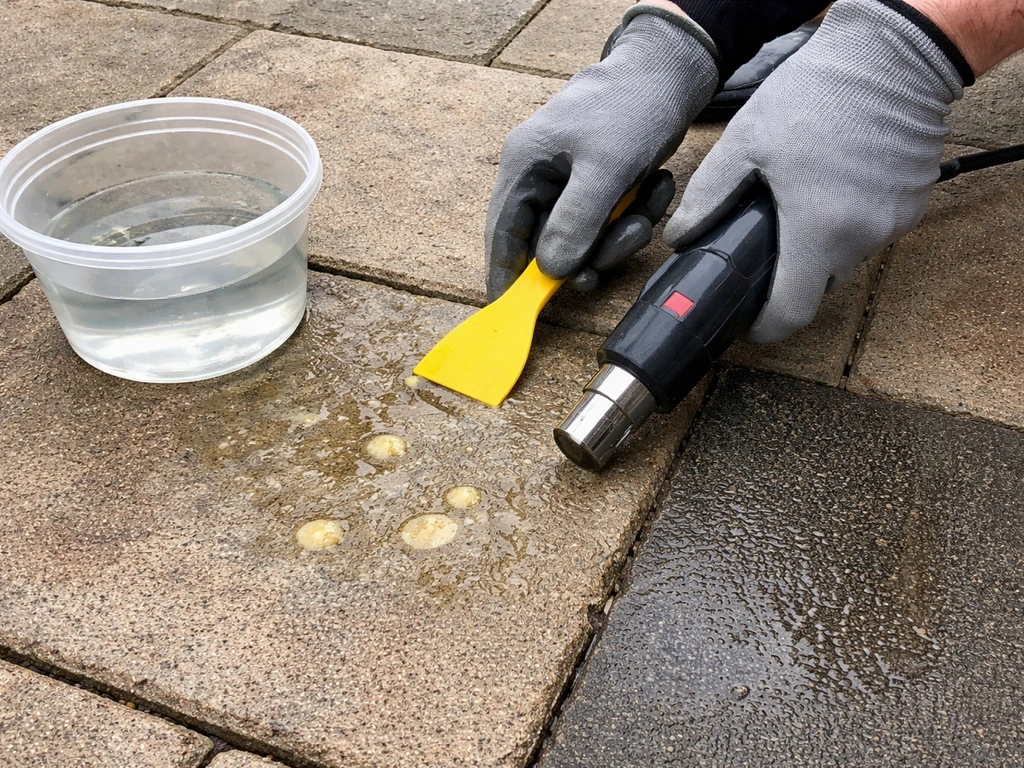
Citronella candles and torch fuel are almost always paraffin-based wax blended with citronella oil. That oil is the sneaky part. Plain paraffin sits on top of stone and can be scraped away cleanly. Citronella wax, though, has an oily carrier that wicks into porous stone the same way cooking grease does. The longer it sits, especially if the sun warms it into a semi-liquid state, the deeper it penetrates.
Before you start, figure out what stage your wax is in. Solid, cooled wax that snapped off cleanly at the edges is the easiest scenario. Partially melted wax that has spread and soaked into the surface is harder, especially on travertine, limestone, or any unsealed flagstone where there are open pores. If you're looking at a faint, slightly shiny patch with no visible wax bulk, you've already lost the top layer and you're just dealing with residue and odor.
Also check whether your stone is sealed. Run your finger across the surface near the stain: if it feels slightly slick or water beads on nearby areas, there's likely a sealer on top. That's actually helpful during cleanup because it slows penetration, but some solvents and wax removers will strip that sealer, which means you'd need to reseal afterward.
Protect your stone, your sealer, and yourself before you do anything
The biggest mistake people make is reaching for whatever cleaner is under the sink. For wax on stone, that can cause more damage than the wax itself. Here's what to keep in mind before you pick up a single tool. If you want the quickest, safest routine, follow the full process for removing wax from a patio step by step remove wax from patio.
Know your stone type
Not all patio stone is equal when it comes to chemical sensitivity. Concrete pavers and granite are relatively forgiving. Travertine, limestone, and marble are calcareous stones, meaning they're calcium-based and they react badly to acids. Vinegar, lemon juice, hydrogen peroxide, and any citrus-based cleaner will etch these surfaces and leave permanent dull spots. Bleach and ammonia are on the other end of the scale: highly alkaline and too caustic for travertine in particular. Muriatic (hydrochloric) acid, which you might use for efflorescence on concrete, can actually dissolve the surface of calcareous stone. If you have travertine, flagstone, or limestone, stick to pH-neutral cleaners and the mechanical methods below.
Always test in a hidden spot first
Whatever product you plan to use, test it in an inconspicuous corner first. Apply a small amount, wait the full dwell time, rinse, and let it dry completely before judging the result. Discoloration and etching are often more visible when the stone is dry than when it's wet. I've seen people think a test looked fine, only to notice a bleached patch after the area dried in the sun. Products like Lithofin WAX-OFF and Techniseal Hardscape Cleaner both specifically recommend this step before treating the full area.
Basic safety for yourself
- Wear gloves when using any solvent, degreaser, or wax remover, even ones marketed as 'natural'
- Work in a ventilated area, especially if using mineral spirits or commercial wax removers
- Keep pets and kids off the area until you've rinsed and the surface is dry
- If you used a solvent, the surface will be slippery until it fully evaporates, so rope it off
Step one: get the bulk of the wax off mechanically
Before you apply any heat or chemical, remove as much solid wax as you can by hand. This saves your cleaner from doing unnecessary heavy lifting and reduces the risk of spreading dissolved wax further into the pores.
Freeze it first if the wax is soft
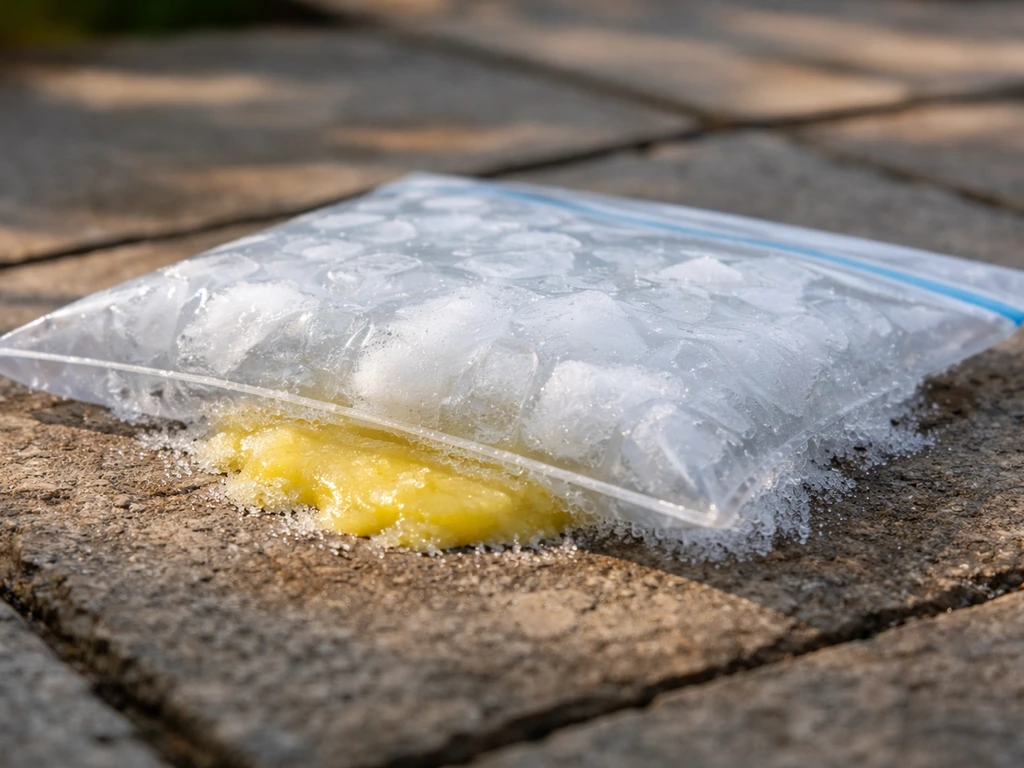
If the wax is soft or sticky, harden it before you try to scrape. Put a handful of ice cubes in a zip-lock bag and press it against the wax for two to three minutes. Once the wax is hard and brittle, it snaps off in pieces instead of smearing. This is particularly useful on warm days when citronella wax turns almost gel-like in the sun.
Scrape with the right tool
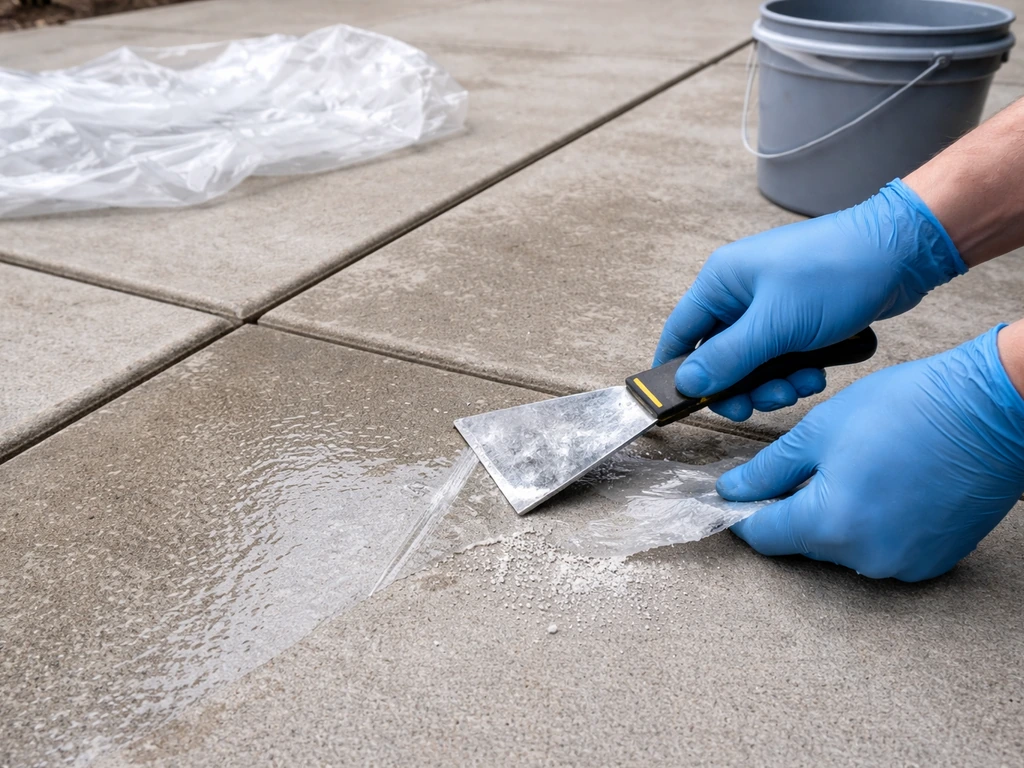
Use a plastic scraper, an old credit card, or a wooden popsicle stick. Hold it at a shallow angle, around 20 to 30 degrees to the surface, and push forward in short strokes. Metal tools like paint scrapers or knives will scratch most stone, especially travertine and softer flagstone, so avoid them. Work from the outside edge of the wax spill toward the center so you don't spread it. Collect the scrapings in a paper towel and toss them rather than letting them fall back onto the patio.
Blot up what's left
After scraping, press clean paper towels or a folded cloth firmly onto the wax residue and let it absorb. Don't rub, just press and lift. You can also sprinkle a thin layer of baking soda, cornstarch, or cat litter over the oily residue, let it sit for 10 to 15 minutes to absorb the oil component, then sweep it away before moving to the next step.
Step two: use heat or a solvent to lift the embedded wax
Once the bulk wax is gone, there's almost always a remaining layer that mechanical scraping can't reach. Heat and solvents tackle this differently and each has its place depending on your stone type. If your main goal is how to get candle wax off patio slabs, start with mechanical removal first and then move to heat or a wax remover once the bulk is gone. For guidance on concrete patio wax removal, use the heat and solvent options outlined for your specific stone surface Heat and solvents tackle this differently.
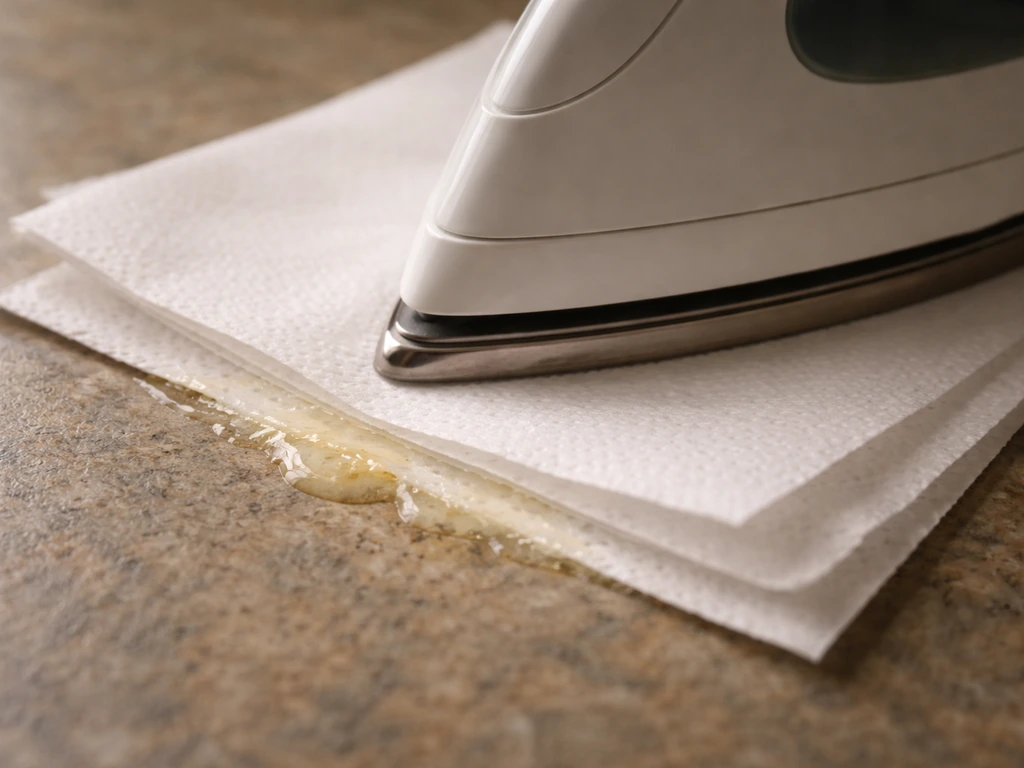
The hot iron and paper towel method
This is what pro stone care specialists recommend for wax that has melted into the surface. Set a household iron to a medium-low setting (no steam). Place three or four layers of plain white paper towels over the wax spot. Press the iron gently onto the paper towels for 10 to 15 seconds, then lift.
The heat re-melts the wax and the paper towel wicks it up. Surface Care Pros recommends using a hot iron on layers of plain white paper towels to re-melt and wick candle wax that has melted into stone pores, repeating until no more transfers.
Move to a fresh section of paper towel and repeat until no more wax transfers. This works well on concrete pavers, flagstone, and granite. Be careful with the heat setting: excessive heat on some stones, especially resin-filled travertine, can affect fillers or sealers.
Solvent-based wax removers
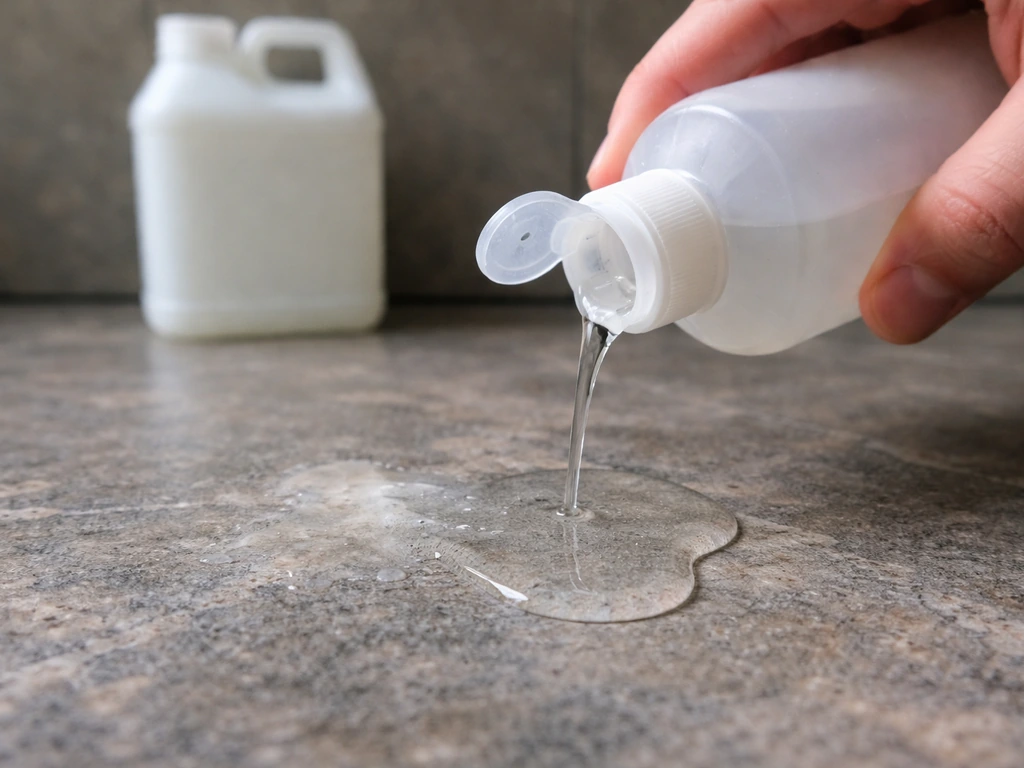
For wax that has really soaked in, a dedicated wax remover is your most reliable option. Products like Lithofin WAX-OFF or AKEMI Wax Remover are formulated specifically for stone and tile surfaces. Apply undiluted to a dry surface and let it work for 5 to 10 minutes (check your specific product label). Wipe away with a clean cloth, then rinse the area with clean water. Important: Lithofin notes that after using WAX-OFF, the surface will need to be resealed if it was previously sealed. Factor that into your plan.
If you don't have a dedicated wax remover on hand, mineral spirits (paint thinner) applied sparingly with a cloth can dissolve paraffin wax. Use it on concrete pavers or granite only. Test first, work in a ventilated area, and rinse thoroughly. Do not use mineral spirits on travertine, limestone, or marble without testing, as it can sometimes affect resin fills or finishes.
What NOT to use and why
| Product | Risk on Calcareous Stone (Travertine/Limestone/Marble) | Risk on Concrete/Granite |
|---|---|---|
| Vinegar or lemon juice | Will etch and permanently dull the surface | Generally safe but limited wax-removing effect |
| Bleach | Too alkaline, can discolor and damage surface | Can discolor; rinse well if used at all |
| Muriatic/hydrochloric acid | Will dissolve the stone surface | Use only for efflorescence, not wax |
| Ammonia-based cleaners | Too caustic, risk of discoloration | May affect sealers; avoid on sealed surfaces |
| Citrus-based degreasers | Acidic; will etch calcareous stone | Generally effective; test first |
Step three: clean up the oily residue and get rid of the citronella smell
After the wax itself is gone, citronella leaves behind an oily film and a noticeable scent. This is where a lot of guides stop, but it's the step that actually finishes the job. If you still see wax or residue after the first pass, follow the specific steps in this guide on how to remove candle wax from patio pavers.
Degrease the surface
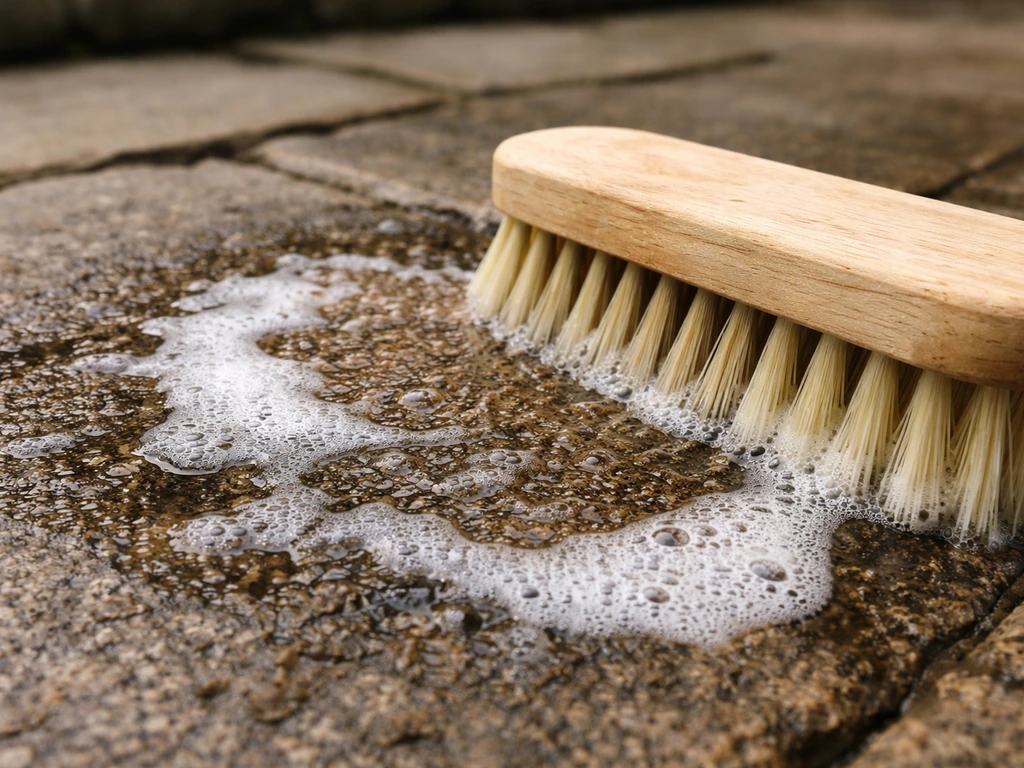
Mix a few drops of plain dish soap (Dawn or similar) with warm water and scrub the area with a stiff-bristled nylon brush. Dish soap is a surfactant that breaks up oily residue without being acidic or alkaline enough to harm most stone. For concrete pavers, a purpose-built hardscape cleaner like Techniseal Hardscape Cleaner handles oily residue well and is formulated to be safe on natural stone without discoloring it. Apply, let it dwell for 3 to 5 minutes, scrub, and rinse thoroughly.
For stubborn oily patches on non-calcareous stone (concrete, granite, bluestone), a small amount of ammonia diluted in water (about one tablespoon per cup of water) applied with a cloth can cut through the remaining film. Rinse well after. Skip ammonia entirely on travertine, marble, and limestone.
Dealing with the citronella odor
Once you've degreased, the smell usually fades on its own within a day or two, especially with sun exposure. If it's lingering, sprinkle dry baking soda over the cleaned area, press it in slightly with a cloth, and leave it for an hour before sweeping away. Baking soda is pH-neutral and safe on all stone types. Avoid using odor sprays or citrus-scented products on calcareous stone since the citric acid content can cause etching.
Rinse and dry
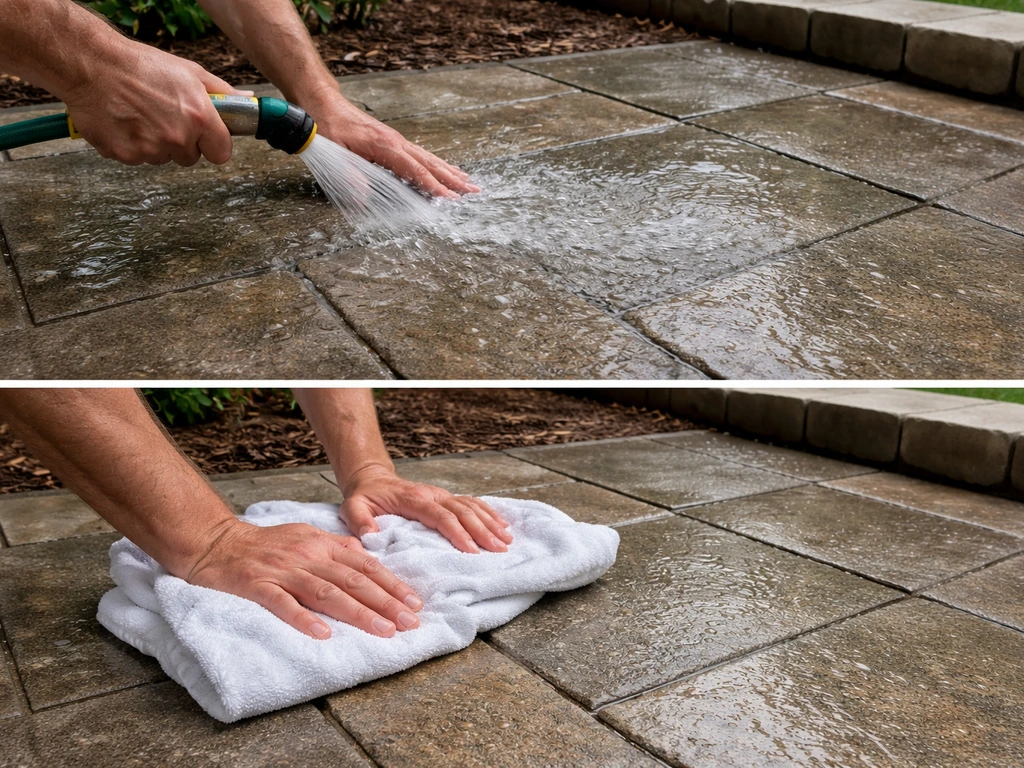
Rinse the area with clean water, either from a bucket or a garden hose. You don't need a pressure washer for this unless the stone is heavily textured and you're trying to flush solvent out of deep grooves. Let the stone dry completely (at least a few hours in direct sun) before assessing whether any residue remains. Wet stone always looks cleaner than it actually is, so judge results only when dry.
Reseal if needed
If you used a commercial wax remover or mineral spirits and your stone was sealed, you'll need to reseal. Check for beading: pour a small amount of water on the cleaned area. If it soaks in instead of beading up, the sealer is gone or compromised. Apply a fresh coat of stone sealer appropriate for your surface type before the next rain.
Stop this from happening again: prevention tips for citronella candle use
The cleanup is doable, but it's genuinely easier to avoid the problem. Citronella candles drip more than standard candles because the wax formula is softer and the oils lower the melting point, especially in summer heat.
- Always place citronella candles on a drip tray or a wide ceramic saucer. Even a cheap dollar-store plate will catch overflow before it hits the stone.
- Never set a burning citronella candle directly on unsealed porous stone. If your travertine or flagstone isn't sealed, the oil absorbs almost instantly.
- Position candles away from areas where kids or pets might brush past and knock them over. A tipped candle is a cleanup job ten times bigger than a drip.
- When storing citronella candles between uses, keep them in a cool spot. Candles that partially melt during storage and re-harden with misshapen wax pools are more prone to uneven burning and overflow.
- Trim candle wicks to about 6mm before lighting. A too-long wick creates a larger flame and more heat, which means faster and messier wax melting.
- If you've had a spill, treat it the same day. Citronella wax is much easier to remove fresh and solid than after it's had days to soak into the pores.
If you're dealing with other wax sources on your outdoor surfaces, the approach is similar but may vary slightly depending on the wax type and the specific surface, whether that's pavers, concrete, or flat slabs. The core principle holds across all of them: mechanical removal first, then targeted cleaning for residue, and always match your cleaner to your stone type.
FAQ
The wax is mostly gone, but I still have citronella smell on the stone. What should I do?
For citronella wax that’s gone but you still smell it, treat the residue step as the main cleanup. Scrub with warm water and a few drops of plain dish soap using a stiff nylon brush, rinse well, then let the area dry fully. If odor persists, press baking soda into the cleaned spot for about an hour and sweep it up. Citronella odor can linger in oily pockets even after the visible wax is removed.
Can I use an iron to remove citronella wax from patio stone?
Yes, but only if your stone is already handled safely and you use the right heat level. Place paper towels over the spot, use a medium-low iron without steam, and move to fresh towel sections each lift. Stop if you see darkening that doesn’t improve after rinsing, and do not try this on stones that are known to be resin-filled or heavily sealed if you are unsure of heat tolerance.
Is vinegar or citrus cleaner safe for removing citronella wax residue?
Avoid vinegar, lemon, citrus cleaners, and any “natural” acidic degreasers on travertine, limestone, marble, or other calcareous stones because they can etch and leave dull spots. Instead, use dish soap and neutral pH cleaning methods, or a stone-safe hardscape cleaner. If you suspect a pH-sensitive stone, stick to mechanical removal plus neutral degreasing.
Should I scrub right away if there’s oily yellow residue after scraping?
Use paper towels or a clean cloth to blot and lift, don’t rub. For the oily residue, you can also absorb before scrubbing by pressing dry paper towels onto the area, then using a light absorbent layer like baking soda, cornstarch, or cat litter for 10 to 15 minutes. Rubbing can smear paraffin deeper into pores and spread the citronella oil.
What if I don’t have a wax remover, can I use mineral spirits instead?
If you have no dedicated wax remover, mineral spirits can work on concrete pavers and granite, but apply very sparingly and only after testing in a hidden corner. On travertine, limestone, or marble, don’t rely on mineral spirits unless your test shows no dulling or surface change, and rinse thoroughly after any use.
How can I tell if the sealer on my patio stone was removed during wax cleanup?
You can usually tell once the area is dry. Sprinkle water on the spot after cleaning: if it beads, sealer may still be present, if it soaks in, the sealer is compromised or removed. This matters because some wax removers require resealing, and stripping a sealer can make future spills more difficult to clean.
What should I do if the wax is soft and smears when I try to scrape it?
If the wax has softened again, harden it before scraping. Ice in a bag pressed onto the wax for 2 to 3 minutes makes it brittle so it lifts in pieces instead of smearing. This is especially helpful on warm days when citronella wax can look gel-like.
Can I use a pressure washer to rinse out melted citronella wax?
Yes, but only for deeper textured stones. A pressure washer can push melted wax and oil deeper into grooves, but rinsing with a garden hose or bucket is usually enough. If you do use a pressure washer, keep it on low and only after you’ve removed bulk wax and done the degreasing step.
What’s the safest “first attempt” if I’m not sure what type of patio stone I have?
Yes, avoid metal scraping and aggressive acids, but you can safely use heat only with paper towels as the barrier. Also, keep dwell times short for any chemical and always test in a corner first. If you’re unsure of the stone type, start with mechanical removal plus dish soap, because that has the lowest risk of etching.
Why does citronella wax seem to soak in faster than regular candle wax, and how can I prevent it?
Citronella candles often drip more because their wax formula is softer and lower melting, so wax can penetrate faster in warm weather. To reduce future issues, place candles on a dedicated tray or use holders with drip guards, and avoid lighting directly on porous stone in high heat sun.
Next Articles
How to Remove Thompson’s Patio Sealer Step by Step
Step-by-step removal of Thompson’s patio sealer on concrete, brick, pavers, and stone, with safety, tests, and cleanup.
Can You Remove Patio Sealer? How to Strip It Safely
Learn if you can remove patio sealer and how to strip it safely by type, material, and method.
How to Remove Resin From Patio Safely by Surface Type
Step by step guide to remove resin from patio by surface type with safe scraping, softening and solvent methods.