Mix 1/3 cup of liquid bleach into a gallon of water, scrub it into the green growth with a stiff-bristle brush, let it sit for 10 to 15 minutes, then rinse thoroughly with a garden hose. That combination handles most cases of green mold, algae, or slime on a concrete patio in a single afternoon. If the growth is thick, stubborn, or keeps coming back, there are a few extra steps worth knowing, and that is exactly what this guide covers.
How to Get Green Mold Off a Concrete Patio Safely
Dylan Hale
8 Jun 2026
What is that green stuff, anyway? Mold, algae, or lichen?
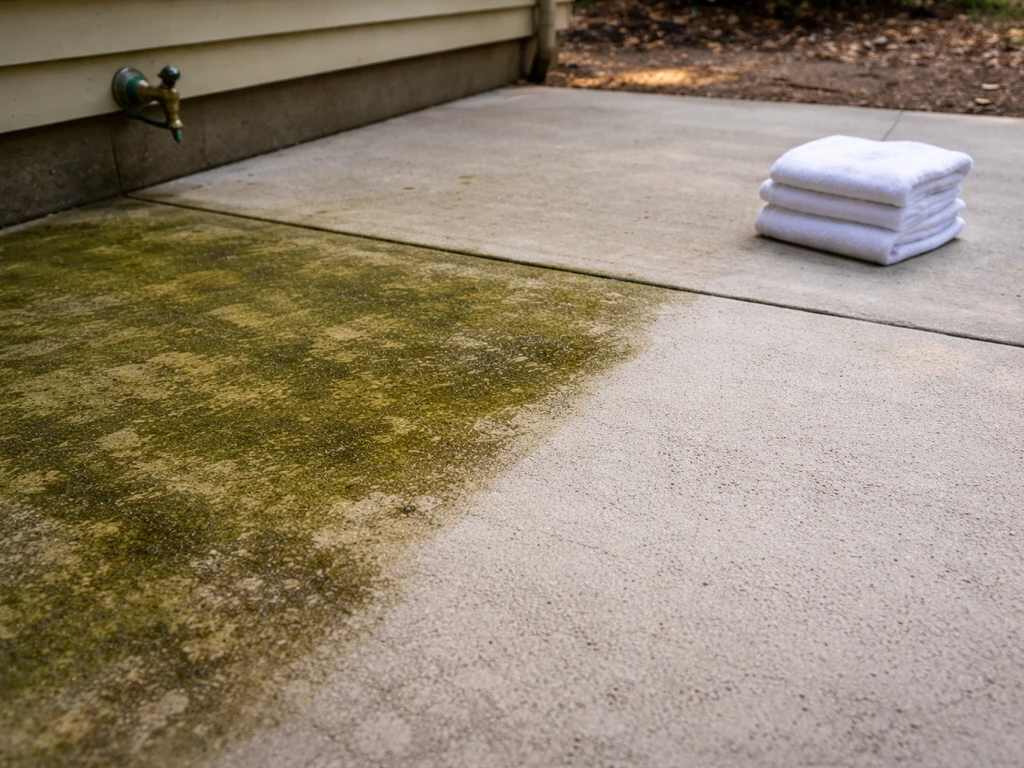
Most people call it green mold, but what is actually growing on your concrete patio is usually one of three things: algae, true mold, or lichen. Telling them apart matters because each one responds a little differently to cleaning.
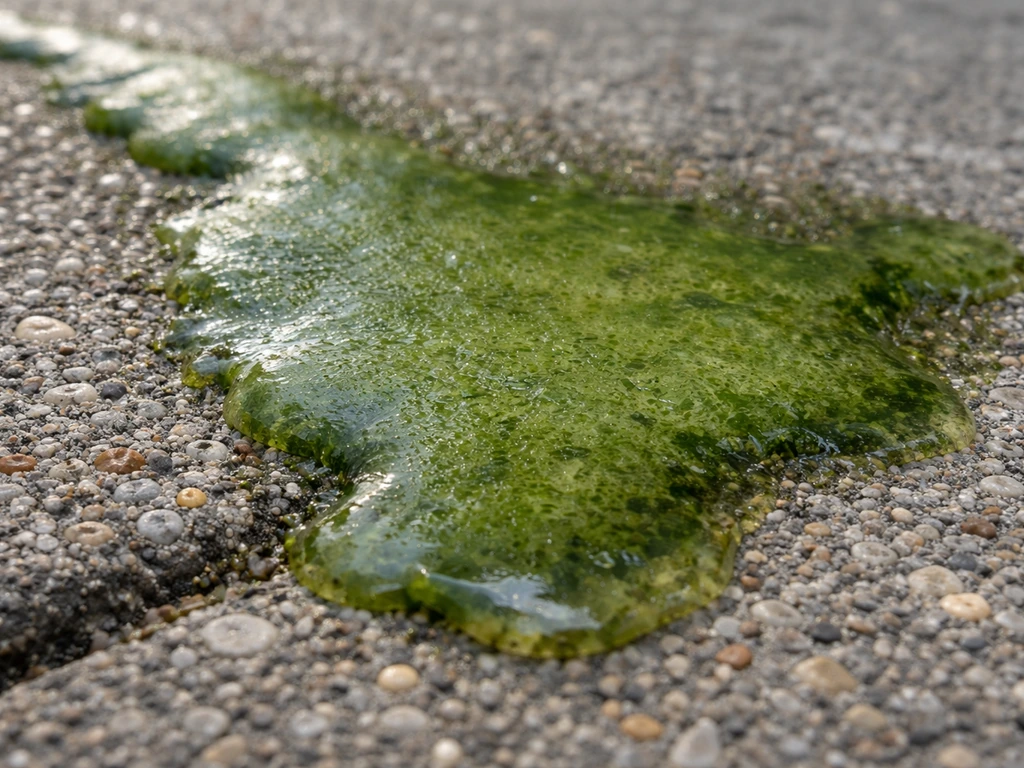
Algae is the most common culprit by far. It shows up as a slimy or powdery green film, especially in shaded or damp corners. It spreads fast when there is moisture and low sunlight, and it is what makes patios dangerously slippery after rain. True mold is fuzzy and grows in patches, often in darker green, black, or gray tones.
It tends to appear in spots that stay persistently wet. Lichen is different from both: it looks dry, crusty, or scaly (sometimes gray-green or even orange) and it grows slowly, bonding tightly to the concrete surface. Lichen is actually a partnership between algae and fungi living together, and because it has no roots it pulls nutrients straight from the air, meaning it can thrive even on bare, dry-looking concrete where nothing else grows.
For practical cleaning purposes, bleach solution tackles all three. The main difference is effort: algae wipes off relatively easily, mold needs a bit more dwell time and scrubbing, and lichen can be stubborn enough that you need to pre-wet it, let the solution soak, and put in real mechanical scrubbing work. If your green growth looks dry, scaly, and barely moves when you scrub it, assume it is lichen and plan for a more patient approach.
Suit up before you start: PPE and safety basics
Bleach and mold spores are both worth protecting yourself from. For sodium hypochlorite (bleach), the US EPA provides agent information relevant to PPE selection and exposure chemical-safety guidance [Bleach and mold spores are both worth protecting yourself from. ](https://iwaste. epa.
gov/guidance/chemical-biological/agent-info? agent=sodium-hypochlorite). Before you open any cleaner, gear up properly. The CDC recommends wearing rubber or non-porous gloves, safety goggles (not vented safety glasses, which let in particles), and an N-95 respirator when cleaning mold.
That last one sounds like overkill for a patio job, but if the growth is heavy or you are scrubbing hard and kicking up debris, inhalation is a real concern. If you have asthma, allergies, or a weakened immune system, it is worth having someone else do the scrubbing or at minimum wearing full respiratory protection.
- Rubber or nitrile gloves, not thin latex ones
- Safety goggles that seal around your eyes, not open-vent glasses
- N-95 respirator, especially for heavy mold or vigorous scrubbing
- Old clothes you do not mind bleaching
- Closed-toe shoes with grip (wet concrete is slippery)
A critical rule: never mix cleaning products. Bleach combined with ammonia-based cleaners or acidic products like vinegar produces toxic gases. Pick one cleaner, use it on its own, and rinse everything thoroughly before switching to anything else. Also, wet down any nearby plants, grass, or garden beds with plain water before you start, and rinse them again after you are done. Diluted bleach splashing on landscaping will not always kill plants if they are well-rinsed, but dry plants hit with concentrated solution can suffer.
Step-by-step: how to remove green mold from your concrete patio
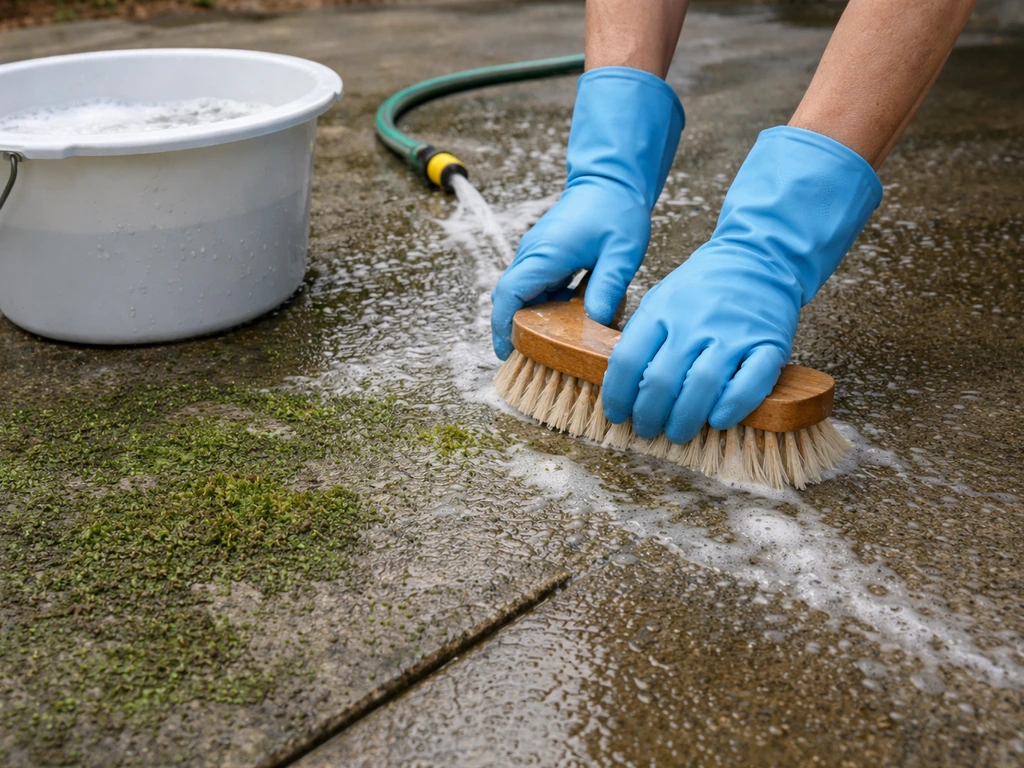
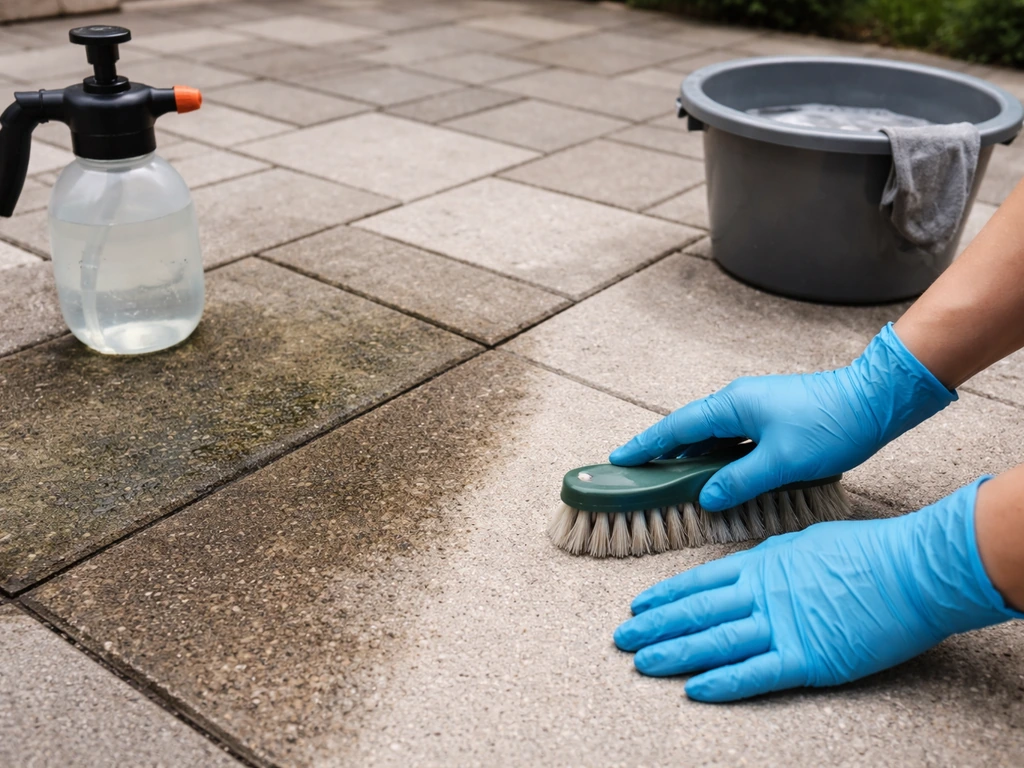
This method works for most homeowners and renters without any special equipment, just a bucket, a brush, and a garden hose. Clorox’s patio-bleach method calls for mixing 1/3 cup of Clorox Disinfecting Bleach into 1 gallon of water in a plastic bucket, then scrubbing with a deck brush dipped in the solution bucket, a brush, and a garden hose.
- Clear the patio. Move furniture, planters, and anything else off the surface. You want full access to every affected area.
- Pre-wet the concrete. Rinse the patio with plain water from a garden hose. This removes loose debris, helps the cleaning solution penetrate, and protects the concrete surface from absorbing undiluted bleach.
- Pre-wet nearby plants. Soak any plants, grass, or garden beds within splash range with plain water before mixing your cleaner.
- Mix your solution. Combine 1/3 cup of household bleach (sodium hypochlorite) with 1 gallon of water in a plastic bucket. Never mix in a metal container. Scale up as needed for larger areas.
- Apply the solution. Pour or brush the diluted bleach solution onto the green growth. Make sure the affected areas are fully saturated.
- Let it dwell. Leave the solution on the surface for 10 to 15 minutes. For heavy mold or lichen, extend this to 20 minutes. Do not let it dry completely on the surface.
- Scrub with a stiff-bristle brush. Use a deck brush or stiff-bristle push broom and scrub firmly in circular motions. You should see the green color breaking up and lifting off. For lichen, expect to scrub harder and longer.
- Rinse thoroughly. Flush the entire patio with your garden hose on a strong spray setting. Work from one end to the other, pushing the dirty rinse water off the patio completely. This step is not optional: leftover bleach residue will continue to react with the concrete and can cause discoloration.
- Re-rinse nearby plants. Give any plants, grass, or landscaping a second rinse with plain water to wash off any bleach runoff.
- Inspect and repeat if needed. Let the patio dry and check. Stubborn spots or lichen may need a second treatment.
Bleach vs. vinegar: which cleaner should you use?
The two most common DIY options are a bleach (sodium hypochlorite) solution and white vinegar. Both have their place, but they are not equally effective, and they are not interchangeable.
| Cleaner | Effectiveness on algae/mold | Effectiveness on lichen | Concrete-safe? | Pet/plant-friendly? | Best for |
|---|---|---|---|---|---|
| Bleach (sodium hypochlorite) | Excellent | Good with dwell time and scrubbing | Yes, when diluted correctly | Rinse plants well; keep pets off until dry | Heavy or widespread green growth |
| White vinegar (undiluted) | Moderate | Weak | Use with caution; acetic acid can affect surface texture with repeated use | Safer for plants, but still rinse | Light algae, eco-conscious cleaning, or homes with pets |
I reach for bleach solution first when the green growth is clearly visible and covering a meaningful area of the patio. It kills mold and algae at the root level rather than just lifting the surface layer, which helps slow regrowth. Vinegar is a reasonable option if the growth is light, if you have pets that spend a lot of time on the patio right after cleaning, or if you want to avoid bleach entirely.
Pour it on undiluted, let it sit for 20 to 30 minutes, scrub well, and rinse. Just be aware that on heavy growth it often takes multiple treatments, and it is not as effective against lichen at all. There is also some research suggesting that repeated acid exposure (even from acetic acid in vinegar) can affect concrete surface texture over time, so I would not make it a weekly habit on older or already-pitted concrete.
For very severe infestations where bleach solution is not cutting it, you can look into dedicated outdoor fungicidal or algaecidal cleaners, or diluted sodium hypochlorite at slightly higher concentrations. Whatever you use, always keep mixing products off the table and protect yourself with full PPE.
When to bring in a pressure washer
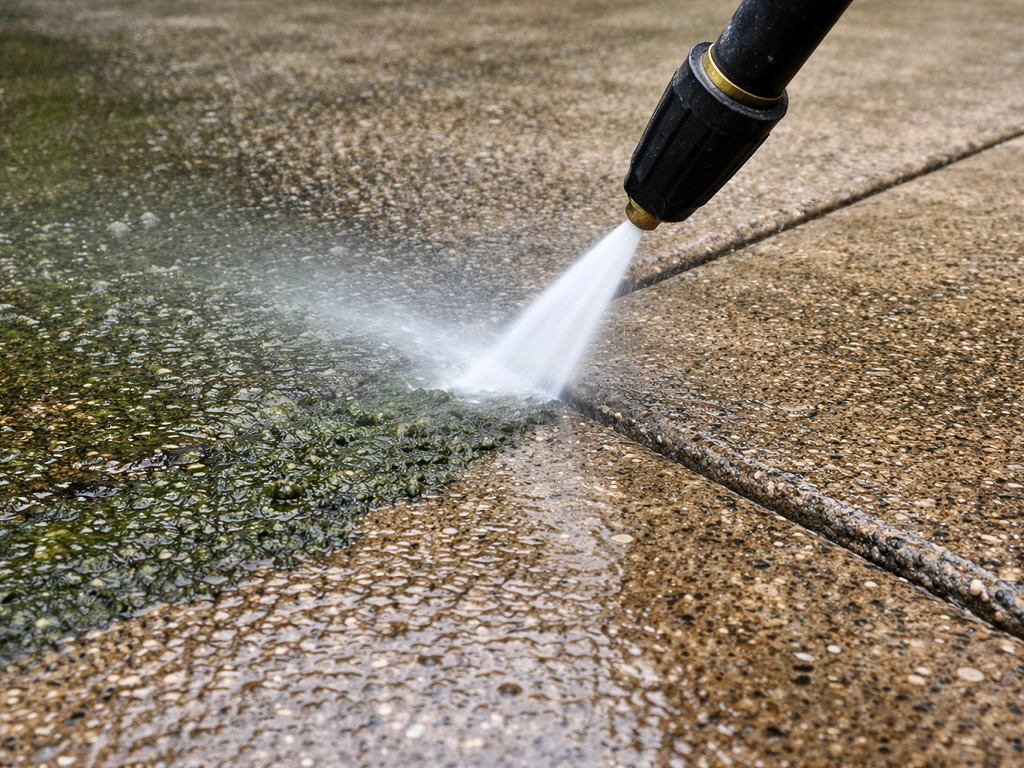
A pressure washer speeds things up significantly and does a better job of blasting out growth from textured or rough concrete surfaces where a brush alone cannot reach into the pores. That said, misused pressure washing can damage concrete, so technique matters.
For standard residential concrete patio cleaning, set your pressure washer to around 3,000 PSI and use a 25-degree fan nozzle. That wide angle distributes the force across a larger area and reduces the risk of surface damage. Avoid zero-degree or 15-degree turbo nozzles on a patio: they concentrate force into a tight point that can gouge, pit, or etch concrete, especially if it is older or already weathered. Keep the nozzle moving at a consistent pace and maintain 6 to 12 inches of distance from the surface.
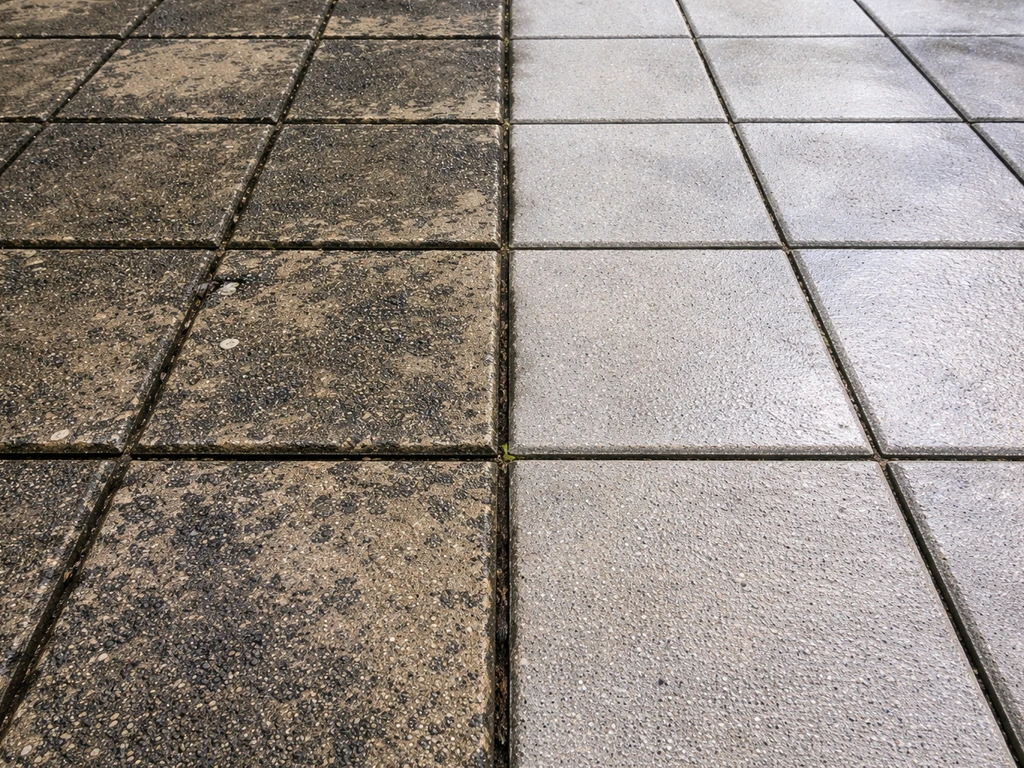
The most effective pressure-washing approach for green growth is a two-step process: apply your bleach solution first, let it dwell for 10 to 15 minutes to kill the growth, then use the pressure washer to rinse and blast the dead material off the surface. Pressure washing alone without a chemical treatment just physically removes what is visible: it does not kill the roots of the growth, so regrowth happens faster. Combining both gives you a cleaner surface that stays cleaner longer. After you have rinsed and blasted off the dead growth, you can finish by checking for any remaining spots and repeating the dwell-and-scrub step where needed how to get mould off patio slabs.
If you do not own a pressure washer, renting one from a hardware store for a half-day costs around $40 to $70 and is well worth it for a large patio. Renters should confirm with their landlord before using one, as high-pressure water directed near building foundations or walls can occasionally cause issues.
Still there after cleaning? Troubleshooting stubborn stains and repeat growth
The green is gone but a stain remains
Sometimes the growth itself is gone but it leaves a green or dark discoloration embedded in the concrete. This is especially common with algae that has been there a long time. Try a second treatment with bleach solution, extend the dwell time to 20 to 25 minutes, and scrub harder. If the stain persists, a stronger sodium hypochlorite concentration or a commercial concrete cleaner formulated for organic stains may be needed. Let the patio dry completely for a day or two before reassessing: concrete often looks stained when wet but comes out cleaner once fully dry.
The mold or algae keeps coming back quickly
If green growth returns within a few weeks of cleaning, the problem is environmental, not your cleaning technique. The patio has the conditions algae and mold love: moisture, shade, and poor airflow. Cleaning removes what is there, but without changing conditions, regrowth is inevitable. See the prevention section below for how to address this at the source.
It is not coming off no matter what you do
If you are dealing with something crusty, dry, and scaly that barely responds to scrubbing, you are likely dealing with lichen rather than algae or mold. Lichen bonds physically to the concrete surface and responds much more slowly to chemical treatments. Soak it thoroughly with bleach solution, leave it for 20 to 30 minutes, then use a stiff wire brush or scraper for mechanical removal before rinsing. You may need to repeat this two or three times. Be patient: lichen grows slowly but it is not going to disappear after one treatment. The same approach applies to green mold on other surfaces like brick patios or stone patios, where the surface texture can make scrubbing harder.
How to keep green mold from coming back
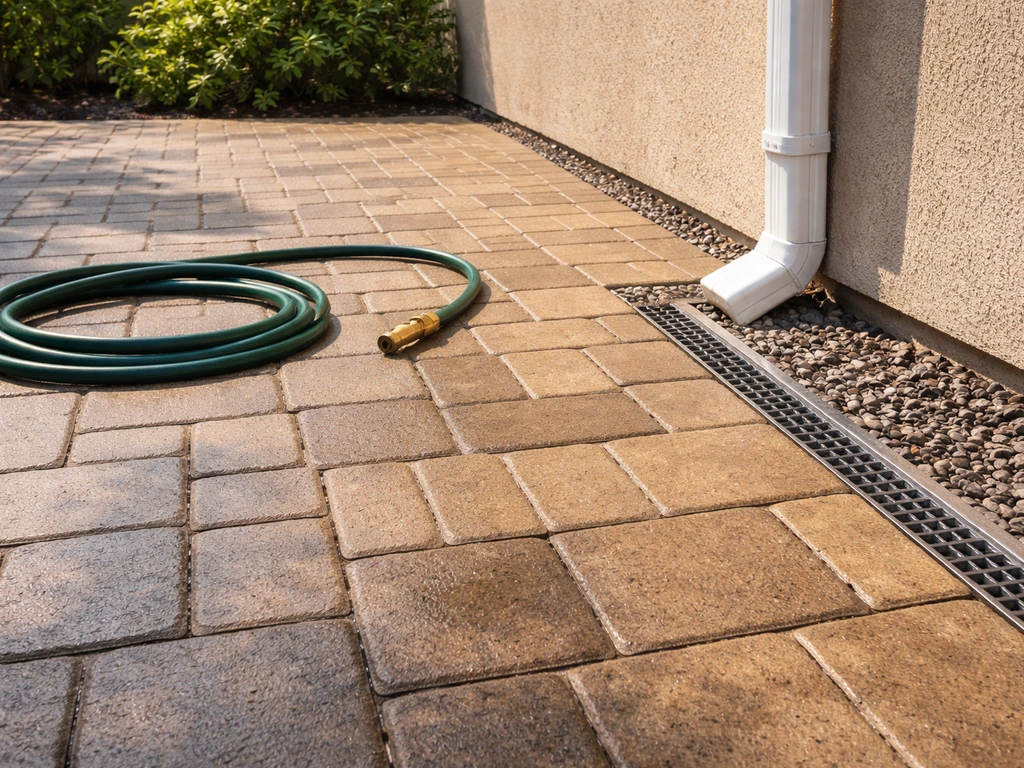
Cleaning is reactive. Prevention is where you actually solve the problem long-term. Once you have removed the growth, learn how to prevent it from coming back on your concrete patio with the right sealing and moisture control. The conditions that allow algae, mold, and lichen to thrive are moisture, shade, and poor drainage. If you are asking how to get rid of mold on patio surfaces fast, start by removing the growth and then keep moisture and shade from returning moisture, shade, and poor drainage. Change those conditions and you will not be scrubbing every spring.
- Improve drainage: Make sure water does not pool on your patio after rain. If you regularly have standing water in certain spots, the patio may need re-sloping or a drain added. Even sweeping pooled water off the surface after heavy rain makes a meaningful difference.
- Increase sunlight and airflow: Trim back overhanging tree branches or shrubs that keep sections of the patio in constant shade. More sunlight and air movement dries the surface faster and makes it much harder for algae to establish.
- Do a quick rinse monthly: Once a month, hose down the entire patio with plain water and a quick pass with a push broom. This removes the early-stage algae and organic debris (leaves, dirt) before growth gets a foothold.
- Apply a concrete sealer: A penetrating concrete sealer fills the pores in the surface that algae and mold colonize. It does not make the patio immune, but it slows growth significantly and makes future cleaning much easier. Reapply every one to three years depending on the product and traffic.
- Do an annual deeper clean: Even with good prevention habits, do one full bleach-solution scrub per year (typically in spring) to reset the surface before warm-weather growth season begins.
Sealing is worth highlighting separately because it is the single most effective step most homeowners skip. A sealed concrete surface is less porous, sheds water faster, and gives algae and mold significantly less to grip onto. If your patio has repeated green growth problems and you have never sealed it, that is your highest-value next step after a thorough clean. Let the patio dry completely for at least 48 hours after cleaning before applying any sealer.
One last note: if you are dealing with green growth on patio pavers, brick, or natural stone rather than poured concrete, the same general approach applies but the chemical choices and pressure settings need to be adjusted for those more porous or sensitive materials. Concrete is relatively forgiving; some natural stones are not. If your patio is made of stone, the best approach may differ slightly, so it helps to follow stone-specific guidance some natural stones are not..
FAQ
Can I use bleach to remove green mold if my patio has plants or a garden bed right next to it?
Yes, but protect them first. Wet the surrounding soil and plants with plain water before you start, keep the bleach solution from pooling near beds, and rinse again after the patio is fully rinsed so concentrated bleach is not left to dry on foliage.
How long should I wait before using the patio after cleaning with bleach or vinegar?
Rinse until runoff runs clear, then let the concrete dry completely. For bleach cleaning, plan on at least 24 hours of drying time, and avoid foot traffic until the surface feels fully dry and there is no bleach odor.
What’s the safest way to test whether it is algae, mold, or lichen before cleaning everything?
Do a small spot test. If the green film wipes or brushes off easily and feels slimy or powdery, it is likely algae. If it forms fuzzy patches that return quickly in wet spots, it is likely true mold. If it is dry, crusty, and barely moves when scrubbed, expect lichen and use more mechanical removal.
Do I need to scrub immediately after applying the bleach solution?
Not usually. Let the bleach solution dwell for the full recommended time so it can kill growth, then scrub or rinse. If you scrub before dwell time, you may remove surface material but not reduce regrowth as well.
Will a pressure washer harm my concrete if I keep the nozzle moving?
It can still damage concrete if you stay too close, use a narrow nozzle angle, or let water blast into cracks and joints. Keep the 6 to 12 inch distance, avoid turbo or zero-degree tips, and do test passes in a less visible area first.
Is it okay to use vinegar when I have pets that go outside right after cleaning?
Vinegar can be a lower-risk option than bleach, but you still need to rinse thoroughly and let it dry fully first. If pets typically lick paws, keep them off the patio until the surface is dry and there is no acidic residue.
What should I do if the green growth comes back quickly even after I cleaned it thoroughly?
Treat it as an environmental issue. Look for the source of moisture (downspouts, leaking irrigation, poor drainage, shaded corners, clogged gutters). Cleaning removes growth, but without reducing moisture and increasing airflow or sun exposure, regrowth is likely.
How do I handle embedded staining after the green growth is gone?
Wait until the patio is dry, then reassess. If discoloration remains, repeat with a longer bleach dwell and stronger scrubbing. If it persists after the concrete is dry, you may need a cleaner formulated for organic stains rather than just removing slime.
What if my concrete patio is sealed already, will bleach or vinegar still work?
Bleach still typically removes growth on sealed concrete, but sealing can reduce penetration and make cleaning less effective for embedded material. Test a small area first, and after cleaning, confirm you are using a compatible sealer if you plan to reseal (and wait for the concrete to dry fully).
Can I spot-treat only the green patches instead of cleaning the whole patio?
Yes, but be careful about bleach boundaries. Green growth often spreads through shaded damp zones, so spot treatments can miss surrounding material and lead to regrowth near the edges. If patches are clustered, consider cleaning the whole affected zone for more consistent results.
Next Articles
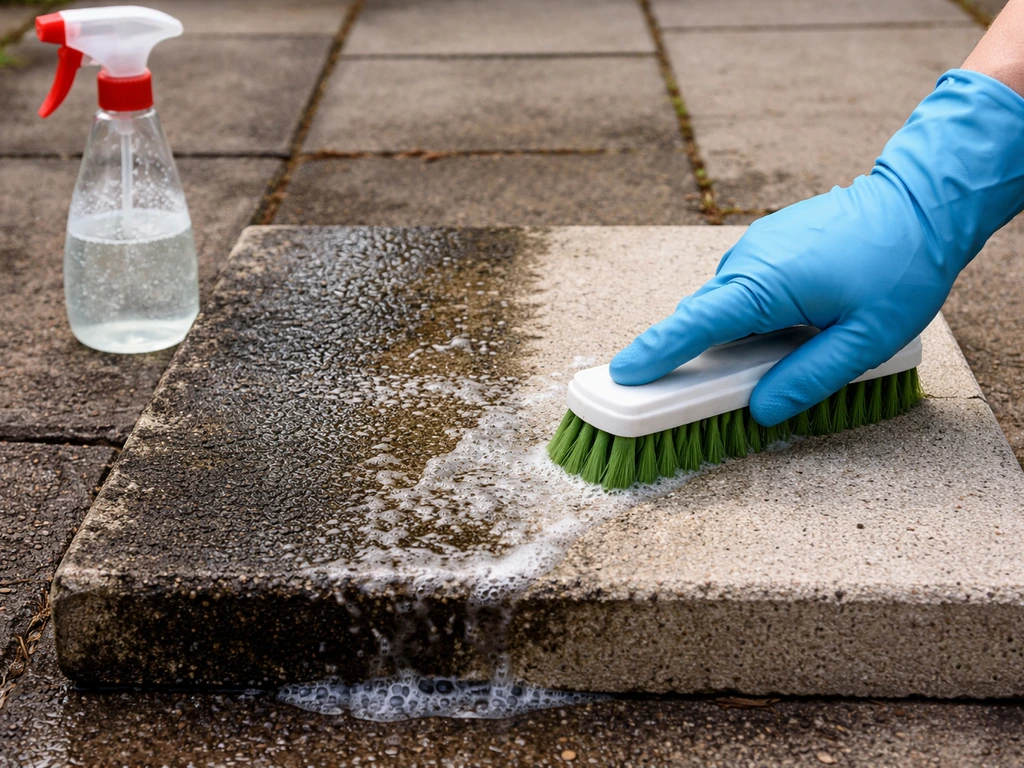
How to Get Mould Off Patio Slabs Safely and Effectively
Step-by-step how to get mould off patio slabs safely with vinegar or bleach, plus pressure-wash tips, prevention, and ma
How to Get Rid of Mold on Patio Step by Step
Step-by-step ways to remove patio mold safely on concrete, brick, stone, pavers, travertine, flagstone and prevent it re
How to Remove Mold From Patio Pavers Step by Step Guide
Step-by-step way to remove mold and black mildew from patio pavers using safe scrub or pressure washing, plus prevention