blank" rel="noopener noreferrer">Mix 1 cup of household bleach into 1 gallon of water, scrub it into the affected concrete with a stiff brush, let it sit for 10 to 15 minutes, then rinse thoroughly with a hose or pressure washer. That combination kills mold and mildew on concrete patios reliably, and it works on both the black and green varieties you'll commonly find out there. If you'd rather skip the bleach, oxygen bleach (sodium percarbonate) is the next best option. I'll walk you through both approaches, plus how to pressure wash if you have one available, and what to do so the mold doesn't come right back.
How to Remove Mold from a Concrete Patio Safely
Dylan Hale
3 May 2026
Safety and prep before you start cleaning
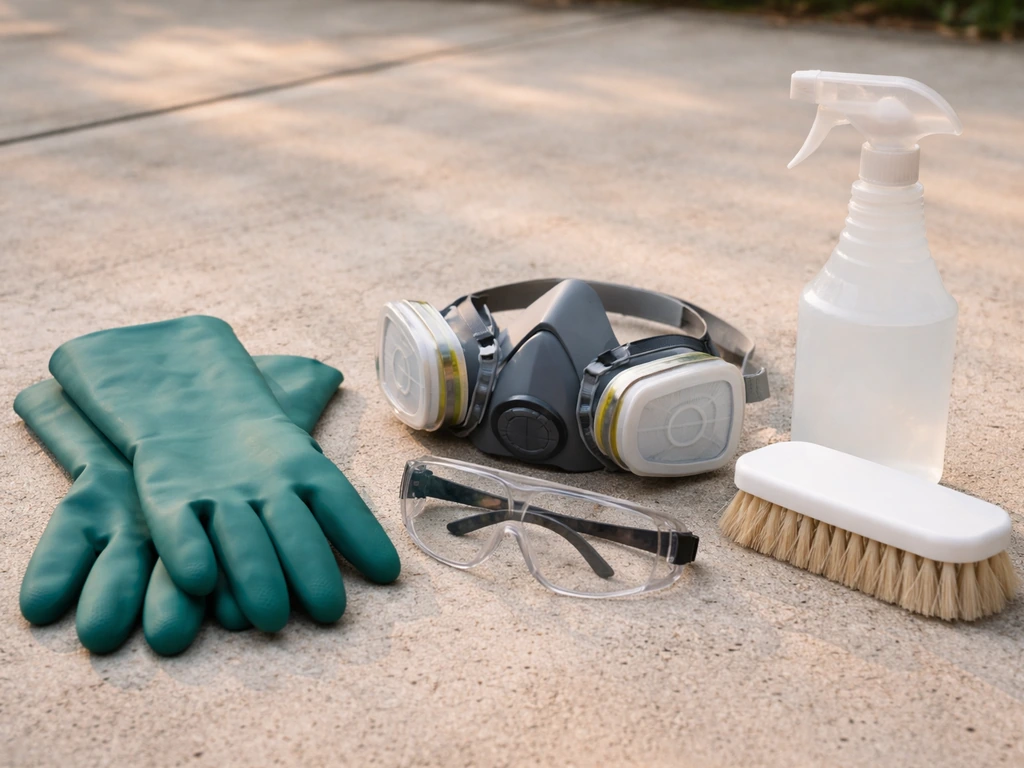
Before you grab a brush or mix anything, take a few minutes to set yourself up safely. Mold spores irritate your lungs, and bleach is hard on skin and eyes. The CDC specifically recommends protecting your mouth, nose, skin, and eyes during mold cleanup. Higher exposures (like a patio heavily covered in black mold) warrant a proper respirator, not just a dust mask.
- Wear chemical-resistant rubber gloves, not thin latex ones, especially if you're using bleach or a commercial mold cleaner.
- Put on safety goggles or glasses. Bleach splashes happen when you're scrubbing.
- Wear old clothes you don't mind staining. Bleach will discolor fabric instantly.
- If you're in an enclosed area or working on a covered patio, ensure good airflow. Open any gates or move furniture to create ventilation.
- Never mix bleach with ammonia or ammonia-based cleaners. The vapors are toxic. Check the labels on anything you already have.
- Clear the patio of furniture, pots, and anything else before you start. Cover nearby garden beds or grass if you're worried about runoff.
- Remove loose dirt, leaves, and debris first. Bleach cannot work effectively through a layer of dirt sitting on top of the mold.
That last prep point matters more than people realize. Trying to clean mold through a layer of debris is like trying to paint over mud. Sweep or blow off the surface, give it a quick rinse, and then start your cleaning solution.
What you're actually looking at: mildew vs. mold, black vs. green
Most of what appears on concrete patios is surface mildew rather than deep structural mold, and the difference matters for how aggressively you need to clean. Mildew sits on the surface and typically looks powdery, flat, and grey or white. It's easier to remove and usually lifts with scrubbing and a diluted bleach solution on the first pass. Mold tends to be darker, fuzzier in texture, and it can penetrate porous concrete if left long enough, meaning you may need a second treatment for stubborn patches.
Green mold (and algae) on concrete
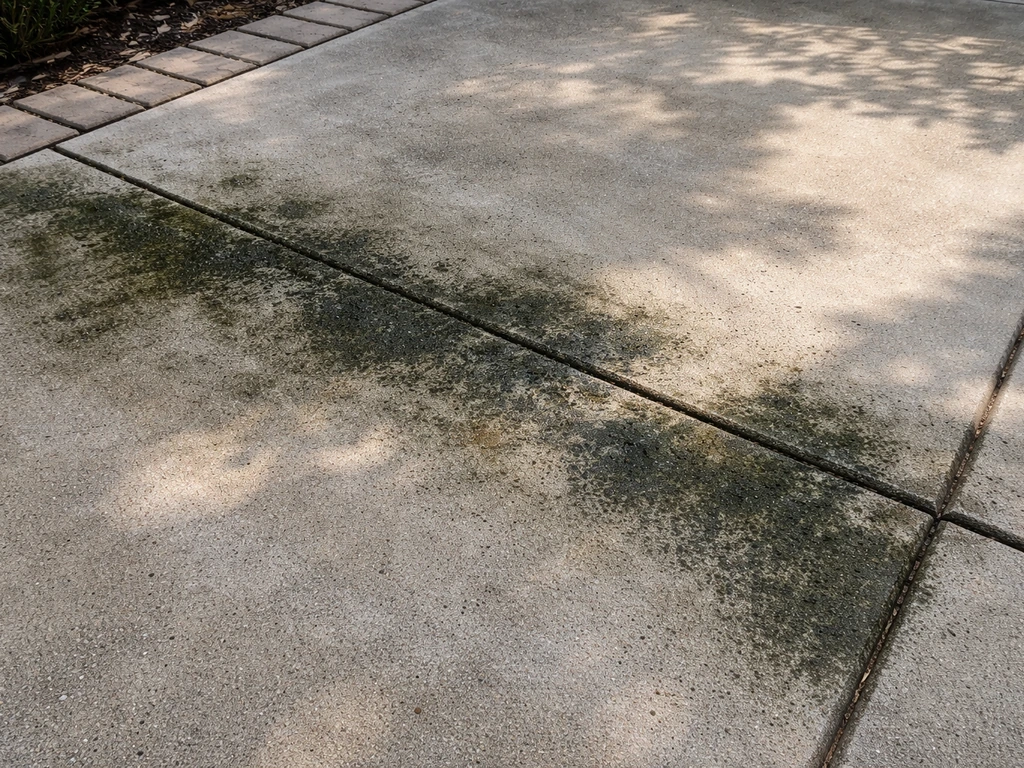
The green stuff is usually a mix of algae, moss, and green mold, and it thrives in damp, shaded spots. You'll see it most in corners, under furniture, or on the north-facing side of a patio that dries slowly. It looks bad but it's generally the easiest type to remove. A bleach solution and a stiff brush will handle most green growth in one session.
This is also the type of growth you'll often find on pavers, brick, and stone patios, though the cleaning approach differs slightly by material. Because green mold and algae show up on brick patios too, follow the same cleaning approach and adjust dwell time for stubborn patches green mold on brick patios. For patio pavers, focus on cleaning the grooves and rinsing thoroughly so cleaner doesn't get trapped in the joints.
Black mold on a concrete patio
Black mold on outdoor concrete is usually Cladosporium or another dark-pigmented outdoor species, not necessarily the infamous Stachybotrys you hear about in indoor water-damage situations. That said, treat it with the same respect: more PPE, more dwell time, and possibly a second application. If a black patch is raised, fuzzy, and returning quickly after cleaning, the concrete underneath may be staying damp due to a drainage or shade problem that needs fixing, not just a cleaning problem.
Cleaning methods: manual scrubbing vs. pressure washing
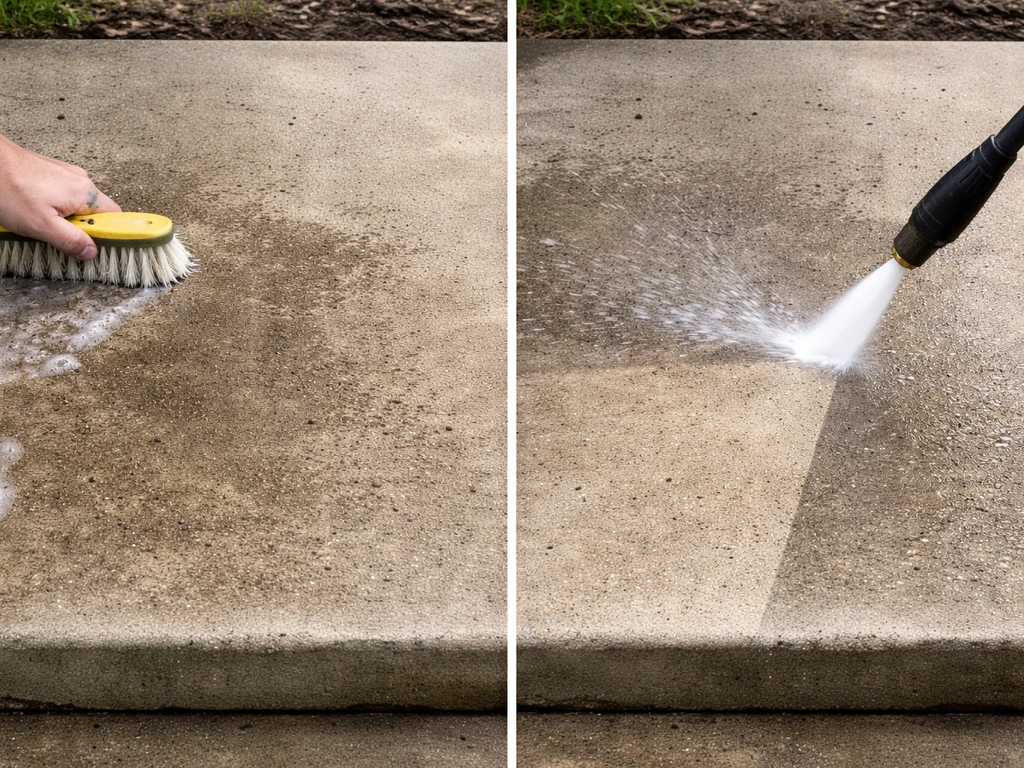
You have two main approaches here, and honestly both work well on concrete. The method you choose comes down to what equipment you have and how large the affected area is.
| Method | Best for | Equipment needed | Effort level | Risk to concrete |
|---|---|---|---|---|
| Manual scrubbing | Small patches, spot treatment, tight corners | Stiff brush, bucket, garden hose | Moderate | Very low |
| Pressure washing | Large areas, full patio refresh, heavily embedded growth | Pressure washer (1500–3000 PSI) | Low physical effort, higher setup | Low if done correctly |
| Scrub + pressure wash combo | Stubborn black mold, heavily textured concrete | Both of the above | Moderate | Low |
For most homeowners dealing with a patch of mold, manual scrubbing with bleach solution is perfectly effective and you can start right now. Pressure washing shines when you've got a whole patio to refresh or the mold has embedded itself into a rough or textured concrete surface where a brush alone won't reach into all the crevices.
Tips for pressure washing mold off concrete
If you're going the pressure washer route, use a 25-degree or 40-degree fan tip nozzle. A 0-degree or 15-degree nozzle can etch or pit concrete if held too close, and that surface damage actually makes future mold growth more likely because it creates more porous texture. Hold the nozzle at roughly a 45-degree angle to the surface and keep it moving steadily. Don't stop or hover in one spot. Start at low pressure and increase only as needed. Pre-wetting the concrete before you apply any cleaning solution is also good practice as it reduces the risk of surface etching from concentrated chemicals on dry concrete. Apply your cleaning solution, let it dwell, then wash it off.
Step-by-step mold and mildew removal for concrete patios
Method 1: Bleach solution (most effective for tough mold)
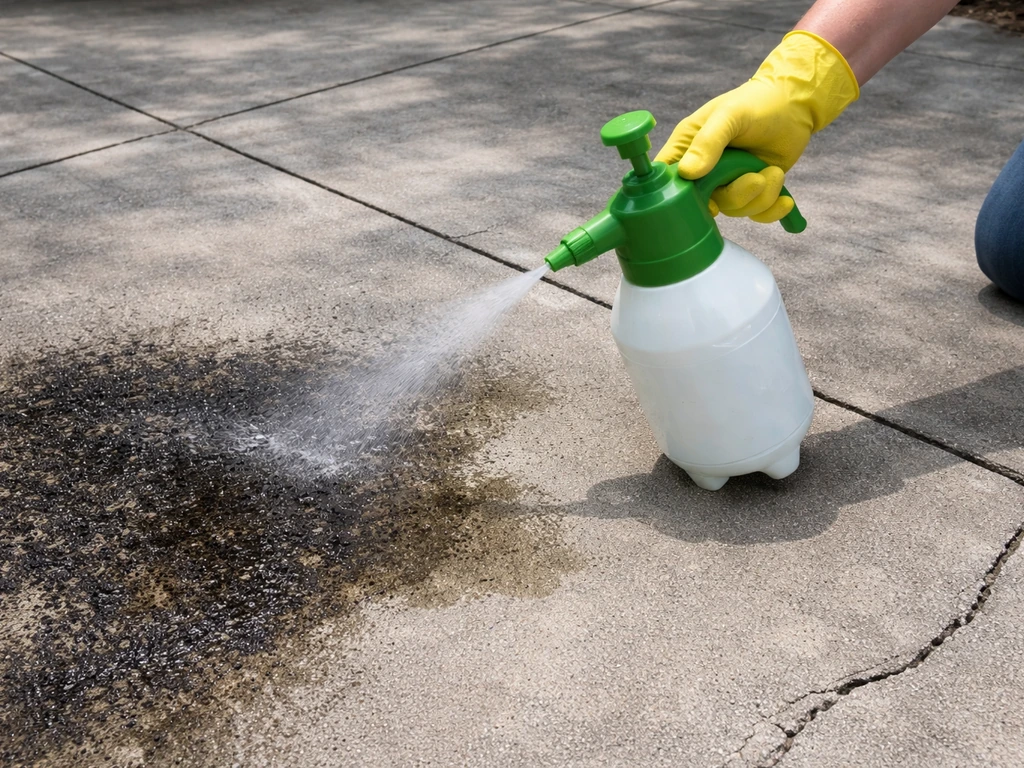
This is the approach I reach for when there's significant mold coverage or visible black growth. Use standard household chlorine bleach (5% to 9% sodium hypochlorite, unscented). Don't use scented bleach or splash-less bleach, which have additives that reduce effectiveness.
- Sweep or blow all loose debris off the patio and remove furniture.
- Pre-wet the concrete with a hose so it's damp but not pooling.
- Mix 1 cup of bleach per 1 gallon of water in a bucket or garden sprayer. This is the CDC-recommended dilution for mold on surfaces.
- Apply the solution directly to the moldy areas, making sure it contacts the full affected surface. If spraying, don't let it dry out before you scrub.
- Let it sit for 10 to 15 minutes. This contact time is what actually kills the mold, not the scrubbing alone.
- Scrub vigorously with a stiff-bristled brush (a deck brush on a long handle saves your back on larger areas).
- Rinse thoroughly with a hose or pressure washer, flushing all the solution and dead mold off the surface.
- Inspect the area. If dark staining or growth remains, repeat the process once more before moving on.
Keep in mind that bleach kills mold but doesn't always remove the dark staining it leaves behind in porous concrete. If a grey or brownish shadow remains after the mold is dead and rinsed away, that's a stain, not active mold. You can try a second treatment or accept that it may fade over time with sun exposure.
Method 2: Oxygen bleach / sodium percarbonate (gentler, pet-safer option)
If you have pets or kids using the patio, or you're concerned about runoff into a garden, oxygen bleach (often sold as a deck or patio cleaner powder) is a solid alternative. It breaks down into water, oxygen, and sodium carbonate, so it's far less harsh on surrounding plants and soil. It takes longer and requires more scrubbing for heavy growth, but it genuinely works on mold, algae, and mildew on concrete.
- Follow the mixing instructions on the product label, as concentrations vary by brand.
- Pre-wet the concrete surface.
- Apply the mixed solution and let it dwell for at least 15 to 20 minutes (longer than chlorine bleach because the oxidizing action is slower).
- Scrub with a stiff brush, working the solution into any textured or roughened areas.
- Rinse completely. You may need a second pass on stubborn spots.
What about vinegar or hydrogen peroxide?
Vinegar gets recommended a lot online, but it's not well-suited for concrete mold removal. Its acidity can etch and degrade concrete surfaces with repeated use, and its effectiveness against established mold colonies on porous concrete is limited. I'd skip it here. Hydrogen peroxide (3% from the drugstore) is milder and won't harm concrete, but it requires extended dwell time and multiple applications on anything beyond light surface mildew. If you're dealing with a small, early-stage patch and prefer a chemical-free approach, it's worth a try, but bleach or oxygen bleach will outperform it on any meaningful growth.
Rinsing, drying, and avoiding staining or surface damage
Rinsing is not optional and it's not something to rush. Bleach left sitting on concrete can lighten the surface unevenly, and any cleaning chemical that dries on the surface before being rinsed can leave residue that attracts new dirt and growth. Rinse the entire treated area with plenty of water, not just the spot you scrubbed. Use a garden hose with decent pressure or your pressure washer on a wide-angle nozzle, and work the water across the whole surface so chemicals don't pool in low spots.
Once rinsed, let the patio dry completely before you put furniture back or apply any sealer. Depending on your climate and how much sun the patio gets, that means at least a few hours on a warm day or potentially a full day in cooler or overcast conditions. Don't cover the surface with furniture while it's still damp because that's exactly the kind of moisture trap that invites mold back. The CDC's guidance on this is blunt: dry right away, and don't paint or caulk over anything that is still wet or moldy.
How to prevent mold from coming back on your concrete patio
Cleaning mold off concrete is satisfying but temporary if you don't address why it grew there in the first place. To get mould off patio slabs effectively, focus on both cleaning the growth and fixing the moisture problem that allowed it to return how to get mould off patio slabs. The EPA is clear on this: blank" rel="noopener noreferrer">controlling moisture is the only practical way to control mold long-term. If you want more specific steps, see our guide on how to prevent mold from coming back on your patio How to prevent mold from coming back on your concrete patio. You can't eliminate every spore, but you can take away the conditions they need to grow.
Fix drainage and standing water
If water pools on your patio after rain, especially in the same spots where mold keeps returning, that's your primary problem. Check whether the concrete slopes slightly away from your house (it should, typically at about 1/8 inch per foot). Low spots can sometimes be addressed with a concrete resurfacer, or you may need to redirect downspouts or add a small drain. Even a simple change like clearing debris from the patio edge so water can flow off freely makes a real difference.
Improve airflow and reduce shade
Mold needs moisture to stay alive, and shade prevents moisture from evaporating. If a dense shrub, overgrown tree, or permanent structure keeps part of your patio in shadow all day, that area will almost always have recurring mold. Trimming back vegetation to let sunlight reach the concrete surface makes a bigger difference than most people expect. Rearranging or raising outdoor furniture slightly so air can circulate underneath also helps, since trapped damp patches under rugs or chair legs are classic mold starters.
Seal the concrete
A quality penetrating sealer (silane, siloxane, or siliconate-based) reduces how much moisture the concrete absorbs, which directly limits mold's ability to take hold. For outdoor patios, penetrating sealers are preferable to film-forming (topcoat) sealers because they're breathable: they let moisture vapor escape from within the concrete rather than trapping it beneath a surface layer, which can actually make mold problems worse. Apply sealer to a fully clean, dry surface, typically after you've done a thorough mold cleaning session. Most penetrating sealers need reapplication every two to three years depending on traffic and weather exposure.
Build a simple maintenance routine
The most effective prevention is also the most boring: regular cleaning before growth gets established. A light scrub or rinse every month or two in seasons with high moisture, combined with an annual treatment with a diluted bleach or oxygen bleach solution, will prevent mold from ever reaching the stage where it takes serious effort to remove.
For detailed steps on getting mold off a brick patio, use the same bleach or oxygen bleach approach and focus on scrubbing, proper dwell time, and thorough rinsing. Sweeping leaves and debris off the surface promptly matters too, since decaying organic matter is exactly what mold feeds on. If you stay on top of it, you're looking at 20 minutes of maintenance rather than a half-day cleaning project.
It's also worth noting that concrete isn't the only patio surface where mold is a recurring issue. If you have adjoining areas made of brick, pavers, or stone, those materials each have their own considerations for mold removal and prevention, and the cleaning approach needs to match the material to avoid damage.
FAQ
Can I mix bleach with other cleaners to remove mold faster on a concrete patio?
No. Do not combine bleach with ammonia, vinegar, or other acids or cleaners. Mixing can create toxic fumes and can also reduce disinfecting effectiveness. Stick to one cleaning product at a time, rinse thoroughly between steps if you need a second pass.
What if the mold smell is still strong after cleaning, even when the black or green spots are gone?
Odor usually means moisture or organic residue remains. Rinse longer, let the patio dry fully, and check for ongoing dampness from pooling or shade. If the smell persists after drying, repeat the treatment once more and address drainage, since spores and growth can regrow when conditions stay wet.
How long should I wait before letting kids or pets use the patio again?
Wait until the concrete is completely dry and all chemical has been rinsed away. In practice, that often means at least several hours on a sunny warm day and potentially a full day in cooler or overcast conditions. Avoid reintroducing furniture, rugs, or shoes that can trap moisture before the surface is dry.
Will bleach remove the dark stains from concrete, or will they come back?
Bleach can kill growth but may not fully remove staining in porous concrete. If you still see a grey or brown shadow after rinsing, assume it is residual staining rather than active mold. You can re-treat once, but sun and time also help stains fade, and preventing moisture is what stops return.
Is it safe to use a pressure washer after bleach treatment, or should I choose one method?
You can use both, but rinse first and let chemicals dwell only as directed for the cleaner you used. If you pressure wash right after applying bleach, you can increase runoff and splash, and you may miss full dwell time. For deep embedment or textured concrete, pre-wet, apply solution, allow dwell, rinse with a wide fan tip, and keep the nozzle moving.
What pressure washer nozzle distance should I use so I do not damage the concrete?
Use a 25-degree or 40-degree fan tip, hold the nozzle around a 45-degree angle, and keep it moving. Start at lower pressure and increase only if needed. Avoid 0-degree or 15-degree tips and prolonged hovering in one spot, because surface etching can make future mold easier to reestablish.
How do I tell surface mildew from deeper mold that needs more than one cleaning pass?
Surface mildew often looks powdery, flat, and light grey or white, and it usually comes off with scrubbing and the first treatment. Darker patches that look fuzzier or return quickly, especially in the same damp spots, suggest the concrete stayed wet longer and may require a second application plus a moisture fix.
Can I seal the concrete immediately after cleaning to prevent mold from returning?
No, you should seal only after the patio is fully clean and completely dry. Applying sealer over remaining moisture or chemical residue can trap water vapor and worsen the underlying problem. Plan to wait until drying is complete, then choose a penetrating sealer rather than a film-forming topcoat for outdoor patios.
Is vinegar or hydrogen peroxide a better option for concrete mold than bleach?
Vinegar is not ideal because repeated acid exposure can etch and wear concrete and it is often less effective on established growth in pores. Hydrogen peroxide (3%) can work, but it usually needs longer dwell time and multiple applications for anything beyond light mildew. If you want the most reliable single-session results, bleach or oxygen bleach generally outperform these options.
What runoff precautions should I take if I use oxygen bleach or chlorine bleach near plants?
Chlorine bleach can harm foliage if it contacts leaves and can be an issue for nearby soil. Oxygen bleach is typically less harsh because it breaks down into oxygen-related byproducts, but any cleaner can still affect sensitive plants. Wet nearby plants or shield them before application, work on a calm day, and rinse thoroughly to prevent concentrated solution from pooling in one spot.
If mold keeps coming back only in one area, what should I check first?
Check moisture causes before repeating treatments. Look for pooling after rain, verify the patio slopes away from the house (commonly about 1/8 inch per foot), clear debris that blocks drainage paths, and identify heavy shade. Also check that furniture or rugs are not trapping dampness underneath.
Next Articles
How to Remove Thompson’s Patio Sealer Step by Step
Step-by-step removal of Thompson’s patio sealer on concrete, brick, pavers, and stone, with safety, tests, and cleanup.
Can You Remove Patio Sealer? How to Strip It Safely
Learn if you can remove patio sealer and how to strip it safely by type, material, and method.
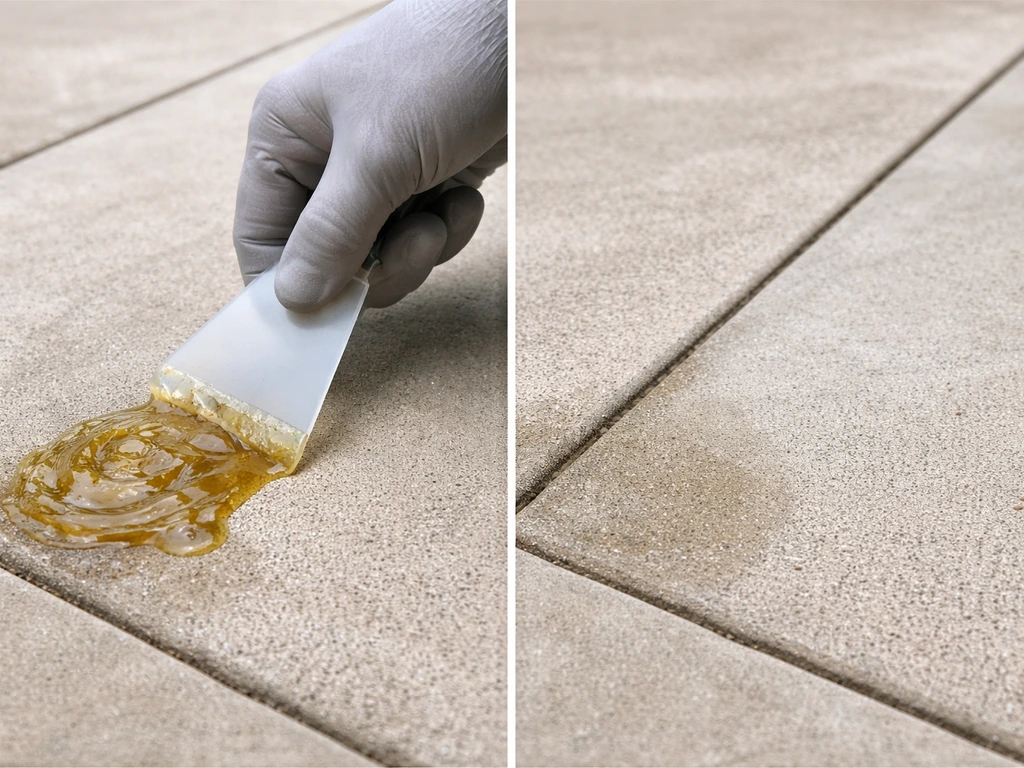
How to Remove Resin From Patio Safely by Surface Type
Step by step guide to remove resin from patio by surface type with safe scraping, softening and solvent methods.