Scrubbing mould off patio slabs comes down to three things: the right cleaner for your slab type, enough dwell time to actually kill the growth, and a proper rinse so it doesn't creep back within weeks. For most patios, white vinegar or a diluted bleach solution (1 cup bleach per 1 gallon of water) will shift even stubborn mould without damaging the surface. Pressure washing speeds things up, but it isn't essential. You can get excellent results with a stiff brush and a bucket.
How to Get Mould Off Patio Slabs Safely and Effectively
Dylan Hale
23 May 2026
Why mould grows on patio slabs (and how bad is yours?)
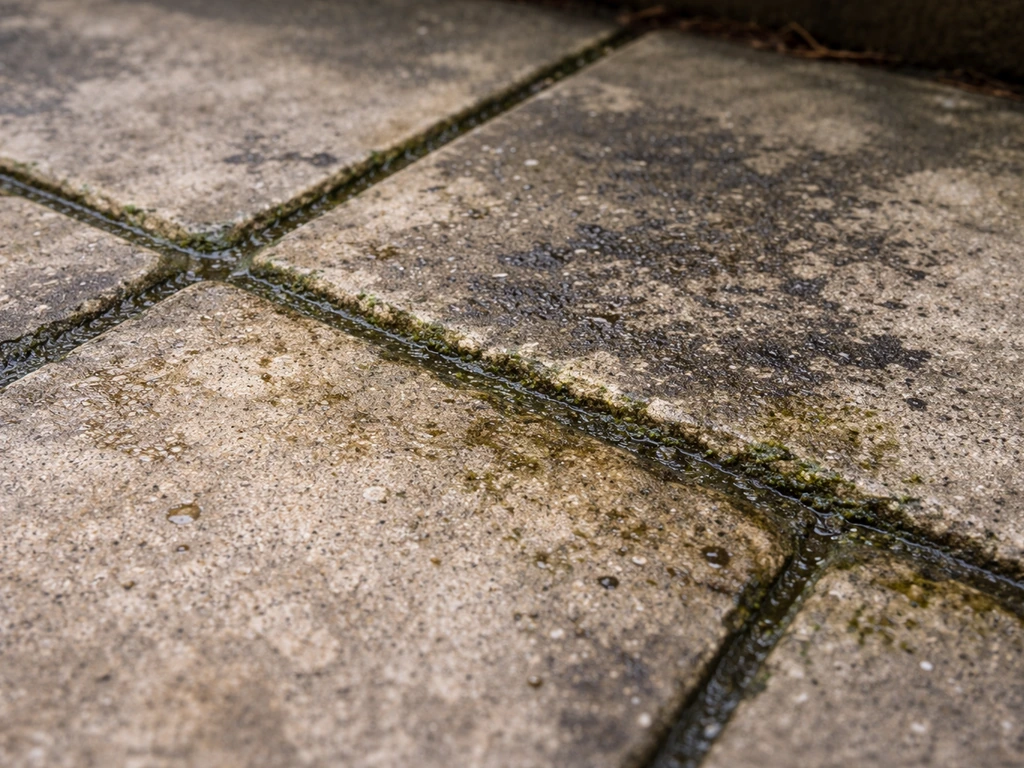
Patio slabs are basically a perfect habitat for mould and algae. They sit outside, they get rained on constantly, and they often sit in shade with poor air movement. The combination of persistent moisture and low airflow is the main reason mould takes hold so fast. If your patio is under a tree, beside a fence, or gets very little direct sun, you're fighting uphill. What you usually see first is a green film or a slippery dark patch, sometimes with a powdery texture. That green film is often algae rather than true mould, but it responds to the same treatments and the same prevention routine, so the distinction matters less than you might think.
Before you reach for any cleaner, take a minute to judge what you're actually dealing with. Light surface greening that wipes away with your foot? That's early-stage and simple to fix. Thick black or dark grey patches, mould that extends into the joints between slabs, or any growth that keeps coming back faster than you can clean it? That's a sign there's a persistent moisture source nearby, like blocked drainage, a leaking wall, or an area that stays wet for days after rain. The cleaner alone won't solve that. You need to fix the water problem too, or the mould will be back before the season's out.
Before you start: prep, safety, and protecting what's nearby
A bit of prep up front saves a lot of hassle. Clear the patio completely: move furniture, plant pots, and anything else sitting on the surface. This lets you clean edge to edge and stops you missing patches under heavy items where mould loves to hide. Do a quick inspection of the slab surface too. Look for cracks, loose pointing, or any slab that lifts when you step on it. Aggressive cleaning on a compromised surface, especially with a pressure washer, can make structural problems worse.
Protection comes next. If you're using any chemical cleaner, cover or move plants, planters, and grass borders that sit right next to the patio. Bleach runoff onto lawns or garden beds will burn them. Wet the soil around the border with plain water before you start and rinse it again after, which dilutes any cleaner that drifts over. Keep pets and children off the area until it's fully rinsed and dry. If you're working indoors or in an enclosed courtyard, ventilation matters: make sure air can move through the space, especially with bleach-based products.
One rule that matters more than most people realize: never mix cleaners. Bleach and vinegar together release chlorine gas. Bleach and ammonia-based cleaners do the same. Use one product, rinse thoroughly, and only then switch to something else if you need to. Pick your method, stick with it for that session, and keep the bottles separate.
Gentler methods first: vinegar and household options
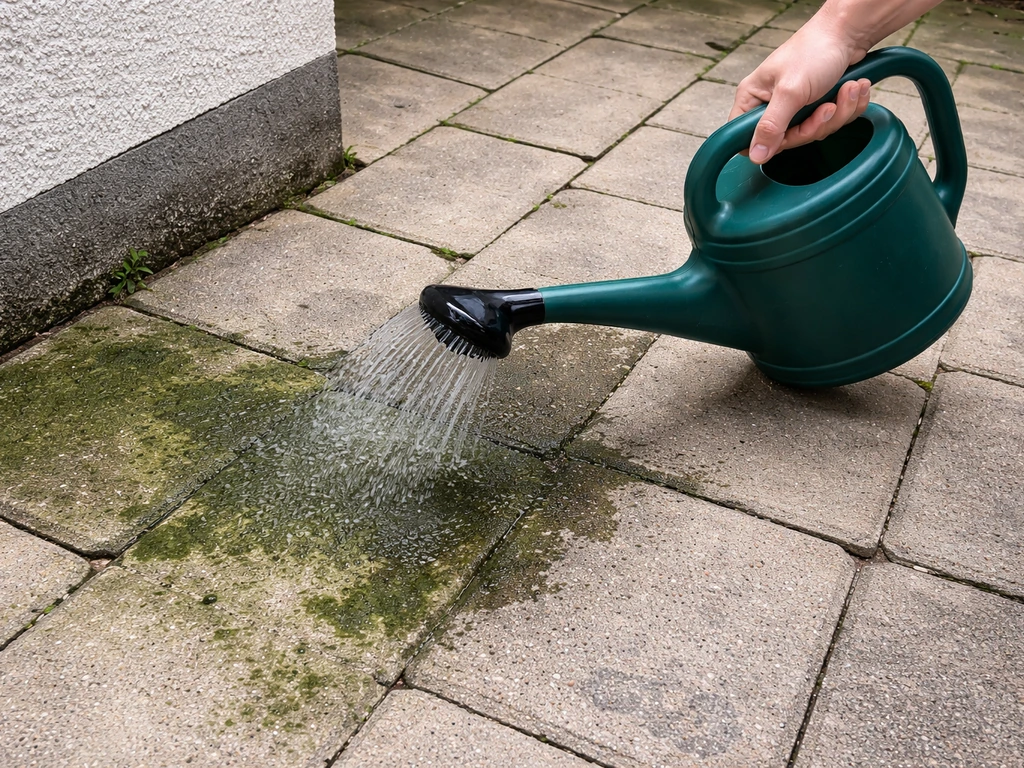
If you have pets, children who play on the patio, or you're on rented property where stronger chemicals need approval, start here. White vinegar is genuinely effective on early to moderate mould growth, and it's safe for most slab materials. It works because it's acidic enough to break down the mould's structure, though it takes longer than bleach and isn't as effective on very thick, established colonies.
For stone, travertine, and any slab with a natural or polished finish, vinegar is actually the recommended first move rather than just a gentle alternative, because bleach and stronger acids carry a real risk of discoloration or etching on those surfaces. Concrete, brick-style pavers, and unfinished flagstone are more tolerant of stronger chemistry, but starting gentle is never a bad call.
- Sweep the dry surface to remove loose debris, leaves, and dirt. Trying to clean through a layer of grime just dilutes your cleaner unnecessarily.
- Pre-wet the slab with plain water from a hose or watering can. This stops the cleaner from being absorbed too quickly into dry, porous slabs.
- Apply undiluted white vinegar directly to the mouldy areas using a spray bottle or pour it on and spread with a brush. For a large patio, a garden sprayer is much faster.
- Leave it to sit for at least 30 minutes, ideally an hour. This dwell time is where the actual killing happens. Don't rush it.
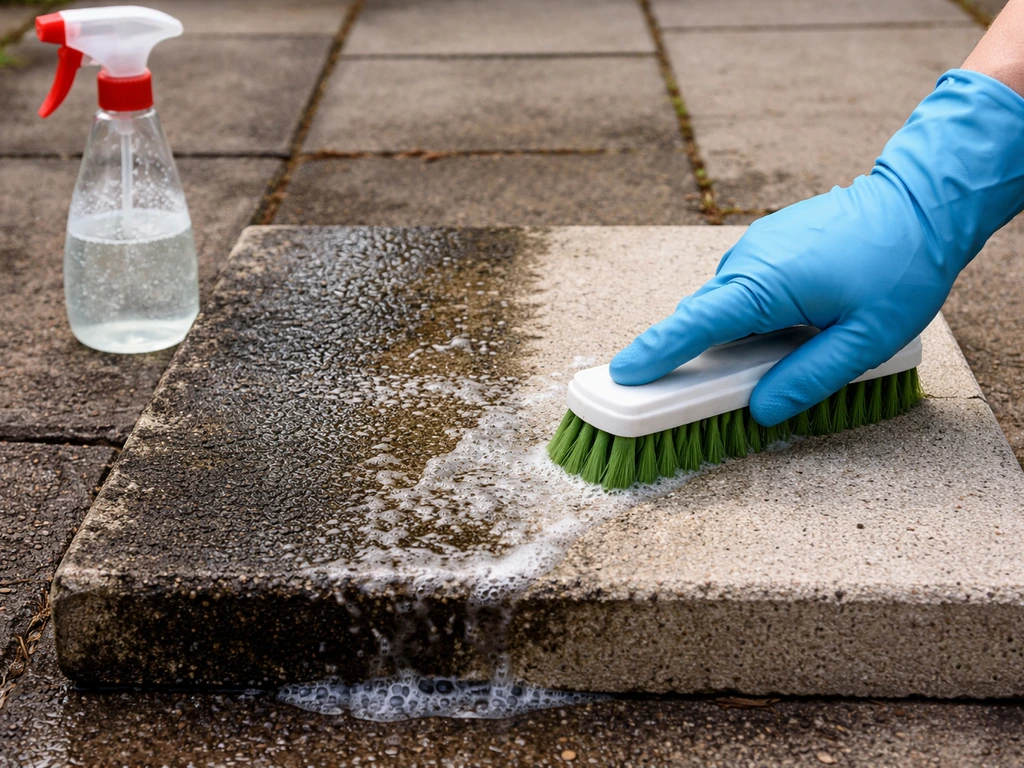
- Scrub firmly with a stiff-bristled brush. A long-handled deck brush saves your back and lets you put real pressure in.
- Rinse thoroughly with a hose. Check that all cleaner and loosened mould is washed completely off the surface and away from plant borders.
For very light surface growth, a paste of baking soda and water scrubbed directly onto affected areas can also help, and it's safe on almost every slab type. It won't touch a serious mould problem, but it's useful for maintenance between deeper cleans. Some people add a small amount of dish soap to their vinegar solution to help it cling to vertical edges and grout lines, and I've found that works reasonably well.
When to use bleach (sodium hypochlorite) and how to do it right
Bleach is the most effective readily available option for killing mould on most patio slab types. It works faster than vinegar, penetrates deeper into porous surfaces, and handles heavy or well-established mould growth that gentler methods won't shift. I reach for it when the vinegar approach hasn't fully cleared things, or when the mould is thick and dark rather than a light green film. It's appropriate for concrete, standard brick pavers, and most unpolished flagstone. Avoid it on travertine, limestone, natural marble, and any slab with a coloured or tinted finish, as it can bleach out pigments and cause uneven patches.
Use regular, unscented household bleach with a sodium hypochlorite concentration between 5% and 9%. Anything stronger and you risk damaging the surface; anything weaker and it may not be effective. The correct dilution for mould on hard outdoor surfaces is 1 cup (240 ml) of bleach per 1 gallon (about 4.5 litres) of water. Don't go stronger than this thinking it'll work faster. It won't make a meaningful difference to results, and it increases the risk to surrounding plants and surfaces.
- Sweep and pre-wet the surface with plain water, exactly as you would for the vinegar method.
- Mix 1 cup of unscented household bleach (5–9% sodium hypochlorite) into 1 gallon of water in a bucket or garden sprayer.
- Apply the solution to the mouldy areas. Work in sections if the patio is large so the solution doesn't dry before you can work with it.
- Allow the solution to dwell on the surface for 10 to 15 minutes. Don't let it dry completely; if it starts to, apply a little more solution.
- Scrub with a stiff brush, paying extra attention to grout lines and joints where mould tends to be thickest.
- Rinse extremely thoroughly with a hose. Bleach residue left on the surface can continue to degrade sealant and damage nearby plants. Rinse until there's no smell of bleach coming off the wet surface.
- Wet any nearby plant borders or grass again with plain water to dilute any runoff.
Wear rubber gloves and eye protection. Work in well-ventilated conditions and don't apply bleach on a windy day when it'll drift onto plants or into your face. And repeat the point from earlier: never mix the bleach solution with vinegar, ammonia-based cleaners, or anything else. Poison Control also cautions not to mix vinegar with chlorine bleach because it can generate irritating chlorine gas, and vinegar is an acid never mix the bleach solution with vinegar. Use it alone, full stop.
Muriatic acid: only if you actually need it
Muriatic acid (hydrochloric acid) is not a mould cleaner. It's primarily used for removing mineral deposits, efflorescence (the white chalky deposits that leach out of concrete and masonry), and hard scale buildup from surfaces. If you're dealing with pure mould or algae, you don't need it, and using it introduces serious risks for no extra benefit over bleach. I'd only consider muriatic acid if I was dealing with heavy efflorescence or calcium buildup alongside mould, on concrete or brick, and had already tried bleach without fully resolving the mineral staining.
If you do decide it's appropriate, the safety requirements are significantly higher than bleach. You need chemical-resistant gloves (not standard rubber kitchen gloves), eye protection or a face shield, and old clothing that covers your skin. Always add acid to water, never water to acid. A typical dilution for masonry cleaning is around 1 part muriatic acid to 10 parts water, but always follow the specific product instructions. Neutralise with a baking soda and water solution after rinsing, to stop any acid action continuing in the slab or joints. Never use muriatic acid on natural stone, travertine, limestone, brick with decorative glaze, or polished pavers. It will etch and permanently damage those surfaces. If your patio is any of these materials and you have a severe mineral staining problem, talk to a specialist stone cleaner rather than reaching for acid.
Manual scrubbing vs pressure washing: which works better?
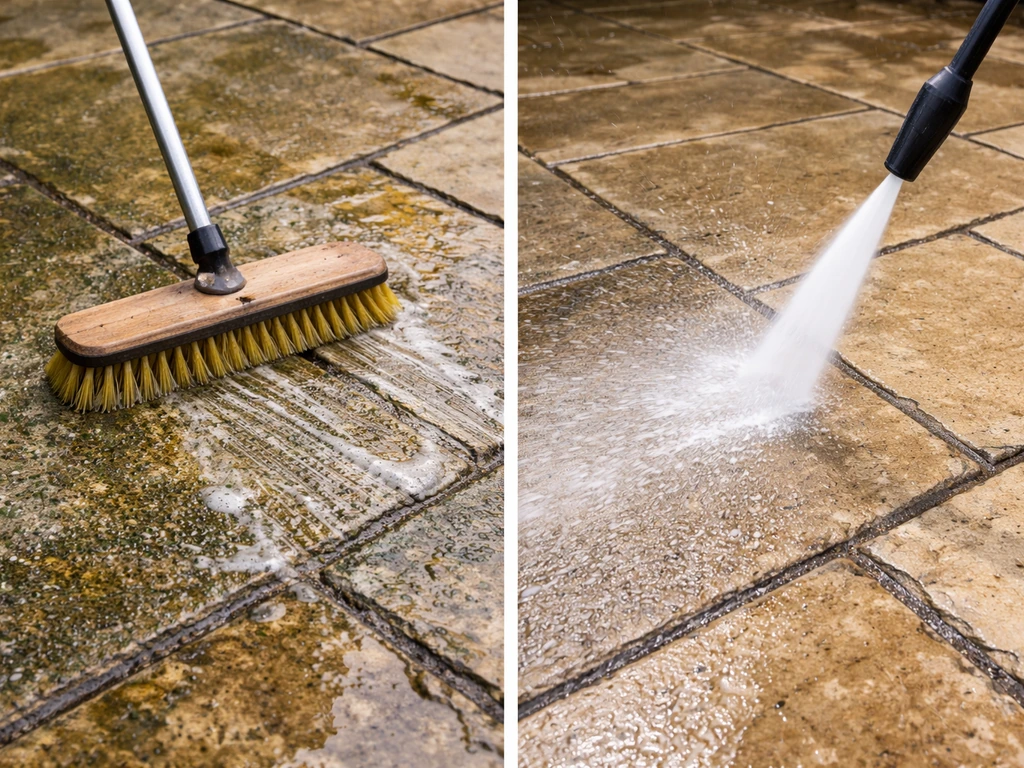
Both work. The honest answer is that manual scrubbing with the right cleaner and a good stiff brush gets you 90% of the way there on most patios. Pressure washing is faster on large areas and does a better job of blasting mould out of deep grout lines, but it carries real risks if you use the wrong settings or tip, and it's not essential.
Manual scrubbing
A long-handled stiff deck brush is the right tool. Wire brushes are too aggressive for most slabs and will scratch concrete and stone. Work in circular motions on flat slab faces and switch to a smaller, stiffer hand brush for joints and edges. Apply your cleaner, let it dwell, then scrub with real pressure. The dwell time does most of the work; the scrubbing just removes the loosened material. Manual cleaning is better for sensitive surfaces like natural stone, travertine, and polished pavers, because you have total control over the pressure applied.
Pressure washing
If you're using a pressure washer, the most important thing is nozzle choice. Avoid turbo nozzles and 0-degree tips entirely on patio slabs. They concentrate force into a tiny point and will etch, scar, or strip the surface, including concrete. Use a 25-degree or 40-degree fan tip, or better still, a surface cleaner attachment, which spreads the pressure evenly and gives a much more consistent result without striping. Start with the lowest pressure setting your machine allows and move up only if needed. Keep the nozzle moving constantly, at a consistent distance of around 20 to 30 cm from the surface. For softer or more porous materials like sandstone, natural flagstone, or old brick pavers, stay with the 40-degree tip and the lowest pressure setting. Blast it with too much and you'll erode the surface or blow out the jointing material between slabs, which is both a cosmetic problem and a structural one.
| Slab Type | Best Cleaning Method | Safest Chemical Option | Pressure Washer Tip |
|---|---|---|---|
| Concrete | Either manual or pressure wash | Bleach solution (1 cup per gallon) | 25-degree fan tip or surface cleaner |
| Brick/Clay Pavers | Either; brush joints carefully | Bleach solution (1 cup per gallon) | 25–40 degree fan tip, low pressure |
| Natural Flagstone | Manual preferred | Vinegar first; bleach only if needed | 40-degree tip, lowest pressure |
| Travertine / Limestone | Manual only | Vinegar only | Avoid pressure washing |
| Polished / Sealed Stone | Manual only | Vinegar only; avoid bleach | Avoid pressure washing |
Stopping mould from coming back
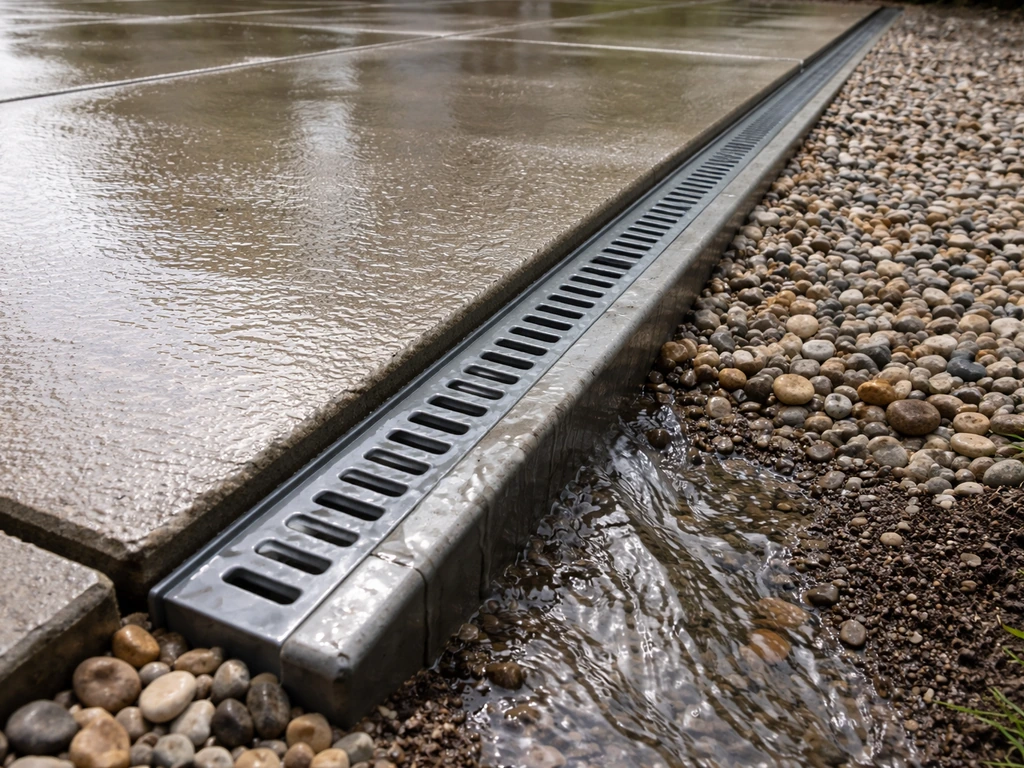
Cleaning is only half the job. If you don't address why the mould grew in the first place, it'll be back. The core issue is almost always persistent moisture, and that comes from a few predictable sources: poor drainage, shade with no airflow, organic debris sitting on the surface, or a slab that's slightly angled so water pools rather than runs off.
Start by looking at your drainage situation. Water should run off the patio surface and away from the house, not pool in low spots. If you have a chronic wet patch after rain, that area will grow mould faster than you can clean it. Regrading or adding a simple drain channel can make a significant difference. Check that nearby gutters, downpipes, and water butts aren't dripping or overflowing onto the patio surface.
Airflow helps a lot. Trimming back overhanging plants and shrubs around the patio's edge lets more sun and wind reach the surface. Slabs that dry out quickly after rain grow far less mould than ones that stay damp for days. If you have furniture or plant pots sitting in the same spot all year, move them periodically, because the patches underneath stay permanently damp and are usually where mould is worst.
For maintenance, a simple routine works better than waiting for mould to return and dealing with a full clean. A rinse down with a hose every few weeks, and a light scrub with diluted vinegar once or twice a season, keeps growth from getting established. For more detail on the quickest DIY treatments, see our guide on how to get rid of mold on patio diluted vinegar. Sealing concrete and brick pavers with an appropriate masonry sealer (check the manufacturer's guidance for your specific slab type) makes the surface less porous and much harder for mould and algae to grip. If you want to remove mold from patio pavers as well as prevent it, make sure you clean first, then allow the pavers to fully dry before you seal Sealing concrete and brick pavers with an appropriate masonry sealer (check the manufacturer's guidance for your specific slab type) makes the surface less porous and much harder for mould and algae to grip.. Sealers do degrade over time, so plan to reapply every few years or when water stops beading on the surface. Just make sure you've fully cleaned and dried the slab before sealing. Sealing over active mould traps it and makes the problem worse, not better.
If your patio is particularly prone to green algae buildup in shady spots, a proprietary patio algaecide or mould inhibitor spray, applied as a preventative after your annual clean, can extend the time between visible regrowth significantly. Apply it uniformly across the whole surface rather than just the worst patches for the best result. The green slippery film that algae causes is worth preventing purely on safety grounds too, since it makes patio surfaces genuinely hazardous underfoot, especially when wet.
Treatment varies a little depending on your specific slab material. Concrete and standard brick pavers give you the most options: bleach, pressure washing, and sealing are all fair game. If you have natural stone, travertine, or polished pavers, the gentler approach is not just a preference but a necessity to protect the surface. For those materials, a regular vinegar clean and good drainage habits will serve you far better than reaching for stronger chemistry. If you're dealing with mould on specific materials like concrete, brick, or stone, the detailed process for those surfaces follows the same core principles but with adjustments to chemical choice and pressure settings that are worth reading into separately.
FAQ
Can I use the same cleaner and brush settings on all patio slab types?
Not safely. Natural stone (travertine, limestone, marble) and polished pavers usually need gentler cleaning, lower agitation, and vinegar-based approaches, while concrete and standard brick pavers tolerate bleach and stronger scrubbing better. If you are unsure what your slabs are, start with vinegar on a small hidden patch and only scale up if there is no discoloration or dulling.
How long should I leave the cleaner on before scrubbing or rinsing?
Dwell time matters because it determines whether the active product can kill the growth. If you scrub immediately, you may remove the surface film but not the mould/algae biology in pores and joints. Follow the product instructions for dwell time, and if using vinegar or bleach, keep the surface visibly wet for the recommended window, then scrub and rinse thoroughly.
Is it safe to clean mould on a patio when it will rain soon after?
It depends, but in general avoid cleaning if rain is likely before the patio is fully rinsed and dried. Fresh cleaner and loosened growth need time to wash off and for slabs to dry, otherwise mould can regrow quickly in damp joints. If rain is unavoidable, reschedule or ensure you can rinse and let the area dry with good airflow.
Will pressure washing always remove mould better than scrubbing by hand?
No. Pressure washing can be faster, but it can also drive growth deeper into joints, strip jointing material, and etch softer or porous surfaces if the pressure or nozzle choice is wrong. Manual scrubbing with a stiff brush often gives a more controlled result, especially on natural stone and any slab where you want to protect joints.
What pressure washer nozzle should I avoid for patios?
Avoid 0-degree tips and turbo nozzles. They concentrate force into a tiny point, which can scar concrete, etch stone, and remove or erode the jointing between slabs. Use a wider fan tip (for example 25 or 40 degrees) or a surface cleaner attachment, and keep the nozzle moving consistently.
Do I need to clean inside the joints between slabs, or is the slab face enough?
You need to address joints if mould keeps returning. Mould and algae often establish in the seams where moisture lingers, so ignoring joints usually leads to regrowth within weeks. Use a smaller stiff brush to work cleaner into gaps, then rinse carefully so residue does not remain trapped in the joints.
How can I tell if what I see is algae or true mould?
You can not always tell by appearance alone. Green, slippery films are often algae, while thick dark patches and powdery deposits can be mould, but both respond to similar cleaning steps. The more important clue is persistence, if it comes back faster than expected, you likely have a continuing moisture source that cleaning alone will not fix.
Why does mould come back so quickly after I clean?
Most of the time it is because moisture is still being fed to the slab. Common causes include pooled water from low spots, downpipes or gutters dripping onto the patio, blocked drainage, debris that holds dampness, shade with poor airflow, or furniture and planters that keep sections wet. Fixing drainage and improving drying usually prevents repeat outbreaks.
Can I seal the patio after removing mould, or will sealing trap it?
Seal only after the patio is fully cleaned and completely dry. Sealing over active growth can trap it and worsen the problem. Also remember sealers degrade over time, so plan to reapply every few years or when water stops beading on the surface.
Is baking soda safe to use if I have pets or kids on the patio?
Yes, baking soda paste is generally low risk compared to bleach or acids for routine maintenance. However, still rinse off residues thoroughly, and keep children and pets off the area until it is dry, especially if you add dish soap or scrub loosened material.
Can I mix bleach with vinegar to make it stronger?
Never mix bleach with vinegar, ammonia-based cleaners, or other chemicals. The combination can release dangerous chlorine gas. Use one product, rinse thoroughly, allow the area to dry, then only switch cleaners on a new pass if you still need it.
Is muriatic acid (hydrochloric acid) a good option for mould?
Usually no. It is mainly for mineral scale and efflorescence, not mould removal. Using it for mould adds significant risk, and it can etch natural stone and other surfaces. Only consider it if you have mineral staining alongside mould on compatible masonry, and then follow the product instructions carefully.
How do I protect plants and grass borders while cleaning?
Wet the surrounding soil before you start, cover or move sensitive planters, and rinse the border again after treatment to dilute any drift. Avoid windy days when using bleach so runoff does not blow onto beds or into the air. Always keep pets and children away until rinsed and dry.
Will bleach damage colored or natural stone slabs?
It can. Bleach may bleach out pigments and create uneven patches, and it is not recommended for travertine, limestone, marble, and polished or tinted pavers. Test any cleaner on a hidden spot first, and choose vinegar-based cleaning for these more sensitive surfaces.
Next Articles
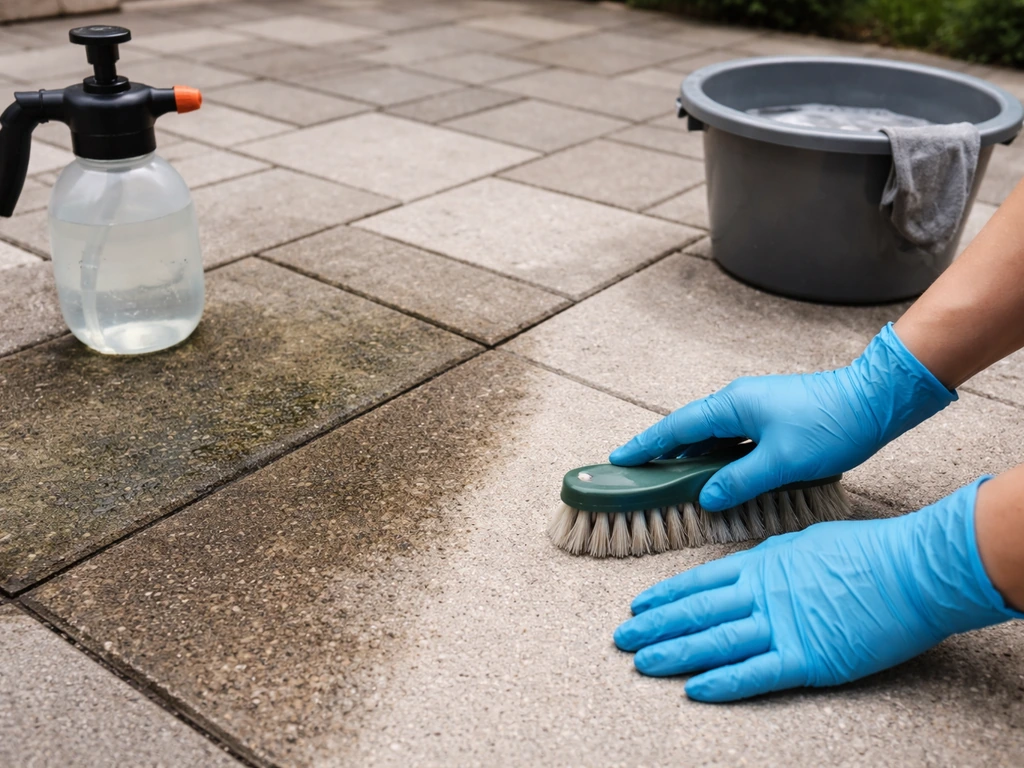
How to Get Rid of Mold on Patio Step by Step
Step-by-step ways to remove patio mold safely on concrete, brick, stone, pavers, travertine, flagstone and prevent it re
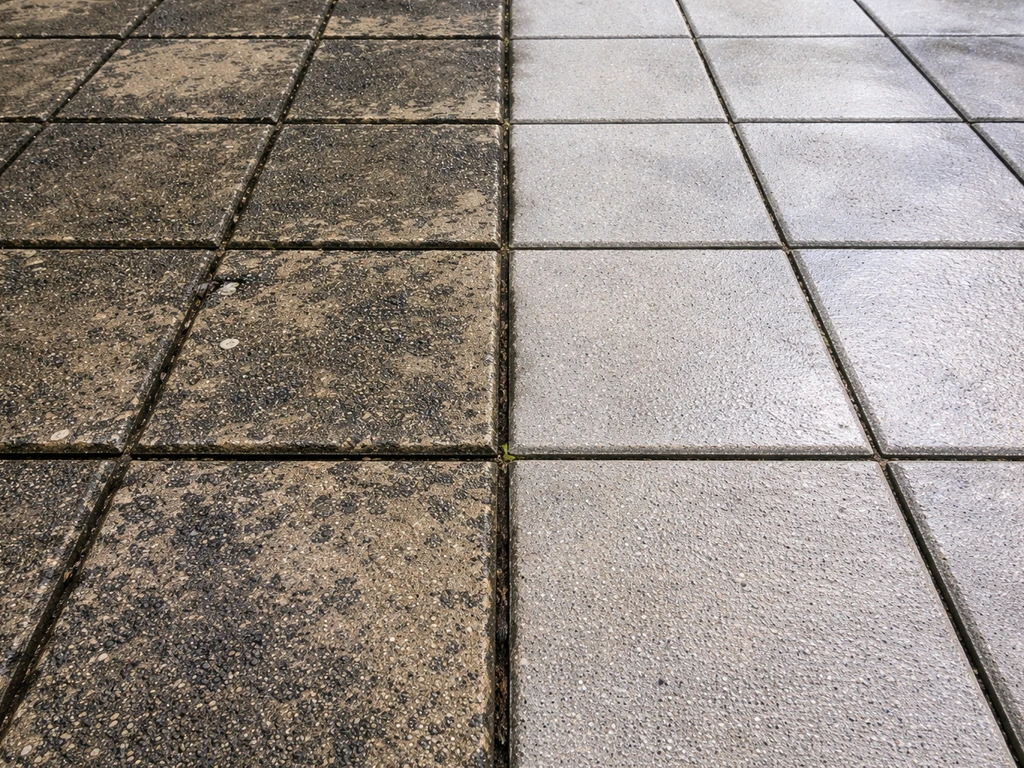
How to Remove Mold From Patio Pavers Step by Step Guide
Step-by-step way to remove mold and black mildew from patio pavers using safe scrub or pressure washing, plus prevention
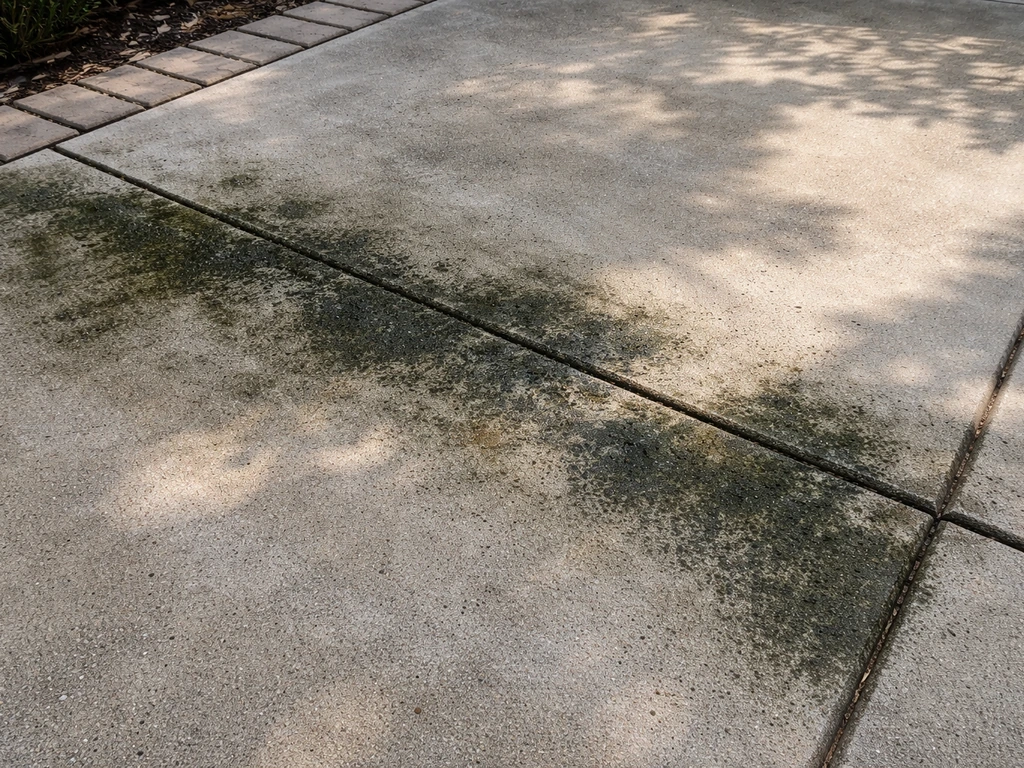
How to Remove Mold from a Concrete Patio Safely
Step-by-step ways to remove mold from a concrete patio, using safe scrubbing, pressure washing, proper cleaners, rinse,