
Oil stains on a patio come out best when you act fast, use the right absorbent first, and then follow up with a degreaser matched to your specific surface. The exact method depends on whether you're working with concrete, pavers, brick, natural stone, travertine, or flagstone, because what lifts oil from concrete can etch a travertine slab in minutes. Get those two things right (speed and surface match) and most oil stains are very fixable.
Oil Stains on Patio: How to Remove Them Step by Step
Dylan Hale
28 May 2026
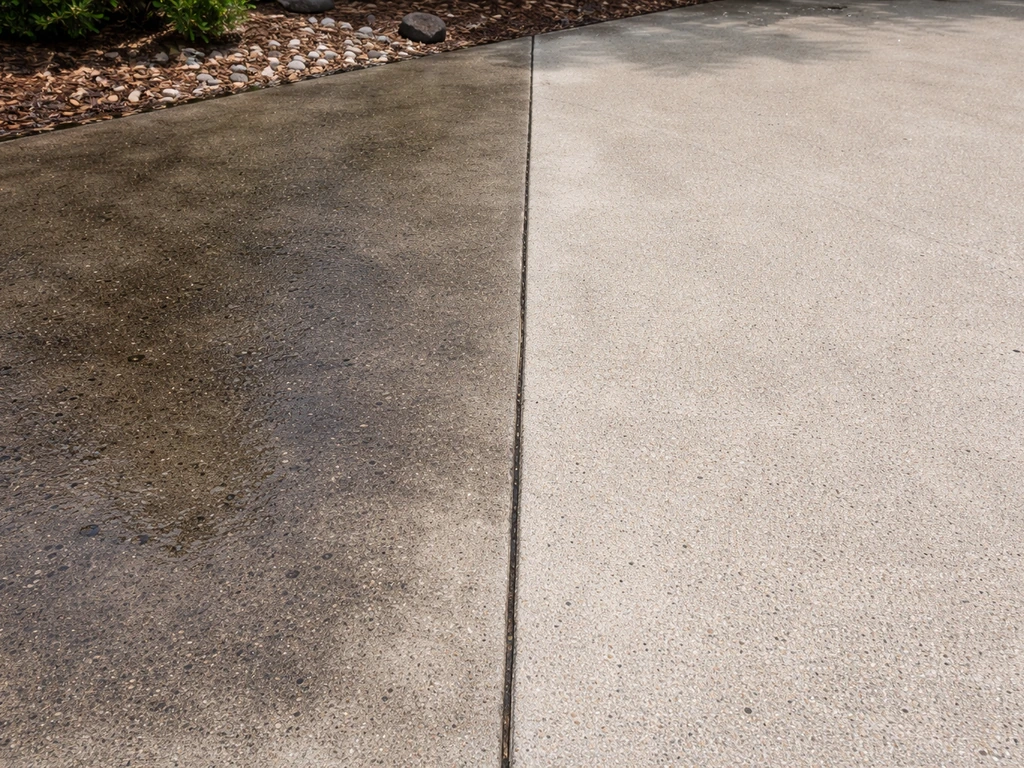
First, confirm your patio material and size up the stain
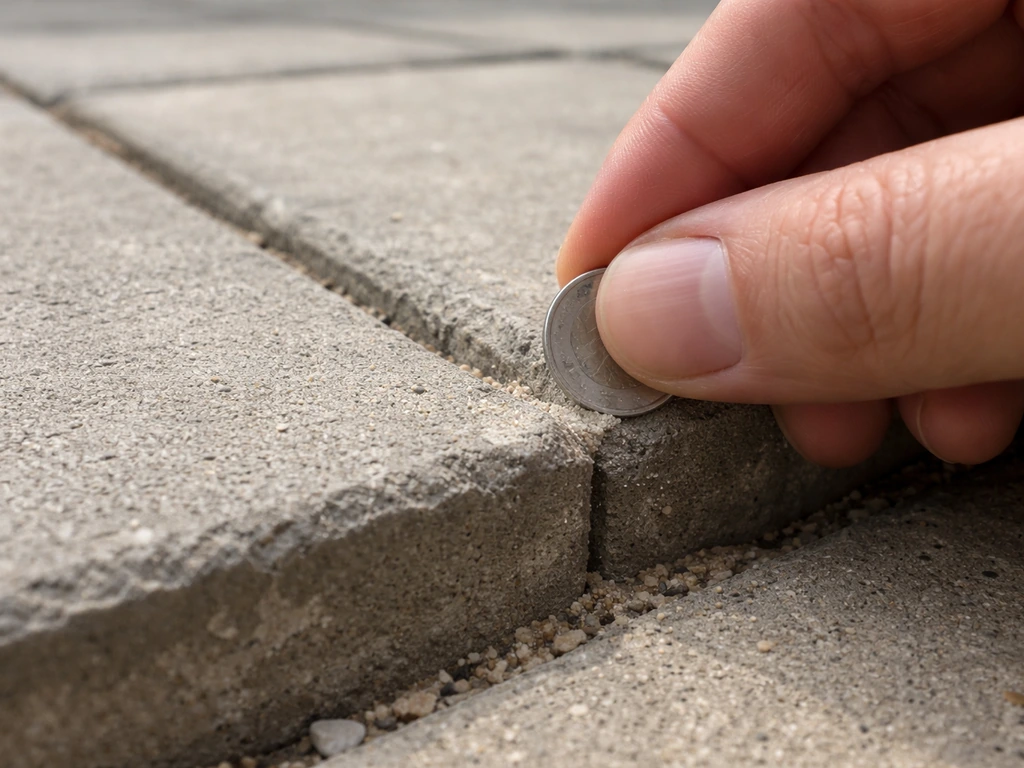
Before you grab any cleaner, take sixty seconds to identify what you're working with. Flip over a loose paver if you have one, look at the edges of a slab, or check any paperwork from the patio installation. The reason this matters is chemical safety: acids like muriatic acid will dissolve calcium-based stones (limestone, travertine, marble), and even aggressive degreasers can strip sealant from sandstone or flagstone. Concrete and clay brick are far more forgiving.
A simple scratch test helps with unknowns. Scrape a hidden corner with a metal key. Concrete and hard pavers barely mark; softer natural stones scratch easily and need gentler treatment. You can also drip a small amount of water on the surface. If it soaks in within a few seconds, the material is porous and will absorb oil deeply, meaning you'll likely need a poultice rather than just a surface scrub. If it beads, the surface is sealed or naturally dense, which makes removal easier.
Also look at the stain itself. A fresh oil patch (wet, shiny, still spreading at the edges) is in the best possible state to treat. A dried stain that's been there for days or weeks has bonded with the porous structure of the material and will need more work. Dark discoloration on stone is the classic sign of deep oil penetration, and that typically means you need a chemical that dissolves the oil from within rather than a cleaner that just works on the surface.
Stop the stain from spreading: the first five minutes matter
Don't reach for water yet. Water can push oil further into porous surfaces. Instead, do these steps in order.
- Scrape off any thick residue (motor oil, cooking grease, chain lube) with a plastic scraper or old credit card. Metal scrapers can scratch stone, so stick to plastic on anything delicate.
- Blot, don't rub. Press paper towels or clean rags firmly onto the wet stain to lift as much oil as possible. Rubbing spreads it sideways and pushes it deeper.
- Cover the whole stain with a dry absorbent material. Kitty litter (the cheap non-clumping clay type), baking soda, cornstarch, or diatomaceous earth all work well. Pour on a generous layer, at least half an inch deep.
- Press the absorbent in gently with your foot and let it sit. For a fresh stain, 15 to 30 minutes is usually enough. For a stain that's been sitting for hours, leave the absorbent overnight.
- Sweep up the absorbent and dispose of it. Do not hose it away, as this spreads oily residue across the patio and into drainage.
After this step you'll have removed the bulk of the oil from the surface. What's left is a residue or stain that has already bonded with the material, and that's what the cleaning methods below are designed to lift.
Removal methods matched to your patio surface
There's no single method that works on every surface. Here's what I'd recommend based on material type.
Concrete patios
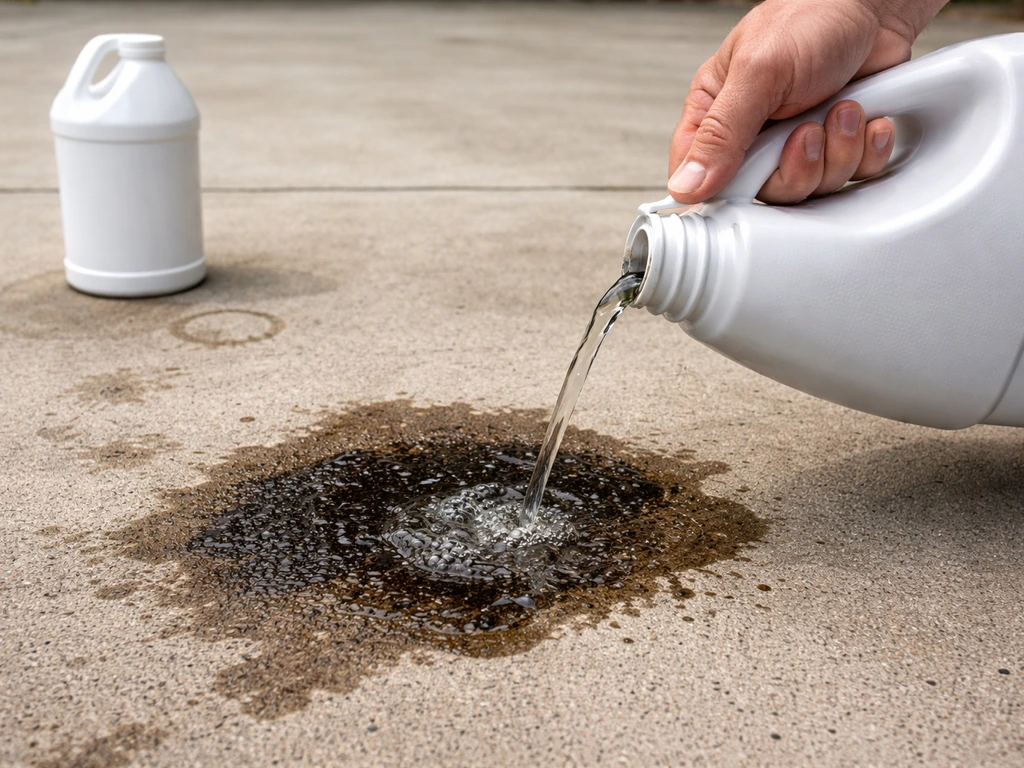
Concrete is the most forgiving surface for oil removal because it handles both acidic and alkaline cleaners without damage. After the absorbent step, apply a heavy-duty degreaser (dish soap works for light stains; purpose-made concrete degreasers like Purple Power, Zep, or Krud Kutter work better for motor oil or cooking grease). Scrub with a stiff-bristle brush, let it dwell for 10 to 15 minutes, then rinse with hot water if possible. For older stains, a poultice paste made from powdered laundry detergent or baking soda mixed into a thick paste with water can be left on for several hours to draw residue out. Concrete can also handle a light dilution of bleach (one part bleach to ten parts water) if you're dealing with a stain that has a dark discoloration from prolonged contact, though bleach doesn't actually cut oil. It's worth using a degreaser first and bleach only to address any residual discoloration.
Brick patios
Clay brick responds well to alkaline degreasers and dish soap scrubs. Apply your degreaser, let it sit for 10 minutes, and scrub with a medium-bristle brush. Avoid wire brushes, which scratch the surface. Brick is porous and can absorb oil deeply, so for older stains a poultice is often necessary. Mix baking soda or diatomaceous earth with a small amount of dish soap and water into a thick paste, apply it over the stain, cover with plastic wrap, and let it dry slowly over 24 hours. The slow drying is important: it's the drying process that draws the oil up out of the brick and into the paste. Scrape it off dry, then rinse. Avoid muriatic acid on brick unless you're an experienced user; it can cause efflorescence (white salt deposits) and damage grout joints.
Natural stone: flagstone, slate, bluestone
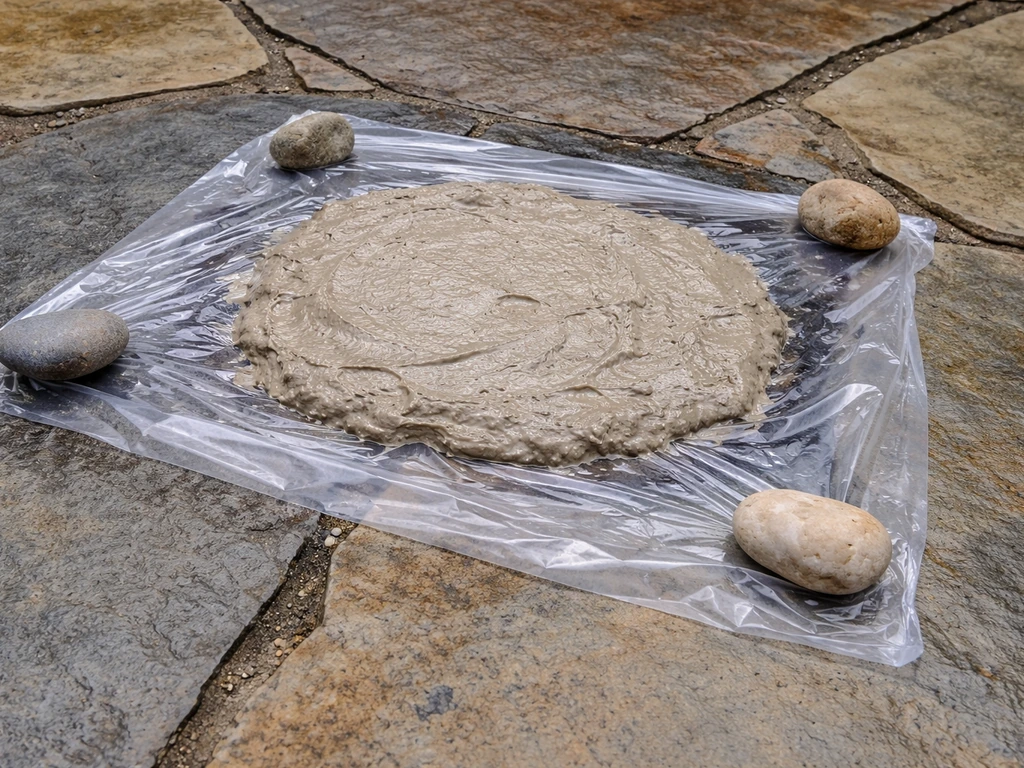
Natural stones like flagstone and slate are porous and geologically varied, meaning their chemistry matters. The standard professional approach for oil on stone is a poultice with a solvent-based chemistry. Mix an absorbent base (baking soda, kaolin clay, or diatomaceous earth works well) with acetone or a stone-safe solvent degreaser until you get a thick peanut-butter consistency. Apply a quarter-inch layer over the stain, cover loosely with plastic wrap (seal the edges with tape), and let it sit for 24 to 48 hours. The acetone dissolves the oil, and as the paste dries it wicks the dissolved oil up out of the stone. Scrape it off, rinse with clean water, and repeat if needed. Avoid bleach and ammonia-based products on natural stone; they can discolor it. The Natural Stone Institute notes that cleaning-product chemistry matters for natural stone and emphasizes choosing products that are safe for the stone's characteristics blank" rel="noopener noreferrer">Avoid bleach and ammonia-based products on natural stone; they can discolor it.. The behavior of oil stains varies across stone types, so if you're dealing with sandstone specifically, the approach and risk profile are slightly different and worth reading about separately. If you're working with a sandstone patio, follow the sandstone-safe poultice and solvent steps to avoid damaging the stone or the sealer sandstone specifically.
Travertine and limestone
These are calcium carbonate stones and the most sensitive of all patio materials. Acids will etch and permanently dull them, including vinegar, muriatic acid, and many multi-surface cleaners that contain citric acid. For oil on travertine or limestone, stick entirely to pH-neutral stone cleaners or a poultice made with baking soda and acetone (acetone is safe on these stones; acids are not). Scrub gently with a soft nylon brush. Never pressure wash travertine at high pressure. I'd treat oil stains on travertine as a job that requires patience over aggression.
Concrete pavers and patio slabs
Concrete pavers behave similarly to poured concrete but with one additional concern: the jointing sand between them. Don't over-saturate the joints with liquid cleaners; it washes out the sand and destabilizes the paver bed. Apply degreaser carefully to the stained face of the paver, let it dwell, then rinse with controlled water pressure rather than a wide hose blast. For really stubborn oil on pavers, you can remove the individual paver, soak it in a bucket of degreaser solution, scrub it, and re-lay it. For deeper stains on concrete pavers, you may need to remove a few affected units and treat them individually with degreaser how to get oil out of patio pavers. That sounds like a lot of effort but it genuinely works better for deep stains. If you're dealing specifically with pavers or slabs, there's more targeted guidance worth checking on those individual topics. If you need deeper guidance for concrete pavers and slabs, follow the steps in our dedicated guide on how to remove oil stains from patio slabs pavers or slabs.
Choosing and using cleaners safely
Here's a practical breakdown of the main options. The key rule is to start with the gentlest option that matches the stain severity, then escalate if needed.
| Cleaner | Best for | Safe on stone/travertine? | Notes |
|---|---|---|---|
| Dish soap (undiluted) | Light, fresh grease stains on any surface | Yes | Gentle, low-risk starting point |
| Baking soda paste | Light-to-moderate stains, poultice base | Yes | No rinsing risk, safe near plants |
| White vinegar (undiluted) | Concrete, brick only | NO | Etches calcium-based stone; do not use on travertine/limestone/marble |
| Purpose-made degreaser (Purple Power, Krud Kutter, Zep) | Moderate-to-heavy stains on concrete/brick/pavers | Check label | Highly effective; rinse thoroughly; keep off grass |
| Acetone (nail polish remover) | Poultice solvent for oil on natural stone | Yes | Flammable; ventilate well; wear gloves |
| Bleach / sodium hypochlorite | Residual discoloration on concrete/brick after degreasing | NO | Does not cut oil; can discolor stone; do not mix with other cleaners |
| Muriatic acid | Extreme staining on concrete only (last resort) | NO | Damages stone, grout, skin; requires full PPE and careful dilution; neutralize with baking soda after use |
When using any chemical degreaser or solvent, wear rubber gloves and eye protection. Work in a well-ventilated area, and if you're near planted beds or lawn, wet the surrounding soil before applying chemicals and rinse the area well afterward to dilute any runoff. Acetone is flammable, so keep it away from open flames and don't store rags soaked in it in a closed bin. Never mix bleach with degreasers or ammonia-based cleaners; the fumes are toxic.
Pressure washing vs. manual scrubbing: which one to use
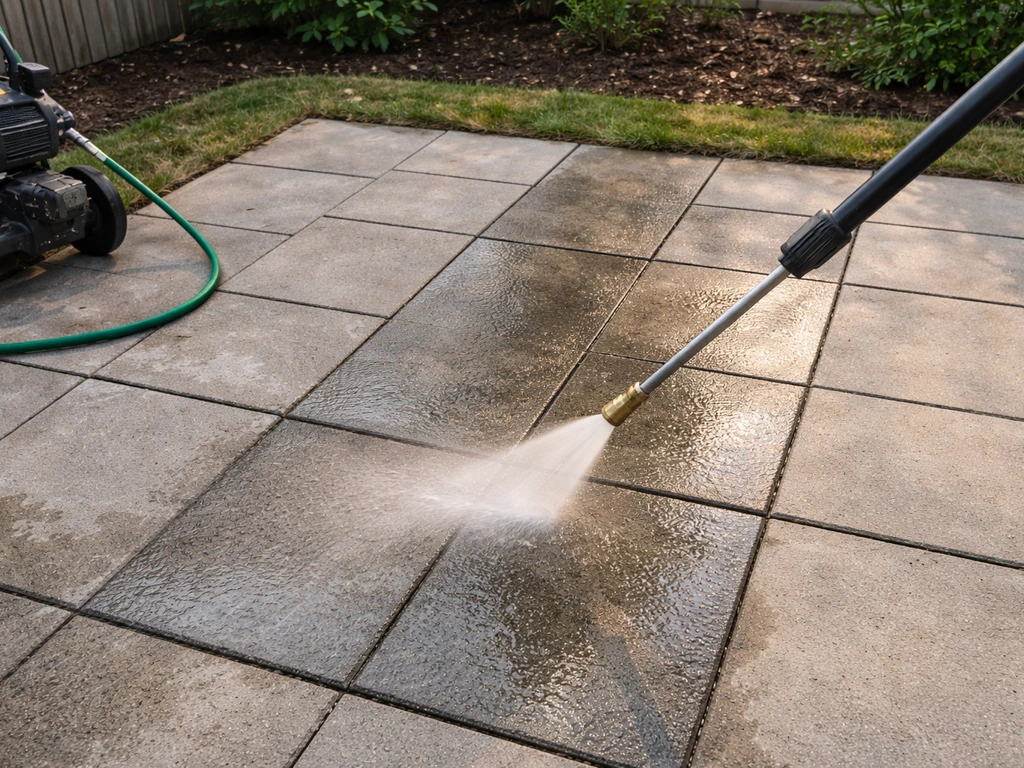
Pressure washing is genuinely useful for oil removal on the right surfaces, but it's been oversold as a fix-all. Here's the honest breakdown.
On concrete and hard clay brick, a pressure washer at 2,000 to 3,000 PSI with a 25-degree nozzle works well after you've applied and dwelled a degreaser. The pressure physically flushes the loosened oil out of the pores. Apply your degreaser, wait the full dwell time, and then pressure wash. Without the degreaser step first, you're largely just moving oil around on the surface rather than lifting it.
On natural stone, flagstone, older brick, and especially travertine, I'd avoid high pressure entirely. It can dislodge grout, erode soft stone surfaces, blow out jointing sand, and drive oil deeper into porous material. If you want to rinse a poultice off stone, use a garden hose with a firm spray setting. That's enough.
Manual scrubbing with a stiff nylon brush takes more elbow grease but gives you more control and is genuinely safer for delicate surfaces. It also lets you work the degreaser into the stain more effectively than water pressure alone. I've found that for most residential patios, manual scrubbing with a good degreaser beats pressure washing when the stain is deep and the surface is anything other than concrete.
| Method | Best surface | Stain severity | Risk level |
|---|---|---|---|
| Manual scrub + degreaser | Any surface | Light to moderate | Low |
| Poultice (24-48 hours) | Stone, brick, pavers | Moderate to severe/old stains | Low |
| Pressure wash (after degreaser) | Concrete, hard pavers, clay brick | Moderate to heavy | Medium (joint damage risk) |
| Pressure wash alone (no degreaser) | Any | Any | Low effectiveness, not recommended |
When the stain won't budge: troubleshooting stubborn spots
If you've cleaned twice and can still see a dark mark, there are a few things to check before giving up or escalating to harsh chemicals.
- The surface is still wet. Oil stains on stone and concrete look dramatically darker when wet and almost disappear when fully dry. Let the area dry completely (give it a full sunny day) before deciding the stain is still there.
- You didn't dwell long enough. Degreasers need time to work. If you applied for 5 minutes and scrubbed, try 20 to 30 minutes next time.
- The oil has polymerized. Old motor oil that's been baking in the sun can cross-link with the surface. At this point a solvent-based degreaser or acetone poultice is more effective than soap-based products.
- The surface was not sealed and the oil went very deep. A second or third poultice application is the answer here, not stronger chemicals. Each application pulls out another layer.
- You're seeing a residue from the cleaner, not oil. Soap or detergent can leave a white or grey film. Rinse more thoroughly with clean water.
- The stain is not oil. Some dark marks on patios are caused by algae, iron oxidation, or tannins from leaves, not oil. A simple test: put a drop of dish soap on it. If it beads and doesn't interact, it may not be oil.
For genuinely entrenched stains on natural stone, the poultice method can be repeated three or four times with good results. Each application draws out more of the oil. If you're seeing zero improvement after three attempts, it may be time to consult a stone restoration contractor, who can use professional-grade poultice products or even re-hone the surface.
One thing I'd say clearly: do not escalate to muriatic acid or bleach out of frustration on a surface that doesn't tolerate it. You can permanently etch travertine or strip the surface of flagstone trying to blast out a stain. A stain that's still faintly visible is better than a surface that's been chemically damaged.
How to tell when the stain is fully gone
The most reliable test is the dry-surface check. Wet the treated area with plain water, let it dry fully in sunlight, and compare it to the surrounding patio. If the area looks uniform with the rest of the surface when dry, the oil is gone. If there's still a slightly darker patch when dry (not just while wet), there's residual oil and another treatment round is warranted.
On concrete, a second test is the paper towel press. Press a dry white paper towel firmly onto the cleaned area for 30 seconds. If you see any yellow-brown transfer, oil is still present at or near the surface. No transfer means you're clean.
Aftercare and preventing the next stain
Once you've got the stain out, seal the surface if it isn't already. A penetrating sealer (silane-siloxane for concrete and stone, impregnating sealer for pavers) fills the microscopic pores that let oil soak in. Most sealers are applied with a paint roller or pump sprayer, need to be re-applied every one to three years depending on traffic and weather, and make future stains dramatically easier to clean because the oil sits on top of the sealer rather than bonding with the material.
For practical daily prevention: put a drip mat under grills and outdoor furniture with metal components, place a rubber-backed mat under any vehicle that parks on the patio, and keep a box of kitty litter or baking soda in the garage so you can hit a fresh drip within minutes. Fresh oil on a sealed surface can often be fully removed with just kitty litter and a dish soap scrub, no special products needed.
If you're dealing with repeated stains in one spot (say, under a barbecue or where a car drips), consider applying an extra coat of sealer to that specific area every season. It takes five minutes and saves you a cleaning job every time it rains.
Finally, log what worked. Different patio materials and oil types respond differently, so noting down which product and dwell time solved your stain means next time you can go straight to the right approach instead of starting from scratch. That's the kind of thing that turns a frustrating afternoon into a twenty-minute job.
FAQ
Can I pressure wash to remove oil stains faster on a patio?
Yes, but only after you’ve used an absorbent and degreaser and waited for the dwell time. If you pressure wash right away, you can force oil deeper into pores or wash it into the jointing sand. If you must pressure wash, use a controlled rinse and keep the nozzle moving, then do a dry-surface check to confirm it’s truly gone.
Is hot water better than cold water for removing oil stains from patio surfaces?
It depends on the finish. If your patio is sealed, hot water can dissolve some residue and help cleaners spread, but it should come after the degreaser has dwelled. For travertine and limestone, avoid high-heat rinsing and any process that can leave detergent residues, because drying marks can make stains look worse even when oil is gone.
Will baking soda or kitty litter alone remove old oil stains?
For porous materials, household absorbents work best as a first step, but the “draw-out” phase usually needs a paste and controlled drying. Kitty litter and baking soda can pull surface oil, yet older, darkened stains often require a poultice that stays in place for many hours. If after one full poultice cycle the stain remains clearly darker when dry, repeat once rather than switching immediately to harsher chemicals.
What if my patio is sealed, does the removal method change?
Test the sealer before you assume acetone or degreaser will be safe. Drip a few drops of water in an inconspicuous spot, if it beads you have a dense or sealed surface, which may reduce penetration but also means some solvents and degreasers can discolor the top finish. If the top layer changes color after a quick spot test, switch to a more stone-friendly solvent degreaser or reduce dwell time and re-test.
Can I combine degreasers, bleach, or vinegar to get oil out quicker?
Don’t mix chemicals to “boost” results. Bleach can’t cut oil and reacting it with degreasers or ammonia cleaners creates toxic fumes. Instead, stick to one product type per round (degreaser, then rinse, or a poultice cycle), then re-evaluate with the dry-surface check before choosing the next escalation step.
How do I remove an oil stain from natural stone without changing its color?
Start with a solvent-safe poultice or an approved stone-safe solvent degreaser approach, not ammonia-based cleaners. If the stain is just cosmetic darkening, you may see improvement after one cycle, but if the area stays darker when fully dry, repeat the poultice. If there is zero change after multiple cycles, it may be past the “home” stage and needs professional reconditioning.
How do I protect nearby plants and lawn when cleaning patio oil stains?
Yes, especially on concrete and pavers with joint sand. If you see plants drooping or discoloration after treatment, rinse the area immediately and use more absorbent next time to reduce runoff. For future jobs, wet nearby soil before applying chemicals and rinse after dwell, but also avoid over-saturating the joints because washed-out sand can create gaps and instability.
What should I do if the stain still looks darker after cleaning?
First, confirm it is oil and not a stain from earlier treatments or detergent residue. Do the dry-surface check and, on concrete, the paper towel press. If there is no residue transfer, the “dark spot” may be discoloration rather than fresh oil, in which case another degreaser cycle may not help and you should consider sealer touch-up or, on stone, professional restoration.
How can I tell whether a new oil spill is embedded or still on the surface?
If it’s a small fresh drip, absorb it quickly and use a dish soap degreaser after the absorbent step, then rinse gently. If it’s an old, spreading stain or you see deep darkening in dry conditions, treat it as embedded oil and use a poultice for porous surfaces. The key decision aid is the water-beading versus soaking test plus the dry-surface check after the first attempt.
Is it worth removing a stained patio paver to clean it properly?
If it’s on pavers, removing the individual unit is most effective when the stain is deep and repeated, because it prevents oil from wicking through adjacent stones and jointing sand. Soak and scrub the removed paver separately in degreaser solution, let it dry fully, then re-lay with the joint sand replaced if it was disturbed or washed out.
Can I use muriatic acid or bleach on stubborn oil stains?
No, not if you don’t know your patio chemistry. Muriatic acid can permanently dull calcium carbonate stones and can cause efflorescence on brick or damage grout joints. Even for concrete, only use it if you’re confident about the surface and you’re following a safe protocol. Safer escalation is repeating a degreaser or poultice cycle before switching to acids or bleach.
When should I seal the patio after removing an oil stain?
Apply sealer only after the area is fully oil-free and dry. Do a full dry-surface check, and on concrete do the paper towel press to ensure there is no transfer. If you seal over residual oil, it can “re-bleed” and darken later, making the stain appear to return.
Next Articles
How to Remove Oil Stains From a Sandstone Patio
Step-by-step guide to remove oil and rust stains from sandstone patio safely with cleaners, poultices, and rinse tips.
How to Remove Thompson’s Patio Sealer Step by Step
Step-by-step removal of Thompson’s patio sealer on concrete, brick, pavers, and stone, with safety, tests, and cleanup.
Can You Remove Patio Sealer? How to Strip It Safely
Learn if you can remove patio sealer and how to strip it safely by type, material, and method.