Oil comes off a patio best when you act fast: blot the spill immediately with an absorbent like cat litter or baking soda, let it sit for at least 30 minutes, sweep it up, then scrub the residue with dish soap and hot water. For stains that have already set into concrete, pavers, brick, or stone, you'll need a degreaser or a poultice made from an absorbent powder and a solvent like mineral spirits or acetone, applied for 24 to 48 hours. The method that works for you depends on your surface type, how old the stain is, and what you have on hand, and this guide walks you through all of it.
How to Get Oil off a Patio: Stepwise Fixes for All Surfaces
Dylan Hale
14 Jul 2026
What this guide covers and how to use it
Whether you've got a fresh drip of cooking oil from the grill or a dark motor-grease shadow that's been baked into your concrete for months, this guide gives you a graduated path from the gentlest possible fix up to professional-grade options. I've structured it so you can jump to the section that matches your situation: just spilled it, dealing with a set stain, working on a delicate natural stone, or trying to figure out whether to rent a pressure washer. You'll also find material-specific cautions throughout because what works on concrete can permanently etch travertine or sandstone.
Oil stains on patios come in two broad categories: petroleum-based (motor oil, grease, chain lube) and organic (cooking oil, butter, fat drips). Both penetrate porous surfaces and require either physical absorption or chemical dissolution. Older stains that have polymerized or bonded with the surface minerals are the hardest to remove and may need repeated poultice treatments or, in extreme cases, professional intervention. If your stain is specifically on pavers, natural stone, or sandstone, there are dedicated guides on this site that go deeper into those surfaces. For specific step-by-step instructions, see our guide on how to remove oil stains on a patio. For joint-specific treatment and step-by-step poultice recipes, see the guide on how to get oil out of patio pavers.
Quick checklist: what to do the moment oil hits your patio
Speed matters more than anything else with a fresh oil spill. The longer oil sits, the deeper it wicks into porous masonry, and the harder it becomes to pull out. Here's exactly what to do before you even think about cleaners:
- Do not wipe or spread the oil. Blot gently with paper towels or a dry cloth to lift the surface liquid without pushing it further into the material.
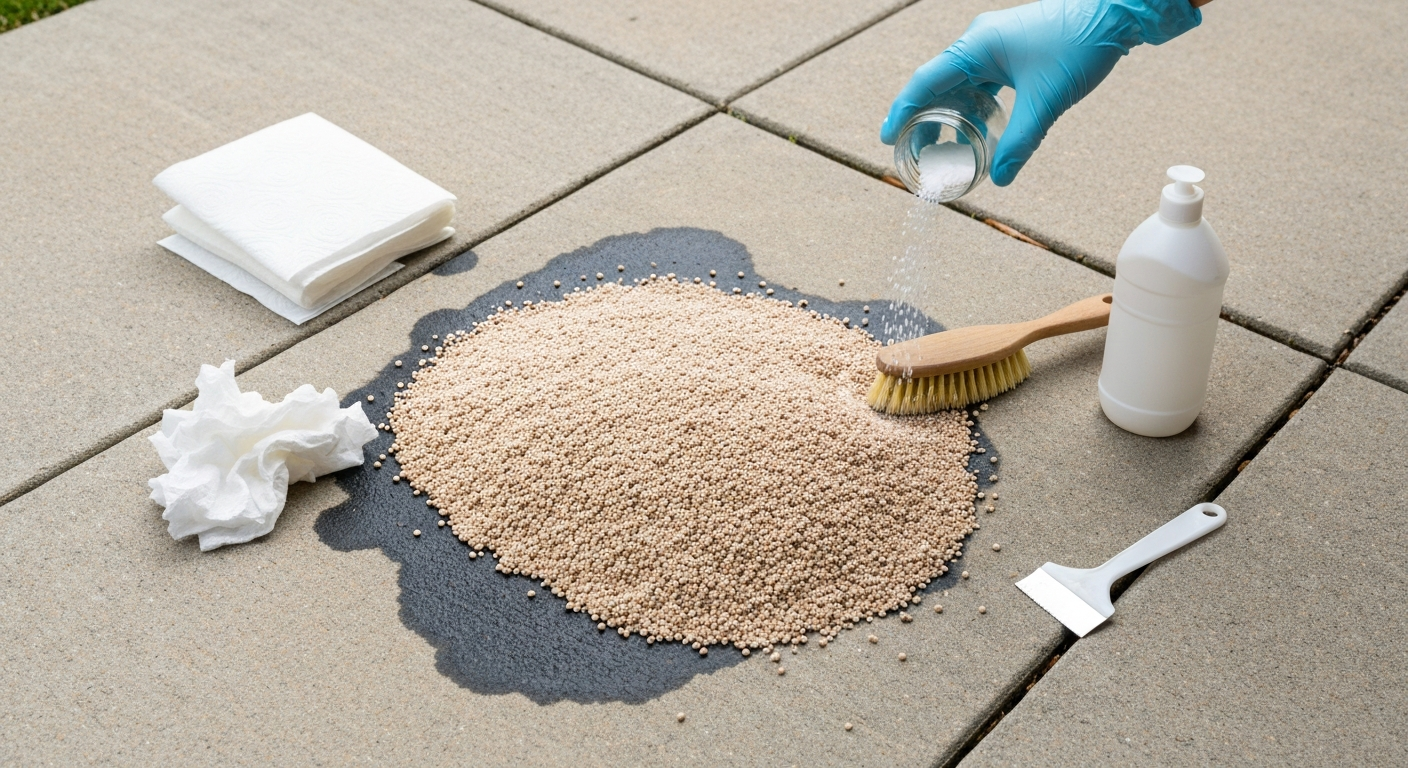
- Pour a generous layer of an absorbent directly onto the wet spill: cat litter (non-clumping clay type), baking soda, cornmeal, or plain sand all work. Cover the entire stain plus about an inch beyond the edge.
- Let the absorbent sit for at least 30 minutes. For larger or thicker spills, leave it for several hours or even overnight.
- Sweep or scrape up the saturated absorbent and bag it for proper disposal — do not wash it into a drain.
- Scrub the remaining residue with hot water and a stiff-bristle brush. Add a few squirts of dish soap and work it in.
- Rinse with clean water. Do not let rinse water containing oil or degreaser run into a storm drain — collect it with a wet-dry vacuum or absorb it with more dry material.
- Assess what's left. If a faint stain remains, move on to the mild cleaner methods below. If the stain is dark and the oil soaked in quickly, jump to the poultice section.
Choosing the right method: stain age, size, and surface porosity
Not every surface handles aggressive cleaners well, and not every stain needs them. The three factors that should drive your decision are how old the stain is, how large the affected area is, and how porous or acid-sensitive your patio material is. The table below summarizes the recommended starting point for each combination.
| Surface | Fresh Stain (under 24 hrs) | Set Stain (days to weeks) | Old/Embedded Stain (months+) | Acid-Safe? |
|---|---|---|---|---|
| Concrete | Absorbent + dish soap | Degreaser + scrub | Solvent poultice or pressure wash | Yes (mild acids OK) |
| Clay brick | Absorbent + dish soap | Alkaline degreaser + scrub | Poultice or low-PSI pressure wash | Yes (dilute acid OK) |
| Concrete pavers | Absorbent + dish soap | Degreaser + scrub | Poultice or pressure wash | Yes (mild acids OK) |
| Natural stone (granite, bluestone) | Absorbent + mild soap | Non-ionic detergent or alkaline cleaner | Solvent poultice | Granite yes; check others |
| Travertine / marble / limestone | Absorbent + mild soap only | Alkaline or pH-neutral cleaner only | Poultice with non-acid solvent | NO — acid damages surface |
| Sandstone | Absorbent + mild soap | pH-neutral or alkaline cleaner | Poultice; avoid strong solvents | NO — acid damages surface |
| Flagstone (slate, quartzite) | Absorbent + mild soap | Non-ionic detergent | Poultice; test solvents first | Varies — always spot-test |
The key rule from the National Park Service is to move from gentlest to strongest, and never skip a step just because you're impatient. Calcareous stones like travertine, marble, limestone, and calcareous sandstone are acid-sensitive: vinegar, acidic brick cleaners, and hydrochloric or hydrofluoric acid will etch or dissolve their surface. On those materials, always use water, pH-neutral cleaners, non-ionic detergents, or alkaline cleaners. On concrete and clay brick, you have more flexibility.
Tools, protective gear, and safety precautions
What you'll need
- Stiff-bristle scrub brush (nylon for stone, stiffer for concrete/brick)
- Plastic scraper or putty knife (for removing dried poultice)
- Bucket and hot water
- Garden hose or pressure washer (optional but useful)
- Plastic sheeting or cling wrap (for covering poultice)
- Masking tape or painter's tape (to hold plastic over poultice)
- Wet-dry vacuum (for collecting wash water)
- Disposable bags for used absorbents and contaminated material
Personal protective equipment
- Chemical-resistant gloves (nitrile or neoprene) for any degreaser or solvent work
- Safety glasses or goggles — splashback from scrubbing is a real hazard
- Old clothes you can throw away if they get solvent on them
- Respirator with organic-vapor cartridges when working with acetone, mineral spirits, or xylene, especially in enclosed or low-wind conditions (per NIOSH guidance)
- Closed-toe shoes — bare feet and flip-flops around solvents are not worth the risk
Safety rules you should not skip
Never mix bleach with ammonia-based cleaners or with acidic cleaners like vinegar. The combination produces toxic chloramine or chlorine gas, this is a serious health risk, not just a general caution. Always read the product label and safety data sheet (SDS) before using any concentrated degreaser or solvent. Solvents like acetone and mineral spirits are flammable: keep them away from open flames, hot surfaces, and ignition sources, and work outdoors or in very well-ventilated areas. Per EPA household hazardous waste guidance, do not pour solvents, used degreasers, or contaminated wash water into a storm drain or into the soil. Collect contaminated wash water with a wet-dry vac or absorbent booms, and contact your local sanitary authority about disposal, many municipalities prohibit discharge to storm drains and require contaminated wash water to go to the sanitary sewer only, with prior permission.
Spot-test first: a step you should never skip
Before applying any cleaner, degreaser, or solvent to the stained area, test it on a small, hidden section of your patio. This is especially critical on natural stone, colored concrete, brick with a finish, and any surface you haven't cleaned with that product before. Here's how to do it properly:
- Choose an inconspicuous spot, ideally at a corner, under furniture, or at the edge of the patio.
- Apply a small amount of your chosen cleaner or solvent to an area roughly the size of a coin.
- Let it dwell for the same amount of time you'd use on the stain itself — don't just wipe it off immediately.
- Rinse thoroughly and let the area dry completely (sometimes discoloration only shows up when dry).
- Check for color change, surface etching, haziness, or any loss of finish. Run your hand over it — does the texture feel different?
- If everything looks the same, you're clear to proceed. If anything looks off, choose a gentler product or contact the stone's manufacturer or a professional before continuing.
I've found that even experienced people skip this step when they're in a hurry, and that's usually when expensive mistakes happen. A five-minute spot test has saved me from ruining a sandstone patio with an acidic cleaner that a hardware store employee casually recommended. It's always worth the time.
Absorbent methods: the first and gentlest step
Absorbents work by drawing oil up and out of the surface pores through capillary action. They're most effective on fresh and light stains, but they're also worth trying on moderately set stains as a first pass before escalating to chemicals. The three most accessible options are cat litter, baking soda, and cornmeal.
Cat litter (non-clumping clay type)
This is the most commonly available and one of the most effective household absorbents for petroleum-based oil. Use non-clumping clay litter, not the clumping bentonite type, which can smear and make a mess. Pour a thick layer (at least half an inch) over the spill and grind it gently into the surface with your foot or a brick. Leave it for at least an hour; for older or larger spills, leave it overnight. Sweep up and dispose of in a trash bag, not down the drain. Clay-based absorbents have decent oil uptake but research shows they're more effective on surface oil than on oil that's already wicked several millimeters into porous concrete or stone.
Baking soda
Baking soda is a gentler absorbent that's safe on virtually every patio surface, including acid-sensitive travertine and sandstone. It won't lift heavy motor-oil stains on its own, but it's excellent on cooking oil drips. Pour it over the stain, let it sit for 30 to 60 minutes, then scrub gently with a damp brush and rinse. For light stains, this alone is often enough. You can also make a paste (more on that in the next section) for a slightly more aggressive application.
Cornmeal
Cornmeal is a useful absorbent when you don't have cat litter or baking soda on hand. It works on the same principle, draws surface oil into the fine particles. Apply liberally, leave it for 30 minutes to a few hours, then sweep up. It's not the most powerful option and I wouldn't rely on it for large or deep spills, but for a small fresh grease drip it does the job and it's completely safe on any patio material.
One honest caveat here: academic reviews of natural sorbents note that no single household absorbent reliably outperforms purpose-made products for deep petroleum hydrocarbon contamination. If you've used an absorbent and a dark stain remains after rinsing, it means the oil has already penetrated below the surface layer and you'll need a chemical or poultice approach.
Mild household cleaners and gentler alternatives
After absorbing what you can, or for stains that are a few days old, a targeted application of a mild cleaner is your next step. These methods are safe on almost all surfaces when used correctly and are a good choice if you have pets or kids who use the patio.
Dish soap and hot water
Dawn or any grease-cutting dish soap is a genuinely effective first-line cleaner for oil on patios. The surfactants that make it good at cutting kitchen grease work the same way on masonry. Squirt a generous amount (don't be shy, I use about a tablespoon for a dinner-plate-sized stain) directly onto the wet or dampened surface. Add a small amount of hot water, just enough to work into a lather, then scrub vigorously with a stiff brush in circular motions for at least two to three minutes. Let it dwell for 5 to 10 minutes before rinsing with clean water. Repeat two or three times if the stain is fading but not gone. This method is safe on concrete, brick, pavers, and most natural stone.
Baking soda paste
Mix baking soda with just enough dish soap and warm water to form a thick paste, roughly the consistency of toothpaste. Apply it to the stain, work it in with a brush, and let it sit for 15 to 30 minutes before scrubbing and rinsing. This is slightly more abrasive than straight dish soap and gives you a bit more physical contact with the stain surface. It's a particularly good option for travertine, marble, and sandstone where acid cleaners are off the table, baking soda is mildly alkaline and won't etch calcareous stone.
White vinegar
Vinegar is a popular eco-friendly patio cleaner, but it comes with a significant material restriction. Undiluted white vinegar (typically 5% acetic acid) is useful for cutting cooking oil residue on concrete, non-calcareous flagstone, and some brick. Apply it directly, let it sit for 10 minutes, scrub and rinse. However, and this is important, never use vinegar on travertine, marble, limestone, calcareous sandstone, or any stone that reacts with acid. The National Park Service specifically lists vinegar-type acids as damaging to calcareous stones, and I've seen firsthand what a diluted acid cleaner does to travertine: it etches a dull, rough patch that requires professional honing to fix. If you're not 100% certain of your stone type, skip vinegar and use the baking soda paste instead.
Commercial degreasers
For stains that mild cleaners haven't fully lifted, a purpose-made alkaline degreaser (available at hardware stores under brands like Simple Green, Purple Power, or Zep) is a logical next step. Alkaline degreasers are safer than acid cleaners on a wider range of surfaces and are effective on both cooking oil and motor oil. Apply according to the product label, dwell for the recommended time (usually 5 to 15 minutes), scrub vigorously, and rinse thoroughly. Always check the label to confirm the product is safe for your specific surface: some degreasers are formulated for concrete and should not be used on polished or sensitive natural stone.
DIY poultice recipes and how to apply them for set stains
A poultice is the most reliable method for oil that has genuinely penetrated into porous masonry. The idea is simple: you mix an absorbent powder with a solvent or cleaner to create a paste that you spread over the stain. As the paste dries, it pulls the oil back up through capillary action and traps it in the powder, which you then remove. The Natural Stone Institute and the Concrete Network both recommend this approach for embedded oil stains, and commercial products like PROSOCO Oil and Grease Stain Remover work on exactly this principle. You can make an effective poultice at home for a fraction of the cost.
DIY poultice recipe for concrete, brick, and pavers
Combine roughly 3 to 4 parts dry absorbent with 1 part solvent by volume, mixing until you reach a peanut-butter consistency. Good absorbents include diatomaceous earth, kaolin clay, powdered chalk, or fuller's earth, all of which the Natural Stone Institute lists as approved poultice materials. For the solvent, use mineral spirits for general oil stains or acetone for tougher petroleum-based stains. Mineral spirits (also called odorless mineral spirits or Stoddard solvent) are the safer starting point: they're less volatile than acetone and work well on cooking oil and light motor oil. For step-by-step instructions specific to concrete patio slabs, see our guide on how to remove oil stains from patio slabs. Acetone is more aggressive and better suited to heavy grease or motor oil, but it evaporates quickly and requires better ventilation and an organic-vapor respirator.
DIY poultice recipe for natural stone (travertine, sandstone, marble)
On acid-sensitive or delicate stone, use diatomaceous earth or talc as your absorbent and mineral spirits as the solvent, avoid acetone on polished stone as it can affect surface finishes. Mix to the same peanut-butter consistency. Do not use whiting (calcium carbonate powder) with acidic chemicals, as the Natural Stone Institute notes the reaction neutralizes the cleaning effect. For sandstone specifically, test your solvent in a hidden spot first, as some sandstones are also sensitive to certain organic solvents.
Step-by-step poultice application
- Pre-wet the stained area with a small amount of water (or the solvent you're using). This opens the pores slightly and helps the poultice penetrate rather than just sitting on top.
- Apply the poultice paste in a layer roughly 1/4 to 1/2 inch thick over the entire stain, extending approximately 1 inch beyond its edges in all directions.
- Cover the poultice with plastic sheeting (cling wrap or a cut plastic bag works fine) and tape the edges down. The plastic slows drying, which forces the poultice to draw oil upward rather than simply drying out on top.
- Leave it for 24 to 48 hours. For very deep or old stains, you can leave it up to 72 hours. Do not disturb it during this period.
- Remove the plastic and allow the poultice to dry completely if it hasn't already. This may take another few hours depending on conditions.
- Scrape off the dried poultice with a plastic scraper — avoid metal scrapers on stone as they can scratch. Sweep or vacuum up the residue.
- Rinse the area thoroughly with clean water and let it dry completely before assessing the result.
- Repeat the process up to five times for stubborn stains. The Natural Stone Institute notes that multiple applications are often needed for deeply embedded oil stains. Each treatment usually lightens the stain noticeably.
If you'd rather use a commercial product instead of mixing your own, PROSOCO's Oil and Grease Stain Remover is a ready-to-use poultice product formulated for concrete, pavers, stone, and brick. It requires no mixing, dries in roughly 5 to 8 hours, and you simply sweep away the residue. Coverage runs approximately 4 square feet per pound of dry poultice powder for their mixing system. It's a solid option when you're dealing with a larger area or want a more consistent result than a DIY mix.
Pressure washing: when it helps and how to do it safely
Pressure washing alone won't remove an embedded oil stain, it moves surface debris but doesn't dissolve or lift polymerized oil from inside porous masonry. Where it genuinely helps is as a rinse and finishing step after you've applied a degreaser or scrubbed a poultice treatment, or for loosening light surface residue on durable materials like concrete and brick. For most homeowners, a consumer electric pressure washer in the 1,300 to 2,300 PSI range is sufficient for patio surfaces and softer stone. Concrete and brick can handle up to 2,000 to 3,300 PSI if needed, though you should always start lower and increase gradually. Rental rates typically run about $40 to $100 per day for consumer or light-commercial units.
Keep the nozzle at least 12 inches from the surface and use a 25-degree (green) or 40-degree (white) tip for general cleaning. Never use a zero-degree (red) tip on patio surfaces. On natural stone, flagstone, or any surface with exposed mortar joints, keep your PSI below 1,500 and hold the wand at an angle rather than directly perpendicular to the surface, as high direct pressure can erode mortar or pop off flakes of softer stone. Apply any chemical degreaser at low pressure (under 50 PSI) using a soap tip, let it dwell, then rinse at full pressure. Cleaning Concrete Masonry (TEK 08‑04A), Concrete Masonry & Hardscapes Association recommends applying chemicals with low‑pressure spray (under 50 psi) and using soft brushes, reserving high‑pressure or abrasive methods for durable, non‑acid‑sensitive materials blank" rel="noopener noreferrer">Cleaning Concrete Masonry (TEK 08‑04A) — Concrete Masonry & Hardscapes Association. And critically, block any nearby storm drains before you start and collect your contaminated wash water with a wet-dry vac or containment booms, discharging oily pressure-wash water to the storm sewer violates EPA stormwater rules and most local ordinances. The EPA's Proposed 2020 MSGP Fact Sheet (pressure‑wash/wash water guidance) advises preventing discharges to storm drains and requires capture and proper disposal of contaminated wash water, typically by controlled discharge to the sanitary sewer only with permission or by hauling it away for proper disposal blank" rel="noopener noreferrer">Proposed 2020 MSGP Fact Sheet (pressure‑wash/wash water guidance) — US EPA.
Material-specific guidance at a glance
| Material | Safe cleaners | Avoid | Special notes |
|---|---|---|---|
| Concrete | Dish soap, alkaline degreaser, acetone, mineral spirits, mild acid | None specific at standard dilutions | Most forgiving surface; poultice works very well |
| Concrete pavers | Dish soap, alkaline degreaser, mineral spirits poultice | Strong acids on pigmented pavers (may fade color) | Test colored/dyed pavers before using strong products |
| Clay brick | Dish soap, alkaline degreaser, dilute acid (with care) | Undiluted strong acid | Mortar joints can be damaged by high pressure or acid |
| Granite / bluestone | Dish soap, non-ionic detergent, mineral spirits, acetone | Very strong acids over time | Generally durable; spot test solvents |
| Travertine / marble / limestone | Dish soap, baking soda paste, pH-neutral or alkaline cleaner, mineral spirits poultice | Vinegar, any acidic cleaner, acidic brick cleaner, HCl, HF | Acid etching is permanent without professional honing |
| Sandstone | Dish soap, baking soda paste, pH-neutral cleaner, mineral spirits poultice | Vinegar, acidic cleaners, strong solvents (test first) | Calcareous sandstone is especially acid-sensitive |
| Flagstone (slate, quartzite) | Dish soap, non-ionic detergent, pH-neutral cleaner | Unknown — always spot test | Highly variable by specific stone type; test everything |
Time and cost expectations
A fresh spill treated within the first hour costs almost nothing and takes 30 to 60 minutes of active work. Cat litter, baking soda, and dish soap are already in most households. A set stain treated with a DIY poultice requires 24 to 48 hours of wait time, plus 15 to 30 minutes of actual effort at each end. The materials (diatomaceous earth and mineral spirits) cost roughly $10 to $20 at a hardware store. A commercial poultice product like PROSOCO runs $20 to $40 per unit but is ready to use with no mixing. Renting a pressure washer adds $40 to $100 for a day's rental. If you need professional help for a very large, deeply embedded stain or for a high-value stone surface, expect to pay $100 to $400 depending on area size, surface type, and local labor rates.
When to call a professional
Most oil stains on patios are DIY-solvable, but there are situations where calling a professional stone or masonry cleaner makes more sense than risking further damage. Consider it if: you've done three or more full poultice treatments and the stain hasn't significantly lightened; you're dealing with a polished or honed stone surface (travertine, marble) and any visible etching has already occurred; the stain covers a very large area and you don't have the tools for containment and wash water recovery; or the patio material is rare, expensive, or you genuinely don't know what it is. Professional cleaners have access to hot-water pressure washing equipment, stronger commercial products, biological (oil-eating microbe) treatments, and grinding or honing equipment for surface restoration. The Concrete Network notes that biological treatments are sometimes used for very deep embedded petroleum hydrocarbons, and these are generally only practical at a professional scale.
Preventing future oil stains and sealing your patio
The single most effective long-term solution is sealing your patio. A quality penetrating sealer (silane, siloxane, or silane-siloxane blend for concrete and masonry; impregnating sealer for natural stone) fills the surface pores and dramatically slows oil absorption, giving you much more time to blot a spill before it sets. Sealers need to be reapplied every two to five years depending on the product, traffic, and climate exposure. For natural stone, use a sealer specifically formulated for your stone type, not a generic concrete sealer. A few other practical habits that make a real difference: keep a container of baking soda or cat litter near the grill so you can react immediately to cooking oil spills; put a drip mat under vehicles parked on the patio; and clean up small spills as soon as you notice them rather than leaving them for the weekend. If you're dealing with oil stains that have already spread through the joints of a paved patio, the guide on removing oil from patio pavers covers joint-specific treatment in more detail. And if your patio is natural stone, there's more surface-specific advice in the guide on removing oil from stone patios.
FAQ
What should I do immediately after a fresh oil spill on my patio?
Act quickly: blot excess oil with paper towels or old rags (do not rub), sprinkle an absorbent (cat litter, baking soda, or sawdust) over the wet area and let sit 15–60 minutes, then sweep up and repeat until most surface oil is removed. Follow with a mild detergent (dish soap) and hot water scrub to lift remaining film, rinse into a bucket (do not send to storm drains), and repeat if needed. Test any cleaner in an inconspicuous spot before broad use.
How do I choose the right escalation path for set or embedded oil stains?
Use a graduated approach: (1) Absorbents for fresh spills; (2) Stronger household cleaners and scrubbing (dish soap, trisodium phosphate alternatives) for surface stains; (3) Solvent or commercial degreasers for deeper petroleum stains; (4) Poultices for embedded oil; (5) Pressure wash or professional mechanical removal for stubborn, deep-set stains. Choose gentler methods first and move up only if stain persists. For acid-sensitive natural stone (travertine, limestone, marble, calcareous sandstone) avoid acids and abrasive scrubbing—use non-ionic detergents, poultices, or solvent-based approaches recommended for stone.
What absorbents work best and how should I use them?
Common household absorbents: clay cat litter (non-clumping) and baking soda are easy and effective for immediate uptake. Sprinkle generously, let sit 15–60 minutes (longer for heavier spills), then sweep/vacuum. For deeper draw-out, repeat or use an absorbent (diatomaceous earth, kaolin) in a poultice. Note: raw sawdust and rice husks absorb but are less effective per weight than mineral sorbents; dispose of saturated material as household hazardous waste per local rules (do not compost or dump).
How do I make and apply a DIY poultice for patios (concrete, pavers, brick)?
Recipe and method: mix 3–4 parts dry absorbent (kitty litter—clay or diatomaceous earth, kaolin, or fuller's earth) to 1 part solvent/cleaner by volume until peanut-butter consistency. Solvent choices: acetone, mineral spirits, or lacquer thinner for petroleum oils (ventilate and use PPE); for milder stains, use water + powdered non-ionic detergent. Trowel 1/4–1/2" thick over stain extending ~1" beyond edge, cover with plastic and tape edges, allow 24–48 hours (or longer for deep stains) for poultice to dry, remove dried material, rinse and repeat if necessary. Test first on an inconspicuous area and start with milder solvent/cleaner on sensitive surfaces.
What poultice materials are recommended for natural stone?
Follow Natural Stone Institute guidance: approved absorbents include kaolin, fuller's earth, whiting (for non-acid poultices), diatomaceous earth, powdered chalk, white molding plaster or talc. For oil stains on stone, use a solvent (mineral spirits or acetone) with one of these absorbents. Avoid acid cleaners on calcareous stones (travertine, limestone, marble) and avoid iron-rich clays with acidic chemicals. Always test in an inconspicuous spot and protect surrounding mortar or sealers.
Which solvents and degreasers are appropriate, and what safety precautions should I take?
Appropriate solvents: mineral spirits (Stoddard), acetone, or commercial solvent-based degreasers for petroleum-based stains. For milder work use concentrated alkaline or enzymatic degreasers formulated for masonry. Safety: use outdoors or in well-ventilated areas, wear chemical-resistant gloves, eye protection, and if vapor exposure may exceed limits use an organic-vapor respirator per NIOSH guidance. Keep away from ignition sources—many solvents are flammable. Read SDS and product label for PPE, storage, disposal, and first-aid. Do not mix bleach with ammonia or solvents.
Next Articles
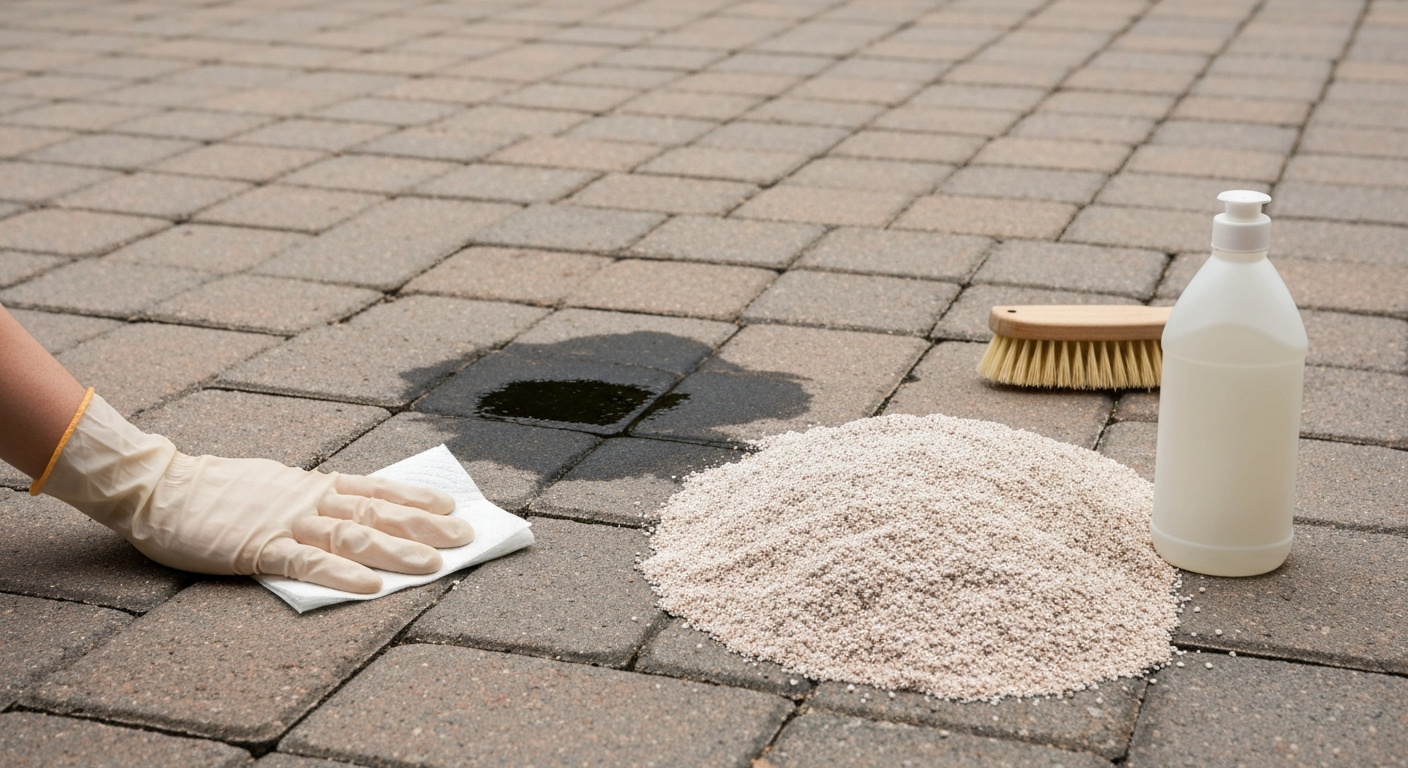
How to Get Oil Out of Patio Pavers: Step-by-Step Guide
How to get oil out of patio pavers: fast spill fixes, stain removers, eco options, and sealing tips.
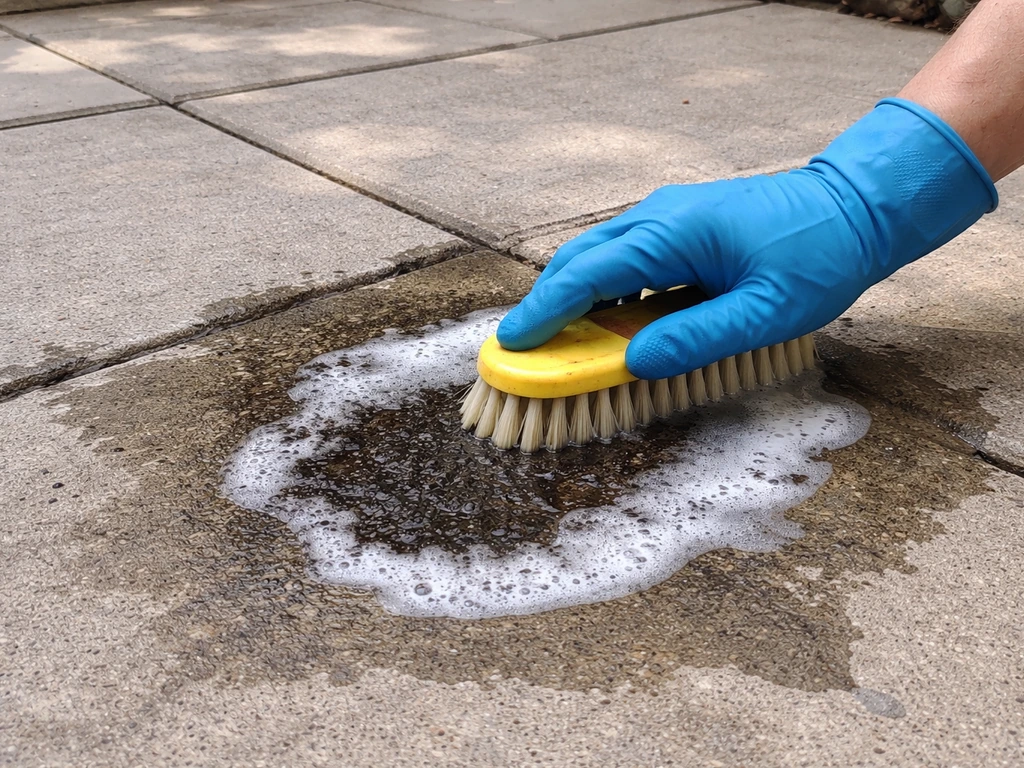
How to Remove Oil Stains From Patio Slabs Step by Step
Step-by-step methods to remove oil stains from patio slabs, from fresh grease to set-in concrete, safely and effectively
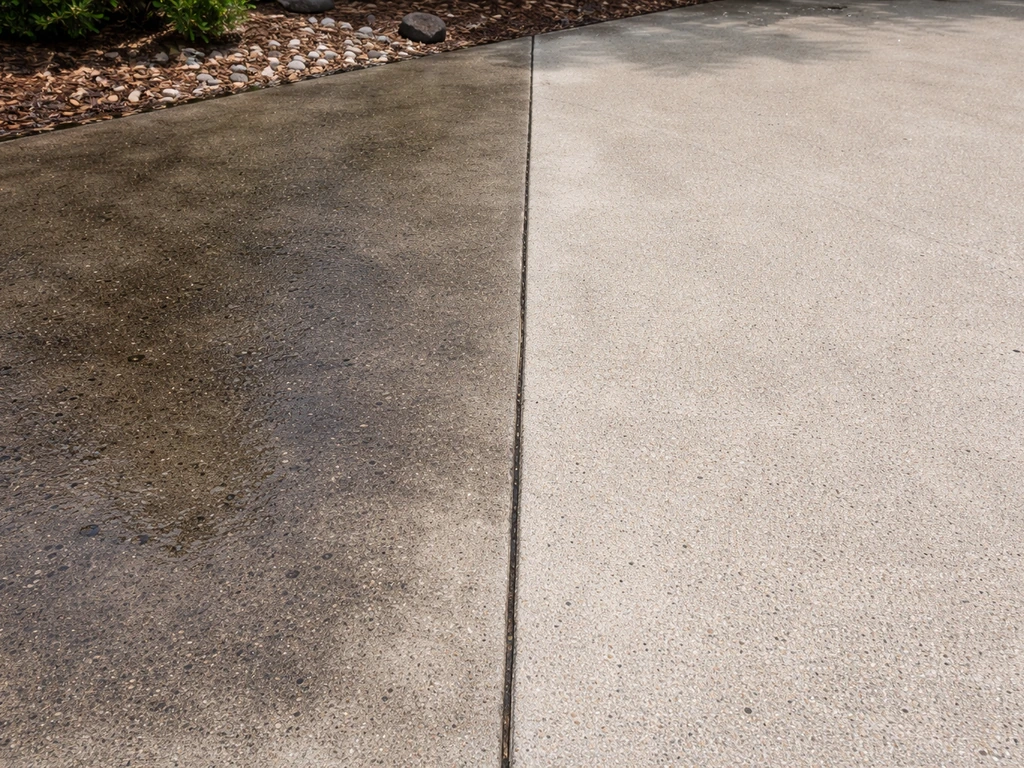
Oil Stains on Patio: How to Remove Them Step by Step
Step-by-step methods to remove oil stains from patios by material, using safe degreasers, poultices, and pressure where