Blot up as much oil as you can, cover the wet spot with an absorbent like cat litter or baking soda, let it sit for 15 to 30 minutes, then scrub with hot water and a grease-cutting dish soap. That handles most fresh spills on concrete or paved slabs in one go. Older, set-in stains need a commercial degreaser, some extra dwell time, and possibly a second or third pass before you see the slab colour coming back.
How to Remove Oil Stains From Patio Slabs Step by Step
Dylan Hale
29 May 2026
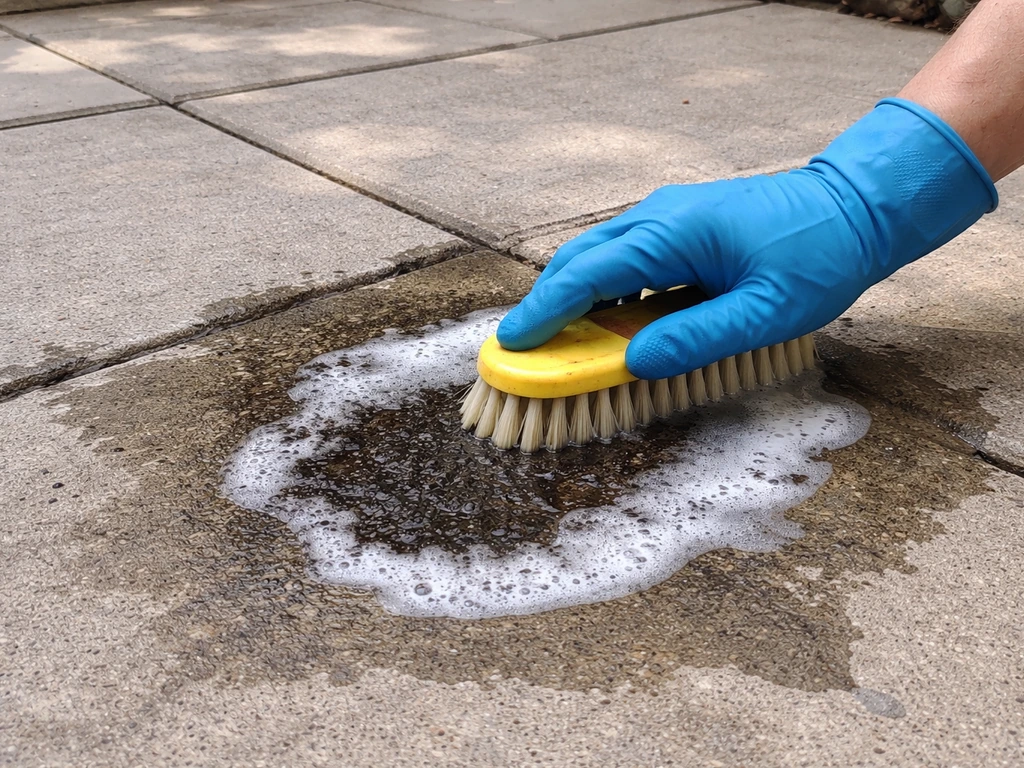
If you are dealing with oil stains on a patio that have soaked in, switch to a degreaser and allow enough dwell time before scrubbing Older, set-in stains. Neither job is complicated, but the order you do things in matters a lot, especially on sealed slabs or natural stone where the wrong product can cause more damage than the oil itself.
Quick diagnosis and what you need before you start
Before you pour anything on the slab, spend two minutes figuring out what you're actually dealing with. It changes everything about which method to use.
Fresh vs old stain
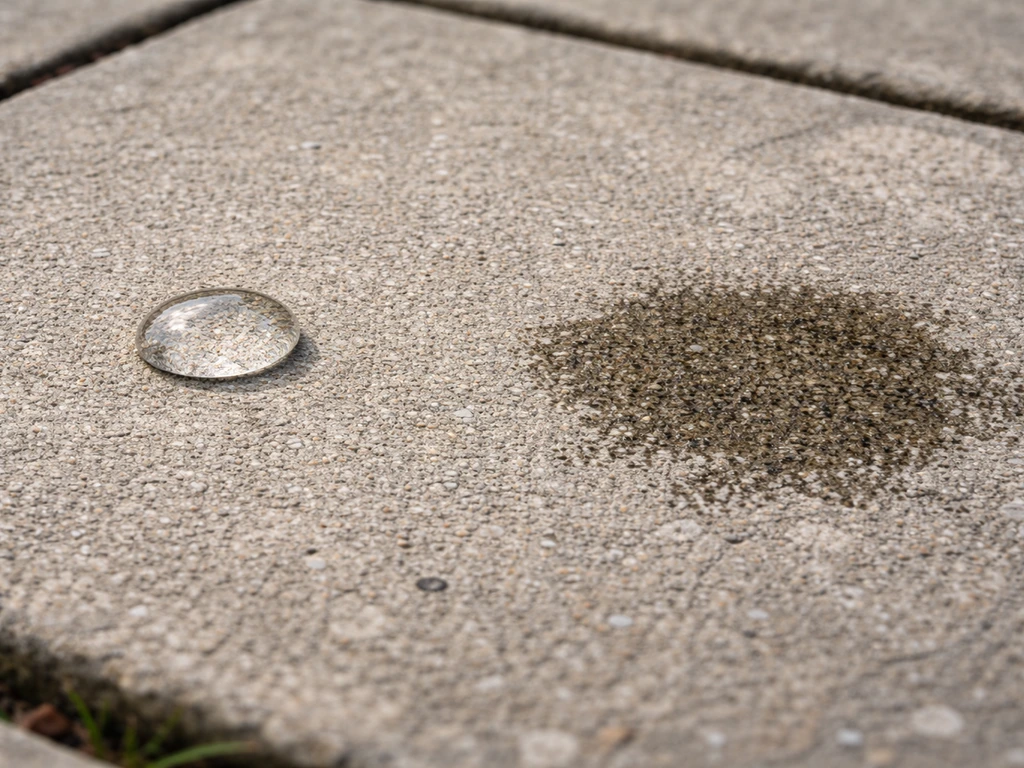
A fresh stain looks dark, feels greasy if you touch the edge of it, and may still have a wet sheen. The oil hasn't fully penetrated the slab yet, which means absorbents and a good degreaser will do the job. An old stain looks flatter, often grey-brown rather than dark black, and is bone dry to the touch. It has soaked into the pores of the concrete or stone and you'll need a commercial degreaser, a poultice method, or possibly a solvent to draw it back out.
Sealed or unsealed surface
Drop a small amount of water onto the slab. If it beads up, the surface is sealed. If it soaks in and darkens the slab within a few seconds, it's bare/unsealed. This matters because solvents and strong acids can strip or cloud a sealer, and oil left under a sealer can cause ghosting and adhesion problems when you go to reseal later. On natural stone like sandstone or slate, treat the surface as sealed and cautious regardless of the water bead test, because acid and harsh solvents can permanently etch or discolour the surface.
What to gather before you start
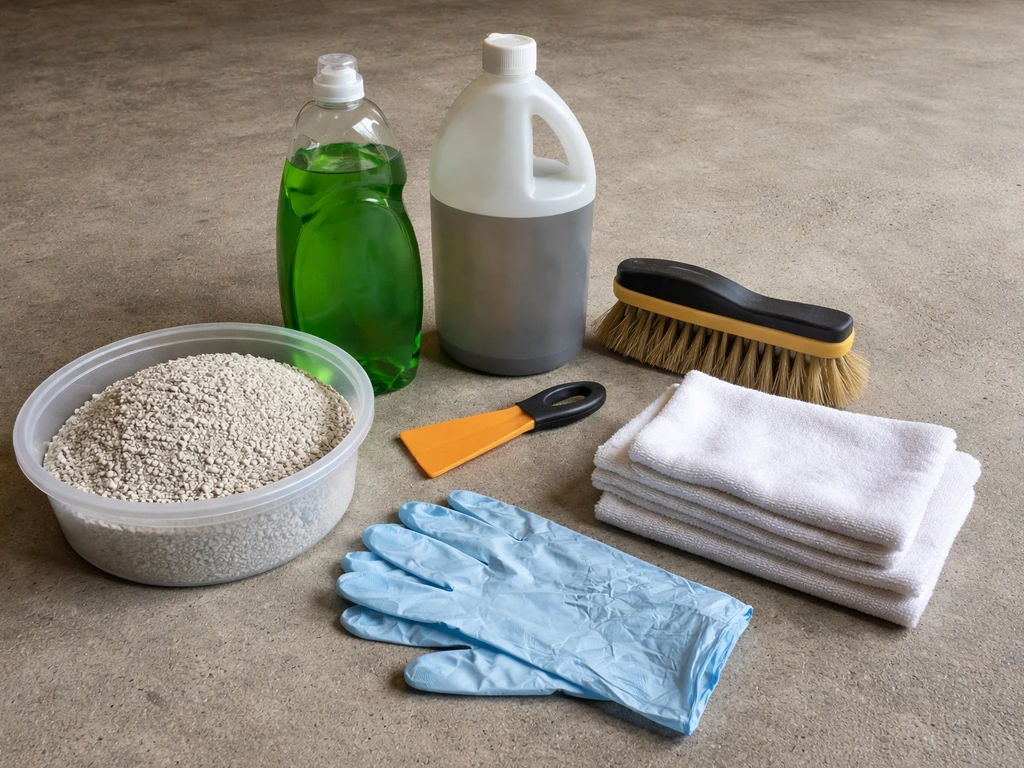
- Non-clumping clay cat litter or baking soda (absorbent for fresh stains)
- Grease-cutting dish soap (e.g., Dawn) or a dedicated concrete degreaser for tougher jobs
- Stiff-bristled scrubbing brush or deck brush (not a wire brush on stone or pavers)
- Hot water and a bucket
- Garden hose with a spray nozzle, or a pressure washer if you have one
- Chemical-resistant gloves and eye protection (essential before any step beyond soap and water)
- Commercial concrete degreaser for old/set-in stains
- Solvent-based poultice material (acetone or mineral spirits) only if the degreaser doesn't shift the stain after repeated passes
- Muriatic acid and baking soda only if you're doing a final deep etch on bare, unsealed concrete and nothing else worked
Remove fresh oil stains: absorb, degrease, scrub
The most important rule with a fresh oil spill is: don't hit it with water first. Water spreads the oil sideways across the porous surface and drives it deeper. Start with dry absorbents and work your way to wet chemistry.
- Blot up any pooled oil immediately with rags or paper towels. Press, don't wipe.
- Cover the entire stain generously with non-clumping cat litter or baking soda. You want a visible layer, not a light dusting. Leave it for 15 to 30 minutes. For a very fresh, heavy spill, I'll leave cat litter on for a full hour.
- Sweep up the absorbent and dispose of it in a bin (not down a drain, since the oil content makes it an environmental concern).
- Squirt a generous amount of grease-cutting dish soap directly onto the damp stain, or mix roughly 2 tablespoons of dish soap into 1 litre of hot water.
- Scrub hard with a stiff deck brush in a circular motion for at least 2 to 3 minutes. You want the soap to emulsify the oil, not just sit on top of it.
- Let the soapy solution dwell on the stain for 10 to 15 minutes.
- Rinse thoroughly with clean water, directing runoff away from garden beds and storm drains.
- Check the stain. A single round usually lifts 70 to 90 percent of a fresh spot. Repeat steps 4 through 7 if a shadow remains.
A baking soda paste works as a gentle alternative if you'd rather avoid dish soap near plants. Mix baking soda with just enough water to form a thick paste, apply it over the stain, and scrub after a 15 to 20 minute dwell. It's slower but genuinely effective on light fresh spots, and it's safe around pets and patio planters.
Tackling old, set-in stains on concrete slabs
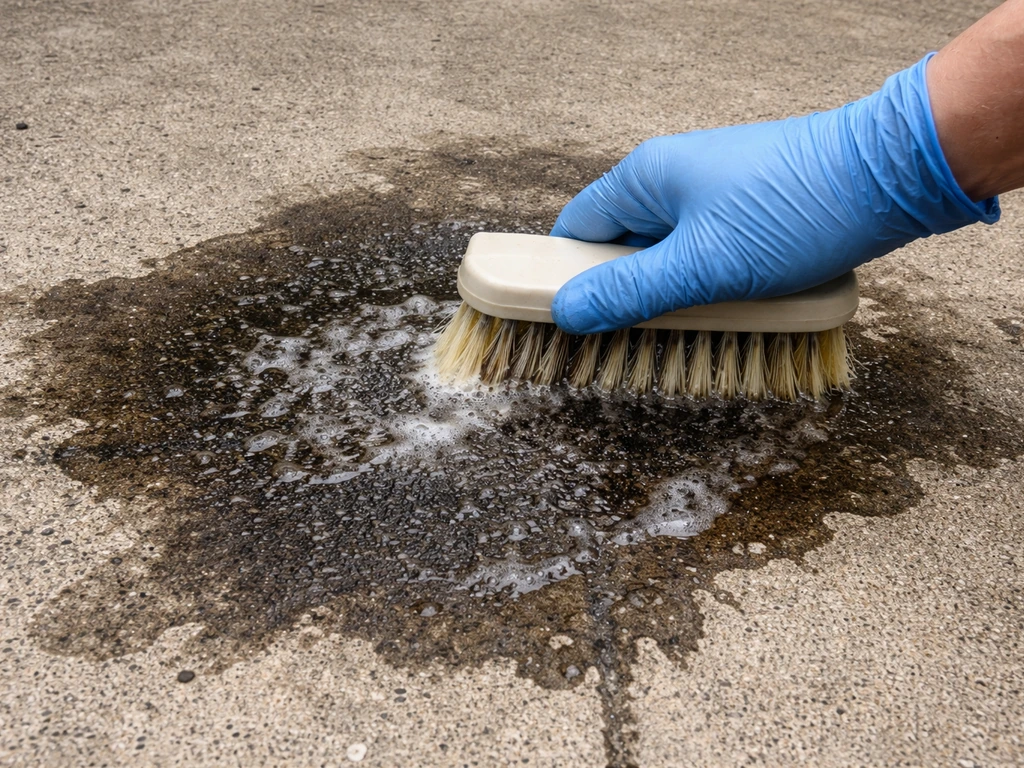
If the oil has been there for weeks, months, or you've inherited someone else's problem, dish soap alone won't cut it. If you want the fastest solution, start by tackling it like a fresh spill first, then step up to stronger degreasers for older stains oil off a patio. The oil has migrated into the pores of the concrete and you need something specifically designed to pull it back out.
Step up to a commercial concrete degreaser
Look for a concentrated, alkaline concrete or masonry degreaser. Products designed for hardscape surfaces (rather than kitchen or automotive use) penetrate and emulsify oil that has bonded with the concrete matrix. Wet the stain with water first (unlike fresh stains, the oil isn't going anywhere at this point and pre-wetting opens pores), apply the degreaser at the product's recommended dilution, and let it dwell for 10 to 20 minutes. Scrub vigorously, then rinse. Repeat up to three times before concluding that a deeper method is needed. Always wear gloves and eye protection with concentrated degreasers.
The poultice method for deep penetration
A poultice draws oil out of porous surfaces the way a poultice draws a splinter. You mix an absorptive material (sawdust, pool filter media, or even cat litter ground fine) with a solvent (acetone, mineral spirits, or a concentrated degreaser) into a thick paste, spread it about 6 to 12mm thick over the stain, cover it with plastic sheeting taped at the edges, and leave it for 24 to 48 hours.
As the solvent slowly evaporates, it pulls the oil up and into the absorptive material. Lift the dried poultice, dispose of it carefully (it's now solvent-soaked waste), and assess. I've found this method is the single most reliable approach for old stains that have had months to penetrate. One caveat: solvents like acetone and xylene can discolour or soften some sealers, so don't use this on sealed concrete without testing in a hidden corner first.
Enzymatic and biological cleaners
Enzymatic degreasers use bacteria to literally consume hydrocarbon compounds. They're slower (you may need to leave them wet on the stain for several hours or repeat over days) but they are genuinely safe for pets, plants, and drains. If you have a stain next to a garden bed or in a space where runoff is a concern, these are worth considering as your first attempt before moving to solvents.
When to use a pressure washer, and how to do it without making things worse
Pressure washing is most useful after you've already applied and let a degreaser dwell, not as the opening move. Blasting a raw oil stain with high-pressure water can force the oil deeper into the concrete and spread it laterally across the slab. The pressure washer is a rinsing and agitation tool here, not the primary cleaning agent.
Pressure and nozzle guidance by surface
| Surface type | Recommended PSI range | Nozzle tip | Notes |
|---|---|---|---|
| Bare concrete slab | 2,000–3,000 PSI | 25° green tip | Keep wand moving; don't linger |
| Sealed concrete slab | 1,500–2,000 PSI | 25–40° tip | High PSI can strip sealer; test first |
| Brick or clay pavers | 1,200–1,800 PSI | 25–35° fan tip | Avoid mortar joints; spray at an angle |
| Natural stone (sandstone, flagstone) | 800–1,200 PSI | 40° wide fan tip | Very low pressure; stone is porous and soft |
| Standard electric consumer washer | 1,500–2,000 PSI max | 25° or 40° tip | Sufficient for most domestic patio jobs |
Never use a turbo or rotary nozzle on any patio surface. The concentrated spinning jet leaves circular etch marks on concrete and can destroy the surface of softer stone or pavers. Use a sweeping pendulum motion, overlap each pass slightly, and always spray at a slight angle rather than dead-on perpendicular, which is especially important near paver joints and on sealed slabs. If you are trying to remove oil from patio pavers, the same blot, absorb, degrease, and rinse steps apply, but you need to be extra careful with grout lines and sealing oil out of patio pavers.
Apply degreaser, let it work, then pressure wash to rinse it out. If you're doing this without a pressure washer, a strong flow from a garden hose with a jet nozzle and continued scrubbing will achieve a similar result, just more slowly. Renters and people without pressure washers can absolutely get through this process by hand.
For sealed or stained slabs: test first, then choose your approach
Sealed concrete and stained decorative slabs need extra care because oil can compromise the sealer layer itself, and aggressive cleaning can compound the problem by stripping the finish you're trying to protect.
The test step you can't skip
Before applying any degreaser or solvent to a sealed slab, test it in an inconspicuous spot. Apply a small amount of your intended product, wait 5 minutes, and wipe it off. Check for cloudiness, colour change, or any tackiness in the sealer. If the sealer reacts, back off and use a milder approach. If it's stable, proceed.
Cleaning without damaging the sealer
For fresh oil on a sealed slab, the oil is sitting on top of or just below the sealer rather than deep in the concrete. Blot the excess, apply dish soap or a mild pH-neutral degreaser, scrub gently, and rinse dry. For fresh oil on bare versus sealed concrete, blot up excess oil and clean with a mild degreaser, rinsing and drying before you seal again. Avoid soaking the surface or leaving standing cleaner, which can undercut the sealer edges. Dry the surface thoroughly after rinsing.
When the oil has already worked under the sealer
If the stain is old and you can see it below a still-intact sealer, you're in trickier territory. You'll likely need to strip the sealer from the affected area using a chemical sealer stripper, clean the bare concrete underneath with a degreaser, allow it to fully dry (at least 24 to 48 hours, ideally 72), and then reseal the stripped section. This is the only reliable way to get the oil out without leaving a ghost stain permanently trapped under the sealer. After resealing, the patch will usually blend well unless the rest of the slab's sealer is significantly weathered, in which case a full reseal of the entire slab will give the most consistent look.
One important note for adjacent natural-stone slabs: the same oil-on-stone problem is common with sandstone patios and stone patio surfaces, and those materials require even more caution because stone is more porous and sensitive to acid and solvent chemistry than concrete. The principles here carry over, but the dwell times, pressure, and chemical concentrations should be dialled back significantly.
Optional deep cleaning with acid etching (only when it's actually the right call)
Muriatic acid etching is not a first-line stain remover. It doesn't dissolve oil. What it does is open the pores of the concrete surface by removing a thin layer of the matrix, which can help lift residual discolouration after the bulk of the oil has already been removed by degreaser and scrubbing. Use it only on bare, unsealed concrete, only after repeated degreaser passes haven't fully cleared the visual stain, and only with full PPE and proper dilution.
How to apply safely
- Put on chemical-resistant gloves, safety goggles, and old clothes. Work outdoors or in a well-ventilated area only. Acid fumes are serious.
- Pre-wet the concrete thoroughly. Acid should never go onto a dry surface.
- Mix muriatic acid with water at a 1: 9 ratio (1 part acid to 9 parts water). Always add acid to water, never the other way around.
- Apply the diluted solution to the stained area using a plastic watering can or acid brush. Do not use metal containers.
- You'll see mild fizzing. Let it react for 3 to 5 minutes. Don't let it sit longer than that.
- Scrub with a stiff nylon brush.
- Rinse thoroughly with plenty of water and proceed immediately to neutralization (see the next section).
Never use acid on sealed concrete, brick, pavers, or any natural stone. On those surfaces it will etch, pit, or permanently discolour the material. This step is concrete-only, unsealed-only, and last-resort-only.
Rinse, neutralize, and assess: how to know when the job is actually done
After any cleaning step, rinsing well is not optional. Degreaser residue left on concrete can attract new dirt. Acid residue left without neutralization will continue to react with the surface and interfere with any sealer you apply later.
Neutralizing after acid etching
Mix baking soda with water at roughly 4 cups of baking soda per gallon of water, or use a commercial acid neutralizer. Apply it to the still-wet surface after your final rinse and let it fizz and react for a couple of minutes. You'll see bubbling slow down as the acid is neutralized. Rinse again with clean water. The surface should feel slightly rough (like fine sandpaper) when dry, which confirms the etch has opened the pores correctly.
Neutralizing after bleach or sodium hypochlorite (for organic-staining context)
If you've used a sodium hypochlorite solution to address any accompanying organic staining (mould, algae under the oil residue), rinse the surface thoroughly and allow it to air dry. Sodium thiosulfate solution can be used to neutralize chlorine residue if you're concerned about runoff near plants, though a thorough water rinse is usually sufficient for outdoor patio use at typical dilutions.
What 'done' actually looks like
The slab will likely look slightly lighter in the treated area when wet, and you won't be able to make a full assessment until it dries completely. Allow 24 hours before judging the result. A faint shadow is normal after a single treatment pass on an old stain. If the shadow is still clearly visible after the surface dries, run another degreaser cycle. Most set-in stains on concrete respond within two to three treatment rounds. If after three full rounds with a commercial degreaser plus a poultice attempt you still have a visible mark, the stain has penetrated very deeply and professional wet-grinding or diamond-polishing of the surface is probably the only remaining option.
Environmental and safety reminders throughout
- Wear chemical-resistant gloves and safety goggles for every step beyond plain dish soap
- Direct all rinse water away from storm drains and garden beds; oil-contaminated runoff is an environmental pollutant
- Dispose of oil-saturated cat litter, rags, and poultice material in a sealed bag in general waste, not compost or recycling
- Keep children and pets off the area while any chemical product (degreaser, solvent, acid) is active
- Never mix bleach with acid or with other cleaning products; use them in separate cleaning sessions with thorough rinsing between
Prevention and long-term patio care
The best oil stain is the one that never happens. A few straightforward habits make a big difference over time.
Seal your slab
A good penetrating sealer or surface sealer on bare concrete dramatically slows oil absorption. Fresh spills on a sealed slab sit on top of the surface long enough for you to blot them up without staining. Most outdoor concrete sealers need reapplication every 2 to 3 years depending on traffic and weather. Before sealing, make sure the surface is completely clean and dry, and run the water bead test to confirm any old sealer has been fully stripped if you're switching sealer types. You can't reliably apply a new sealer over an incompatible old one without surface prep.
Handle spills immediately
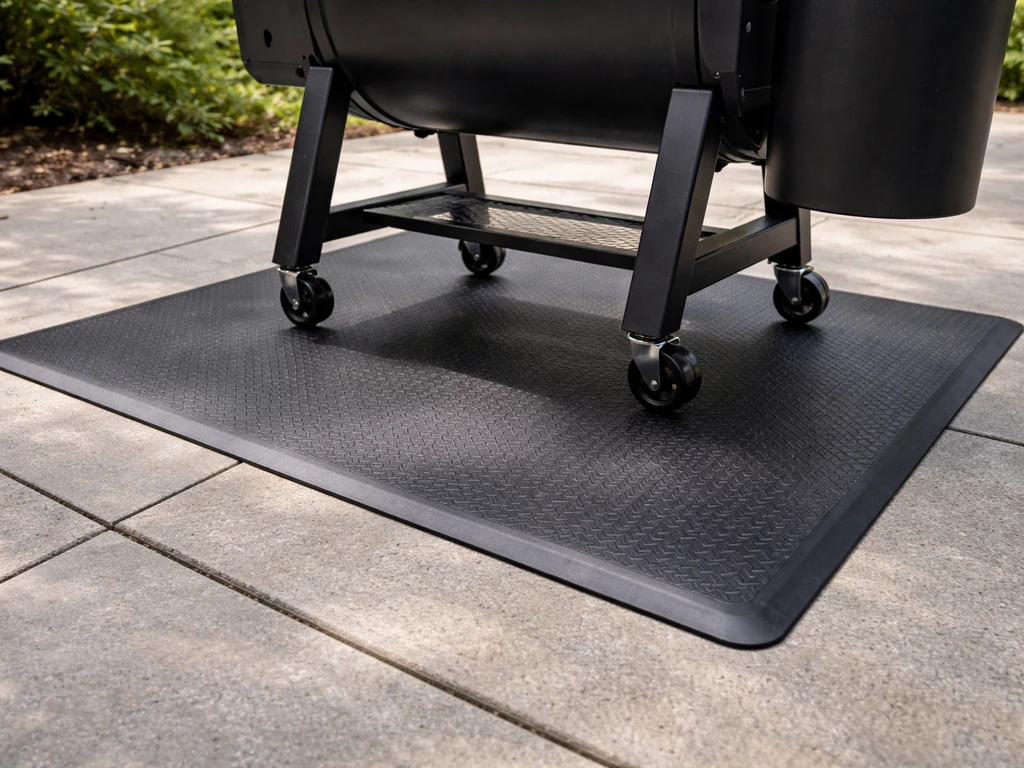
Keep a small bag of cat litter or a container of baking soda near your BBQ or parking area. The difference between a spill you can clean up in 10 minutes and a stain you're fighting for days comes down to how fast you cover it. For BBQ grease drips specifically, a drip tray under the grill and a rubber-backed mat under the grill station makes this a non-issue.
Routine cleaning schedule
Give the whole patio a rinse and a light scrub with diluted dish soap or a mild pH-neutral cleaner every month or two during the season. This stops light grease and cooking residue from building up into the kind of set-in stain that needs solvent treatment. A quick pass with a garden hose and brush is all it takes. Annual or biannual pressure washing (with a degreaser pre-treatment) keeps the surface fresh and makes inspection easy, so you catch any new stains while they're still easy to fix.
Protective mats in high-risk areas
Outdoor rubber or anti-fatigue mats under grills, smokers, and outdoor cooking stations protect the slab directly. Look for mats rated for UV exposure and outdoor use; cheap indoor mats deteriorate quickly outside and can actually transfer staining from the mat backing to the concrete. If you park a motorbike or lawnmower on the patio, a purpose-made oil-absorbent drip pad under the engine is cheap and saves you a lot of cleaning work.
FAQ
Can I remove an oil stain from patio slabs if it already dried, but it is not fully “old” yet?
Yes, but only if you treat it like a fresh spill. Blot, cover with absorbent (cat litter or baking soda), then scrub with hot water plus a grease-cutting dish soap. Avoid soaking the area, and dry thoroughly after rinsing because extra moisture can undercut a sealer edge and spread the oil laterally under the finish.
How can I tell if a degreaser or solvent will damage a sealed patio slab before I clean the whole stain?
Use a sealer compatibility check before you pour anything. Do the 5-minute hidden-spot test, then rinse and look for cloudiness, tackiness, or colour change. If the sealer gets tacky or cloudy, switch to a milder pH-neutral approach and avoid solvents or acids, since trapped residue can later ghost through a reseal.
What should I do if the stain on a sealed patio slab comes back after it dries?
First confirm whether the stain is on top or below the finish using the water bead test. If water beads, stick to gentle dish soap or a mild pH-neutral degreaser, then scrub gently. If you get persistent darkening after drying, the finish may be compromised and you may need to remove and reseal the affected section rather than keep cycling stronger chemicals.
Will a pressure washer remove oil stains from patio slabs by itself?
Do not rely on pressure washing alone. Pre-treat with degreaser and allow the specified dwell time, then rinse with sweeping technique. If you skip dwell time, you mainly blast oil residue around and can force it deeper, which often increases the visible grey-brown shadow even after repeated washes.
How many cleaning rounds should I try before deciding it is a deep, set-in oil stain?
Watch for two failure patterns. If the stain lightens when wet but returns strongly when dry, run another degreaser cycle and consider a poultice. If it never lightens after three degreaser cycles, expect deep penetration and plan on wet-grinding or diamond polishing (or professional service), because repeated scrubbing is unlikely to fix it.
Why does my patio still show a dark outline after the oil cleaning steps, even though I rinsed?
Rinse residue is a common cause of “it still looks dirty” even when the oil is mostly gone. After the final rinse, do a quick inspection in dry daylight, then wait 24 hours. If there is still a shadow, re-degrease rather than jumping straight to poultice or acid, especially on sealed slabs.
What is the safest approach if the oil stain is near garden plants or drains?
For plant-safe cleaning, start with enzymatic degreasers near garden beds or where runoff matters. Keep the surface wet during dwell by reapplying as directed, then use thorough rinsing. Avoid acetone or xylene near landscaping because they can damage nearby plants and, if not contained, create unwanted runoff.
Can algae or mould under the oil be removed at the same time as the oil stain?
If you see algae or mould at the oil line, treat the biological staining after degreasing. Apply your biocide or chlorine treatment per label directions, then rinse thoroughly and allow to air dry. Consider neutralizing chlorine residue only if runoff could reach sensitive areas, since leftover oxidizer can interfere with sealing later.
Can I use muriatic acid to get oil stains out faster?
Yes, but the method depends on whether the slab is sealed and on the chemistry. If it is bare unsealed concrete and degreaser passes did not fully clear the discoloration, muriatic acid can be a last-resort, properly diluted step. Never use acid on sealed surfaces, brick, pavers, or natural stone, because it can permanently etch and make the stain worse.
What is the quickest way to decide which method to use, dish soap, degreaser, poultice, or solvent?
The best way is to test for removal potential before committing. Do a small water bead test for sealing, then choose your first step (dish soap for sealed, alkaline degreaser for bare, poultice for deep). This prevents you from wasting time on the wrong product, like using solvents on a surface that is sealed and can be attacked or clouded.
How can I prevent future oil stains from getting set into the concrete?
Keep a “mild first” rule for patio care. For routine maintenance, do periodic light scrubbing with diluted dish soap or a mild pH-neutral cleaner, and pre-treat any scheduled pressure washing with degreaser. This stops cooking grease from building into a set-in stain that later requires poultice or wet-grinding.
What is the best way to handle barbecue grease drips on patio slabs?
If you spill barbecue grease, put an absorbent down immediately (before you see spreading). A drip tray under the grill and a rubber-backed mat under the cooking zone greatly reduces contact with the slab. For leftover residue, blot and scrub promptly, because heat can partially bake oil into the surface faster than typical vehicle drips.
Next Articles
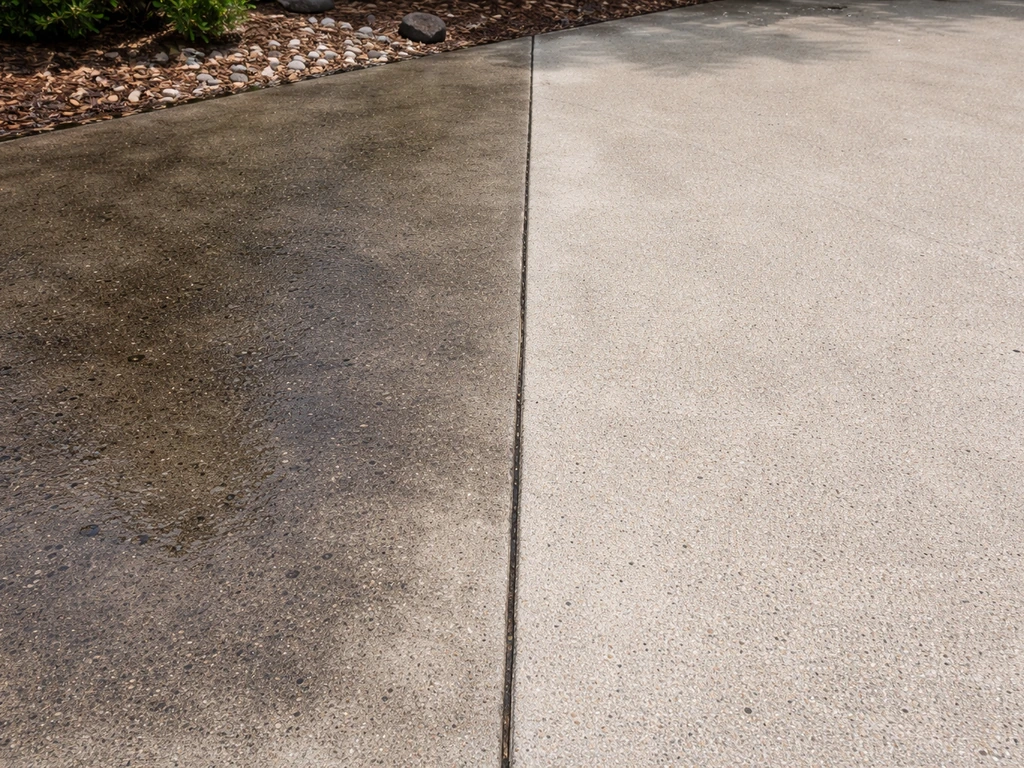
Oil Stains on Patio: How to Remove Them Step by Step
Step-by-step methods to remove oil stains from patios by material, using safe degreasers, poultices, and pressure where
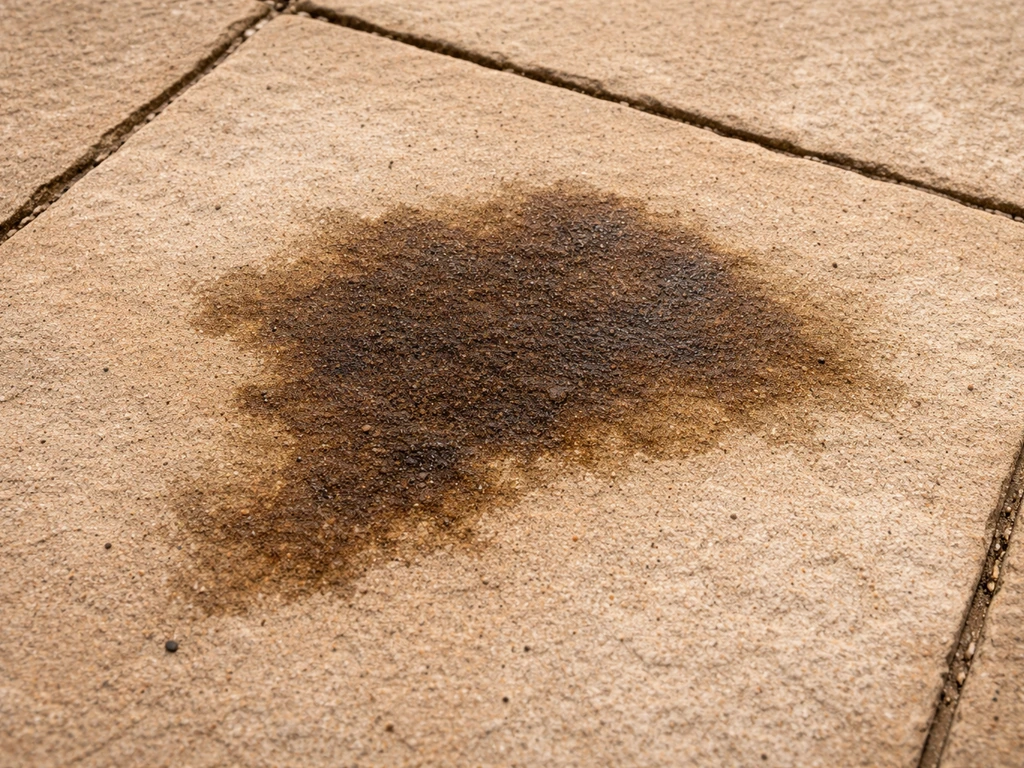
How to Remove Oil Stains From a Sandstone Patio
Step-by-step guide to remove oil and rust stains from sandstone patio safely with cleaners, poultices, and rinse tips.
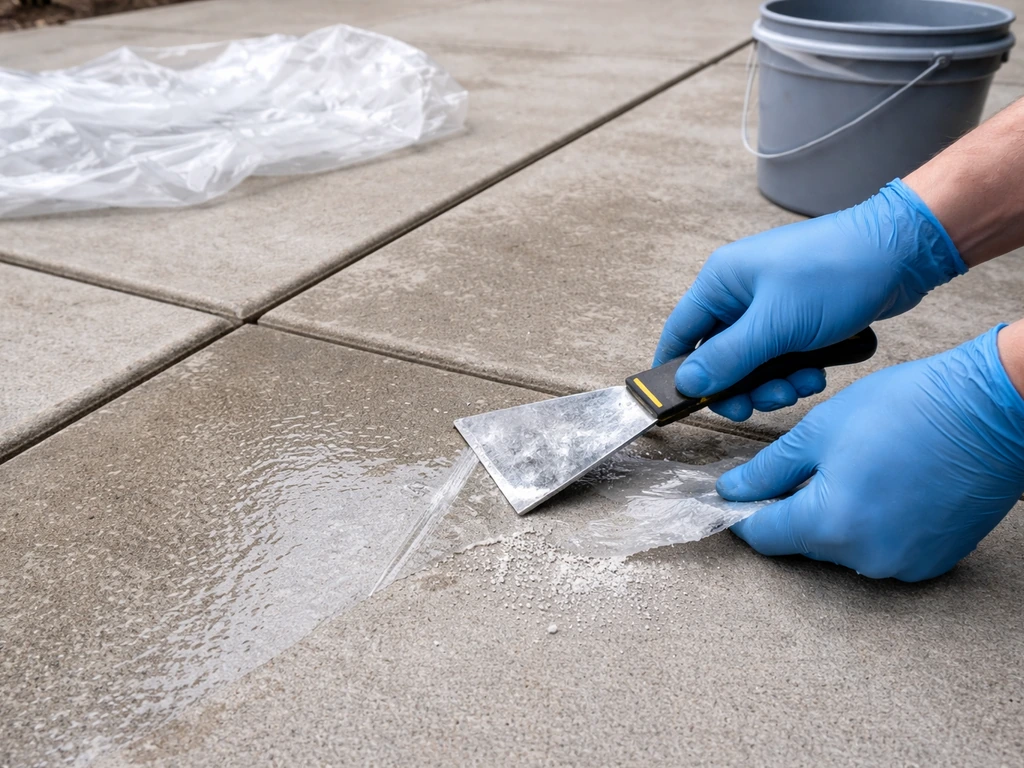
How to Remove Thompson’s Patio Sealer Step by Step
Step-by-step removal of Thompson’s patio sealer on concrete, brick, pavers, and stone, with safety, tests, and cleanup.