You can remove oil from a stone patio by absorbing the excess first, then working a degreasing cleaner or poultice into the stain, letting it dwell, and rinsing thoroughly. For a focused step-by-step guide on how to remove oil stains from patio slabs, see our dedicated walkthrough. For step-by-step instructions and product recommendations, see our guide on how to get oil off a patio. Fresh food oil (olive oil, cooking grease) responds well to dish soap and hot water or a baking soda scrub. Old petroleum stains (motor oil, chain lube) need a solvent-based poultice or a commercial degreaser, and even then may take two or three rounds. The right method depends on your stone type, how long the oil has been sitting, and whether you're a renter working with household supplies or someone willing to pick up a specialist product.
How to Remove Oil from Stone Patio: DIY Steps & Tips
Act fast: emergency steps for a fresh oil spill
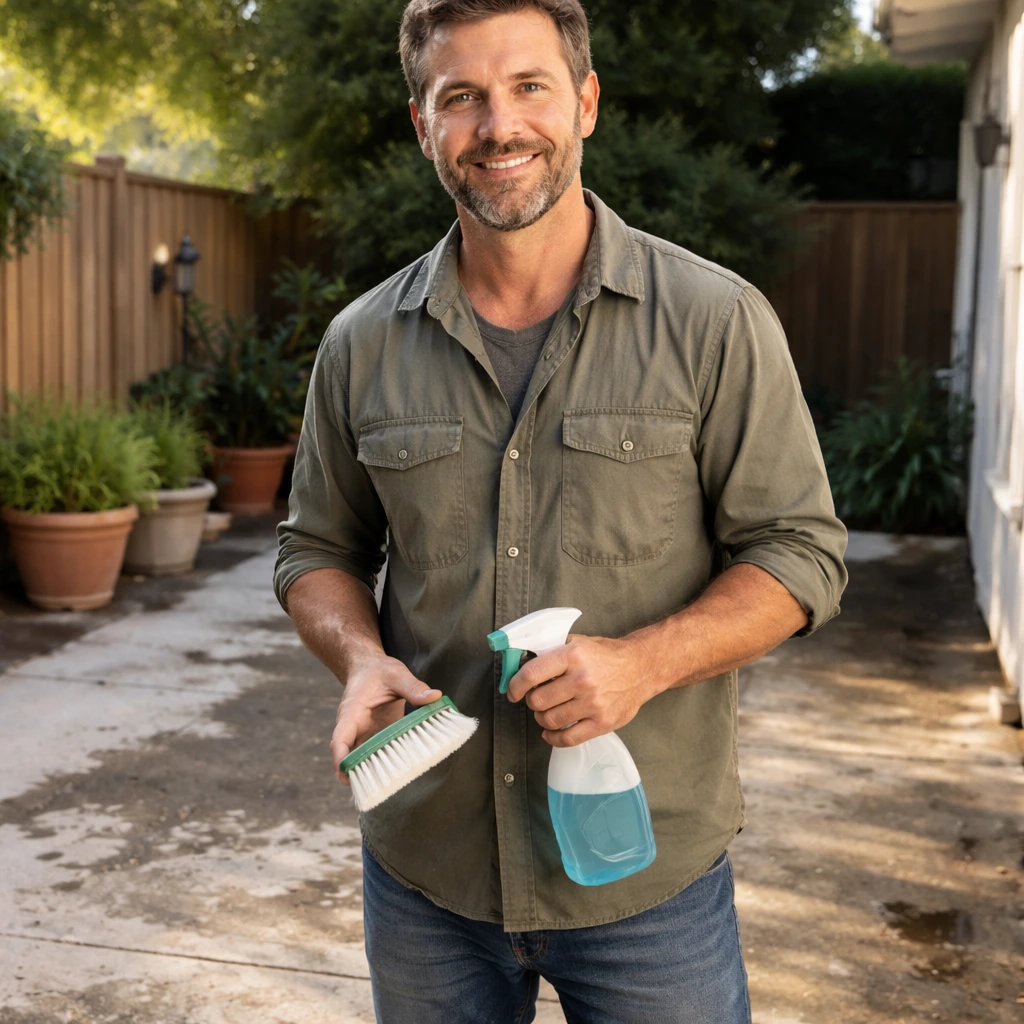
The first fifteen minutes after a spill are the most valuable. Stone is porous, and oil moves downward quickly, so your goal is to stop it from going deeper before you start cleaning.
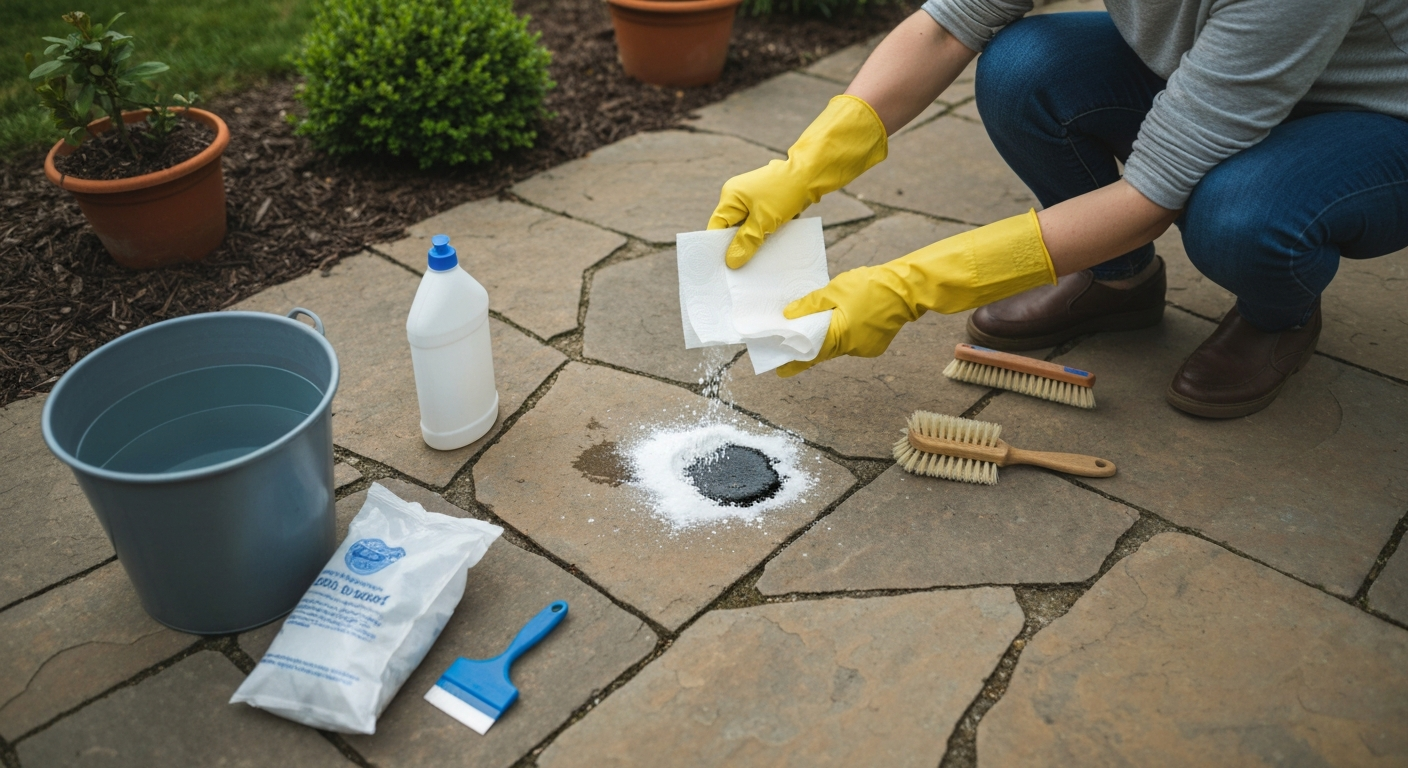
- Blot, don't wipe. Press paper towels or a clean cloth straight down onto pooled oil and lift. Wiping spreads it sideways and pushes it into the pores.
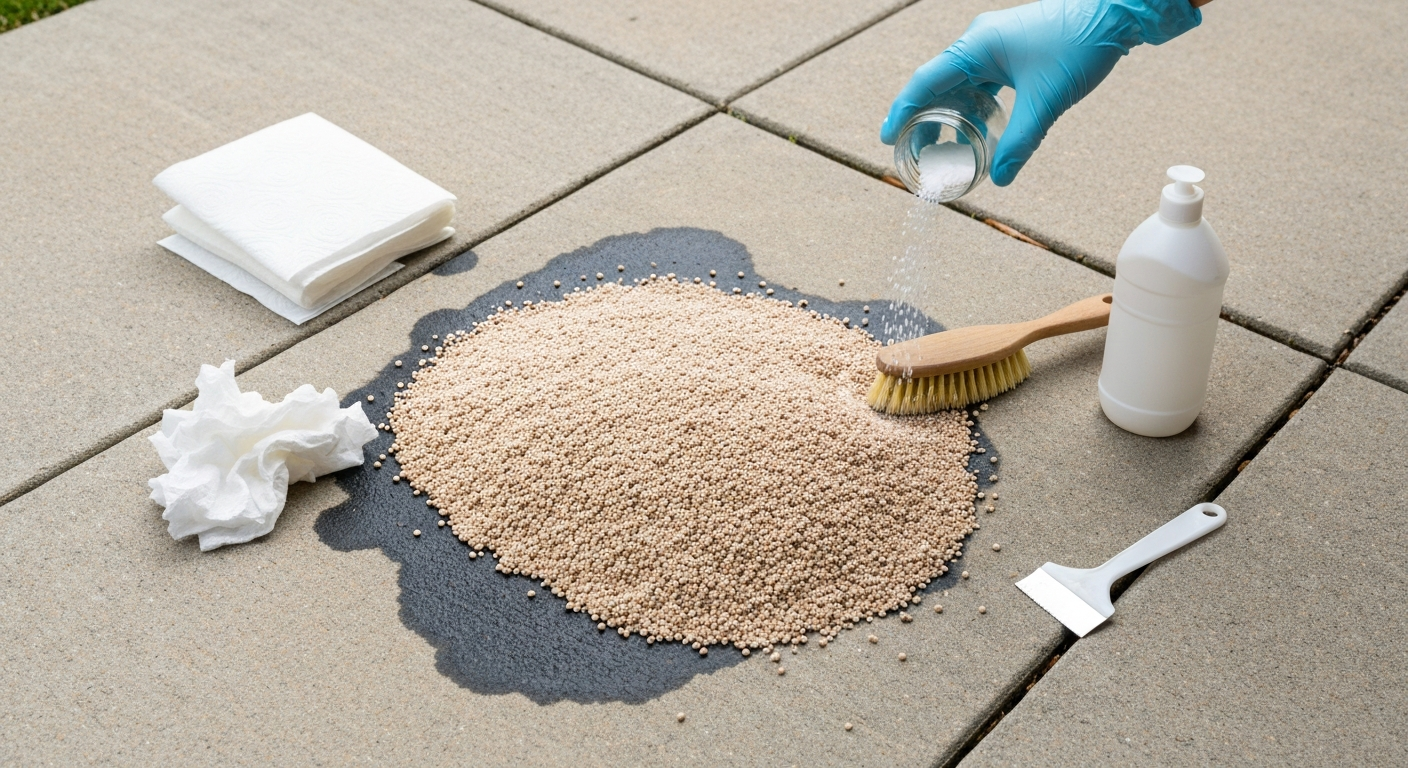
- Pour on a dry absorbent generously. Non-clumping clay cat litter is the most available option and works well. Baking soda, cornstarch, sawdust, or diatomaceous earth are all solid alternatives. Cover the spill and go about an inch beyond the edges.
- Leave it alone for at least 30 minutes. For a larger spill or if you can't clean immediately, leave it overnight. The absorbent will pull oil upward out of the stone.
- Sweep up the used absorbent with a stiff broom and dustpan. Do not rinse it down the drain. Bag it and dispose of it with your regular household waste (or per local rules for oily materials).
- Follow immediately with a cleaning method below. Leaving just the swept surface is not enough for porous stone.
Resist the urge to hose the spill down right away. Water drives oil deeper into stone and spreads it outward. Also hold off on acidic cleaners like vinegar during the emergency phase, especially on travertine, limestone, or sandstone, because acid etches these stones permanently.
Assess the situation before you clean anything
Jumping straight to cleaning without a quick assessment can make things worse or waste your effort entirely. There are three things worth identifying: what kind of stone you have, what kind of oil caused the stain, and how long it has been there.
Know your stone type
This is the single most important factor in choosing a cleaner. Stone patios generally fall into two categories: calcareous stones (travertine, limestone, marble) that contain calcium carbonate and react badly to acid, and silicate-based stones (granite, many sandstones, flagstone, slate) that are more chemically tolerant. Concrete and clay brick sit in their own category and can handle stronger treatments. If you're not sure what you have, a quick test is to put a drop of white vinegar on an inconspicuous spot. Fizzing or bubbling means you have a calcareous stone and need to avoid all acids, including vinegar as a cleaner.
| Stone Type | Acid Safe? | Pressure Wash Safe? | Notes |
|---|---|---|---|
| Travertine / Limestone | No | Low pressure only (under 1,000 psi) | Very porous; etches easily; avoid vinegar, lemon, muriatic acid |
| Sandstone | Generally no (calcium-cemented types) | Low pressure (500–1,000 psi) | Soft and absorbent; easily damaged by abrasives or high pressure |
| Flagstone (bluestone, slate) | Usually yes for silicate types | Moderate (up to 1,200 psi) | Test first; some flagstone varieties are calcareous |
| Granite pavers | Yes | Up to 1,500 psi | Dense and durable; tolerates most cleaners |
| Concrete / Brick pavers | Yes (avoid on colored/exposed aggregate) | Up to 2,000–3,000 psi | Most forgiving; can handle alkaline degreasers and moderate acids |
Food oil vs. petroleum oil
Food oils (olive oil, vegetable oil, cooking grease) are organic and respond well to alkaline cleaners, dish soap, and hydrogen peroxide-based poultices. ASTM C1515, poultice/cleaning agent selection (oxidizers vs solvents) recommends using oxidizers such as hydrogen peroxide for organic stains and solvent or organic carriers for oil stains, matching the agent to the stain type and the stone's mineralogy ASTM C1515 — poultice/cleaning agent selection (oxidizers vs solvents). Petroleum oils (motor oil, chain lubricant, grease from machinery) are hydrocarbon-based and need organic solvents like acetone or mineral spirits to break them down. Using a dish-soap approach on a motor oil stain will frustrate you because the chemistry is not right for the job.
How stain age and penetration determine what will actually work
This is where I see homeowners set themselves up for disappointment. A fresh spill from this morning is mostly sitting near the surface and responds to nearly any cleaning method. A stain that has been there for a week has migrated deeper into the stone and started to oxidize, so you need something with dwell time, like a poultice. A stain that has been there for months or years has polymerized into the stone matrix in some cases, and surface cleaning alone will not shift it. Penetration depth also matters: highly porous stone like travertine or sandstone lets oil travel down quickly, while dense granite holds oil closer to the surface longer. For old, deep stains, expect to repeat your chosen method two or three times and accept that some very old petroleum stains may only lighten rather than disappear completely.
| Stain Age | Likely Penetration | Best Approach |
|---|---|---|
| Under 1 hour | Surface only | Absorbent + dish soap or baking soda scrub |
| 1 hour to 24 hours | Shallow (top layer of stone) | Dish soap, enzymatic cleaner, or baking soda poultice |
| 1–7 days | Moderate (mid-depth) | Degreaser poultice with appropriate solvent; may need 2 applications |
| 1 week to 1 month | Deep | Solvent poultice (acetone or mineral spirits for petroleum; H2O2 for food oils); repeat likely |
| Several months or longer | Very deep / possibly permanent | Professional poultice treatment; manage expectations; sealing after may hide residual discoloration |
Always do a patch test first
I know it feels like a delay when you're staring at a stain, but a five-minute patch test can save you from permanently damaging your patio. Pick a spot that is hidden, such as under a furniture leg or along the far edge of the patio. Apply your chosen cleaner in a small area roughly the size of a coin. Leave it for the full dwell time you plan to use on the stain, then rinse and let it dry completely. Check for: color change or bleaching, surface texture change (roughening, pitting, or powdering), any loss of sheen on polished or honed stone, and any residue that doesn't rinse clean. If any of these happen, switch to a gentler method or a pH-neutral stone cleaner before touching the main stain.
Tools and materials checklist
Most of the everyday items listed below you probably already have. The specialty supplies are worth picking up if you have a stubborn or deep stain.
Everyday items
- Non-clumping clay cat litter, baking soda, or cornstarch (absorbents)
- Paper towels or clean cotton cloths (blotting)
- Stiff-bristle nylon scrub brush (avoid metal wire brushes on natural stone)
- Bucket
- Dish soap (Dawn or similar grease-cutting formula)
- Hot water
- Plastic wrap or a plastic bag (for covering poultices)
- Masking tape (to hold plastic over the poultice)
- White vinegar (for silicate stones only, not calcareous)
- 3% hydrogen peroxide from a pharmacy
- Rubber gloves
- Safety glasses
Optional specialty supplies
- Fuller's earth or kaolin powder (absorbent base for poultices; available at hardware or pottery supply stores)
- Diatomaceous earth (food-grade; excellent fine absorbent for poultices)
- Acetone or mineral spirits (solvent carrier for petroleum-oil poultices)
- Commercial stone degreaser or alkaline poultice powder (from tile or stone supply stores)
- Enzymatic cleaner (Bio-Kleen, Zout, or similar; good for food oils)
- Citrus degreaser (d-limonene-based; lower toxicity than petroleum solvents)
- Pressure washer with 25-degree fan tip (optional for finishing rinse)
- Stone sealer (for after cleaning, to prevent future staining)
Renter-friendly methods: no special equipment needed
If you rent, or you just don't want to buy specialized products, these approaches handle most fresh-to-moderate oil stains on stone patios. They work best on food oils and on spills that are less than a week old. They are also safe for pets and children once the area is rinsed and dry.
Method 1: Absorbent + dish soap and hot water
This is my go-to first pass for almost any fresh oil stain, including olive oil on flagstone or a cooking grease drip near the barbecue. The dish soap emulsifies the oil into tiny droplets that rinse away with the water.
- Blot any pooled oil and cover the stain with baking soda or cat litter. Leave for 30–60 minutes, then sweep up.
- Boil or heat water to as hot as your stone can comfortably handle. For soft natural stones like travertine, use hot tap water rather than boiling water to avoid thermal shock.
- Squirt several drops of dish soap directly onto the stain.
- Pour a small amount of hot water over it to work up a lather.
- Scrub firmly with a stiff nylon brush in circular motions for 2–3 minutes.
- Let it dwell for 5 minutes.
- Rinse thoroughly with clean water. Repeat the scrub-and-rinse cycle up to three times.
- Let the area dry fully and check in daylight. Residual staining means the oil has penetrated deeper and you need to move to a poultice.
Expected results: Fresh food oil on non-porous stone often clears entirely after one or two rounds. On porous stone, you will usually see significant lightening. Time commitment: about 20–30 minutes active time plus drying.
Method 2: Baking soda paste scrub
Baking soda is a mild alkali that helps cut through food oils and acts as a gentle abrasive. It is safe on most stone types, including travertine and sandstone, unlike vinegar. For step-by-step guidance specifically on how to remove oil stains from sandstone patio, consult our dedicated sandstone oil-stain removal guide. Make a thick paste by mixing baking soda with just enough dish soap and water to reach a spreadable consistency. Apply it generously over the stain, scrub with a nylon brush, leave for 10–15 minutes, then scrub again and rinse well. This works particularly well on olive oil or salad dressing spills.
Method 3: Enzymatic cleaners
Enzymatic cleaners use biological enzymes to break down organic compounds, including food oils and grease. They work more slowly than solvents but are very safe for sensitive stones, pets, and anyone who wants to avoid strong chemicals. Apply the cleaner per the product label, typically letting it sit for 15–30 minutes on the stain before scrubbing and rinsing. I've found them especially useful for older cooking oil stains on sandstone, where aggressive chemicals risk surface damage. They do not work well on petroleum-based oils.
A note on vinegar
Vinegar comes up in a lot of DIY cleaning guides, and it can work on silicate-based stone (certain flagstones, some slate) for light grease. However, do not use vinegar on travertine, limestone, marble, or calcium-cemented sandstone. It will etch the surface, creating a dull, rough patch that is permanent without professional restoration. If you already tried the drip test above and saw fizzing, stay away from vinegar entirely.
Step-by-step protocols for renter-safe methods
Protocol A: Fresh food oil (olive oil, cooking grease) on natural stone
- Blot and absorb (15–30 minutes): Apply baking soda or cat litter, leave 30 minutes minimum, sweep and discard.
- Dish soap scrub (10 minutes): Apply dish soap directly to the stain, add hot water, scrub vigorously with a nylon brush.
- Dwell (5 minutes): Let the soapy lather sit on the stain.
- Rinse thoroughly with clean water. Use a bucket and pour rather than a hose if possible to keep runoff controlled.
- Assess when dry (30–60 minutes dry time): If a shadow remains, move to Protocol B.
- Repeat up to 3 times if there is visible improvement each round.
Expected results: Complete removal on fresh spills on dense stone. Significant lightening on porous stone. Time: 1.5–2 hours total including drying time.
Protocol B: Baking soda and hydrogen peroxide poultice for food oils
- Mix 3% hydrogen peroxide from the pharmacy with baking soda to a peanut-butter consistency in a plastic container. You can add a few drops of dish soap to the mix.
- Dampen the stained area lightly with water before applying (this pre-wetting prevents the poultice from drying too fast and actually pulling the cleaner deeper rather than the oil out).
- Spread the paste 1/4 to 1/2 inch thick over the stain, extending about 1 inch beyond the visible edges.
- Cover tightly with plastic wrap and tape the edges down. This slows evaporation so the poultice draws oil upward rather than drying out.
- Leave for 24 hours minimum, up to 48 hours for older stains.
- Remove the plastic and let the poultice dry completely (usually several more hours).
- Once fully dry and chalky, scrape it off gently with a plastic scraper. Do not use metal tools on soft stone.
- Rinse the area well with clean water and let it dry completely before assessing.
- Repeat if needed. Two or three applications is normal for a stain more than a few days old.
Expected results: Significant fading of moderate food-oil stains; often complete removal on first or second application on stone that is not extremely porous. Time: 2–3 days per application cycle including drying.
Household degreasers and homemade poultices for tougher stains
When dish soap and baking soda are not cutting it, usually because the stain is deeper, older, or petroleum-based, it's time to move up to a proper poultice with a stronger solvent carrier. This is the method professional stone restorers rely on, and you can do it at home with supplies from a hardware store.
Understanding the poultice mechanism
A poultice works by capillary action. The wet paste is pressed onto the stone and sealed with plastic. As it slowly dries, it pulls the oil it has dissolved upward and out of the pores into the paste itself. When you remove the dried paste, the oil comes with it. This is why the plastic cover and full dwell time are essential: rushing the drying kills the drawing action. One pound of mixed poultice paste covers roughly one square foot at the recommended 1/4 to 1/2 inch thickness.
Recipe 1: Acetone or mineral spirits poultice for petroleum oil
Use this for motor oil, grease, chain lubricant, or other petroleum-based stains. Acetone works faster; mineral spirits are slightly less aggressive and better for soft or sealant-coated stones.
- Safety first: Work outdoors with gloves and safety glasses. Acetone and mineral spirits are flammable; keep away from open flames. Dispose of used poultice material as hazardous waste per your local guidelines.
- Mix your absorbent powder (fuller's earth, kaolin, diatomaceous earth, or powdered chalk) with acetone or mineral spirits in a glass or metal container until you reach a peanut-butter consistency. Avoid plastic containers with acetone as it can dissolve some plastics.
- Pre-wet the stained stone surface lightly with water.
- Apply the paste 1/4 to 1/2 inch thick, extending 1 inch past the stain edges.
- Cover with plastic wrap sealed at the edges with tape.
- Leave for 24 to 48 hours. For very old stains, extend to 72 hours.
- Remove the plastic and allow the poultice to dry fully (this may take several hours or longer depending on humidity).
- Scrape off the dried paste using a plastic scraper.
- Rinse thoroughly with clean water. Do not allow solvent runoff to enter storm drains.
- Inspect when fully dry. Repeat if the stain has lightened but not cleared.
Recipe 2: Citrus degreaser poultice (lower toxicity option)
D-limonene citrus solvent is derived from orange peel and is considerably less toxic than acetone or petroleum distillates. It is a good option if you want something more environmentally considered or if you have pets or children around. Mix it with kaolin or fuller's earth to the same peanut-butter consistency and follow the same application and dwell procedure as above. It handles light-to-moderate petroleum stains and food-based grease well, though it may not fully break down heavy motor oil on its own.
Household alkaline degreasers
Products in the TSP (trisodium phosphate) family and commercial alkaline degreasers like Oil Eater can be applied directly or as the liquid carrier in a poultice. These work well on food grease and moderate petroleum oil on concrete, brick, and silicate-based stone. Do not use strong alkaline cleaners on polished or honed natural stone without testing first, as they can strip sealers and dull the surface. Dilute per the product label, scrub, let dwell for 10–15 minutes, and rinse very thoroughly. Alkaline residue left in porous stone can cause long-term surface damage.
Safety and environmental notes for all degreaser methods
- Always wear rubber gloves and eye protection when using solvents or alkaline degreasers.
- Work in ventilated conditions; acetone and mineral spirits produce vapors that accumulate in low areas.
- Never pour solvent-laden rinse water down a storm drain. Contain runoff in a bucket and dispose of it per local hazardous waste rules.
- Used poultice material containing petroleum solvents is typically considered hazardous waste. Check your local municipality's guidelines.
- Keep pets and children off the treated area until it is rinsed clean and fully dry.
What to do when stain removal may not be fully possible
Some stains, particularly old, heavy motor oil on very porous stone like travertine or soft sandstone, have penetrated so deeply that complete removal is genuinely not achievable with DIY methods. After two or three full poultice cycles with minimal further improvement, you are reaching the realistic limit of surface treatment. At that point, you have a few options: hire a professional stone restoration company that has access to heated ultrasonic cleaning equipment and prescription-strength chemical systems, replace the individual affected stones if they are discrete pavers or slabs, or apply a penetrating stone sealer that can even out the appearance and prevent the remaining discoloration from worsening. For step-by-step instructions specifically for pavers, read our guide on how to get oil out of patio pavers. A good sealer will not hide the stain completely, but it does reduce its visual prominence and stops further oil absorption going forward.
Pressure washing: when and how to use it
Pressure washing is a useful final rinse step or a starting point for heavily soiled patios, but it is not a substitute for chemical treatment of oil stains. High pressure alone does not lift oil; it moves it around. The benefit comes when you pair it with a degreaser application, use low pressure with appropriate nozzle choice on natural stone, and treat it as a rinse rather than a scrubber. Blue Oak Patios, recommended PSI/nozzle/distance guidance for pavers & natural stone recommends soft‑wash/low‑pressure methods (typically under ~1,000–1,500 psi for many natural stones), using wide 25°–40° fan nozzles, and maintaining about 6–18 inches distance depending on stone and nozzle Blue Oak Patios — recommended PSI/nozzle/distance guidance for pavers & natural stone.
- Travertine and limestone: stay under 1,000 psi, use a 40-degree fan tip, keep the wand 12–18 inches from the surface, and never use a zero-degree tip.
- Sandstone: 500–1,000 psi maximum; these stones are soft and can be pitted or spalled by excessive pressure.
- Flagstone (silicate varieties): up to 1,200 psi with a 25–40 degree fan tip.
- Concrete and brick pavers: 2,000–3,000 psi is generally safe with a 25-degree fan; maintain 6–12 inches of distance.
- Always keep the wand moving; dwelling in one spot causes etching even on tough stone.
- Apply your degreaser or cleaning solution first, let it dwell per the product instructions, then pressure wash as the rinse.
Material-specific do's and don'ts
| Stone Type | Safe Methods | Avoid |
|---|---|---|
| Travertine | Absorbents, dish soap, baking soda poultice, H2O2 poultice, pH-neutral stone cleaner | Vinegar, lemon juice, muriatic acid, strong alkalis, high-pressure washing |
| Sandstone | Absorbents, dish soap, enzymatic cleaners, gentle baking soda paste, poultice with mineral spirits | High-pressure washing, wire brushes, acids, strong alkaline degreasers without testing |
| Flagstone (silicate) | Most of the above plus citrus degreaser, diluted alkaline degreaser, acetone poultice | Acids on calcareous varieties (test first); aggressive wire brushing |
| Granite pavers | Full range including alkaline degreasers, acetone poultice, moderate pressure washing | Prolonged strong acid exposure; not usually a risk with oil stains but worth noting |
| Concrete / Brick pavers | Alkaline degreasers, TSP variants, solvent poultice, pressure washing up to 3,000 psi | Concentrated muriatic acid on colored concrete; avoid if decorative aggregate is present |
Sealing your stone after cleaning
Once the stain is gone (or as faded as it is going to get), sealing is the smartest prevention step you can take. A penetrating impregnating sealer soaks into the pores of the stone and creates a hydrophobic and oleophobic barrier that slows oil absorption dramatically. It does not make the stone completely oil-proof, but it means the next spill stays near the surface long enough for you to blot and clean it before it penetrates. Most sealers last two to five years outdoors depending on traffic and UV exposure. Apply it to a clean, completely dry stone surface and follow the manufacturer's cure time before allowing traffic or furniture back onto the patio.
When to call a professional
Hire a professional stone restoration company if: you have completed three full poultice cycles and the stain has stopped improving, the stone has already been etched or damaged by previous cleaning attempts, the affected area is large (more than a few square feet of heavy petroleum staining), or you have polished travertine or high-end stone where cosmetic damage would be costly to live with. Professionals have access to heated pressure-extraction equipment and stronger chemistry than consumer products, and they carry liability insurance. It is not a sign of failure to call one. For heavily stained individual pavers or flagstones, replacing the affected pieces is sometimes faster and more cost-effective than repeated professional treatments.
FAQ
What should I do immediately after an oil spill on my stone patio?
Act fast. Blot any pooled oil with paper towels or rags (do not wipe or rub). Cover the spill generously with a dry absorbent — non‑clumping clay cat litter, fuller's earth/diatomaceous earth, baking soda or sawdust — and press gently. Let the absorbent sit at least 15–60 minutes for small spills; for larger or heavier spills leave several hours or overnight. Sweep or scoop up the absorbent into a sealed bag for disposal according to local rules (do not wash oil into storm drains). Only after absorption should you proceed with cleaning steps.
How do I assess the stain before cleaning?
Check four things: 1) Stone type — is it calcareous (travertine, limestone) or silicate (sandstone, flagstone, concrete, brick/paver)? 2) Oil type — food/vegetable oil (olive, canola) or petroleum (motor oil, hydraulic oil)? 3) Age and penetration — fresh/surface vs dried/long‑set; press a damp paper towel to gauge transfer; darkening that doesn’t lift with surface cleaning indicates penetration. 4) Seal or finish — is the surface sealed? Test an inconspicuous area with a few drops of water — beading = sealed. Use this assessment to pick safe cleaners and methods.
What renter‑friendly, low‑risk methods work best for fresh food oil (olive oil)?
For recent/fresh olive oil: 1) Absorb (see emergency actions). 2) Mix a few drops of dish soap with very hot water, apply, scrub with a stiff nylon brush, let sit 5–10 minutes, then rinse thoroughly and repeat as needed. 3) For persistent surface oil, sprinkle baking soda or cornstarch, let sit 30–60 minutes, brush out and re‑clean with soap and water. These methods avoid harsh chemicals and tools and are safe for most stones except acid‑sensitive calcareous surfaces where you should not use vinegar or harsh acids.
When should I use a poultice, and how do I make and apply one?
Use a poultice for deep, time‑set, or petroleum stains that won’t lift with surface cleaning. Make a paste by mixing an absorbent powder (kaolin/fuller's earth, powdered chalk, baking soda) with an appropriate carrier to peanut‑butter consistency. For food oils use a detergent or low‑strength hydrogen peroxide carrier; for petroleum oils use a solvent carrier (mineral spirits, acetone, or a commercial poultice solvent). Apply 1/4–1/2 in. thick covering the stain and 1 in. beyond edges, cover with plastic and tape the edges, and let dwell 24–48 hours (may require up to 72 hrs). Remove, gently scrape, rinse, and repeat as needed. Always test in a hidden area and follow safety precautions for solvents (PPE, ventilation).
Which household cleaners should I avoid on certain stones?
Do NOT use vinegar, lemon, muriatic acid, or other acids on calcareous stones (travertine, limestone, marble) — they will etch and permanently damage the surface. Strong alkalines and abrasive powders can also dull or roughen softer natural stones. Solvents can soften or strip sealers on any stone. Always test first, use the gentlest effective option, and avoid abrasive scrubbing on textured stones that can trap residue.
What commercial cleaners and solvents are appropriate and how should I choose one?
Choose based on stain chemistry and stone: for food/grease try a water‑based alkaline degreaser or enzyme cleaner; for petroleum use mineral spirits, acetone or a commercial solvent degreaser. Consider greener solvents (d‑limonene or methyl esters) if compatible. Read product labels for recommended stone types, dilution, dwell time and disposal. Always test on an inconspicuous spot and rinse thoroughly. Wear gloves, eye protection and ensure ventilation when using solvents.
How to get oil off a patio: step-by-step fixes for cooking oil & grease, material-specific tips, DIY poultices and cauti
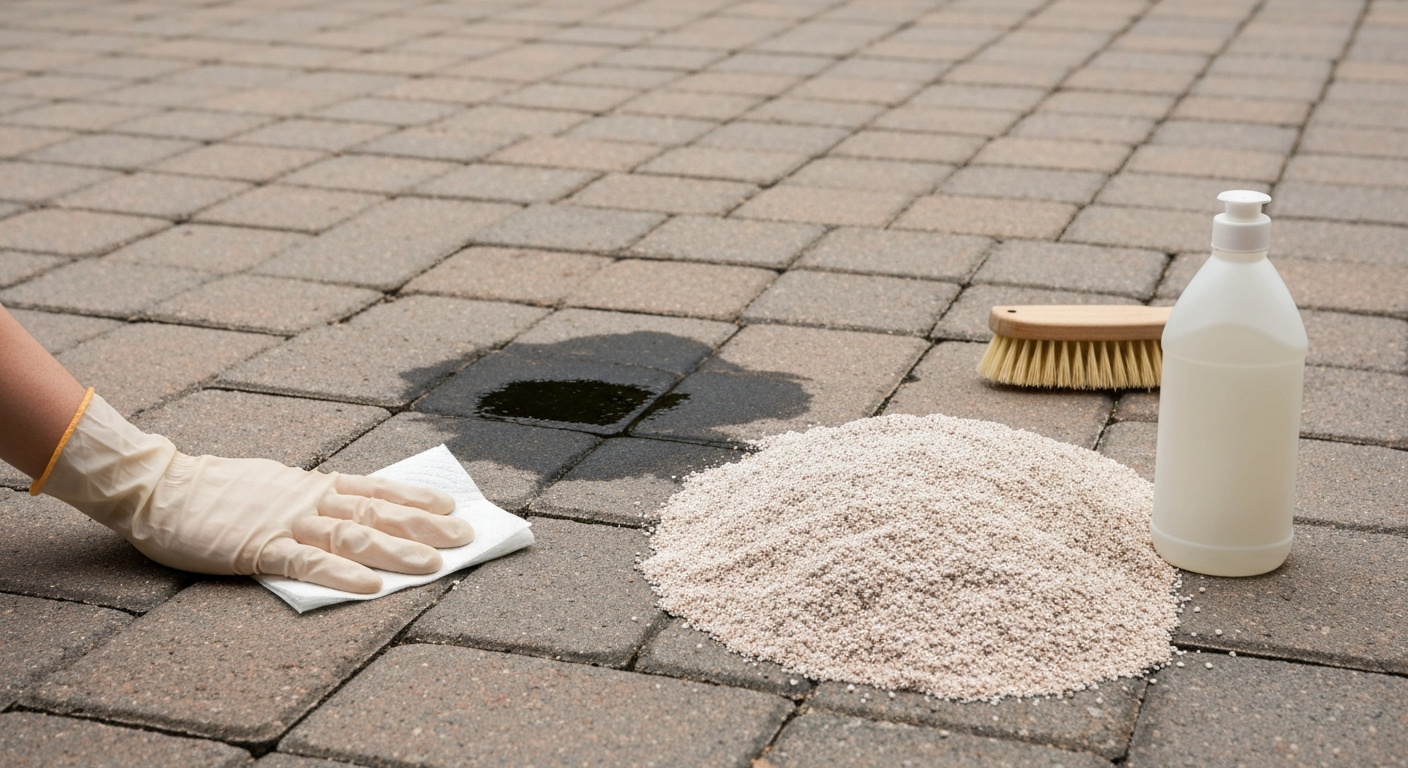
How to get oil out of patio pavers: fast spill fixes, stain removers, eco options, and sealing tips.
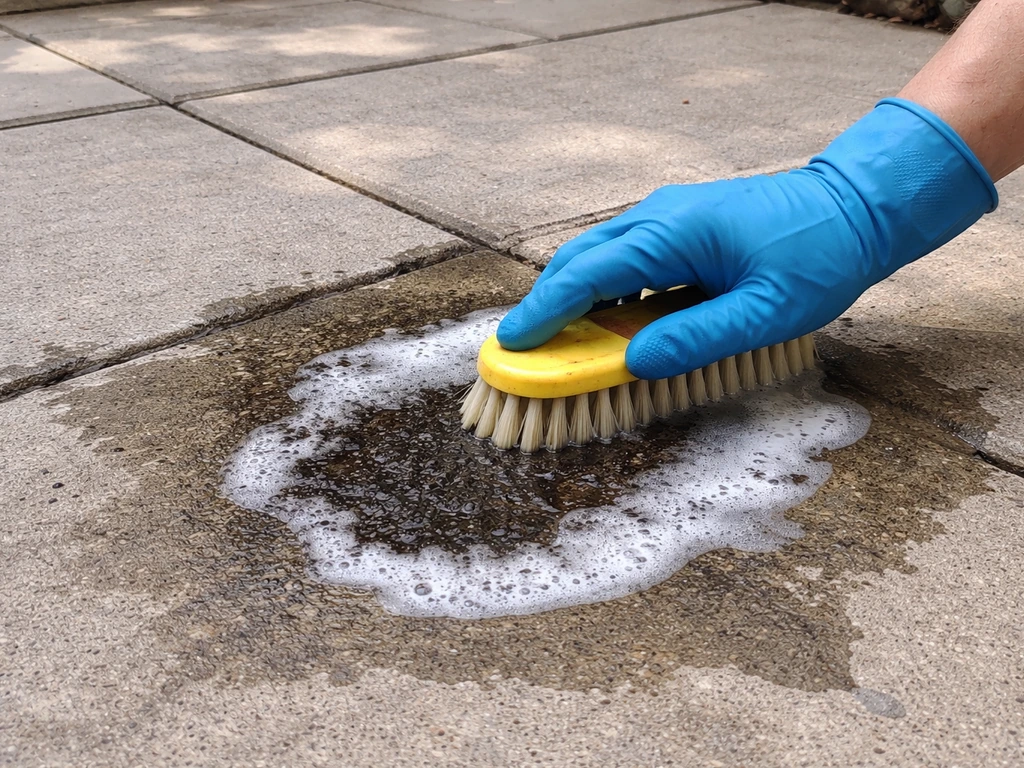
Step-by-step methods to remove oil stains from patio slabs, from fresh grease to set-in concrete, safely and effectively