You can remove moss from a patio today using a stiff brush and a diluted bleach solution (sodium hypochlorite), white vinegar, or a dedicated outdoor moss killer. Scrub the moss loose, apply your chosen cleaner, let it dwell for 10 to 20 minutes, then rinse thoroughly with clean water. For heavy buildups, a pressure washer speeds things up significantly. The right approach depends on your patio surface and how much moss you're dealing with, so read on to match the method to what you've got.
How to Remove Moss From a Patio: Step-by-Step Guide
Dylan Hale
29 Apr 2026
Quick diagnosis and safety before you start
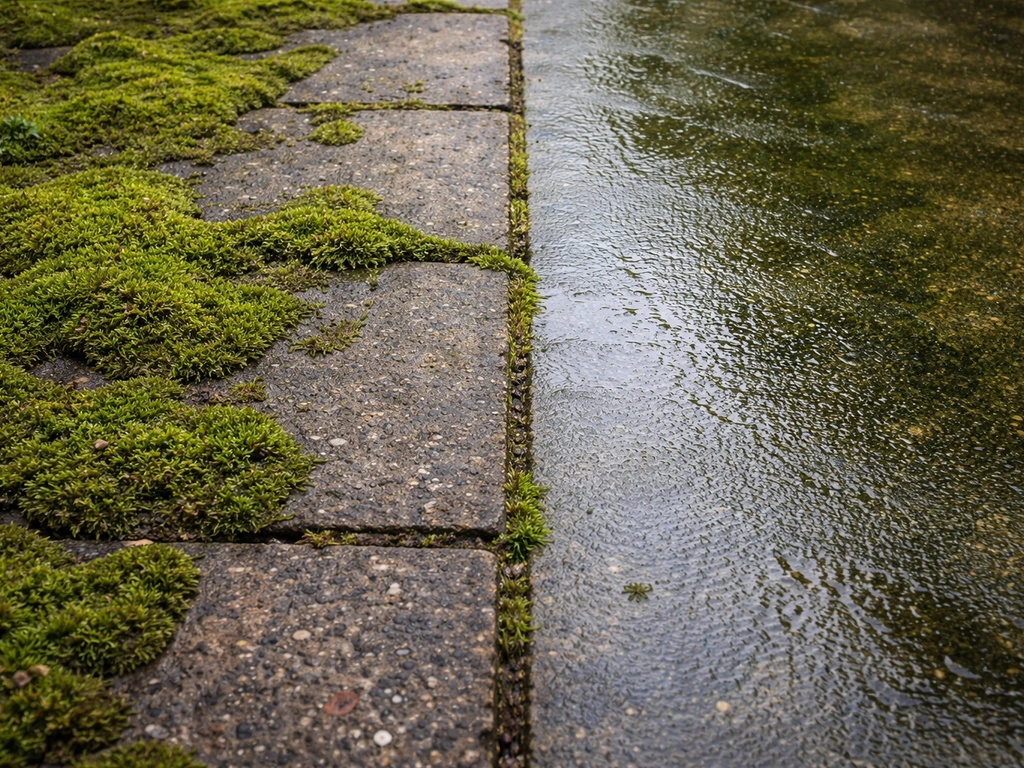
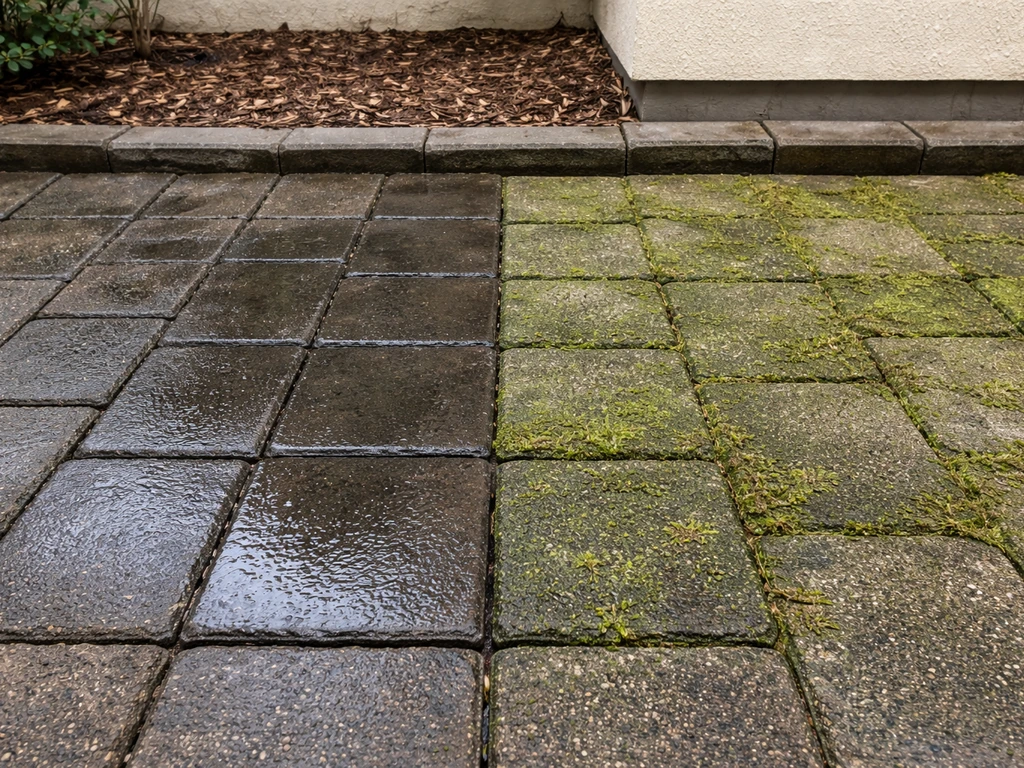
Before you grab a cleaner, take a minute to figure out what you're actually dealing with. Moss is that thick, spongy, dark-green carpet that holds moisture against your patio surface. Green algae is the thin, slimy film that makes paving dangerously slippery after rain. You'll often find both together, and the removal process is largely the same for each. The key difference is that algae spreads faster across smooth surfaces, while moss digs into grout lines, aggregate, and textured stone more aggressively.
A few safety points before you do anything else. If you're using any bleach-based product, wear rubber gloves, eye protection, and old clothes, and work in a ventilated area. Never mix bleach with ammonia, vinegar, or any other cleaner. Mixing bleach with an acid can release chlorine gas, which is genuinely dangerous. Work one product at a time, rinse tools between uses, and if you're spraying near garden beds, wet the surrounding plants with plain water first to dilute any overspray. Wet moss is extremely slippery, so wear non-slip footwear throughout.
Manual scrubbing vs. pressure washing: which one do you need?
For most homeowners, a stiff-bristle brush and a bucket of diluted cleaner will handle the job just fine. I've found that manual scrubbing gives you more control, especially around grout lines and furniture legs, and it won't damage softer stones or dislodge polymeric sand from your joints. It takes longer but it's the safer default if you're not sure how your surface will respond to high water pressure.
Pressure washing is faster and more satisfying for large concrete or paver patios, but there are real limits to know. Keep the nozzle at least 30 cm (about 12 inches) from the surface and use a fan tip rather than a pinpoint jet. Avoid high pressure on joints filled with polymeric sand, especially if the sand was installed in the last 30 days. Aggressive pressure washing can blow out the jointing material entirely, which creates exactly the kind of gaps where moss and weeds take hold next season. For natural stone and aggregate surfaces, stick to lower pressure settings or manual cleaning.
| Method | Best for | Time needed | Equipment |
|---|---|---|---|
| Manual scrubbing | All surfaces, tight spaces, grout lines | 30–60 min | Stiff brush, bucket, gloves |
| Pressure washing | Large concrete/paver areas, heavy buildup | 15–30 min | Pressure washer, fan nozzle |
| Spray-and-leave products | Maintenance, light algae, busy schedules | Minimal effort, results over days | Garden sprayer |
What to use to remove moss and green algae
You've got a few solid options depending on your preference for natural versus chemical approaches. Here's what actually works and when to use each one.
Natural options
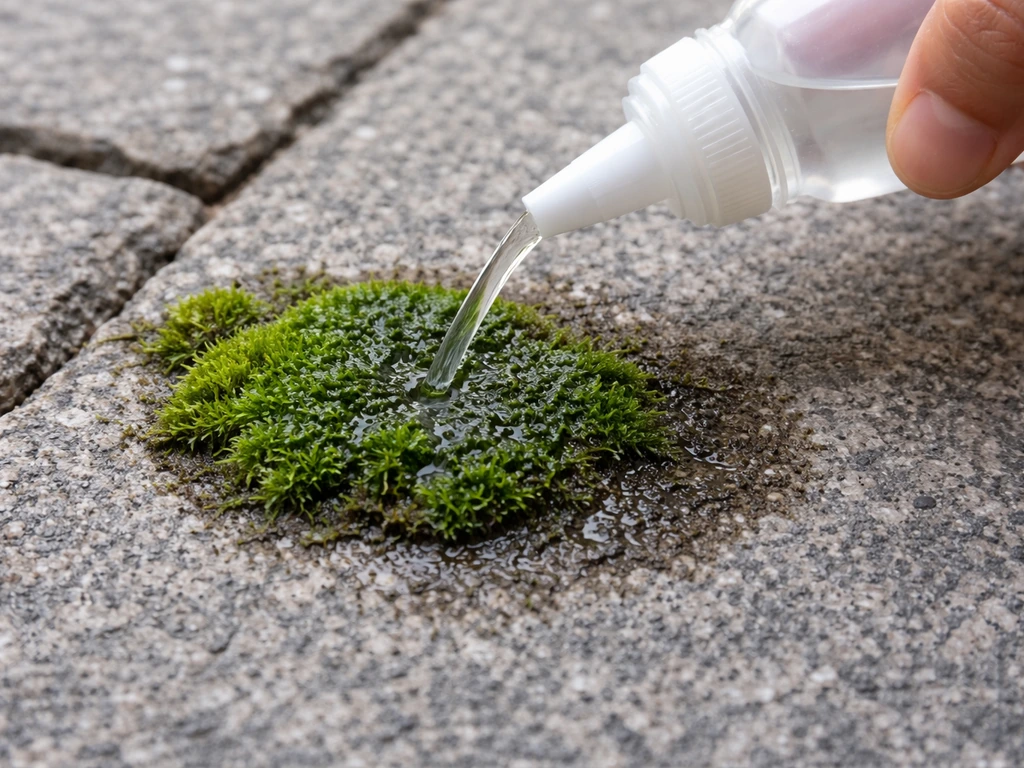
White vinegar (undiluted or mixed 50/50 with water) is the most accessible natural option. It works on light to moderate moss because its acidity breaks down the plant structure. Spray it on, wait 15 to 30 minutes, then scrub and rinse. It's slower than bleach and you may need two applications for thick patches, but it's a reasonable choice if you have pets or children using the patio and want to limit chemical exposure. One honest caveat: don't use undiluted vinegar repeatedly on natural stone or grout, as the acid can etch softer materials over time.
Baking soda is another gentle option for very light moss. Sprinkle it dry onto damp moss, let it sit for 20 to 30 minutes, scrub, and rinse. It's less effective on heavy growth but won't harm any patio surface.
Chemical options
Sodium hypochlorite (bleach) is the most effective and widely available chemical for patio moss. For light algae, dilute to roughly a 1 to 2 percent solution (about 1 part bleach to 9 parts water). For heavy moss, use a stronger mix closer to 5 to 6 percent (1 part bleach to 2 or 3 parts water). Apply with a brush or garden sprayer, saturate the moss well, let it dwell for 10 to 20 minutes, then scrub and rinse thoroughly. Rinsing well matters: residual bleach can discolor adjacent materials or disperse salts into porous concrete, causing efflorescence.
Dedicated outdoor moss and algae killers, like 30 SECONDS Outdoor Cleaner or Safer Brand Moss and Algae Killer, are pre-formulated and convenient. They typically contain sodium hypochlorite and are designed to be sprayed on and left for around 10 minutes before scrubbing and rinsing. Some spray-and-leave products, like Wet and Forget, work differently: you spray once and let weathering do the work over several days or weeks. These are excellent for annual maintenance but not the right choice if you need a clean patio this weekend.
A word on muriatic acid: it is sometimes used on concrete to strip stubborn staining, but I'd steer most homeowners away from it for moss removal specifically. It's highly corrosive, requires serious protective equipment, and can cause permanent surface damage if used incorrectly. Bleach-based cleaners will handle virtually every moss situation without those risks. If you're dealing with deep mineral staining underneath old moss on raw concrete, that's the one scenario where muriatic acid might come up, but treat that as a separate problem and follow strict acid-safety protocols if you go that route.
How to remove moss by patio surface
Concrete and cement patios
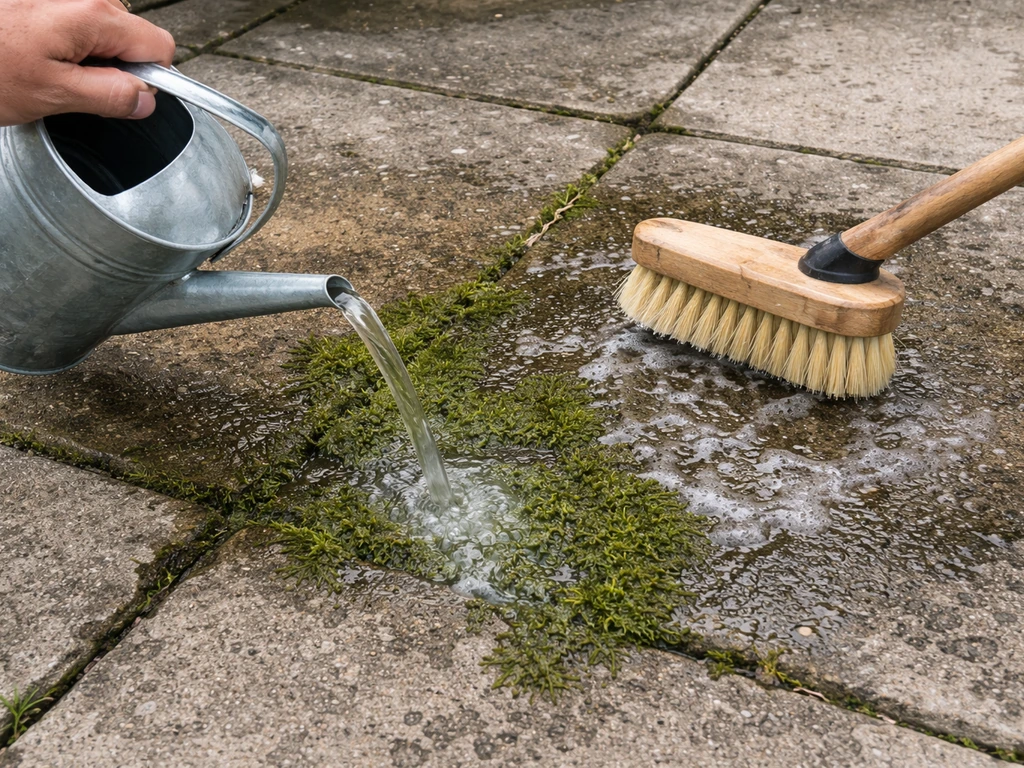
Concrete is the most forgiving surface to clean. A diluted sodium hypochlorite solution works very well here. Saturate the moss with a stiff bristle brush, let it dwell for 10 to 20 minutes, scrub hard, and rinse with a hose or pressure washer. Concrete is porous, so rinse thoroughly to flush the chemical out rather than letting it sit and potentially draw salts to the surface. For really stubborn embedded moss stains on raw concrete, a second application usually does the job.
Patio slabs (paving slabs and natural stone)
Paving slabs and natural stone need a little more care. Use a diluted bleach solution or a purpose-made stone-safe cleaner. Avoid full-strength vinegar on limestone, travertine, or sandstone because the acid will etch the surface. Apply your cleaner, dwell for 10 minutes, then use a stiff brush rather than a pressure washer at full power. After rinsing, check whether the stone looks dull or discolored: some porous stones benefit from a sealer after cleaning to close the pores and reduce future moss foothold.
Brick and paver patios
Bricks and pavers respond well to a mild bleach solution or a dedicated outdoor cleaner. The main thing to watch here is the joints. If you have polymeric sand in the joints, keep pressure washer intensity low and direct it along the surface rather than straight into the joints. Blasting the joints loose creates gaps that fill with organic debris, and then you're back to square one with moss growing season after season. Moss in grout lines specifically is worth tackling separately for the best result.
Aggregate patios
Exposed aggregate surfaces have lots of nooks and crevices where moss embeds itself deeply. Manual scrubbing with a stiff brush is more effective here than a pressure washer, because the jet tends to bounce off the uneven surface. Use a sodium hypochlorite solution at around 5 percent for heavy buildup, work the brush into the texture, dwell for 15 minutes, then rinse well. You may need two passes. Because aggregate is very porous, be especially thorough with the rinse to prevent residue buildup.
Patio furniture
For metal, plastic, or resin furniture with green moss or algae, a diluted bleach solution (1 part bleach to 10 parts water) applied with a soft brush or sponge works well. Rinse thoroughly to avoid bleach sitting on metal joints and causing rust. For wooden furniture, use a vinegar-based cleaner or a specialized wood outdoor cleaner rather than bleach, which can dry out and discolor the wood. Scrub along the grain, rinse well, and allow to dry fully before storing or stacking.
How to stop moss from growing back
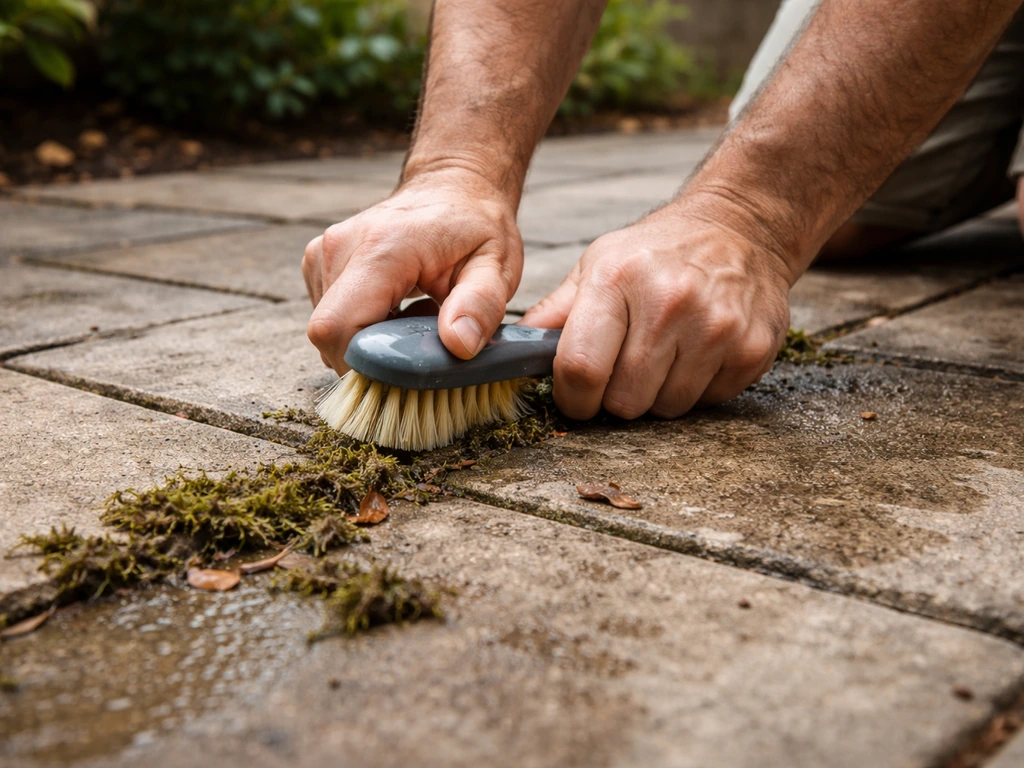
Moss doesn't grow on a patio by chance. It shows up where there's consistent moisture, limited sunlight, and organic debris like fallen leaves or dirt settling into cracks. If you only clean the moss without addressing those conditions, it'll be back within a season.
- Trim back overhanging trees and shrubs to let more sunlight and airflow reach the patio surface. Moss hates direct sun and a drying breeze.
- Clear debris regularly: leaves, soil, and organic matter sitting in joints or on the surface create the perfect moss starter kit. A quick sweep after storms makes a real difference.
- Check drainage: if water pools on any section of the patio after rain, that's where moss will always return first. Re-grading or improving drainage channels resolves this properly.
- After cleaning, apply a penetrating sealer to porous concrete, stone, or pavers. Sealed surfaces dry faster and give moss less to grip onto.
- Use a preventive spray-and-leave product like Wet and Forget once a year in early spring before moss takes hold.
- Keep gutters and downspouts clear so they don't discharge water directly onto the patio surface.
- If moss keeps returning in jointed surfaces, check that the jointing compound is still intact. Deteriorated joints trap organic debris and moisture, and that's where regrowth starts.
The GSA guidance on moss treatment notes that a proper sodium hypochlorite treatment will keep the surface free of new growth for some time, but 'some time' only lasts if you back it up with the physical changes above. Chemical treatment alone is a temporary fix.
How to avoid damaging your patio or leaving slippery residue
The biggest mistakes I see people make are using too strong a chemical solution, not rinsing enough, and underestimating how slippery a wet patio is during the whole process. Here's how to avoid each of those problems.
- Always start with the more diluted end of any bleach solution. You can always apply a second coat if needed, but you can't undo etching or discoloration on natural stone.
- Rinse as soon as the dwell time is up. Letting bleach or acid-based cleaners sit longer than recommended can pull salts to the surface of concrete (efflorescence) or stain lighter-colored stone.
- Never mix bleach with vinegar, ammonia, or any other cleaner. Mixing bleach with an acid releases chlorine gas. Use one product, rinse thoroughly, then switch if needed.
- Wet surfaces are slippery even before you add any cleaner. Wear non-slip footwear the entire time, and if others are nearby, keep them off the patio until it's been rinsed and has started to dry.
- After pressure washing or chemical cleaning, check grout lines and polymeric sand joints for any displacement. Top up any damaged jointing material once the surface is fully dry to prevent weeds and moss from colonizing the gaps.
- If you're cleaning near garden beds or a lawn, rinse surrounding vegetation with plain water before and after applying any chemical cleaner to dilute any runoff.
- Once the patio is clean and fully dry (allow at least 24 to 48 hours after cleaning), apply a penetrating sealer appropriate to your surface. This closes pores, reduces moisture absorption, and makes your next cleaning job much easier.
If your patio has fresh polymeric sand in the joints installed within the last 30 days, hold off on any pressure washing and stick to gentle hand-scrubbing with a soft brush until the jointing has fully cured. Rushing this damages the jointing integrity and creates exactly the drainage and debris traps that invite moss back.
Once you've cleared the surface moss, it's also worth looking closely at the grout and joints, since moss embeds itself there most stubbornly and is often the original source of spread across the rest of the patio. This brush-in approach also helps you get into patio grout lines without blasting or missing stubborn spots grout and joints. If you need help with grout specifically, follow the steps for <a data-article-id="220B1438-17AC-4CB9-B93F-AD177D4AA713"><a data-article-id="3FF57916-5E4F-4C3E-A1BE-94338A38575F"><a data-article-id="3FF57916-5E4F-4C3E-A1BE-94338A38575F">how to remove patio grout</a></a></a> safely and effectively. If you need help with grout specifically, follow the steps for how to clean patio grout safely and effectively. Addressing the moss in grout lines properly is its own targeted job that makes the overall result last much longer. After the moss is cleared, let the grout dry fully before deciding whether it needs re-sealing or repair, especially on a patio exposed to weather how to dry grout a patio.
FAQ
Can I remove moss faster if I apply the cleaner and start scrubbing right away?
Yes, but do not start scrubbing until the cleaner has had its full dwell time (about 10 to 20 minutes for most bleach-based options, longer for weathering products). If you scrub immediately, you can spread the algae or moss fragments across the surface instead of killing and lifting them.
What happens if I do not rinse well after using bleach or outdoor moss killer?
Avoid it. Bleach solutions can leave residue that leads to discoloration and, on porous concrete, mineral salt buildup (efflorescence). If you see white haze after rinsing dries, do a second thorough rinse and consider a maintenance treatment later rather than increasing chemical strength.
Can I pressure wash my patio right after installing polymeric sand joints?
For most patios, you want the jointing material to be fully cured first, if polymeric sand was installed recently (the article notes about 30 days). If joints are already present long-term, use lower pressure, keep the nozzle angled to avoid forcing water into seams, and focus on hand-brushing the moss out of grout lines.
Is it okay to use vinegar after bleach (or bleach after vinegar) if moss still remains?
For typical outdoor cleaners, do not use vinegar and bleach in the same day on the same area. Work one product at a time, rinse thoroughly between steps, and keep any follow-up cleaning in the same “family” (either acid-based or bleach-based) unless you are confident everything has been neutralized by a full rinse and dry.
How do I rinse properly on porous surfaces like raw concrete or exposed aggregate?
On porous concrete and exposed aggregate, plan for a heavier rinse. Target the water flow to flush chemicals out of pores rather than just wetting the surface, then let it dry fully before judging results or applying a sealer.
How can I protect nearby plants and garden beds while removing patio moss?
Yes. Small plants near the patio can be harmed by overspray or runoff. Wet surrounding plants and the soil lightly with plain water before spraying, then avoid drift by using a brush-on application where possible.
What if the moss is gone but my patio is still slippery after cleaning?
Watch for persistent slippery algae on smooth slabs even after moss is gone, that often means the growth is actually algae-based. In that case, prioritize the cleaning method that targets algae film (dwell, scrub, rinse), and ensure you are not only removing the visible green patches.
Why does moss come back quickly even after I cleaned it thoroughly?
Treat it like two problems: first remove existing growth, then break the moisture and debris cycle. Rake out leaves, improve drainage, increase sunlight where possible, and consider spot repairs in grout lines so water is not pooling in the same spots.
Can I use vinegar on limestone or travertine to remove moss?
If you have natural stone such as limestone, travertine, or sandstone, skip undiluted vinegar and use a stone-safe cleaner or diluted bleach at a conservative strength. After rinsing, check for dullness or color change, and test in an inconspicuous spot first.
Should I reseal grout or reapply a sealer after removing patio moss?
After the surface dries, reassess. If grout looks washed out, pitted, or you see gaps, you may need repair before sealing. If it looks intact but is staining, sealing can help reduce future foothold, but seal only when fully dry to avoid trapping moisture.
If moss stains reappear or black spots return after a few weeks, what should I do?
Yes, and it can be a sign you disturbed embedded growth. Give it a second targeted pass with the same method, focusing on grout lines and edges first, then scrub and rinse again. If regrowth happens within a short window, address moisture sources and debris rather than repeatedly increasing chemical strength.
Next Articles
How to Remove Patio Grout Without Damaging Tiles
Step-by-step removal of patio grout, old and hard, using hand and power tools safely without damaging tiles. Includes af
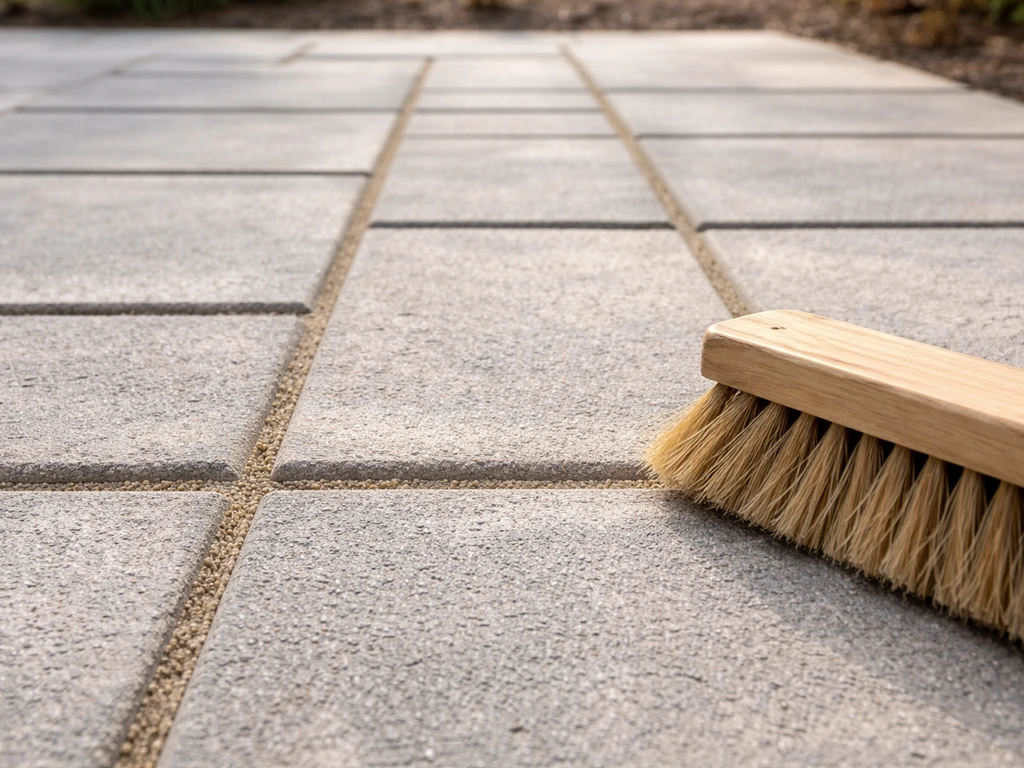
How to Dry Grout a Patio: Step-by-Step Guide
Step-by-step guide to dry grout patio joints: prep, grout choice, application, drying time, fixes for gaps, haze, and wa
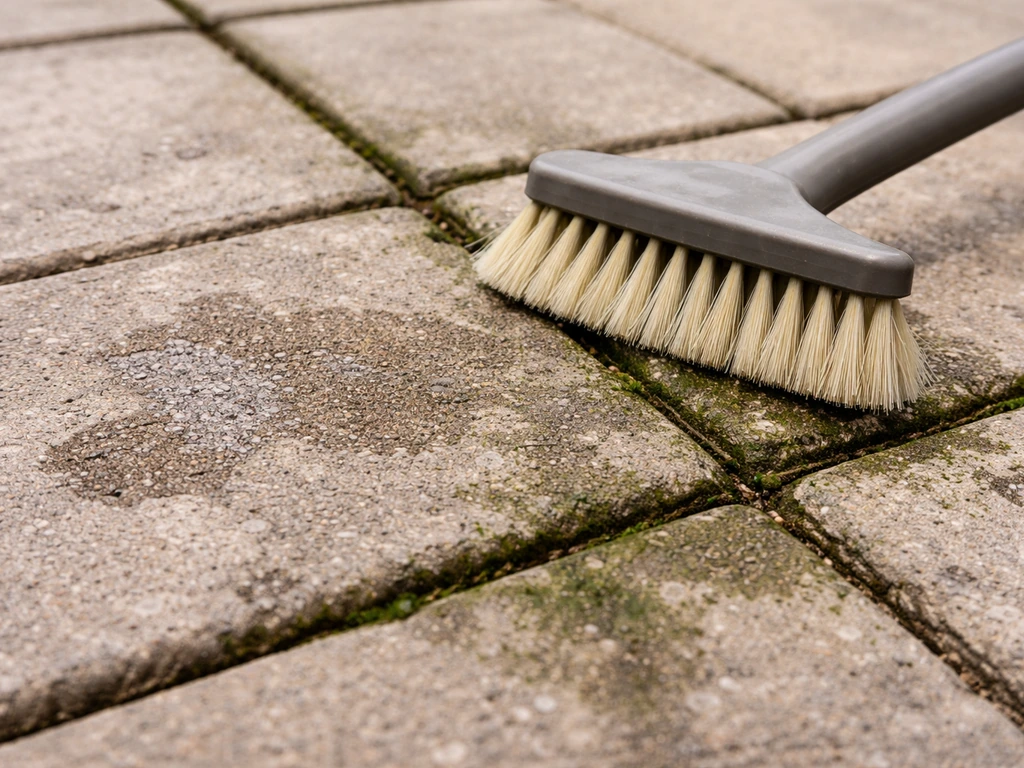
How to Use a Brush in Patio Grout: Step-by-Step
Step-by-step guide to clean patio grout with the right brush, technique, solutions, and safe rinsing to remove mold, alg