For a fresh grease stain on patio pavers, blot up the excess, cover it with an absorbent powder like baking soda or cat litter, let it sit for 20–30 minutes, then scrub with dish soap and a stiff brush before rinsing. For older, set-in stains, you'll need a dedicated degreaser or an enzyme-based cleaner, more dwell time, and possibly a pressure washer. The exact approach depends on what your pavers are made of, because what works perfectly on concrete can permanently damage travertine or limestone.
How to Remove Grease Stains from Patio Pavers
Dylan Hale
6 Jun 2026
Know your paver material before you pour anything on it
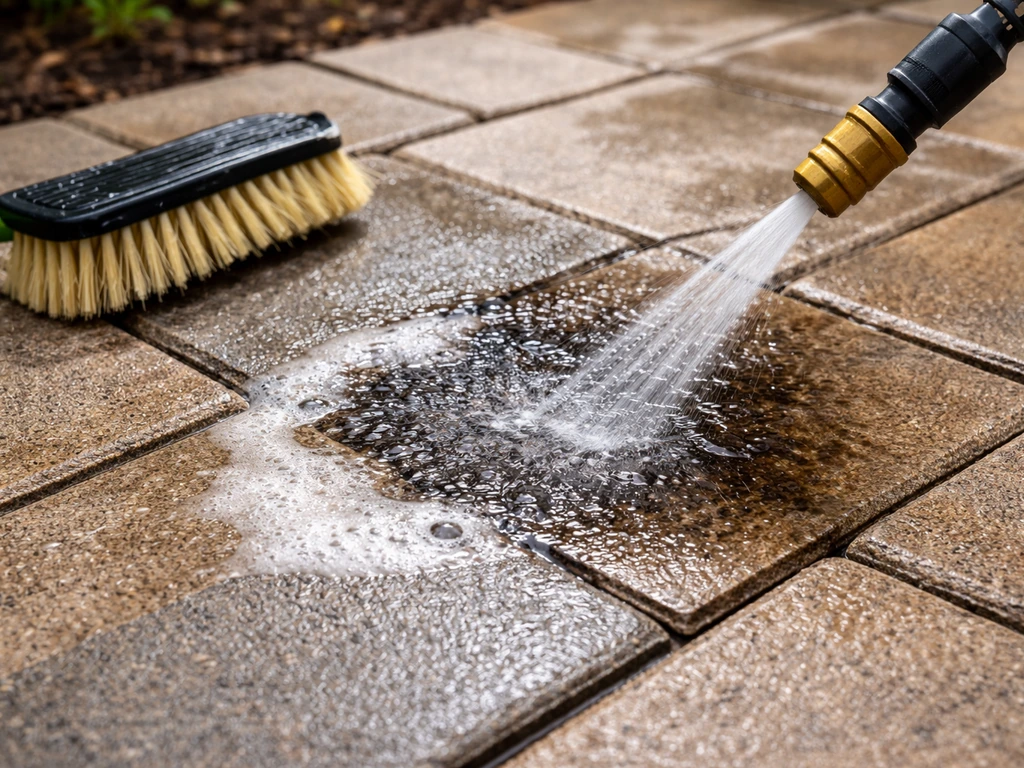
This step matters more than most people realize. I've seen homeowners ruin the surface of their pavers by reaching for the wrong cleaner before checking what they're actually working with. The wrong acid-based product on a limestone or travertine paver won't just fail to clean it, it can etch, dissolve, or permanently discolor the stone.
Here's a quick rundown of the most common patio paver types and their key cleaning considerations:
| Paver Type | Acid-Safe? | Key Consideration |
|---|---|---|
| Concrete pavers | Yes (diluted) | Most forgiving; handles degreasers and light acid rinses well |
| Brick | Use with caution | Older or soft brick can be damaged by strong acids; test first |
| Natural sandstone / Indian sandstone | No | Acid etches the surface; stick to pH-neutral or alkaline cleaners |
| Limestone | Absolutely not | Hydrochloric acid dissolves calcite — even brief contact causes damage |
| Travertine / Marble | Absolutely not | Irreversible discoloration and surface loss from acid contact |
| Granite / Slate | Generally yes | Dense and acid-tolerant, but always patch-test first |
| Porcelain / Ceramic | Yes | Very non-porous; stains usually sit on the surface and clean easily |
If you're not sure what you have, look at the paver edges or check any leftover materials from installation. Concrete pavers have a consistent, slightly rough texture and feel heavy and uniform. Natural stone has variation in color and veining. If the pavers are pale, cream, or beige with visible pits and holes, treat them as travertine or limestone and avoid anything acidic entirely. This distinction is especially important if you're also dealing with grease on stone patio surfaces, which require a noticeably gentler approach than concrete. To get grease off a stone patio safely, start with gentle absorbent steps and avoid anything acidic that could harm limestone or travertine grease on stone patio surfaces.
Prep work before you start cleaning
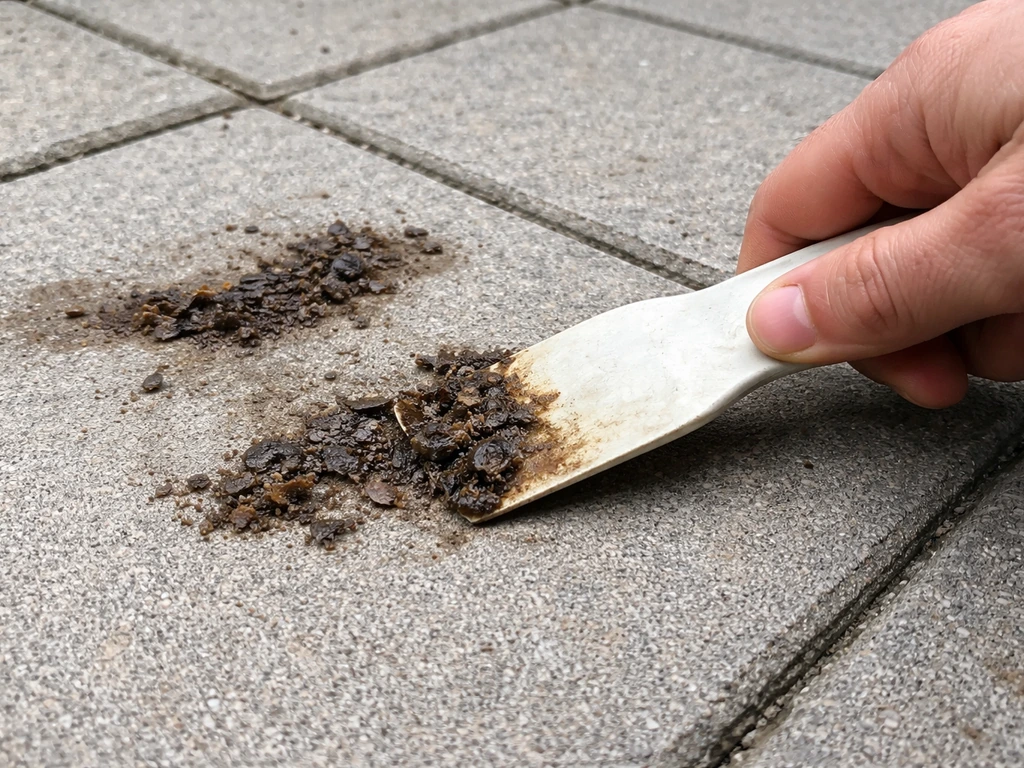
Don't pour cleaner directly onto a fresh grease stain. You'll push the grease deeper into the paver's pores and spread it wider. Take two minutes to do this first:
- Dry-scrape any solid grease or food residue with a plastic scraper or an old spatula. Avoid metal scrapers on natural stone — they scratch.
- Blot (don't wipe) liquid grease with paper towels or rags, pressing down firmly and lifting straight up. Wiping spreads the stain.
- Cover the stain immediately with an absorbent material: baking soda, cornstarch, cat litter, or sawdust all work. Pour a generous layer — at least 1/4 inch thick — over the entire stained area.
- Let the absorbent sit for at least 20–30 minutes. For a large or deep spill, leave it for a few hours or overnight.
- Sweep up the absorbent material and dispose of it.
- Wet down any nearby plants, grass edges, or garden beds before applying any cleaner. This dilutes runoff and reduces chemical absorption into soil.
- If you're using a stronger degreaser or any chemical cleaner, drape a plastic sheet or wet rags over the edges of nearby paving or borders you don't want splashed.
Manual cleaning methods that work for most grease stains
For fresh stains or light grease, you often don't need anything beyond what's already in your kitchen or garage. I'll be honest, dish soap is underrated for this job. It's formulated to cut through cooking grease and it's safe on virtually every paver material.
Dish soap and hot water
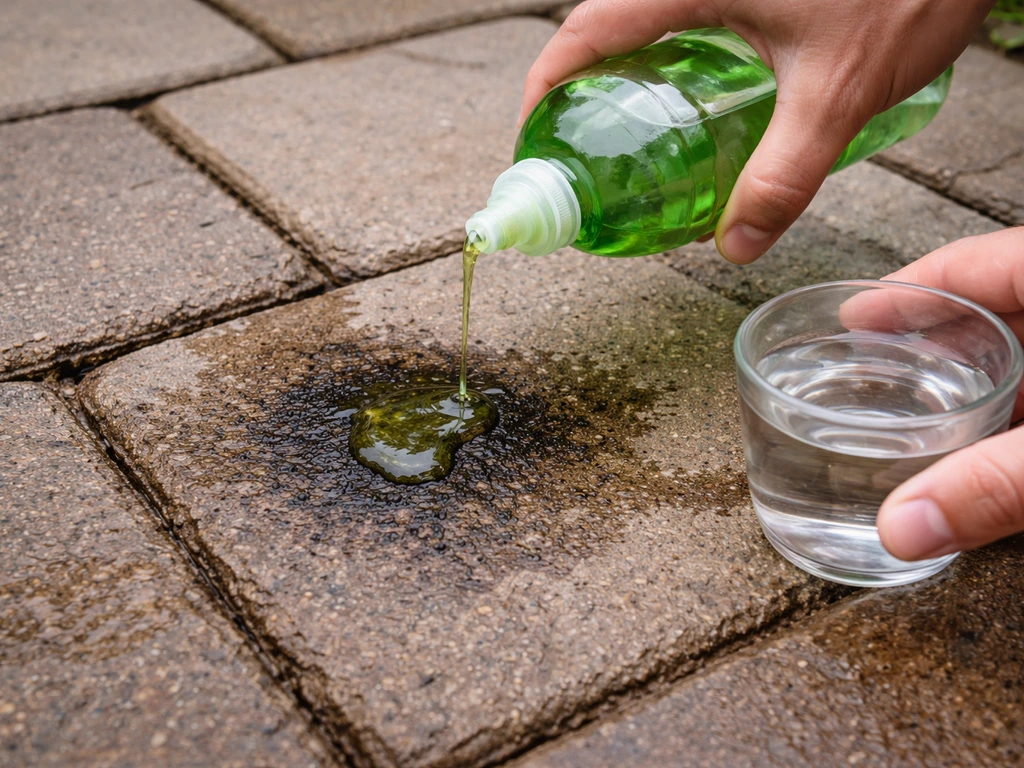
- Squeeze a generous amount of dish soap (Dawn or any grease-cutting formula) directly onto the damp stain.
- Add a small amount of hot water — not boiling, just hot from the tap — to help activate the soap.
- Scrub with a stiff-bristle brush in a circular motion for 2–3 minutes. Use a deck brush for larger areas.
- Let the soapy lather sit on the stain for 5–10 minutes.
- Scrub again, then rinse thoroughly with clean water.
- Repeat if needed. For a fresh stain caught early, one or two rounds usually does it.
Absorbent powder scrub
If you have baking soda or a commercial powdered absorbent on hand, you can combine the blotting and scrubbing steps. After the initial absorption phase, dampen the powder slightly so it forms a paste, then scrub it into the stain with a brush. The mild abrasive action of baking soda helps lift grease from textured paver surfaces without any scratching risk. Rinse well afterward.
Household degreaser sprays
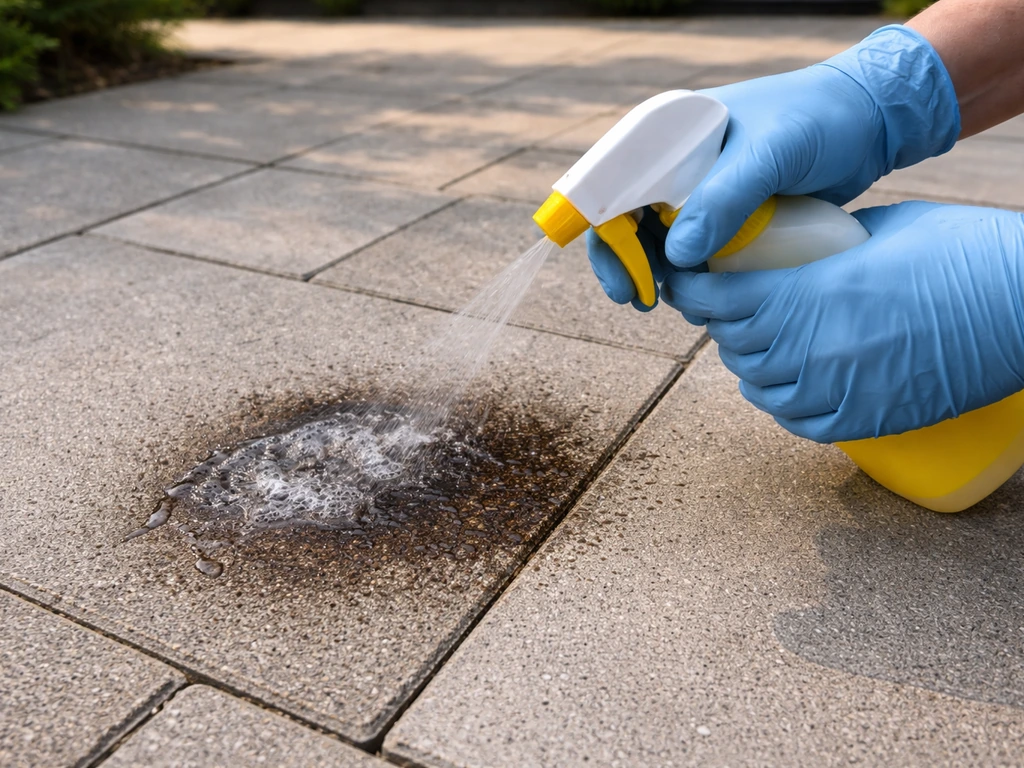
Products like Simple Green, Purple Power, or a generic citrus degreaser work well on concrete and brick pavers. Spray the degreaser directly onto the stain, let it dwell for 5–15 minutes (check the product label), then scrub and rinse. Always dilute concentrate formulas according to instructions, using them undiluted won't speed up the clean and can leave a residue. On natural stone, check that the product is pH-neutral before using it.
Stubborn or old grease stains need more firepower
If the grease has had days, weeks, or months to penetrate into the paver, dish soap alone won't cut it. The grease has migrated into the pores of the paver surface and you need something that can break it down at a deeper level.
Dedicated paver degreasers
Techniseal makes two products worth knowing about. Their Dirt & Grease Cleaner for Pavers is a good general-purpose option that blank" rel="noopener noreferrer">handles barbecue grease and motor oil on concrete pavers, with different application instructions depending on whether your pavers are sealed or bare. For seriously embedded petroleum-based stains (think old oil drips or heavy cooking grease that soaked in over a whole season), their Professional-Grade Oil & Grease Remover is specifically formulated for older, stubborn stains on concrete pavers and slabs. These are available at paver suppliers and some home improvement stores.
Application is usually straightforward: apply the product to a dry or slightly damp surface, let it dwell for the time specified on the label (often 10–30 minutes for stubborn stains), agitate with a stiff brush, then rinse well. On sealed pavers, some degreasers need a shorter dwell time to avoid affecting the sealer, always check the product instructions.
Enzyme-based cleaners
Enzymatic degreasers work differently from chemical ones, they use biological enzymes that literally digest organic material including fats and oils. They take longer (sometimes 20–30 minutes or more) but they're gentler on the environment, safer around pets, and less likely to cause color change on sensitive surfaces. Brands like Zout, Biokleen, or enzyme-based concrete degreasers you'll find at hardware stores all fall into this category. Apply generously, keep the surface damp so the enzymes stay active, scrub, and rinse. This takes longer but is the better choice if you have pets or kids using the patio, or if runoff might reach a garden or water feature.
A note on acids and what to avoid on certain stones
Some cleaning guides recommend muriatic acid or other acidic cleaners for concrete paver stains. On concrete pavers, diluted acid can work, but for grease specifically, alkaline degreasers actually perform better since grease is broken down by alkalis, not acids. More importantly: if your pavers are limestone, travertine, marble, or Indian sandstone, blank" rel="noopener noreferrer">keep acids away entirely. Hydrochloric acid dissolves the calcite in limestone on contact, and even brief exposure can permanently etch or discolor travertine and marble. This isn't a recoverable mistake, it's an irreversible surface change.
Pressure washing vs. scrubbing by hand
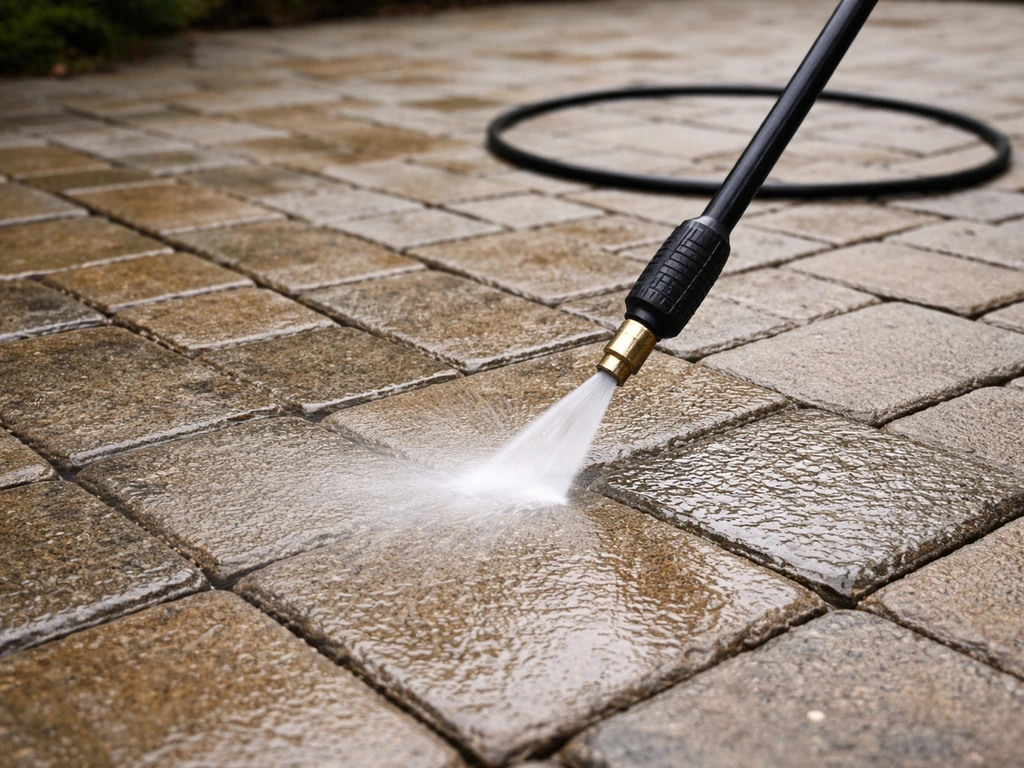
A pressure washer can do in 10 minutes what takes 30 minutes of hand scrubbing, but it can also damage your pavers if you use it wrong. Here's how to use one safely and when to stick with hand-scrubbing.
Using a pressure washer on patio pavers
- Use a pressure setting between 1,200 and 1,800 PSI for most concrete or brick pavers. Going above 2,000 PSI risks eroding the joint sand between pavers and can chip or pit softer materials.
- Use a 25-degree (green) or 40-degree (white) fan tip. Never use a zero-degree (red) tip on pavers — it concentrates pressure to a destructive point.
- Hold the wand at least 12 inches from the paver surface, and keep it moving. Don't linger over one spot.
- Apply your degreaser or dish soap first, let it dwell, then use the pressure washer to rinse and agitate — this combination is far more effective than water pressure alone.
- Avoid directing high-pressure water directly at paver joints. Spray parallel to or at a low angle across the surface rather than pointing straight down into the gaps.
- After pressure washing, check the joints. If sand has washed out, reapply polymeric joint sand once the pavers are dry.
When to skip the pressure washer
On travertine, marble, or soft natural stone pavers, hand-scrubbing is the safer choice. If you decide to use one, follow the same caution in pressure washing vs. scrubbing by hand so you do not damage your slabs pressure washer. High-pressure water can widen the natural pits and holes in travertine and dislodge grout fill. It can also work filler out of softer stone surfaces. If you don't have access to a pressure washer, a stiff deck brush, a bucket of hot soapy water, and 15 minutes of elbow grease will get most grease stains out without any equipment rental. Renters, in particular, will find that this manual approach handles the vast majority of grease stains completely.
Rinsing, drying, and keeping grease stains from coming back
Rinsing is more important than most people think. Leaving degreaser or soap residue on pavers attracts dirt and can create a slippery film. Rinse the cleaned area thoroughly with a garden hose on full blast, working the water from the cleaned area outward so you push residue away from the pavers rather than back into them. Sealing your patio can also make it easier to wipe up grease later, so you are not repeating deep cleaning every time Keeping grease stains from coming back. Rinse at least twice if you used a commercial degreaser.
Let the pavers dry completely before evaluating the result, pavers look darker when wet, and what looks like a remaining stain often disappears once dry. Give it at least a few hours in warm weather, or up to 24 hours on a cooler or overcast day. If a faint shadow remains after drying, repeat the cleaning process rather than applying more product on a wet surface.
Sealing pavers to prevent future grease penetration
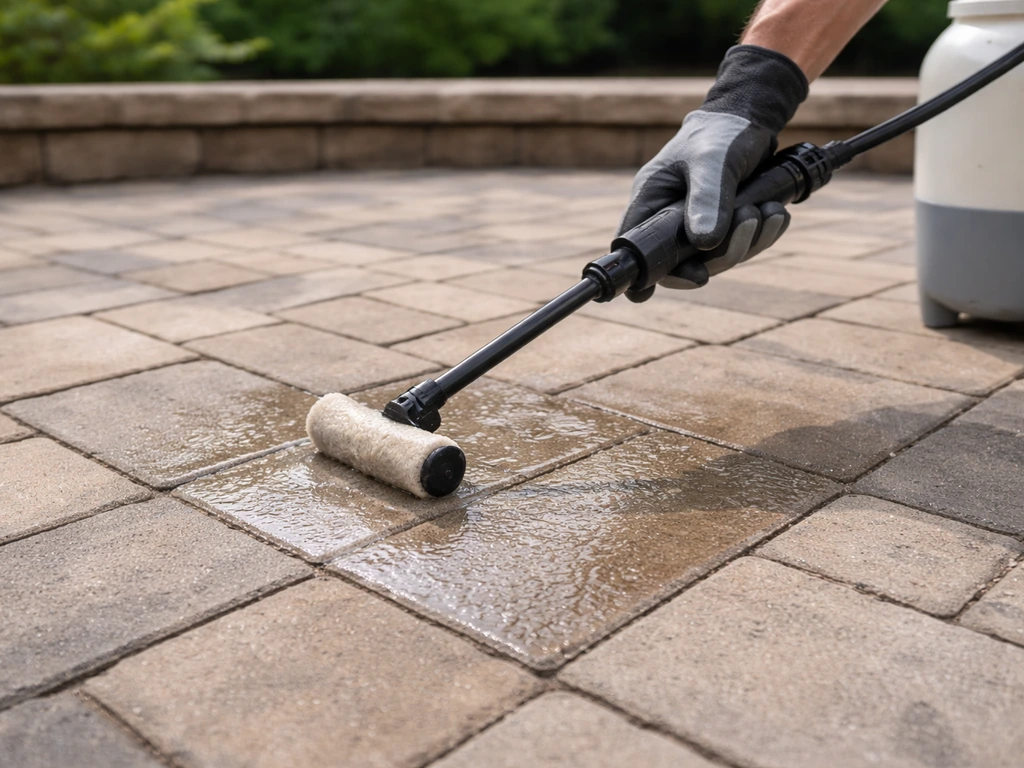
If you're dealing with grease stains near a grill or outdoor kitchen, sealing your pavers is one of the most practical things you can do for long-term maintenance. A penetrating paver sealer (also called an impregnating sealer) fills the microscopic pores in the paver surface, making it much harder for grease to penetrate. Future spills sit on top of the sealer and can be wiped up before they stain. Look for a sealer rated for your specific paver type, concrete paver sealers and natural stone sealers are different products. Apply sealer only to clean, dry pavers, and reapply every 2–4 years depending on foot traffic and weather exposure.
As a quick maintenance habit: keep a bag of cat litter or baking soda near the grill. When you drip grease, cover it immediately. That five-second response prevents 90% of the deep staining that makes cleaning a project.
Safety, what to avoid, and protecting what's around you
Personal protection
Always wear rubber gloves when working with degreasers, especially commercial or industrial-strength formulas. Add safety glasses if you're scrubbing vigorously or pressure washing, since splashback is real. If you're using a concentrated liquid degreaser, work in a ventilated area and avoid breathing the fumes directly. This applies especially to solvent-based degreasers.
Always do a patch test
Before applying any new product to the full stain, test it in a small, inconspicuous corner of your paving. Wait the full dwell time, rinse, let it dry, and check for color change, surface etching, or residue. This takes five minutes and can save you from permanently altering the appearance of your entire patio. This is especially important on any natural stone, colored concrete, or brick pavers where surface finishes vary widely.
Chemical compatibility and what not to mix
- Never mix bleach with any ammonia-based cleaner or acidic cleaner — the reaction produces toxic chloramine gas.
- Don't apply acid cleaners over alkaline degreasers without rinsing thoroughly in between — the neutralization reaction can bubble up and force material deeper into pores.
- Avoid using the same brush you used with an acid-based cleaner on a limestone or travertine surface without washing it first — residue transfer can cause spotting.
- Don't use petroleum-based solvents (like mineral spirits or acetone) on pavers near open drains that connect to storm systems — they're environmental hazards and may be prohibited by local codes.
Environmental and runoff considerations
Most patio cleaning runoff flows to storm drains, which in many areas connect directly to waterways without treatment. Strong chemical degreasers and solvents in that runoff are genuinely harmful. Where you have the option, choose enzyme-based or biodegradable degreasers, especially for large cleaning jobs. Wet down surrounding soil and plants before you start, and direct rinse water toward a lawn or garden bed where the ground will filter it naturally, rather than letting it run directly to a drain. It's a small choice with a real difference, especially if you're cleaning near a rain garden or natural drainage area.
FAQ
Can I use bleach to remove grease stains from patio pavers?
Avoid bleach. It does not reliably break down petroleum oils, and it can discolor masonry or leave an uneven, chalky film, especially on natural stone or colored concrete. Stick to absorbent powders, dish soap, pH-neutral cleaners, or an alkaline or enzyme-based degreaser.
What if the stain is from motor oil instead of cooking grease?
Motor oil usually needs a stronger oil-and-grease remover than dish soap. Use a product labeled for oil and grease on pavers, apply with a dwell time (often 10 to 30 minutes), scrub with a stiff brush, then rinse thoroughly. If the pavers are sealed, check that the cleaner is compatible with sealed surfaces.
How do I tell if I should stop scrubbing and use a degreaser?
If absorbent steps and dish soap agitation stop the stain from lifting after several rounds, or the stain has been there for days or longer, it has likely migrated into pores. At that point, switch to an alkaline degreaser for concrete/brick or an enzyme degreaser for a gentler approach, rather than increasing soap and scrubbing force.
Will grease stains on sealed pavers lift faster than on unsealed pavers?
Often yes. Sealer helps keep fresh spills from penetrating, so you can usually remove the stain with absorbent steps and dish soap or a mild degreaser. If oil has already seeped past the sealer layer or the sealer is failing, you may still need a dedicated oil remover.
Is it safe to use a concrete degreaser on colored or stamped concrete?
Not automatically. Colored and stamped concrete finishes can fade or develop patchy discoloration if the cleaner is harsh or leaves residue. Test in a small corner first, confirm the product is meant for your finish type, and make sure you rinse multiple times after dwell time.
Can I mix dish soap with a degreaser or enzyme cleaner?
Don’t mix chemicals unless the product label explicitly says it’s compatible. Combining cleaners can reduce effectiveness or create unwanted residue. Use one product at a time, rinse fully between steps, and then move to the next cleaner if needed.
How often should I repeat cleaning before giving up?
For fresh or light stains, 1 to 2 cycles of absorbent then scrub and rinse usually works. For older stains, do 2 cycles at most before reassessing the paver type and switching products (for example, from soap to enzyme or oil-and-grease remover). Repeating on wet surfaces can smear oils and make results look worse.
What’s the best way to prevent streaks after rinsing?
Rinse from the cleaned area outward so residue is pushed away from the pavers. Use full water pressure and try to avoid letting dirty runoff pool back over the spot. If streaks appear, re-rinse after the area dries, since residue can look darker when wet.
My pavers have a grease stain plus dirt in the same area, how do I handle both?
First remove the grease using the grease-specific method (absorbent then degreaser or enzyme). After the oil is lifted, do a second pass focused on general grime if needed, because residual oils can trap dirt. This two-step approach prevents re-depositing oily residue while trying to clean dirt.
Can I use a wire brush or abrasive pad to speed up grease removal?
For many textured concrete pavers a stiff nylon or deck brush is safer than aggressive metal abrasion. Wire brushing can scratch finishes and create rough spots that hold future grease. If you use an abrasive, keep it light and test on an inconspicuous area first.
How should I treat grease stains near plants, and what about runoff to drains?
Before you clean, wet surrounding soil to reduce chemical absorption, then direct rinse water toward a lawn or garden bed rather than letting it hit a storm drain. Enzyme-based options are typically gentler, and you should still rinse thoroughly so residues do not soak into soil.
When should I seal the patio after removing a grease stain?
Only seal when the pavers are fully clean and completely dry. If you seal while residue or moisture remains, the sealer can trap oils and make the stain reappear. A practical rule is to wait until the pavers look uniform and dry to the touch, then apply sealer according to the sealer’s drying-time guidance.
Next Articles
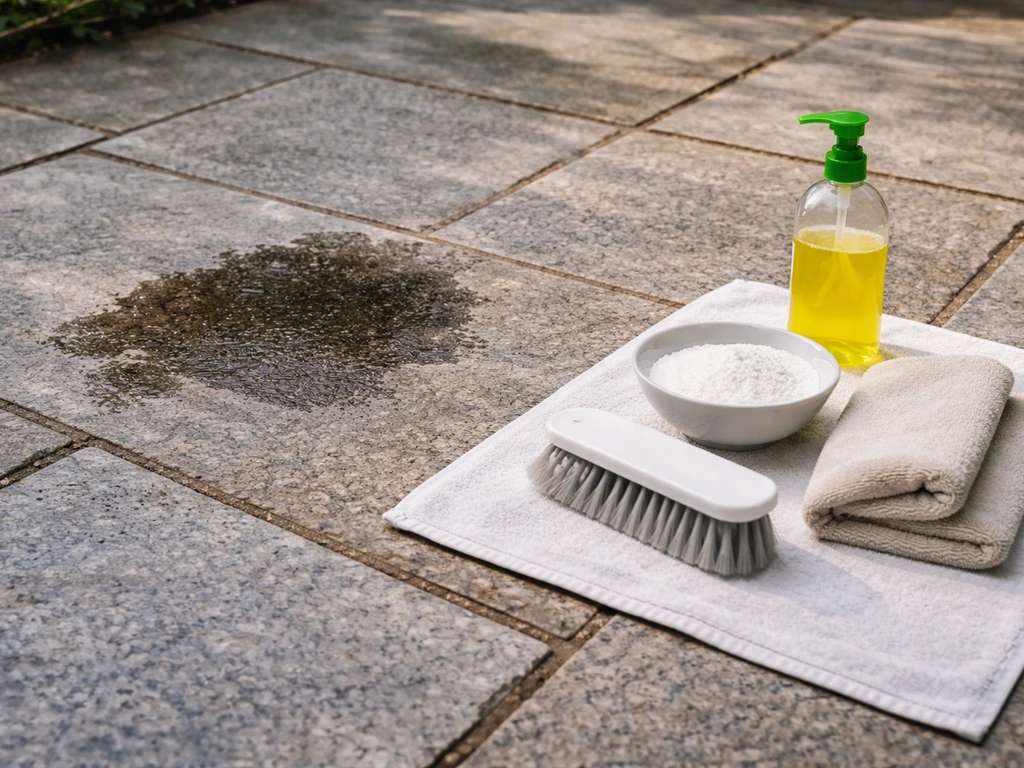
How to Get Grease Off Stone Patio: Step-by-Step Guide
Step-by-step ways to remove fresh and set-in grease stains from stone patio, safely for natural stone like granite.
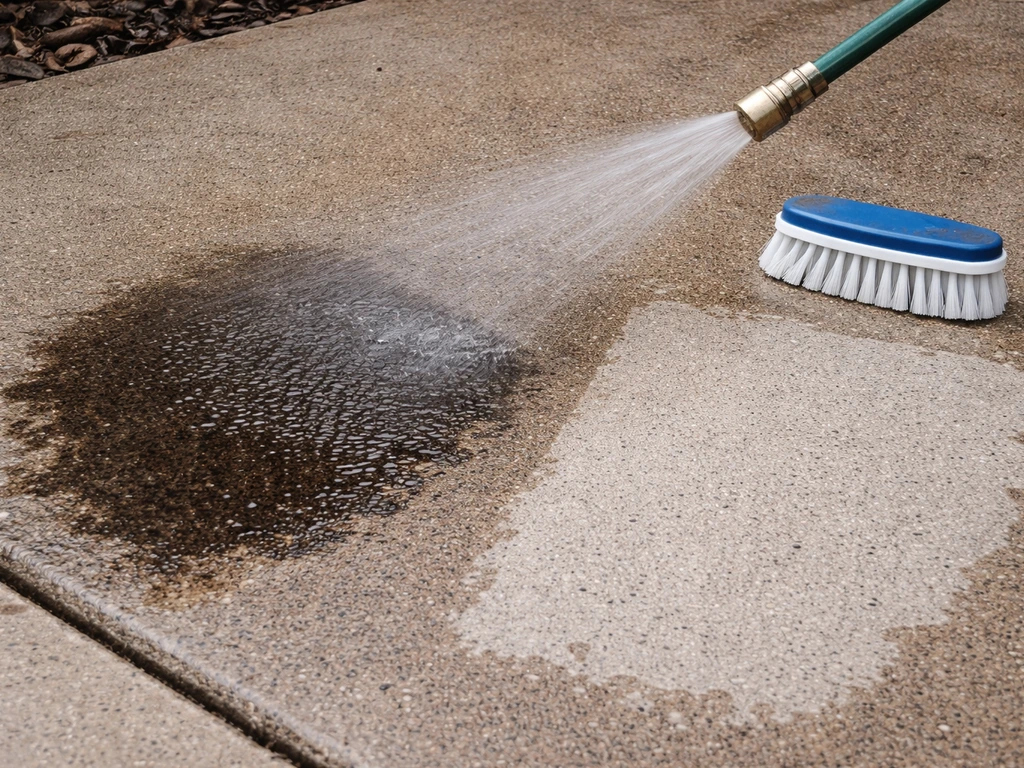
How to Get Grease Out of a Concrete Patio Step by Step
Step-by-step methods to remove fresh and set-in grill grease and oil stains from a concrete patio safely.
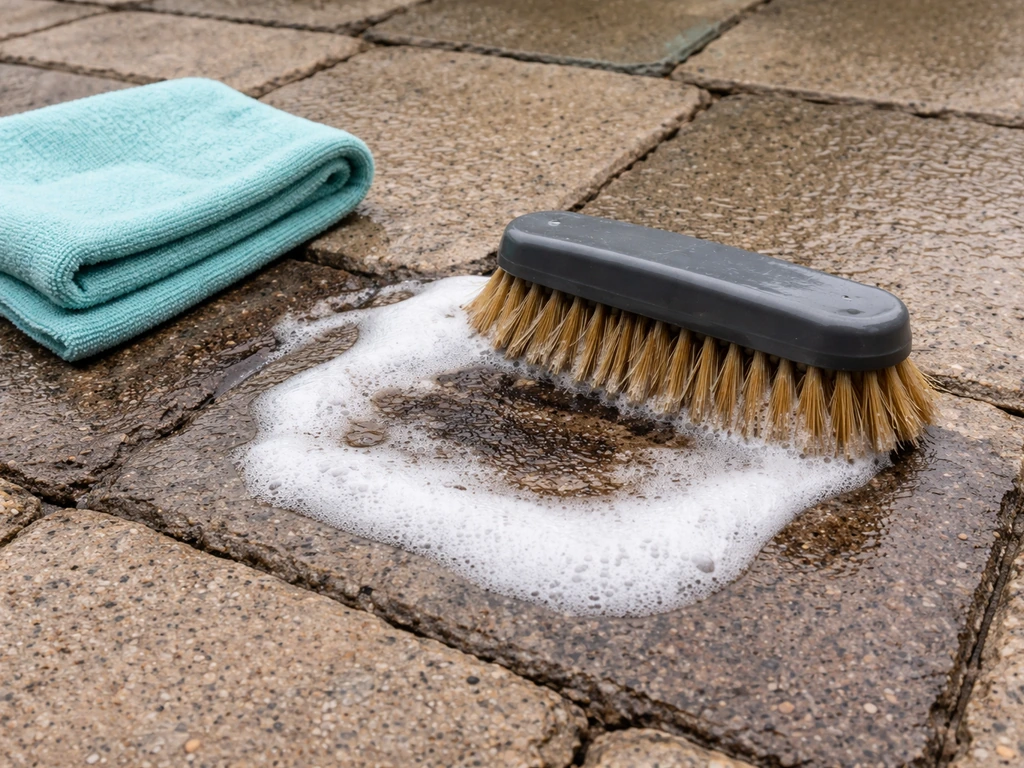
How to Get Grease Off Patio: Step-by-Step Cleaning
Step-by-step ways to remove fresh and set-in grease from concrete, pavers, brick, stone, and travertine patios.