
The safest and most effective way to get grease off a stone patio is to act fast with an absorbent, follow up with a pH-neutral degreaser or dish soap, scrub with a stiff nylon brush, and rinse thoroughly with plenty of water. After you choose the right cleaner, follow these steps to lift and rinse the grease safely without damaging the stone how do you get grease off patio slabs.
How to Get Grease Off Stone Patio: Step-by-Step Guide

Dylan Hale
4 Jun 2026
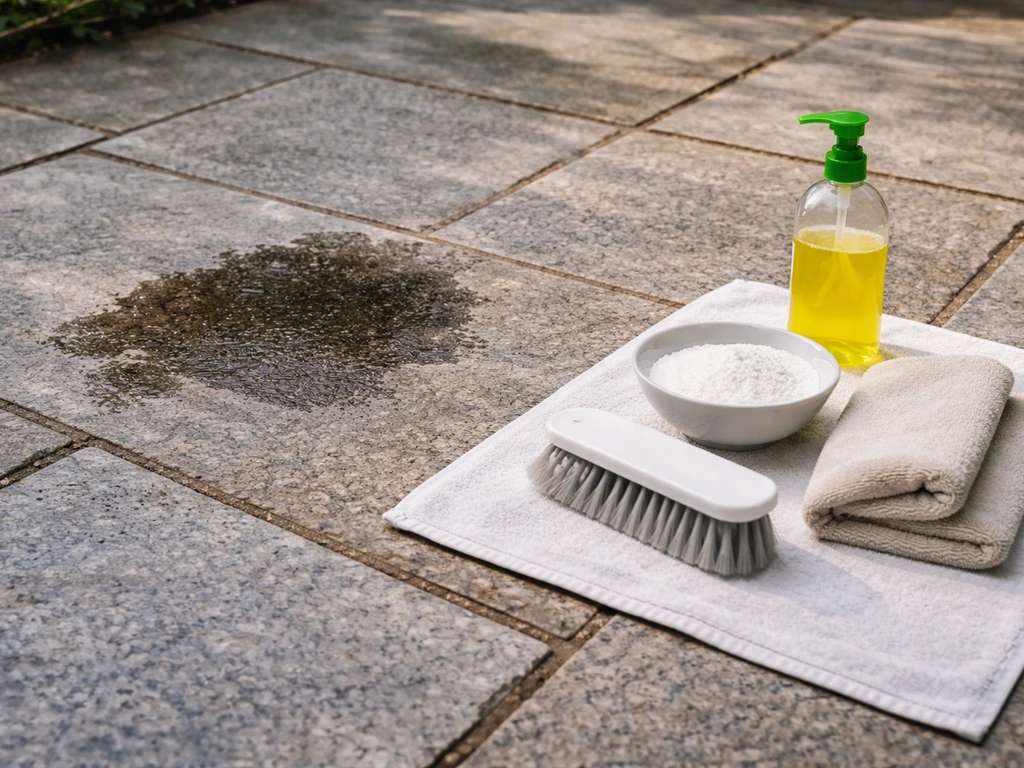
If you need step-by-step guidance, this guide covers the safest ways to remove grease from a patio without damaging the stone how to get grease off patio. For older, set-in stains, you'll need a poultice or a dedicated stone-safe degreaser with a longer dwell time, possibly repeated two or three times. The one rule that overrides everything else: [do not use acid-based cleaners (including vinegar) or straight bleach on natural stone. ](https://cdn-global.
laticrete. com/-/media/project/laticrete-international/europe/product-documents/tdshow-to/tds-262eustone--tile-care-guide-en. ashx? d=00010101T000000Z&hash=C5A9219753711F87CBE5FF8214340E63DA2B4530&la=es-mx&vs=1) They etch the surface and can permanently discolor it.
Quick triage: know your stone, know your stain
Before you grab a bucket, take two minutes to figure out what you're working with. The stone type and the age of the grease stain will determine everything about your approach.
Identify your stone type
Not all stone responds the same way to cleaners. Broadly, patio stones fall into two camps: calcium-based stones (limestone, travertine, marble, and some sandstones) and silica-based stones (granite, slate, quartzite, and most flagstone). Calcium-based stones are far more reactive to acid, meaning even mild acidic cleaners will etch them. Granite and slate are more forgiving, but they're still porous enough to absorb oil quickly, and bleach can cause discoloration and weaken the surface over time. If you're unsure what you have, assume it's calcium-based and treat it gently until you know otherwise.
Fresh grease vs. old set-in grease
Fresh grease (a barbecue drip from this afternoon) sits mostly on top of the stone and in the very top of the pores. Old grease (from last summer's cookouts, or a stain you just noticed) has migrated deeper into the stone and oxidized. Fresh stains usually come out in one treatment. Old stains may need two or three rounds of the poultice method, and you need to be realistic: a deeply set stain that's been there for years might lighten significantly but not disappear entirely.
Safest first approach
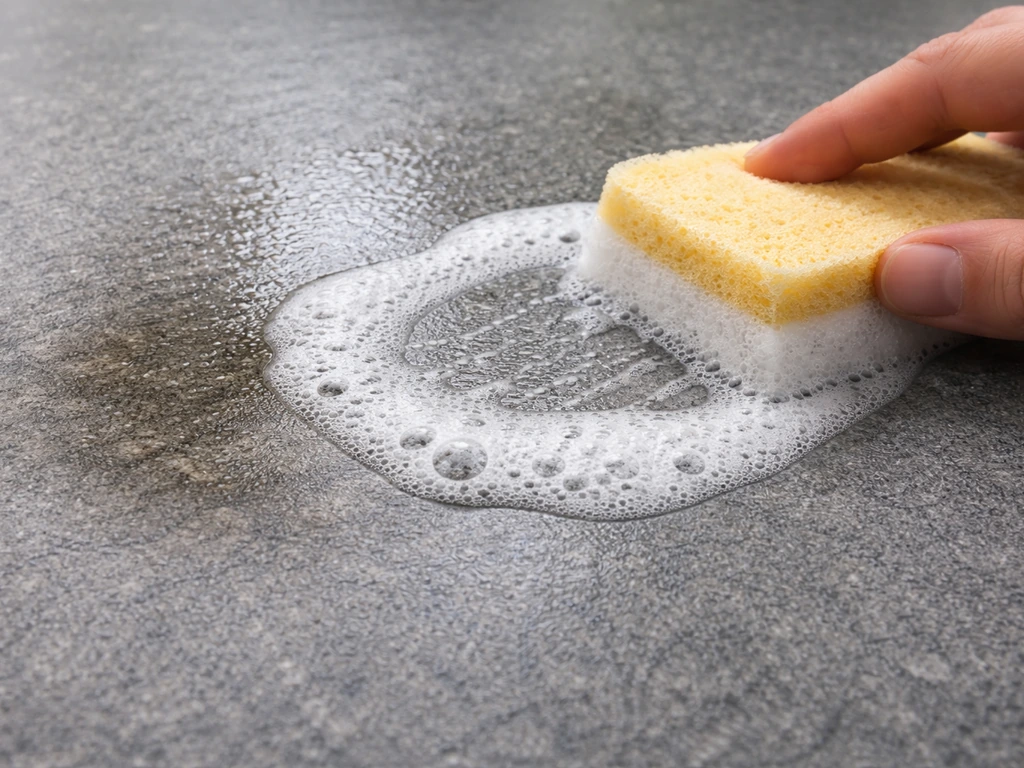
I always recommend starting with the gentlest method that has a reasonable chance of working, then escalating only if it fails. For most grease stains on stone, that means dish soap or a pH-neutral degreaser first. Chemical escalation (enzyme-based degreasers, stone-specific alkaline cleaners) comes second. Stronger products should be a last resort, and some products that work fine on concrete patios are simply off the table for natural stone.
Prepare the area before you start cleaning
Good preparation saves you from making the stain worse or damaging surrounding plants and furniture. Here's what to do before you apply anything.
- Clear the area: Move furniture, potted plants, and anything else off the patio. Cleaning solutions, even mild ones, can damage plant roots and stain outdoor furniture legs.
- Sweep or blow off loose debris: Dirt and grit sitting on the surface will work against you, turning into an abrasive paste when wet and potentially scratching the stone.
- If the stain is fresh: Blot up as much grease as possible with paper towels or an old cloth right now. Press down firmly and lift straight up rather than wiping, which spreads the oil further.
- Apply an absorbent immediately on fresh stains: Pour a generous layer of baking soda, cornstarch, or cat litter over the grease. Let it sit for at least 15 to 30 minutes (longer is better) to draw the oil out of the pores, then sweep it up.
- Pre-wet the stone: Before applying any cleaner, lightly wet the surrounding stone with plain water. This helps prevent the cleaner from wicking too far into dry stone and keeps it focused on the stained area.
- Do a spot test first: Pick an inconspicuous corner, apply your chosen cleaner, wait the full dwell time, then rinse. Check for any color change, etching (a dull, matte patch where the surface was shiny), or lightening. If you see any of those signs, switch to a gentler product.
Removing grease with household degreasers: step-by-step scrubbing
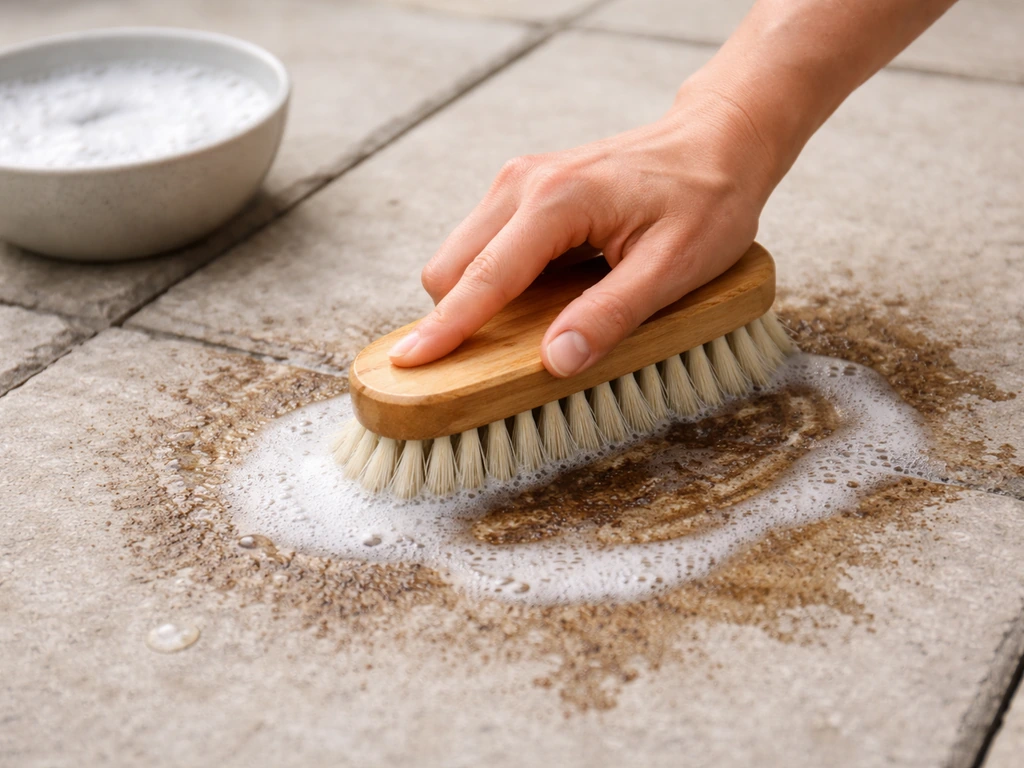
This is your first line of attack, and for fresh or moderately set grease on most stone types, it's often all you need.
Dish soap method (best for fresh grease)
- Mix a solution of 1 to 2 tablespoons of liquid dish soap (Dawn or a similar grease-cutting formula) in a bucket of warm water.
- Pour or apply the solution directly onto the stained area, making sure to saturate it.
- Let it sit for 5 to 10 minutes. Don't let it dry out on the stone.
- Scrub with a stiff-bristled nylon brush using firm, circular motions. Avoid metal-bristle brushes, which can scratch stone surfaces.
- Rinse thoroughly with clean water. I use a garden hose on a medium jet setting, not a power washer at this stage.
- Check the stain. If a light shadow remains, repeat from step 1 up to two more times before escalating to something stronger.
Absorbent poultice method (best for set-in grease)
A poultice works by drawing oil up and out of the stone as it dries, rather than trying to dissolve it. It's slower but it's the right tool for older stains. Mix baking soda or talc powder with enough dish soap (or a liquid stone-safe degreaser) to form a thick paste with the consistency of peanut butter. Spread it over the stain in a layer about a quarter-inch thick, extending an inch beyond the stain's edges.
Cover it with plastic wrap and tape down the edges so it dries slowly. Leave it for 24 to 48 hours. When you peel it off, it should be dry and crumbly. Sweep it up and rinse the area well.
You'll often see a noticeable improvement after one application. Repeat the process two or three times on stubborn stains, letting the stone dry fully (at least 24 hours) between rounds.
Commercial household degreasers
Products like Simple Green, ZEP Citrus Degreaser, or similar alkaline degreasers work well on stone as long as you dilute them according to the label and confirm they're pH-neutral or mildly alkaline (not acidic). Apply, let dwell for 5 to 10 minutes, scrub, and rinse. Always check the label for language like 'safe for natural stone' or confirm the product is pH-neutral before using it on any stone surface you care about.
Chemical options for tough grease stains (and how to stay safe)
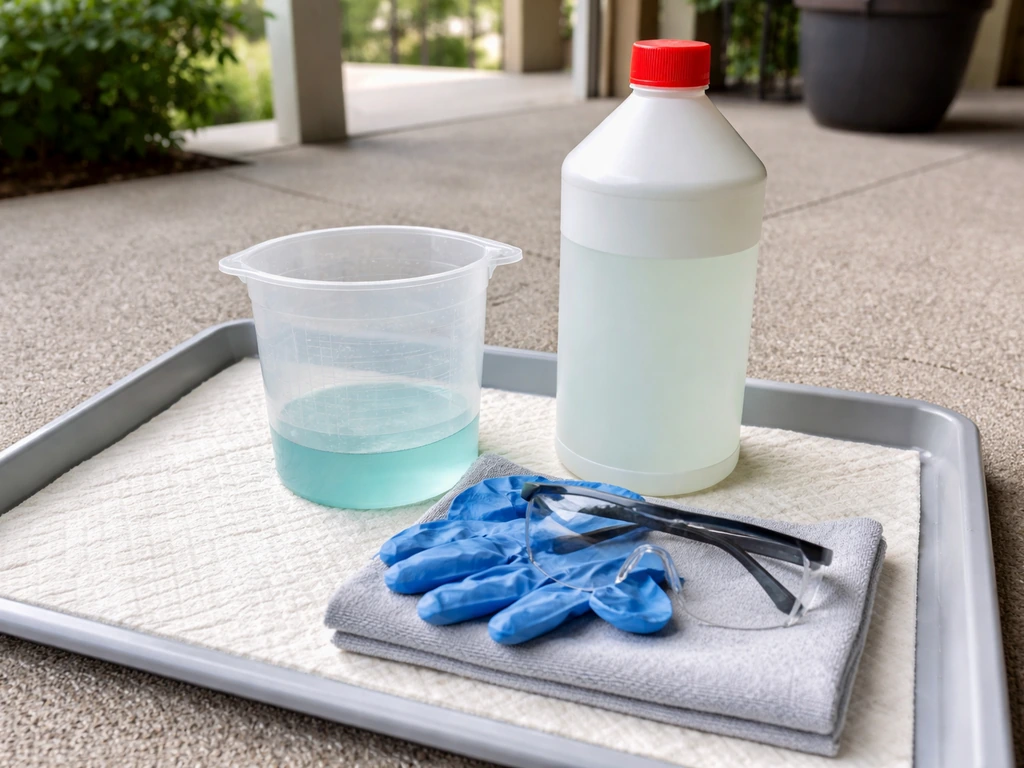
When repeated dish soap treatments and a poultice haven't fully shifted the stain, it's time to look at stronger chemistry. This is where most people make mistakes, so I want to be direct about what's safe and what will damage your stone.
What's actually safe on natural stone
The guiding principle from stone care specialists like STONETECH and American Olean is consistent: cleaners for natural stone must not contain acid and must not contain bleach. Vinegar is acidic. Bleach is corrosive. Even a diluted vinegar-and-water solution can etch and eventually damage many natural stone varieties, especially limestone, travertine, and marble. For grease specifically, you want an alkaline (not acidic) enzyme-based or solvent-based degreaser that's explicitly formulated for natural stone. Products labeled for stone tile care, typically those using concentrated surfactants and enzymes, are your best bet.
Enzyme-based stone degreasers
Enzyme cleaners break down organic matter including oils and grease at a molecular level. They're slow compared to harsh chemicals but they're genuinely safe for natural stone and they work. Apply according to the product label, allow a longer dwell time (15 to 30 minutes is typical), keep the surface moist during dwell time, scrub well, and rinse thoroughly. These are especially good for repeated treatments on old stains.
A note on sodium hypochlorite and muriatic acid
Sodium hypochlorite (the active ingredient in bleach) gets used on concrete and some pavers for general grime and mildew, but on natural stone it's risky. It can strip color, weaken the surface over time, and leave behind residue that continues to react with the stone. For grease specifically, it's not even the right chemistry.
Muriatic acid is in a different category entirely: it's a powerful acid used to strip mineral deposits from concrete, and it will visibly etch and damage natural stone surfaces. Do not use muriatic acid on natural stone patios. It's a concrete and brick tool, not a stone tool. If you have a concrete patio with some stone elements, you'd only ever consider acid on the concrete sections, not on any natural stone.
Safety steps when using any chemical degreaser
- Wear chemical-resistant gloves and eye protection.
- Work in a ventilated area and avoid breathing fumes directly.
- Keep pets and children off the patio until it's fully rinsed and dry.
- Never mix products. Apply one cleaner, rinse completely, then (if needed) apply a second.
- Dilute according to label instructions. Stronger concentration doesn't always mean better results and can damage the surface.
- After any chemical treatment, rinse with significantly more water than you think you need. PROSOCO's stone care guidance makes this point explicitly: use lots of water to flush spent cleaner and dissolved soiling completely off the surface.
Pressure washing vs. scrubbing by hand: which one and when
Pressure washing is useful, but it's not always the right call for natural stone, and using it incorrectly can make things worse rather than better.
| Method | Best for | Risk on natural stone | Recommended pressure/technique |
|---|---|---|---|
| Manual scrubbing | Fresh grease, delicate stone, tight joints | Minimal, safest option | Nylon brush, warm soapy water, circular motion |
| Garden hose (jet setting) | Rinsing after manual cleaning | Very low | Medium jet, hold at least 12 inches from surface |
| Pressure washer (low PSI) | Rinsing large areas after cleaning, moderately tough stains | Moderate if used incorrectly | Max 1200-1500 PSI, 40-degree wide fan tip, 18+ inches from surface |
| Pressure washer (high PSI) | Concrete and brick (not natural stone) | High: can spall, etch, or erode grout/joints | Not recommended for natural stone patios |
I've found that pressure washing is most useful as a final rinse tool after you've already broken up and lifted the grease with a degreaser and a brush. Using a pressure washer first on a grease stain can actually drive the oil deeper into the stone's pores, making the stain harder to remove. If you do use one, keep the pressure at or below 1500 PSI, use a 40-degree wide-angle tip (not a zero or 15-degree tip, which will concentrate pressure and can gouge stone), and keep the nozzle at least 18 inches from the surface. Work in smooth, even passes rather than holding on one spot.
If you're a renter or you don't own a pressure washer, manual scrubbing gets the job done on virtually every grease stain if you use the right cleaner and give it enough time. It just takes more elbow grease (no pun intended). The poultice method in particular needs no equipment at all beyond a brush and a bucket.
Rinsing, drying, and repeat treatments
This step gets rushed and it really shouldn't be. Incomplete rinsing leaves cleaner residue on the stone, which attracts dirt, can continue reacting with the surface, and leaves a filmy or streaky finish. PROSOCO’s “New Rules” Natural Stone Maintenance Instructions emphasizes rinsing spent cleaner and dissolved soiling with lots more water to help remove residue and support the rinse or neutralization step after chemical cleaning lots more water to rinse.
- Rinse the treated area with clean water immediately after scrubbing. Don't let cleaner dry on the stone.
- Use substantially more water than feels necessary. Work the water into grout lines and pores, not just across the surface.
- Check the area once it's rinsed by letting it air dry for 10 to 15 minutes in a shaded spot. Wet stone can hide a stain.
- Once dry, assess the stain. If you can still see a shadow or discoloration, repeat the cleaning treatment from the beginning. Let the stone dry fully (at least 24 hours) between rounds if using a poultice.
- For chemical degreaser treatments, follow with a second rinse of plain water after the first rinse to make sure there's no residue.
- After the final treatment, let the stone dry completely (24 to 48 hours in dry weather) before applying any sealer or deciding the stain is gone for good. Residual moisture can make a cleaned stain look darker than it actually is.
Some stains, especially old ones that have been there through multiple seasons, may not disappear completely. What looks like a persistent stain after three or four rounds of treatment might actually be at its limit. At that point, a professional stone restoration service can sometimes go further with specialist tools and products, but don't expect miracles on a stain that's years old and deeply oxidized.
Preventing grease stains on stone patios going forward
The best time to deal with a grease stain is before it happens. A few simple habits and one meaningful maintenance step will save you a lot of work.
Seal the stone
This is the single most effective thing you can do. A quality impregnating sealer (sometimes called a penetrating sealer) soaks into the stone's pores and creates a barrier that slows oil absorption dramatically, giving you time to blot up a fresh spill before it stains. Look for a sealer specifically labeled for natural stone, and avoid topical film-forming sealers on stone patios since they can peel, trap moisture, and make the surface slippery.
Apply sealer to clean, dry stone according to the manufacturer's instructions and reseal every one to three years depending on traffic and weather exposure. Different stone types (granite, slate, travertine) have different porosity levels, so check the label to make sure the product is appropriate for your specific stone.
Day-to-day habits that make a real difference
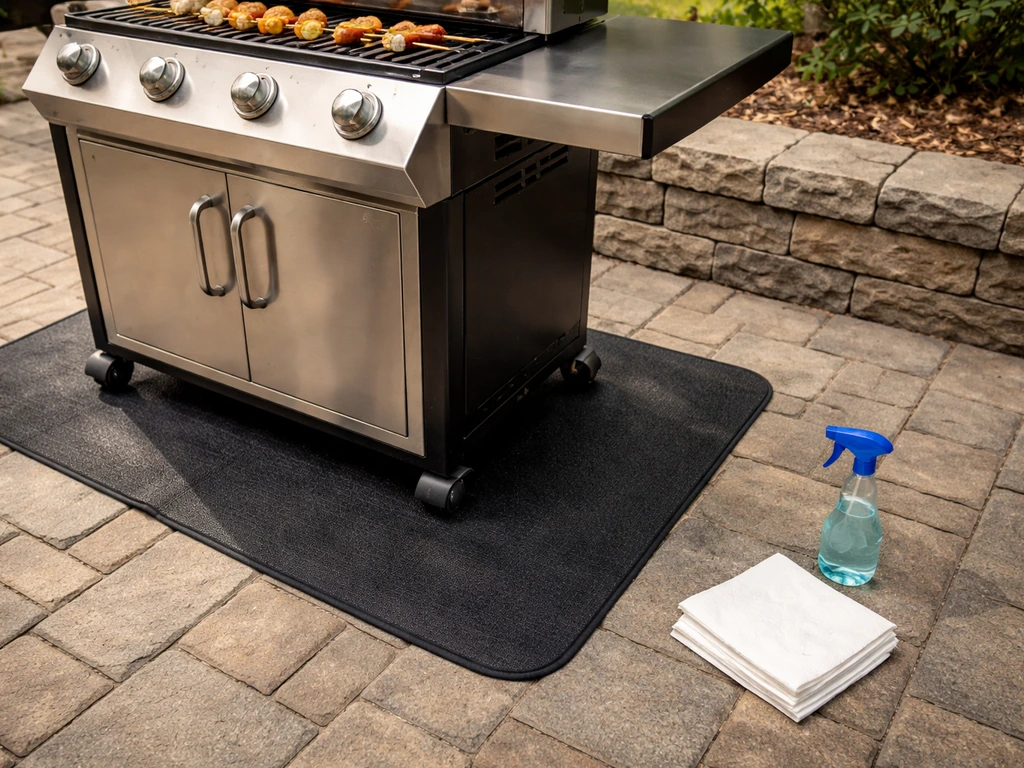
- Place a grill mat or drip tray under your barbecue grill. This catches most splatter before it hits the stone.
- Blot grease spills immediately rather than wiping. Keep a roll of paper towels near the grill during cooking season.
- Rinse the patio with a garden hose after cooking sessions, even if you don't see an obvious spill.
- Sweep the patio regularly. Grit and debris work loose oil deeper into pores when walked on.
- Spot-clean small grease marks with dish soap and a brush as soon as you notice them, rather than waiting for them to set.
If you're dealing with grease on other patio surfaces, the approach shifts considerably. For a concrete patio, the exact same workflow applies, but you can usually use a stronger degreaser and scrub more aggressively because concrete is more forgiving than natural stone Concrete patios are much more tolerant of acidic cleaners and high-pressure washing than natural stone. . Concrete patios are much more tolerant of acidic cleaners and high-pressure washing than natural stone.
Pavers fall somewhere in between depending on whether they're concrete or natural stone. Pavers can be especially tricky because some are concrete while others are natural stone, so always match the cleaner to the material before you scrub Pavers fall somewhere in between. The principles in this guide apply most directly to natural stone, so if you're working on a different material, check the guidance specific to that surface before applying anything.
FAQ
Can I use Dawn dish soap directly, or do I need to dilute it for stone?
Start with the gentlest mix you can use effectively. For most patios, dilute dish soap in warm water first, then use the diluted solution to scrub and rinse. If you plan to use it in a poultice paste, you want a thick paste consistency, but still avoid making it overly soapy because heavy residue can be harder to rinse and leave streaks.
What if the grease stain is on dark stone and looks like a shadow even after cleaning?
Residual oil and oxidation can leave a darker “ghost” even after the grease is removed. Try a second round of poultice (24 to 48 hours drying time) rather than escalating to stronger chemicals. If the shadow persists after repeated poultice and proper rinsing, the stain may be embedded or oxidized, and a professional stone restoration may be the next step.
How do I know whether my patio is limestone or granite before I start cleaning?
If you cannot identify it from the installer or product tags, do a cautious test with water first. If water darkens and the stone lightens noticeably as it dries, the stone is porous. Then treat as calcium-based (limestone type) and avoid any acidic cleaners until you confirm the type through a reputable stone supplier or labeling.
Is it okay to mix cleaners, like dish soap plus an alkaline degreaser, in the same bucket?
Avoid mixing products. Even if both are individually stone-safe, combining them can change pH or create residues that are difficult to rinse. Stick to one cleaner at a time, scrub, rinse thoroughly, and only switch products if the stain does not improve.
How long should I let the cleaner sit before scrubbing for best results?
Follow the product label, but as a general guideline for alkaline pH-neutral degreasers, dwell time is usually around 5 to 10 minutes. For enzyme-based degreasers, dwell time is typically longer, about 15 to 30 minutes, and the surface should stay moist during that period. If the area dries out early, reapply so the chemistry can keep working.
Do I need to rinse with a lot of water, or can I just wipe it off?
Rinse thoroughly with plenty of water. Wiping often leaves surfactant residue, which can attract dirt and create streaking. After rinsing, inspect the surface under bright light, and if you see haze or slickness, rinse again to fully clear the residue.
Will scrubbing with a metal brush damage the patio?
Yes, metal bristles can scratch many stones, especially softer ones like limestone or travertine. Use a stiff nylon brush as the safer default. If you need more agitation, increase dwell time and repeat the cleaning cycle rather than switching to abrasive metal tools.
Can I use a steam cleaner to lift grease from stone?
Steam is risky unless the stone type and product compatibility are confirmed. Heat and moisture can drive contaminants deeper into pores and may loosen grime so it spreads. If you want to try heat, treat it as an advanced step and spot-test a small, inconspicuous area after you have already loosened grease with a proper degreaser.
What should I do if grease is still coming back after the stain seems to lighten?
Grease may be migrating back from deeper pores, especially with older stains. Continue with the poultice method in multiple rounds, letting the stone dry fully between treatments (at least 24 hours). Make sure each round is followed by a complete rinse and that the surface is fully dry before the next application.
How can I protect the patio after the grease is removed so it does not stain again?
Once the patio is fully clean and dry, apply a penetrating sealer made for natural stone. The sealer should be compatible with your specific stone type and applied according to label instructions. Reseal on a schedule based on traffic and weather exposure, often every one to three years.
When is it time to call a professional instead of doing more rounds at home?
If you have completed several cycles, like dish soap or pH-neutral degreaser scrubbing plus two or three poultice rounds, and the stain only lightens slightly, it may be fully embedded. A stone restoration service can use specialized equipment and stone-safe products to extract or balance discoloration beyond typical DIY methods.
Next Articles
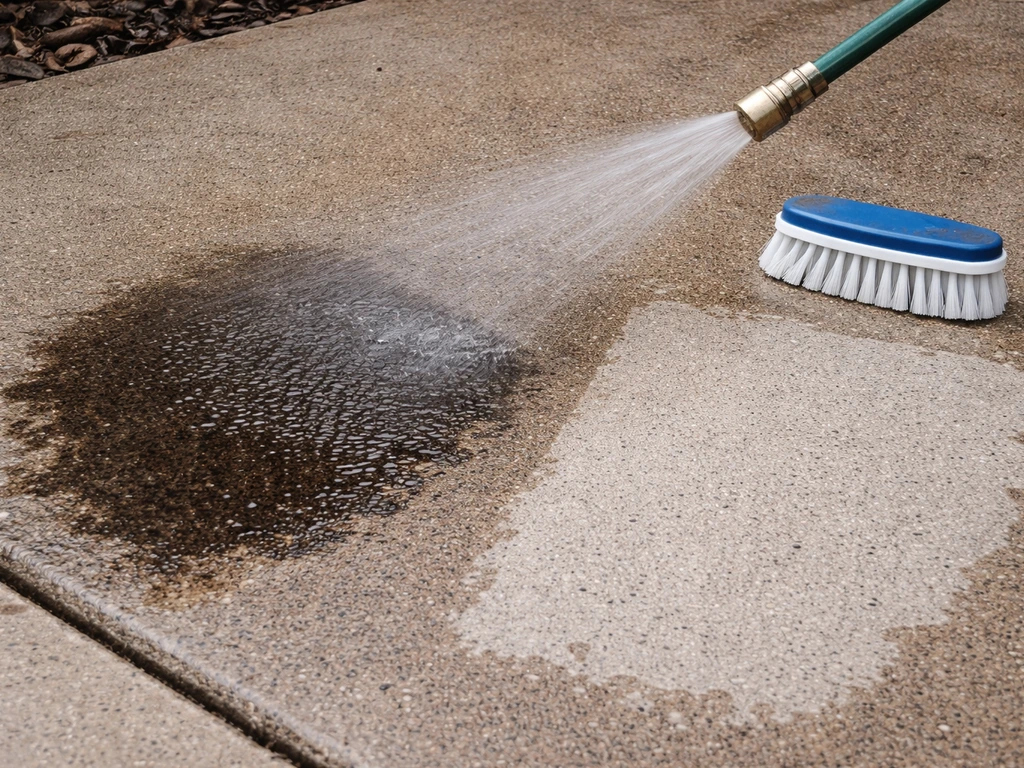
How to Get Grease Out of a Concrete Patio Step by Step
Step-by-step methods to remove fresh and set-in grill grease and oil stains from a concrete patio safely.
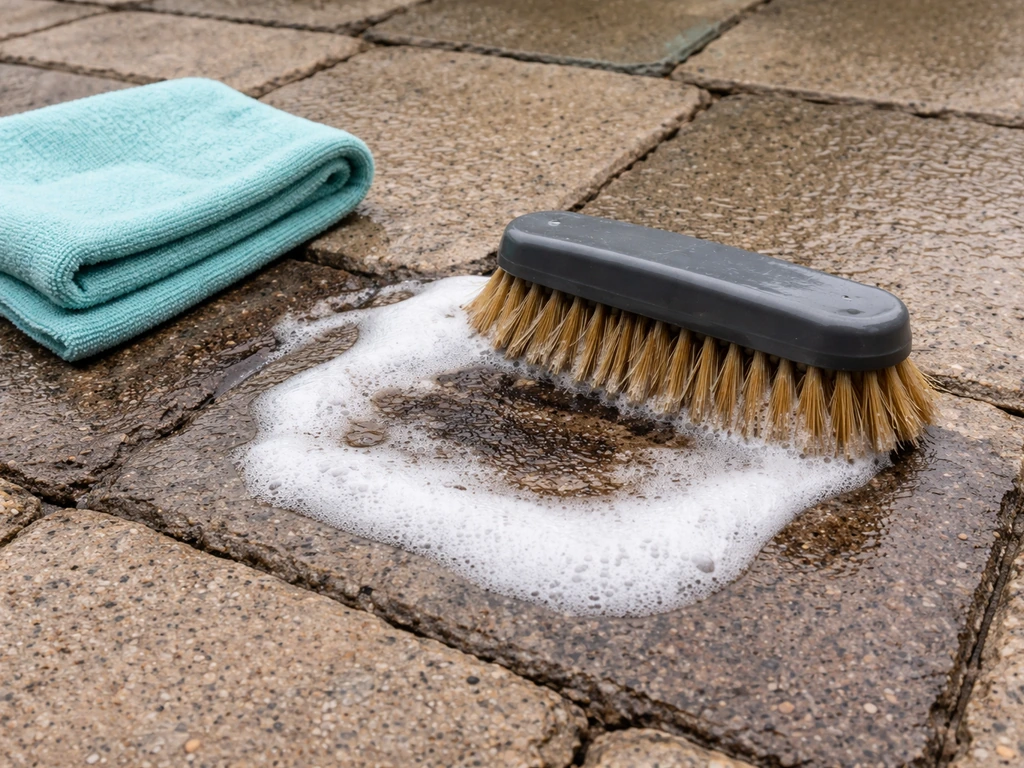
How to Get Grease Off Patio: Step-by-Step Cleaning
Step-by-step ways to remove fresh and set-in grease from concrete, pavers, brick, stone, and travertine patios.
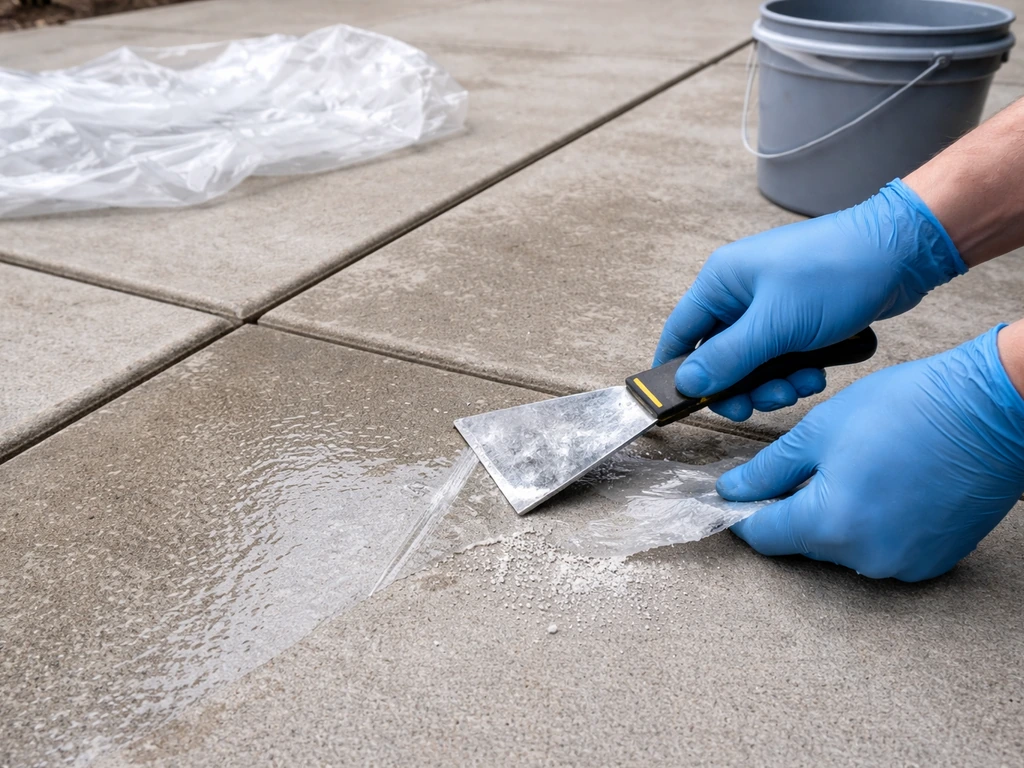
How to Remove Thompson’s Patio Sealer Step by Step
Step-by-step removal of Thompson’s patio sealer on concrete, brick, pavers, and stone, with safety, tests, and cleanup.