
Grill grease on a concrete patio comes out best with a two-stage approach: absorb or scrape up the bulk of the grease first, then work a degreaser into the pores with a stiff brush and rinse thoroughly. Fresh spills respond quickly to dish soap or a concrete degreaser. Set-in stains that have already soaked into the concrete need a poultice that draws the oil back out over several hours, and possibly two or three treatment cycles before the stain fully clears. The sooner you act, the easier this gets.
How to Get Grease Out of a Concrete Patio Step by Step

Dylan Hale
19 May 2026
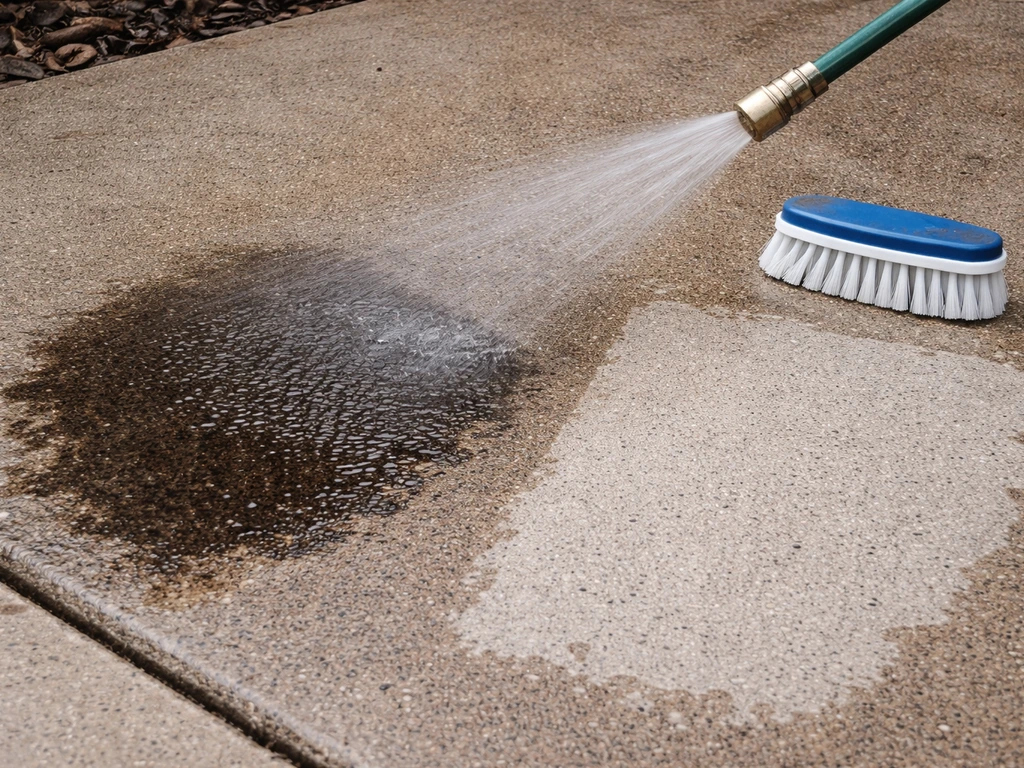
Fresh spill or old stain? Figure this out first
The method you use depends almost entirely on how deep the grease has gone. Concrete is porous, so oil and grease start as a surface film and then get pulled down into the tiny capillaries in the slab. A fresh spill that happened today still sits mostly at the surface and can be lifted with a degreaser and some scrubbing. A stain that has been baking under the sun for a week or more has likely bonded into the concrete itself, and surface washing alone won't touch it.
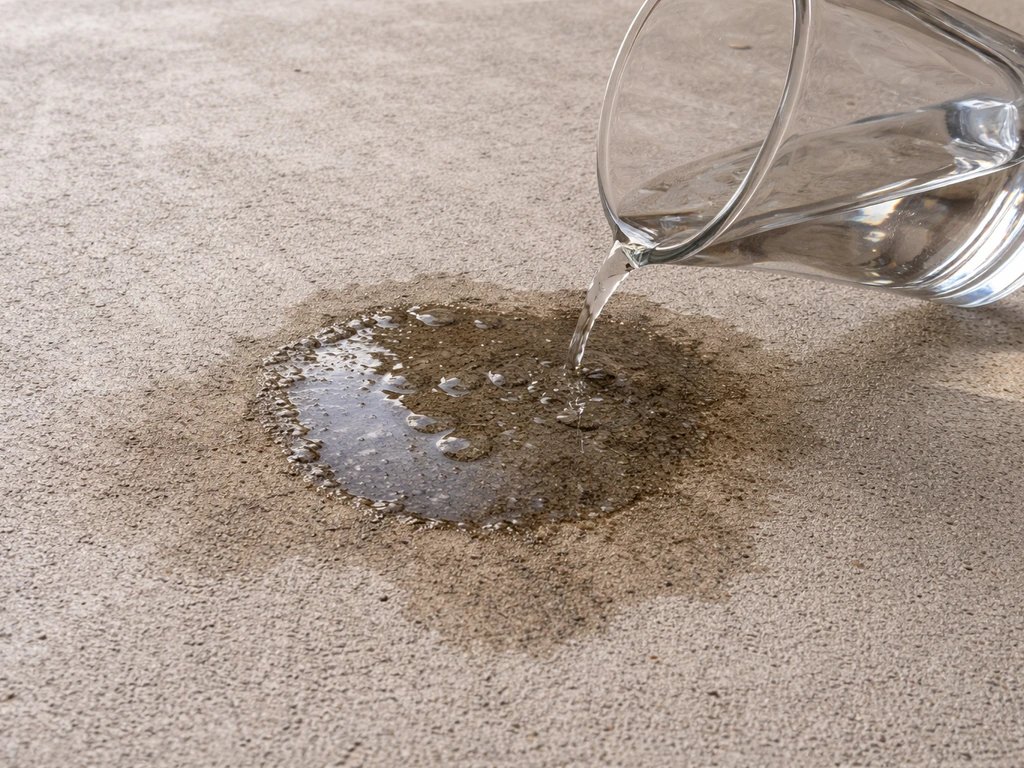
Here's a simple field test: pour a small amount of water onto the stained area. If the water beads up and the stain still looks dark and wet, you're dealing with a surface-level or near-surface stain. If the concrete absorbs the water quickly but the dark grease mark doesn't change at all when you scrub it with dish soap and hot water, it has penetrated deep and you'll need a poultice. That distinction determines whether you start with Step 1 or jump straight to the stubborn-stain section.
Prep before you touch it with chemicals
Before you open any cleaner, spend five minutes on prep. It saves you from damaging your plants, your concrete, or yourself.
- Move or cover nearby plants. Many degreasers and stronger chemicals will burn grass and shrubs. Lay a tarp or plastic sheeting over anything you don't want to soak.
- Rinse the surrounding concrete with plain water before applying any cleaner. Wet concrete dilutes runoff and reduces the chance of a chemical drying in the wrong spot.
- Put on chemical-splash eye protection and chemical-resistant gloves before you open the degreaser. Concrete degreasers are not the same as dish soap, and even milder products can cause skin and eye irritation with prolonged contact.
- Test the cleaner in an inconspicuous spot first. Apply it at the intended dilution, let it sit for the recommended dwell time, rinse, and check that the concrete color and texture haven't changed before you treat the whole stain. This is the single step most people skip and later regret.
- Make sure you have good ventilation. If you're cleaning in an enclosed patio or under a covered pergola, open up whatever you can. Stronger chemicals like muriatic acid need serious airflow.
Step-by-step cleaning for fresh and moderate grease stains
Step 1: Remove the bulk without spreading it
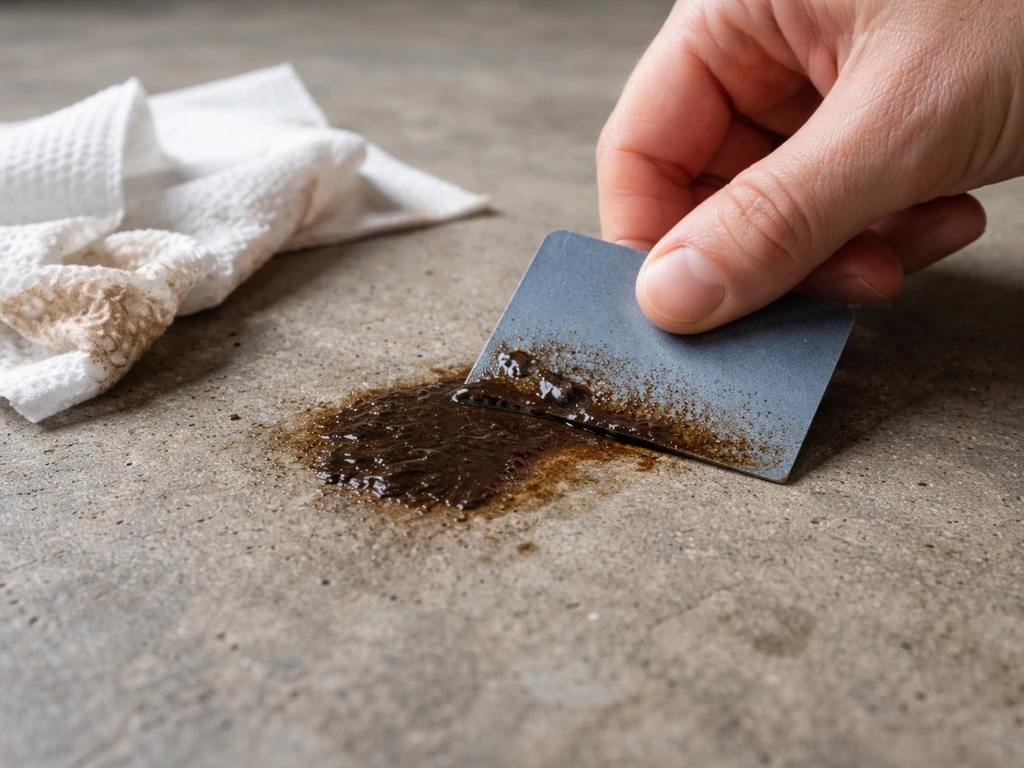
If the spill is fresh, use a plastic scraper, old credit card, or paper towels to lift as much of the standing grease as you can. Work from the outside edge of the spill toward the center so you don't push it into a larger area. Don't rub. Blot and scrape. Once you've removed the bulk, pour an absorbent material directly onto what's left.
Cat litter, baking soda, cornstarch, or sawdust all work as absorbents. Pour a generous layer over the stain, press it in lightly with your foot, and let it sit for at least 15 to 30 minutes. Then sweep it up and dispose of it. This step alone can pull a surprising amount of grease out before you introduce any water or cleaner.
Step 2: Apply a degreaser and scrub
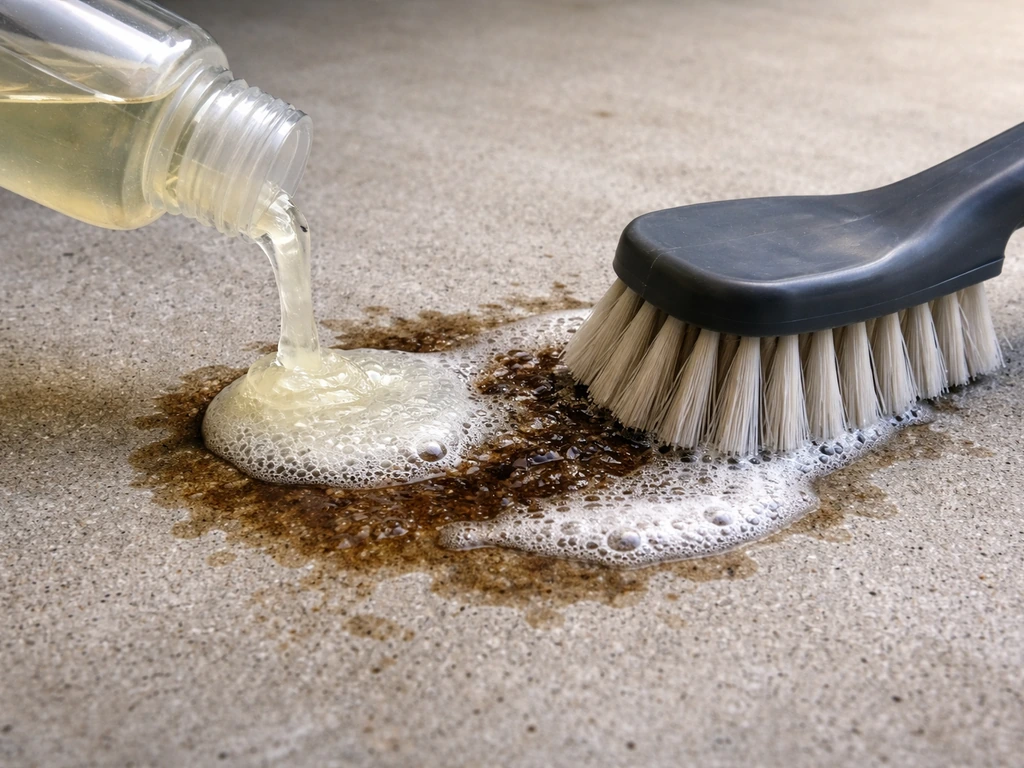
For fresh and light-to-moderate stains, a good degreaser does the heavy lifting. You have a few options depending on what you have available and how strong you want to go.
- Dish soap (Dawn or similar): Squirt a generous amount directly onto the stain, add a small amount of hot water, and scrub with a stiff-bristled brush for two to three minutes. Rinse with a garden hose. Repeat if needed. This works well on very fresh spills.
- Concrete-specific degreaser: Products like Quikrete Cleaner, Etcher & Degreaser are designed for exactly this situation. Follow the label dilution instructions, apply to the stain, let it dwell for the manufacturer's specified time (typically 5 to 10 minutes for lighter stains), scrub firmly, and rinse thoroughly.
- Baking soda paste: Mix baking soda with just enough water to make a thick paste, spread it over the stain, scrub for a minute or two, and rinse. It's gentle and safe around plants. Don't expect miracles on deep stains, but it's a solid first pass for fresh ones.
Use a stiff nylon or natural-bristle brush, not a wire brush, which can scratch concrete and leave metal deposits. Scrub in small circular motions over the entire stained area, then rinse with a strong stream from a garden hose. Check the result once the concrete dries. If the stain has significantly faded or is gone, you're done. If it's still dark, move to the next section.
Getting out stubborn set-in grease stains
Set-in oil and grease that didn't respond to scrubbing needs to be pulled out of the concrete rather than scrubbed off the surface. That's what a poultice does: it draws the oil up and out through capillary action as it dries. This takes patience, but it genuinely works on stains that seem permanent.
How to do a poultice cycle
- Mix your poultice material. You can make a DIY version by combining an absorbent powder (diatomaceous earth, fuller's earth, or even flour) with a solvent like acetone or mineral spirits to form a peanut-butter-thick paste. Alternatively, use a commercial product like PROSOCO Oil & Grease Stain Remover, which is specifically formulated for this purpose.
- Apply the paste about 1/4 to 1/2 inch thick over the entire stained area, extending an inch or two beyond the stain's edges.
- Cover the poultice loosely with plastic sheeting and tape the edges down. This slows evaporation and forces the poultice to draw oil out rather than just drying on top.
- Let it dwell. For commercial products like PROSOCO, the spec is 5 to 8 hours or overnight. For DIY poultices, aim for at least 8 hours and up to 24. The poultice should be fully dry before you remove it.
- Once dry, scrape up and sweep away the dried powder and dispose of it properly (it contains extracted oil/grease).
- Rinse the area with water and let it dry fully before evaluating the result.
One cycle often isn't enough for deeply set stains. Expect to repeat the process two or three times, with at least 24 to 48 hours between cycles so the concrete can fully dry. Each round progressively draws more oil out. After two or three cycles, most stains either disappear or fade enough that a final degreaser scrub finishes the job. If you're still seeing a ghost of the stain after three cycles, the remaining discoloration is likely oxidized oil residue rather than active grease, and a stronger chemical treatment may be needed.
Pressure washing vs. scrubbing by hand
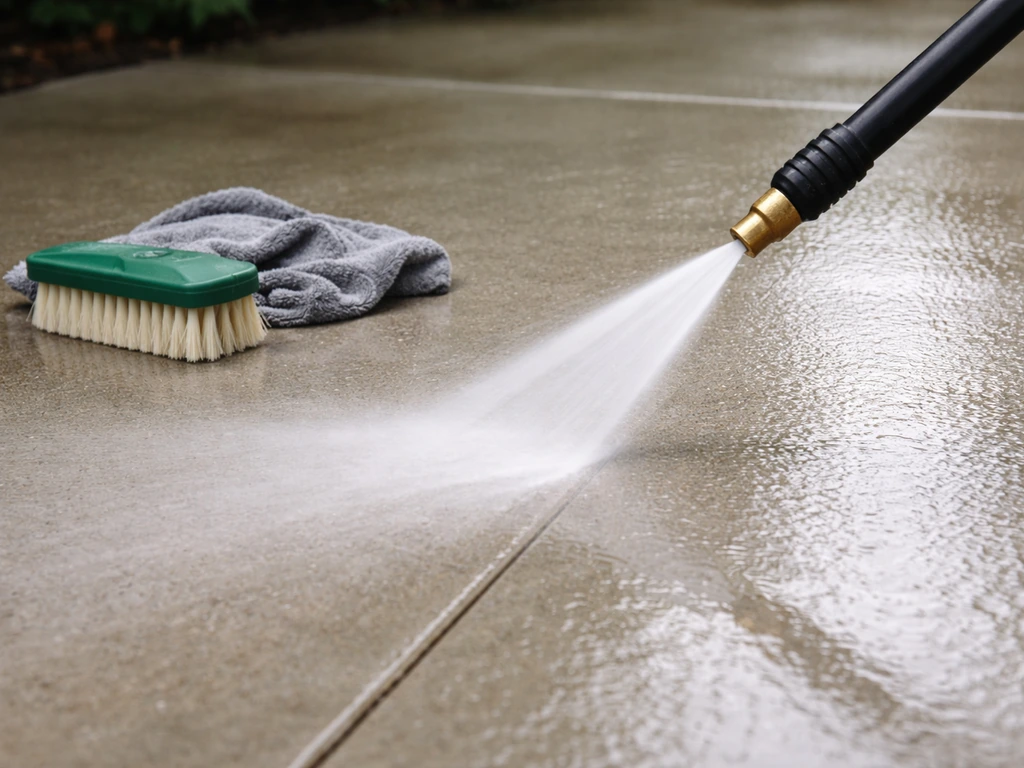
A pressure washer is a great finishing tool but a poor first step for grease stains. If you hit a fresh grease spill with high-pressure water before absorbing or degreasing it, you'll spread the grease into a larger area and push it deeper into the concrete pores. I've made this mistake and ended up with a bigger stain than I started with.
| Situation | Best Approach | Why |
|---|---|---|
| Fresh spill, not yet treated | Manual absorption and scrubbing first | Pressure water spreads grease before it's broken down |
| After degreaser has dwelled | Pressure wash to rinse out broken-down grease | High pressure flushes emulsified oil out of pores effectively |
| Light surface stain on sealed concrete | Pressure wash with degreaser in tank or pre-applied | Sealed surface doesn't absorb; pressure rinse is sufficient |
| Deep, set-in stain needing poultice | Manual poultice application; pressure wash after cycles | Poultice needs to dry in place; pressure disrupts the process |
| Delicate or old concrete with surface cracks | Hand scrubbing only | High pressure can widen cracks and damage worn surfaces |
When you do use a pressure washer, use a 25-degree (green) or 40-degree (white) tip from about 12 inches away. Avoid zero-degree and 15-degree tips on concrete patios as they can etch or pit the surface. Keep the wand moving and don't linger in one spot. For grease specifically, applying a concrete degreaser first, letting it dwell for 5 to 10 minutes, and then pressure washing gives you far better results than pressure washing alone.
When to bring in stronger chemicals
If poultice cycles and a good concrete degreaser haven't cleared the stain, it's time to think about stronger chemical options. Here's how I think about the choices, from gentler to more aggressive.
White vinegar (diluted)
Undiluted white vinegar or a 50/50 vinegar-water mix is a mild acid that can help cut grease residue and lift some discoloration. It's safe around most plants once diluted, doesn't require heavy PPE, and is a reasonable option if you're treating a faded stain rather than active deep grease. Apply it, let it sit for 10 to 15 minutes, scrub, and rinse. It won't work on heavy grease penetration, but it's a good gentle option for residual staining after a poultice cycle. Do not use vinegar immediately before or after sodium hypochlorite or muriatic acid treatments. Mixing acids with bleach produces chlorine gas, which is dangerous.
Sodium hypochlorite (bleach)
Household bleach (sodium hypochlorite) is sometimes used to remove the discoloration that remains after grease has been extracted, since the oxidizing action can break down residual organic compounds. Use a diluted solution (about 1 part bleach to 10 parts water), apply to the stain, let it sit for 5 to 10 minutes, scrub lightly, and rinse extremely thoroughly with lots of water. Bleach can discolor or lighten concrete if left on too long, and it can harm nearby plants, so protect them and rinse aggressively. Wear chemical-splash goggles and nitrile gloves. Never mix bleach with vinegar, ammonia, or any acid-based cleaner.
Muriatic acid (for serious cases only)
Muriatic acid is the most aggressive option and should be a last resort for grease stains on a concrete patio. It's more commonly used for etching and mineral stain removal, but it can help break down heavily embedded grease residue when everything else has failed.
If you go this route: dilute to at least 1 part acid to 10 parts water (always add acid to water, never water to acid), wear a respirator rated for acid vapors, chemical goggles, and acid-resistant gloves, and work in well-ventilated conditions. Apply to the stain only, let it work for 2 to 3 minutes while it fizzes, then rinse thoroughly.
Neutralize the treated area by applying a baking soda and water solution (about 1/4 cup baking soda per gallon of water) and rinsing again. Muriatic acid can etch and lighten concrete, so test it in a hidden spot first and don't use it on decorative, stamped, or colored concrete without professional guidance. It's not appropriate for stone patios, brick, or pavers, which is worth keeping in mind if you're also dealing with grease on other patio materials.
| Chemical Option | Best For | Safety Level | Risk to Concrete |
|---|---|---|---|
| Dish soap / baking soda | Fresh, light spills | Low (household safe) | None |
| Concrete degreaser (e.g., Quikrete) | Fresh to moderate stains | Medium (gloves + eye protection) | Minimal if rinsed |
| White vinegar | Residual discoloration, light grease | Low | Minimal (don't leave on too long) |
| Sodium hypochlorite (bleach) | Organic residue, discoloration after extraction | Medium (gloves + goggles, no mixing) | Can lighten if overused |
| Muriatic acid | Stubborn embedded residue, last resort | High (respirator, goggles, gloves, ventilation) | Can etch and lighten concrete |
Keeping grease stains off your patio in the future
The best grease stain is the one that never soaks into your concrete. If you are wondering how do you get grease off patio slabs, start by treating the spill quickly and using a degreaser or poultice when it has soaked in. A few simple habits make a real difference.
- Use a grill mat or splatter mat under and around your grill. These silicone or fabric mats are inexpensive and catch the drips before they hit the concrete. Place them under the entire grill footprint, not just directly beneath the grates.
- Clean up grease spills immediately. Every minute you wait, the oil is soaking deeper into the concrete. Keep a roll of paper towels and a small container of dish soap near the grill during cookouts.
- Seal your concrete patio. A penetrating concrete sealer fills the pores and dramatically slows how quickly oil absorbs. It doesn't make the concrete impervious, but it gives you a meaningful window to wipe up spills before they stain. Reseal every two to three years depending on traffic and weather exposure.
- Do a quick degreaser rinse at the end of grilling season. Even if you don't see obvious stains, light grease accumulation builds up over time. A diluted concrete degreaser and a scrub brush once a year keeps the surface from becoming chronically discolored.
- Check your grill's grease trap and drip pan regularly. A full drip pan overflowing during a cookout is one of the most common sources of big grease spills on patios.
If you've worked through everything above and the stain is still there but lighter, give it one more poultice cycle and don't lose heart. Set-in grease stains often take multiple attempts, and each round does make a visible difference.
If the concrete has a gray ghost where the stain was but no active grease left, that's usually a case for a mild acid treatment like diluted vinegar or, if needed, a brief muriatic acid application followed by thorough neutralization and rinsing. The same general approach applies to grease on other outdoor surfaces, though the specific chemicals and pressures you use need to match the material, since stone, slate, and pavers are more sensitive than concrete.
If you are dealing with slate, use slate-safe degreasing steps and avoid harsh abrasives that can damage the surface stone, slate, and pavers. If you're working with patio pavers, the same approach works, but you'll want paver-safe methods when choosing chemicals and scrubbing intensity.
FAQ
Can I use hot water or steam instead of a poultice for grease stains?
Yes, but only after you remove as much grease as possible first. For fresh spills, scrape or blot the bulk, apply an absorbent (cat litter, baking soda, or sawdust), then degrease and rinse. If you skip the absorb/scrape step and go straight to a hot-water or steam wash, you can spread the grease deeper into the pores.
How do I know whether my grease stain is still active grease or just leftover discoloration?
Test for penetration before you choose a method. If water beads and the area still looks dark after scrubbing, it is usually near-surface and responds to degreaser. If water soaks in quickly and the dark spot barely changes with dish soap scrubbing, assume deep penetration and switch to a poultice cycle.
What solvents can I use to dissolve grease from concrete patios?
Do not use a solvent like gasoline, kerosene, or paint thinner on patio concrete. They can be dangerous to handle, may damage plants and coatings, and can leave residue that makes the stain worse or harder to remove.
What’s the best way to contain oily runoff while cleaning a large grease spill?
If you have a lot of grease, pre-treat before you rinse with a degreaser, and keep runoff contained. Rinse in small sections, use a stiff brush while the degreaser is dwelling, and use absorbent socks or towels around the area if you have them, so oily water does not spread to nearby landscaping.
Should I wet the concrete before I apply degreaser or vinegar?
Wet the surface lightly before using strong chemicals if the concrete is very dusty or chalky, then remove pooled puddles. This helps the cleaner spread evenly instead of beading. Still, the key steps remain absorb or scrape first, then degrease or poultice, and rinse thoroughly.
How long should I wait between repeated degreaser or poultice treatments?
If you’re re-treating the same spot, wait until the concrete is fully dry before starting the next cycle (typically 24 to 48 hours between poultice rounds). Reapplying too soon can trap moisture and slow capillary action, so the next cycle draws out less oil than it should.
Why does my patio feel slippery after cleaning, even if the stain looks lighter?
A degreaser can leave a slick feel if you don’t rinse enough. After scrubbing, rinse until the water runs clear and the surface no longer feels oily, then let it dry. If it still feels slippery, do another light degreaser dwell and rinse, rather than adding more absorbent.
My grease stain is lighter but not gone. What should I do next?
If the stain becomes lighter but you still see a grayish ghost, it’s often oxidized residue rather than active grease. In that case, a mild acid approach (diluted vinegar) may help with discoloration, but if it has not improved after a couple of gentle attempts, that’s when stronger chemical options may be considered.
Can I switch between vinegar and bleach (or muriatic acid) to finish the job faster?
Keep vinegar, bleach, and muriatic acid from touching each other or the same damp surface in sequence. Rinse fully between chemical types, let the concrete dry, and do not apply vinegar immediately before or after bleach or any acid treatment.
What changes if my concrete patio is sealed, stamped, or colored?
Yes, but rinse timing and surface compatibility matter. For sealed concrete, absorbent and degreaser usually work better than aggressive acids, and you should rinse very thoroughly to prevent streaking. If you know the patio is stamped or decorative with a sealer, test any acid in a hidden spot first and avoid muriatic acid unless you have confirmed it’s safe for that finish.
When can I seal the patio again after removing grease, and how do I avoid re-staining?
After you treat and rinse, allow the concrete to dry completely before attempting to reseal. Also, only reseal when the grease and discoloration are fully cleared, because trapping residual oil under a sealer can bring the stain back later.
Next Articles
How to Get Grease Off Patio: Step-by-Step Cleaning
Step-by-step ways to remove fresh and set-in grease from concrete, pavers, brick, stone, and travertine patios.
How to Remove Thompson’s Patio Sealer Step by Step
Step-by-step removal of Thompson’s patio sealer on concrete, brick, pavers, and stone, with safety, tests, and cleanup.
Can You Remove Patio Sealer? How to Strip It Safely
Learn if you can remove patio sealer and how to strip it safely by type, material, and method.