
Grease comes off most patios with a good degreaser, some hot water, and a stiff brush. The key is matching your cleaner to your surface material, acting fast if the spill is fresh, and knowing when a pressure washer helps versus when it can actually make things worse. This guide walks you through every step, from identifying what you're dealing with to preventing the next stain.
How to Get Grease Off Patio: Step-by-Step Cleaning
Dylan Hale
4 May 2026
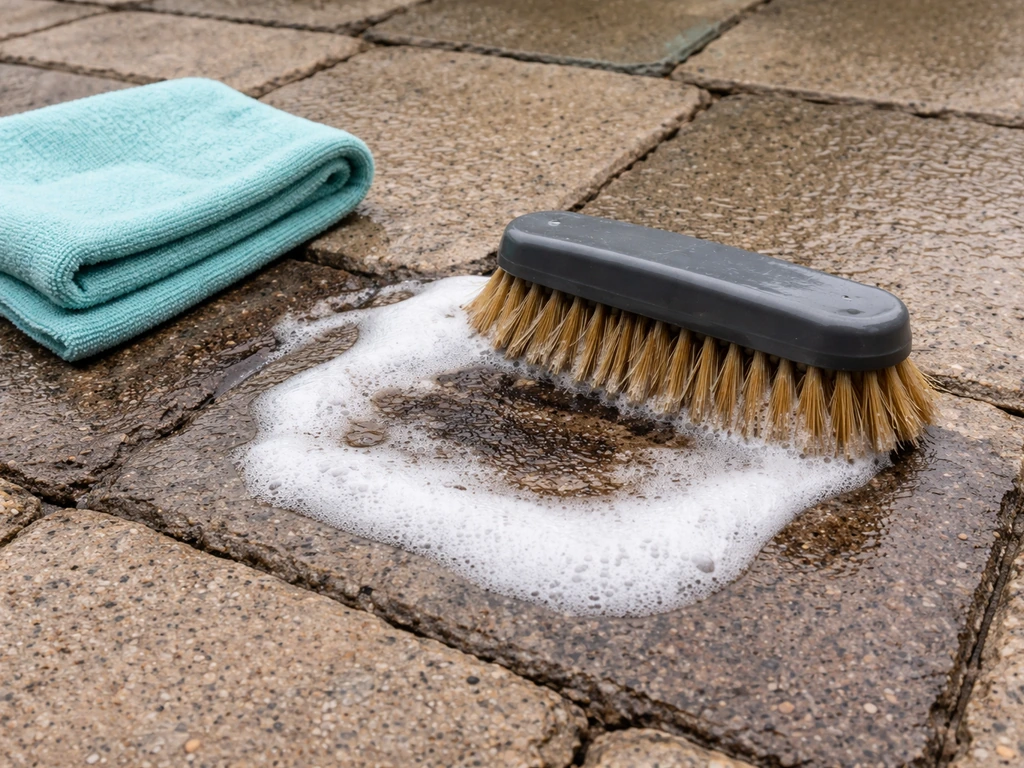
Figure out your surface and what kind of grease you're dealing with
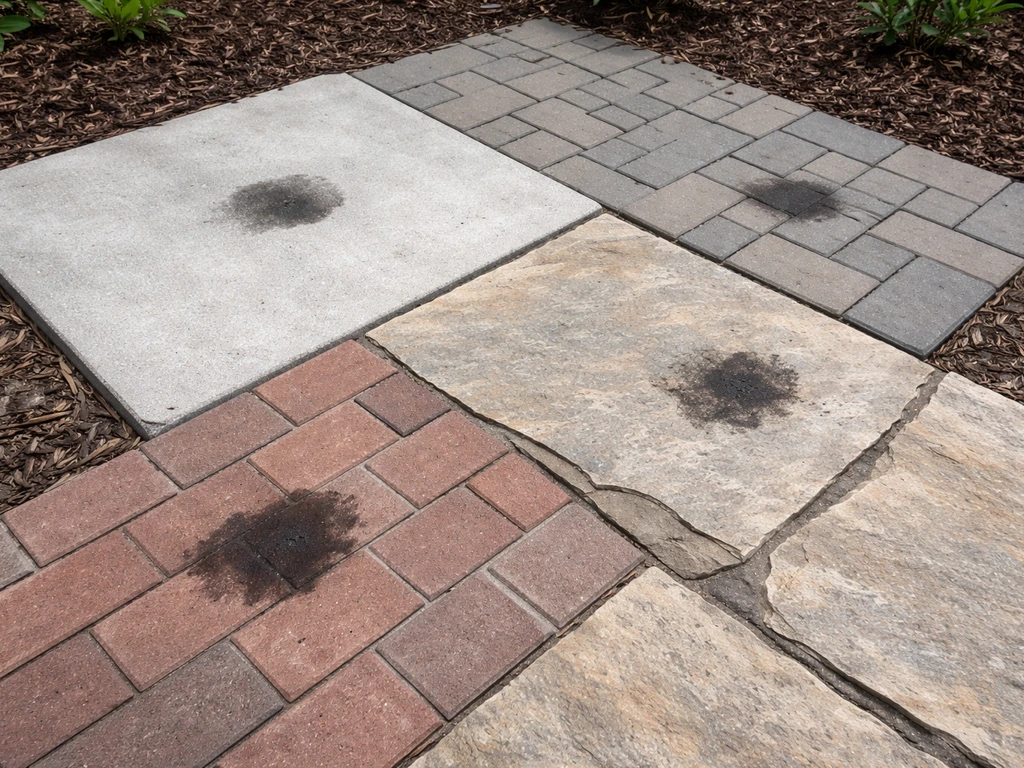
Before you grab anything from under the sink, take 30 seconds to look at what your patio is made of. The material determines almost everything: what cleaner is safe, how hard you can scrub, and whether a pressure washer is a good idea. Common patio surfaces include poured concrete, concrete or clay brick, natural stone (flagstone, slate, sandstone, limestone), travertine, and interlocking pavers made from concrete or natural stone. If you're not sure, concrete looks smooth and uniform, brick has that classic rectangular block look with mortar joints, and natural stone has irregular textures and color variations.
The age of the grease matters just as much as the surface. Fresh grease (still wet or tacky, happened within the last few hours) is dramatically easier to remove because it hasn't had time to soak into the pores of the material. Set-in grease (anything dried, darkened, or that's been there more than a day) has penetrated deeper and will need a longer dwell time, possibly multiple treatments, or a poultice approach. BBQ drippings, cooking oil spills, and car maintenance grease all behave similarly, but animal fat from cooking can be slightly stickier than motor oil, so keep that in mind when choosing a degreaser.
Prep first: protect your surroundings and test your cleaner
A few minutes of prep saves you from creating a new problem while fixing the old one. Grease cleaners and degreasers can damage plants and grass, so wet down any lawn, planters, or garden beds close to the stain before you start. This dilutes any runoff that reaches them. Move furniture, cushions, and planters away from the work area so they don't get splashed. If you have a pet door near the patio, block it off while you work and until the surface is fully rinsed and dry.
Always test your chosen cleaner in an inconspicuous spot first, especially on natural stone, brick, or travertine. Apply a small amount, wait the full dwell time, rinse, and check for discoloration or surface change before treating the main stain. This one step has saved me from ruining a perfectly good patio more than once. Also pre-wet the entire stained area with clean water before applying any cleaning solution. This is actually a formal recommendation from concrete cleaning guidelines and it matters: a dry surface can absorb cleaner too fast, reducing its effectiveness and making it harder to rinse out completely.
- Wet down nearby grass, plants, and garden beds before you start
- Move furniture and pots away from the work area
- Wear rubber gloves and eye protection when using degreasers or stronger chemicals
- Test cleaner in a hidden corner: apply, dwell, rinse, check
- Pre-wet the stained surface with plain water before applying any cleaning product
- Never use gasoline or other volatile, flammable solvents to remove grease — this is a genuine safety hazard
The fastest manual method that works on most patios
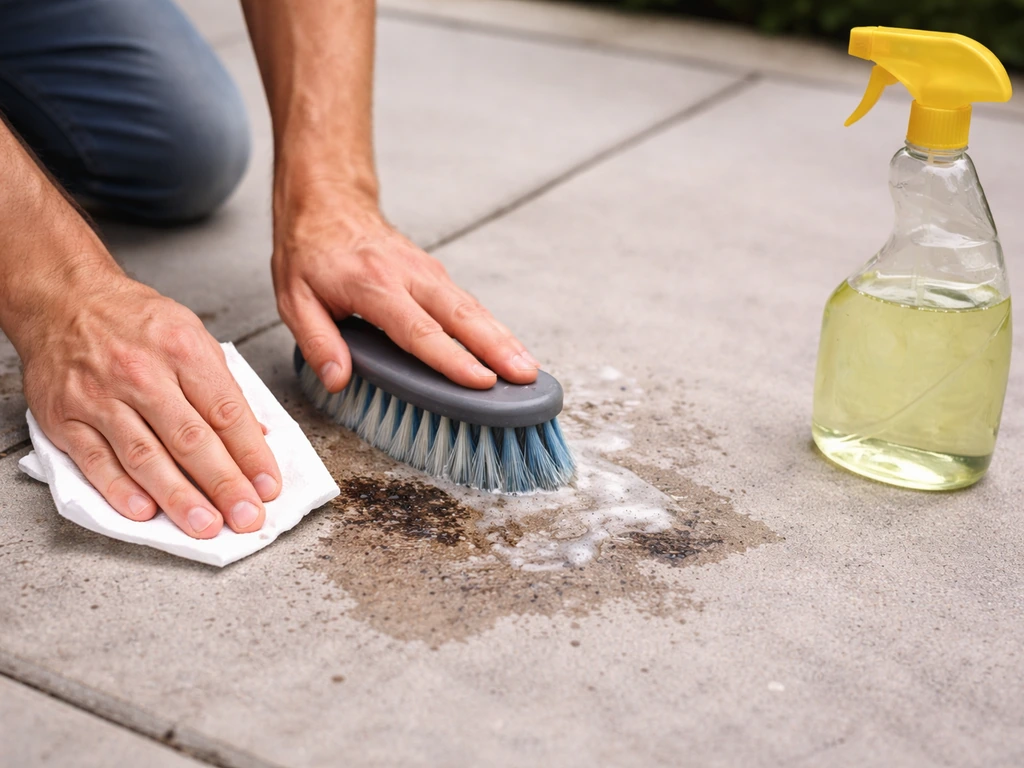
This is my go-to starting point regardless of surface type, because it's safe, effective on fresh stains, and uses things most people already have. For set-in stains you may need to follow up with something stronger, but start here.
- Blot up any excess fresh grease with paper towels or an old rag. Don't wipe or spread it — press and lift straight up.
- Sprinkle a generous layer of an absorbent material (cat litter, baking soda, or cornstarch) over the stain. Leave it for 15 to 30 minutes to pull up remaining surface grease.
- Sweep or scrape up the absorbent and discard it.
- Pre-wet the area with warm water.
- Apply a commercial degreaser (dish soap works for light stains; a dedicated concrete or masonry degreaser works better for anything heavier). Use enough to cover the stain completely.
- Let it dwell for 3 to 5 minutes. Don't let it dry out.
- Scrub firmly with a stiff-bristled nylon brush or a deck brush. Work in circular motions, then back and forth.
- Rinse thoroughly with clean water. Use a hose on full pressure or pour buckets of clean water over the area. Rinse until no soapy residue remains.
- Allow to dry fully and check. Repeat if the stain is still visible.
For an eco-friendlier approach, a paste of baking soda and warm water applied to the stain, left for 20 minutes, and then scrubbed works reasonably well on fresh grease. White vinegar can help cut through light grease too, but avoid it on natural stone, travertine, limestone, or marble since the acid can etch those surfaces. Stick with pH-neutral dish soap or a dedicated stone-safe degreaser on anything natural stone-based.
Pressure washer vs. scrubbing: picking the right approach
A pressure washer speeds things up significantly and is great for large areas or stubborn set-in grease, but it's not always the right call. The main risks are etching the surface if you use too much pressure or too narrow a nozzle, and dislodging the jointing sand in paver systems if you blast directly into the joints. Here's how to think about it:
| Surface | Recommended PSI Range | Notes |
|---|---|---|
| Concrete (unsealed) | 1500–2500 PSI | Use a 25-degree or wider fan tip; avoid zero-degree nozzle |
| Concrete (sealed) | 1200–1500 PSI | High pressure can strip sealant; keep tip moving |
| Pavers (unsealed) | 1500–2000 PSI | Keep tip at least 12 inches from surface; avoid joint lines |
| Pavers (sealed) | 1500–2000 PSI | Caution near joints; max 1500 PSI recommended to protect jointing product |
| Brick | Low-to-medium, start at 1000–1500 PSI | Never use high pressure directly on mortar joints; risk of damage |
| Natural stone / flagstone | Low pressure only, under 1500 PSI | Softer stones etch easily; scrubbing often safer |
| Travertine | Low pressure only, under 1000 PSI | Porous and fragile; hand scrubbing preferred |
When scrubbing is the better choice: if you have pavers with polymeric sand in the joints, if the surface is a soft natural stone, travertine, or decorative stamped concrete with a sealed finish, I'd skip the pressure washer or use it very carefully at the low end of the ranges above. Aggressive pressure on paver joints can wash out the stabilizing sand or polymer, leaving gaps that let weeds in. A combination approach often works best: scrub with a degreaser first, then rinse with a low-to-medium pressure wash to flush everything out.
If you're renting a pressure washer and don't have much experience, start at the lowest setting, keep the nozzle at least 12 inches from the surface, and use a sweeping motion rather than focusing on one spot. Swirl marks and etching happen when you hold too close or move too slowly. A 25-degree fan tip is a safe default for most patio surfaces. The SIMPSON MegaShot MSH3125-S product listing includes quick-connect nozzle tips such as a 25° fan tip, which matches this common recommendation a 25-degree fan tip is a safe default for most patio surfaces.
Grease removal by surface type
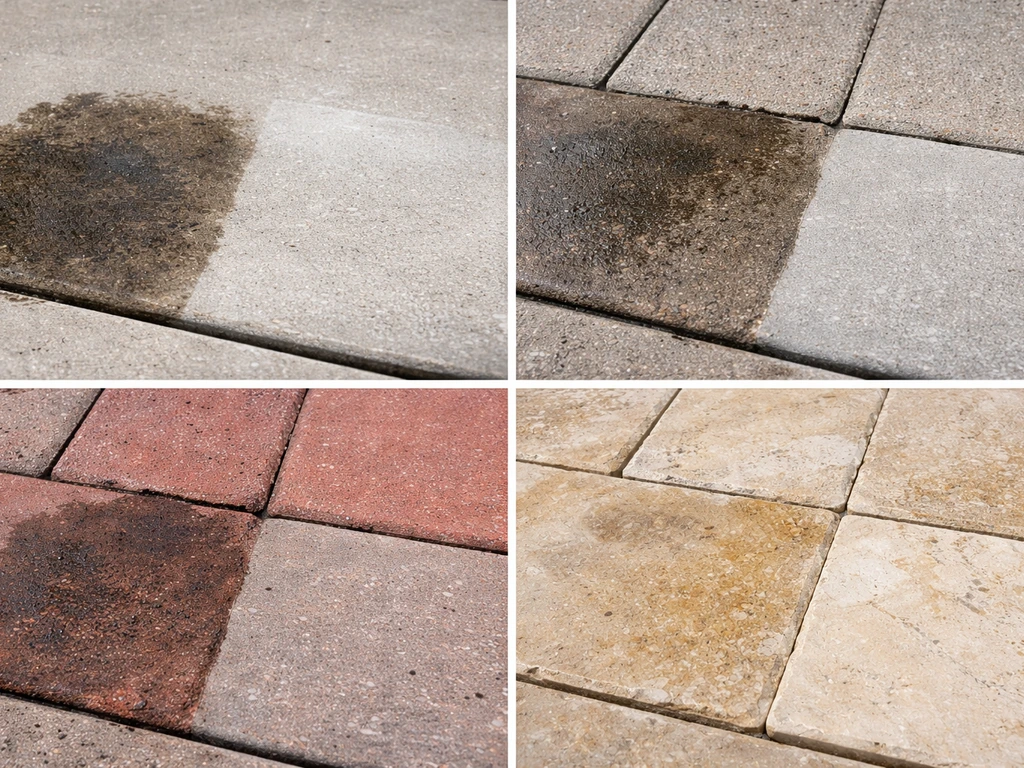
Different patio materials need different approaches. What's safe on concrete can damage travertine, and what dissolves grease on pavers might stain brick. Here's a breakdown for each common surface.
Concrete
Concrete is the most forgiving surface to clean. A dedicated concrete and masonry degreaser (products like Rust-Oleum Heavy-Duty Degreaser or Zep Heavy-Duty Concrete and Masonry Floor Cleaner are designed specifically for this) works very well on both fresh and set-in grease. Pre-wet the concrete, apply the degreaser, let it dwell for 3 to 5 minutes, scrub hard, and rinse completely with clean water.
One important note: avoid using plain soap (like bar soap or dish soap as your primary cleaner on bare concrete), standard soap can leave a residue that's hard to remove. A dedicated degreaser or concrete-specific cleaner is better. For deeper stains, a poultice method (covered below) is effective. <a data-article-id="4B3316AB-5521-4AB7-AE3B-85A7A862BE5D">Getting grease out of concrete specifically is a topic worth its own deep dive.
Pavers
Concrete or clay brick pavers respond well to degreasers and medium-pressure washing, but the jointing sand is always the concern. Use soapy water or a degreaser with a stiff brush first, scrubbing well without digging into the joints. If you follow up with a pressure washer, keep it under 1500 PSI and avoid directing the stream at a steep angle into the joints. If you do lose some jointing sand, you'll need to re-sand and compact after cleaning. Removing grease stains from pavers has its own set of nuances if you're dealing with a larger area or sealed surface.
Brick
Brick is porous and can absorb grease deeply, but it's also vulnerable to damage from the wrong cleaner and from metal brushes (which can scratch the surface and leave iron deposits in the mortar joints). Always use a nylon or natural-bristle brush, never metal. Saturate the brick well before applying any cleaner and keep it wet throughout treatment. A grease-cutting dish soap or degreaser applied to wet brick, scrubbed with a nylon brush, and rinsed thoroughly is a solid approach. Rinse very thoroughly because brick mortar joints can trap soap residue.
Natural stone (flagstone, sandstone, slate)
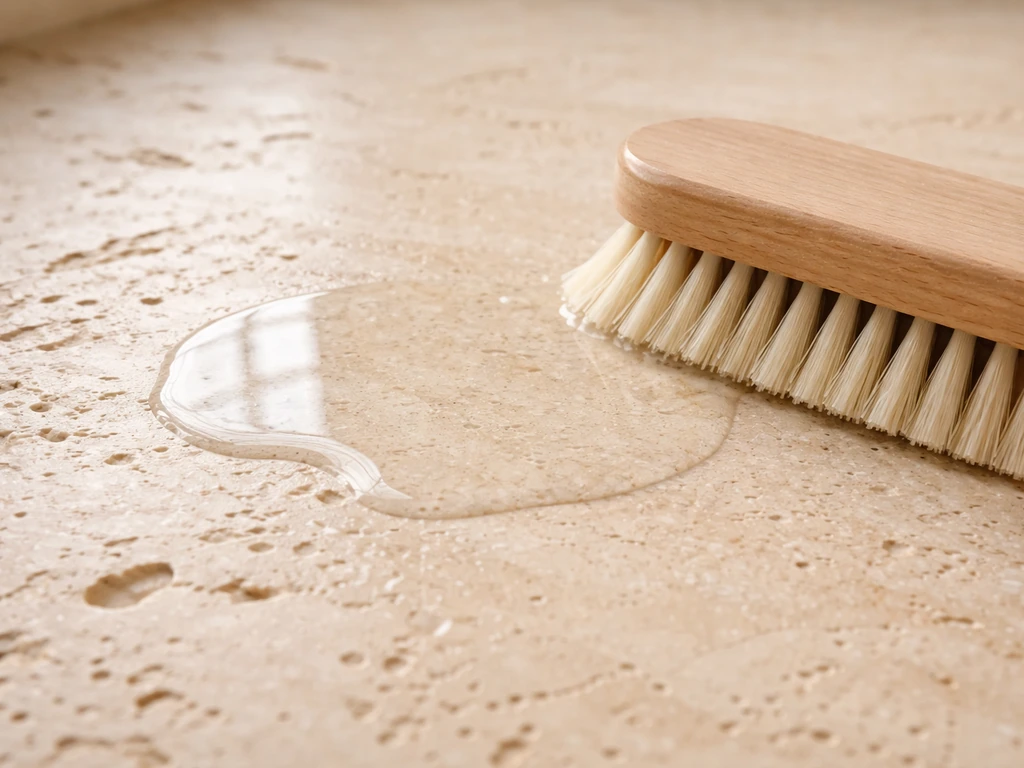
Natural stone is where you have to be most careful. If you have a grease problem on stone, use a pH-neutral degreaser and avoid acid-based cleaners to protect the surface natural stone. Many "patio cleaner" products sold in garden centers are actually hydrochloric acid-based, and these can cause serious discoloration and surface damage on sandstone, slate, limestone, and flagstone. Avoid any acid-based product on these surfaces entirely.
A pH-neutral degreaser or a product specifically designed for natural stone (like STONETECH Oil Stain Remover) is the right call. how to remove grease stains from slate patio pH-neutral degreaser or a product specifically designed for natural stone. Scrub gently with a soft to medium nylon brush. For set-in stains, a poultice works well.
If you have flagstone, there's more detail worth knowing about the specific risks of getting grease off stone patios.
Travertine
Travertine is both porous and acid-sensitive, which means it needs the gentlest approach of any common patio material. No acid cleaners, no vinegar, no muriatic acid, nothing with a low pH. Use a pH-neutral stone-safe degreaser, apply it gently, and hand scrub with a soft nylon brush. Travertine has natural pits and voids that can trap grease, so you may need to repeat the treatment a few times. Rinse well with plain water and dry the surface. Low-pressure rinsing only.
Patio slabs (generic concrete slabs)
Most generic patio slabs are essentially concrete, so the same degreaser approach applies. However, if they're sealed or have a colored finish, treat them more like sealed concrete: lower pressure, avoid harsh acids, and always test first. Getting grease off patio slabs is worth a closer look if you're dealing with a larger spill across multiple slabs. Getting grease off patio slabs is worth a closer look if you're dealing with a larger spill across multiple slabs how do you get grease off patio slabs.
When regular degreasers aren't cutting it: stronger options
If you've done two rounds of degreaser and scrubbing and the stain is still clearly visible, it's time to step up. Here are the escalating options, from moderate to stronger, with honest notes on where each is appropriate.
Poultice method for deep set-in stains
A poultice is essentially a thick paste that draws the grease back out of the porous surface as it dries. Mix an absorbent powder (fuller's earth, diatomaceous earth, or even plain flour) with a degreasing liquid (acetone, mineral spirits, or a commercial degreaser) into a peanut butter-like consistency. Spread it about a quarter inch thick over the stain, cover with plastic wrap, tape down the edges, and let it sit for 24 to 48 hours.
When it's fully dry, scrape it off with a plastic scraper (not metal), brush away the residue, and rinse the area. For natural stone, STONETECH Oil Stain Remover works on this same principle, and the manufacturer specifies a 48 to 72 hour drying window before removal. This is slower but genuinely effective on old, deep stains.
For deep-seated oil-based stains on natural stone, the stain typically darkens the stone and often needs to be chemically dissolved and then flushed or rinsed away, with a poultice approach commonly used.
Stronger commercial degreasers
For concrete and pavers, heavy-duty concrete degreasers like those from Rust-Oleum, Zep, or Conspec are formulated to penetrate and lift oil-based stains. Follow the label instructions closely: apply to a pre-wetted surface, allow the recommended dwell time (often 1 to 5 minutes depending on the product), scrub, and rinse immediately and thoroughly. Don't let these products dry on the surface. Always pre-test in a hidden area first.
Muriatic (hydrochloric) acid: use with extreme caution and only on concrete
Muriatic acid is sometimes suggested for stubborn stains on concrete, but it's worth being very clear about the risks. Acid-based patio cleaners can cause dramatic discoloration and damage on natural stone, brick, travertine, limestone, sandstone, flagstone, and Indian sandstones. Even on concrete, acid cleaners require proper dilution (a general reference point from concrete guidance is roughly 1 part acid to 9 to 19 parts water, but check your specific product instructions), thorough pre-wetting, neutralization after use, and complete rinsing.
Always wear acid-resistant gloves, eye protection, and work in well-ventilated conditions. Honestly, for most residential grease stains, a good commercial degreaser and some elbow grease will do the job without the added risk. I'd only reach for muriatic acid as a last resort on bare, unsealed concrete, and never on any natural stone or specialty surface.
Rinse properly, dry completely, and stop the next stain before it happens
Rinsing and drying
Rinsing is not optional and it's not a quick splash. After any cleaning treatment, rinse the surface with clean, clear water and keep rinsing until the water runs clear and there's no soapy or chemical residue left. Any cleaner residue left behind can attract dirt, leave a film, or continue reacting with the surface. If you used a strong chemical, do a final rinse and mop or squeegee any standing water away. Let the surface dry fully before checking the result or applying any sealant. A damp surface will look darker and may hide whether the stain is actually gone, so give it a few hours in decent weather before you declare victory or decide you need another round.
If the stain is still there
A single treatment won't always fully remove a deep or old stain. That's normal. Let the surface dry completely, then repeat the process. Most grease stains respond well to two or three treatment cycles. If you're on your third round and still seeing a significant mark, try the poultice method or step up to a stronger commercial degreaser. What you should not do is immediately apply acid or a very strong chemical out of frustration, doing so without testing and with an already-treated surface can cause more surface damage than the original stain.
Preventing grease stains from coming back
The best protection against future grease stains is sealing your patio surface. A good penetrating sealer fills the pores in concrete, stone, and pavers so that grease sits on top rather than soaking in immediately. This gives you a window of time to clean it up before it becomes a stain at all. Most patio surfaces benefit from resealing every 1 to 3 years depending on traffic and weather exposure.
- Seal your patio surface after cleaning: a penetrating sealer makes future spills much easier to clean up
- Place a grill mat or drip tray under your BBQ or smoker to catch drippings before they hit the patio
- Wipe up cooking oil, grease, and food spills as soon as they happen — fresh stains take minutes to clean, set-in stains can take hours
- Lay down a rug or outdoor mat in high-traffic zones near outdoor cooking areas
- Rinse the patio after any outdoor cooking session with a quick hose-down to remove light residue before it bakes in
- If you change oil or do any vehicle maintenance, always use a drip pan, and do that work off the patio if possible
Getting grease off your patio is genuinely a manageable job when you use the right cleaner for your material, give it enough dwell time, scrub it out properly, and rinse it fully. The extra minutes you spend prepping and testing will save you from a surface damage headache. And if you seal the surface afterward, you'll rarely have to deal with a stubborn stain again.
FAQ
Can I use baking soda paste or vinegar if I do not know what my patio material is?
Only if you can confirm the surface is safe. Baking soda is generally low risk, but vinegar is acid and can etch or dull travertine, limestone, slate, sandstone, and marble. When you are unsure, stick to a pH-neutral degreaser and do a hidden-spot test first.
How long should I leave the degreaser on before I scrub or rinse?
Use the product label dwell time as the controlling rule, because too little time can leave grease behind and too long can increase residue risk. If you do not have a label, aim for short dwell windows, then re-treat after fully drying rather than letting it sit for many hours.
What is the safest way to scrub grease without damaging the surface?
Pre-wet first, use a stiff nylon brush for most surfaces, and avoid metal bristles on brick and natural stone. Apply pressure gradually, focus on agitation rather than digging into joints, then rinse thoroughly to remove any mobilized oil.
Can I clean grease with just dish soap and water?
Sometimes for very fresh light grease, but it is often too weak for set-in motor oil or deep BBQ drippings. Also note that on bare concrete, plain soap can leave a stubborn residue that needs more rinsing or a degreaser to fully clear.
Why does the stain still look darker after rinsing?
Grease is not the only thing that affects appearance. Water and leftover cleaner can darken porous materials temporarily, so evaluate only after several hours of drying in normal weather. If it is still clearly visible when dry, repeat treatment or move to a poultice for deep stains.
Do I need to neutralize after using a degreaser or muriatic acid?
Most pH-neutral degreasers do not require special neutralization beyond thorough rinsing. Acid-based treatments, if you ever use them, require proper rinsing and follow the product instructions for neutralization, plus acid-resistant gloves and eye protection.
Is pressure washing ever a good idea for pavers with polymeric sand?
Yes, but only carefully. Direct high-pressure streams at joints can wash out polymer or jointing sand, leaving gaps and weed risk. For polymeric joints, prefer scrub with a degreaser first, then a low-to-medium pressure rinse, keeping the nozzle off the joints.
What PSI should I use if I rent a pressure washer?
For general patio work, start on the lowest setting, keep the nozzle at least about 12 inches away, and use a fan tip. For pavers and concrete joints, the article guidance suggests staying under 1500 PSI and avoiding steep angles into joints.
What if the grease has been on the patio for weeks or months?
Expect multiple treatments. After two or three rounds of degreaser and scrubbing, switch to a poultice to draw oil out as it dries, then rinse after removal. Fully dry the surface between attempts so you can judge progress accurately.
Will cleaning grease harm nearby grass or plants even if I pre-wet them?
Pre-wetting helps, but you should also avoid spraying cleaner runoff toward beds and consider covering sensitive plants. After rinsing, wash the surrounding area lightly with clean water to reduce chemical concentration left in runoff.
Should I seal immediately after the grease is gone?
Wait until the surface is completely dry and the residue is fully rinsed away. A damp or still-oily surface can trap contaminates under the sealer, causing re-soiling or poor bonding. If possible, give it a full day in dry weather before sealing.
How can I tell if my patio is sealed before I choose a cleaner?
A simple test is to sprinkle water on the surface after it is clean and dry. If the water beads and sits, it is likely sealed, and you should use lower pressure, avoid harsh acids, and test cleaners in a hidden spot to prevent patchiness.
What should I do if the grease stain spreads during cleaning?
That usually means the oil is being mobilized but not being lifted. Stop and let the area settle, then re-treat with a stronger degreaser and enough dwell time, scrub in controlled sections, and rinse until water runs clear. For deep spread patterns, a poultice is often the next step.
How do I remove grease from the edges or cracks where a brush cannot reach well?
Work in sections and concentrate dwell time where the grease has wicked into seams. After degreasing, use a smaller nylon brush or a soft deck brush to agitate in cracks, then rinse from the outside toward the stain so runoff carries loosened oil away.
Next Articles
How to Remove Thompson’s Patio Sealer Step by Step
Step-by-step removal of Thompson’s patio sealer on concrete, brick, pavers, and stone, with safety, tests, and cleanup.
Can You Remove Patio Sealer? How to Strip It Safely
Learn if you can remove patio sealer and how to strip it safely by type, material, and method.
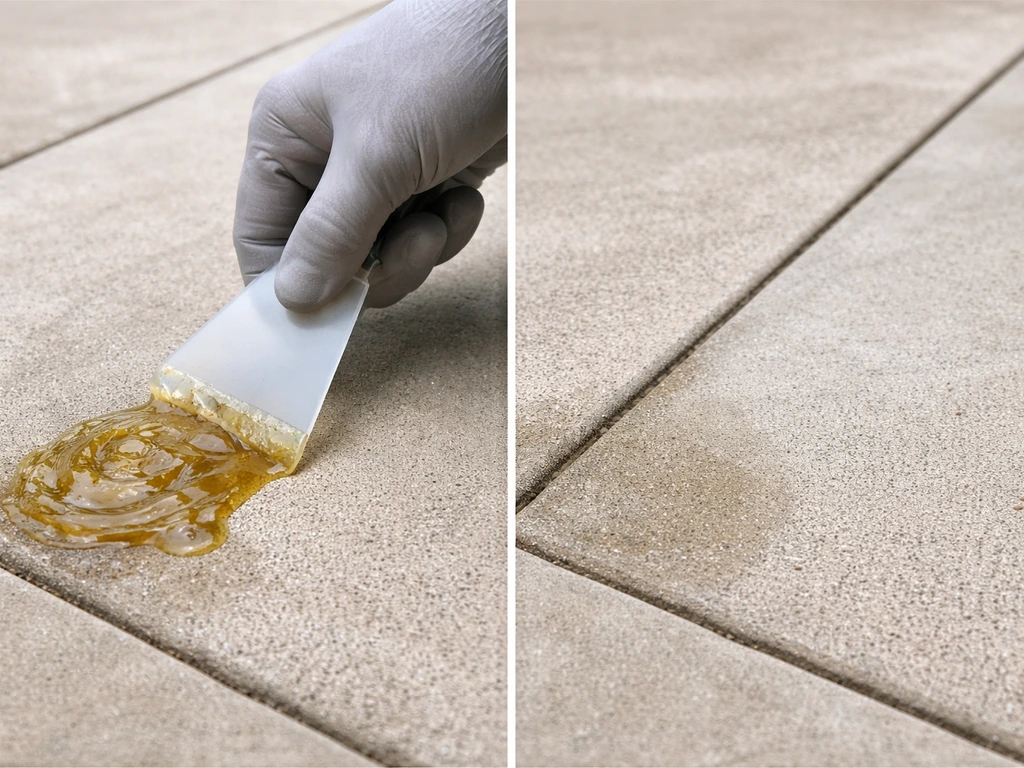
How to Remove Resin From Patio Safely by Surface Type
Step by step guide to remove resin from patio by surface type with safe scraping, softening and solvent methods.