Most concrete patio stains come down to a handful of culprits: rust, oil and grease, organic growth like mold and algae, tannins from leaves or wood, mineral deposits (efflorescence), and paint. Once you know which one you're dealing with, the fix is usually straightforward. Start by identifying the stain, protect your plants and test a small spot first, then use the right cleaner for that specific stain type. Below is everything you need to do that safely, whether you're scrubbing by hand or running a pressure washer.
How to Remove Concrete Stains From Patio Slabs
Dylan Hale
6 Jun 2026
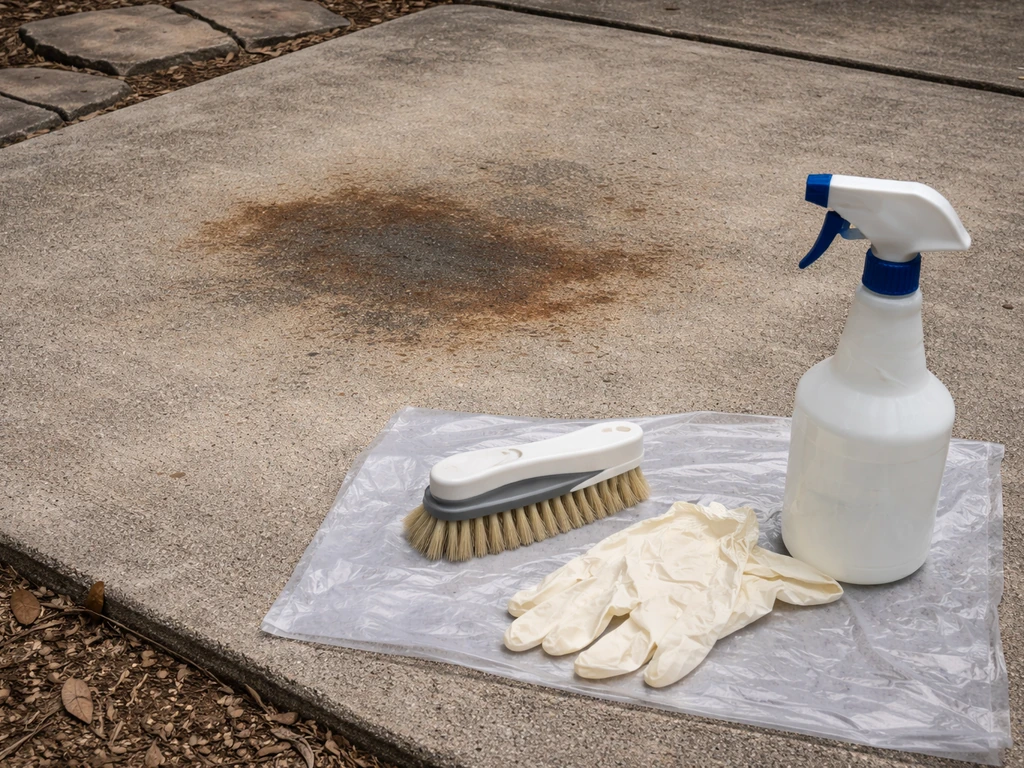
Figure out what you're actually dealing with
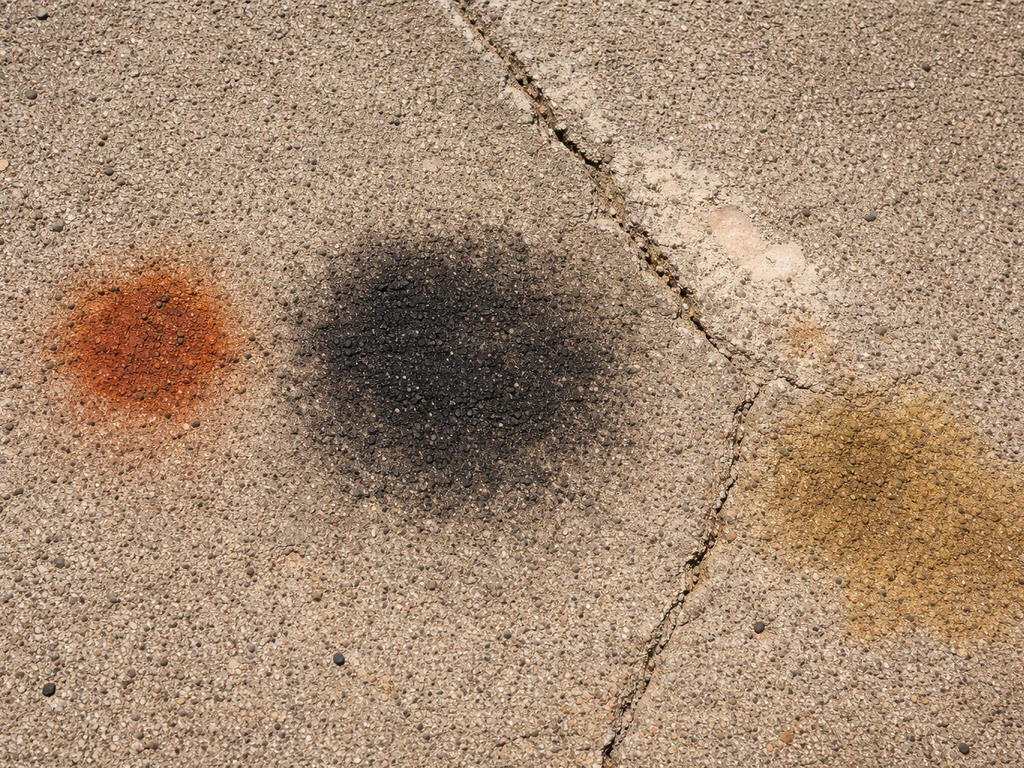
Before reaching for any cleaner, take a close look at the stain. Color, texture, and location tell you a lot. Here's a quick guide to the most common types:
| Stain appearance | Likely cause | What to use |
|---|---|---|
| Orange or reddish-brown | Rust from metal furniture, nails, or rebar | Oxalic acid poultice |
| White powdery or chalky crust, often near joints or cracks | Efflorescence (mineral salt deposits) | Muriatic or sulfamic acid, or dilute vinegar |
| Black, green, or dark grey patches | Mold, mildew, or algae (organic growth) | Sodium hypochlorite or oxygen bleach |
| Dark brown tannin ring, often leaf-shaped | Tannins from leaves, wood, or plant matter | Oxalic acid or oxygen bleach |
| Dark grey or black spreading patch, oily feel | Oil or grease (BBQ drips, engine oil) | Poultice with absorbent material or commercial degreaser |
| Coloured splatter or solid film | Paint or old sealant | Paint stripper or mechanical removal |
| White or grey haze, slight crust after wet weather | Hard water or mineral deposit | Dilute acid cleaner or descaler |
One thing that trips people up is confusing efflorescence with mold. Efflorescence is a crystalline, salt-like white deposit that forms when water-soluble salts migrate through the concrete and crystallize on the surface as moisture evaporates. It's chalky and dry. Mold and algae are darker, usually greenish or black, and tend to grow in shaded or damp areas. The treatments are completely different, so it's worth a moment to identify correctly before you start.
Before you clean anything: prep, protect, and test
A few minutes of prep makes a real difference. Skipping it can mean dead plants, ruined paint on nearby surfaces, or a stain that gets worse instead of better. Here's what I always do first.
Protect your surroundings
- Move planters, furniture, and cushions well away from the work area.
- Water any plants or grass bordering the patio thoroughly before you start. Wet soil dilutes any cleaner that splashes onto it.
- Drape plastic sheeting over plants you can't move.
- Close doors and windows to keep fumes out of the house.
- Cover any painted surfaces, fencing, or brickwork that chemical cleaners could splash onto.
Do a test patch first
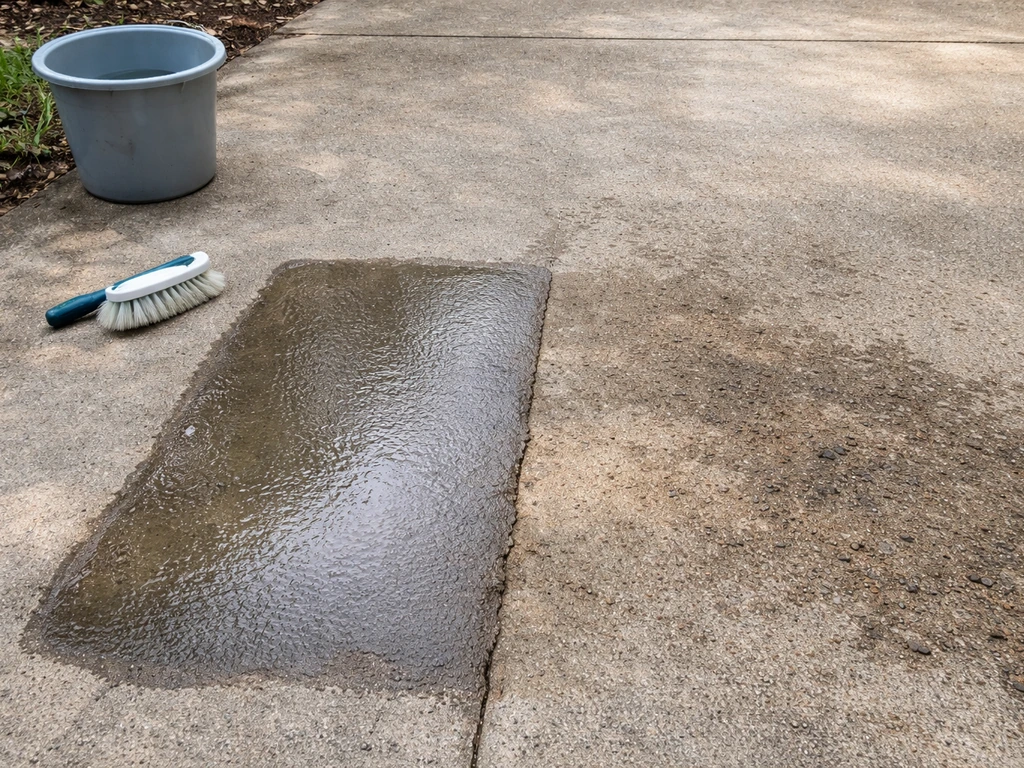
Always test your cleaning solution on a small, inconspicuous area before going full coverage. Concrete slabs vary a lot in age, finish, and whether they've been previously sealed or treated. Some older slabs can discolour or even etch with stronger chemicals. Apply your chosen solution to a roughly 6-inch square, wait the full dwell time, rinse, and let it dry completely before checking. If the surface looks fine, proceed with confidence.
General prep steps
- Sweep or blow all loose debris off the slab.
- Rinse the entire surface with plain water so it's damp but not pooling.
- Check whether the slab has been sealed (water beads up on a sealed surface). If it has, many acid-based cleaners won't react properly and you may need to strip the sealer first or use mechanical prep.
- Put on your PPE: rubber gloves, safety glasses, and old clothes. For acid-based cleaners, add a respirator.
Stain-by-stain removal methods
Rust and metal stains
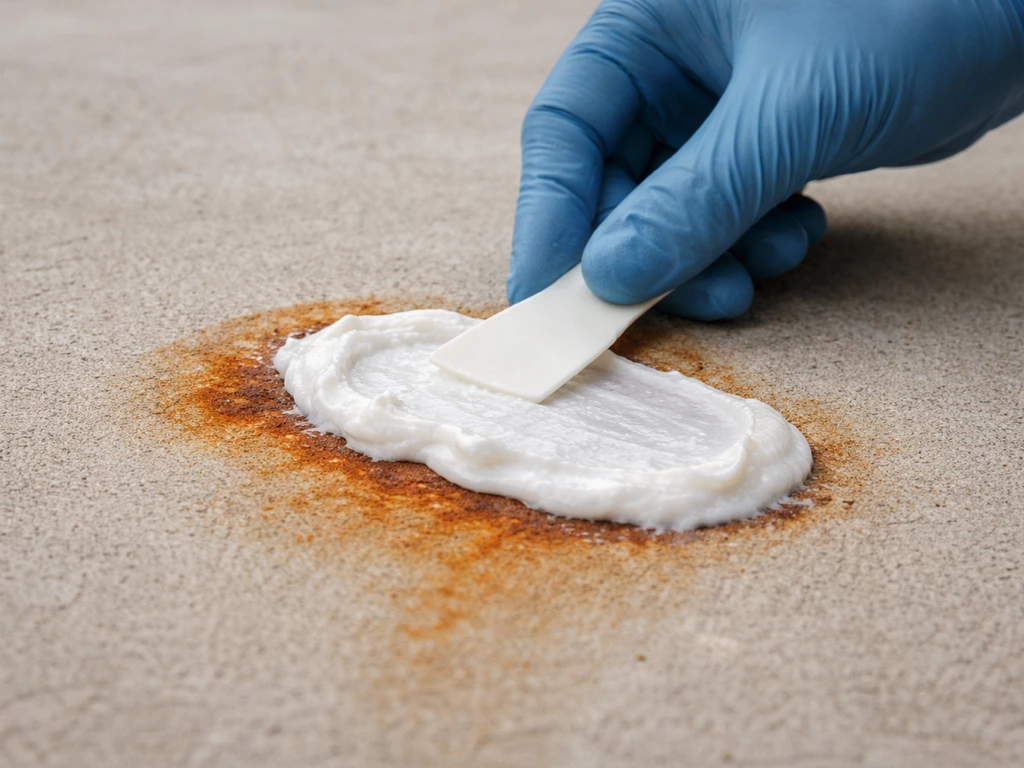
Rust stains are stubborn but very treatable with oxalic acid. The acid converts the iron compounds into water-soluble salts that can be rinsed away. For deep stains on porous slabs, a poultice works best because it draws the dissolved rust out of the concrete rather than just treating the surface.
Mix 1 pound of oxalic acid crystals into 1 gallon of water, then combine this solution with a fine absorbent powder (diatomaceous earth or talc works well) to form a thick paste. Spread it about a quarter-inch thick over the stain, cover with plastic wrap, and leave it for 24 to 48 hours. Once it dries, sweep up the dried poultice and rinse the area thoroughly.
For surface-level rust, you can apply the oxalic acid solution directly, scrub with a stiff nylon brush, leave it 5 to 10 minutes, and rinse. Note: do not use oxalic acid if you're also using sodium hypochlorite on the same area, as mixing acids with bleach produces toxic chlorine gas.
Organic stains: mold, algae, and mildew
Dark green, black, or grey patches of mold and algae respond well to sodium hypochlorite (bleach) or oxygen bleach (sodium percarbonate). Sodium hypochlorite is faster and stronger. For light algae or mildew on concrete patio slabs, a diluted mix works well: use a 1:5 ratio of 12. 5% sodium hypochlorite to water, apply with a brush or sprayer, leave it for 10 to 15 minutes, scrub if needed, and rinse thoroughly.
Never mix bleach with vinegar, oxalic acid, or any other acidic cleaner as this releases chlorine gas. Oxygen bleach is gentler and safer around plants: dissolve it in water per the product instructions, wipe or pour onto the stain, wait about 10 minutes, scrub, then rinse. It takes longer but I'd use it as the first option if you have pets or a vegetable garden nearby.
Oil and grease stains
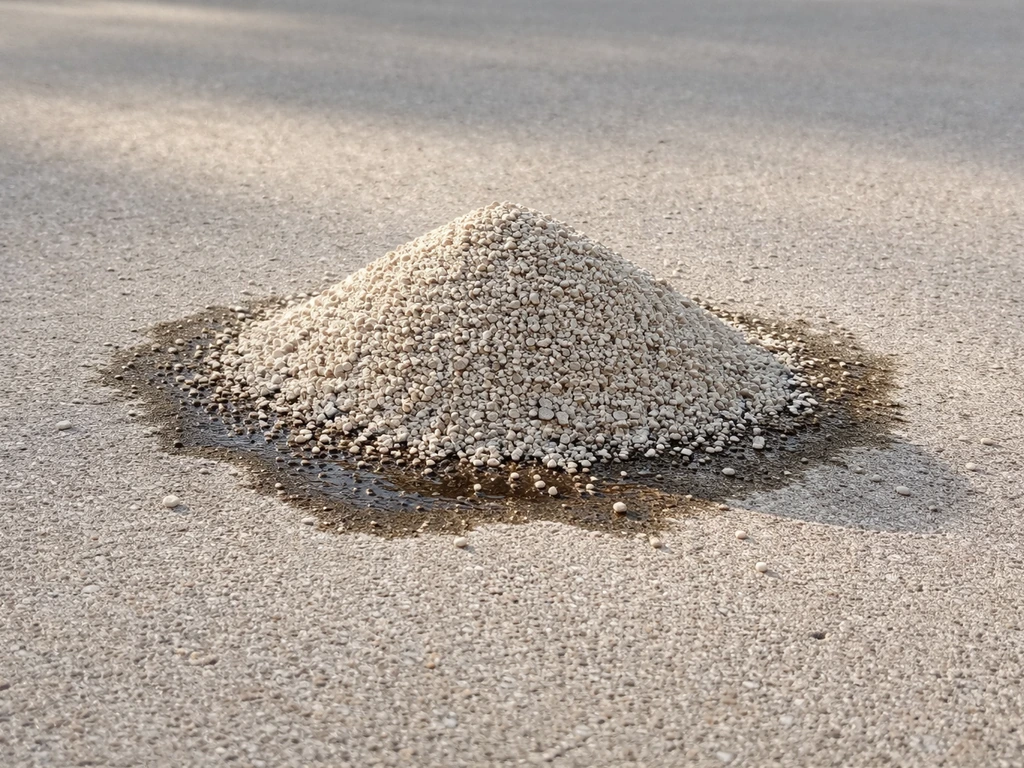
Fresh oil spills are much easier to deal with than old ones. If it's fresh, immediately cover the spill with an absorbent material: cat litter, baking soda, or sand. Leave it for several hours, sweep it up, and rinse. For set-in grease, a poultice is your best tool.
Apply a commercial oil and grease poultice (products like PROSOCO Oil and Grease Stain Remover are designed specifically for concrete and porous paving slabs) directly over the stain. Cover with plastic wrap and leave it for 5 to 8 hours. The poultice draws the oil out of the concrete pores as it dries. Sweep up the dried material and rinse.
For large or heavily contaminated areas, a heavy-duty degreaser applied before pressure washing can help break down residual oil. Grease stains go deeper the longer they sit, so act fast if you can.
Tannin stains from leaves, bark, and wood
Tannins leach out of wet leaves, timber furniture, and plant debris, leaving flat dark brown or yellowish stains on concrete. Oxalic acid is the go-to treatment here because it converts the tannin compounds into water-soluble salts. Apply a diluted oxalic acid solution, scrub with a nylon brush, leave for 5 to 10 minutes, and rinse well. Oxygen bleach also works for lighter tannin staining and is worth trying first if the discolouration is not too deep.
Avoid using sodium hypochlorite as a first choice for tannin stains because it can sometimes intensify the discolouration on certain concrete finishes, and as always, never mix it with any acid-based product. If you're regularly dealing with leaf stains on your patio, removing fallen leaves quickly (before they go wet and sit for days) is the most effective prevention.
Efflorescence and mineral deposits
Efflorescence (the white powdery crust) is best treated with a mild acid. Diluted white vinegar is a reasonable first attempt for light deposits: apply undiluted or slightly diluted, let it sit for 5 to 10 minutes, then scrub and rinse thoroughly. If that doesn't shift it, a concrete and masonry cleaner/etcher or a diluted muriatic acid solution will work more effectively. Master Builders guidance specifically names muriatic or sulfamic acid as appropriate for efflorescence salt removal.
After treatment, remove excess liquid with a non-metal squeegee or mop, then rinse generously. Important: efflorescence is a symptom of moisture movement through the slab. The GSA efflorescence guidance similarly explains that this moisture-driven salt-like deposit needs thorough rinsing and attention to the conditions causing the movement so it does not keep returning [efflorescence is a symptom of moisture movement through the slab](https://inspectapedia. com/exterior/Removing%20Efflorescence%20from%20Concrete-GSA.
pdf). Cleaning it off without fixing drainage or waterproofing issues means it will return. Address the source of moisture for a lasting result.
Paint stains
Fresh paint can often be scrubbed off with hot soapy water and a stiff brush before it cures. Dried paint usually needs a dedicated concrete paint stripper or, for small spots, careful mechanical removal with a scraper or wire brush attachment. Pressure washing can help remove softened paint after applying stripper. Avoid using acid cleaners on paint stains as they're not designed for this and can cause other surface damage without effectively removing the paint.
Chemical options: which cleaner does what
Choosing the right chemical matters more than scrubbing harder. Here's a straightforward breakdown of when each cleaner type earns its place.
| Cleaner | Best for | Strength | Key safety note |
|---|---|---|---|
| White vinegar (acetic acid) | Light efflorescence, light mineral deposits | Gentle | Safe around plants when diluted and rinsed; don't mix with bleach |
| Oxygen bleach (sodium percarbonate) | Mold, algae, tannin stains, general organic staining | Moderate | Dissolve fully in water before use; safe for most garden surroundings |
| Sodium hypochlorite (bleach) | Heavy mold, algae, stubborn organic growth | Strong | Never mix with any acid; ventilate well; dilute for concrete use |
| Muriatic acid (hydrochloric acid) | Efflorescence, hard mineral deposits, acid etching | Aggressive | Dilute to 10% (1 part acid to 2 parts water); wear respirator; never mix with bleach |
| Oxalic acid | Rust/iron stains, tannin stains | Moderate-strong | Never mix with bleach or sodium hypochlorite; rinse thoroughly |
Using oxygen bleach safely
Sodium percarbonate (oxygen bleach) must be fully dissolved in water before it becomes active. Mix it according to the product instructions, apply to the stained area, and allow a dwell time of around 10 minutes before scrubbing and rinsing. It's slower than sodium hypochlorite but considerably safer around plants, pets, and painted or coloured concrete. This is my first recommendation for organic stains when the patio borders a garden.
Using sodium hypochlorite safely
For heavier mold, algae, or organic build-up, sodium hypochlorite is highly effective but must be used carefully. Dilute it before use (a 1:5 ratio of 12.5% SH with water works well for concrete patios). Apply with a brush or low-pressure sprayer, allow 10 to 15 minutes dwell time, and rinse very thoroughly. The critical safety rule: never mix sodium hypochlorite with vinegar, oxalic acid, or any acidic cleaner. The reaction produces chlorine gas, which is acutely toxic. Work in a well-ventilated area and keep people and pets off the surface until it's fully rinsed and dry.
Using muriatic acid safely
Muriatic acid is the strongest tool in the kit and should be reserved for stubborn efflorescence, heavy mineral deposits, or surface prep where gentler options have failed. It's typically available at 31% to 37% concentration and needs to be diluted down to approximately 10% (roughly 1 part acid to 2 parts water, always adding acid to water, never the reverse).
Apply to a pre-wetted surface, allow the acid to react for 2 to 10 minutes (no longer than necessary), then rinse extremely thoroughly. You can neutralise any remaining acid with a baking soda and water solution before the final rinse. Don't use muriatic acid on sealed or previously coated slabs without first removing the sealer, as the acid won't react properly with the concrete surface beneath.
Pressure washing vs scrub-and-soak: which approach to choose
Both methods work well when used correctly. The choice mostly comes down to the stain type, slab condition, and what equipment you have access to.
When scrub-and-soak wins
For chemical treatments like oxalic acid poultices, oxygen bleach, or muriatic acid, scrub-and-soak is almost always the better approach. These cleaners need dwell time to work, and pressure washing them off too early defeats the purpose. Scrubbing also lets you focus on the stain and apply mechanical effort exactly where it's needed without driving contaminated water across a clean surface. Renters or anyone without a pressure washer will get excellent results with a stiff nylon-bristle brush, a bucket, and the right cleaner.
When pressure washing is the right call
Pressure washing excels at removing loose organic growth, post-treatment rinsing, and general surface cleaning before or after chemical treatment. It's also very effective for covering large areas quickly. The key is using the right nozzle and standoff distance. Hold the nozzle perpendicular to the surface at a distance of 18 to 30 inches.
Use a 25-degree green fan tip for most concrete cleaning work. A 15-degree yellow tip can be used for tougher areas but proceed carefully. Avoid the 0-degree red tip entirely on concrete patio slabs as it can scar and pit the surface. A surface cleaner attachment (the disc-shaped rotating head) gives even, consistent cleaning without stop marks and is worth using if you have one.
Don't use a pressure washer to apply chemical solutions to masonry; apply chemicals by hand and use the pressure washer only for rinsing and post-treatment cleaning.
When not to pressure wash
- On cracked or spalling slabs where high pressure can worsen damage.
- When working with active chemical treatments still in dwell time.
- On freshly sealed concrete before the sealer has fully cured.
- When the stain is oil-based and not yet treated: high pressure just drives oil deeper into the pores.
Step-by-step walkthroughs for common scenarios
Removing a rust stain from a patio slab
- Sweep and rinse the area. Put on gloves and eye protection.
- Mix 1 pound of oxalic acid crystals into 1 gallon of water. Add diatomaceous earth or talc to form a thick paste.
- Spread the poultice about a quarter-inch thick over the stain. Cover with plastic wrap and tape edges down.
- Leave for 24 to 48 hours.
- Remove the plastic, let the poultice dry completely, then sweep up the dried material.
- Rinse the area thoroughly with plain water. Repeat if residual staining remains.
- Do not use bleach anywhere near this area until the oxalic acid is fully rinsed away.
Removing mold or algae from a patio slab
- Pre-wet the slab and move plants away. Put on gloves and eye protection.
- Mix sodium hypochlorite at a 1: 5 ratio with water (or use oxygen bleach for a gentler option).
- Apply the solution with a brush or pump sprayer, covering all affected areas.
- Leave for 10 to 15 minutes. Do not let it dry out; re-apply if needed.
- Scrub with a stiff nylon brush, then rinse thoroughly with plenty of water.
- Check after drying. For stubborn patches, repeat the treatment or step up to undiluted oxygen bleach.
- Once clean, rinse surrounding plants with plain water.
Removing an oil or grease stain
- For fresh spills: cover immediately with cat litter, baking soda, or sand. Leave several hours, then sweep up and rinse.
- For set-in oil: apply a commercial oil and grease poultice product directly to the stain.
- Cover with plastic wrap and leave for 5 to 8 hours.
- Remove the cover, allow the poultice to dry fully, then sweep up the dried residue.
- Rinse the area well. If a faint shadow remains, repeat the poultice process.
- For very heavy contamination, apply a degreaser before the poultice step and scrub before rinsing.
Removing efflorescence from a patio slab
- Dry-brush loose chalky deposits first with a stiff brush. Do not wet the surface yet.
- Pre-wet the slab, then apply diluted muriatic acid (1 part acid to 2 parts water) or a proprietary concrete and masonry cleaner/etcher.
- Allow the acid to react for 2 to 10 minutes. You'll see a mild fizzing reaction as it works.
- Scrub with a nylon brush, then remove excess liquid with a non-metal squeegee or mop.
- Neutralise with a baking soda and water solution if using muriatic acid, then rinse very thoroughly.
- Allow to dry fully and check results. Address the moisture source causing the efflorescence or it will return.
Keeping your patio slabs stain-free going forward
The best time to clean a stain is immediately after it happens. Oil, tannins, and even rust stains are dramatically easier to remove when fresh than after they've had days to penetrate porous concrete. Keep a bottle of oxygen bleach solution mixed and ready during outdoor entertaining season, and rinse BBQ drips, wine spills, and leaf piles off the slab before they have a chance to set.
Should you seal your patio slab?
Sealing is one of the most effective things you can do to reduce future staining. A penetrating sealer soaks into the concrete and blocks moisture and contaminants from penetrating the pores, without leaving a slippery film on the surface (which matters a lot for an outdoor patio). Film-forming sealers create a glossy surface layer that offers strong protection but can become slippery when wet and may need more maintenance over time. For exterior patio slabs, I generally recommend a penetrating sealer for practicality and safety. If your slab is new, wait at least 28 days before applying any sealer so the concrete has fully cured. Re-apply sealer every one to three years depending on traffic and weather exposure.
Regular maintenance habits that make a real difference
- Sweep the patio regularly to remove leaves and debris before they break down and leach tannins.
- Rinse the slab with plain water after heavy rain or leaf fall to clear organic matter before it stains.
- Use rubber or plastic feet on metal garden furniture to prevent rust transfer marks from legs and base frames.
- Clean the patio thoroughly with oxygen bleach or a diluted bleach solution once or twice a year before mold and algae can establish.
- Inspect the slab for efflorescence each spring and treat early before deposits harden and spread.
- Check drainage around the patio: pooling water accelerates both mold growth and salt migration.
If you're dealing with more specific situations like burn marks from a fire pit, blood stains, glue residue from old furniture feet, or persistent leaf tannin rings, those each have their own targeted approaches that follow the same core framework: identify the stain type, prep the surface, choose the right chemistry, and rinse thoroughly.
If your concrete patio has burn marks, treat them by identifying the damage type first and then using the right cleaner plus a careful test patch before rinsing burn marks from a fire pit. Glue residue on concrete patio slabs typically needs the right solvent or scraping method, followed by thorough cleaning and rinsing to prevent residue from redepositing remove glue from concrete patio.
For exact steps on how to remove burn marks from a patio, follow the targeted cleaning method for heat damage and test it in a small spot first burn marks from a fire pit. If you are dealing with blood stains on a concrete patio, you’ll want to use the right pre-treatment and cleaner based on how fresh the stain is. Blood stains on concrete can be removed by using the right pre-treatment and cleaner based on whether the stain is fresh or old blood stains on a concrete patio.
The principles above will get most people most of the way there with what they already have at home or can pick up from a hardware store for a few dollars.
FAQ
Can I use one cleaner for all concrete patio stains instead of identifying the type first?
It usually doesn’t work well. Different stain sources require different chemistry, and some mixes can worsen the problem (for example, bleach reacting with acids). If you’re unsure, start with a gentle oxygen-bleach approach for organic growth, then move to targeted treatments like oxalic acid for rust or an oil poultice for grease.
What should I do if the stain comes back after I remove it?
Reappearing stains often mean the source is still moving through the slab. Efflorescence will return if moisture pathways are unchanged, and rust or tannin stains can return if water is continually feeding the area. Look for recurring wet spots, drainage issues, and ongoing leaf/plant contact, then address water control before repeating aggressive chemistry.
Is efflorescence always safe to scrub off, or can it damage the concrete?
Scrubbing is fine for the loose powder, but aggressive acid etching or repeated harsh treatments can alter the surface finish. The safest route is mild cleaning first, rinse thoroughly, and stop once the crust is gone. If it keeps returning quickly, treat the moisture problem rather than escalating cleaners.
Will pressure washing ruin my patio surface or push stains deeper?
It can, if you use the wrong tip or hold the nozzle too close. High-pressure jets can erode softer concrete, especially with a zero-degree nozzle, and they can drive some liquids deeper into pores. Use the recommended standoff and fan tips, and prefer scrub-and-soak for stain chemistry, then pressure wash only for rinsing and loose residue removal.
Do I need to protect nearby plants and pets even with “plant-safe” oxygen bleach?
You should still rinse and protect, because concentrated product solutions can burn leaves or irritate sensitive plants. Keep people and pets off the surface until the chemistry is fully rinsed and dry, and avoid drift onto garden beds by applying carefully with a brush or low-pressure sprayer.
Can I apply muriatic acid over an unsealed, already-dirty patio?
Acid works more predictably on pre-wetted surfaces, and heavy grime can reduce contact and cause uneven reactions. Wet the area first, remove loose debris, and test a small spot. If the patio is sealed or coated, you usually need to remove the sealer first because the acid may not reach the concrete beneath.
What’s the safest way to mix or store cleaning solutions to avoid dangerous fumes?
Never mix bleach with vinegar, oxalic acid, or any acidic cleaner, and don’t store combined solutions in one container. Mix one product at a time in clean containers, label them, and keep them away from other chemicals. If you previously used an acid on the area, fully rinse and wait before using any bleach product.
How long should I wait after treatment before walking on or resealing the slab?
Plan to wait until the slab is fully dry and rinsed clean of residue. Resealing immediately after chemical cleaning can lock in contaminants or weaken adhesion. For resealing, allow adequate drying time, and if the concrete was treated with strong acids, consider waiting longer than usual and doing a small adhesion or dryness check first.
Does oil staining require a different approach for stamped or textured concrete?
Yes, textured surfaces trap oil in crevices, so surface-only cleaners may leave a halo. A poultice works better because it draws oil out of pores and embedded texture. Apply evenly, keep it covered with plastic wrap, and expect multiple applications for heavily stained stamp patterns.
I have a rust stain and there’s also algae nearby, what order should I clean in?
Start with the algae first using an oxygen bleach or diluted sodium hypochlorite method, then rinse thoroughly and let it dry. Once the organic growth is gone, treat rust with oxalic acid or an oxalic poultice. This prevents organic residue from interfering with rust chemistry and helps you see the true rust outline.
Will scraping or wire brushing damage the patio when removing dried paint or glue?
It can, especially on soft or previously sealed concrete, where aggressive scraping may create surface gouges. Use controlled pressure, keep the tool flatter to the surface, and test in a hidden area. For glue residue, remove bulk material carefully first, then use the appropriate solvent or adhesive remover method, followed by thorough rinsing to prevent re-depositing.
Next Articles
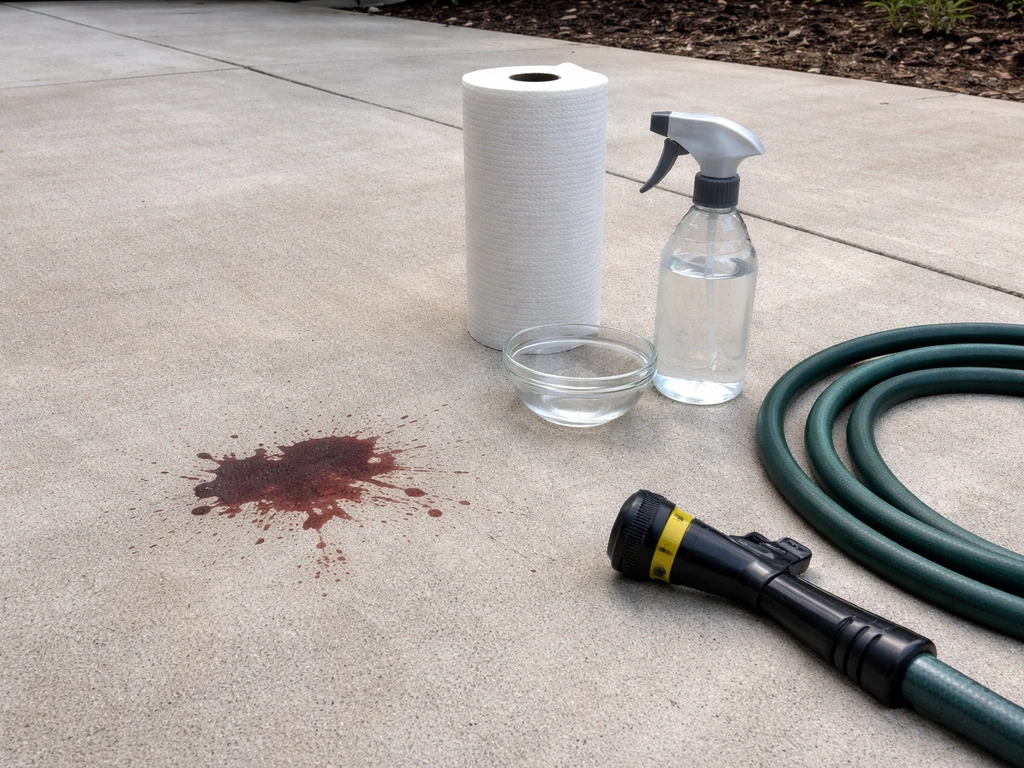
How to Get Blood Off Concrete Patio Fast and Safely
Step-by-step how to get blood off concrete patio fast: blot, safe cleaners, hydrogen peroxide or enzymes, pressure wash,
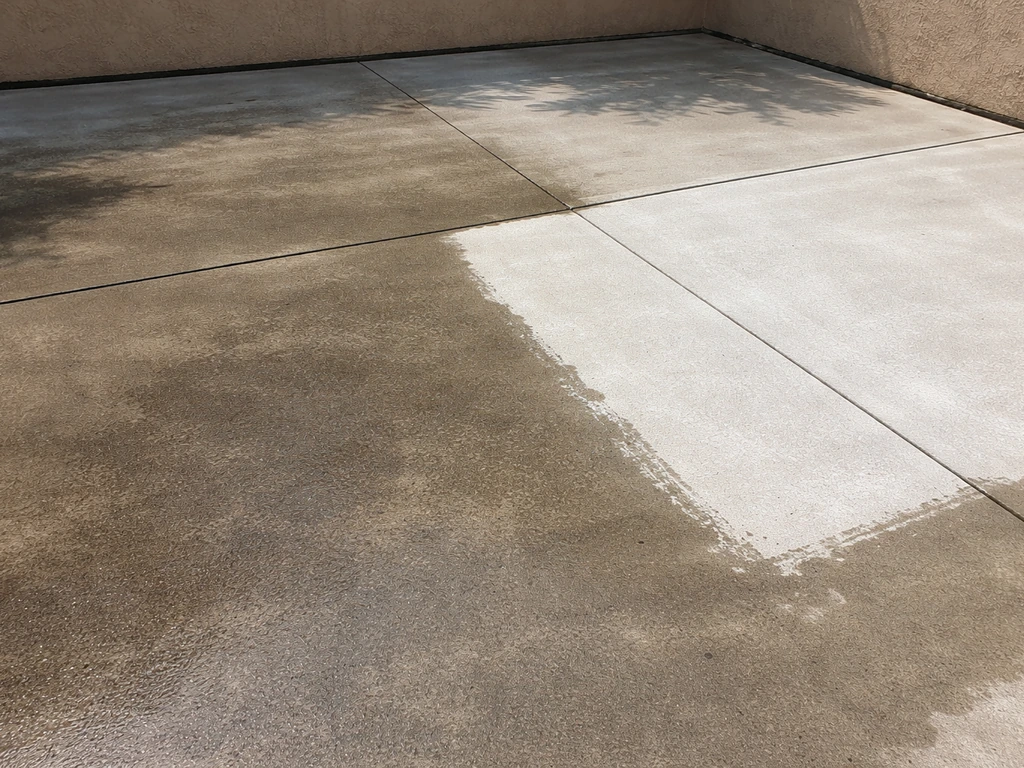
How to Remove Stain From Concrete Patio Today
Step by step how to remove stain from concrete patio fast, matching bleach, acid, or vinegar by stain type without etchi
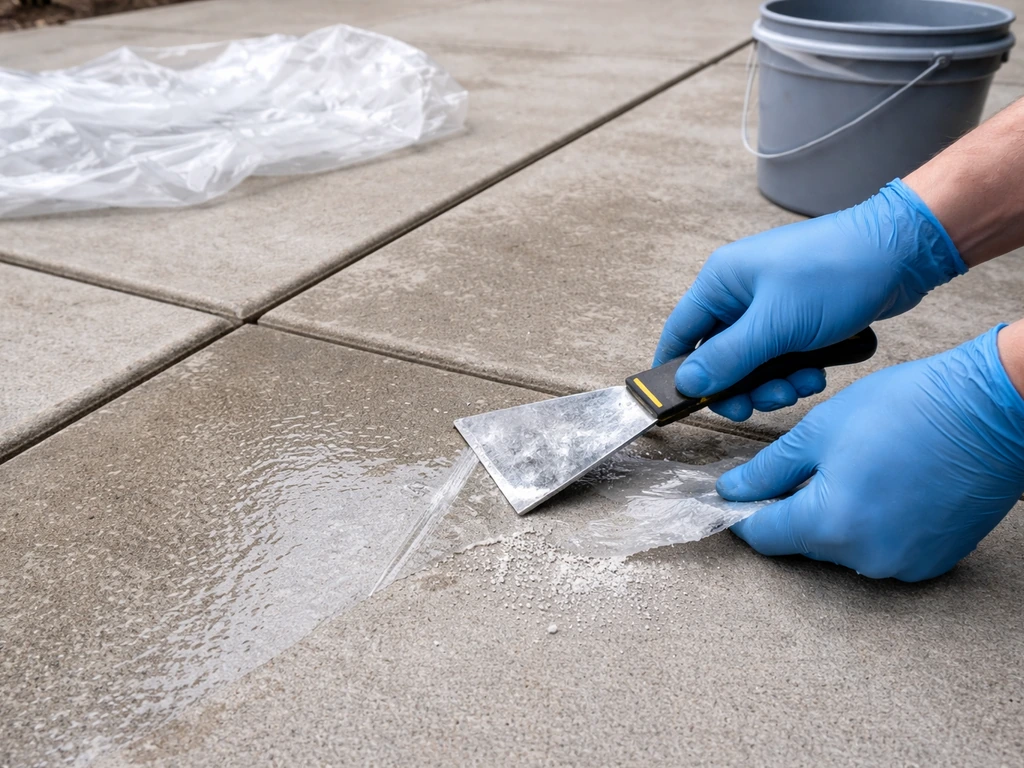
How to Remove Thompson’s Patio Sealer Step by Step
Step-by-step removal of Thompson’s patio sealer on concrete, brick, pavers, and stone, with safety, tests, and cleanup.