
Cold water, absorbent material, and a stiff scrub brush will handle fresh blood on a concrete patio in under 30 minutes. For dried or set-in blood, you need a protein-breaking enzyme cleaner or an oxidizer like 3% hydrogen peroxide or oxygen bleach, followed by a thorough rinse. The key rules: always use cold water (never hot), blot before you scrub, and clean the stain off the surface before applying any bleach-based disinfectant or it simply won't work. If you are dealing with glue residue, you can use the same rinse-and-scrub approach and choose a remover designed to break down adhesive without damaging the concrete surface how to remove glue from concrete patio. Here's the full step-by-step process.
How to Get Blood Off Concrete Patio Fast and Safely
Dylan Hale
16 May 2026
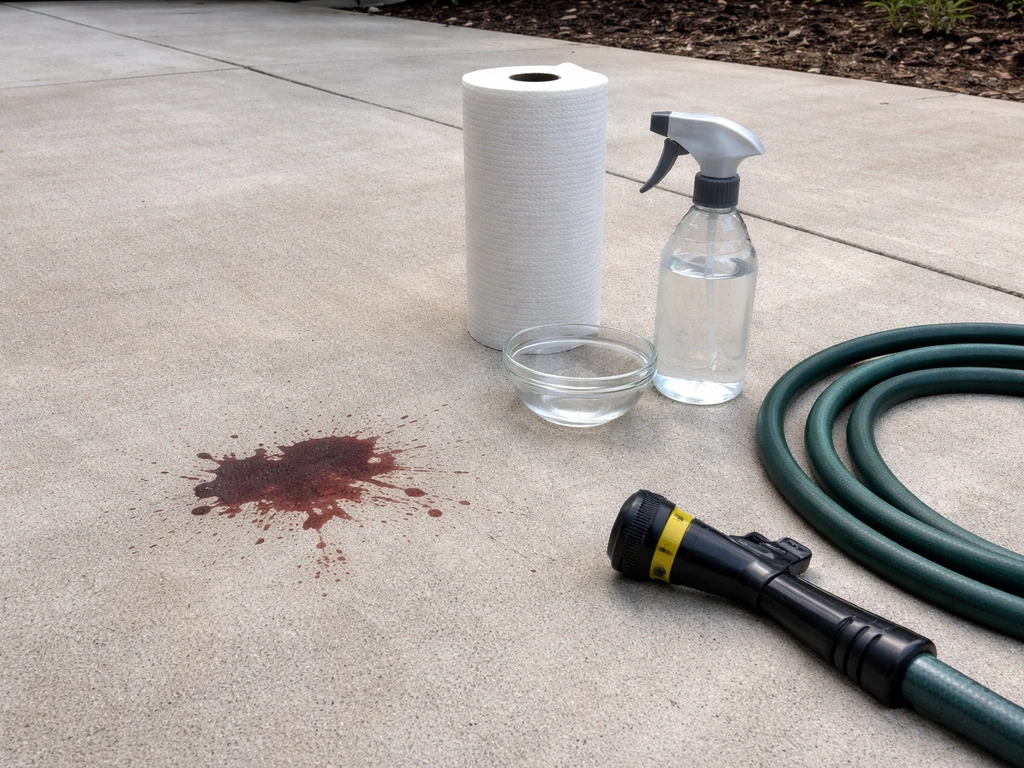
First, figure out what you're dealing with
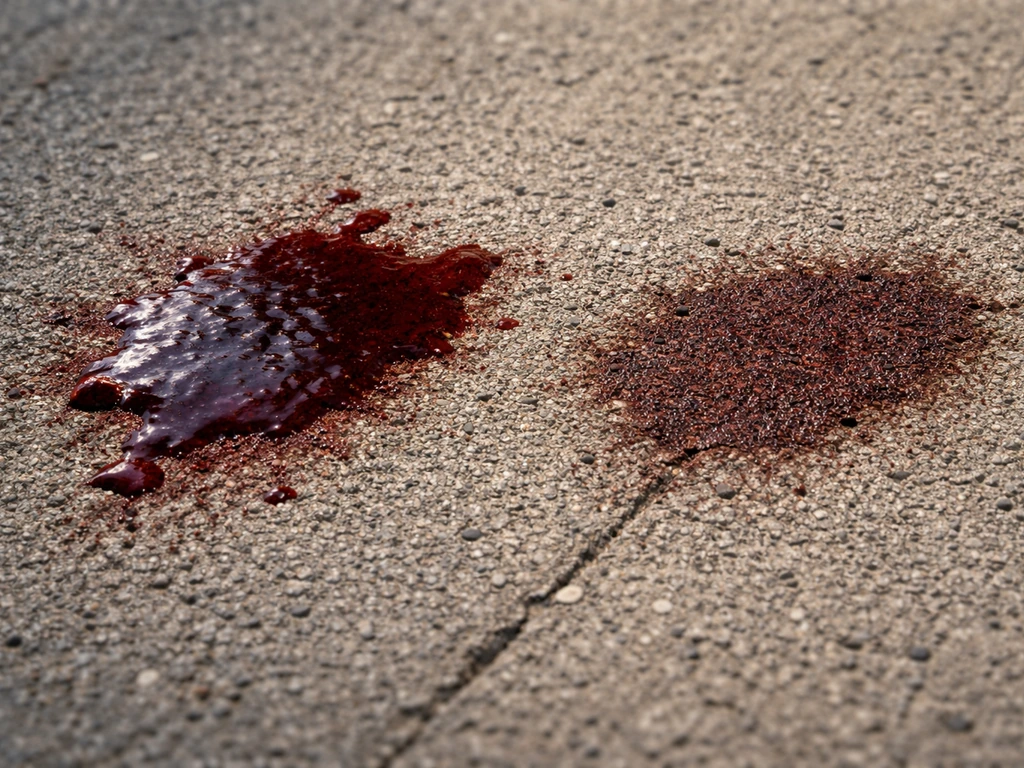
Fresh blood and dried blood need completely different approaches, and skipping this assessment step is how people make the stain worse. Fresh blood (still wet or tacky, reddish-pink) can be lifted from the surface without much chemical help. Dried blood (brown, rust-colored, sunken into the concrete pores) has bonded with the concrete and needs enzymatic or oxidizing chemistry to break it apart.
Check how deep the stain goes. Concrete is porous, and blood that has been sitting for more than an hour or two will have wicked down into the surface. Press a damp white cloth onto the edge of the stain. If color transfers easily, it's still partially active. If the surface looks dry and matte with a brown tinge, you're dealing with a set-in stain and you'll need the deeper cleaning methods covered below. Also note the size of the stain, since that affects which product concentration to use and whether one treatment will be enough.
Protect yourself and the area before you start
Blood is a biological fluid, and you need basic PPE before touching it or applying any cleaning chemicals. This isn't overcautious, it's just practical. Grab nitrile or latex gloves at minimum. If there's a large volume of blood or you're concerned about splash, add safety glasses and old clothing you don't mind throwing out. For significant spills, a disposable Tyvek suit and shoe covers aren't overkill.
Contain the spill before you start cleaning it. Don't rinse the area with a hose right away as that spreads blood across a wider surface and can run it into landscaping, drains, or adjacent materials. Instead, build a boundary: use cat litter, paper towels, or old rags to absorb the outer edges of the spill first, working inward. Place used materials directly into a sealed bag for disposal as you go. Once the bulk of the material is picked up, then you can begin rinsing and scrubbing.
If you have plants, garden beds, or grass immediately adjacent to the patio, wet them down with plain water before applying any cleaners. This dilutes any chemical runoff before it can reach the roots. Keep in mind that some cleaning solutions (including bleach) can discolor adjacent concrete or other patio materials if they splash or run, so it's worth taking a minute to cover or protect nearby surfaces.
How to remove fresh blood from concrete (manual method)
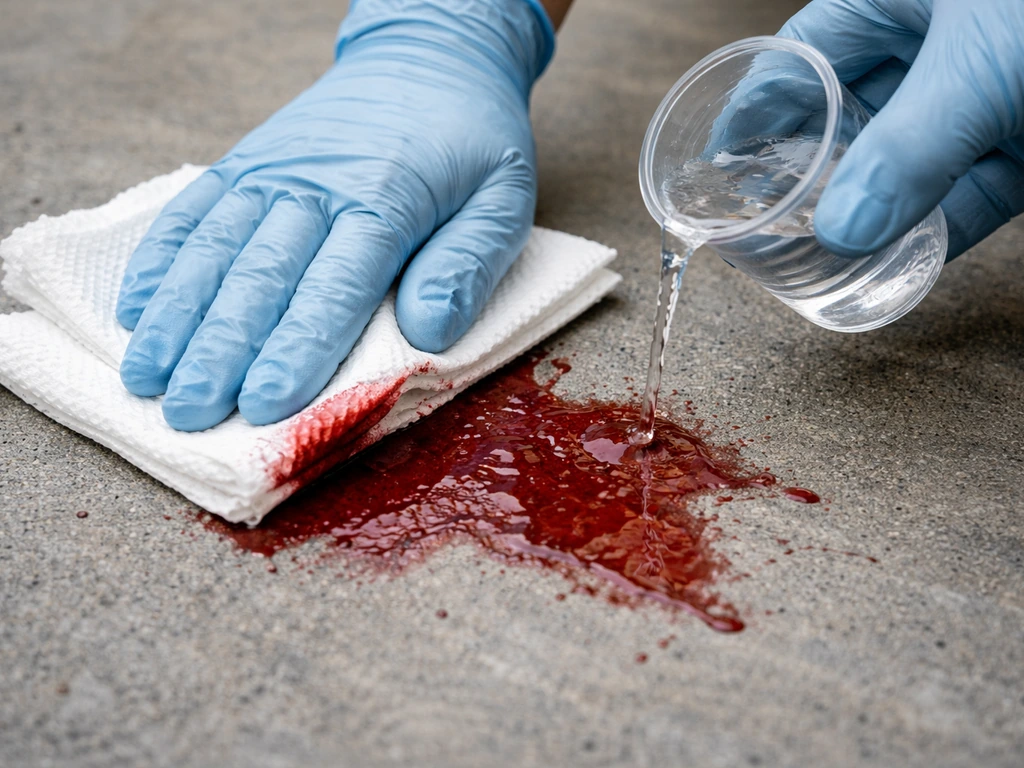
Fresh blood is the easiest scenario, and you can usually clear it completely without specialty products. Work quickly, and always use cold water. Hot water cooks the proteins in blood and sets the stain permanently into the concrete.
- Blot up as much blood as possible using paper towels or old rags. Press down firmly and work from the outside edge of the stain inward to avoid spreading it. Dispose of used materials in a sealed bag immediately.
- Pour a small amount of cold water over the stain to dilute what remains. Don't flood the area, just enough to loosen the blood from the surface pores.
- Apply a small amount of dish soap or laundry detergent directly to the stain. Both work well because they contain surfactants that help lift proteins from the surface.
- Scrub with a stiff-bristled brush using circular motion. Concrete is rough, so you need real pressure here. A deck brush or utility scrub brush works better than a household scrubber.
- Rinse with cold water, then blot dry with a clean cloth. Check the stain. For fresh blood, one or two rounds of this is usually enough to remove it completely.
- If a faint residue remains, apply 3% hydrogen peroxide (standard drugstore bottle) directly to the spot, let it sit for 1 to 3 minutes, then rinse thoroughly. You'll see it fizz as it breaks down the protein, which tells you it's working.
Removing dried or set-in blood stains
Once blood dries into concrete, you need chemistry that can break down the protein structure of the stain. There are two reliable options: enzyme cleaners and oxidizers. I've found enzyme cleaners to be the most effective starting point because they're designed specifically for protein-based stains like blood, and they're safe for most surfaces and landscaping.
Enzyme cleaners
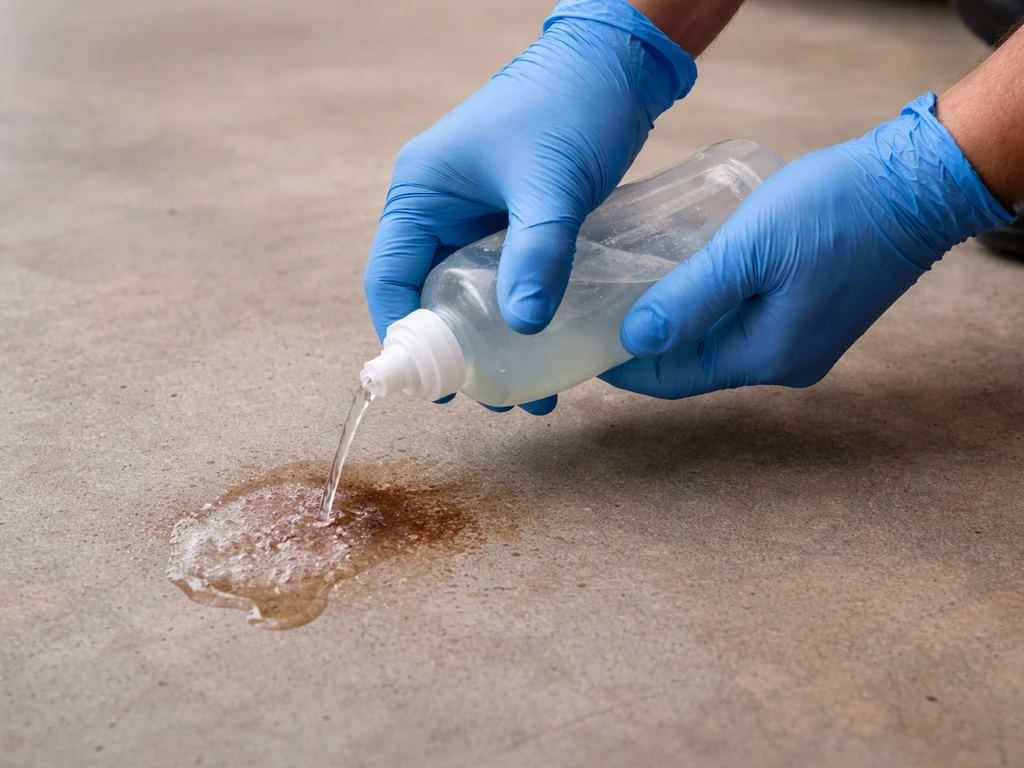
Enzyme cleaners use protease enzymes to break apart the protein chains in blood, essentially digesting the stain at a molecular level. Look for a product labeled for protein stains, biohazard cleanup, or pet/blood stains. Apply it generously to the stain so the product soaks into the concrete rather than just coating the surface. Most products specify a 5 to 15 minute dwell time depending on severity, but for dried blood that's been sitting more than 24 hours, I'd give it a full 15 minutes.
The biggest reason enzyme cleaners fail is that they dry out before the enzymes finish working. If the product starts to dry on the surface, mist it lightly with cold water to keep it active. Don't let it evaporate completely. After the dwell time, scrub with a stiff brush and rinse thoroughly with cold water. For deep or old stains, you may need two or three applications. Let the surface dry completely between treatments so you can accurately assess what's left.
Hydrogen peroxide and oxygen bleach
Hydrogen peroxide (3% solution, the kind sold in any drugstore) is another strong option for dried blood on concrete, and it's one of the methods recommended for this exact purpose. Apply it directly to the stain and let it sit for 1 to 3 minutes. The foaming action you see is the peroxide oxidizing the blood proteins. Once the fizzing slows, scrub and rinse with cold water. Repeat if needed.
Oxygen bleach (sodium percarbonate, sold as products like OxiClean) is a gentler but effective oxidizer that works well on porous concrete. Mix it according to package directions with cold water, apply to the stain, and let it dwell for 15 to 30 minutes. It won't strip or damage concrete and is much safer around plants than chlorine bleach. This is my preferred option when I've got a dried stain and want to protect nearby landscaping. One important note from the GSA: don't apply a second treatment to the same area until you've fully rinsed away the first chemical. Mixing residues can reduce effectiveness or cause unexpected reactions.
When to use bleach and how to do it safely
Chlorine bleach (sodium hypochlorite) is a disinfectant, not primarily a stain remover, and this distinction really matters. Here's the critical thing the CDC makes clear: bleach is substantially inactivated by organic material like blood. That means if you pour bleach directly onto a blood stain without cleaning it first, the bleach gets tied up reacting with the blood itself and doesn't properly disinfect the surface. The correct order is always clean first, then disinfect.
Use bleach after you've removed the bulk of the blood with the manual or enzyme method above. For disinfecting a large spill area, a 1:10 dilution of household bleach (roughly one part bleach to nine parts water) is the standard recommendation. For smaller areas, a 1:100 dilution is sufficient. Apply the diluted bleach, keep the surface visibly wet during the full contact time (at least 1 to 10 minutes depending on the source and your risk level), then rinse thoroughly if required.
A few firm cautions with bleach on a concrete patio. Always work in a ventilated area and never mix bleach with ammonia-based cleaners or any other household chemicals. If bleach contacts your eyes, flush with water immediately for at least 15 minutes. Don't let bleach sit on the concrete for extended periods because it can lighten or discolor the surface, especially if it's colored or stamped concrete. And protect your plants aggressively: wet them down thoroughly before use and rinse them again after. Bleach runoff onto grass or garden beds can cause real damage.
If your patio is decorative, stamped, or stained concrete, skip chlorine bleach entirely. Oxygen bleach or enzyme cleaners are far safer for those surfaces and won't risk stripping color or sealant.
Pressure washing: the right way to use it on blood stains
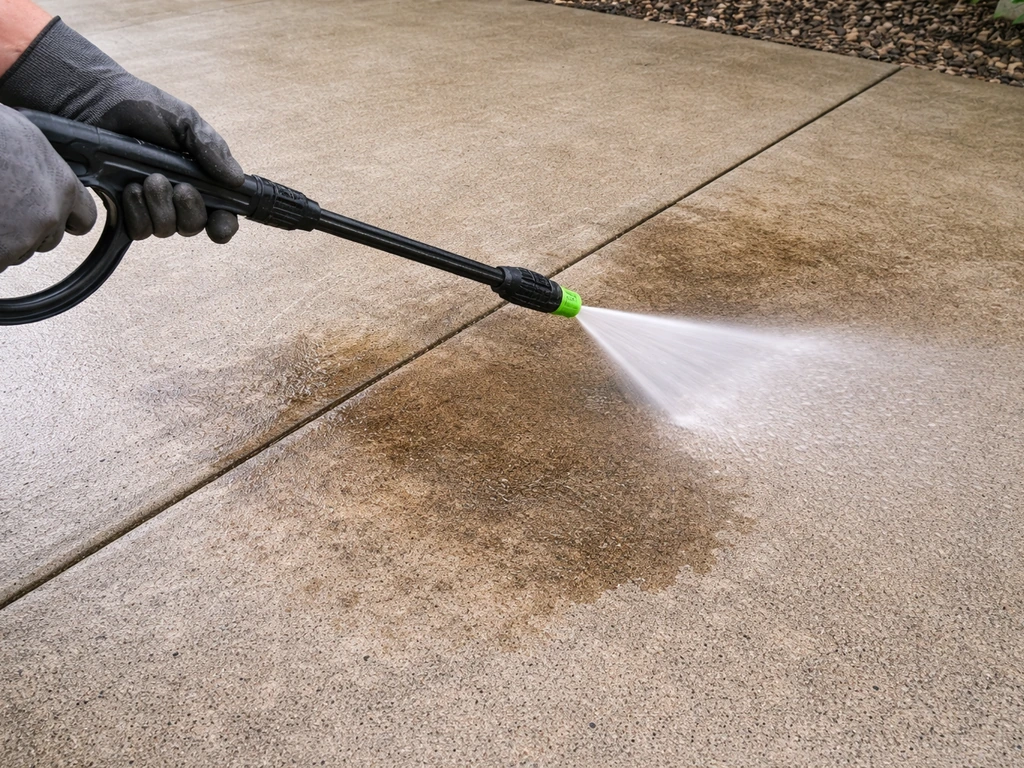
A pressure washer can speed things up dramatically, but there's a real risk of driving the stain deeper into porous concrete if you use it incorrectly. The GSA specifically warns that improper liquid application can force stains deeper into the concrete rather than lifting them out. Pressure washing is best used after a chemical treatment has already loosened the stain, not as the first step.
For concrete patios, start with a 25-degree (green) fan tip nozzle and a pressure of around 2,500 to 3,000 PSI. Keep the nozzle at least 12 inches from the surface and use a steady sweeping motion rather than staying in one spot. Pausing in one place concentrates the force and can etch or damage the concrete surface. A surface cleaner attachment (the spinning disc type) is even better because it distributes pressure evenly and prevents the streaky stop-marks you get with a wand.
Pre-wet the patio before applying any cleaning solution, then let your enzyme cleaner or oxygen bleach solution dwell for 3 to 5 minutes before pressure washing it off. Use a 25 to 35 degree fan tip for general rinsing and stick to the sweeping pendulum motion. After cleaning, rinse the entire slab, not just the stained spot, to prevent a clean patch from standing out visually against the rest of the patio.
If your patio has a sealer on it, check the condition after cleaning. Heavy scrubbing, oxidizing chemicals, or pressure washing can degrade older sealant. If water stops beading on the surface after you've cleaned it, the sealer has likely been compromised and should be reapplied once the concrete is fully dry. Resealing also makes future stains, including blood, much easier to clean because fluids can't soak into the pores as quickly.
What not to do, and how to handle stains that won't budge
Common mistakes that make it worse
- Using hot or warm water: heat sets protein stains permanently. Always use cold water for blood.
- Scrubbing before blotting: scrubbing a fresh blood spill without absorbing it first spreads the stain outward and pushes it deeper into the concrete pores.
- Hosing down the area immediately: rinsing before containment spreads blood across a larger surface and can carry it into drains or adjacent areas.
- Applying bleach directly to the blood stain: as noted above, blood inactivates bleach. You need to clean the stain first, then disinfect.
- Mixing chemicals: never combine bleach with hydrogen peroxide, ammonia, or other cleaners. Besides being dangerous, it can damage the concrete and void any effectiveness.
- Skipping rinse between treatments: applying a second product on top of an un-rinsed first product can reduce effectiveness or cause reactions. Rinse thoroughly and let the surface dry between attempts.
- Scraping or dry-sweeping dried blood: dried blood can generate airborne particles when disturbed. Wet the stain before any scrubbing or removal.
When the stain won't come out after one round
Stubborn or very old blood stains sometimes need multiple treatment cycles. Rinse the area completely after each attempt and let it dry fully before reassessing. What looks like a remaining stain when the concrete is wet often fades significantly once dry. If the stain is still visible after two rounds of enzyme cleaner, switch to a hydrogen peroxide or oxygen bleach treatment.
For tougher burn-like discoloration on a concrete patio, you can also use an oxidizer such as hydrogen peroxide or oxygen bleach to lift remaining staining. If you've already used hydrogen peroxide and there's still a shadow, try a longer dwell time on the next pass (up to 5 minutes for 3% hydrogen peroxide) and follow immediately with stiff brush scrubbing while the product is still wet on the surface.
For stains that are months or years old and deeply embedded, you may need to accept that some discoloration will remain, especially in unsealed concrete. If you are dealing with a persistent discoloration after cleanup, you can compare this approach with how to remove burn marks from patio using the right chemistry and surface protection steps. At that point, options include a light surface grind by a concrete professional, a decorative overlay, or simply sealing the patio (which will darken the surface slightly and make the stain less visible while protecting against future staining). At that point, options include a light surface grind by a concrete professional, a decorative overlay, or simply sealing the patio, which can also help with how to remove leaf stains from concrete patio later.
Preventing re-staining after cleanup
The best long-term step you can take is sealing your concrete patio. A penetrating concrete sealer fills the surface pores and creates a barrier that stops blood and other biological fluids from soaking in immediately. This doesn't make your patio stain-proof, but it gives you a much wider window to clean up spills before they set. Apply sealer once the patio is fully dry and clean, following product directions for your specific sealer type. Most concrete patios benefit from resealing every 2 to 3 years.
If you're dealing with other tough stains on your patio alongside this one, many of the same principles apply across different stain types. The clean-first, dwell-time, rinse-thoroughly workflow is common to most organic and biological stains on concrete surfaces. The core rule is always the same: understand what the stain is made of, choose chemistry that breaks it down, give it enough time to work, and rinse completely before trying again.
FAQ
Can I use hot water or steam to remove blood from a concrete patio faster?
No. Hot water can “cook” the proteins in blood and make the stain bond more firmly to the concrete pores. Stick to cold water for rinsing and scrubbing, even if it feels slower.
What should I do if the blood stain is on stamped or colored concrete?
Avoid chlorine bleach, because it can lighten or strip color and sealants on decorative surfaces. Choose an enzyme cleaner or oxygen bleach, and test any product in a hidden spot first if the patio has an unknown sealer.
How long should I wait before resealing the patio after removing blood?
Let the concrete dry completely, then confirm water beading or absorption has returned to normal for your sealer type. In practice, that often means waiting at least 24 to 48 hours after final rinsing, depending on humidity and temperature, before applying penetrating sealer.
Can I mix hydrogen peroxide with enzyme cleaner or bleach to increase power?
Don’t mix products in the same area or in the same application cycle. Use one chemistry type, rinse thoroughly, let it dry enough to reassess, then switch products if needed. Mixing residues can reduce effectiveness and create unexpected reactions.
Why does the stain look lighter while wet but darker after drying?
That usually happens because some discolored material is still embedded below the surface while the water is temporarily changing how the concrete reflects light. Always reassess after the slab dries fully, then repeat treatment only if the brown or rust shadow remains.
What’s the safest way to protect nearby plants if the patio is sloped toward a garden?
Pre-wet the surrounding soil lightly, then also block or route runoff if possible (for example, by placing absorbent pads or a temporary barrier at the downhill edge). After treatment, rinse the entire area gently to prevent concentrated chemical flow into beds.
If I have a sealer, do I need to clean differently for blood stains?
Yes, in two ways. First, use less aggressive mechanical action since you can dull or roughen old sealers. Second, focus on thorough rinsing and multiple shorter dwell times rather than long soaks, since sealed surfaces can trap residue that later attracts more discoloration.
Will a pressure washer always remove blood stains completely?
Not always. Pressure washing can drive loosened stain deeper if you start before the chemistry has broken it down. Use the washer only after enzyme or oxidizer treatment has loosened proteins, and keep a safe nozzle distance and steady motion to avoid etching.
How do I dispose of materials used to absorb blood safely?
Seal used paper towels, rags, cat litter, or absorbent pads in a bag right away. If it’s a large spill, treat it as bio-waste in your local system, but at minimum keep it contained and out of regular loose trash until you can handle it according to local guidance.
What if the blood stain is from an unknown source or you’re dealing with a large spill?
Increase protection and reduce splashing risk. Wear gloves plus eye protection, consider disposable suit and shoe covers for big volumes, and avoid direct hose rinsing until the bulk is absorbed and contained.
Can I use dish soap or generic concrete cleaners to remove blood?
They may help with surface grime, but they usually won’t break down blood proteins the way enzyme cleaners do, and they won’t oxidize set-in stains the way hydrogen peroxide or oxygen bleach can. Use soap only as a light pre-clean, then follow with the correct protein-breaking step.
How many treatment cycles are reasonable before switching methods?
A common approach is one full enzyme pass, rinse completely, then reassess after drying. If the stain remains, do a second cycle; if it still persists, switch to an oxidizer (3% hydrogen peroxide or oxygen bleach) rather than repeating the same product indefinitely.
Next Articles
How to Remove Stain From Concrete Patio Today
Step by step how to remove stain from concrete patio fast, matching bleach, acid, or vinegar by stain type without etchi
How to Remove Thompson’s Patio Sealer Step by Step
Step-by-step removal of Thompson’s patio sealer on concrete, brick, pavers, and stone, with safety, tests, and cleanup.
Can You Remove Patio Sealer? How to Strip It Safely
Learn if you can remove patio sealer and how to strip it safely by type, material, and method.