Most burn marks on a patio will come off with a stiff brush, dish soap, and some elbow grease. The ones that don't usually respond to a targeted cleaner matched to your specific surface. The key is knowing what caused the mark, what your patio is made of, and then working through a logical progression from gentle to stronger, so you don't trade one problem for a worse one.
How to Remove Burn Marks From Patio by Material
Dylan Hale
20 Jun 2026
First: identify the burn mark type and your patio material
Not all burn marks are the same, and treating them like they are is how patios get damaged further. Before you grab any cleaner, take 60 seconds to figure out what you're actually dealing with.
What kind of burn mark is it?
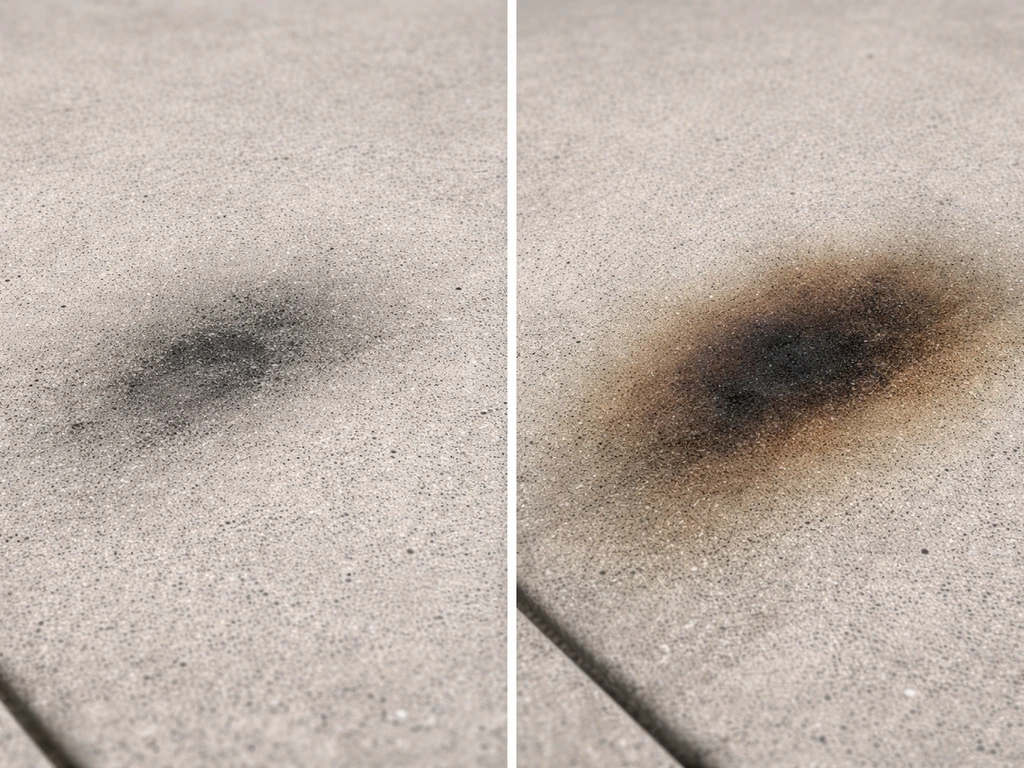
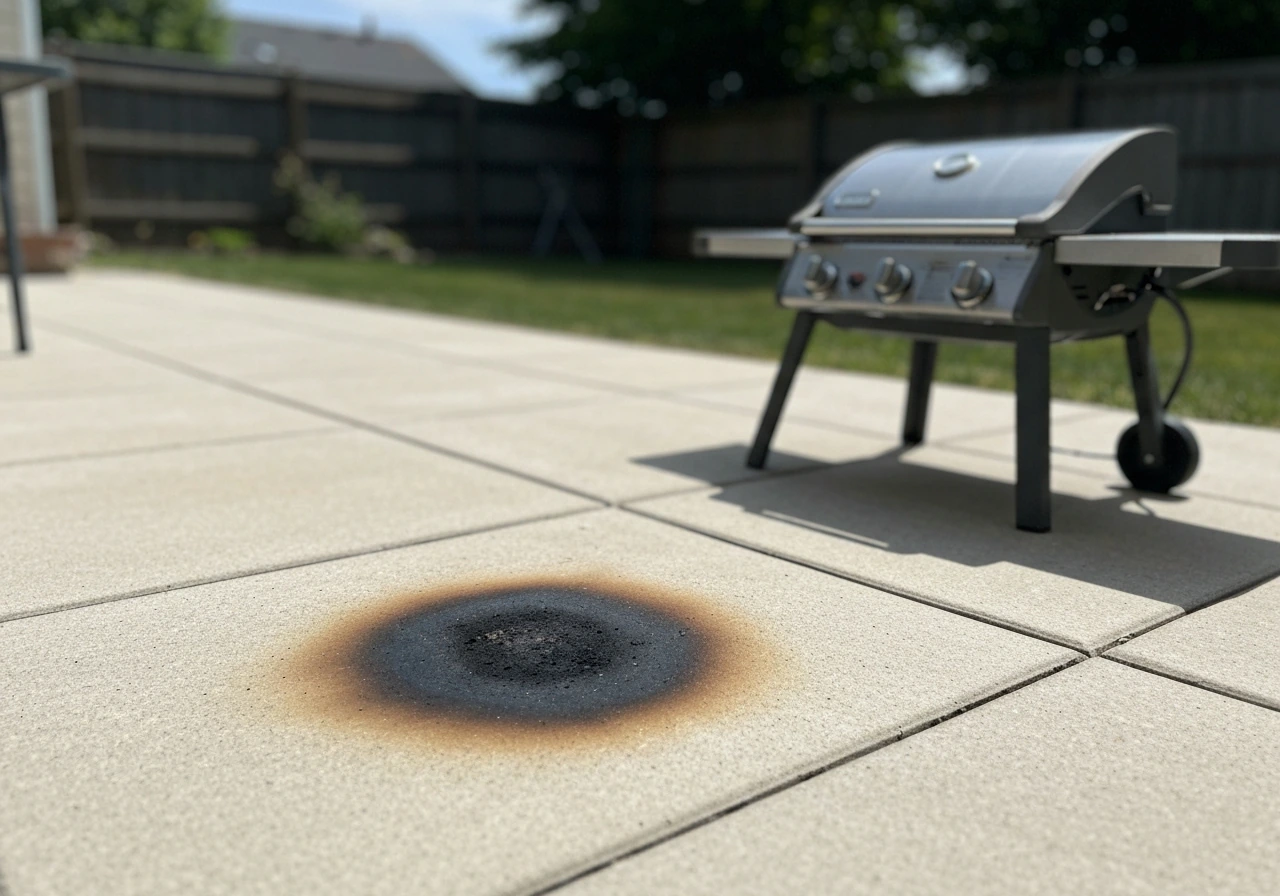
- Light scorch or soot: Black or grey surface deposit from a grill, fire pit, or candle. Usually sitting on top of the surface, not bonded to it. Easiest to remove.
- Deep heat discoloration: The patio material itself has changed color from prolonged high heat. Often looks grey, white, or bleached. The discoloration is in the stone or concrete, not on it.
- Smoke staining: Brownish or yellowish haze around the main burn area, often spreading wider than expected. Comes from oils and tars in smoke.
- Rust or metal transfer: Orange-brown marks from grill legs, fire pit rings, or patio heater bases. Not technically a burn, but often mistaken for one.
- Chemical residue: White, chalky, or discolored patches from firestarter gels, lighter fluid, or citronella products that were burned or spilled near the surface.
What is your patio made of?
This matters enormously. Concrete can handle aggressive cleaners that would destroy travertine. If you specifically have a concrete patio, follow the steps below to safely remove burn marks without damaging the surface Concrete can handle aggressive cleaners. Brick is porous and holds soot differently than dense flagstone. If you're not sure, look at the texture: concrete is uniformly grey and often smooth or broom-finished; pavers have uniform cut shapes with visible joints; brick is reddish-brown with a grainy texture; natural stone like flagstone has irregular shapes and varied color patterns; travertine has a distinctive creamy/tan color with visible pores or holes filled with grout or resin.
Safety steps before you start (and what not to do)
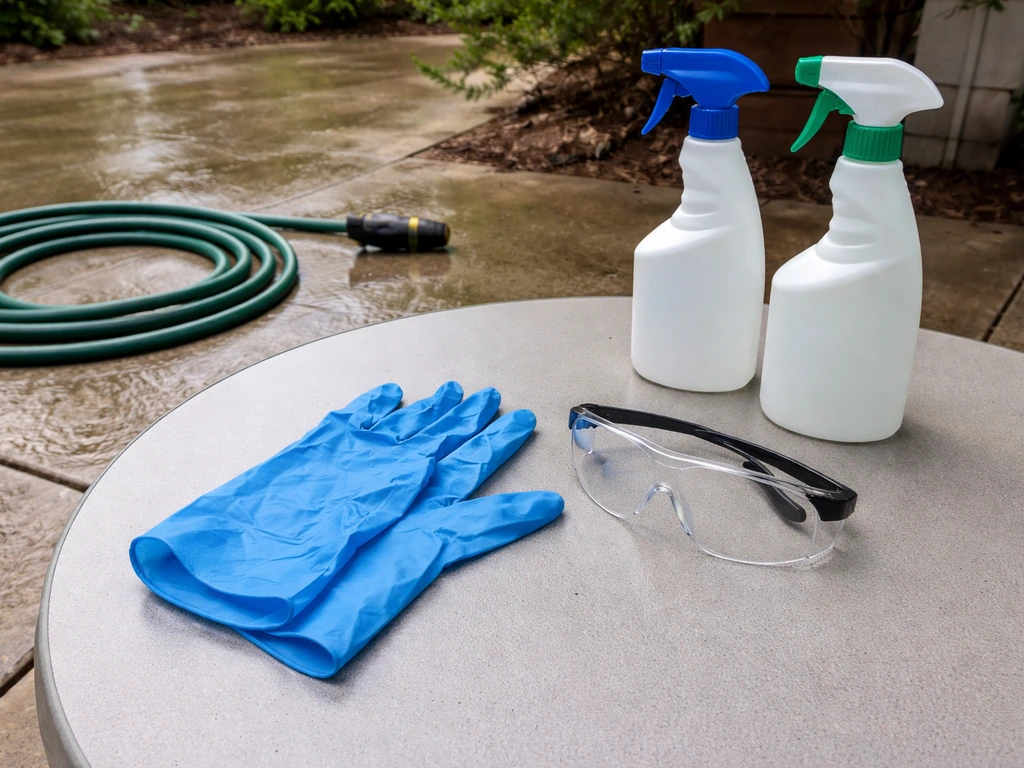
I always take a few minutes to prep before applying anything. It saves plants, skin, and surfaces.
- Wear nitrile gloves and safety glasses any time you're using a cleaner stronger than dish soap. Even diluted bleach will irritate eyes on contact.
- Wet surrounding grass, plants, and garden beds with plain water before cleaning. This dilutes any runoff and reduces chemical absorption into roots.
- Work in a ventilated area. If you're cleaning near a wall or under a covered patio, the fumes from bleach or acid-based cleaners concentrate fast.
- Check if your patio is sealed before applying anything. A sealed surface may have an invisible coating that strong cleaners or acids will strip unevenly, leaving blotchy patches. Drop water on the surface: if it beads, it's sealed; if it soaks in, it's not.
- Never mix cleaners. Bleach plus any acid (including vinegar) produces chlorine gas. Pick one product per session, rinse thoroughly, and let the surface dry before switching.
Common mistakes that make things worse
- Using muriatic acid on natural stone: It will etch and permanently dull marble, travertine, limestone, and some sandstone.
- Using vinegar on travertine or limestone: Acetic acid reacts with calcium carbonate and causes irreversible dull, rough etch marks. I've seen patios get ruined this way.
- Pressure washing too aggressively: High pressure (above 2,000 PSI on a narrow nozzle) can blast mortar out of brick joints and roughen concrete surfaces.
- Skipping the rinse: Leaving cleaner residue on any patio surface causes secondary staining and can accelerate surface breakdown.
- Assuming more product means faster results: Letting a cleaner dwell too long, especially on natural stone, causes more damage than a light application used correctly.
Step one: remove loose soot, ash, and surface dirt
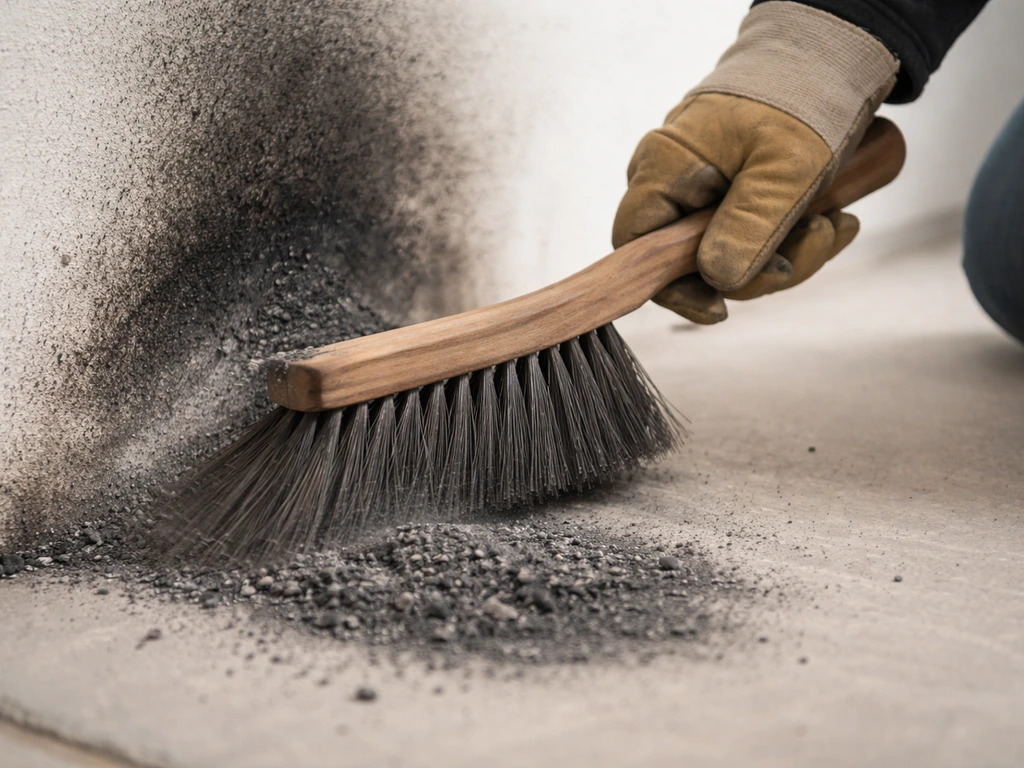
Before any liquid cleaner touches the surface, clear away the loose stuff. Applying water or soap to dry soot just spreads it and grinds it deeper into pores. This step takes five minutes and makes everything after it easier.
- Sweep or vacuum up loose ash and dry soot with a stiff-bristle broom or a shop vac. Don't use a leaf blower — it scatters fine particles everywhere.
- Use a dry brush (an old deck brush works well) to break up any dried, crusty deposits before adding water.
- Once loose material is removed, rinse the area with plain water from a garden hose. Let it drain for a minute so the surface is wet but not pooled.
- Now assess what remains. If most of the mark has already lightened significantly, you may only need a basic soap scrub. If there's still a dark, defined stain, move to the cleaning stage.
Gentle methods that work for most light marks
For light scorch marks and surface soot on most patio materials, start here. These methods are safe on every surface covered in this article, and they work more often than people expect.
Dish soap and stiff brush
This is genuinely my first move every single time. Mix two tablespoons of standard dish soap into a bucket of warm water. Apply to the wet stained area and scrub hard with a stiff-bristle deck brush or a scrubbing pad. Let it sit for 5 minutes, scrub again, then rinse. For soot and light scorch marks, this alone removes a surprising amount. Repeat two or three times before escalating to anything stronger.
Baking soda paste
Mix baking soda with just enough water to form a thick paste. Apply it directly to the burn mark, let it sit for 10 to 15 minutes, then scrub with a stiff brush and rinse. Baking soda is mildly abrasive and alkaline, which helps lift carbonized soot without the risk of etching. It's safe on concrete, pavers, brick, flagstone, and travertine.
Hydrogen peroxide for light discoloration
Standard 3% hydrogen peroxide from any drugstore can help with light surface discoloration and organic-based burn residue on concrete, pavers, and flagstone. Apply it directly to the stain, let it fizz and dwell for 10 minutes, scrub, and rinse. It has mild bleaching properties without the harshness of chlorine bleach, making it a reasonable middle step.
Vinegar: useful in some situations, harmful in others
White vinegar works as a light cleaner on concrete and some pavers where mineral deposits are involved, but it absolutely cannot be used on travertine, limestone, marble, or any calcium carbonate-based stone. The acetic acid reacts with these materials and causes irreversible etching: dull, rough, whitish marks that cannot be scrubbed or washed away. Even a small amount does damage. If you're not certain whether your patio is an acid-sensitive stone, don't use vinegar at all.
Targeted removal by surface material
Once gentle methods have done what they can, you need to match your approach to the specific material. Here's what works, what doesn't, and what to watch for on each surface.
Concrete
Concrete is the most forgiving patio surface for burn mark removal. If soap and baking soda haven't fully cleared the mark, a diluted bleach solution handles most soot-based organic staining well. Mix one part household bleach (sodium hypochlorite, typically 5 to 6%) with three parts water. Apply to the stain, let it dwell for 10 to 15 minutes, scrub with a stiff brush, and rinse thoroughly. For stubborn deep heat discoloration that doesn't respond to bleach, a concrete degreaser or a dedicated concrete stain remover is the next step. For the toughest situations on unsealed concrete only, a very diluted muriatic acid solution (1 part acid to 10 parts water, applied carefully with a brush) can remove deep carbon staining, but it also etches the surface slightly and requires thorough rinsing and neutralizing with a baking soda solution afterward. Never use muriatic acid on sealed concrete without stripping the seal first, and always test a hidden spot.
Pavers
Concrete pavers respond similarly to poured concrete, but you need to be gentler around the joints. Mortar and polymeric sand in paver joints can be loosened by strong acids and aggressive pressure washing. For soot and burn marks, start with the dish soap scrub, escalate to diluted bleach if needed, and keep the cleaner on the paver surface itself rather than flooding the joints. Rinse with a garden hose on a medium setting, not a pressure washer on a tight nozzle. Natural stone pavers (bluestone, slate, some sandstone) need the same acid-free approach as flagstone: no vinegar, no muriatic acid.
Brick
Brick is porous and holds soot and smoke staining deeply. For concrete patio slabs that have dark spots from burn residue or general grime, the same staged approach helps you remove stains without harming the surface staining deeply. Start with a stiff-bristle brush and hot soapy water, scrubbing in circular motions. For smoke-stained brick, a paste of cream of tartar mixed with water applied for 10 minutes before scrubbing can lift discoloration. Diluted bleach (1:4 ratio) works on stubborn soot staining on unsealed brick, but test in a hidden area first because bleach can lighten some brick colors unevenly. Avoid wire brushes on brick: they leave behind tiny metal fragments that rust later and create new stains.
Natural stone (flagstone, slate, bluestone)
Natural stone patios need a gentler touch than concrete. Dish soap, baking soda, and hydrogen peroxide are all safe. For darker flagstone and slate, a pH-neutral stone cleaner is the most reliable product for burn and soot staining. Avoid bleach on dark natural stone because it can cause uneven lightening, especially on slate. Don't use any acid-based products. I've found that repeated gentle scrubbing over two or three sessions beats one aggressive treatment on natural stone every time.
Travertine
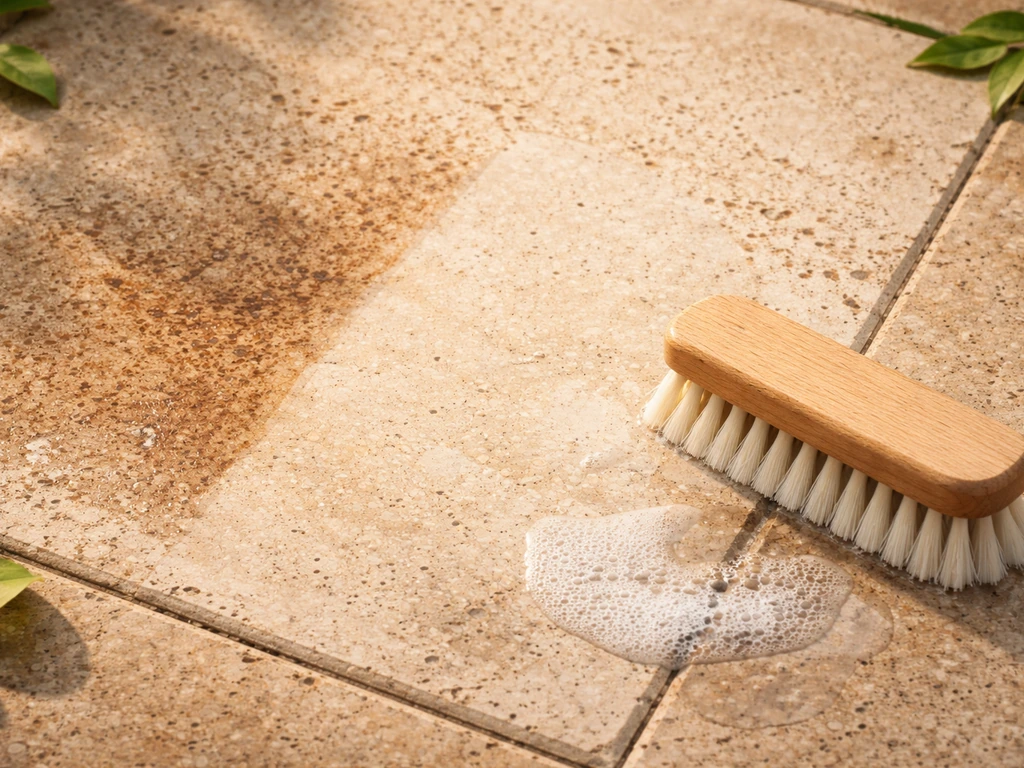
Travertine requires the most care of any common patio material. If you are dealing with leaf stains on a concrete patio, start with the gentle dish soap scrub and then move up to stronger concrete-safe options if needed Travertine requires the most care. It's a calcium carbonate stone (essentially limestone) that blank" rel="noopener noreferrer">reacts chemically with acids to form permanent etch marks. That rules out vinegar, citrus-based cleaners, muriatic acid, and many general-purpose cleaners. For burn marks and soot on travertine, use only pH-neutral stone-safe cleaners and a soft to medium brush. Apply the cleaner, let it dwell for 5 minutes (no longer), scrub gently, and rinse with clean water. For deeper smoke staining that doesn't lift, a poultice specifically designed for natural stone (available at tile and stone supply stores) can draw out embedded staining without chemical damage. Do not over-scrub or overcleanse travertine in one session: the porous surface can absorb cleaning products if left too long, and repeated acid exposure, even from trace amounts in generic cleaners, compounds the damage. If a burn mark has left a rough, dull patch on travertine after cleaning, that's etching from heat or prior acid contact, and it can only be fixed by professional honing and resealing, not further cleaning.
| Surface | Safe cleaners | Avoid | Pressure washing OK? |
|---|---|---|---|
| Concrete (unsealed) | Dish soap, bleach (1:3), muriatic acid (diluted, last resort) | Nothing specific, but test before acids | Yes, up to 3,000 PSI with wide fan nozzle |
| Concrete (sealed) | Dish soap, pH-neutral cleaner, diluted bleach | Muriatic acid (strips seal) | Yes, but use low pressure 1,200-1,500 PSI |
| Pavers (concrete) | Dish soap, diluted bleach | Strong acids near joints | Yes, medium pressure, wide nozzle |
| Pavers (natural stone) | pH-neutral stone cleaner, dish soap | Vinegar, muriatic acid | Low pressure only, 800-1,200 PSI |
| Brick | Dish soap, diluted bleach (1:4), cream of tartar paste | Wire brushes, strong acids | Yes, medium pressure, keep nozzle moving |
| Flagstone / Slate | Dish soap, baking soda, pH-neutral stone cleaner | Vinegar, bleach on dark stone | Low to medium pressure only |
| Travertine | pH-neutral stone cleaner only, stone poultice for deep stains | Vinegar, any acid, bleach, citrus cleaners | Low pressure only, 800 PSI max, wide nozzle |
Abrasive options, resealing, and finishing up
When to use abrasives
For burn marks on concrete that genuinely won't shift with chemical cleaning, light abrasion is an option. A concrete grinding pad or a stiff wire brush (on concrete only, not stone or brick) can scrub away surface-level carbon discoloration. On a smaller area, a pumice stone rubbed wet over the mark works surprisingly well on concrete. For natural stone, abrasion is only appropriate in the hands of a professional using the right grit sequence, because amateur grinding will leave visible scratch patterns and uneven surfaces.
After the mark is gone: rinsing and drying
Whatever cleaner you used, rinse the entire area thoroughly with clean water from a garden hose. For bleach or acid treatments on concrete, do a second rinse pass after five minutes. For concrete patio glue, rinse well and then use the strongest concrete-safe method you can manage, working step by step so you don't damage the surface how to remove glue from concrete patio. Let the surface dry completely before assessing the result: some staining looks worse wet and improves when dry, and some marks that seem gone when wet reappear as the surface dries. Give it at least 24 hours of dry weather before deciding whether to repeat the treatment.
Should you reseal after removing a burn mark?
If you were working on a sealed surface, aggressive cleaning or acid treatment will have compromised the sealant layer in the treated area. Resealing just that spot will look patchy; you're better off resealing the entire patio. For concrete, a penetrating concrete sealer applied after the surface is fully dry (at least 48 hours) protects against future staining and makes burn mark cleanup much easier next time. For natural stone and travertine, use a sealer specifically rated for that stone type. Sealing travertine won't prevent acid etching (that's a chemical reaction, not a surface absorption issue), but it does reduce how deeply soot and smoke staining penetrates.
Preventing future burn marks
- Place a grill mat or heat-resistant pad under any grill, fire pit, or patio heater. Silicone or composite patio mats rated for high heat cost under $30 and save significant cleanup time.
- Use a trivet or elevated stand under portable fire pits to keep heat off the patio surface directly.
- Keep a buffer of at least 18 inches between fire pits and the patio surface edge where possible.
- After any fire pit use, sweep away ash and soot before the next rain event. Wet ash is harder to remove and can cause secondary staining.
- Reseal concrete and paver patios every one to three years depending on use, so that future spills and heat marks sit on the sealer rather than the substrate.
When to call a professional or accept the damage
Some burn marks are permanent. If a fire pit sat on travertine for hours and left a rough, discolored patch, that's etching and heat damage combined: no household product reverses it. If concrete has spalled (surface layers have popped off) or a paver has cracked from heat stress, cleaning isn't the solution. In those cases, a stone restoration professional can hone and repolish travertine or other natural stone surfaces. Badly damaged individual concrete pavers or bricks can often be replaced without redoing the whole patio. If you're dealing with other types of patio discoloration alongside burn marks, the same material-specific logic applies whether you're dealing with organic stains, rust marks, or grease residue: match the product to the surface and work up gradually from gentle to stronger.
FAQ
Can I use a pressure washer to remove burn marks from my patio?
You can, but avoid it as a first option. High-pressure spray can drive soot deeper into brick and loosen mortar or polymeric sand in paver joints, creating a bigger problem. If you must rinse hard, use a garden hose at medium flow and keep the nozzle farther back than you think, especially around joints and grout lines.
Should I clean a burn mark immediately or wait?
If the patio is still hot or warm to the touch, wait until it cools completely. Once cool, start with dry removal first (brush off soot), then switch to a wet method. Waiting days can let carbon and smoke residue set into pores and make later steps harder.
How do I tell if the burn mark is from heat or from chemicals (like a grill spill)?
Heat damage often leaves a rough, dull, or patchy surface change, especially on stone like travertine, while grease or food residue usually smears and feels slick or leaves darker streaks that grow during wetting. A quick test is to lightly wet the area, if the mark intensifies and looks greasy, prioritize degreasing steps rather than bleach or acids.
Will bleach or hydrogen peroxide lighten my patio unevenly?
Yes, especially on porous materials and darker bricks or stones. Hydrogen peroxide is typically milder than chlorine bleach, but both can cause patchiness depending on how the surface already has aged or been sealed. Always test in a hidden spot and fully rinse after the dwell time, then wait for the area to dry before judging the final color.
What if I accidentally used vinegar on travertine or another acid-sensitive stone?
Stop immediately and rinse with lots of clean water. If etching occurred, it usually cannot be removed with more cleaning, because the damage is chemical. For travertine, the practical fix is professional honing and resealing, especially if the dull rough patch remains after the stone dries.
Does sealing my patio help prevent burn marks, or does it make them worse?
Sealing helps reduce how deeply soot and smoke staining penetrates, so future cleanup is easier and more surface-level. However, if you apply aggressive acids or bleach after sealing, you can compromise only the treated area’s seal, making it look patchy. Plan to reseal the entire patio when sealing has been disrupted.
Is it safe to use a wire brush on patio burn marks?
On concrete, a stiff brush is fine, but avoid wire brushes on brick and stone. Metal fragments left behind rust later and create new brown stains. If you need extra abrasion, use a stiff nylon deck brush or a concrete-specific tool for concrete only.
How long should I let a cleaner sit, can I leave it longer to make it work faster?
Follow the dwell times in the staged approach, because longer contact can increase surface damage, especially on natural stone. For travertine, keep dwell times short (around minutes, not extended soaking). If the mark is still present after the correct dwell time and scrubbing, repeat the cycle rather than extending exposure.
What should I do if the stain looks worse when wet?
That’s common, and it often improves as the surface dries. After rinsing, let it dry for at least 24 hours before deciding to escalate. If the mark remains after drying, move to the next appropriate method for your patio material, rather than repeating the same treatment immediately.
Can I remove burn marks from sealed concrete without harming the seal?
You can sometimes improve the appearance, but strong oxidizers or acids can degrade the seal locally. If you used bleach or any acid-based step, expect you may need to reseal, and patchy results are more likely if you reseal only the spot. When in doubt, reseal the whole patio after the surface is fully dry.
Are there burn marks that cleaning will never fix?
Yes. Rough, dull, or discolored patches on travertine often indicate heat etching or prior acid contact, which household products cannot reverse. Similarly, if concrete spalls or pavers are cracked from heat stress, you cannot brush it away. Those cases typically require restoration work such as honing, repolishing, or replacing damaged units.
Next Articles
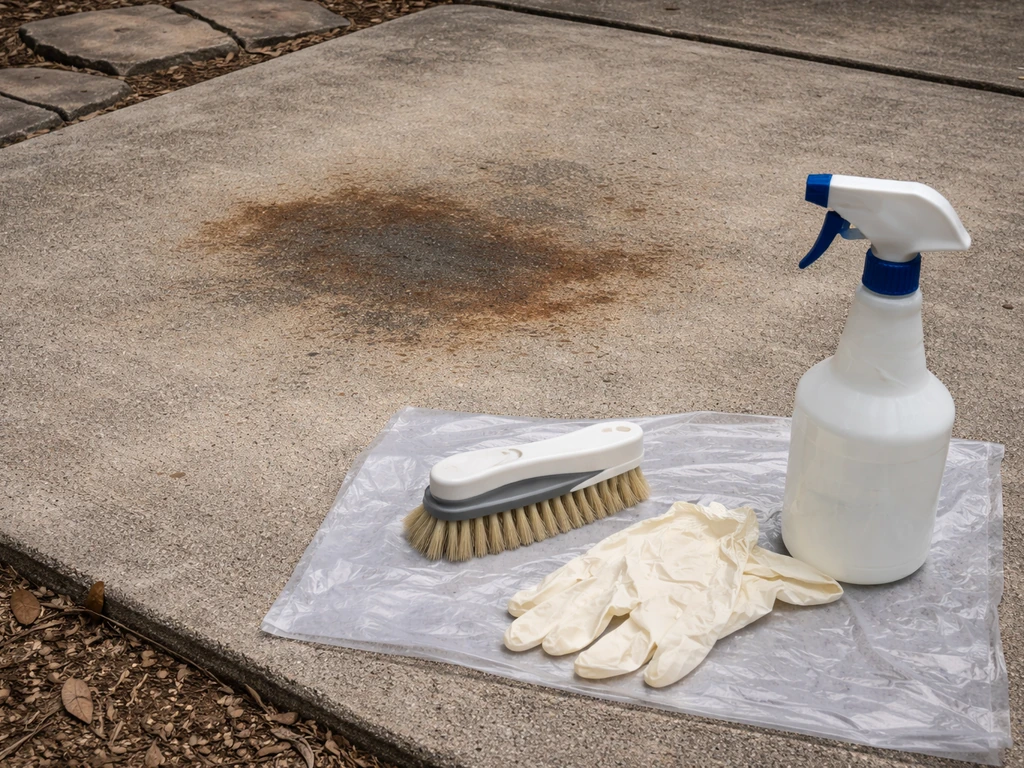
How to Remove Concrete Stains From Patio Slabs
Identify concrete stain type and remove it safely with scrub, soak, oxygen bleach or acid, plus prevention and sealing t
How to Get Blood Off Concrete Patio Fast and Safely
Step-by-step how to get blood off concrete patio fast: blot, safe cleaners, hydrogen peroxide or enzymes, pressure wash,
How to Remove Stain From Concrete Patio Today
Step by step how to remove stain from concrete patio fast, matching bleach, acid, or vinegar by stain type without etchi