Leaf stains on a concrete patio come off with oxygen bleach (sodium percarbonate) in most cases. Mix about 8 oz per gallon of warm water, pour it over the stained area, let it sit for 10 minutes, scrub with a stiff brush, and rinse thoroughly. For deeper or older stains, a diluted sodium hypochlorite solution works faster but needs more careful handling. Either way, the process is straightforward and you can do it today with tools you likely already have.
How to Remove Leaf Stains From a Concrete Patio
Dylan Hale
26 Jun 2026
Why leaf stains appear on concrete patios
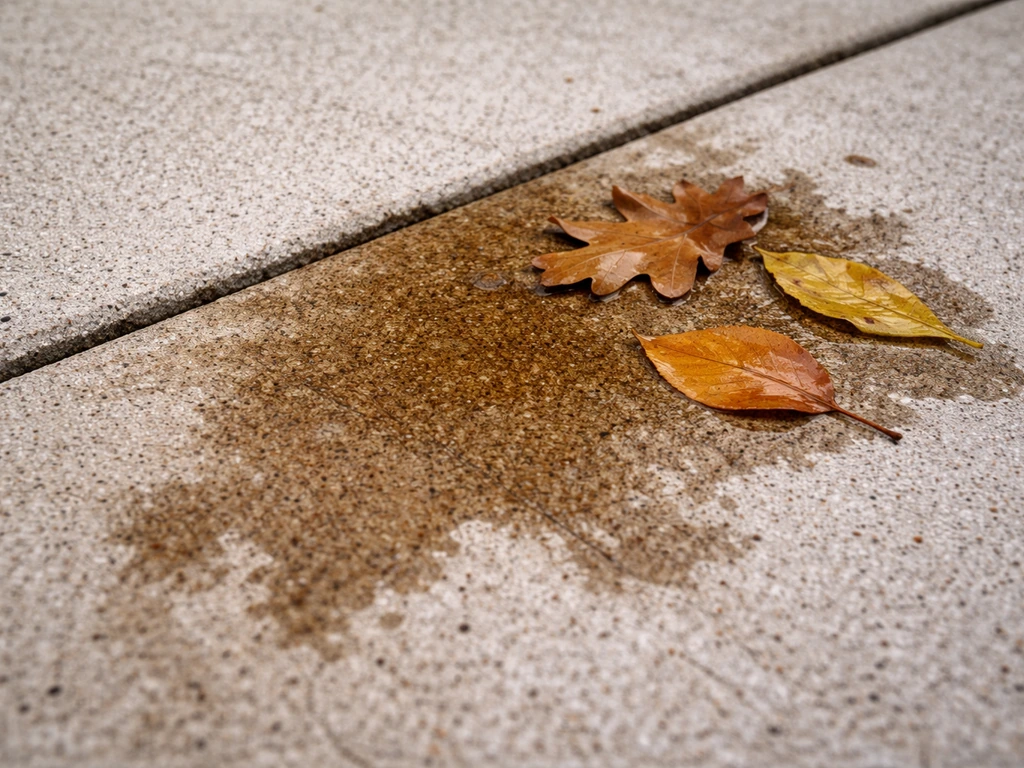
Concrete looks solid, but it's actually quite porous. When wet leaves sit on the surface, they release tannins and natural plant pigments, which are essentially organic dyes. Those dyes get carried by moisture into the pores of the concrete and bond with the surface. The longer leaves sit, especially in damp conditions like after rain or overnight dew, the deeper the tannins penetrate and the harder the stain becomes to remove.
This is different from mold, algae, or rust. It's not biological growth, and it's not a mineral deposit. It's purely an organic discoloration from plant material. That distinction matters because it tells you which cleaners will actually work. Tannin stains respond well to oxidizers, specifically oxygen bleach and chlorine-based bleach, while something like rust would need a completely different approach involving oxalic acid. If you're looking at a reddish-brown stain from iron rather than leaves, that's a separate problem.
Leaves from oak, maple, pine needles, and acorns are particularly notorious for this because of their high tannin content. Berries are another common culprit. If you've got trees overhanging your patio, leaf staining at the end of fall is practically guaranteed unless you stay on top of the cleanup.
Quick prep: remove debris and assess stain depth
Before you apply any cleaner, clear the patio completely. Sweep away all leaves, debris, and loose dirt. If your goal is to remove stain from concrete patio quickly, start by clearing debris and identifying whether the discoloration is surface-level or embedded. This isn't just tidying up for the sake of it. Any leaves still sitting on the surface will keep leaching tannins while you're trying to clean, which defeats the purpose. Once the surface is clear, give the whole patio a rinse with a garden hose to wet it down and flush away loose surface dirt.
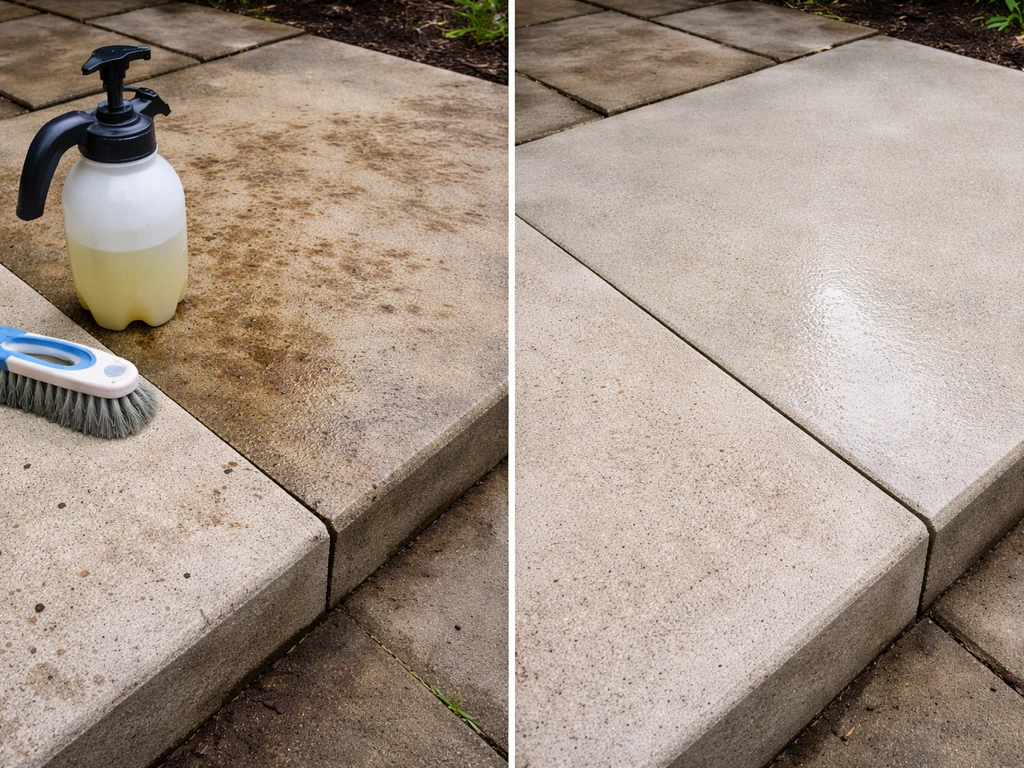
Now take a close look at the stains. There are two scenarios worth distinguishing before you pick a cleaner. First, surface-level staining: the stain shows up when dry but looks lighter or disappears when wet. That's usually easier to lift and will respond well to a gentler cleaner. Second, embedded discoloration: the stain is visible whether the concrete is wet or dry and has a clearly defined outline from where a leaf sat. Those are deeper tannin deposits and will need more dwell time or a stronger product.
Also check whether you're actually dealing with a tannin stain at all. A white or gray haze on the concrete surface is almost always efflorescence, which is salt deposits from moisture moving through the concrete, and it needs a completely different treatment. A rust-colored stain with no clear leaf shape might be iron from furniture or water. For actual leaf stains, you'll typically see a brownish or dark outline that closely mirrors where a leaf was sitting.
Gentle cleaning options to try first
I always recommend starting with the gentler approach, especially if the stains are relatively fresh or you're not sure how your concrete will react. It's also a better choice if you have pets or garden beds nearby, since the runoff is much safer for plants and soil.
Oxygen bleach (sodium percarbonate)
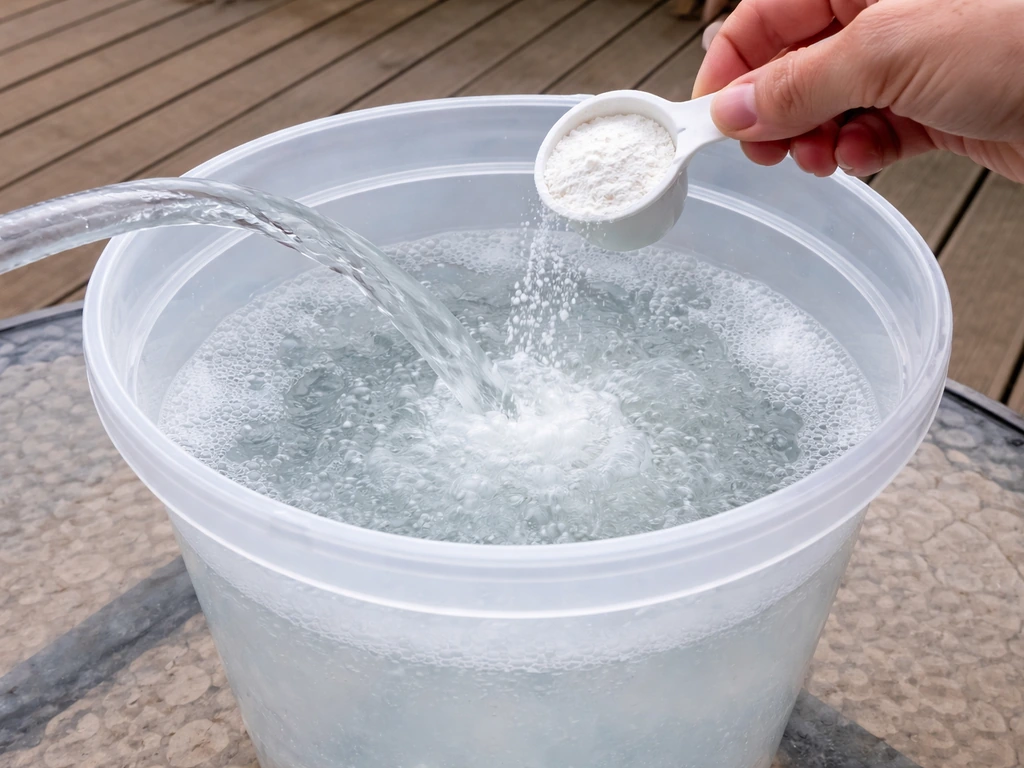
This is my go-to for leaf stains. Products like OxiClean Versatile Stain Remover or dedicated deck and patio oxygen bleach powders work on the same chemistry. When you mix sodium percarbonate with water, it releases active oxygen that breaks down organic material without the harshness of chlorine bleach. It's safer around plants, less likely to discolor the concrete itself, and it's effective on the tannin compounds that cause leaf stains.
- Mix approximately 8 oz of oxygen bleach powder per gallon of warm water in a bucket. Stir until fully dissolved.
- Pour or apply the solution generously over the stained area, making sure the concrete is damp but not flooded.
- Let it dwell for at least 10 minutes. For older or darker stains, extend this to 20 to 30 minutes. Don't let it dry out; re-apply if needed.
- Scrub firmly with a stiff-bristled brush, working in circular or back-and-forth strokes over the stain.
- Rinse thoroughly with a garden hose or pressure washer. Make sure all residue is flushed away.
Dish soap and warm water
For very light, fresh leaf stains, a squirt of dish soap in a bucket of warm water and a good scrub can actually do the job. This is worth trying first if the stain appeared recently and hasn't had time to set. Don't expect it to lift anything older than a week or two, but it's a zero-risk starting point.
White vinegar
Undiluted white vinegar can help loosen surface-level organic staining and is a reasonable option if you want to avoid all chemical products. Pour it directly on the stain, let it sit for 10 to 15 minutes, then scrub and rinse. I'll be honest though: vinegar is more effective on mineral deposits and light surface grime than on embedded tannin stains. If the stain has been there for more than a few weeks, you'll likely need to move on to something stronger. Also, avoid using vinegar repeatedly on concrete as the acidity can very gradually etch the surface over time.
Stronger stain removers for stubborn leaf stains
If oxygen bleach and scrubbing didn't fully lift the stain, it's time to bring in chlorine-based bleach. This works faster on organic tannin stains but comes with more safety considerations and requires careful rinsing.
Diluted chlorine bleach (sodium hypochlorite)
Standard household bleach diluted with water is effective at oxidizing the tannin compounds in leaf stains. The Concrete Network recommends soaking the stained area and letting it sit for 5 to 10 minutes before rinsing. A common working dilution is roughly 1 part bleach to 4 to 5 parts water, though products like Clorox Outdoor Bleach are already formulated for exterior surfaces and can be used more directly.
- Mix 1 part bleach with 4 to 5 parts water in a plastic bucket or spray bottle. Never mix bleach with vinegar, ammonia, or any other cleaner, as this creates toxic gases.
- Apply to the stained area and let it dwell for 5 to 10 minutes. Watch the stain: you should see it lighten as the bleach works.
- Scrub with a stiff brush to help lift the loosened stain material.
- Rinse very thoroughly with plenty of water. Residual bleach can affect nearby plants and can interfere with any sealer you plan to apply later.
- Repeat once if needed, but avoid over-applying chlorine bleach repeatedly to the same spot.
One important note: if your concrete has a colored or decorative finish, test any bleach solution in a hidden corner first. Sodium hypochlorite can affect certain concrete dyes and coatings. For plain gray concrete, you're generally fine, but always test before committing to the full area.
Dedicated concrete cleaners
If neither oxygen bleach nor diluted chlorine bleach is shifting the stain after two attempts, look for a product specifically formulated for organic stains on concrete or masonry. Many patio cleaning products contain higher-concentration sodium hypochlorite or enzyme-based formulas designed to break down embedded organic material. Follow the product's dwell time and rinsing instructions exactly, and always check that it's rated safe for concrete surfaces.
How to scrub and rinse properly
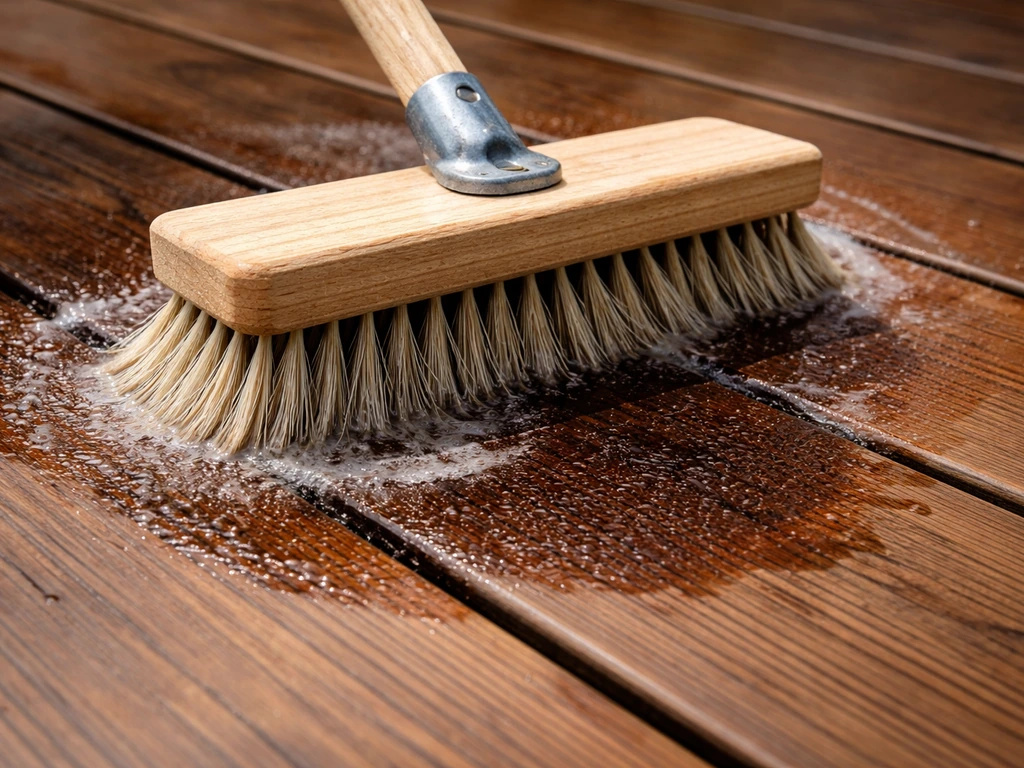
The scrubbing step is where a lot of people either rush or skip, and it genuinely makes a difference. A stiff-bristled deck brush or a long-handled scrub brush is what you want. Wire brushes can work but risk scratching the surface, so stick with nylon or polypropylene bristles for most concrete patios.
Scrubbing by hand
Apply firm, consistent pressure and work in overlapping circular or straight strokes. Focus on the edges of the stain first and work inward. The goal is to help the cleaning solution penetrate and mechanically lift the loosened tannin material out of the pores. Give it at least two to three minutes of active scrubbing per stained section before rinsing.
Using a pressure washer
A pressure washer speeds things up significantly, but technique matters. For rinsing after cleaning, keep the pressure under 1,500 PSI to avoid etching or pitting the concrete surface. Use a 25-degree or 40-degree nozzle for concrete, and hold the wand at roughly a 45-degree angle to the surface so the water disperses and pushes debris away rather than driving it deeper. Start on the lowest effective pressure setting and only increase if needed. Always test in a small, inconspicuous area first, especially if your concrete is older or shows any signs of surface wear.
If you're applying a cleaner and then pressure washing it off, apply the solution first and let it dwell fully before bringing the pressure washer in. Don't use the pressure washer to push the cleaner around the surface during the dwell period; that wastes your dwell time and dilutes the solution.
Safety and surface care
Protecting yourself and nearby surfaces
When using bleach or any chemical cleaner, wear rubber gloves and eye protection. Bleach splashes are a real hazard, especially when scrubbing vigorously. Work in a ventilated area and avoid applying bleach in direct hot sunlight, which causes it to evaporate too quickly before it can work and can leave uneven marks.
Before you apply any cleaner, wet down any nearby grass, garden beds, or planters with plain water. This dilutes any runoff before it reaches plant roots. For bleach specifically, rinse plants again thoroughly after you're done cleaning. Oxygen bleach is much gentler in this regard and breaks down into water, oxygen, and sodium carbonate, making it the safer choice near gardens.
Sealing the concrete after cleaning
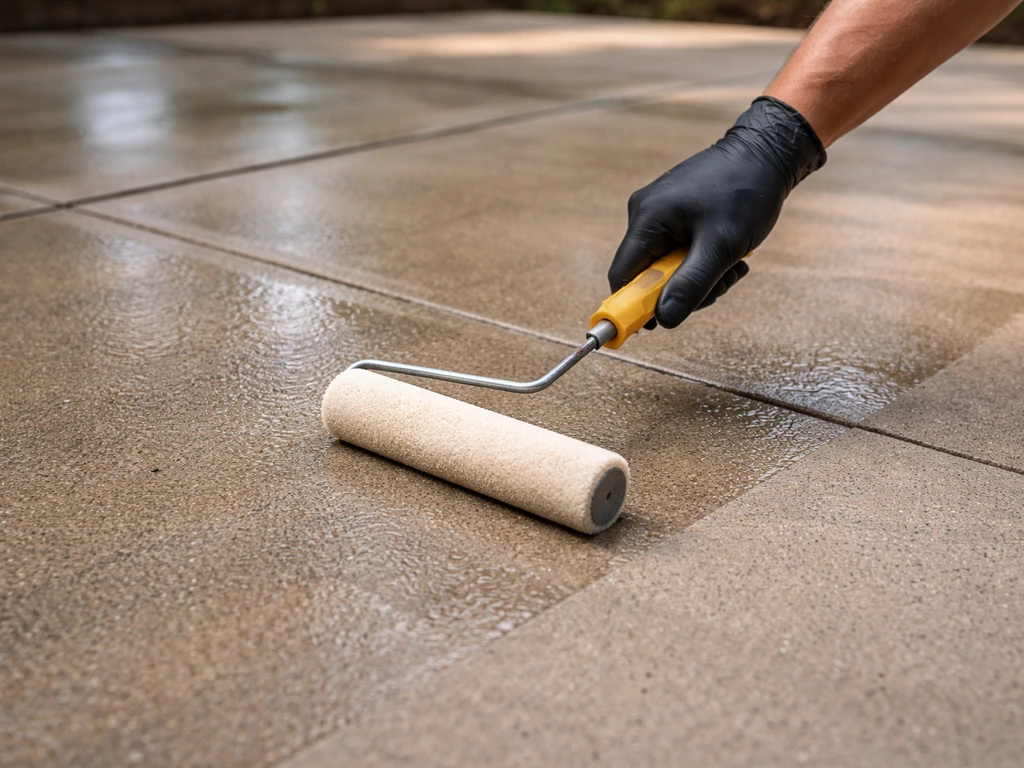
Once the stain is removed and the patio is fully dry, sealing the concrete is the best thing you can do to prevent future staining. A penetrating concrete sealer fills the pores that tannins exploit, making it much harder for future leaf stains to set. Don't seal over a stain, though. If any discoloration remains, sealing traps it permanently under the coating and makes future removal much harder.
For new concrete, wait at least 28 days after pouring before sealing. For existing patios, reseal every one to two years, or when you notice water no longer beads up on the surface. That bead test is your practical indicator that the sealer has worn down and the concrete is becoming porous again. Clean the surface thoroughly before resealing, which may mean a more aggressive pressure wash to remove any embedded dirt or old curing compounds.
What to do if the stain won't lift
Troubleshooting persistent stains
If you've tried oxygen bleach and then chlorine bleach with proper dwell times and the stain is still clearly visible, consider these scenarios: If you still see stubborn discoloration, you can follow the same process in more detail with this guide on how to get blood off concrete patio.
| What you're seeing | What it probably is | What to try next |
|---|---|---|
| Brown or tan leaf-shaped outline, still visible after two cleaning attempts | Deeply embedded tannin stain | Try a concentrated enzyme-based concrete cleaner or repeat bleach treatment; extend dwell to 15 minutes |
| White or gray haze, especially after wetting | Efflorescence (salt deposits, not tannin) | Use a dedicated efflorescence remover; standard bleach won't help here |
| Orange or rust-colored stain without a clear leaf shape | Iron/rust staining from furniture or water | Use an oxalic acid-based rust remover rated for concrete; tannin cleaners won't work on this |
| Stain appears greenish or fuzzy | Algae or mold growth (separate from tannin staining) | Treat with a bleach or sodium hypochlorite solution; oxygen bleach also works well for this |
| Stain has darkened after cleaning | Possible moisture trapped in concrete, or cleaner residue | Rinse more thoroughly and allow to fully dry over 24 to 48 hours before reassessing |
One mistake I've seen people make is layering multiple chemicals without rinsing between attempts. If you used vinegar first and then want to try bleach, rinse completely and let the surface dry before switching products. Mixing residues can reduce effectiveness or, in the case of some combinations, create hazardous fumes.
Prevention: stopping leaf stains before they start
The most effective prevention strategy is simply prompt removal of fallen leaves. Don't let leaves sit on the patio overnight if you can help it, especially after rain. A quick sweep every couple of days during fall goes a long way toward avoiding the whole problem.
- Sweep or blow leaves off the patio immediately after they fall, especially before rain or overnight dew.
- Rinse the patio surface with a garden hose weekly during leaf-fall season to flush away early tannin deposits before they set.
- Apply or maintain a quality penetrating concrete sealer; reseal whenever water stops beading on the surface.
- Trim overhanging branches where practical to reduce the volume of leaves landing on the patio.
- Do a light scrub with soapy water at the end of each fall season before winter sets in, to clear any staining that built up gradually.
Concrete staining in general tends to compound over time. Leaf stains that get ignored through one fall season are noticeably harder to remove by spring than they would have been in November. If you keep up with the sweeping and do a seasonal rinse, you're unlikely to ever need the stronger cleaning methods described here. But when stains do set in, oxygen bleach is where I'd start every time.
FAQ
How long should I leave oxygen bleach on the stain before scrubbing and rinsing?
A good baseline is about 10 minutes of dwell time, then scrub immediately and rinse thoroughly. If the stain is older but looks tannin-based (brown/leaf outline), give it another attempt with the same dwell time rather than extending indefinitely, since overly long contact can increase the chance of light surface whitening.
What if the stain gets lighter but not completely removed after one treatment?
Plan on two rounds. Do not stack different cleaners back-to-back without a full rinse and dry. After the second round, if any dark outline remains, switch to a stronger oxidizer approach (as outlined in the article) or use a masonry product labeled for organic stains, then reassess.
Can I use a pressure washer right away after applying oxygen bleach?
No, let the cleaner dwell for the full time first. If you blast it off immediately, you dilute the active chemistry before it has time to break down the tannins. After dwell, rinse with controlled pressure (under about 1,500 PSI) and a 25- to 40-degree nozzle while keeping the wand at an angle.
How can I tell if my “white haze” is leaf staining or efflorescence?
Leaf stains usually have a recognizable stain shape or outline where leaves sat. Efflorescence typically appears as a more uniform, powdery gray or white film that forms when moisture moves through the concrete and leaves salts behind. If it’s a film that comes off lightly like a powder, treat it as efflorescence rather than tannins.
Is it safe to clean leaf stains if it might rain soon?
Try not to start right before a heavy rain. Rainwater before the dwell time can wash the cleaner away, leaving patchy results and requiring repeat treatments. If rain is likely, aim for a dry window long enough to scrub and fully rinse, then let the patio dry completely before sealing.
Will chlorine bleach harm nearby plants or grass?
It can, especially with runoff. Wet down nearby soil and vegetation first with plain water, then rinse plants thoroughly after the job. Oxygen bleach is generally more plant-friendly because it breaks down into oxygen and water, but any runoff from chlorine should be treated as risky.
Can I seal the patio immediately after stain removal?
Wait until the concrete is fully dry and free of residue. If you seal with moisture or cleaner still present, you can trap remaining discoloration or reduce sealer performance. Also, if any tint remains, sealing can lock it in, making future removal much harder.
Should I use vinegar instead of bleach if I have decorative or colored concrete?
Be cautious with both. The article recommends testing any bleach solution in a hidden corner, and vinegar can also affect the surface over time due to acidity. If your concrete has a colored finish or sealer, do a small test area with the product you plan to use, and avoid multiple vinegar applications on the same spot.
What’s the biggest mistake people make when removing leaf stains?
Layering multiple chemicals without rinsing between attempts (for example, vinegar then bleach). Residues can reduce effectiveness, and some combinations create hazardous fumes. Rinse completely, let the surface dry, then switch to the next method if needed.
If I have pets, what’s the safest way to handle the cleanup?
Choose oxygen bleach first and plan for contact safety. Keep pets off the patio during application and scrubbing, and only allow access after a full rinse and complete drying. Oxygen bleach residue is less concerning than chlorine, but runoff and wet surfaces can still irritate skin and paws.
What brush should I use, and can I use a wire brush?
Use a stiff-bristled deck brush or nylon/polypropylene scrub brush for effective mechanical lifting without gouging. Wire brushes can scratch concrete, and those scratches can hold dirt and become visible later, especially on smoother or sealed patios.
Next Articles
How to Remove Burn Marks From Patio by Material
Material specific steps to remove patio burn marks safely, from soot and discoloration to concrete, pavers, and traverti
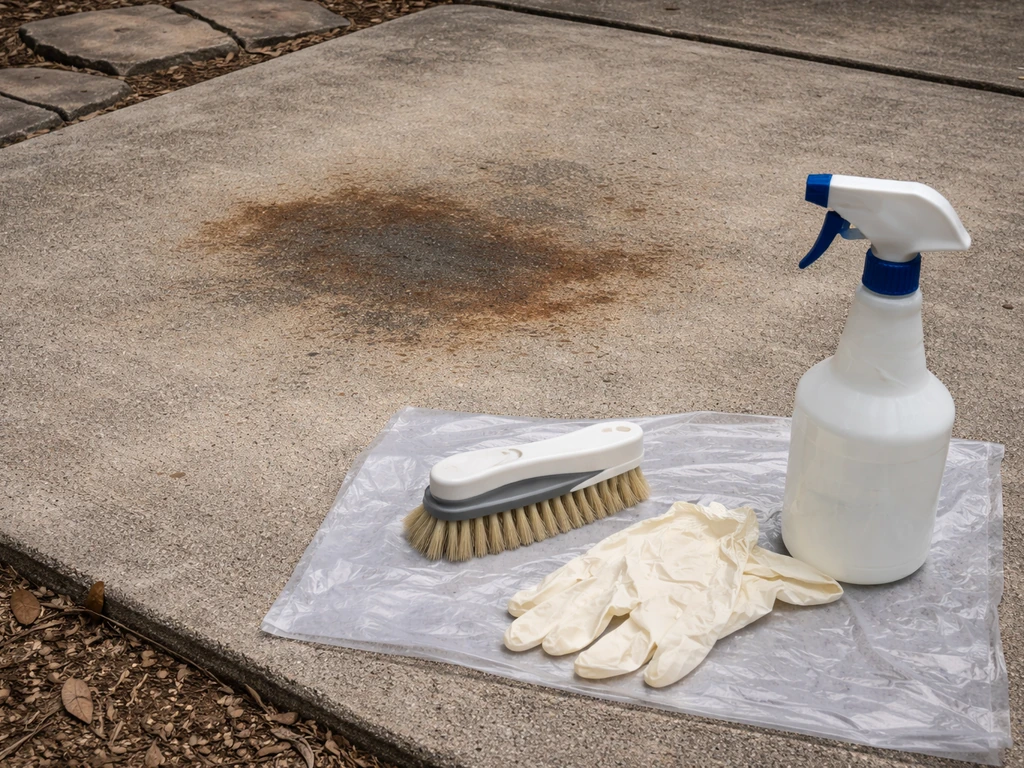
How to Remove Concrete Stains From Patio Slabs
Identify concrete stain type and remove it safely with scrub, soak, oxygen bleach or acid, plus prevention and sealing t
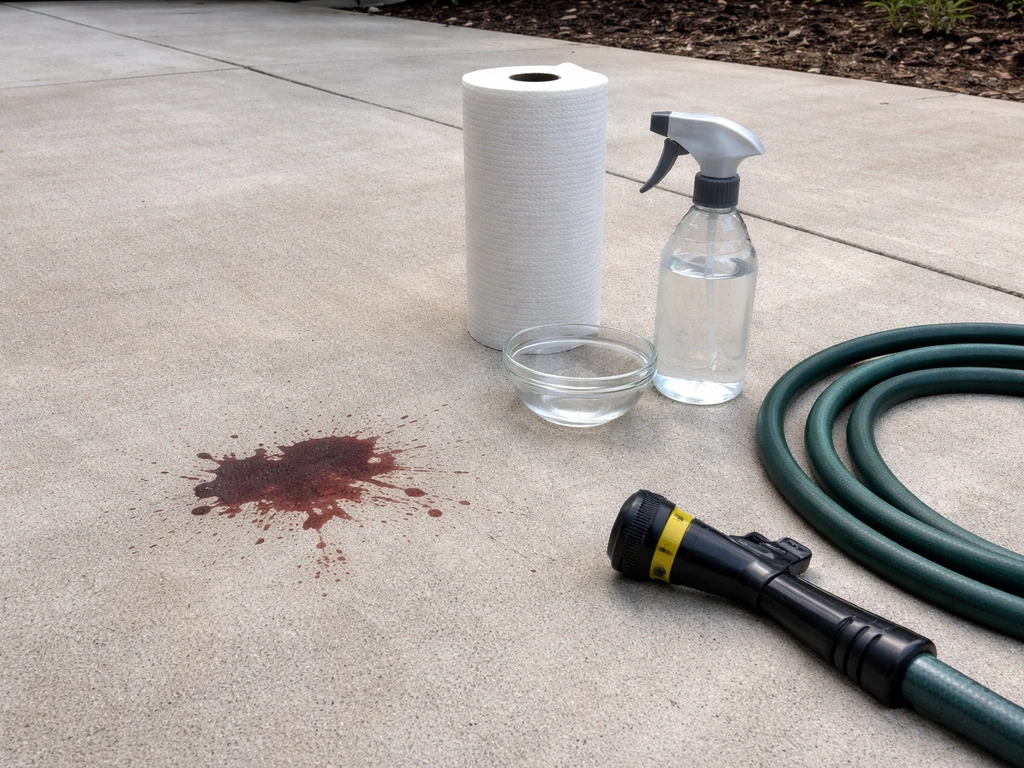
How to Get Blood Off Concrete Patio Fast and Safely
Step-by-step how to get blood off concrete patio fast: blot, safe cleaners, hydrogen peroxide or enzymes, pressure wash,