Most concrete patio stains come out with dish soap, a stiff brush, and some patience, but the trickier ones like wood stain, urine, rust, or deeply set grime need a targeted approach. The key is matching your cleaner to the stain type and giving it enough dwell time to actually work before you rinse. I'll walk you through the whole process, from figuring out what you're dealing with to the final rinse, so you can get your patio looking clean without accidentally etching or damaging the concrete.
How to Remove Stain From Concrete Patio Today
Dylan Hale
1 May 2026
Step 1: Figure out what stain you're actually dealing with
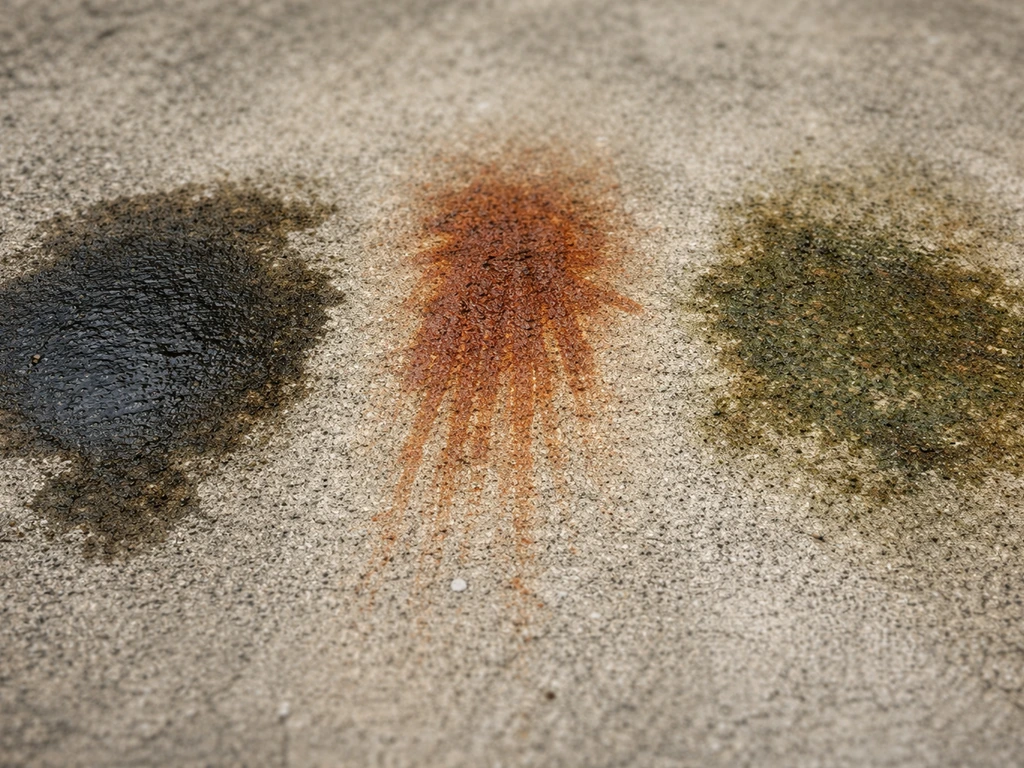
Before you grab any cleaner, spend 60 seconds diagnosing the stain. Different stains need completely different treatments, and using the wrong product can either do nothing or make things worse. Here's what to look for:
| Stain appearance | Likely cause | Best first approach |
|---|---|---|
| Dark oily patch | Grease or motor oil | Dish soap or degreaser |
| Orange or reddish-brown | Rust from furniture legs or rebar | Oxalic acid product |
| Brown or tan tinted area | Wood/deck stain or tannins from leaves | Deck cleaner or oxygen bleach |
| Yellow or ammonia smell | Urine (pet or wildlife) | Enzymatic cleaner |
| White powdery haze | Efflorescence (mineral deposits) | Diluted white vinegar or mild acid wash |
| Black or green patches | Mold, mildew, or algae | Bleach solution or oxygen bleach |
| General gray discoloration | Dirt buildup or old sealer | Heavy-duty concrete cleaner |
Age matters just as much as type. Fresh stains, anything less than 24 to 48 hours old, sit near the surface and usually respond well to simple scrubbing with soap and water. Old or set stains have migrated deeper into the concrete's pores. Because concrete is porous, liquids like urine, oil, and water-based stains get absorbed and won't just rinse away. Older stains need longer dwell times and stronger products. If you're not sure how old it is, treat it like an old stain and give your cleaner more time.
Gather your supplies and protect the area first
Jumping straight into cleaning without a bit of prep can damage your plants, streak your siding, or ruin a small patch of concrete before you've tested anything. A few minutes of setup saves you from bigger headaches.
What you'll need
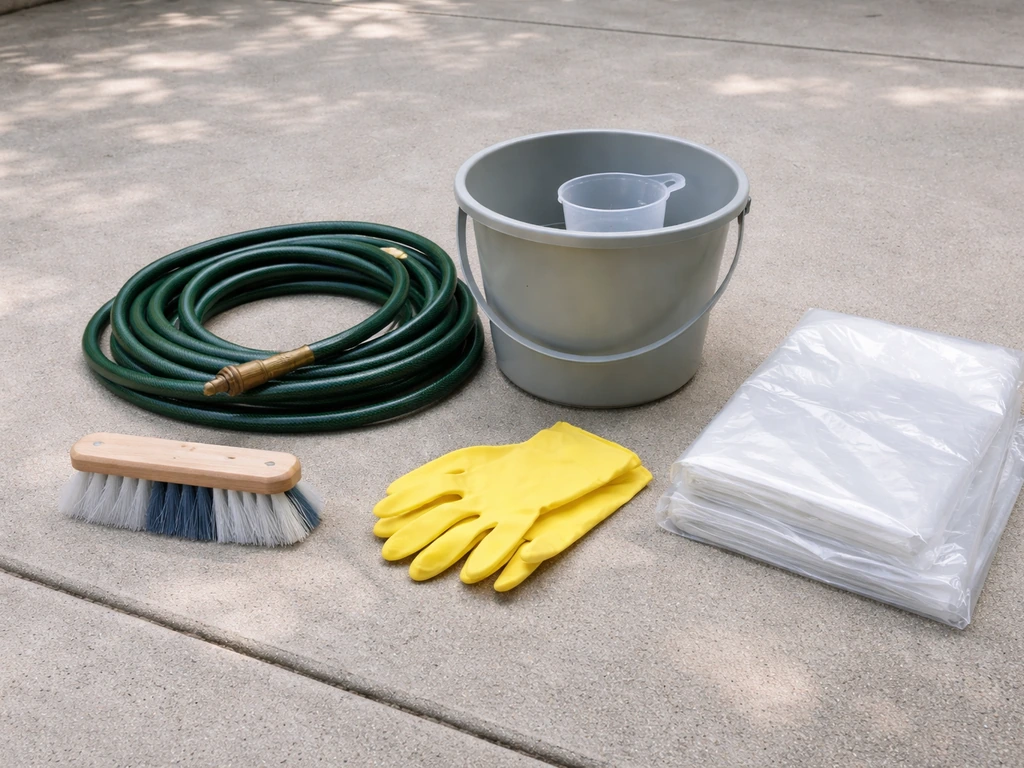
- Stiff-bristle scrub brush (nylon bristles are fine; avoid wire brushes on concrete)
- Garden hose or pressure washer (1,500–3,000 PSI for concrete)
- Bucket and measuring cup
- Rubber gloves and safety goggles — non-negotiable with any acid or bleach
- Your chosen cleaner (see sections below)
- Plastic sheeting or old towels
- Baking soda (to neutralize acid cleaners after use)
Before you start: protect plants and test a spot
If you have planters or garden beds along the patio edge, wet them down with plain water before you apply any cleaner. This dilutes any runoff and reduces the chance of bleach or acid burning the roots. Cover nearby plants with plastic sheeting if you're using anything stronger than dish soap.
Always test your cleaner on an inconspicuous corner first, a 6-inch square area works fine. Apply it, wait the recommended dwell time, and rinse. Check that the concrete hasn't lightened, darkened, or changed texture. Concrete is sensitive to pH extremes, and some cleaners that are marketed as safe can still etch or discolor certain concrete mixes. If the test spot looks fine after drying, you're good to go wider.
The general method that works for most stains
This approach works for general grime, mold, mildew, tannin stains from leaves and wood, and most organic stains. It's the right starting point before you reach for anything stronger.
- Sweep or blow any loose debris off the patio surface first.
- Pre-wet the entire stained area with plain water from your hose. This opens the concrete's pores slightly and helps the cleaner penetrate rather than just sitting on top.
- Mix your cleaner: for oxygen bleach (like OxiClean powder), dissolve about 1 scoop per gallon of warm water. For dish soap, a few generous squirts per bucket is enough for light stains.
- Apply the solution liberally to the stain. Don't be shy — you want it saturated, not just damp.
- Let it dwell. For oxygen bleach, aim for 15 to 20 minutes. For dish soap, 5 to 10 minutes is fine. For heavy-duty concrete cleaners (like commercial products), check the label — some specify 2 to 3 hours for tough stains.
- Scrub with a stiff-bristle brush using firm, circular motions. Work the cleaner into the pores rather than just scrubbing the surface.
- Rinse thoroughly with a hose or pressure washer. If pressure washing, keep the nozzle moving — don't hold it in one spot, which can erode the concrete surface over time.
- Inspect once dry. If the stain is lighter but still visible, repeat the process before trying a stronger chemical.
One thing I've found makes a real difference: don't let the cleaner dry on the surface. If you're working in direct sun or on a hot day, the solution evaporates too fast to do its job. Work in the shade or early morning if possible, and keep a hose nearby to re-wet the area if needed.
How to remove wood stain or deck stain from concrete
Wood stain and deck stain are some of the more stubborn concrete stains because they're designed to penetrate and bond. If you spilled deck stain while refinishing a fence or deck, or tracked it across the patio, here's how to approach it based on how fresh it is.
Fresh wood stain (still wet)
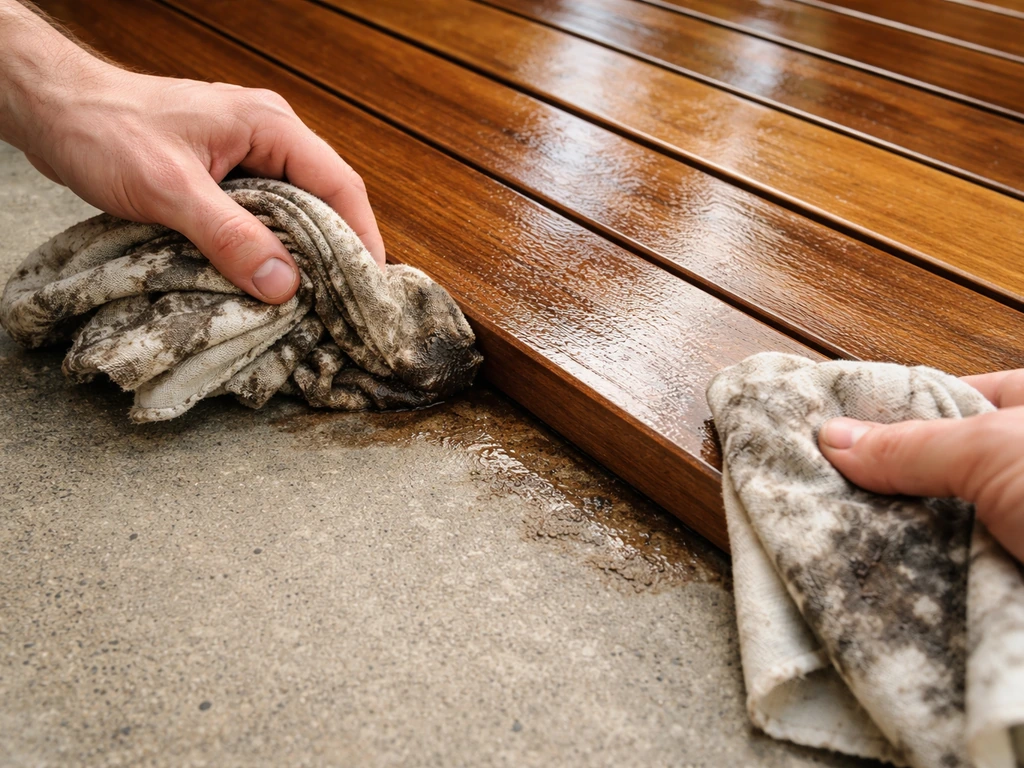
- Blot up as much excess stain as possible with old rags. Don't wipe or spread it — blot from the outside edge inward.
- Apply paint thinner, mineral spirits, or acetone to a rag and blot the stain repeatedly. For water-based deck stain, dish soap and warm water can work at this stage.
- Scrub with a stiff brush, then rinse thoroughly.
- Follow up with an oxygen bleach solution if a shadow remains.
Dried or set wood stain
Once wood stain has dried and bonded into the concrete's pores, solvent-based removers are your best bet. Apply mineral spirits or a dedicated deck stripper/stain remover directly to the stain, let it soak for 20 to 30 minutes, then scrub hard with a stiff brush. You may need two or three applications for oil-based stains. After the stain lifts, clean the area with a dish soap solution and rinse completely, you don't want residual solvent sitting on the concrete.
For water-based deck stains that have dried, oxygen bleach or a commercial deck cleaner (the kind sold for cleaning wooden decks before staining) works well, apply generously, dwell 15 to 20 minutes, and scrub. Pressure washing at 2,000 PSI after chemical treatment will help pull out the last of the stain from deeper pores. This type of staining is closely related to the broader challenge of removing concrete stains from patio slabs, where surface penetration is the core difficulty. That same logic also applies when you need to figure out what type of stain you have and choose the right cleaner removing concrete stains from patio slabs.
How to remove urine stains and odor from concrete
Urine is one of the nastiest concrete stains to deal with, not because it's visually dramatic but because the odor can linger for months if you don't neutralize the uric acid crystals embedded in the pores. Bleach will disinfect the surface and kill bacteria, but it won't actually break down the uric acid, which means the smell comes back, especially in warm weather. Enzymatic cleaners are the right tool here.
What to use: enzymatic cleaners
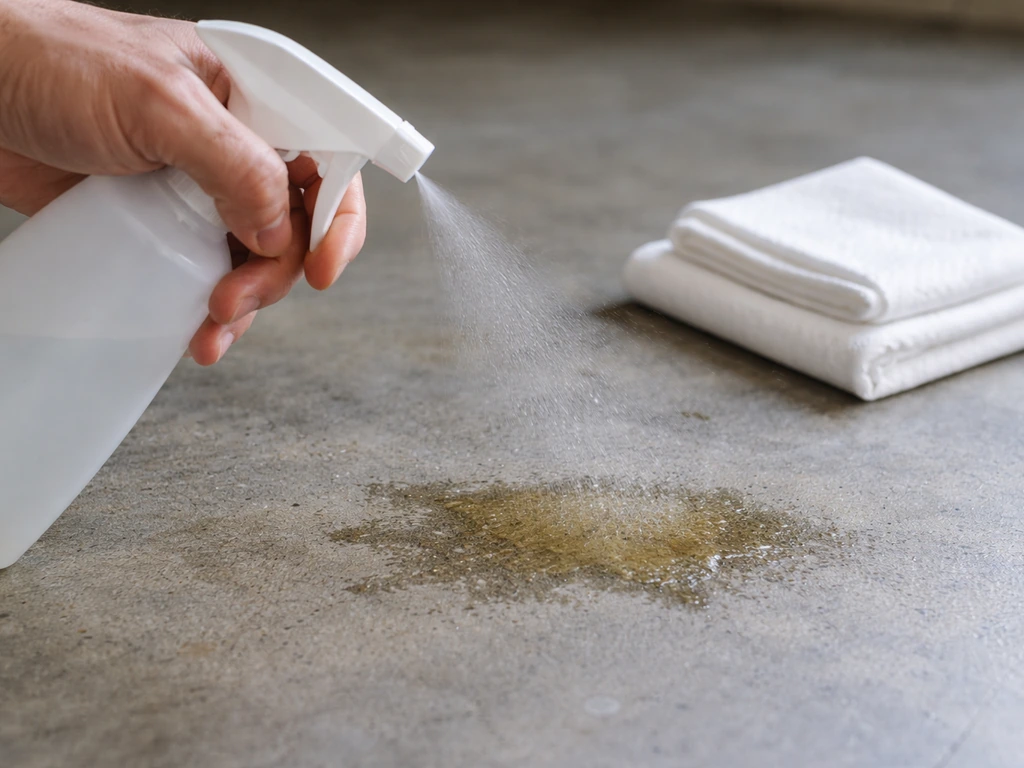
Look for products specifically labeled as enzymatic or bio-enzymatic cleaners for pet urine on concrete. These contain live enzymes and beneficial bacteria that literally digest the uric acid crystals. They take longer to work than bleach, but they actually solve the problem rather than masking it.
- Clean any solid waste and blot up any liquid first.
- Pre-wet the stained area lightly with plain water — enzymes need moisture to stay active.
- Apply the enzymatic cleaner generously. For deeply absorbed urine in porous concrete, you want the product to saturate down to the same depth the urine reached. Don't be sparing.
- Cover the treated area with plastic sheeting. This slows evaporation and keeps the enzymes wet and working. Leave it for at least 1 to 2 hours, or longer for older stains — some products work best with a 4 to 8 hour dwell time.
- Important: don't be alarmed if the urine odor gets stronger at first. That's normal — the enzymes are actively breaking down the deposits, and the smell intensifies temporarily before it disappears.
- Remove the plastic, let the area air out, and rinse thoroughly with clean water.
- If odor remains after drying, repeat the process. Old, deeply set urine often needs two applications.
After using an enzymatic cleaner, you can follow up with a diluted bleach solution to disinfect and eliminate any remaining surface bacteria. Just make sure to rinse the enzymatic product off completely first, since mixing it with bleach deactivates the enzymes.
Choosing your chemical: bleach, oxygen bleach, vinegar, or muriatic acid
The cleaner you reach for should match the stain type and how cautious you want to be. Here's an honest breakdown of the main options.
Chlorine bleach (sodium hypochlorite)
Standard household bleach contains sodium hypochlorite, typically 5% to 9% concentration in common US products. It's excellent for killing mold, mildew, algae, and bacteria on concrete. For patio cleaning, dilute it to roughly 1/3 cup bleach per gallon of water (following the CDC's general disinfection guideline), apply to the stain, let it dwell 5 to 10 minutes, scrub, and rinse thoroughly. Don't use bleach at full concentration on concrete, it's unnecessary and can affect the surface. Always wear rubber gloves and eye protection, work in a ventilated area, and keep it away from plants. Bleach won't do much for oil-based stains, rust, or uric acid, it's specifically strong against biological and organic growth.
Oxygen bleach
Oxygen bleach (sodium percarbonate products like OxiClean) is my go-to for general concrete patio stains, especially tannin stains from leaves, wood stain shadows, and general discoloration. It's much gentler than chlorine bleach, safer around plants and pets once rinsed, and still effective with a 15 to 20 minute dwell time. Keep the area wet during the dwell period, don't let it dry out in the sun. It works more slowly than chlorine bleach but is safer for regular use and less likely to affect the concrete's color.
White vinegar
Vinegar is genuinely useful for a narrow set of concrete stains, specifically efflorescence (the white powdery mineral deposits) and light calcium buildup. GSA preservation guidance notes that removing concrete efflorescence can involve detergents or solvents, and it also discusses chemical approaches for efflorescence removal. For those, undiluted white vinegar applied with a brush, left for 10 to 15 minutes, and scrubbed off can work well. But I want to be honest: vinegar is too mild for most concrete patio stains. It won't touch oil, rust, mold, or set-in organic stains. It's also not strong enough to replace acid washing or etching for any preparation work. Use it when it fits the stain type, but don't expect it to do more than it can.
Muriatic acid
Muriatic acid is the nuclear option, and I'd honestly avoid it unless you've tried everything else or you're dealing with severe efflorescence or mineral staining that nothing else has touched. It will etch concrete, that's not a risk, it's what it does by design, and many coating manufacturers specifically recommend against using it for stain removal or surface prep precisely because of that damage. If you do use it, always dilute it heavily (typically 1 part acid to 10 parts water, added acid to water, never the reverse), wear acid-resistant gloves, a face shield, and old clothes, keep baking soda nearby to neutralize spills, and rinse the concrete thoroughly with a baking soda solution (1 cup per gallon of water) after use to neutralize any remaining acid. This is not a beginner product. If you have any doubt, call a concrete restoration professional instead.
Quick comparison
| Cleaner | Best for | Strength | Risk to concrete | Pet/plant safe after rinsing |
|---|---|---|---|---|
| Dish soap / degreaser | Fresh grease, light organic stains | Mild | None | Yes |
| Oxygen bleach | Tannins, wood stain, general discoloration, mold | Moderate | Very low | Yes |
| Chlorine bleach (diluted) | Mold, mildew, algae, bacteria | Moderate-strong | Low if diluted | Yes after thorough rinsing |
| White vinegar | Efflorescence, light calcium deposits | Mild | Very low | Yes |
| Enzymatic cleaner | Urine, biological waste, odor | Targeted | None | Yes |
| Oxalic acid product | Rust stains | Moderate | Low with correct use | Toxic — rinse thoroughly |
| Muriatic acid | Severe mineral staining, last resort | Very strong | High — will etch | No — neutralize and rinse fully |
Rinse properly, neutralize acid, and keep stains from coming back
The final rinse
Rinsing sounds simple, but it's where a lot of people cut corners. Any cleaner left to dry on concrete can leave a residue that attracts more dirt, affects the pH of the surface, or continues to react with the concrete. After scrubbing, rinse the entire treated area with a strong flow of water. If you're using a pressure washer, a 25-degree tip at 2,000 to 2,500 PSI is ideal, keep the nozzle moving and don't hold it in one spot. If you're using a hose, use the jet setting and rinse in overlapping passes. Keep rinsing until the water running off is completely clear.
Neutralizing after acid treatments
Any time you've used muriatic acid, oxalic acid, or a strongly acidic product, follow up with a neutralizing rinse. Mix 1 cup of baking soda per gallon of water, apply it across the treated area, let it bubble briefly (that's the acid-base reaction working), then rinse again with plain water. This prevents the residual acid from continuing to etch the concrete and protects the surface long-term. Keep soap, water, and clean towels nearby while working with any acid in case of skin contact, and rinse any skin contact immediately.
Preventing future stains
Once your patio is clean, a concrete sealer is the single best investment you can make. A penetrating silane or siloxane sealer fills the pores and dramatically slows how quickly future spills get absorbed. Most sealers need to be reapplied every 2 to 5 years depending on traffic and weather. For furniture rust stains, put rubber or plastic feet caps on all metal legs, that alone eliminates one of the most common recurring concrete patio stains. If you have pets, a quick enzymatic spot clean after accidents prevents urine from setting deep. And if you're doing any deck staining or painting near the patio, lay down plastic sheeting on the concrete first, removing dried wood stain from concrete is a much bigger job than catching it wet.
Concrete stains from specific sources, like burn marks, glue, leaf tannins, or blood, follow the same basic logic as this guide: identify the source, match the chemistry, give it dwell time, and rinse completely. If you're dealing with a glue residue on a concrete patio, use the right solvent or adhesive remover and then scrub and rinse thoroughly. If you need a starting point for burn marks on a patio, treat them as a set surface stain and choose the right cleaner before you scrub burn marks from patio. To tackle blood on a concrete patio, identify the type of blood stain and use the right cleaner for it, then give it dwell time before a thorough rinse. Once you understand how porous concrete actually behaves, most stains become manageable with the right product and a bit of patience.
FAQ
Can I use the same cleaner for all stains on a concrete patio if I just scrub harder?
Usually no. Stronger scrubbing helps surface grime, but it does not reverse deep penetration in porous concrete. If the stain is oil-based, rust, or urine, the chemistry must match the source, otherwise you risk spreading residue wider or setting it deeper.
What should I do if I cannot identify the stain type?
Treat it like a set stain and start with an oxygen bleach solution plus a stiff brush, because it is generally safer than chlorine bleach or acids for many common discolorations. Apply to a test spot first, keep the area wet during dwell, then rinse fully before deciding to move to solvents or other specialized products.
How long should I let the cleaner sit on the stain before scrubbing and rinsing?
Follow the product’s dwell time, and if you are unsure about stain age, choose the longer end of the recommended window. Do not let the cleaner dry on the surface, if it starts drying, re-wet with water so it can keep working before you scrub and rinse.
Will pressure washing always make stain removal easier?
Pressure washing helps after chemical treatment, but it can also damage concrete if misused. Use a moderately wide spray (around a 25-degree tip) with moving technique, avoid staying in one spot, and always rinse until runoff is clear, otherwise residues can re-attract dirt.
How do I know if a stain remover actually worked or if it only lightened temporarily?
Re-check after it dries completely, not just right after rinsing. Some removers can cause brief color changes while the surface is wet or in alkaline condition, a true fix holds its color once fully dry.
Can I mix bleach with other cleaners or cleaners with vinegar on a concrete patio?
Do not mix. Bleach with acids or many other chemicals can create harmful fumes and can also reduce effectiveness or leave unpredictable residues. If you switched cleaners, rinse thoroughly with water first, then test a small area before continuing.
What is the safest way to protect plants and grass near the patio?
Wet nearby soil and plants with plain water before you apply any cleaner, and cover plants with plastic sheeting if you are using anything stronger than dish soap. Keep runoff controlled so it does not run into garden beds or pool along edges.
Is it okay to use muriatic acid to remove stubborn mineral stains?
It can work, but it is high-risk because it etches concrete by design and can damage nearby materials and skin. Use it only if you have exhausted gentler options, dilute correctly (acid added to water), neutralize with a baking soda rinse, and consider hiring a concrete restoration pro if you are unsure.
After using oxygen bleach or chlorine bleach, do I still need to neutralize the patio?
Usually not for oxygen bleach, since it is designed to rinse clean once dwell time is complete. Chlorine bleach generally requires thorough rinsing, but not a baking soda neutralizer unless you used strongly acidic products. If you used muriatic acid, oxalic acid, or another strong acid, always perform the baking soda neutralizing rinse.
Why does the stain come back later, especially with urine and rust?
With urine, smell can return because uric acid crystals remain in pores, so disinfecting alone does not fully solve it. With rust, recurring stains often come from ongoing metal contact or moisture, using protective feet on metal furniture legs and correcting moisture sources helps prevent reappearance.
What is the best way to remove pet urine without making the odor worse?
Use an enzymatic or bio-enzymatic cleaner specifically labeled for pet urine on concrete. Rinse the product off completely before any disinfecting step, because mixing enzymatic cleaners with bleach deactivates enzymes and reduces long-term odor control.
Can vinegar be used for patio stain removal if I already have it at home?
Only for specific cases like efflorescence or light calcium buildup. It is typically too mild for oil, rust, mold, and set organic stains, so it will not replace stronger stain-specific treatments.
How do I avoid residue streaks after cleaning concrete?
Finish with a full-area rinse until runoff water looks clear, not just until it stops foaming. If you are working in sun or heat, re-wet so the cleaner does not dry and leave salts or reaction byproducts that attract dirt later.
Next Articles
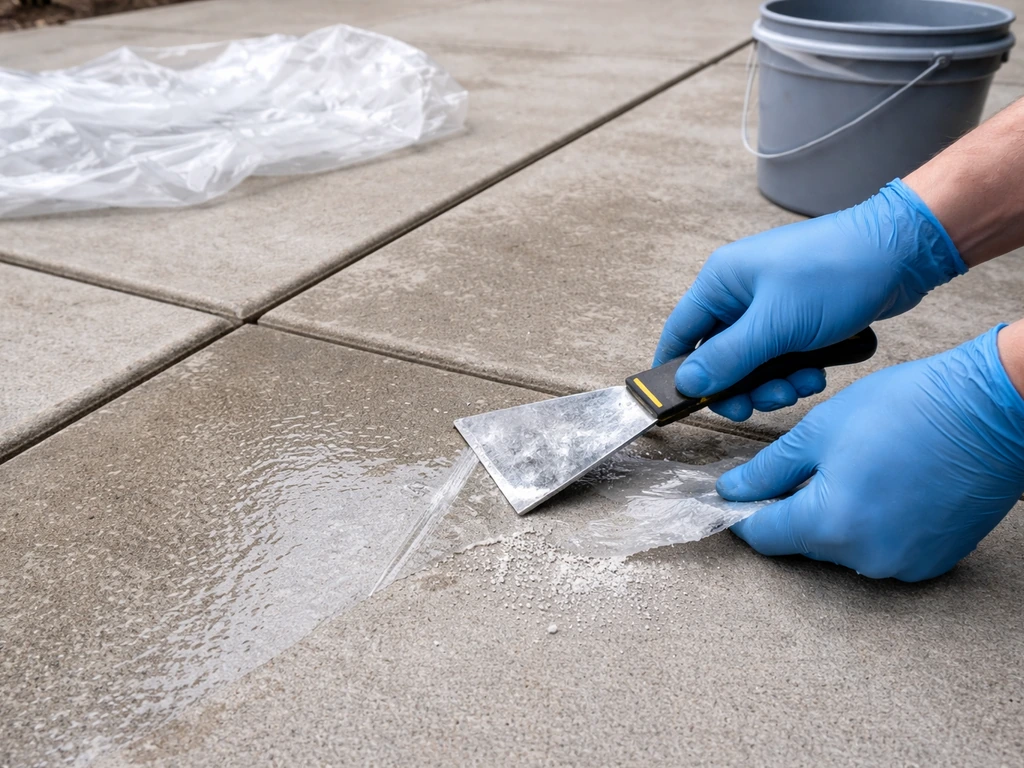
How to Remove Thompson’s Patio Sealer Step by Step
Step-by-step removal of Thompson’s patio sealer on concrete, brick, pavers, and stone, with safety, tests, and cleanup.
Can You Remove Patio Sealer? How to Strip It Safely
Learn if you can remove patio sealer and how to strip it safely by type, material, and method.
How to Remove Resin From Patio Safely by Surface Type
Step by step guide to remove resin from patio by surface type with safe scraping, softening and solvent methods.