
Wood stain on patio slabs is removable, but the method you need depends on two things: how long the stain has been sitting there, and whether your slabs are sealed or not. Fresh stain (still wet or within a few hours) can often be lifted with dish soap and a stiff brush. Dried or cured stain that has soaked into unsealed concrete or stone needs a proper chemical remover, a poultice, or an oxalic-acid-based brightener to break it down. If you need a step-by-step approach for stubborn spots, follow the guidance in how to remove stain from patio. The good news is you can tackle most of this with products you can grab today.
How to Get Wood Stain Off Patio Slabs Step by Step
Dylan Hale
29 May 2026
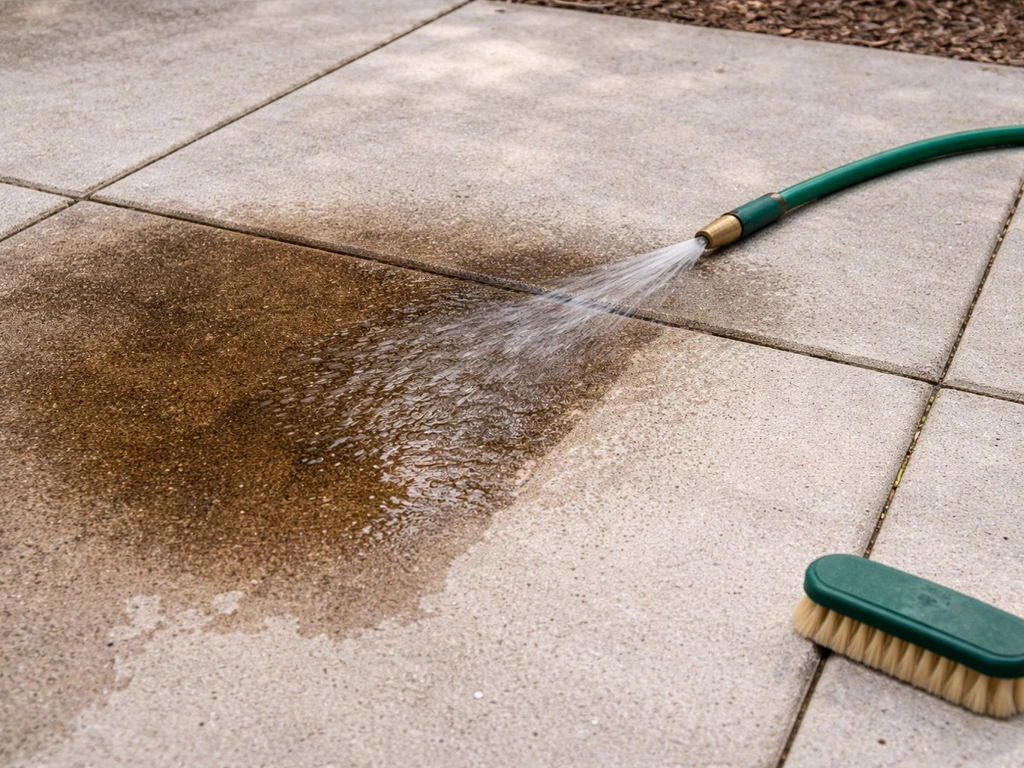
Fresh vs cured stain, and sealed vs unsealed slabs
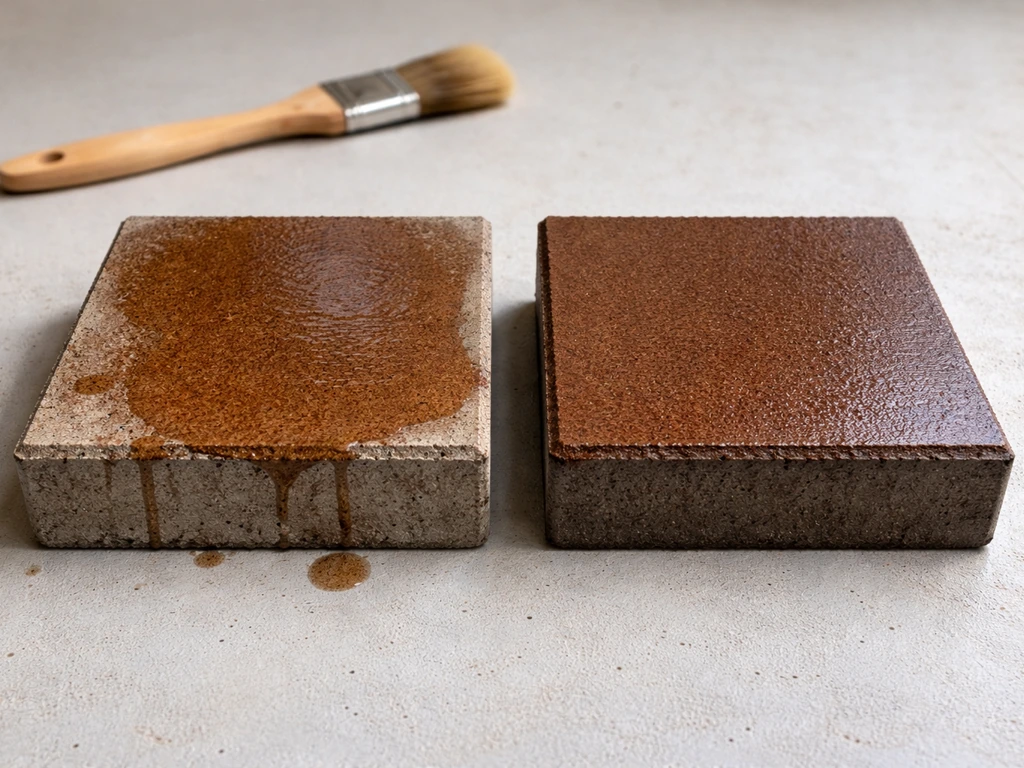
Before you grab anything from the shed, spend two minutes doing a quick assessment. It will save you from making things worse.
How old is the stain?
Fresh stain (still wet, or dried within the last few hours) sits mostly on the surface. You have a real chance of lifting it before it locks into the pores of the slab. Stain that has been there for a day or more has started to cure and bond. On unsealed concrete or stone, oil-based stains especially will have wicked down into the pores, which is why you need a different strategy than just scrubbing. Do not scrub aggressively at first with a dry stain because you risk driving it deeper or spreading it.
Is your patio sealed or unsealed?
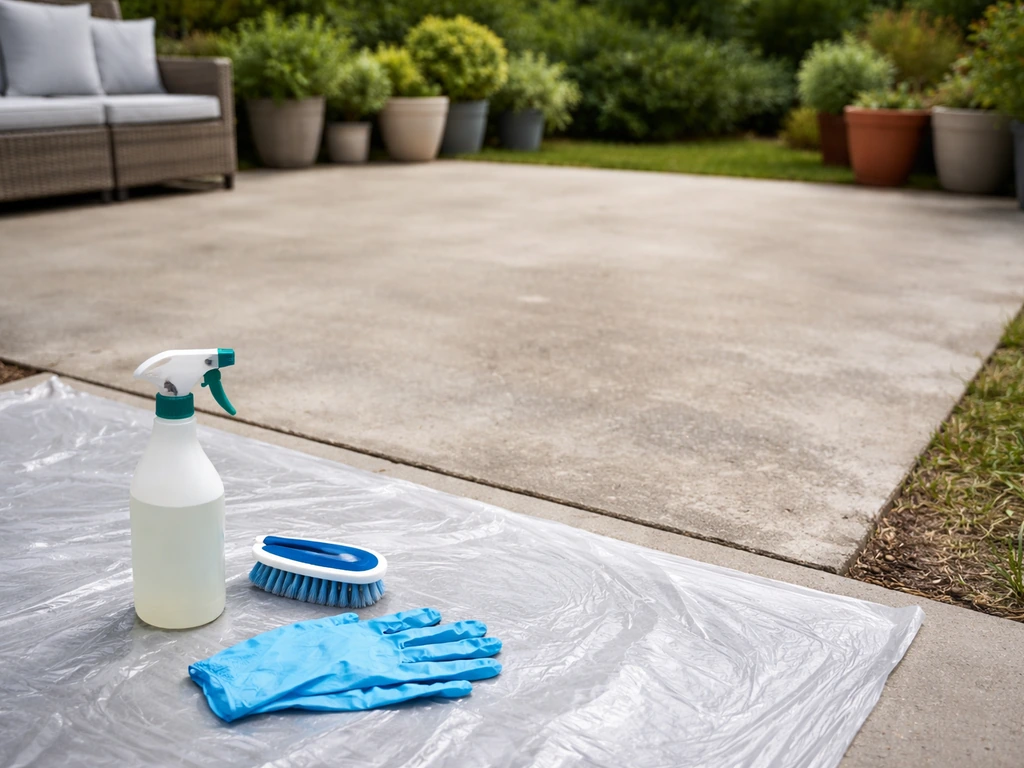
The quickest way to find out is the water bead test: pour a small amount of water on the slab and watch what happens. If it beads up and sits on top like water on a waxed car, the surface has a film-forming sealer on it. If the water absorbs straight into the slab within a few seconds, the surface is unsealed (or the old sealer has worn off). This matters a lot for stain removal. On a sealed surface, wood stain often sits on top of the sealer layer rather than in the stone itself, which makes removal easier but also means aggressive chemicals could damage or cloud the sealer. On an unsealed slab, the pigment can go deep, so you may need a poultice or repeated chemical treatment.
What type of patio surface do you have?
Concrete is the most forgiving and can handle stronger treatments. Natural stone (limestone, travertine, flagstone) is more reactive to acids, so you need to be careful with oxalic-acid products. Brick and pavers fall somewhere in between. If you have limestone, be especially cautious with anything acid-based since it can etch the surface and leave white patches. For a deeper look at removing stains from limestone specifically, that surface has its own set of considerations worth reviewing separately. For example, knowing what not to use on limestone can make the difference between removing the stain and permanently etching the surface removing stains from limestone specifically.
Prep and safety before you start
A few minutes of prep prevents a second mess and keeps you and your garden safe.
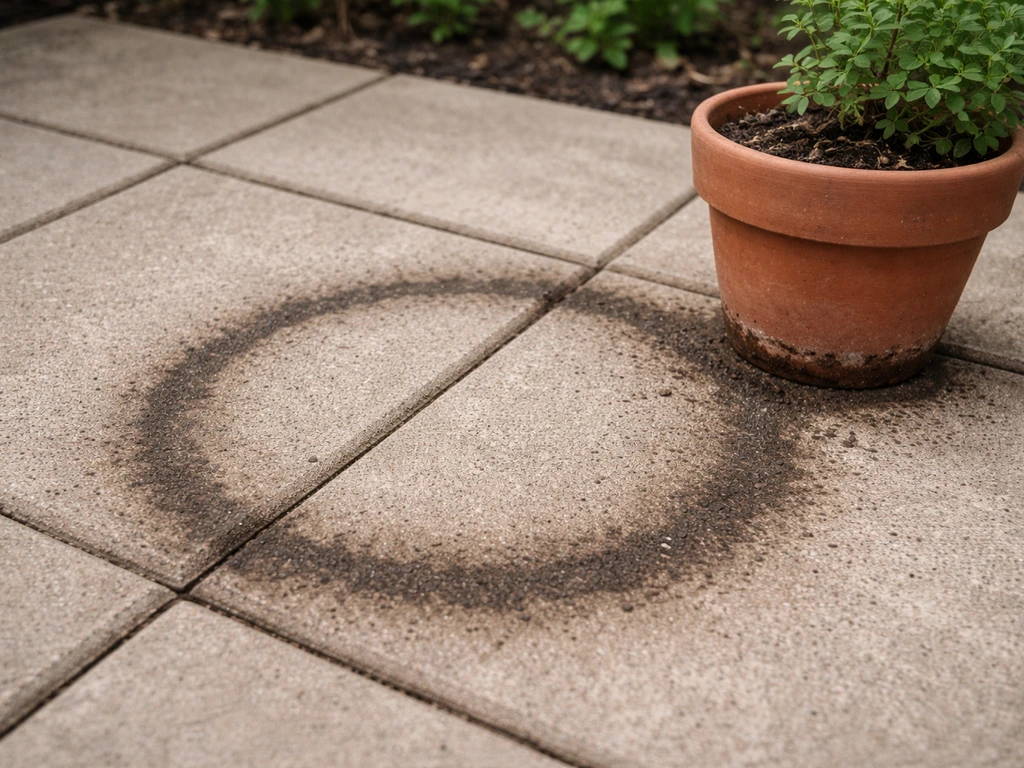
- Clear the area: move furniture, plant pots, and any decorative items away from the stain. Sitting plant pots can also leave tannin rings on patio surfaces over time, so clearing them now is good habit anyway.
- Cover nearby plants and lawn edges with plastic sheeting or cardboard if you are using chemical removers. Rinse anything that gets splashed immediately.
- Sweep or blow loose debris off the slab so grit does not scratch the surface when you start scrubbing.
- Put on nitrile gloves, safety glasses, and old clothes. If you are using acid-based products, add a face mask and work in a ventilated area.
- Have a garden hose or bucket of clean water ready to rinse at any stage.
- Do a spot test in an inconspicuous corner before applying any cleaner to the main stain. This is especially important on natural stone, coloured concrete, and any sealed surface. Wait the full dwell time and check for discolouration or etching before committing to the full area.
Start gentle: manual scrubbing, vinegar, and absorb-and-lift
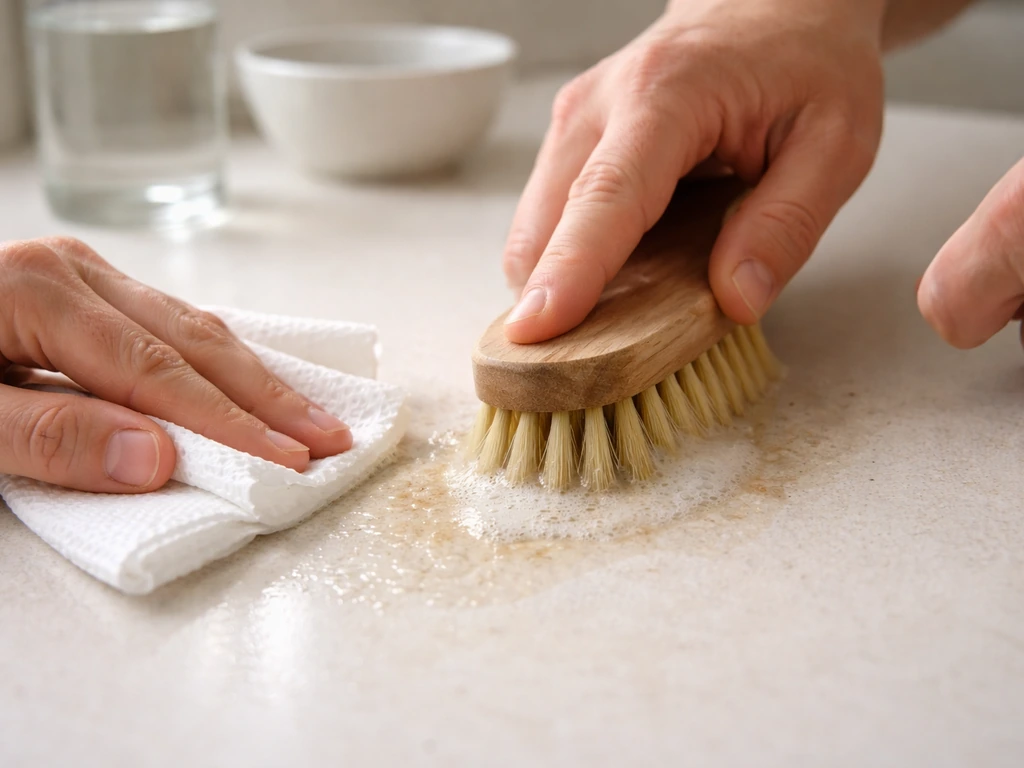
Always start with the least aggressive method. You can always step up if it does not work, but you cannot undo etching or discolouration.
For fresh or lightly dried stain
- Blot (do not wipe) as much wet stain as possible with paper towels or an old cloth. Work from the outside edge inward so you do not spread it.
- Mix a few drops of dish soap with warm water and scrub the stain with a stiff nylon brush. Avoid wire brushes on stone or decorative concrete as they can scratch.
- Rinse thoroughly with clean water and check progress. Repeat once or twice if needed.
- If the stain is still there but faint, move to the vinegar method below before reaching for stronger products.
Vinegar and baking soda (eco-friendly option)
White vinegar (5% acetic acid) can help loosen lighter or partially cured wood stain pigment on concrete and pavers. I would not rely on it alone for dark oil-based stains, but it is worth trying first if you have pets or a veggie garden nearby and want to keep things gentle. Pour undiluted white vinegar directly onto the stain, let it sit for 10 to 15 minutes, then scrub with a stiff brush and rinse well. Do not use vinegar on limestone, travertine, or any acid-sensitive stone as it will etch the surface. If vinegar alone does not shift it, sprinkle baking soda onto the wet vinegar (it will fizz), scrub, and rinse. The fizzing action can help lift surface-level pigment without harsh chemicals.
Absorb-and-lift (poultice method for oily/resin stains)
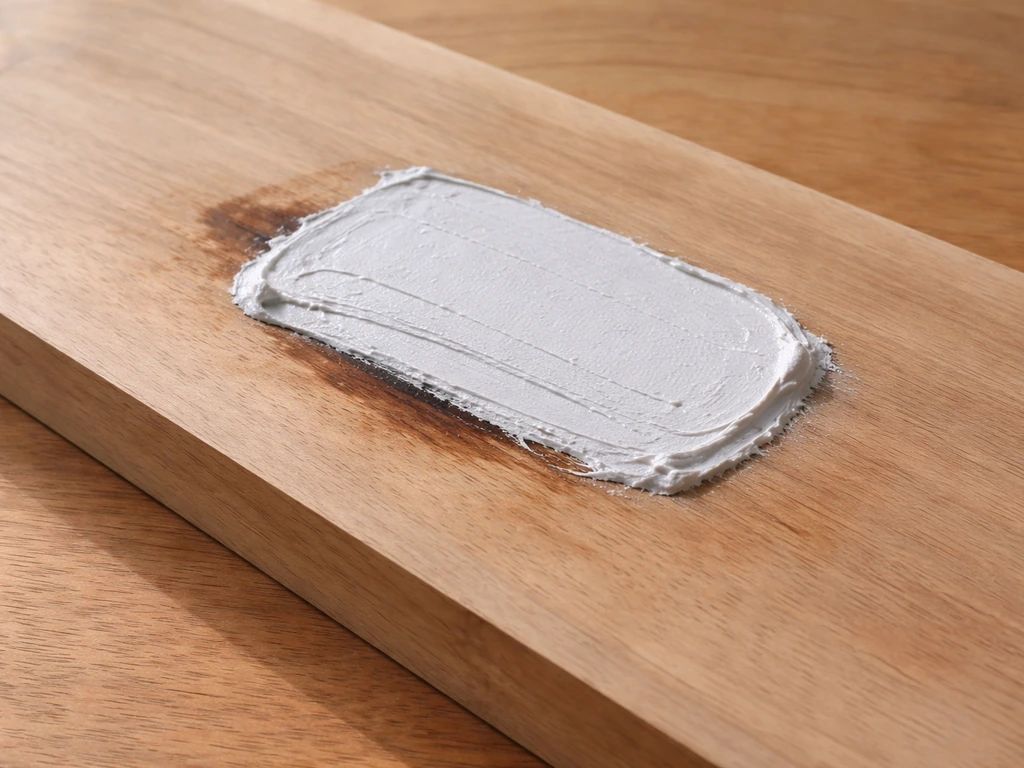
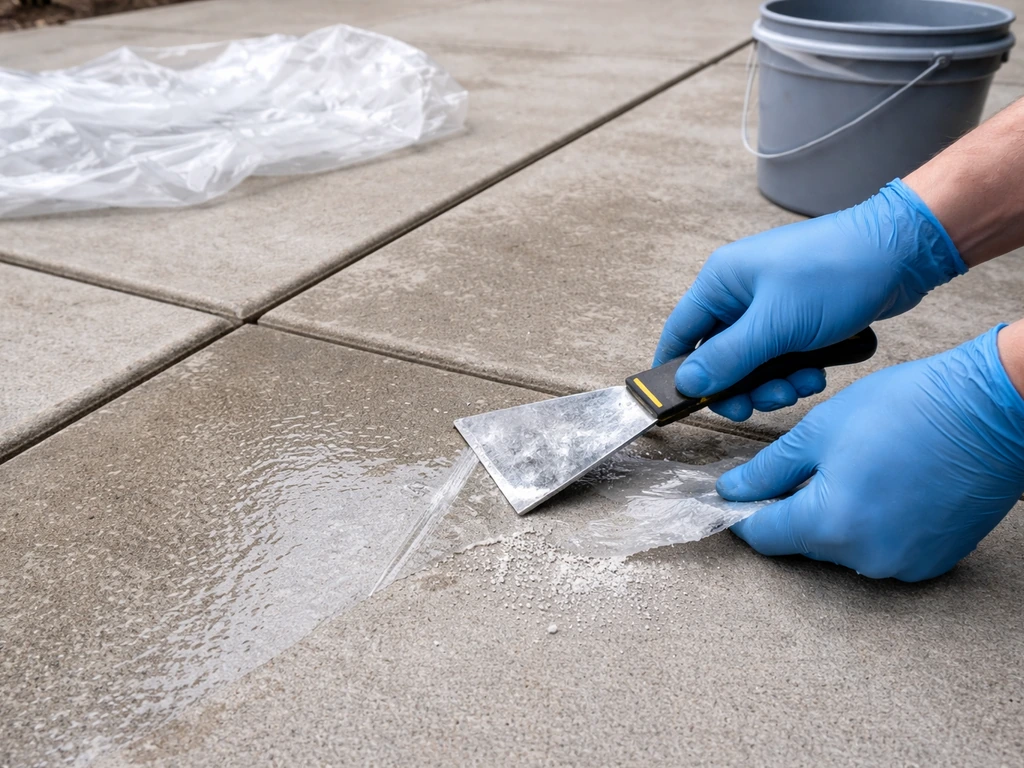
Oil-based wood stains that have soaked into an unsealed slab respond well to a poultice because it reverses the absorption: the moisture in the poultice re-dissolves the staining material and pulls it back out as it dries. You can make a DIY version using cat litter or diatomaceous earth mixed with a small amount of acetone or mineral spirits to form a thick paste, or buy a dedicated commercial poultice stain remover (Aqua Mix is a well-known option). Wet the concrete surface first, apply the poultice about 1/8 inch thick over the stain, cover it loosely with plastic film, and let it dry completely (usually 24 to 48 hours). The U.S. GSA describes poulticing oil-based stains on concrete by wetting the concrete first, applying a poultice about 1/8 inch thick to the target area, letting it dry, and allowing the liquid to migrate into the concrete to dissolve the staining material. As it dries, it draws the dissolved stain up into itself. Once dry, scrape it off, rinse the area with clean water, and check the result. Repeat if needed.
Chemical removal for stubborn or cured wood stain
If gentle methods have not done the job, you need something with more chemistry behind it. Here are your main options, from moderate to strong.
Oxalic-acid-based deck brighteners
These are worth knowing about because they are specifically formulated to break down tannin and pigment from wood products, which is exactly what you are dealing with. Products like Star Brite, Defy, or similar deck brighteners contain oxalic acid or a mild acid blend. They work well on concrete and most pavers. Avoid them on limestone, travertine, or polished marble as the acid will etch those surfaces. Wet the slab first, apply the brightener according to label directions (typically mix with water, apply with a brush or sprayer), let it dwell for 10 to 15 minutes (do not let it dry on the surface), scrub, and rinse thoroughly. After using any oxalic-acid product, neutralise the surface with a baking soda solution (about 1 cup of baking soda dissolved in a gallon of water), scrub lightly, then flush with clean water. This stops the acid from continuing to work and prevents any residue affecting a sealer later.
Concrete degreasers and dedicated stain removers
For oil-based wood stains on concrete, a concrete degreaser (alkaline-based cleaners like Simple Green Concrete Cleaner, or products like Krud Kutter Concrete Clean and Etch) can cut through the resin and pigment effectively. Apply undiluted or at the label-recommended concentration, let it dwell for 5 to 10 minutes, scrub with a stiff brush, and rinse. Make sure the surface dries thoroughly before applying any sealer afterward. These products are generally safe on concrete and most pavers but test on a small area first on coloured or decorative concrete where bleaching is a risk.
Mineral spirits or paint stripper (last resort for oil-based stains)
If you are dealing with a dark, oil-based deck stain that has fully cured and nothing else is working, mineral spirits or a dedicated paint and stain stripper can dissolve the binder. Apply with a brush, let it sit for 10 to 15 minutes, scrub, and wipe up the dissolved residue. Follow immediately with a strong rinse. These are solvent-based, so ventilate the area, keep away from drains (collect runoff where possible), and do not use near open flame. This approach is better suited to concrete than natural stone.
Spot testing and dwell time rules
Always test any chemical on a hidden corner first and wait the full dwell time before checking. Wrong chemistry on decorative or sealed surfaces can cause whitening, bubbling, or poor bonding if you re-seal later. Never leave acid-based products to dry on the surface as concentrated residue can etch permanently. If you see any unexpected whitening or fizzing on natural stone, flush with water immediately.
Pressure washing vs manual scrubbing
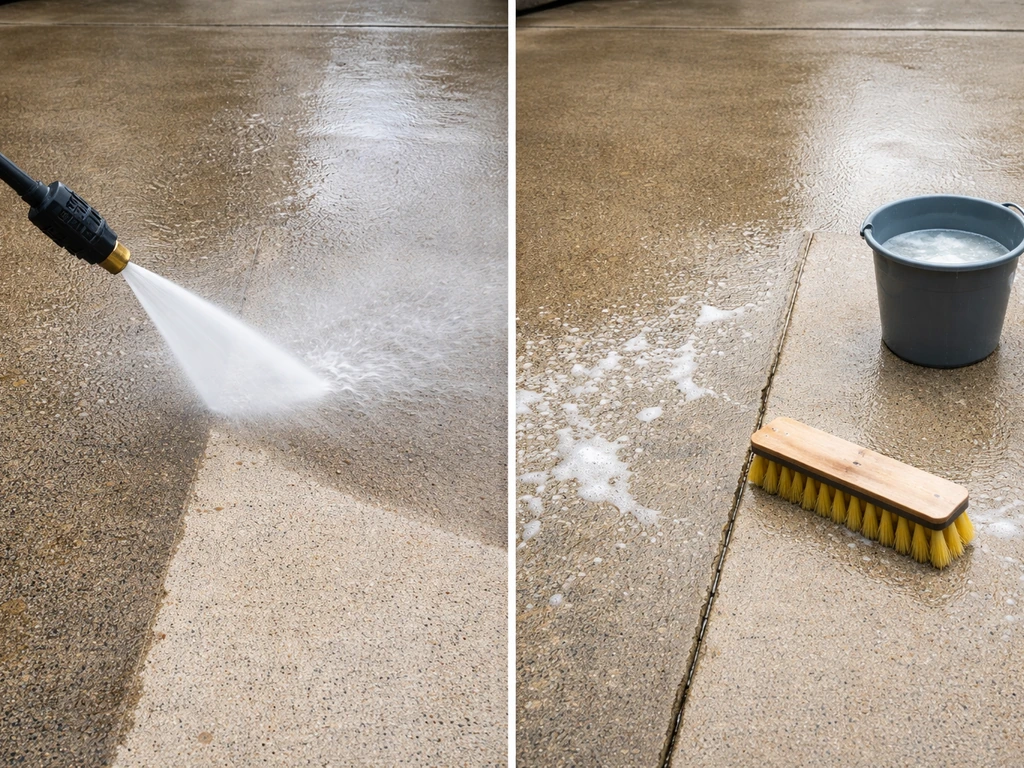
Both methods work, but they suit different situations. Here is how to do each without damaging your slabs.
| Method | Best for | Key limits | Recommended approach |
|---|---|---|---|
| Pressure washing | Concrete, pavers, solid brick after chemical pre-treatment | Can pit/etch if too close or too high PSI; avoid on soft stone, grout lines, old or crumbling mortar | 2,000 to 3,000 PSI max; use a 25-degree or 40-degree fan nozzle; maintain 6 to 12 inches standoff; steady overlapping passes |
| Manual scrubbing | Natural stone, travertine, limestone, sealed surfaces, small stain areas | Slower and more effort; less risk of surface damage | Stiff nylon brush; apply cleaner first, let it dwell, then scrub in circular motion; rinse thoroughly |
How to pressure wash without damaging slabs
- Apply your chosen chemical cleaner first and let it dwell before pressure washing. Do not rely on pressure alone to shift cured stain.
- Set pressure to no more than 2,500 to 3,000 PSI for concrete. For pavers or softer stone, stay closer to 1,500 to 2,000 PSI.
- Use a 25-degree (green) nozzle for concrete, or a 40-degree (white) nozzle for more delicate surfaces.
- Keep the nozzle 6 to 12 inches from the surface and move in steady, overlapping passes. Never hold it in one spot.
- Test in an inconspicuous area first, especially on textured or stamped concrete.
- Rinse any chemical residue thoroughly after washing.
How to scrub effectively by hand
- Wet the slab before applying any chemical cleaner (especially important for poultice methods).
- Apply cleaner and let it dwell for the full recommended time without letting it dry.
- Use a stiff nylon deck brush or hand scrubbing brush in overlapping circular motions.
- Rinse with a hose on a strong jet setting, working the water away from plant beds.
- Check your progress and repeat the application if stain remains.
What to do when it is not coming off: escalation path
Most wood stain on patio slabs responds within two or three treatment cycles. If you are not making progress, follow this escalation path rather than jumping straight to the most aggressive option.
- Attempt 1: Dish soap and stiff brush with hot water. Repeat twice. If faded but not gone, move to step 2.
- Attempt 2: White vinegar (on concrete/pavers only, not stone) OR a commercial concrete degreaser. Full dwell time, stiff scrub, rinse. Repeat once. If still present, move to step 3.
- Attempt 3: Oxalic-acid-based deck brightener or a dedicated poultice stain remover. Allow full dwell or drying time. Neutralise with baking soda solution, rinse thoroughly. Repeat once if needed.
- Attempt 4: Mineral spirits or paint and stain stripper applied to the specific stain area. Dwell 10 to 15 minutes, scrub, rinse well. Collect solvent runoff where possible.
- Attempt 5: If the stain has genuinely not moved after all of the above on unsealed concrete, the pigment may have penetrated too deeply for surface removal. At this point, a professional sandblasting or grinding service can remove the top layer of concrete. Alternatively, if sealing or resurfacing was already on your to-do list, this may be the trigger to do it, as a quality sealer and new surface coating can conceal residual light shadowing.
- If you notice the stain is fading unevenly or the treated area looks lighter than the surrounding slab, you are likely seeing the cleaned area against a generally dirtier patio. A full patio clean often resolves this visual mismatch.
Common complications and quick fixes
- Fading but not fully gone: repeat the same treatment cycle one more time rather than escalating to a stronger chemical. Most cured stains need two to three applications.
- White or cloudy residue after treatment: this is often dried chemical residue or efflorescence drawn up by moisture. Scrub with warm water and a mild detergent, then rinse. If it persists on natural stone, it may be etching from an acid product, which requires professional honing to fix.
- Uneven lightening across the patio: do a general clean of the whole surface to even out the colour rather than treating just the stain area in isolation.
- Film or greasy residue after mineral spirits: apply a concrete degreaser to the area, scrub, and rinse. This lifts the solvent residue left behind.
- Etching or pitting after pressure washing: if you have gone too aggressive with PSI or nozzle distance, the damage is mechanical and cannot be reversed with cleaning. Minor etching can sometimes be improved with a concrete resurfacer or sealer.
Rinse, dry, and protect your patio after treatment
Rinsing properly is not optional, especially after any chemical treatment. If you are dealing with fertiliser stains on a patio, use an approach similar to rust or chemical residue removal and always rinse thoroughly after treatment. Residue left in the pores of the slab can interfere with sealing, cause ongoing discolouration, or harm plant life nearby if it runs off later.
- After any chemical treatment, flush the area generously with clean water from a hose. Work the water away from plants and drains where possible.
- After oxalic acid or any acid-based product, apply a baking soda neutraliser (1 cup per gallon of water), scrub lightly, and rinse again.
- Let the slab dry completely before assessing the result. Wet concrete looks darker and can make remaining stain harder to see accurately. Give it at least a few hours, or ideally a full dry day.
- Once dry and clean, consider applying a penetrating sealer to the affected area or the whole patio. A sealer fills the pores that absorbed the stain, making future spills much easier to wipe up before they set. Do a water bead test after the sealer dries to confirm coverage.
- For a sealed surface, check whether the sealer needs a fresh coat over the cleaned area. Chemical removers can strip or thin a sealer layer, leaving that section more vulnerable.
Preventing wood stain landing on the patio again
Most wood stain ends up on patio slabs during decking or furniture maintenance projects. A few simple habits prevent a repeat: lay down a canvas drop cloth (not plastic, which slides) under any wood you are staining, use a tray under the stain tin, and stain furniture on grass rather than over slabs where possible. If you still find new patches of green on your patio stones, use the right grass-removal approach so you do not damage the surface how to get grass out of patio stones. Sealing your patio is the single most effective long-term protection because it means any future spills sit on the surface rather than soaking in, giving you time to wipe them up. If plant pots are a recurring source of staining on your patio, that is a slightly different problem worth addressing separately, since tannin runoff from pots behaves differently from wood stain. If plant pots are causing recurring stains, treat the tannin runoff and clean the spots as soon as you notice them.
FAQ
How do I remove wood stain if I do not know whether my patio is sealed or unsealed?
Do the water bead test first. If water beads up for more than a few seconds, you likely have a sealer layer. Start with surface lifting (dish soap and a stiff brush, or vinegar on compatible surfaces), and use gentler cleaners to avoid clouding the sealer. If water soaks in quickly, treat it like an unsealed surface and expect the need for a poultice or repeated chemical dwell times.
What is the safest way to test a cleaner before I treat the whole patio?
Pick a hidden corner or edge, pre-wet the area if the product instructions call for wetting, then apply and wait the full dwell time before rinsing and checking. Look for whitening, color fading, softening of surface texture, or bubbling. If any of those happen, stop and switch to a different chemistry (especially on limestone, travertine, or polished stone).
Can I use pressure washing to get wood stain off patios?
Pressure washing can spread stain pigment deeper or across adjacent slabs if the stain is already partially absorbed. If you use it at all, do it after you have used a lifting method or poultice, and keep pressure moderate while rinsing thoroughly. For unsealed concrete or stone, rely on chemical dwell times and rinsing, not brute force.
Why does the stain come back or look “ghosted” after cleaning?
That usually means pigment residue remained in pores or in older sealer layers. It can also happen if you did not rinse long enough after an acid or degreaser. Re-treat using the same approach that matches the surface condition (poultice for unsealed oil-based staining, oxalic brightener for tannin-rich residues on compatible surfaces), then rinse until runoff runs clear.
How long should I wait between treatment cycles before trying something stronger?
After each cycle, fully rinse and let the slab dry, then reassess. Most patio stains show improvement within two to three cycles. If there is little to no change after that, stop escalating with harsher products and switch to the correct chemistry for the stain type (tannin pigment versus oil resin, sealed versus unsealed).
What should I do if I get white spots after using an oxalic-acid or brightener product?
White spotting often indicates residue or interaction with sensitive stone. Flush immediately with plenty of water, then neutralize using a baking soda solution (about 1 cup baking soda per gallon of water) on the affected area and lightly scrub. Avoid leaving any acid-based product to dry, and do a small re-test before continuing anywhere else.
Is vinegar safe to use on every patio surface?
No. Vinegar (acetic acid) can etch limestone, travertine, and similar acid-sensitive natural stone, leaving permanent white patches. If you are on concrete or some pavers it may help as a gentle first step for lighter or partially cured stains, but if your patio includes limestone or travertine, skip vinegar entirely and use non-acid or stone-safe options.
Can I apply sealer immediately after stain removal?
Wait until the slab is completely clean and dry, and ensure any chemical residue is fully rinsed out. If residue remains, it can interfere with bonding and cause future discoloration. A good rule is to rinse until runoff is clear, let the surface dry fully (often at least a day or more depending on humidity), then test sealer in a small area first.
How do I deal with wood stain that is mixed with mold or algae on the patio?
Clean and remove biological growth first, then address the stain. Algae and mildew can prevent chemicals from contacting pigment effectively. Use the appropriate cleaner for organic growth, rinse well, let the patio dry, then return to stain removal with the method that matches your surface (poultice for oil-based staining on unsealed slabs).
What is the best approach for dark oil-based deck stains that seem “fully cured”?
For cured oil-based stain on unsealed concrete or porous stone, a poultice is usually the most effective next step. For sealed surfaces, stain may sit on top of the sealer film, so you may be able to lift it with surface-focused methods, but avoid aggressive acids that can damage or cloud the sealer. If nothing moves after several cycles, use chemistry designed to break down the binder, such as an alkaline degreaser for concrete, keeping stone sensitivity in mind.
How can I prevent spills and staining when re-staining patio furniture or decking?
Use a canvas drop cloth, not plastic, and put a tray under the stain tin to catch drips. Stain on grass when possible, so you are not forcing resin into patio pores. If you do spill, treat it as a “fresh stain” immediately because once it cures, you lose the easy lift phase and move into poultice or stronger chemistry.
Next Articles
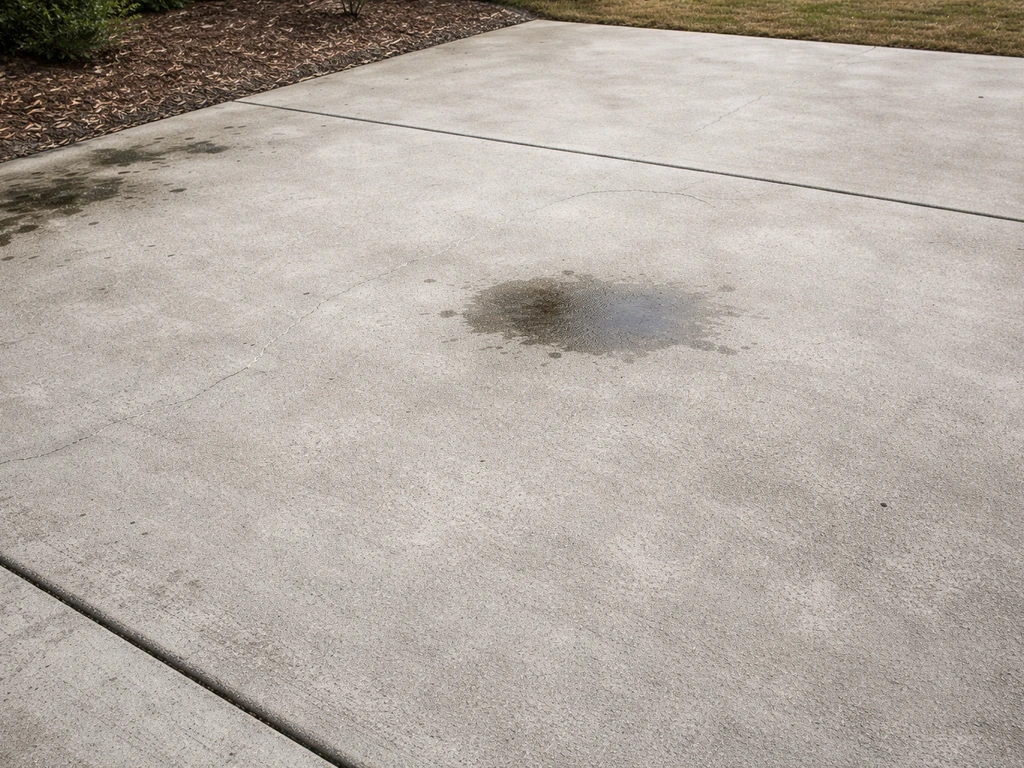
How to Remove Stains From Patio: Step by Step Guide
Step-by-step methods to remove patio stains fast by material and stain type, with safe pressure wash or scrubbing tips.
How to Stop Plant Pot Stains on Your Patio
Stop patio plant pot stains fast with diagnosis and step by step cleaning for concrete, brick, stone, pavers
How to Remove Thompson’s Patio Sealer Step by Step
Step-by-step removal of Thompson’s patio sealer on concrete, brick, pavers, and stone, with safety, tests, and cleanup.