
Grease stains on a limestone patio need to come off with a pH-neutral degreaser, gentle scrubbing, and a lot of patience. If you are also dealing with grass sprouting between the stones, remove it by lifting the roots and cleaning out the joints so it does not regrow grass out of patio stones. Limestone is a calcareous stone, which means acids etch it instantly and bleach can discolor it permanently.
How to Remove Stains From Limestone Patio Grease
Dylan Hale
6 Jul 2026
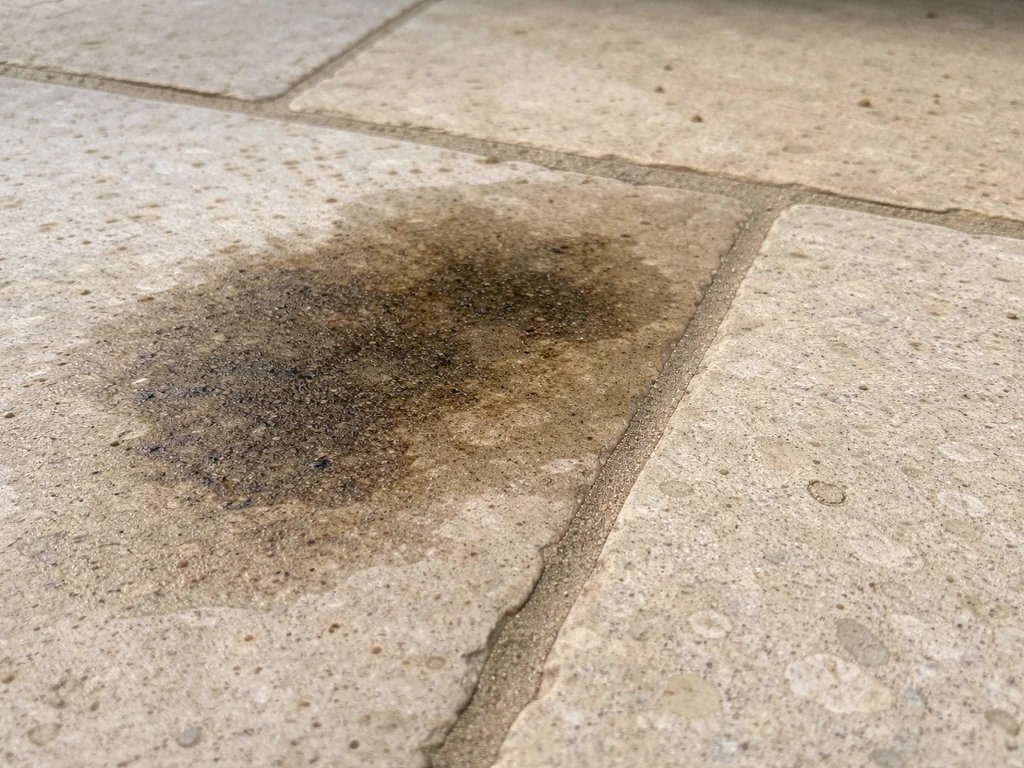
That rules out most of the go-to cleaners people reach for first. The safe method is dish soap or a dedicated stone-safe degreaser, warm water, a stiff nylon brush, and for stubborn spots, a poultice that pulls the oil up from deep in the stone. Done right, you can clear most grease stains without damaging the surface at all.
Check your limestone before you touch it with anything
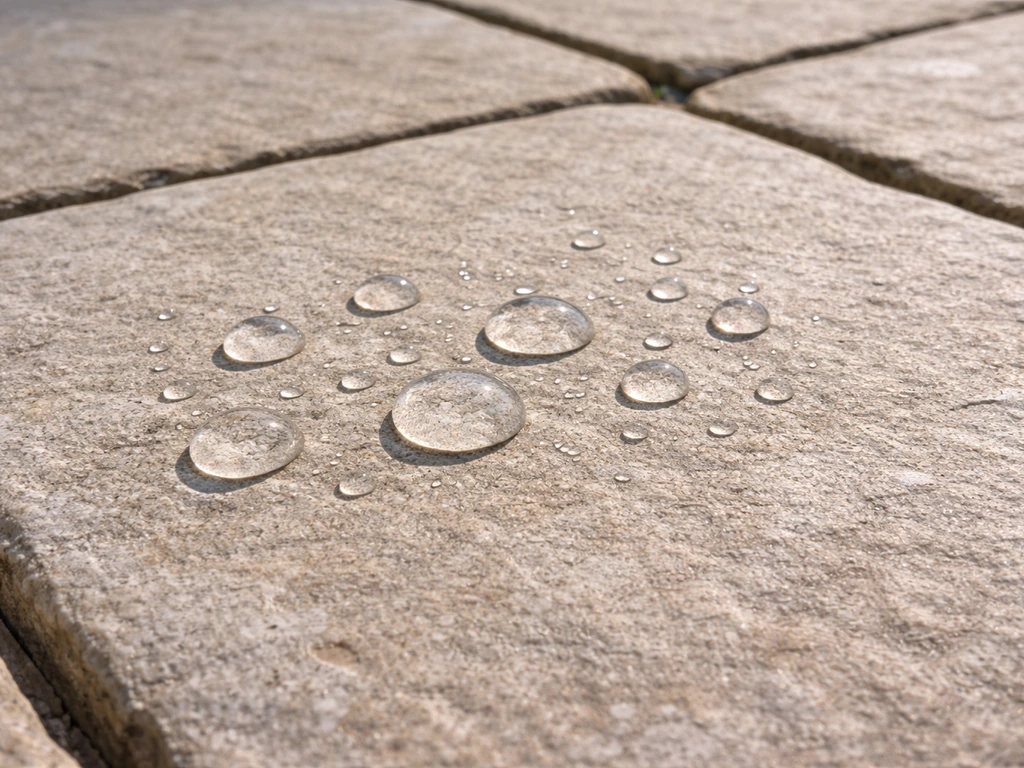
The most important thing you can do before grabbing a cleaner is figure out whether your limestone is sealed or not. This matters because unsealed limestone is porous and will soak up any chemical you apply extremely fast, giving you almost no margin for error. Sealed stone gives you a bit more working time and tolerance, but it still reacts badly to acids.
Run a simple water bead test: splash a small amount of water onto a clean part of the patio away from the stain. If the water beads up and sits on the surface, your sealer is still performing. If the water soaks in and darkens the stone within a minute or two, the stone is effectively unsealed, either because it was never sealed or because the sealer has worn away. Treat it as unsealed either way, because the stain area itself is almost certainly compromised even if the rest of the patio is fine.
Also do a small test patch before applying any cleaner. Pick an inconspicuous corner, apply your chosen product, and check for discoloration or any change in surface texture. Limestone varies a lot in density and finish, and what works on one slab can react differently on another. This takes five minutes and can save you a ruined patio.
The etching risk is real and fast
Acids react with the calcium carbonate in limestone almost on contact. This includes things you might not think of as "strong": white vinegar, lemon juice, CLR, most bathroom tile cleaners, and some general-purpose outdoor patio sprays. The result is a dull, slightly rough patch called an etch mark. It is not a stain you can clean off. It is physical damage to the stone surface. On top of that, bleach and ammonia-based cleaners can discolor limestone and strip or degrade sealers. If a product label does not clearly state it is safe for natural calcareous stone, assume it is not safe for limestone.
What you are dealing with and what to avoid
Grease stains on a patio typically come from barbecue drips, cooking oil spills, bike chain grease, or motor oil tracked in from the garage. Fresh grease sits on or just below the surface and is relatively easy to lift. Grease that has been baking into unsealed limestone in the summer heat for weeks can penetrate up to around 2 cm deep, according to product data from stone care specialists. The older the stain, the more treatment cycles you will need.
On limestone specifically, you need to avoid the following completely:
- Vinegar and lemon juice (acidic, will etch immediately)
- CLR and similar limescale removers (highly acidic, designed for calcium-based minerals and extremely destructive on limestone)
- Bleach and sodium hypochlorite (can discolor and degrade the stone)
- Ammonia-based cleaners including many glass cleaners
- Muriatic acid (used on concrete but catastrophic on limestone)
- Any patio cleaner that does not specifically confirm pH-neutral or stone-safe formulation
What you do want is something in the pH 7 to 8 range: a stone-safe pH-neutral degreaser, a dedicated limestone cleaner, or even plain washing-up liquid as a starting point for fresh stains. If you are trying to remove wood stain from a patio, the safest approach is to identify the surface material and then use an appropriate, surface-safe cleaner rather than harsh acids or bleach how to get wood stain off patio. For deeper stains, a commercial stone poultice is your best tool.
Step-by-step manual degreasing for a grease-stained limestone patio
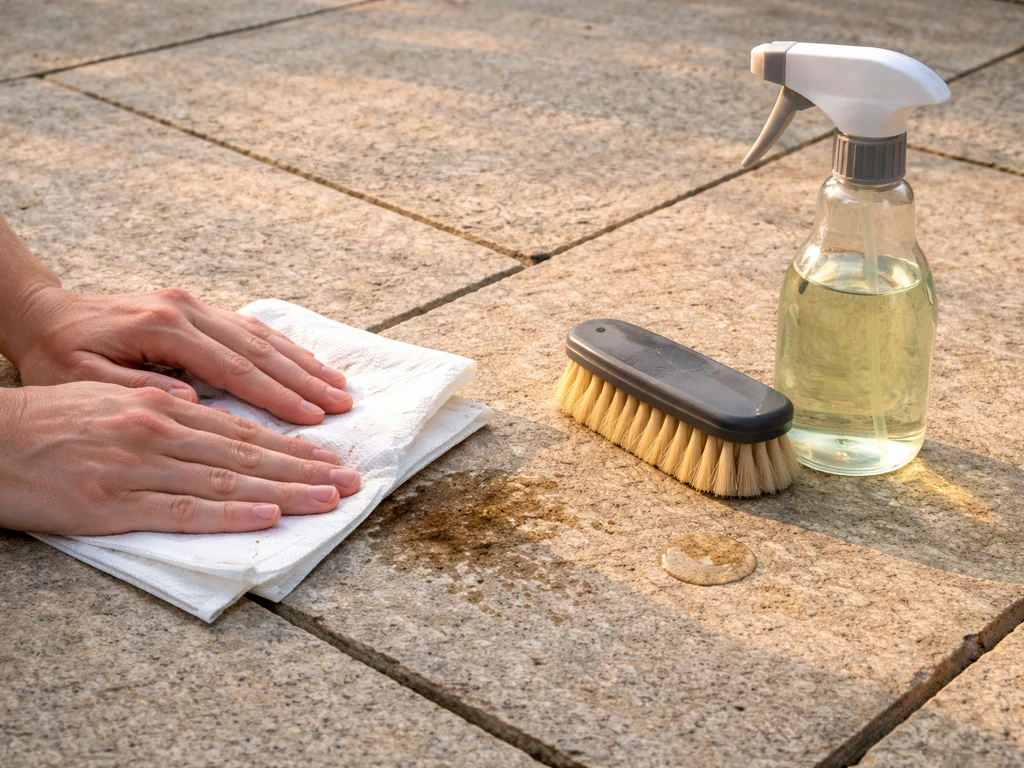
This method works for most fresh to moderately set grease stains. It is also the safest starting point before you try anything more aggressive.
- Blot up any fresh grease first. If the spill is recent, lay paper towels or an absorbent cloth on top and press down. Do not wipe or spread it. Let the towels soak up as much surface grease as possible before you introduce any water or cleaner.
- Sprinkle a layer of an absorbent powder over the remaining stain. Baking soda, cornstarch, or plain talcum powder all work. Leave it for 15 to 30 minutes to draw residual surface grease out of the stone. Sweep it off carefully with a soft brush.
- Mix your cleaning solution. Use a few drops of pH-neutral dish soap in warm water, or use a purpose-made stone-safe degreaser mixed to the manufacturer's dilution. Avoid making it overly concentrated as that does not improve results and can leave residue.
- Apply the solution directly to the stain and let it dwell for 5 to 10 minutes. For unsealed limestone, do not walk away and forget about it. Set a timer. The goal is to let the degreaser work into the pore structure without drying out on the surface.
- Scrub with a stiff nylon brush using circular motions. Do not use a wire brush or metal scraper. Work from the outside edge of the stain inward to avoid spreading the grease further into clean stone. Apply moderate pressure.
- Rinse thoroughly with clean water. A bucket and a hose both work. Get all the soap residue off the surface, because dried detergent leaves a film that attracts dirt.
- Assess. If the stain is visibly lighter or gone, you are done with this step. If it is still clearly there, repeat the process once more before moving to a poultice.
I have found that two or three rounds of this manual method will clear most barbecue grease and cooking oil spills that are less than a few weeks old. If the stain has been sitting there through a few rain cycles and still looks dark and greasy, that is when you need the poultice approach covered below.
When to use a pressure washer and how to do it safely
A pressure washer can help rinse a loosened grease stain off limestone, but it will not remove a deep oil stain on its own. Think of it as a rinse tool, not the cleaning tool. The real risk with pressure washing limestone is using too much pressure, which can physically pit or scar the stone surface, open up micro-cracks, or spread the stain sideways into clean areas.
If you decide to pressure wash, keep the PSI between roughly 800 and 1,200. Limestone is softer than concrete, and I would stay closer to 800 PSI especially if the stone feels powdery or crumbly at the edges. For nozzle choice, use the 25-degree (green) or 40-degree (white) fan tip. Never use the 0-degree (red) concentrated nozzle on limestone. The force concentration is destructive on soft stone even at moderate pressure settings.
Hold the nozzle at least 30 to 40 cm (about 12 to 16 inches) from the surface and keep it moving with smooth, overlapping passes. Do not hover in one spot. If you have a surface cleaner attachment, that is actually the best option for even coverage without the risk of streaking or concentrated blasting. Apply your degreaser by hand first, let it dwell, then use the pressure washer to rinse it off rather than trying to blast the grease out cold.
Skip pressure washing entirely if the limestone is already showing signs of pitting, flaking, or surface damage. Manual scrubbing is gentler and you have more control.
Stubborn stains: poultice treatments for deep-set grease
A poultice is simply an absorbent material mixed with a cleaning chemical into a thick paste, applied over the stain, covered with plastic, and left to dry. As it dries, it draws the grease up out of the stone pores and into the absorbent material. It is the most effective method for grease that has penetrated deep into unsealed or lightly sealed limestone.
Making and applying a poultice
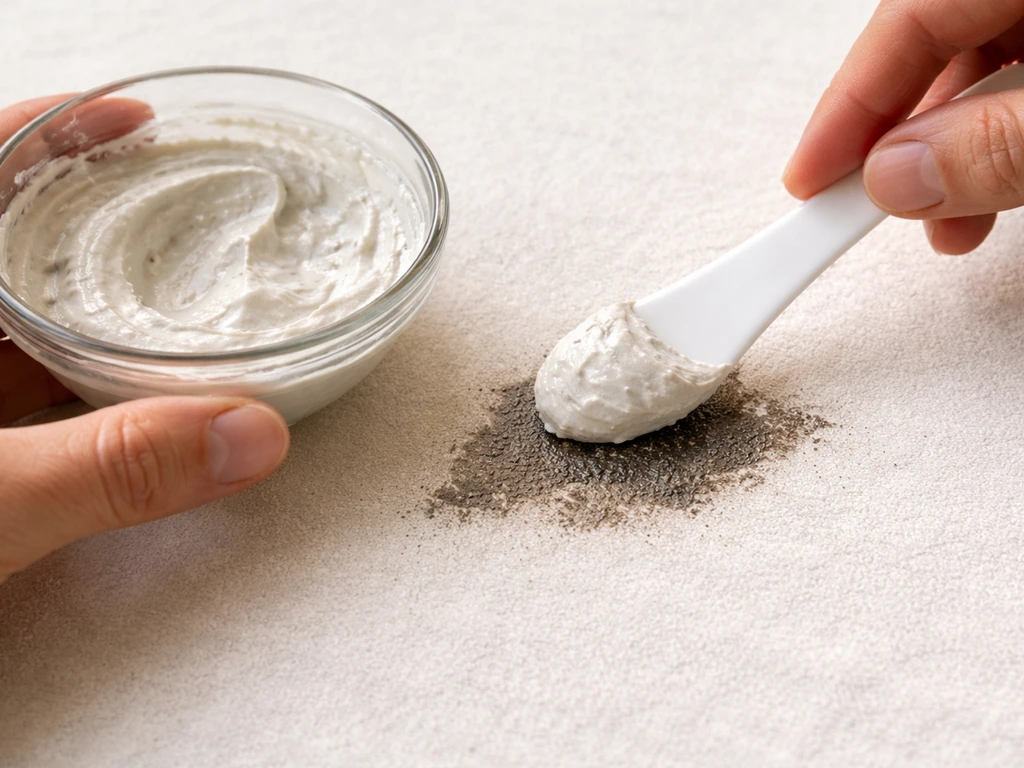
- Choose an absorbent base. Kaolin clay, fuller's earth, diatomaceous earth, talc, or even plain unscented baby powder all work. You want a fine, dry, white powder. Avoid anything colored as it can transfer into the stone.
- Choose your cleaning chemical. For grease, a small amount of acetone or a stone-safe degreaser works well as the liquid component. Acetone is particularly effective for oil-based stains. You can also use a ready-made commercial product like HMK R152 Stone Poultice, which is specifically formulated for oil and grease on patio stone and does not require mixing.
- Mix to a peanut butter consistency. Combine the powder and liquid until you get a thick, spreadable paste. Too wet and it will not draw the stain properly. Too dry and it will not penetrate.
- Clean and slightly dampen the stained area with plain water, then apply the poultice about 1 cm thick over the stain, extending a centimetre or two beyond the stain edges.
- Cover immediately with plastic cling film. Tape the edges down with painter's tape to slow down the drying process. Slow drying gives the paste more time to draw the grease upward.
- Leave it for 24 to 48 hours. Rose Restoration and other stone care specialists cite this as the standard dwell window for oil and grease. Do not rush it.
- Remove the plastic, let the poultice dry completely (it will turn lighter in color and powdery), then scrape it off gently with a plastic scraper. Rinse the area thoroughly.
- Assess the stain. For deep grease, you may need two or three full cycles. Each cycle should lift more of the stain. Some very old, dark grease stains may lighten significantly but not disappear entirely.
If you would rather use a fully commercial option without mixing your own, Aqua Mix Poultice Stain Remover is another widely available product that covers oil and grease stains on natural stone and includes guidance for stubborn stains that need repeat applications.
Spot treatment between poultice cycles
Between poultice applications, while the stone is clean and slightly damp, do a quick manual scrub with your pH-neutral degreaser to work on whatever the previous cycle loosened at the surface level. This combination of surface scrubbing and deep poultice work moves the process along faster than either method alone.
Rinse properly, neutralize if needed, and prevent the next stain
Final rinse and neutralizing
After any cleaning process on limestone, rinse the entire treated area thoroughly with clean water. This is not optional. Residual cleaner left on limestone, even a pH-neutral product, can leave a film, attract dirt, or over time cause surface issues. Work the water across the stone with a brush or push broom and rinse again.
If you used a stronger alkaline degreaser as part of your cleaning process (some commercial stone degreasers sit at pH 9 to 10), a neutralizing afterwash is worth doing. Products like PROSOCO Sure Klean Limestone and Masonry Afterwash or Diedrich 707N Limestone Neutralizer are designed exactly for this step. They are applied after your primary cleaner is fully rinsed off, left briefly, then rinsed again. For routine pH-neutral dish soap cleaning, a thorough water rinse alone is sufficient.
Drying and resealing
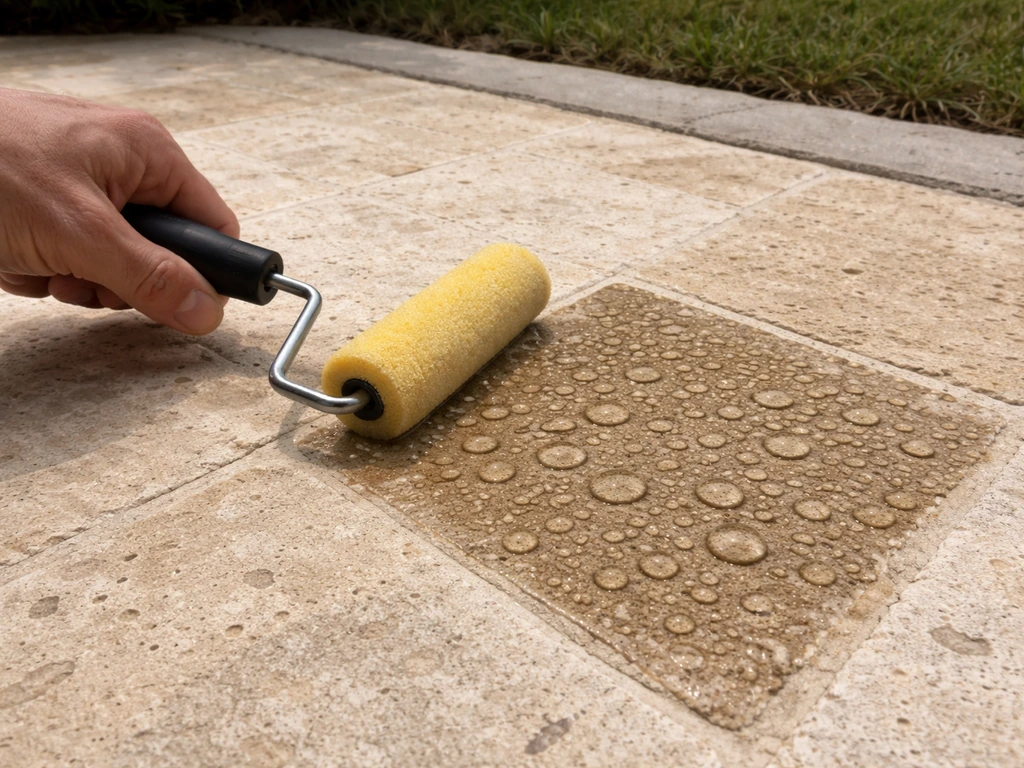
Let the limestone dry completely before assessing your results or applying any sealer. Granite Heroes also recommends waiting until the stone is completely dry before applying a sealer, and it explains that proper preparation and stone condition affect longer-term stain resistance completely dry before applying any sealer. In warm, dry conditions this can take 24 to 48 hours. In cooler or humid weather, allow 48 to 72 hours. Do not seal damp stone as it traps moisture inside and can cause spalling or efflorescence over time.
If your water bead test earlier showed the stone is unsealed, now is the perfect time to seal it. A penetrating impregnating sealer is the right choice for outdoor limestone. It soaks into the stone rather than sitting on top, provides oil and water repellency from within, and does not create a visible film that can peel or discolor. Limestone typically needs resealing every one to two years outdoors depending on traffic and weather exposure.
Preventing grease stains from coming back
Sealing is the single best prevention step, but a few practical habits go a long way. Place a drip mat or grill tray under your barbecue to catch fat drips before they hit the stone. Wipe up any cooking oil or grease spills immediately rather than leaving them to soak in. For a patio that also has plant pots nearby, it is worth knowing that pot residue and fertiliser runoff create their own staining issues on limestone that need different treatment approaches. If you are trying to remove plant pot residue, you will often need to address fertiliser runoff and potting-soil buildup separately from simple grease plant pots nearby.
| Stain type | Best first approach | Escalation if needed | What to avoid |
|---|---|---|---|
| Fresh grease (same day) | Absorbent powder, then pH-neutral degreaser + scrub | Repeat 2 to 3 scrub cycles | Acids, bleach, wire brushes |
| Set grease (weeks old) | pH-neutral degreaser + scrub first, then poultice | 2 to 3 poultice cycles 24–48 hrs each | High-PSI pressure washing, acidic cleaners |
| Deep/old grease (months) | Poultice as first step, scrub between cycles | Commercial stone poultice (HMK R152 or Aqua Mix) | Acids, ammonia, concentrated nozzle tips |
The honest truth is that most grease stains on limestone respond well to patient, repeated treatment with gentle methods. For fertiliser marks on a patio, use a different approach because the salts and nutrients can cause etching and discoloration if you treat them like grease. The ones that do not fully disappear are usually very old, deep-set stains in unsealed stone that has had months of UV and heat driving the oil further in. Even in those cases, two or three poultice cycles will dramatically lighten the stain. Seal the stone afterward and you will not be back here dealing with the same spot next summer.
FAQ
Can I use a pressure washer to remove grease stains from my limestone patio?
Yes, but only as a rinse step after you loosen grease with a pH-neutral degreaser. Start by brushing and dwell-time cleaning first, then rinse with controlled pressure, because blasting directly at cold grease can push oil deeper and also scar softer limestone.
What should I do differently if my limestone patio is unsealed?
Avoid it. If a water bead test shows unsealed behavior, treat the stain area as compromised and assume any chemical you apply will absorb quickly. That means shorter contact times, lighter scrubbing, and testing any product in an inconspicuous spot before fully applying.
How do I know if a cleaner is safe for limestone before I use it on the whole stain?
Yes, but discoloration can happen even if the product is “gentle.” Always do a five minute patch test and then inspect in daylight, because etching and dullness can take time to become obvious. Also confirm the label explicitly says safe for natural calcareous stone.
When should I stop scrubbing and switch to a poultice?
If the stain still looks dark after two to three manual rounds, or it returns quickly after drying, that usually indicates deeper penetration. Switch to a poultice cycle, and plan for repeat applications rather than expecting one pass to lift oil from deeper pores.
Should I rinse only the stained spot or the whole area I cleaned?
Most of the time, you should not try to “spot clean” and leave the rest untreated. Oil and cleaner residue can create a halo, so rinse the entire treated area thoroughly and brush/push broom the wash water across before the final rinse.
How long should I wait before sealing the limestone after removing a grease stain?
Wait until it is fully dry before sealing, and don’t rely on surface dryness alone. If it feels cool or damp below the surface, extend the drying window, because sealing damp limestone increases the risk of trapped moisture issues like spalling or efflorescence later.
Can I start with dish soap for fresh grease on limestone?
For a very small fresh grease spot, washing-up liquid can work as a first attempt, but it needs warm water, gentle brushing, and a thorough rinse to prevent residue buildup. For older or heavy stains, dish soap is usually not strong enough, so move to a stone-safe pH-neutral degreaser or poultice.
What if my limestone looks pitted or powdery around the stain, can I still pressure wash?
If you have pitted or flaking limestone, you should skip pressure washing entirely. Those surface defects mean the stone has already been damaged or softened, and concentrated water force or aggressive rinsing can spread cracking and widen the affected area.
Is it okay to alternate different cleaners to speed up stain removal?
Yes. Even if you avoid acids, mixing products or reapplying repeatedly without proper rinsing can leave chemical films or interact with prior residue. Use one cleaner at a time, rinse well between steps, and do not stack treatments that have different active chemistries.
What if the area looks dull or rough after cleaning, is that still a stain I can remove?
If you see a rough, dull patch rather than a grease stain, you may have created an etch mark. Etching is physical damage, so it is not something that “cleans off.” In that case, focus on stain-safe steps going forward and consult a stone professional for resurfacing or blending options.
Does sealing guarantee the patio will never stain again after grease removal?
When resealing, use a penetrating impregnating product suited for outdoor limestone and apply after the stone is fully dry. Also keep grease-prone areas like grill zones and drip lines protected (mat or tray), because sealing reduces staining but does not make limestone immune to deep oil penetration from repeated drips.
Next Articles
How to Get Wood Stain Off Patio Slabs Step by Step
Step-by-step methods to remove wood stain from patio slabs with safe cleaners, scrubbing, rinse, and prevention tips.
How to Remove Stains From Patio: Step by Step Guide
Step-by-step methods to remove patio stains fast by material and stain type, with safe pressure wash or scrubbing tips.
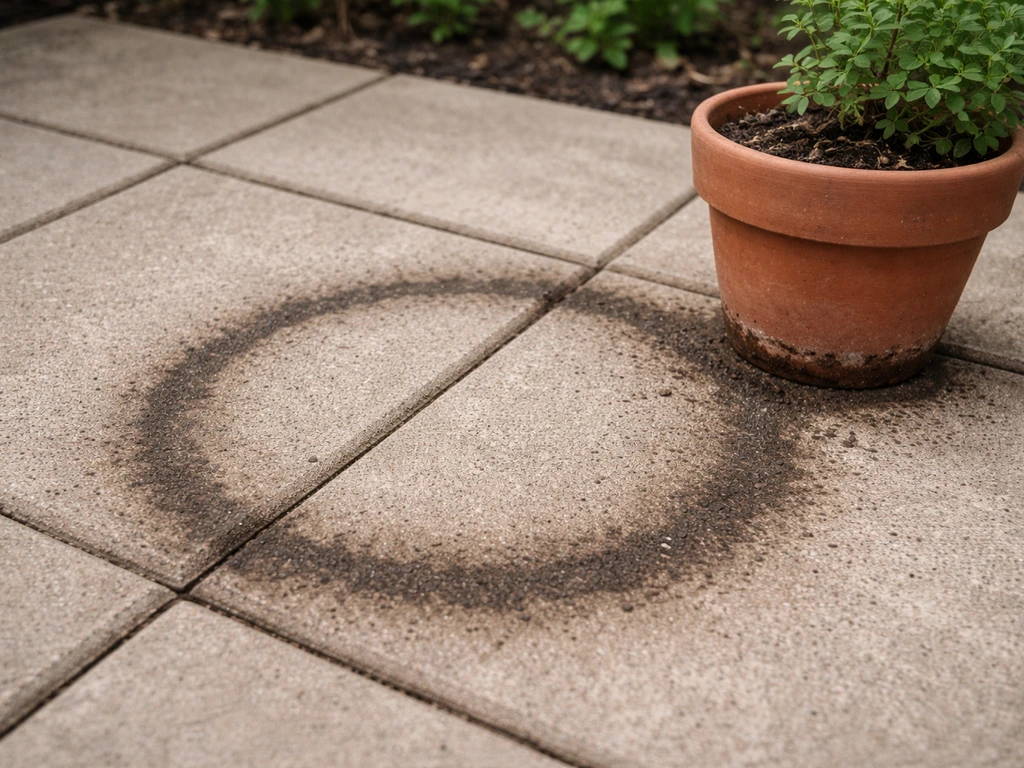
How to Stop Plant Pot Stains on Your Patio
Stop patio plant pot stains fast with diagnosis and step by step cleaning for concrete, brick, stone, pavers