White vinegar does clean patios, but only for specific stains. It works reasonably well on light mold, algae, mildew, and some organic surface grime. It will not remove oil, soot, rust, or deep mineral deposits, and it can permanently damage natural stone surfaces like travertine, limestone, and marble. For petroleum-based stains, industry guides recommend degreasers and mechanical methods rather than vinegar; see How to Remove Oil Stains from Concrete (ConcreteNetwork). If you have a concrete, brick, or paver patio with green or black organic growth and you want a low-cost, low-chemical option, white vinegar is worth trying. If you are standing in front of rust streaks, grease marks, or black patches on flagstone, reach for something else.
Does White Vinegar Clean Patios? Safe Steps for Black Spots
How to identify what's actually causing your black spots
Before grabbing any cleaner, it really pays to spend two minutes figuring out what you are actually dealing with. I have seen people apply vinegar to rust stains and spend an afternoon scrubbing with zero result. The fix depends completely on the cause, so here is how to read what your patio is telling you.
| Stain type | Appearance | Common locations | Quick field test |
|---|---|---|---|
| Mold / mildew | Black, grey, or greenish fuzzy or flat patches, often in shaded or damp corners | Under furniture, shaded walls, grout lines | Smells musty; bleach dilution lightens it within a minute |
| Algae | Green, brown, or black slippery film, often covers larger areas | Anywhere with moisture and sunlight | Slippery underfoot; turns green when wet |
| Soot / carbon | Dry, powdery, grey-black, usually near fire pits or BBQ areas | Around fire pits, barbecue zones | Rubs off on a damp white cloth as dark grey smear |
| Oil / grease | Dark, spreading stain, often shiny or iridescent when wet | Near BBQs, driveways, car parking pads | Darkens when water hits it; does not rinse away |
| Rust (iron oxide) | Orange-brown to reddish-black, often follows the shape of metal furniture legs or planters | Under steel furniture, planters, brackets | Distinct orange tinge; oxalic acid lifts it fast |
| Mineral/efflorescence | White, chalky, or grey crusty deposits, sometimes tinted by nearby organic matter | Grout lines, edges of pavers, brick faces | Powdery; brushes off partially when dry |
Black spots on patios are almost always mold, algae, or a combination of both, especially in the UK climate or anywhere with regular rain and shade. If your black spots are widespread across patio slabs or bricks, organic growth is the most likely culprit. Soot and oil tend to be localized. If you want a deeper look at diagnosing and treating black spots specifically by surface type, there are separate guides on this site covering black spots on patio slabs, bricks, flags, and stones in more detail. For step-by-step instructions specifically for flags, see the guide on how to remove black spots from patio flags. For brick-specific advice, see our guide on how to get rid of black spots on patio bricks. For a deeper look at diagnosing and treating black spots specifically by surface type, see the guide on how to get black spots off patio slabs. For a focused walkthrough on how to remove black spots from patio stones, see our dedicated guide. If you’re asking does vinegar remove black spots on patio, see our dedicated guide on black spots on patio slabs and bricks for detailed treatment recommendations.
What white vinegar can actually remove
Household white vinegar is typically 4 to 6 percent acetic acid. That acidity gives it genuine cleaning ability against certain biological and light mineral deposits. Here is where it holds up in real use.
- Light mold and mildew: Acetic acid disrupts surface biological growth. Research confirms measurable antibacterial and antibiofilm activity from acetic acid, though contact time matters. For outdoor patio surfaces, 15 to 30 minutes of dwell time with scrubbing is more realistic than a quick spray.
- Algae and green slime: Vinegar acidifies the surface enough to kill algae spores and loosen the organic film, especially on concrete and brick. You will need to scrub and rinse thoroughly.
- Light organic grime and surface discolouration: General grey-green surface dulling from environmental deposits often responds to a good vinegar soak and stiff brush.
- Light efflorescence (mineral haze): Very light white mineral haze on new concrete or pavers can sometimes be lifted with diluted vinegar, though dedicated efflorescence removers are more reliable and less risky for repeated use.
- General surface refresh on concrete and brick: On unsealed concrete or clay brick, a vinegar clean can noticeably brighten the surface and remove the dull film that builds up over months.
One honest caveat: vinegar is not an EPA-registered disinfectant, and the lab research that shows its antibiofilm activity uses long controlled contact times, sometimes hours. Multiple recent in vitro studies report that acetic acid can kill and disperse Pseudomonas aeruginosa biofilms at low concentrations (planktonic MICs ~0.047–0.31%), though eradication of established biofilms typically requires higher concentrations and longer or repeated exposures. In a practical outdoor clean, you are working in a 15 to 30 minute window. You will kill a good portion of surface growth and loosen the rest for mechanical removal by scrubbing, but you should not expect it to sterilize the surface. The goal on a patio is clean, not clinically sterile, and vinegar is capable of that for the right stains.
Where vinegar will fail or make things worse
This is the section I wish more people read before they start. Using vinegar on the wrong stain or the wrong surface wastes time at best and causes permanent damage at worst.
Stains vinegar cannot remove
- Oil and grease: Vinegar has no surfactant or saponifying chemistry. It simply cannot break down petroleum-based stains. You need an alkaline degreaser, enzyme cleaner, or purpose-made concrete degreaser with mechanical agitation.
- Soot and carbon deposits: The oily, particulate nature of soot requires a degreaser or TSP-based cleaner, not an acid.
- Rust stains: Acetic acid is the wrong chemistry entirely for iron oxide. Oxalic acid or phosphoric acid-based rust removers are the correct tools here, and they make a visible difference within minutes.
- Deep or heavy efflorescence and calcareous mineral deposits: Stubborn mineral build-up needs a buffered or purpose-formulated masonry cleaner for consistent, safe results.
Surfaces where vinegar causes damage
- Travertine, limestone, and marble: These are calcareous stones, meaning they contain calcium carbonate. Acetic acid reacts chemically with calcium carbonate and dissolves the surface, causing etching. This is not a stain you can wash off. The dull, cloudy etch marks are physical damage to the stone surface and typically require professional honing to restore.
- Flagstone (if calcareous): Many flagstone types are limestone or contain calcium carbonate minerals. Always confirm your specific stone type before applying anything acidic.
- Unsealed natural stone in general: Even non-calcareous stones can absorb acid and be dulled or discoloured if unsealed. Use pH-neutral stone cleaners instead.
- Polymeric sand joints: If your pavers have been set with polymeric sand, acid cleaners including vinegar can damage or discolour the jointing compound. Stick to manufacturer-approved, non-acidic cleaners.
The safe-to-use summary: white vinegar on concrete, clay brick, and non-calcareous pavers for organic growth is generally fine with a test patch first. Vinegar on natural stone, especially travertine or anything with a polished finish, is a risk not worth taking.
Safety first before you start
Vinegar is one of the gentler patio cleaners, but it still warrants basic precautions, and there is one serious safety rule that is non-negotiable.
PPE and personal protection
- Wear rubber or nitrile gloves: Prolonged skin contact with concentrated acetic acid can cause irritation.
- Eye protection: If you are spraying or scrubbing vigorously, splash risk is real. Safety glasses take five seconds to put on.
- Old clothes or an apron: Vinegar will not bleach fabric, but it does smell strongly and may carry surface grime.
Protecting plants, pets, and drains
- Move pots and planters off the patio before cleaning. Vinegar runoff onto soil will lower pH and can harm plants with repeated exposure.
- Water surrounding lawn and border plants before you start, then rinse again thoroughly after to dilute any runoff.
- Keep pets off the area until the surface is fully rinsed and dry. Vinegar residue is not acutely toxic to pets, but it is an irritant and animals will lick their paws.
- If you have a storm drain nearby, heavy runoff of any cleaner should be minimised. Diluted vinegar biodegrades readily, but excess should not be directed into drains in large volumes.
Never mix vinegar with bleach
This is the one rule that matters most. Mixing white vinegar with bleach (sodium hypochlorite) produces chlorine gas, which is toxic and can cause serious respiratory injury even in outdoor conditions. If you are thinking of alternating between the two cleaners, rinse the surface extremely thoroughly with water and allow it to dry before switching chemicals. Do not mix them in a bucket, spray bottle, or watering can under any circumstances.
Always do a test patch first
I always tell people: five minutes of testing saves hours of regret. A test patch is especially important on surfaces you have never cleaned with vinegar before, on any natural stone, and on any patio with coloured or sealed pavers.
- Choose a hidden spot: Pick a corner, an area under a planter, or a section behind furniture that will not be immediately visible if anything goes wrong.
- Apply your intended vinegar solution (full strength or diluted, whatever you plan to use) to approximately a 15 x 15 cm (6 x 6 inch) area.
- Leave it for the full dwell time you intend to use, typically 10 to 20 minutes.
- Scrub lightly with a stiff brush, then rinse with clean water.
- Wait at least 30 minutes and ideally 1 to 2 hours before inspecting, because some surface reactions (colour change, dull patches) only become visible once the surface dries completely.
- Look for: any lightening or bleaching of colour, a new dull or frosted appearance, any surface texture change, or loose grit/material on the surface. If you see any of these, stop and switch to a pH-neutral cleaner.
For concrete and most clay brick, you will almost always see no negative change and can proceed. For natural stone, do not skip this step even if someone else tells you it is fine: etching from acid is irreversible.
Choosing the right vinegar strength and dilution
Standard household white vinegar is 4 to 6 percent acetic acid. Industrial or cleaning-grade white vinegar runs at 10 to 20 percent and is stronger than most homeowners need for patio work. Here is how I approach concentration decisions.
| Scenario | Recommended strength | Dilution ratio | Contact time |
|---|---|---|---|
| Light surface algae or green film on concrete | Standard household (5%) | 1 part vinegar : 1 part water | 10–15 minutes with scrubbing |
| Moderate mold or mildew on brick or pavers | Standard household (5%) | Full strength or 3:1 vinegar to water | 15–30 minutes with scrubbing |
| Heavy organic growth or black spot mold on concrete | Full strength household (5%) | Undiluted | 20–30 minutes, re-apply if needed |
| Light efflorescence haze on new concrete | Standard household (5%) | 1 part vinegar : 3 parts water | 5–10 minutes, rinse immediately |
| Natural stone (travertine, limestone, marble) | Do not use | Do not use | Use pH-neutral stone cleaner only |
A word on industrial-strength vinegar: the 10 to 20 percent solutions sold for cleaning or gardening are genuinely more aggressive and increase the risk of etching on concrete over time and damage on sensitive surfaces. I stick to standard 5 percent household vinegar for all patio work and rely on longer contact time and good scrubbing rather than higher concentration when facing stubborn growth.
Step-by-step: how to clean your patio with white vinegar
This method works for concrete, clay brick, and non-calcareous pavers with organic growth (mold, algae, mildew). No pressure washer required, though one will speed up rinsing if you have access to one.
What you will need
- White vinegar (standard 5 percent household grade, 1 to 2 litres for a small patio)
- Spray bottle or garden pump sprayer (plastic only, not metal)
- Stiff-bristle brush or deck scrub brush
- Two buckets (one for solution, one for rinse water)
- Garden hose with good water pressure or access to a pressure washer
- Rubber gloves and eye protection
- Measuring jug or cup for dilution
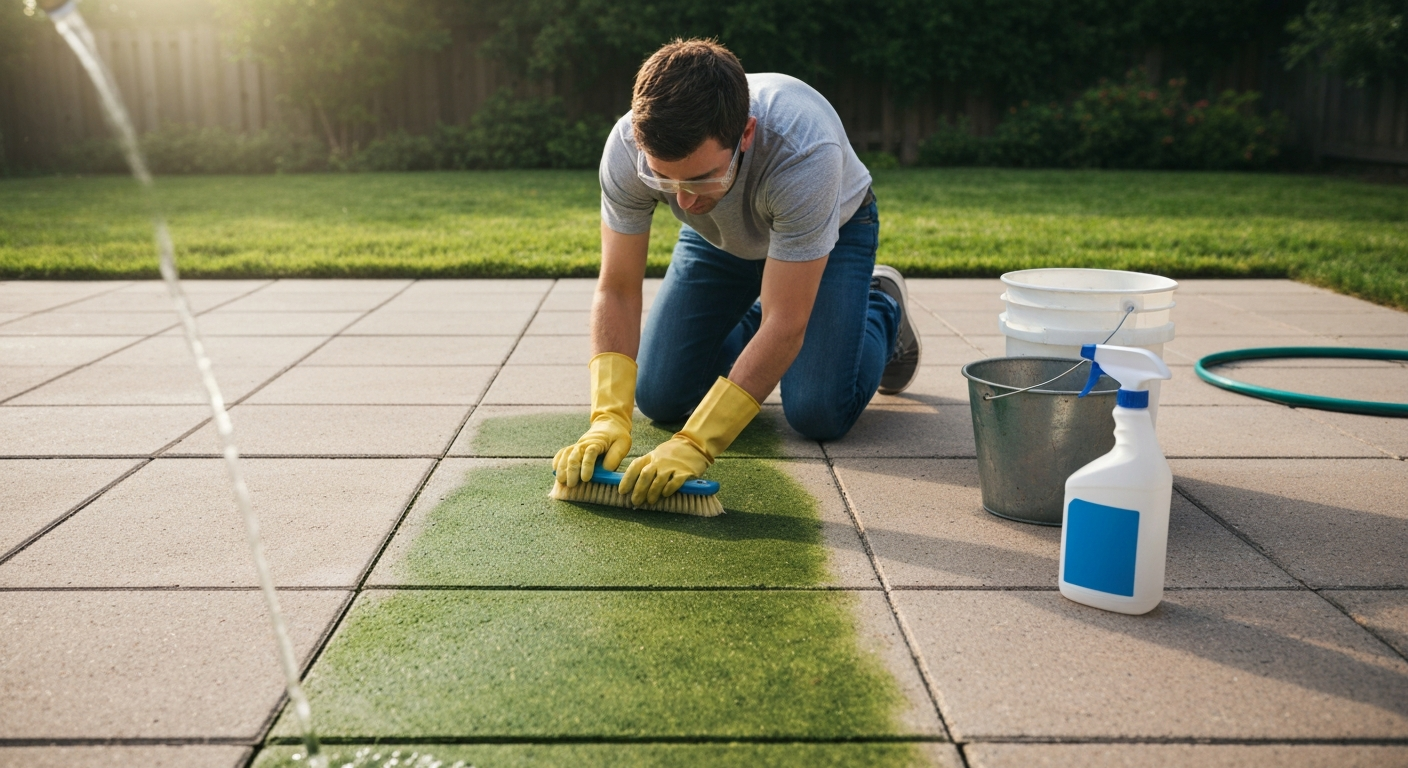
Application steps
- Clear the patio: Remove all furniture, pots, and decorations. You want full access to the surface and you do not want runoff collecting under objects.
- Pre-wet the surface: Hose the entire patio down with plain water. This prevents the vinegar from being absorbed too quickly by a dry surface and helps prevent runoff from spreading too far into surrounding soil.
- Mix your solution: For moderate mold or algae, use full-strength vinegar or a 3:1 ratio (three parts vinegar to one part water). For light surface film, a 1:1 mix is sufficient. Pour into your spray bottle or pump sprayer.
- Apply to the surface: Spray or pour the vinegar solution evenly across the affected area. Do not let it pool excessively in one spot. Work in sections of about 2 to 3 square metres at a time so you can manage dwell time properly.
- Allow to dwell: Leave the solution on the surface for 15 to 30 minutes. Do not let it dry out. If it is a hot or windy day, re-spray to keep the surface wet.
- Scrub with a stiff brush: Work the brush in circular or overlapping strokes across the entire section. You should see the organic growth loosening and lifting. Apply reasonable pressure, especially into textured surfaces and grout lines.
- Rinse thoroughly: Use a garden hose at full pressure or a pressure washer (start at around 1500 to 2000 PSI for concrete, lower for softer brick) to flush the surface completely. Rinse from the highest point to the lowest so dirty water does not flow back over cleaned areas.
- Repeat if needed: Very heavy mold or algae growth may need a second application. This is normal. Apply, dwell, scrub, and rinse again. Repeat up to three times before concluding vinegar alone is not strong enough and you need an alternative cleaner.
- Inspect when dry: Wait until the surface is fully dry (at least an hour, longer in overcast conditions) before evaluating results. Wet surfaces always look cleaner than they are.
Tips for renters and those without a pressure washer
A pressure washer speeds up rinsing but is not essential for vinegar cleaning. A garden hose with a good pressure nozzle and thorough scrubbing will get the job done on most residential patios. Work in smaller sections of about 1 square metre at a time, rinse each section completely before moving on, and use a second bucket of clean water for a final hand-rinse. Budget extra time rather than extra equipment: a small concrete patio can be fully cleaned this way in 45 to 90 minutes.
When vinegar is not enough: the right alternatives by stain type
Knowing when to switch cleaners is as important as knowing how to use vinegar. Here are the alternatives I reach for when vinegar will not do the job, matched to the specific stain chemistry.
| Stain type | Best alternative cleaner | Key notes |
|---|---|---|
| Oil / grease | Alkaline degreaser, enzyme cleaner, or commercial concrete degreaser | Apply, agitate with a stiff brush, allow to dwell 10–20 min, rinse. Absorb fresh spills with cat litter or sawdust first. |
| Rust stains | Oxalic acid or phosphoric acid-based rust remover | Pre-wet surface, apply, allow 5–15 min dwell, scrub, rinse. Remove the iron source (furniture leg caps, metal planters) to prevent recurrence. |
| Heavy mold / algae | Sodium hypochlorite (bleach) solution or oxygen bleach (sodium percarbonate) | Sodium hypochlorite is fast and effective. Never mix with vinegar. Oxygen bleach is safer around plants and pets. |
| Efflorescence (mineral salts) | Buffered or purpose-formulated efflorescence remover | Pre-wet, apply cleaner, 5–10 min dwell, scrub, rinse thoroughly. Follow the product TDS for dilution ratios. |
| Soot / carbon | TSP (trisodium phosphate) cleaner or alkaline degreaser | Apply, scrub with stiff brush, rinse well. Good ventilation and PPE are important. |
| Natural stone (all stains) | pH-neutral stone cleaner matched to stone type | Never use acid on travertine, limestone, or marble. Professional restoration may be needed for etched surfaces. |
Keeping it clean after you finish: prevention and sealing
Cleaning a patio is satisfying, but the longer you can keep it clean, the less work you do each season. Mold and algae return to unprotected surfaces relatively quickly in shaded or damp environments. A few straightforward steps extend the results considerably.
- Seal concrete and pavers: A penetrating sealer applied after cleaning significantly slows organic growth by reducing the porous surface area available for spores to colonise. Reapply every 2 to 3 years depending on foot traffic and weather exposure.
- Improve drainage and airflow: Organic growth thrives where moisture sits. Check that your patio drains properly and trim back plants or overhanging branches that keep the surface in shade and damp.
- Routine rinses: A monthly hose-down and an occasional light scrub with a diluted vinegar solution (or plain water) prevents the build-up that requires heavy cleaning later.
- Apply a biocide or algaecide treatment after cleaning: On patios prone to rapid algae regrowth, a diluted biocide (patio cleaner product with long-term algaecide) applied after the main clean provides a residual protective effect for several months.
- Lift furniture legs off the surface: Rubber or plastic leg caps under metal garden furniture legs prevent the moisture trap that creates rust stains on concrete and pavers.
FAQ
Does white vinegar clean patios effectively?
White vinegar (household 4–6% acetic acid) can help remove light organic films, mildew, some moss/algae, and surface grime when combined with scrubbing and rinsing. It is not a registered disinfectant and is unreliable for rapid biofilm eradication, heavy infestations, embedded dirt, oil/grease, rust, or deep stains—those generally need purpose‑built cleaners and longer contact times or stronger chemistries.
What kinds of black spots will vinegar remove, and which it won’t?
Vinegar can help reduce black spots from light mold, mildew, and surface algae if you scrub and allow dwell time. It will not reliably remove: deep black staining from soot/carbon, embedded mold or long‑established biofilms without repeated treatment, petroleum/oil stains, iron/rust stains, or mineral/efflorescence deposits. Material and stain chemistry determine the right treatment.
How should I identify what’s causing black spots on my patio?
Look at texture, color, location, and behavior: • Fuzzy/green/black patches in damp shaded areas — likely algae/moss/mildew. • Black sooty smudges near grills/driveways — soot or carbon/soot. • Shiny or dark wet‑looking spots that repel water — oil/grease. • Reddish or orange patches near metal — iron/rust. • White powdery deposits — efflorescence (minerals). When unsure, test‑patch and try appropriate cleaner for each suspected cause.
When should I use full‑strength vinegar vs diluted?
Full‑strength (straight from bottle, ~4–6% acetic acid) can be used for light organic growth and short contact scrubs on acid‑resistant surfaces like concrete or brick (test first). Dilute 1:1 with water for gentler cleaning or on more delicate surfaces. Never use vinegar on calcareous stone (marble, travertine, limestone) even diluted; use pH‑neutral stone cleaners instead.
Step‑by‑step safe vinegar cleaning method (general):
1) Clear area; sweep loose debris. 2) Wet surrounding vegetation and cover drains if possible. 3) Test patch in an inconspicuous spot for 24 hours. 4) Apply vinegar (spray bottle or pump sprayer) full‑strength or diluted per your test. 5) Let sit 5–15 minutes for surface grime, longer for persistent growth but do not let dry. 6) Agitate with a stiff nylon brush or deck brush. 7) Rinse thoroughly with garden hose or pressure washer at low setting. 8) Repeat if needed and allow to dry. For heavy growth, use oxygen bleach or product recommended for that stain type.
How long should vinegar contact the surface?
For light mildew/algae allow 5–15 minutes of contact with periodic agitation. For tougher biofilms longer or repeated contact may help, but household vinegar is less effective than commercial biocides that require specified dwell times. Never allow acid cleaners to evaporate and dry on surface—always rinse thoroughly.
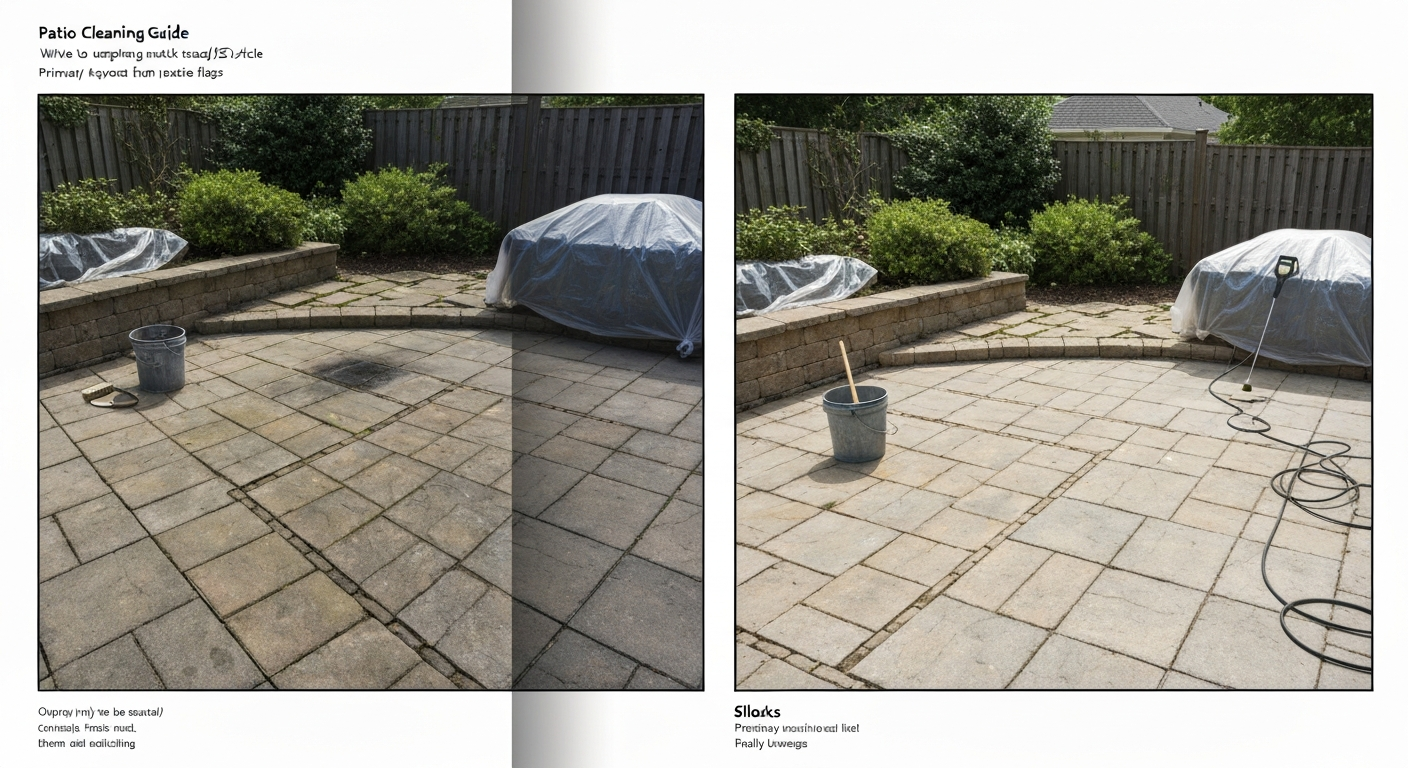
How to remove black spots from patio flags: identify causes, DIY step-by-step fixes, safe recipes, tools, and prevention
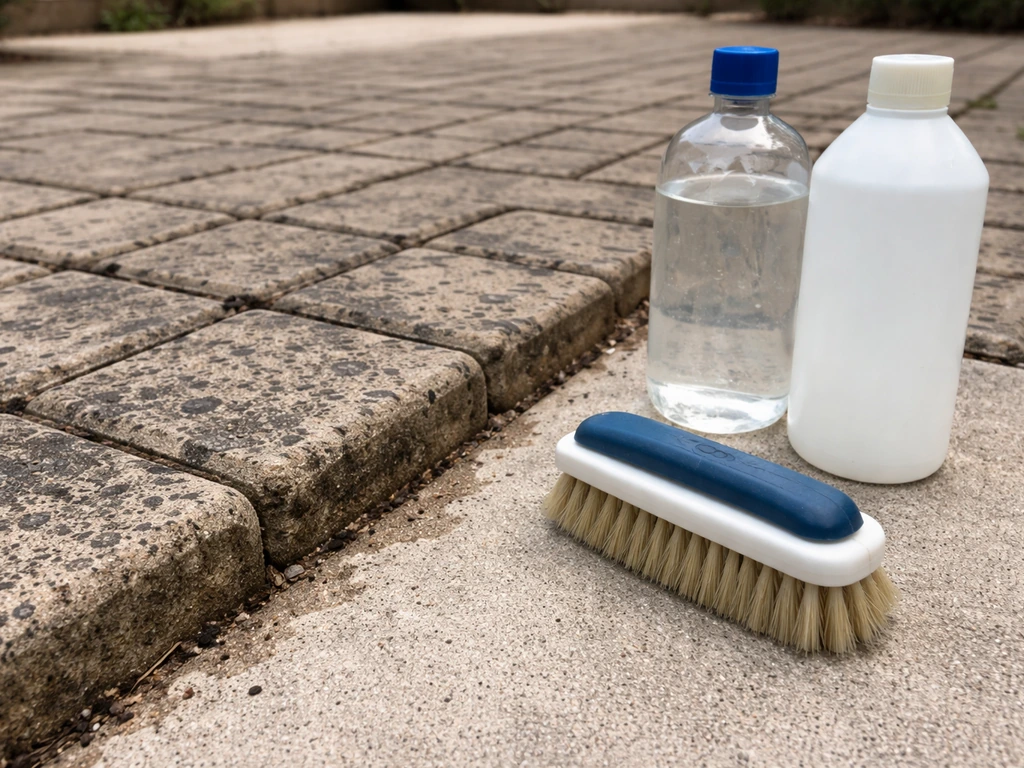
Find the cause of black patio brick spots and use the right scrub, oxygen bleach, or lime acids safely to remove.
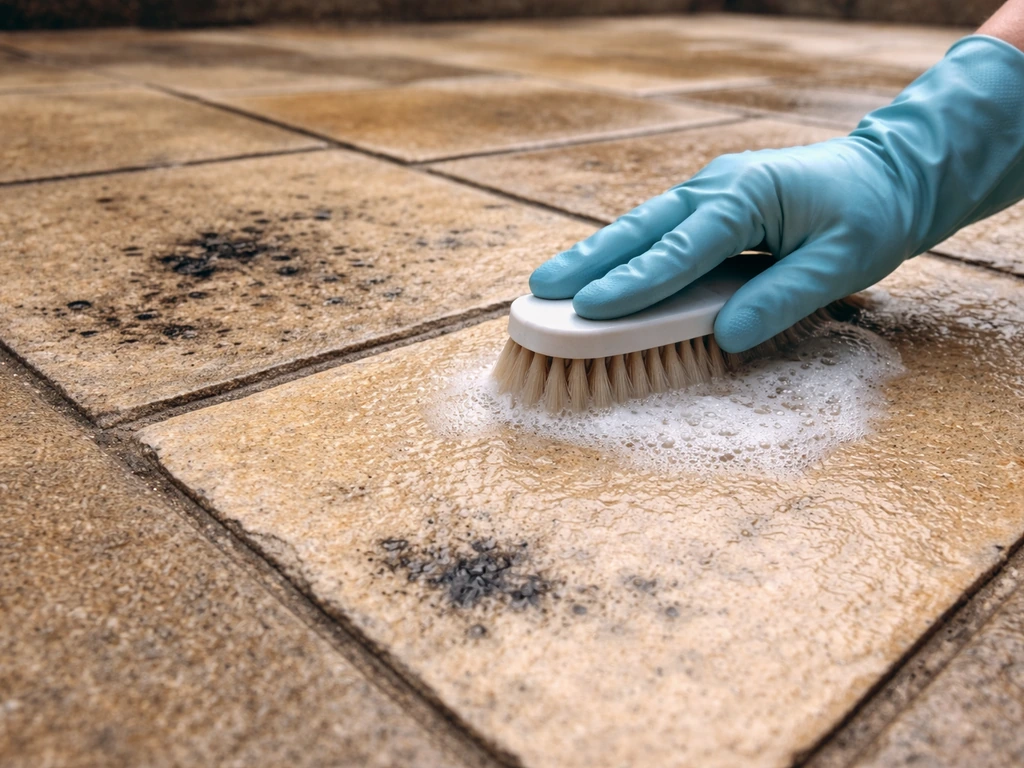
Step-by-step ways to remove black spots from sandstone patio stones, identify causes, clean safely, and prevent regrowth