Vinegar can remove some black spots on a patio, but whether it works depends entirely on what's causing the spots. It does a reasonable job on light organic staining and surface grime, but it struggles with deep mold on porous surfaces, won't touch rust or efflorescence effectively, and can permanently etch or damage natural stone like travertine, marble, and limestone. So: test first, know your surface, and have a backup plan ready.
Does Vinegar Remove Black Spots on Patio? Steps to Try
Dylan Hale
3 Jun 2026
What's actually causing those black spots
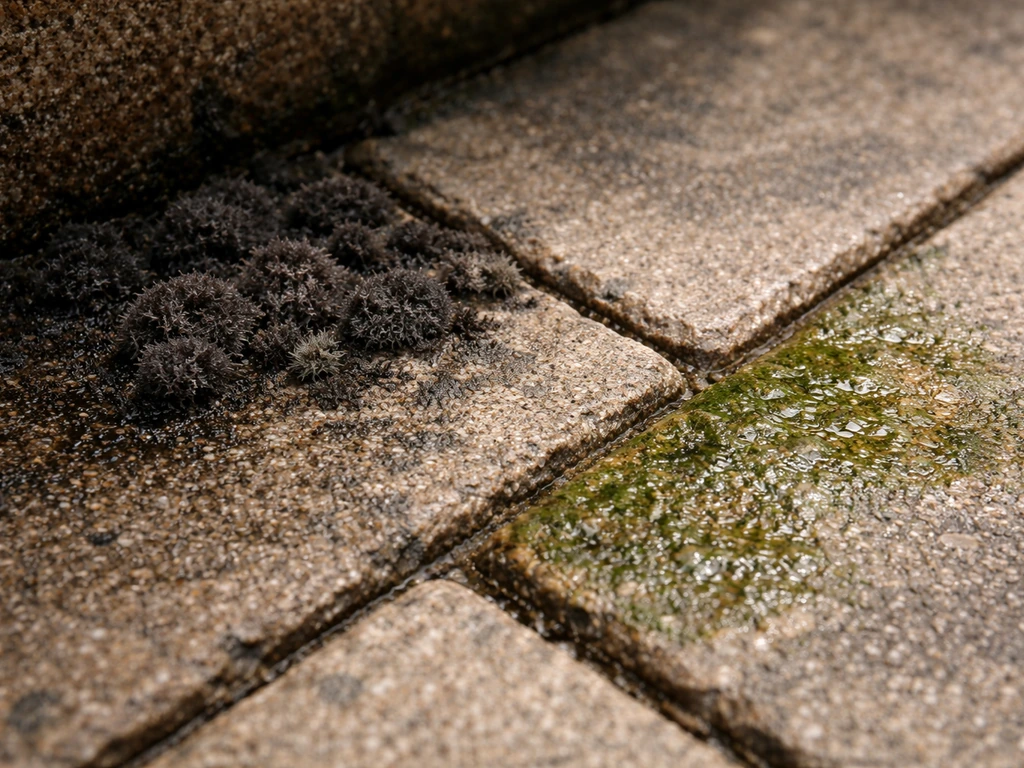
Before you grab the vinegar, it helps to know what you're dealing with. Black spots on a patio usually fall into one of these categories, and the cause changes everything about how you treat them.
- Mold and mildew: Dark, often fuzzy or slimy patches that appear in shaded, damp areas. Very common on north-facing patios or under furniture.
- Algae: Green-black or dark green film that tends to coat large areas, especially on damp or shaded slabs. Feels slippery when wet.
- Organic staining: Black marks left by decomposing leaves, bark, berries, or plant debris sitting on the surface over time.
- Rust: Orange-brown to near-black spots caused by metal furniture legs, planters, or fasteners sitting on the patio surface.
- Efflorescence: White to grayish mineral deposits that can oxidize or get dirty and appear dark or black, especially in joints between pavers or bricks.
- Grease and soot: Black marks near BBQ areas, fire pits, or high-traffic spots. Oily to the touch.
- Tire marks or paint: Sharp-edged black marks near driveways or from accidental paint spills.
Run your finger across the spot. If it smears or comes off slightly, it's likely surface-level organic matter. If it's completely embedded with no transfer, you're dealing with something that's penetrated the surface. That distinction matters a lot when choosing your cleaner.
Does vinegar actually remove black spots (and when does it work)
Household white vinegar contains about 5 to 8 percent acetic acid. That's mild enough to be safe around most surfaces but strong enough to break down light organic staining and some surface grime. I've had good results using it on surface-level leaf stains on concrete and on light organic residue on brick pavers. It's genuinely useful in those situations.
Where it starts to fall short is on mold. Healthline notes that vinegar is generally not recommended for killing mold on concrete and is unlikely to be effective at cleaning mold from porous, absorbent surfaces. That's been my experience too. You might lighten the stain on top, but the mold roots stay embedded in the pores and come back within weeks. For algae, vinegar can knock back a light coating but won't reliably kill the spores. It's a band-aid, not a fix.
Here's a quick breakdown of when vinegar helps versus when it doesn't:
| Black Spot Cause | Does Vinegar Work? | Notes |
|---|---|---|
| Light organic staining (leaves, bark) | Yes, often effective | Works well on hard surfaces with some scrubbing |
| Surface grime and dirt buildup | Yes, with scrubbing | Diluted vinegar loosens residue well |
| Mold and mildew | Rarely effective | Porous surfaces absorb mold deep; vinegar won't reach it |
| Algae | Partial, temporary | Fades the stain but doesn't kill spores reliably |
| Rust | No | Acid helps slightly but vinegar is too weak for embedded rust |
| Efflorescence | No | Needs a dedicated acidic efflorescence remover |
| Grease and soot | No | Acid doesn't break down oils; needs a degreaser |
| Tire marks or paint | No | Requires solvent or mechanical removal |
Surface-by-surface: where vinegar is safe and where it isn't
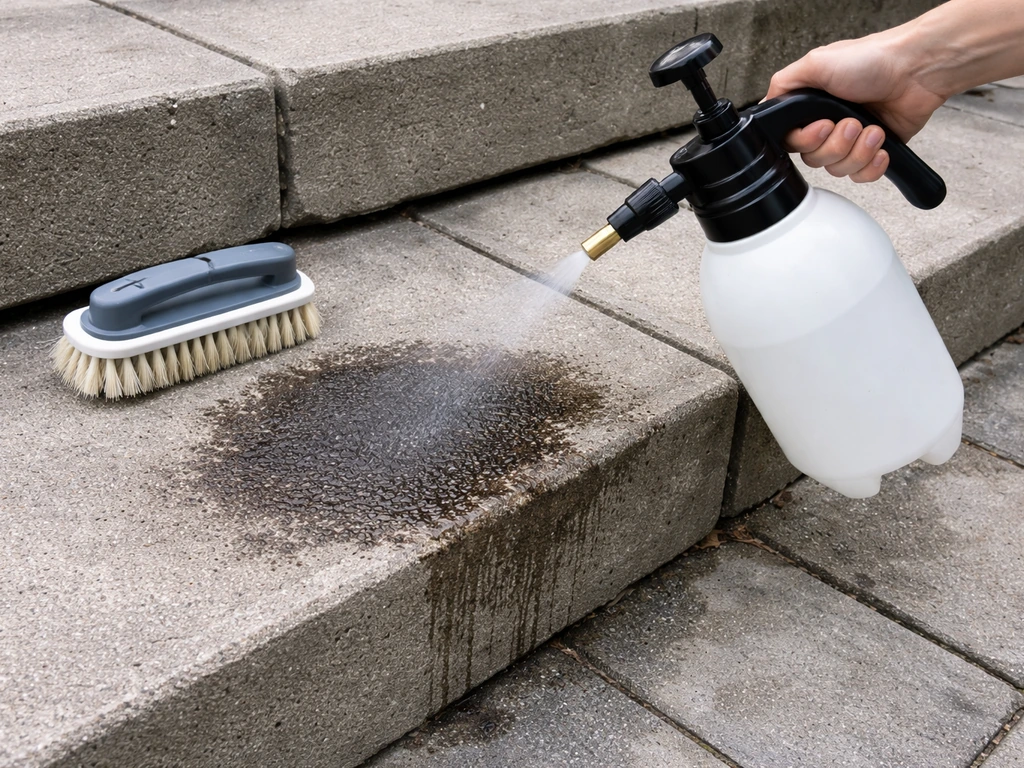
This is the part most articles skip, and it's the most important. Vinegar's acidity (pH around 2 to 3) is helpful on some surfaces and destructive on others. Using it in the wrong place will leave you with a bigger problem than the original black spots.
Concrete
Diluted white vinegar is generally safe on concrete for short dwell times, meaning a few minutes, not hours. It won't etch concrete the way it etches natural stone. I've used a 1:1 dilution (one part vinegar, one part water) on concrete patios for organic stains with decent results. The caveat: if your concrete is sealed, prolonged acid exposure can start to break down the sealer. Keep dwell time short and rinse thoroughly.
Brick and clay pavers
Diluted vinegar can work on brick for light staining, but be cautious. Brick is porous and the mortar or jointing sand between pavers can react to repeated acid exposure over time. Use it sparingly, keep it diluted (1:2 or more, vinegar to water), and don't make it a regular habit. For black spots on brick pavers specifically, there are better targeted options I'll cover below. For brick pavers, the best approach depends on whether the black spots are organic residue, mold, algae, or efflorescence, and the cleaner you choose should match that cause how to get rid of black spots on patio bricks.
Concrete pavers
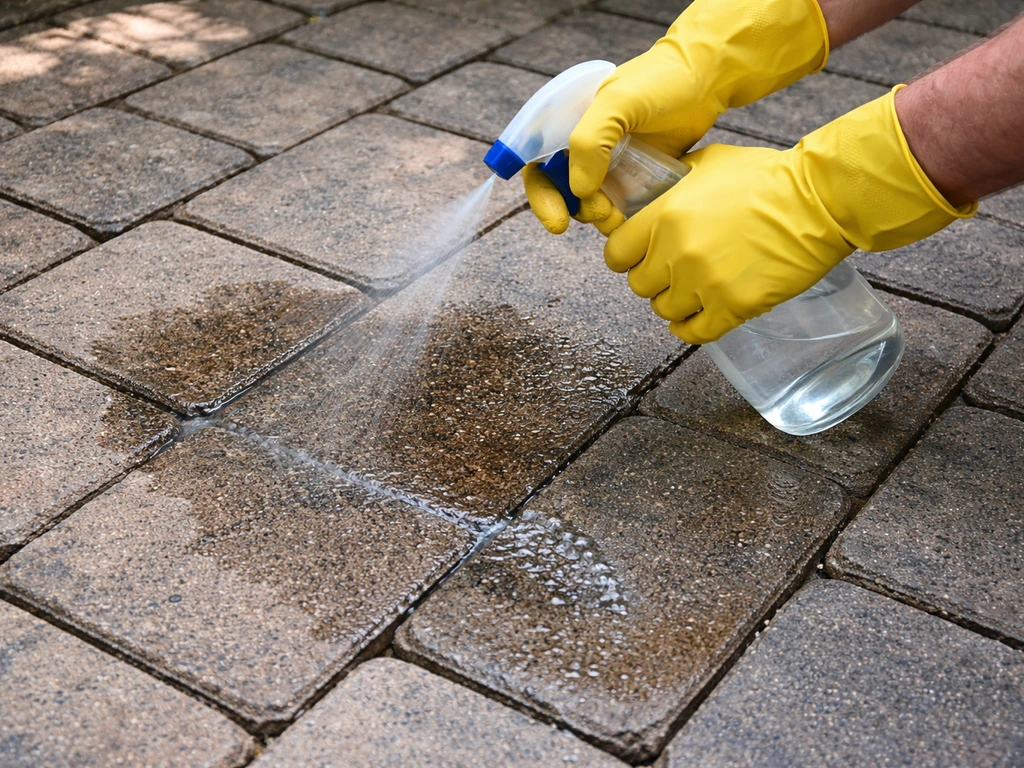
Similar guidance to plain concrete. Diluted vinegar is reasonably safe for one-off stain treatment on concrete pavers. Avoid getting it into the jointing sand repeatedly, and rinse well after a short dwell time. If you're seeing widespread black spots across many pavers, that's likely algae or mold and vinegar won't give you lasting results anyway.
Natural stone (sandstone, slate, quartzite, granite)
Harder siliceous stones like granite, slate, and quartzite are more acid-resistant than softer calcareous stones. Diluted vinegar can be used with caution on these surfaces, but I'd still recommend testing an inconspicuous corner first. Watch for any dulling or color change within the first minute. If you see it, stop and rinse immediately.
Travertine, limestone, and marble
Do not use vinegar on these surfaces. This is one of the clearest rules in stone care. Travertine, limestone, and marble all contain calcium carbonate, which reacts immediately with acid. One application of vinegar can leave visible etching, which is a dull, damaged patch in the surface finish. The Natural Stone Institute recommends pH-neutral cleaners for calcareous stone, and Dynamic Stone Tools lists vinegar as an immediate etching risk on marble, travertine, and limestone. There is no safe concentration of vinegar for these surfaces outdoors. Use a pH-neutral stone cleaner or a purpose-made product instead.
Flagstone
Flagstone covers a wide range of stone types, so you need to identify what kind you have before applying vinegar. If your flagstone is limestone or travertine, treat it as above and avoid vinegar entirely. If it's slate or sandstone-based, diluted vinegar with a short dwell time is generally safe. When in doubt, test first. The same guidance applies to getting black spots off patio flags made from softer calcareous materials.
How to apply vinegar correctly (dilution, dwell time, and scrubbing)
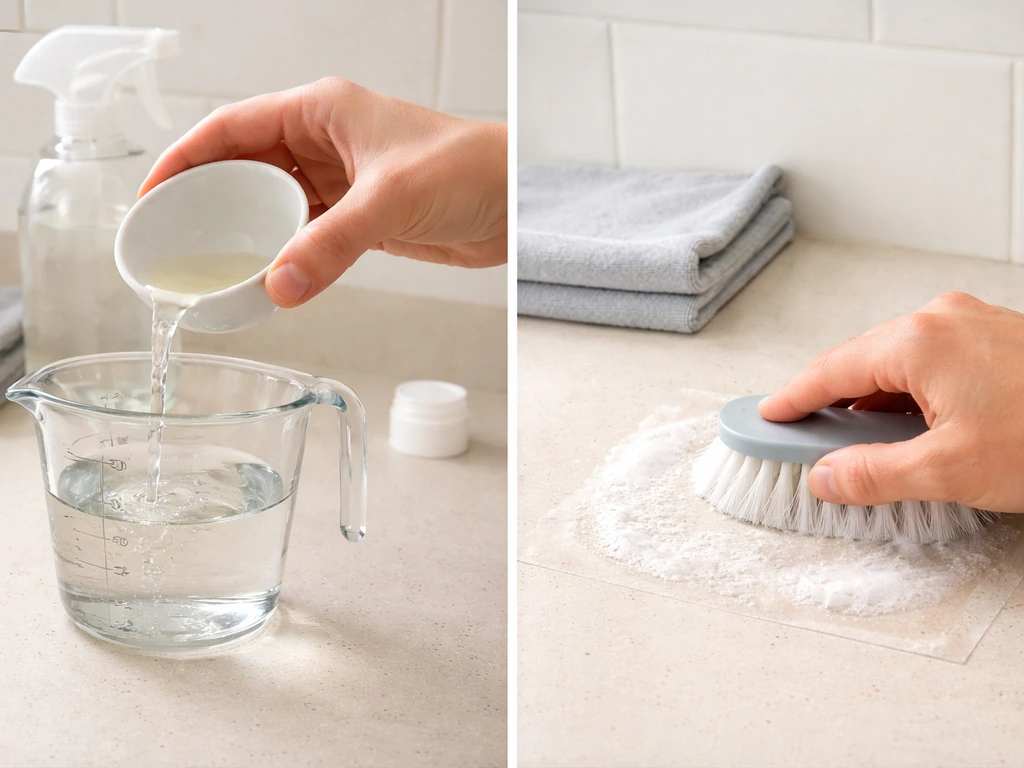
If you've confirmed vinegar is appropriate for your surface and the stain type, here's how to do it properly. Rushing it or using it undiluted causes more problems than it solves.
- Prep the area: Sweep away loose debris and wet the surface lightly with plain water. Moisten nearby plants and grass before you start, as the runoff will be acidic.
- Mix your solution: For concrete and harder surfaces, start with a 1:1 ratio of white vinegar to water. For more delicate surfaces you're uncertain about, go 1:2 or 1:3. Don't use undiluted vinegar directly on any patio surface.
- Test a small area: Apply a little of the solution to an inconspicuous corner. Wait two minutes and check for any color change, dulling, or bubbling. If you see any of those, stop and choose a different cleaner.
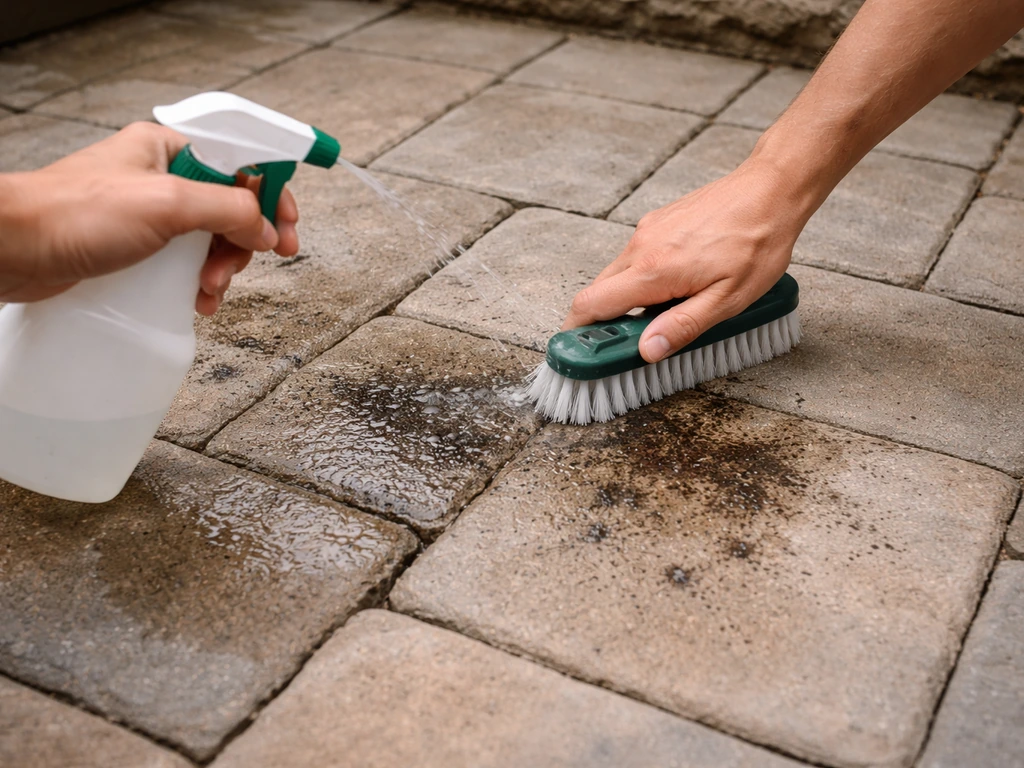
- Apply to the stained area: Pour or spray the diluted vinegar directly onto the black spots. Don't let it spread to grout lines or natural stone edges unnecessarily.
- Dwell time: Let it sit for five to ten minutes maximum. Don't let it dry on the surface, and don't leave it for longer than fifteen minutes on any surface.
- Scrub firmly: Use a stiff-bristle brush (not wire on stone or pavers) and scrub in circular motions. You need mechanical action alongside the acid to lift the stain.
- Rinse thoroughly: Flush the area well with clean water to neutralize the acid and wash away residue. This step is not optional.
- Protect yourself: Wear rubber gloves and eye protection. Vinegar splashes sting. Keep pets and kids away from the area until it's fully rinsed.
If the spot lightens but doesn't disappear after one round, you can repeat the process once more. If two rounds don't make a meaningful difference, vinegar is probably not the right solution for that stain type and you should move on to a targeted product.
When vinegar won't cut it
I'll be straight with you: vinegar is not a heavy-hitter. It works for light, surface-level organic staining on compatible surfaces. For anything deeper or more complex, you need the right tool for the job.
Mold and mildew
For genuine mold on porous surfaces like concrete or brick, a dilute bleach solution (sodium hypochlorite) or an oxygen bleach product is far more effective. Oxygen bleach (sodium percarbonate, the powdered type you dissolve in warm water) is a good middle ground if you want something less harsh than chlorine bleach. It's safer around plants and pets once dry, and it breaks down into oxygen and water.
Mix it according to the packet directions, apply to the affected area, let it dwell for 15 to 20 minutes, scrub, and rinse. For heavy mold outbreaks on concrete or pavers, a properly diluted chlorine bleach solution (about one part bleach to ten parts water) is genuinely effective. Use it outdoors, protect nearby plants by wetting them first, wear gloves and goggles, and rinse thoroughly afterward. If you choose pressure washing for heavy buildup, start on the lowest pressure setting and increase gradually to remove dirt without damaging the surface (Homes & Gardens) Homes & Gardens — Top expert tips for pressure washing a patio (article).
Algae
Algae responds well to oxygen bleach dissolved in warm water, applied generously and left to dwell. This works on most patio surfaces including pavers and concrete without the harshness of chlorine bleach. For persistent algae on natural stone, use a pH-neutral algae remover formulated for stone. Never use chlorine bleach on natural stone, particularly travertine or limestone.
Rust
Rust stains need an oxalic acid-based rust remover or a product specifically formulated for rust on outdoor surfaces. Vinegar contains some acid but not the right kind in sufficient concentration to dissolve iron oxide deposits. Look for a product designed for rust on concrete or masonry, and follow the label closely.
Efflorescence
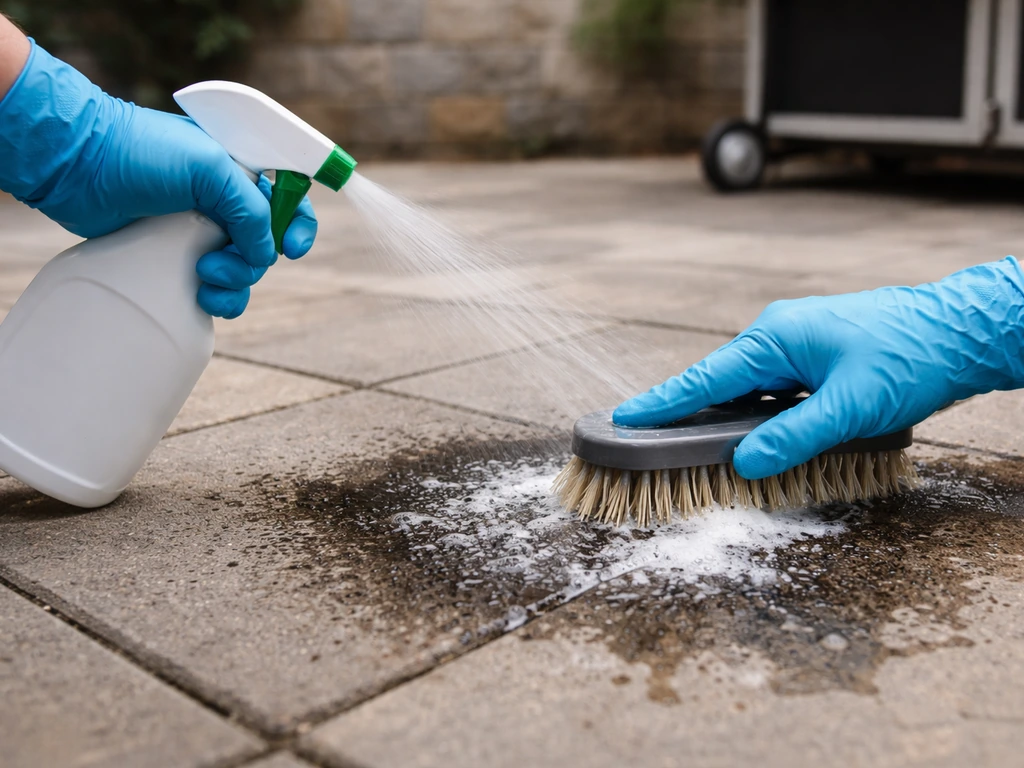
Efflorescence is the white-to-grayish mineral salt deposit that leaches through concrete, brick, and pavers as moisture moves through them. When it collects dirt it can look dark or nearly black. Vinegar is too mild to dissolve it reliably. Use a dedicated efflorescence remover, several of which are available without hydrochloric (muriatic) acid, which is worth looking for if you want something safer to work with.
Products like those from Techniseal, SRW (EF Efflorescence Remover), and Prosoco's T2751 line are formulated specifically for this and work quickly. Always dilute according to the product label and test an inconspicuous area first, as the Home Depot guidance for Foundation Armor products correctly points out.
A typical starting dilution recommended on such products is around 1:4 (product to water), though this varies.
Grease and soot
Acid doesn't cut grease. For BBQ grease, fire pit soot, or cooking oil stains, use an alkaline degreaser or a dedicated concrete degreaser. Apply, let it penetrate for five to ten minutes, scrub with a stiff brush, and rinse. These work on concrete and brick but check compatibility before using on natural stone.
Pressure washing: what works and what damages things
For a lot of these black spot problems, pressure washing combined with the right cleaner is the most efficient approach, and you don't need professional equipment to do it safely. A consumer-grade pressure washer works fine if you follow a few rules. Techniseal’s restoration guidance recommends pressure washing with about 1,500 psi, keeping the wand at about a 45-degree angle, and maintaining a consistent distance to help prevent damage blank" rel="noopener noreferrer">about 1,500 psi pressure, a 45-degree wand angle, and a consistent distance.
- For most patio pavers, set pressure between 1,000 and 1,500 PSI. Techniseal's paver restoration guidance specifically recommends around 1,500 PSI to avoid damage, and Pristine Clean confirms this range is safe for most pavers.
- Never exceed about 3,000 PSI near grout or mortar joints. Power Washing Dude notes that high pressure above this threshold can erode or blow out mortar, especially on older installations.
- Start low and increase gradually if needed. Homes & Gardens recommends beginning at the lowest effective pressure and working up only as required.
- Use a 25 to 40 degree fan tip or a surface cleaner attachment. Avoid turbo or zero-degree tips on patio surfaces, as Homes & Gardens cautions these can heavily damage the surface.
- Keep the wand at a consistent angle (around 45 degrees) and a consistent distance from the surface to avoid streaking or uneven cleaning.
- If you don't own a pressure washer, a garden hose with a high-pressure nozzle plus scrubbing works well for smaller areas, making this completely doable without specialized equipment.
What to do after cleaning: sealing and preventing black spots from coming back
Getting rid of black spots is only half the job. If you don't address why they appeared, they'll be back within a season. Use the right cleaner for the specific cause you identified, then seal afterward to help prevent the black spots from returning prevent black spots from coming back. Sealing your patio surface is the most effective long-term prevention step you can take. A quality paver or concrete sealer closes the surface pores that harbor mold, algae, and organic staining. It also makes future cleaning much easier because contaminants sit on top of the sealer rather than embedding in the material.
Moisture is the underlying driver of most biological black spot problems. Shade and standing water create ideal conditions for mold and algae. Where possible, improve drainage around your patio, trim back overhanging trees or shrubs that keep the surface damp, and move planters and furniture regularly to allow the surface to dry out. Techniseal's efflorescence guidance also ties moisture management directly to prevention, recommending damp-proofing measures behind installations to limit moisture movement through the material.
For ongoing maintenance, a light clean with a diluted oxygen bleach solution once or twice a year goes a long way toward keeping biological growth from taking hold. It's much easier to maintain a clean patio than to restore one that's been neglected for two or three seasons.
A simple decision path to follow right now
If you want a quick framework to work through before you grab any cleaner, here it is:
- Identify your surface material. If it's travertine, marble, or limestone, skip vinegar entirely and go straight to a pH-neutral cleaner or a product formulated for calcareous stone.
- Identify the stain type. Organic surface staining? Try diluted vinegar. Mold, algae, or biological growth? Use oxygen bleach or a dilute sodium hypochlorite solution. Rust? Use an oxalic acid-based rust remover. Efflorescence? Use a dedicated efflorescence remover without hydrochloric acid. Grease or soot? Use an alkaline degreaser.
- Test before you commit. Apply your chosen solution to a small, hidden area first and wait a few minutes. Look for etching, discoloration, or any surface change.
- Apply, dwell, scrub, and rinse. Follow the timing and dilution guidance for whatever product you're using. Rinse thoroughly every time.
- Judge success honestly. If the stain has significantly lightened or gone after one to two rounds, you're done. If not, reassess the cause and switch to a more targeted product.
- Seal the surface once it's fully clean and dry. This prevents the spots from returning as quickly and makes your next clean much easier.
The topics of removing black spots from specific patio surfaces, including slabs, stones, bricks, and flags, all follow the same underlying logic: identify the cause, match the cleaner to the material, and don't skip the sealing step afterward. Vinegar earns a place in your patio cleaning toolkit, but it's one tool among several, not a universal fix.
FAQ
Can I use undiluted white vinegar to remove black spots faster?
It’s usually a mistake. Undiluted vinegar increases the risk of etching or damaging finishes on stone and can accelerate sealer breakdown on concrete. Stick to dilution, keep dwell time short, and rinse thoroughly even when diluted.
After vinegar, the spot looks lighter but comes back quickly. What does that mean?
That pattern usually indicates the black discoloration was coming from embedded growth or residue deeper in the pores. Vinegar may remove surface residue, but if the underlying cause is mold roots or persistent algae, it will reappear. Switch to an oxygen-bleach or stone-appropriate algae solution and then seal.
How long should I leave vinegar on the patio before rinsing?
For compatible surfaces like unsealed concrete with light organic staining, a few minutes is the safe zone. Avoid extended soaking or letting it dry on the surface. Rinse right after the dwell time to minimize risk to concrete sealer and nearby materials.
Is vinegar safe to use around plants, pets, and nearby grass?
Even diluted vinegar can harm sensitive plants if it contacts leaves or stays on the soil. Wet the area around the patio first to reduce absorption into the surrounding ground, keep spray off foliage, and rinse the patio thoroughly after treatment.
Should I scrub with a wire brush or pressure washer right after vinegar?
Avoid wire brushes, especially on brick and natural stone, because they can scratch and trap dirt. If you pressure wash, do it after the vinegar is fully rinsed, and use a moderate fan tip and distance to avoid forcing residue deeper into joints and pores.
What’s the best way to tell if the black spots are mold, algae, or just grime?
Do a transfer test with a damp cloth or by lightly rubbing with a gloved finger. Smearing suggests surface grime or organic residue, while non-transfer suggests deeper penetration. Visual clues also matter, dark speckling in shaded damp zones often points to growth rather than simple dirt.
Does vinegar work on black spots caused by algae in shaded areas?
Vinegar can knock down a light coating, but it often won’t kill regrowth drivers like spores and embedded material. For shaded patios, oxygen bleach solutions (with proper dwell time) tend to give more durable results, then sealing helps slow future recontamination.
My patio has paver joints filled with sand, will vinegar damage them?
Repeated acid exposure can weaken or discolor mortar and jointing sand over time, especially on porous brick and some paver systems. Keep vinegar treatment to occasional spot use, don’t saturate joints, and rinse well to prevent pooling.
Is it okay to apply vinegar and then use bleach, or should I choose one?
Choose one approach at a time. Mixing or sequencing acid cleaners with bleach products can create hazardous reactions or reduce effectiveness. If you switch to oxygen or chlorine bleach, rinse thoroughly and wait per the product label before applying anything else.
Does vinegar remove rust stains on patio concrete?
Usually no. Vinegar’s acid isn’t the right type or strength to dissolve iron oxide effectively. For rust, use an oxalic acid-based rust remover or a rust-specific outdoor product, then rinse and consider sealing to prevent future staining.
Will vinegar remove efflorescence deposits that look dark?
Typically not. Efflorescence is mineral salts, and vinegar is too mild to reliably dissolve them. If you see crusty white to gray residue (sometimes darkened by dirt), use a dedicated efflorescence remover and follow its dilution and dwell instructions.
Should I seal immediately after cleaning, including after vinegar?
Don’t seal until the patio is fully dry and the surface is residue-free. If sealer is applied over damp material or leftover acid, you can get patchy adhesion and faster recurrence. After cleaning, give extra drying time, then test a small area with water to confirm the surface is ready for sealing.
How many vinegar rounds should I try before stopping?
A common decision point is one additional round after the first attempt. If there’s no meaningful improvement after two total applications, the cause is likely not compatible with vinegar, so switching to a targeted cleaner (oxygen bleach, algae remover, rust remover, or efflorescence product) is the better next step.
Next Articles
How to Get Black Spots Off Patio Slabs Step by Step
Step-by-step removal of black spots from patio slabs, with material checks, safe chemicals or none, and prevention.
How to Remove Thompson’s Patio Sealer Step by Step
Step-by-step removal of Thompson’s patio sealer on concrete, brick, pavers, and stone, with safety, tests, and cleanup.
Can You Remove Patio Sealer? How to Strip It Safely
Learn if you can remove patio sealer and how to strip it safely by type, material, and method.