Black spots on patio slabs are almost always caused by biological growth: mold, mildew, algae, or lichen. The fix depends on how bad it is and what your slabs are made of. For most concrete patios, a diluted bleach solution (1 cup bleach per gallon of water), scrubbed in and left for a few minutes before rinsing, clears the majority of black spots in one session. For natural stone, you need a gentler approach. Either way, the method you choose matters more than how hard you scrub.
How to Get Black Spots Off Patio Slabs Step by Step
Dylan Hale
4 May 2026
Quick diagnosis: what's actually causing those black spots
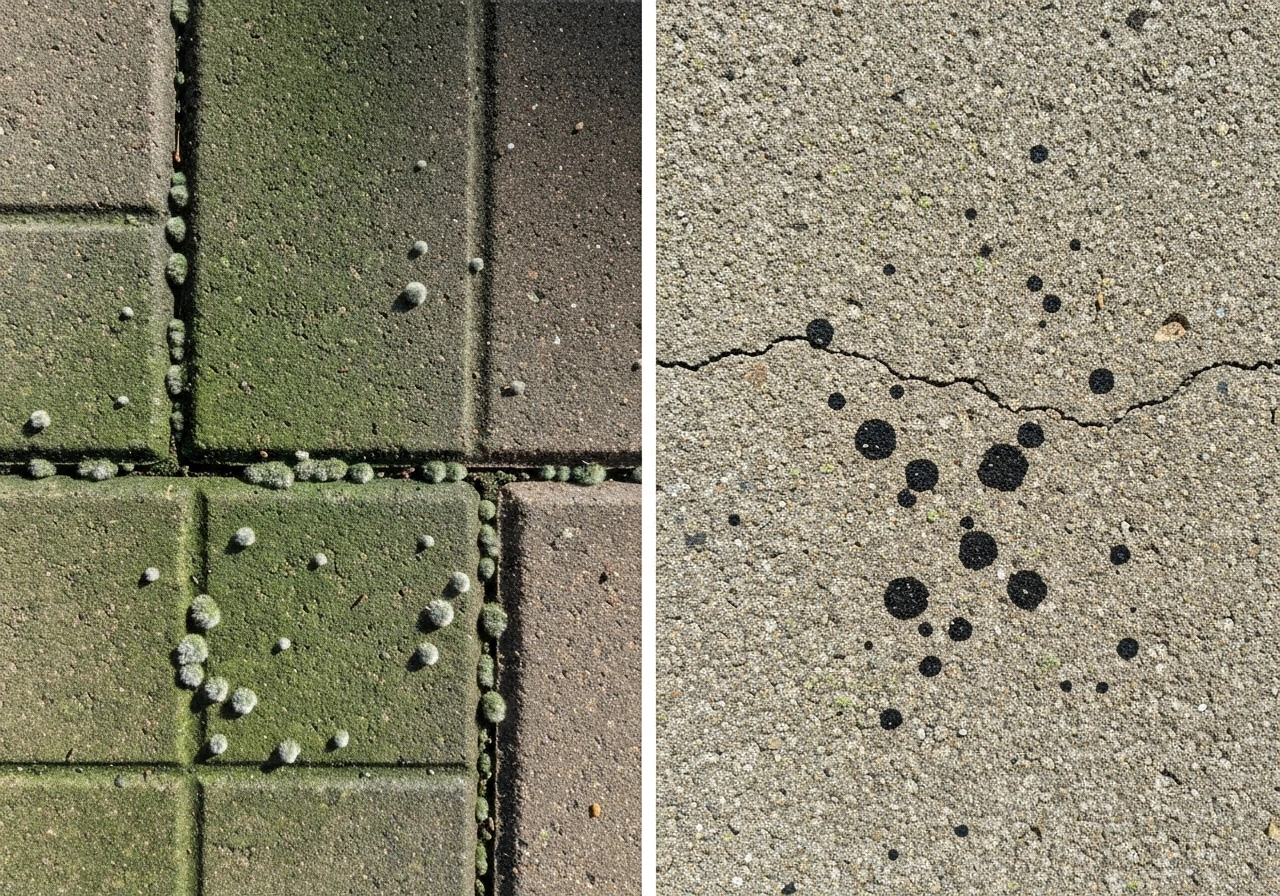
Before you grab any product, it helps to know what you're dealing with. The most common culprits on patio slabs are mold, mildew, algae, and lichen. These tend to show up in patches, often on the shaded or damp side of the patio, and the spots usually have a slightly fuzzy or slimy texture if you touch them (don't do it barehanded). You'll typically see the worst growth in low-light corners, near drains, under garden furniture, or anywhere water tends to sit after rain.
Black spots can also come from atmospheric staining: pollution, tire marks near driveways, tannins from leaves decomposing on the surface, or general grime that's worked its way into the pores of the slab. These don't scrub off as easily as biological growth and sometimes need an acid-based approach. A quick test: if the spots are slightly raised or have any texture to them, it's almost certainly biological. If they look flat and embedded into the surface, you're probably dealing with organic or mineral staining.
Prep and safety before you start
Know your patio material
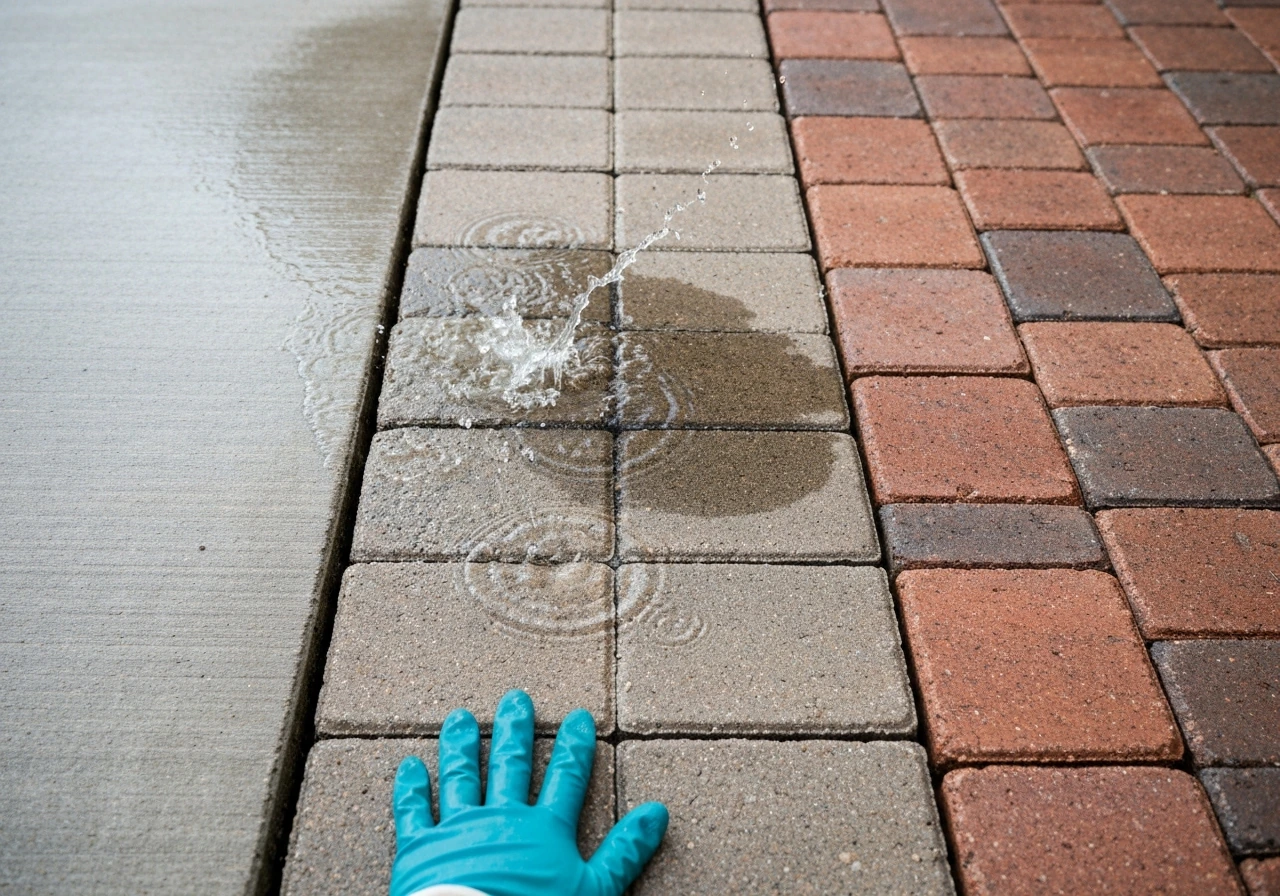
The single most important thing before applying any cleaner is knowing what your slabs are made of. Concrete, concrete pavers, and brick can handle bleach and diluted acid without major issues. Natural stone, including travertine, flagstone, and sandstone, is acid-sensitive and can be permanently etched or discolored by bleach-heavy solutions or any acid-based cleaner.
These same identification and cleaning steps can also help you remove black spots from patio flags without damaging the surface how to remove black spots from patio flags. If you have stamped concrete (poured concrete imprinted to look like stone or brick, often sealed), treat it more like natural stone: avoid strong acids and test everything in a hidden corner first, since the sealant can be damaged.
Protect plants and test a small area
Wet down any grass, plants, or garden beds bordering the patio before you start. This dilutes any chemical runoff that reaches them. Cover anything delicate with a tarp if you're using bleach or acid. Always spot-test your chosen cleaner on a small, inconspicuous area of the slab, let it fully dry, and check for discoloration or surface changes before treating the whole patio. This takes ten minutes and can save you a ruined patio. Wear rubber gloves, eye protection, and old clothes for any chemical cleaning. If you're working in an enclosed space or using acid, add a face mask or respirator.
Chemical-free cleaning methods
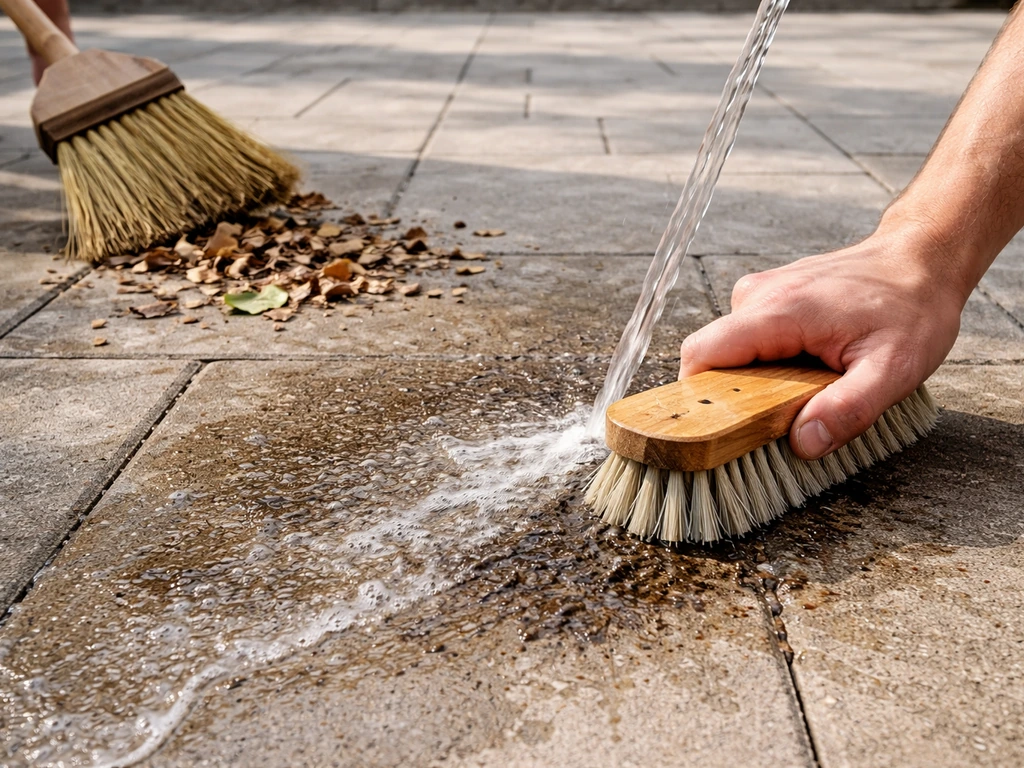
If the black spots are fresh, light, or you'd prefer to avoid chemicals (especially useful if you have pets, children, or adjacent planted borders), start here. This approach works surprisingly well on early-stage biological growth.
- Sweep the patio thoroughly to remove loose debris, leaves, and surface dirt.
- Soak the spotted areas with hot water and let it sit for a few minutes to loosen the growth.
- Scrub firmly with a stiff-bristle brush or deck scrubbing brush. A long-handled brush saves your back. Work in circular motions and apply real pressure.
- Rinse well with a garden hose, directing runoff away from plants.
- For light biological growth, a baking soda paste works well: mix 1 tablespoon baking soda into 1 cup of water, apply to the spots, let it sit for 10 to 15 minutes, scrub, then rinse thoroughly.
White vinegar (around 5% acetic acid) is often recommended for light surface mold and mildew on concrete. Pour it undiluted onto the spots, let it dwell for 10 to 15 minutes, scrub, and rinse. I've found it works reasonably well on very early-stage mold but struggles with anything deeply embedded. It's also worth knowing that vinegar is acidic enough to damage sealed concrete finishes and natural stone, so always dilute it and patch-test first if you're unsure about your surface. For a deeper look at how vinegar performs on different patio materials, that comparison is covered separately on this site.
Bleach and sodium hypochlorite for mold and algae
For concrete, brick, or paver patios with established mold, mildew, or algae, bleach is the most effective readily available treatment. Use regular unscented household bleach with a sodium hypochlorite concentration of 5% to 9%. The CDC's mold cleanup guidance recommends a ratio of 1 cup of bleach per 1 gallon of water, and that's the ratio I use too. Don't go stronger thinking it'll work faster: it increases surface and health risk without meaningfully better results.
- Put on rubber gloves and eye protection before mixing anything.
- Mix 1 cup of household bleach into 1 gallon of room-temperature water in a bucket.
- Wet the stained area with plain water first (this helps the solution penetrate rather than just bead off).
- Apply the bleach solution to the black spots and surrounding area using a brush, sponge, or spray bottle.
- Leave it to dwell for at least 1 minute, and ideally 5 to 10 minutes. The surface should stay visibly wet throughout.
- Scrub with a stiff brush to agitate and break up the mold or algae.
- Rinse thoroughly with plenty of clean water. Repeat if growth is heavy.
A few important cautions: do not use bleach on natural stone (travertine, flagstone, marble, sandstone) as it can strip the surface and cause irreversible discoloration. Avoid mixing bleach with any other cleaning product, especially anything containing ammonia. Work in a ventilated area and keep children and pets off the patio until it's fully rinsed and dry.
When to consider muriatic acid (and how to use it safely)
Muriatic acid (hydrochloric acid) is a heavy-duty option for stubborn staining on concrete that bleach and scrubbing haven't shifted. It's particularly useful for deeply embedded mineral or organic staining and for cleaning up efflorescence (the white chalky residue that sometimes appears after wet cleaning). Use it only on plain or standard concrete, never on natural stone, coloured decorative concrete, or sealed stamped concrete.
The standard dilution for concrete cleaning is 1 part muriatic acid to 10 parts water. Always add the acid to the water, never the other way around. Apply with a brush, let it sit for just 2 to 3 minutes (no more), scrub briefly, then rinse very thoroughly. After rinsing, neutralize the surface with a solution of 1 cup baking soda dissolved in 1 gallon of water, apply it to the treated area, let it fizz and sit for a minute, then rinse again with clean water.
Full PPE is non-negotiable here: chemical-resistant gloves, eye protection or goggles, old clothing, and a respirator or N95 mask. Work outdoors only. Pre-wet the concrete before applying the acid solution, and make sure plants and nearby surfaces are protected from any splashing. This is not a product for tight enclosed spaces or for anyone unsure about handling concentrated acids. If in doubt, use the bleach method or a commercial patio cleaner instead.
Pressure washing vs. hand scrubbing: which works better on slabs
Both methods work, but they're not interchangeable for every situation. Here's how they compare on patio slabs:
| Method | Best for | PSI/Nozzle | Risk level | Equipment needed |
|---|---|---|---|---|
| Pressure washing | Large areas, ingrained growth, post-bleach rinse | 2,500–3,000 PSI, 25-degree (green) nozzle | Medium (can etch if too close or wrong nozzle) | Pressure washer |
| Hand scrubbing | Small areas, natural stone, delicate surfaces, rental situations | N/A | Low (controlled application) | Stiff brush, bucket, hose |
| Combined approach | Best overall results on concrete | Start with bleach/chemical, finish with pressure rinse | Low-medium | Both |
If you're pressure washing concrete, keep to 2,500 to 3,000 PSI and use a 25-degree green nozzle. Hold the wand about 12 inches from the surface and keep it moving. Never use a 0-degree (red) nozzle on patio slabs: it concentrates the force into a pinpoint jet and can easily etch or spall the concrete surface, leaving visible damage. Work in consistent overlapping passes rather than blasting one spot. On softer or more porous materials like sandstone or brick, drop the pressure further (1,200 to 1,500 PSI) or skip the pressure washer entirely and hand-scrub.
For most standard concrete patios, I've found the most effective approach is to apply a bleach solution first, let it dwell, then use the pressure washer to rinse and blast away the loosened growth. This combination cuts the work in half compared to either method alone.
Troubleshooting: stubborn stains, recurring spots, and preventing spread
Stains that won't budge after first treatment
If black spots remain after a bleach treatment and scrub, give the area a second application before reaching for something stronger. If the black spots persist after a second bleach application and scrub, switch to the right approach for your patio material. Let the bleach solution sit longer on the second pass, up to 15 minutes if the surface isn't drying out. If that still doesn't clear it, consider whether the staining might be mineral or chemical rather than biological, in which case a diluted acid approach (on concrete only) is your next step. Commercial patio or masonry cleaners with sodium hypochlorite at higher concentrations than household bleach are also worth trying before you escalate to muriatic acid.
Why black spots keep coming back
If the spots return within weeks or a season, the underlying conditions haven't changed. Mold and algae come back wherever moisture, shade, and organic debris combine. The fix isn't just cleaning: it's removing the conditions that support growth. To prevent black spots from coming back, focus on moisture control and regular rinsing, not just one-time cleaning black spots keep coming back.
Check whether water is pooling on or around the slab after rain. Clear anything that blocks light or airflow (overhanging plants, debris piles, furniture sitting in the same spots permanently). Rinse the patio with a hose every few weeks rather than waiting for visible growth to return. For concrete patios prone to recurring algae, applying a concrete sealer after cleaning creates a less porous surface that's significantly harder for organisms to colonize.
Rust-Oleum’s application instructions for its penetrating concrete sealer provide manufacturer guidance for sealing concrete after cleaning applying a concrete sealer after cleaning creates a less porous surface.
Preventing spread and setting a cleaning schedule
- Sweep or blow the patio clear of leaves and organic debris at least once a week in autumn.
- Rinse the surface with a hose monthly to flush away early-stage spores and dirt before they establish.
- Move furniture periodically so moisture doesn't concentrate in the same spots.
- Treat the first signs of growth immediately: a 10-minute spot treatment now prevents a full cleaning session later.
- Consider applying a penetrating concrete sealer every two to three years on plain concrete patios.
Why white spots appear after cleaning and how to fix them
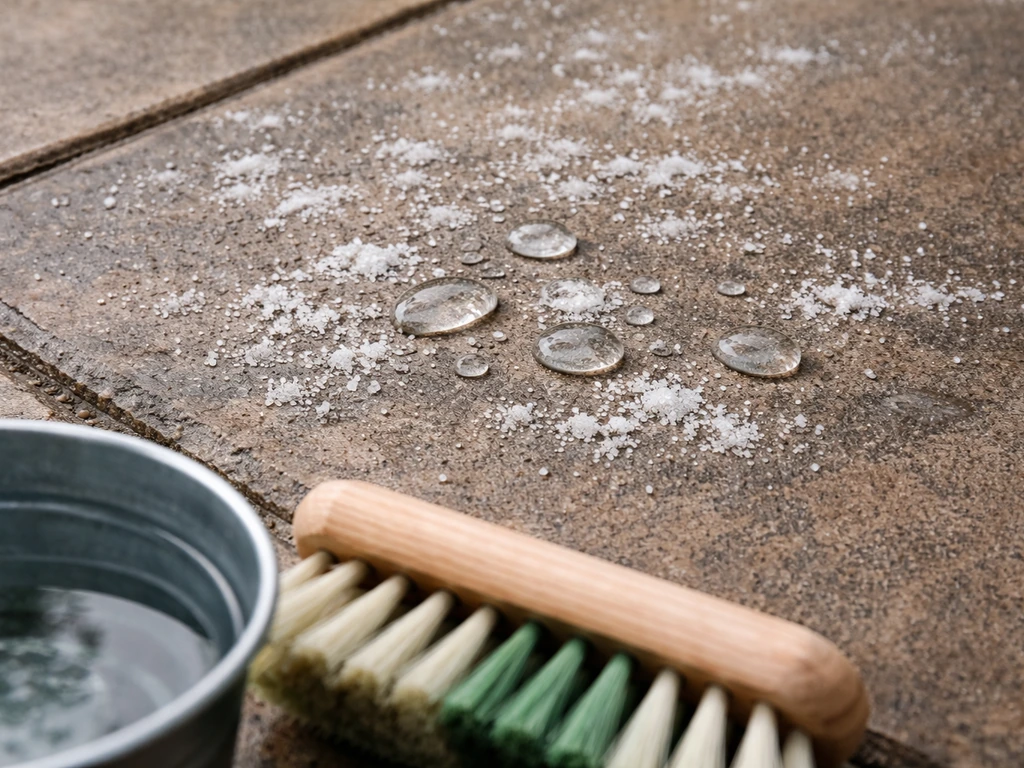
White residue appearing on slabs after cleaning is almost always efflorescence: soluble salts inside the concrete or stone that get carried to the surface by moisture and left behind when the water evaporates. It looks like a chalky or powdery white bloom, and it's especially common after wet cleaning methods that drive water into the slab. It's not damage, but it is annoying.
A quick diagnostic test: splash a little water on the white deposit. If it disappears while wet and reappears as it dries, it's efflorescence. If it stays white when wet, it might be paint residue, limescale, or leftover cleaning product.
For fresh, light efflorescence, dry brushing with a stiff brush followed by vacuuming is often enough and is actually preferable to wet cleaning, since water can redissolve the salts and push them back in. For heavier deposits, a dilute acid solution shifts it well. Mix 1 part white vinegar with 5 parts water (for light cases) or use a diluted muriatic acid solution (1:20 for mild efflorescence, 1:10 for heavier buildup on concrete only), let it sit for 10 to 15 minutes, scrub, then rinse thoroughly and neutralize with a baking soda solution.
To reduce the chances of efflorescence returning after future cleans, avoid over-saturating the slab, allow it to dry fully before sealing, and improve drainage around the patio if water regularly sits against the edges. Sealing the concrete after cleaning and after the slab has dried completely significantly reduces how much moisture can penetrate and carry salts to the surface.
FAQ
How can I tell if the black spots are mold or just staining before I treat them?
Yes, but match the approach to the spot type. If the area feels fuzzy or looks slimy, it is usually biological and bleach or vinegar (for light growth) is appropriate. If the area looks flat, embedded, and does not smear or lift with a damp scrub, it is more likely staining and may need an acid step on concrete only (muriatic) rather than repeated bleach.
What should I do if I already used bleach and the black spots are still there?
Bleach can work even after a previous clean, but do a fresh patch test and increase contact time rather than strength. Try a second bleach application on concrete, let it dwell longer (up to about 15 minutes if the surface is not drying out), then rinse thoroughly. If it still persists, switch methods based on whether the spots are textured (biological) or flat (stain).
Can I combine cleaning products, like bleach then vinegar, to remove tougher black spots?
Never mix bleach with anything else, especially ammonia or acidic cleaners. Also avoid using vinegar first and then “top it off” with bleach, because residues can react. If you want to change strategies, rinse very thoroughly, wait until fully dry, then start the next product with a new patch test.
Is it okay to pressure wash immediately, or should I treat first?
Avoid it when you suspect biological growth is still present. Pressure washing can spread loosened organisms into other areas or drive them deeper if the surface is not treated first. For concrete, the faster route is typically bleach or a diluted hypochlorite product first, brief dwell, then pressure wash to rinse away what you loosened.
How do I handle black spots on sealed or stamped concrete?
On sealed or decorative stamped concrete, treat it like natural stone. Skip strong acids and use gentle, diluted cleaners only after testing. If you pressure wash, keep the nozzle farther back and avoid aggressive settings that can damage the seal and create patchy discoloration.
Why do black spots come back so fast after cleaning?
If you see black spots after a “deep clean,” they may be remaining growth, not new damage. Wait for the surface to dry fully, then reassess. If the spots are back quickly in the same shaded spots, it points to a moisture or debris issue, so focus on drainage, removing organic buildup, and rinsing regularly rather than escalating chemicals right away.
Can I clean black spots safely if I have pets or kids?
Yes, if you protect surrounding landscaping and pets, and you use the right dwell and rinse steps. Wet the plants before starting, cover delicate items, and keep kids and pets off the patio until it is fully rinsed and dry. For lighter cases, vinegar can reduce chemical exposure, but it still needs dilution and patch testing to avoid finish damage.
Will pressure washing damage my patio slabs if they are porous or soft?
Pressure washing is not always the best tool. If your patio is sandstone, porous brick, or other softer materials, high pressure can erode the surface and create more uneven discoloration. In those cases, lower PSI or hand-scrubbing with the gentler method is usually safer than blasting.
What if I used bleach on natural stone by mistake?
If you accidentally use bleach on an acid-sensitive stone, rinse immediately and stop the treatment, then let the area dry before evaluating. Discoloration can be difficult to reverse, so patch testing before any further cleaning is crucial. For future attempts, switch to a stone-safe approach rather than repeating bleach or acids.
How do I know if white residue after cleaning is efflorescence, and how do I stop it from returning?
White chalky residue after cleaning is usually efflorescence, and it often gets worse if the slab stays oversaturated. Reduce future recurrence by improving drainage, avoiding over-wetting during cleanup, and ensuring the patio dries fully before any sealing. If you already have it, use the “wet test” to confirm it dissolves while wet, then dry brush for light cases or use a mild acid approach for heavier buildup on appropriate surfaces.
Next Articles
How to Remove Thompson’s Patio Sealer Step by Step
Step-by-step removal of Thompson’s patio sealer on concrete, brick, pavers, and stone, with safety, tests, and cleanup.
Can You Remove Patio Sealer? How to Strip It Safely
Learn if you can remove patio sealer and how to strip it safely by type, material, and method.
How to Remove Resin From Patio Safely by Surface Type
Step by step guide to remove resin from patio by surface type with safe scraping, softening and solvent methods.