Treating a concrete patio means different things depending on what you're working with. If you just poured fresh concrete, 'treating' it means curing it properly so it doesn't crack and stays strong. If you have an existing patio that looks dingy, stained, or covered in mold, treating it means cleaning, removing stains, and optionally sealing it so it stays that way. Both are covered here, step by step, so you can figure out which situation you're in and get straight to fixing it.
How to Treat and Cure a Concrete Patio Safely
Dylan Hale
29 Apr 2026
What 'treat' vs 'cure' actually means for concrete
These words get used interchangeably online, but they refer to two completely different things. Curing is a chemical process. When fresh concrete is poured, the cement particles need water to complete a reaction called hydration. That reaction is what gives concrete its hardness and strength. According to ACI 308R, curing is specifically about keeping enough moisture and the right temperature present so that hydration can continue properly. Without it, the surface dries out too fast and you get cracking, surface dusting, and weakened concrete that won't last.
Treating an existing patio is a completely different job. It means restoring the look and condition of concrete that's already hardened, by cleaning off organic growth, removing stains, and applying a protective sealer. If your patio is already years old and just looks rough, skip ahead to the cleaning sections. If you're working with fresh concrete, start with the curing section right below.
Prep and safety before you start anything
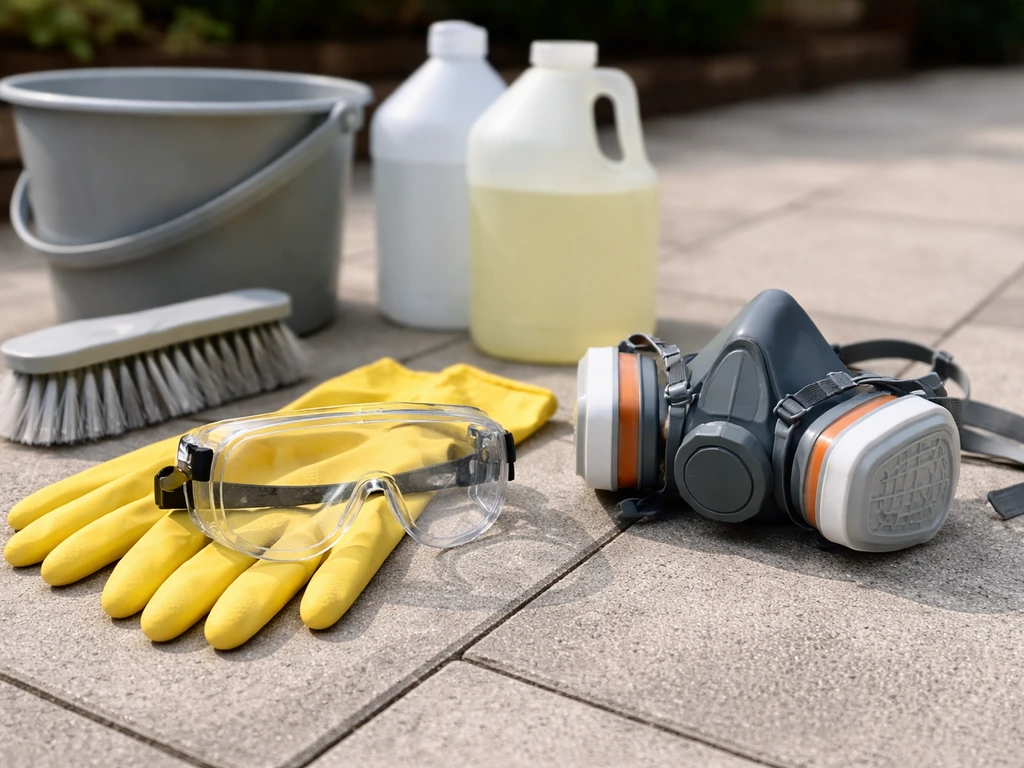
Whether you're curing new concrete or cleaning an old patio, a few prep steps protect you and the surrounding area. Skipping these is how you end up bleaching your garden or burning your hands.
- Wear rubber gloves, eye protection, and old clothes. If you're using muriatic acid, add a respirator mask and long sleeves.
- Wet down any grass, plants, or garden beds bordering the patio before applying any chemical cleaner. This dilutes runoff and reduces absorption.
- Move furniture, planters, and any metal objects off the patio completely. Metal left on a wet acid treatment will stain the concrete.
- Sweep the surface first to remove loose debris, leaves, and dirt. Cleaning over dry debris wastes product and reduces contact.
- Check the weather. Don't apply curing compounds or sealers if rain is coming within 24 hours or if temps are below 50°F (10°C).
- If you're pressure washing, make sure nearby doors and windows are closed.
How to cure freshly poured concrete the right way
The single biggest mistake with new concrete is letting it dry out too fast. That near-surface zone is especially vulnerable in the first hours after pouring, and wind, sun, or low humidity can pull out moisture before hydration finishes. The goal is to keep that moisture in for long enough to let the concrete reach adequate strength.
Timing: when to start curing
Curing should begin as soon as the surface finishing is complete and the concrete can support the curing material without damage. For a liquid curing compound (the most practical option for a DIY patio pour), QUIKRETE's acrylic sealer/curing compound specifies applying it within a 4 to 6 hour window after finishing. Don't wait until the next day. Once that surface starts drying out, you've already lost moisture you can't get back.
Steps for curing with a liquid curing compound
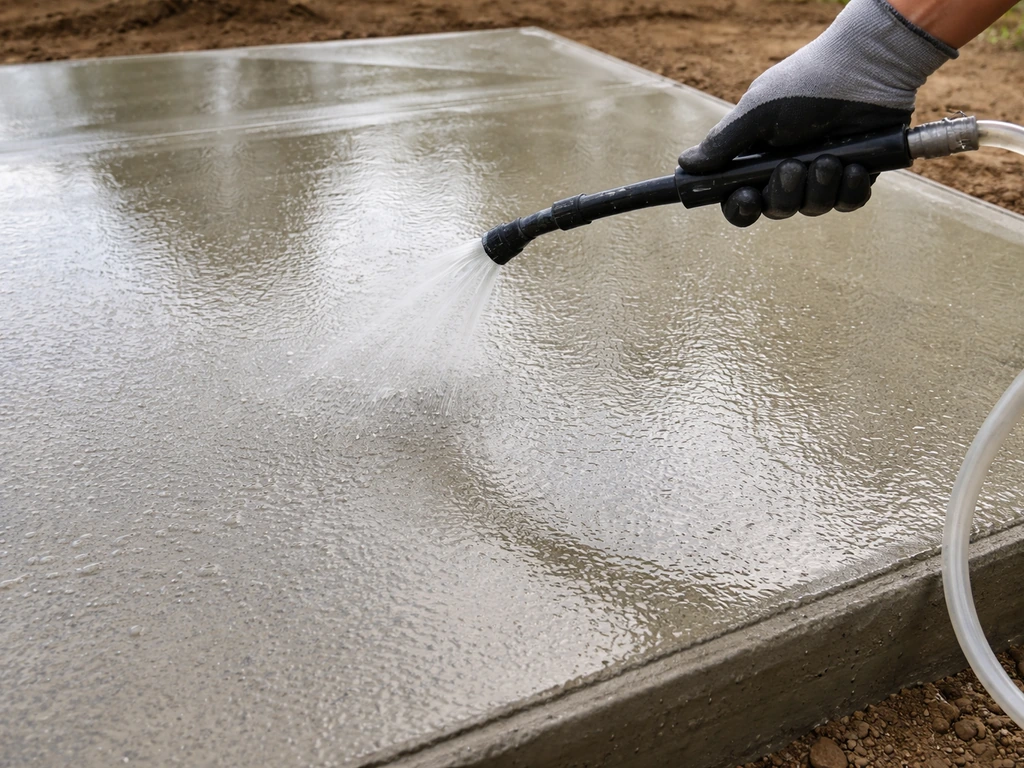
- Finish the concrete surface as normal (screeding, floating, troweling).
- As soon as bleed water disappears and the surface can hold foot pressure, apply the curing compound. QUIKRETE's coverage is around 200 sq ft per gallon, so calculate your area first.
- Apply in a thin, even coat using a pump sprayer, roller, or brush. Avoid puddles, especially on textured surfaces.
- Do not thin the product with water or solvents. Use it at full strength.
- Protect the surface from foot traffic and rain for at least 24 hours after application.
- The curing membrane will begin to break down naturally. Dayton Superior's data shows ASTM C309 compounds typically dissipate within 7 to 10 days, which is normal.
- Wait a full 28 days before sealing. This is CEMSTONE's minimum recommendation, and it's backed by ACI standards. Sealing before the concrete has fully cured traps moisture and causes problems.
Wet curing as an alternative
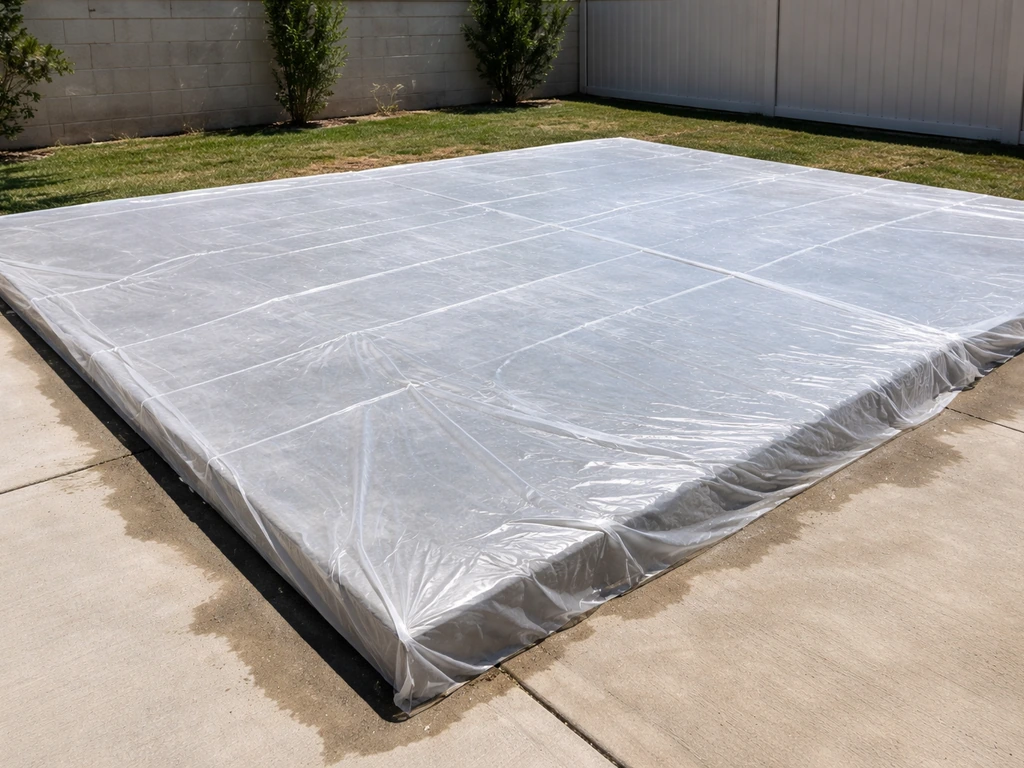
If you don't have a curing compound on hand, wet curing works well. Lay wet burlap, canvas, or plastic sheeting over the slab and keep it continuously moist for at least 7 days. This is more labor-intensive but very effective. The plastic traps moisture without adding any chemicals, which is useful if you're in an area where you can't apply product right away.
Cleaning and refreshing an existing concrete patio
For a patio that's already set and just looks bad, the core decision is whether to pressure wash, hand scrub, or both. I've found that for most residential patios, a combination works best: pressure washing for the general surface and hand scrubbing for stubborn spots and edges.
Pressure washing: how to do it without damaging the surface
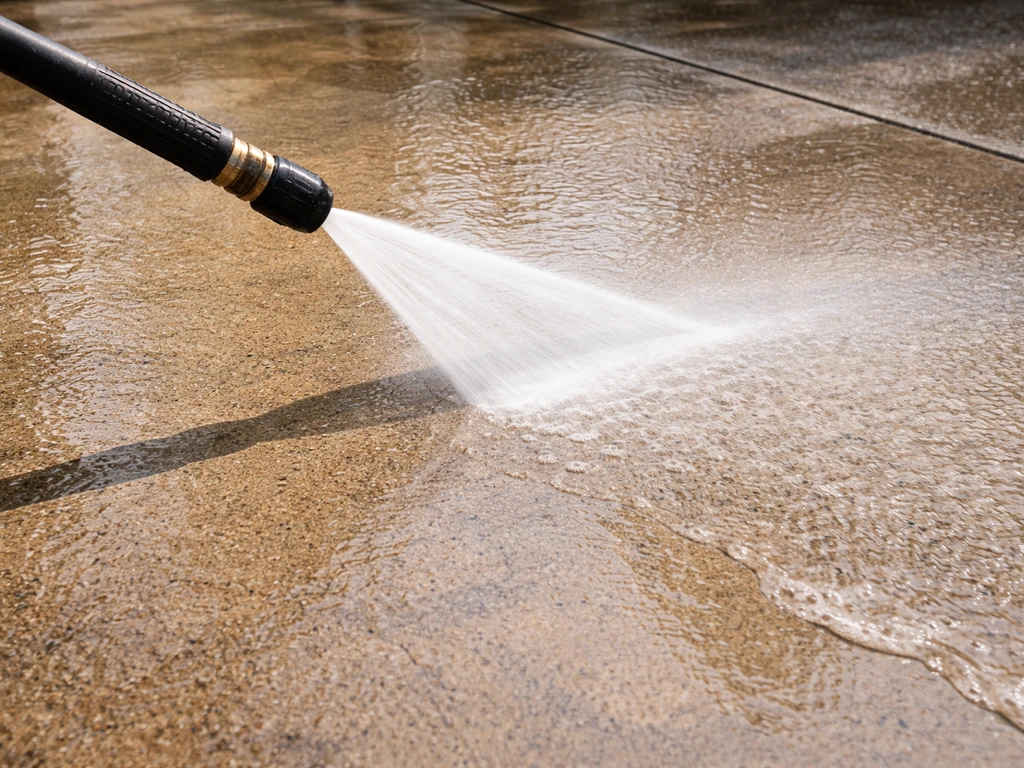
Concrete is tougher than pavers or flagstone, but it's not indestructible. The right PSI for residential concrete cleaning is around 3,000 to 3,500 PSI. Never use a 0-degree (red tip) nozzle on a patio. That pinpoint force will etch and scar the surface. Use a 15 to 20 degree yellow tip for stubborn stains, or a 25 to 40 degree tip for general cleaning.
- Sweep the surface to remove loose debris.
- Pre-wet the concrete with plain water.
- If using a concrete cleaner or degreaser, apply it now and let it dwell for 5 to 10 minutes before washing.
- Keep the nozzle 8 to 12 inches from the surface. Use sweeping, overlapping passes rather than holding in one spot.
- A surface cleaner attachment distributes pressure more evenly and reduces the risk of streaking or etching. Worth renting if you don't own one.
- Rinse from the far end toward a drain or lawn edge so dirty water flows off the patio.
- Allow the surface to dry for at least 24 hours before applying any sealer.
Manual scrubbing: for renters and budget-conscious readers
You don't need a pressure washer to get a concrete patio clean. If you are dealing with fine surface grime, you may also want to read how to get rid of concrete dust on patio as a related option for reducing that powdery residue after cleaning concrete patio. A stiff-bristle deck brush, a garden hose, and the right cleaning solution will handle most problems. It takes longer, but it's gentler, costs less, and is easier to control when you're working near plants or painted surfaces. For each method in the stain section below, the manual approach is just: apply the cleaner, let it dwell, scrub firmly in circular motions, and rinse thoroughly.
Targeted fixes for common concrete stains and problems
Mold and mildew
Mold and mildew on concrete show up as dark grey, black, or greenish fuzzy patches, usually in shaded or damp areas. blank" rel="noopener noreferrer">Bleach is the most effective treatment. blank" rel="noopener noreferrer">The CDC recommends starting with 1 cup of household bleach per 1 gallon of water for cleaning visible mold. Apply the solution, let it sit for 10 to 15 minutes, scrub with a stiff brush, and rinse thoroughly. If you have pets or kids using the patio, this takes longer but a white vinegar solution (undiluted or mixed 1:1 with water) is safer and still kills surface mold, though it may need more scrubbing and a second application.
Algae and green growth
Green or brown slippery film on concrete is usually algae. It responds well to the same bleach solution used for mold. Sodium hypochlorite products (look for patio or deck cleaners with sodium hypochlorite as the active ingredient) are particularly effective for large algae patches and work faster than straight household bleach. Dilute per the product label, apply, let it dwell for 10 minutes, and rinse. For organic growth, I've found pressure washing alone pushes it around more than kills it. Use the chemical first, then rinse.
Rust stains
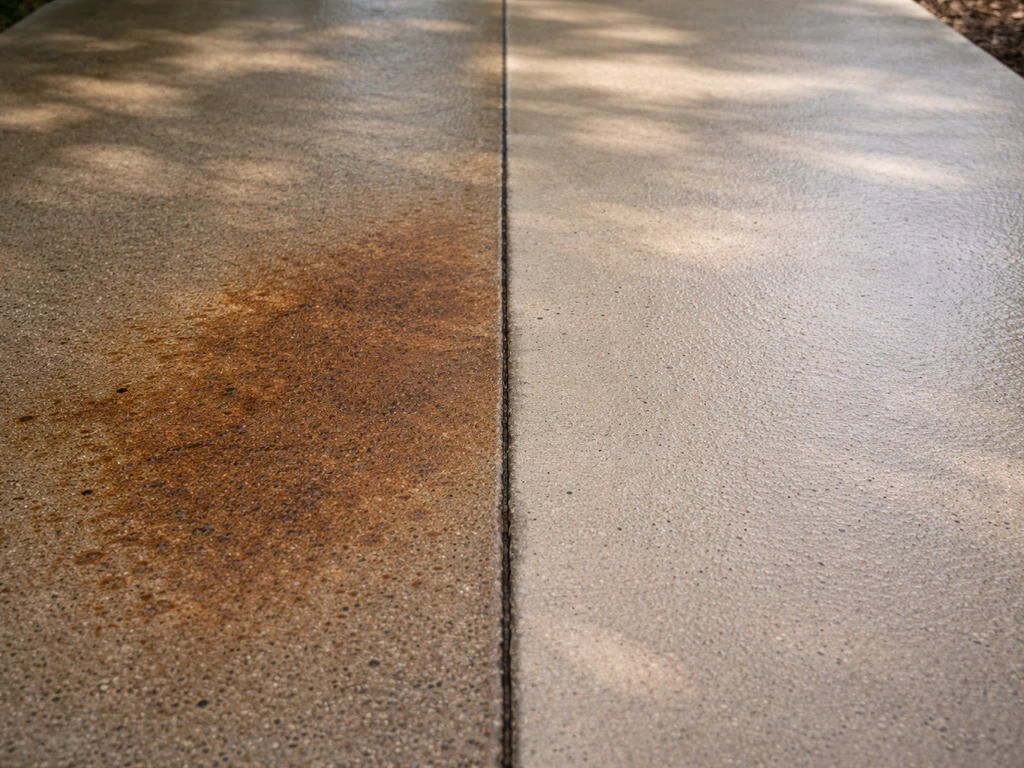
Rust stains come from metal furniture legs, planters, or rebar showing through the surface. Bleach won't touch rust. You need an oxalic acid-based rust remover (sold as concrete or deck stain remover at hardware stores). Apply it directly to the stain, let it sit for 5 to 10 minutes, scrub, and rinse. For older or deeper rust stains, you may need a second application. Don't leave metal objects sitting on the patio once you've cleaned it, or the stains will come straight back.
Grease and oil stains
Grease and oil are stubborn on porous concrete because they soak in quickly. Start by absorbing as much as possible with cat litter, baking soda, or cornstarch. Let it sit for several hours, then sweep it off. Next, apply a degreaser or dish soap directly to the stain, work it in with a stiff brush, and let it sit for 10 to 15 minutes. Hot water helps break down the oil. Rinse and repeat if necessary. For old set-in stains, a commercial concrete degreaser or a poultice method (mixing a solvent with an absorbent powder like diatomaceous earth, applying it, and covering overnight) tends to pull more out of the concrete.
Efflorescence
Efflorescence is that chalky white powder or crusty white residue that forms on concrete surfaces when water pulls soluble salts up through the slab. It looks like someone dusted the concrete with chalk. It's not a structural problem, but it looks bad and will return if the source of moisture isn't addressed. For light efflorescence, try a stiff dry brush first.
If that doesn't clear it, a diluted white vinegar solution (1:1 with water) will dissolve mild deposits. For heavier crusty buildup, muriatic acid is the most effective solution. Start with a 1:20 dilution (about 5% acid) as a test on a small area. For thicker deposits, a 1:10 dilution (about 10%) works faster but requires very careful handling.
Apply, let it contact the deposit for no more than 2 to 3 minutes, scrub, and neutralize (see the finishing steps section below).
Choosing the right cleaner: vinegar vs bleach vs muriatic acid
| Cleaner | Best for | Dilution | Dwell time | Caveats |
|---|---|---|---|---|
| White vinegar | Light mold, mild efflorescence, general grime | Undiluted or 1:1 with water | 10 to 20 minutes | Safer for pets and plants; slower acting; may need repeat applications |
| Household bleach | Mold, mildew, algae, organic staining | 1 cup per 1 gallon water (approx 5 tbsp per gallon also cited by CDC) | 10 to 15 minutes | Rinse plants before and after; don't mix with other cleaners; ventilate well |
| Sodium hypochlorite (patio cleaner) | Heavy organic growth, algae, large area mold | Per product label (typically 1:10 to 1:20) | 5 to 15 minutes | More concentrated than household bleach; wear gloves and eye protection |
| Muriatic acid | Heavy efflorescence, mineral deposits, stained masonry | 1:20 for light deposits; 1:10 for heavier buildup | 2 to 3 minutes maximum | Requires respirator, full PPE; must neutralize after; never use undiluted on a patio; patch test first |
My general recommendation: start with the gentlest option that's likely to work for your specific stain type. Vinegar is the go-to for anything mild when you have pets or nearby plants. Bleach handles most organic growth problems. Muriatic acid is genuinely effective for efflorescence and mineral scale, but it's the last resort because of the safety requirements and the need to neutralize the surface afterward.
Rinsing, neutralizing, drying, and what to do next
After bleach or vinegar
Rinse the entire surface thoroughly with a garden hose or pressure washer on a wide fan setting. Direct runoff away from garden beds or neutralize it by watering down any plants that may have been splashed. Let the concrete dry completely before evaluating results or moving on to sealing.
After muriatic acid: neutralizing is not optional
After using any acid treatment, you must neutralize the surface before rinsing. Mix about 1 cup of baking soda per gallon of water and apply it over the treated area. You'll see it fizz where there's remaining acid. Let it sit for a few minutes, then rinse thoroughly with plenty of water. Skipping this step can leave acid residue that damages sealers, harms plants over time, and continues to slowly etch the surface.
Drying time before sealing
This is where people rush and regret it. After pressure washing or wet cleaning, let the concrete dry for a minimum of 24 hours before applying any sealer. Euclid Chemical's guidance for their water-based sealer specifically calls out a 24-hour dry window after washing. Northeast Decorative Concrete notes that even 24 to 48 hours may not be enough if the concrete feels cold or damp to the touch. Trapped moisture under a sealer causes whitening, peeling, and adhesion failure.
Applying a sealer to finish the job
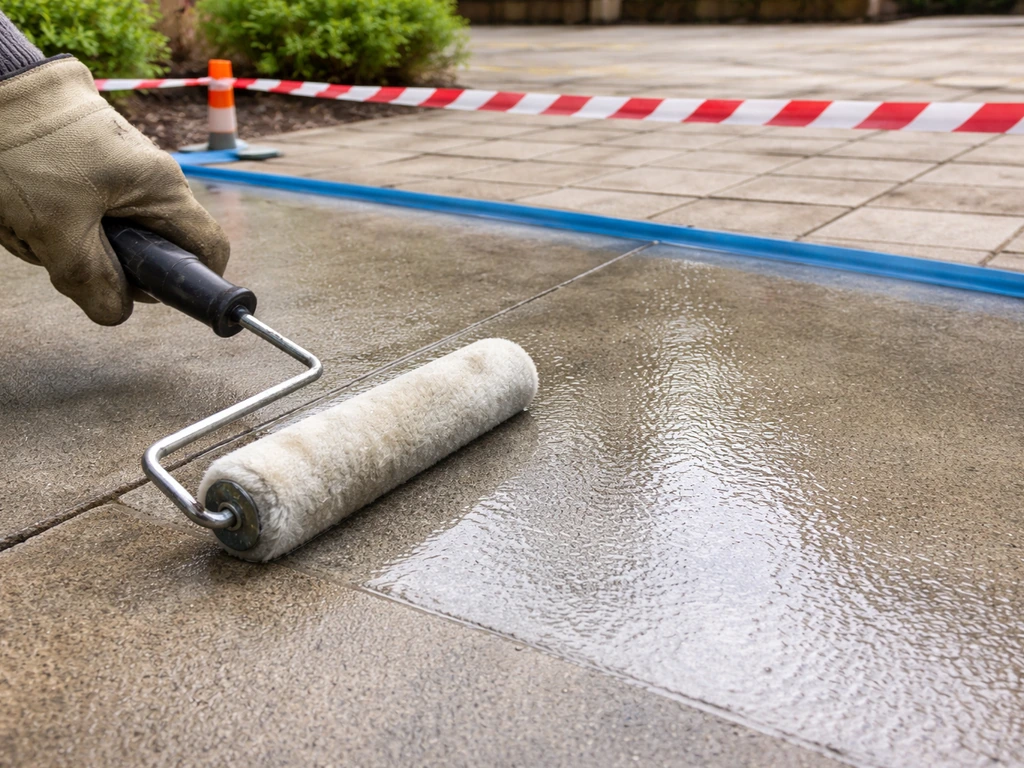
Sealing after cleaning is the most effective way to keep your patio looking good and reduce how often you need to deep clean it. It protects against moisture intrusion (which causes efflorescence), makes stains easier to wipe off, and slows organic growth. Sealing is one of the best ways to protect a concrete patio from moisture and stains protect concrete patio. Apply sealer at full strength with a brush, roller, or mop style applicator per the product instructions. QUIKRETE specifically cautions against thinning sealer with water or solvents. Don't apply if rain is expected within 24 hours or if temperatures are below 50°F (10°C).
After sealing, keep foot traffic off the surface for at least 24 hours. The ASCC recommends waiting even longer before parking a vehicle or placing heavy furniture. If you just poured and cured fresh concrete, remember the 28-day minimum before sealing applies here too.
Preventing the same problems from coming back
The stains and growth that come back fastest are almost always tied to drainage and moisture. Check that your patio has adequate slope away from the house so water doesn't pool. Trim back any plants or trees that create constant shade, since shaded damp surfaces grow mold and algae far faster. Reapply sealer every 1 to 3 years depending on traffic and exposure. Regular sweeping and a quick rinse every few weeks takes only minutes and prevents the kind of buildup that requires a full treatment job later. Keeping up with maintenance is a lot easier than starting over from scratch, and it's worth looking into a regular maintenance routine to protect the work you've just put in.
FAQ
Can I clean and seal my concrete patio in the same day?
Yes, you usually can, but the sequence matters. Clean and fully rinse first, then let the slab dry completely (commonly at least 24 hours after washing, longer if it feels cool or damp). If you are treating mold or algae with bleach or another cleaner, neutralize when acids were used, and always rinse thoroughly before sealing so you do not lock residue under the sealer.
How do I know when my concrete patio is truly dry enough to seal after cleaning?
Do not seal over standing water, wet stains, or visible curing residue. If the concrete is still darkened from moisture, feels cool to the touch, or you can see droplets after a quick spray test, it is not dry enough yet. Wait until the surface is consistently dry all the way through, not just on top.
Is it safe to mix cleaners (bleach, vinegar, acid) when treating a concrete patio?
When you use bleach for mold or algae, do not mix it with vinegar, acids, or other cleaners. The safest approach is one product at a time, and a full rinse between steps if you change methods (for example, bleach first for growth, then another treatment like rust remover on specific spots).
What’s the best way to treat rust stains on concrete without making the whole patio look worse?
Rust removal is typically spot work. After you treat rust with an oxalic acid-based product, rinse the whole area you worked, then allow the patio to dry before you reassess other stains. Do not expect bleach to help rust, and do not seal until you have removed as much rust staining as possible.
How should my approach change if the patio is already sealed?
For concrete that is already sealed, many cleaners will still work for growth and grime, but stain removers and acids may not penetrate the same way. Do a small test on a hidden spot. If water beads strongly, that usually indicates an existing film, and you may need to use a chemistry that is compatible with sealed surfaces or consider mechanical prep before re-sealing.
Can I seal a new concrete patio earlier than 28 days if I use curing compound?
Yes, but treat it as a separate risk. You can apply sealer only after the concrete is fully cured, which is usually 28 days for new pours. If you rushed sealing earlier, trapped moisture can cause whitening or peeling, even if the patio looks dry.
What should I watch for when pressure washing concrete to avoid permanent damage?
Pressure washers can be effective, but keep the nozzle at a safe distance and avoid scoring. Use a wide fan and avoid the narrow red-tip style stream. If you see pitting, surface etching, or exposed aggregate after cleaning, stop and switch to hand-scrub for that area.
Why does my patio look dirtier after I rinse off algae or mold?
For slippery algae film, start with chemical treatment first, then rinse. If you pressure wash immediately, you can spread the algae into cleaner areas and make the patio look worse for a while. Apply the cleaner, let it dwell per instructions, scrub if needed, and then rinse.
If mold or efflorescence keeps coming back, what should I fix first?
Often the source is moisture movement, not the stain itself. Look for poor slope away from the house, clogged downspouts, or sprinklers spraying the slab. If the patio gets repeatedly wet in the same spots, you will likely need to correct drainage first, then clean and re-seal.
Can I treat only part of the patio (spot clean, spot seal) instead of the whole surface?
Spot repair is usually possible, but you still need correct prep for patch areas. Remove loose material, clean the patch thoroughly, and let it cure properly before any coating or sealer. Blotchy color after sealing is common when the old concrete and patch don’t have the same age and porosity.
Next Articles
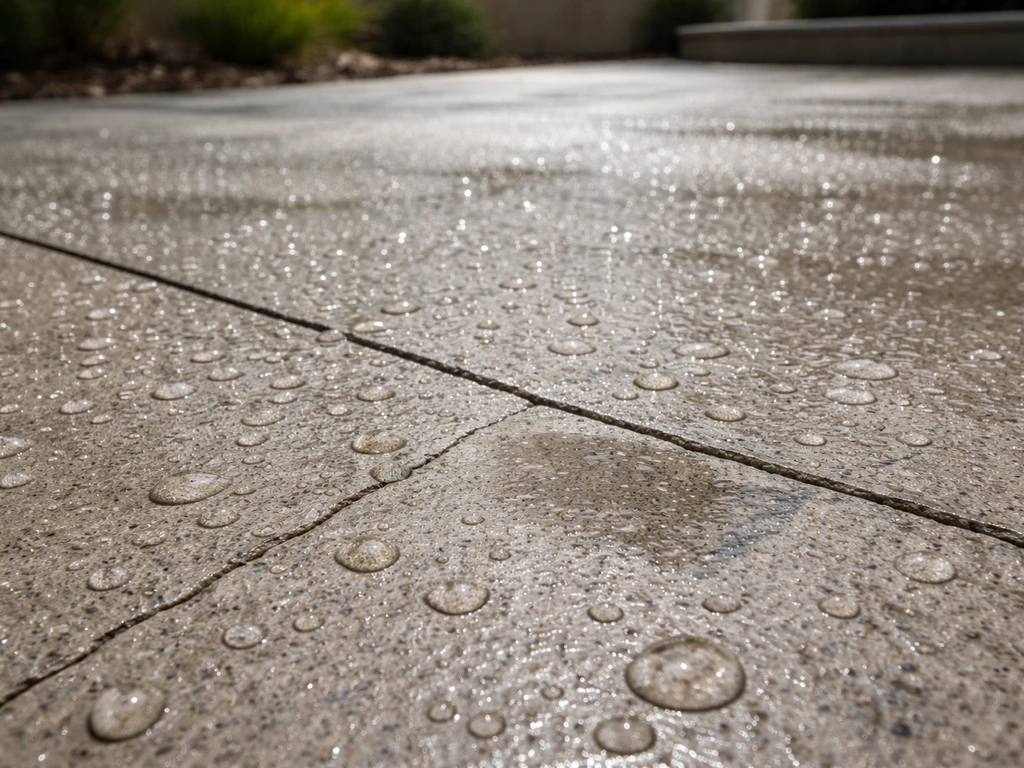
How to Protect a Concrete Patio From Water, Cracks, and Stains
Step-by-step concrete patio protection from water, freeze-thaw cracks, mold, rust, grease, and stains using safe cleanin
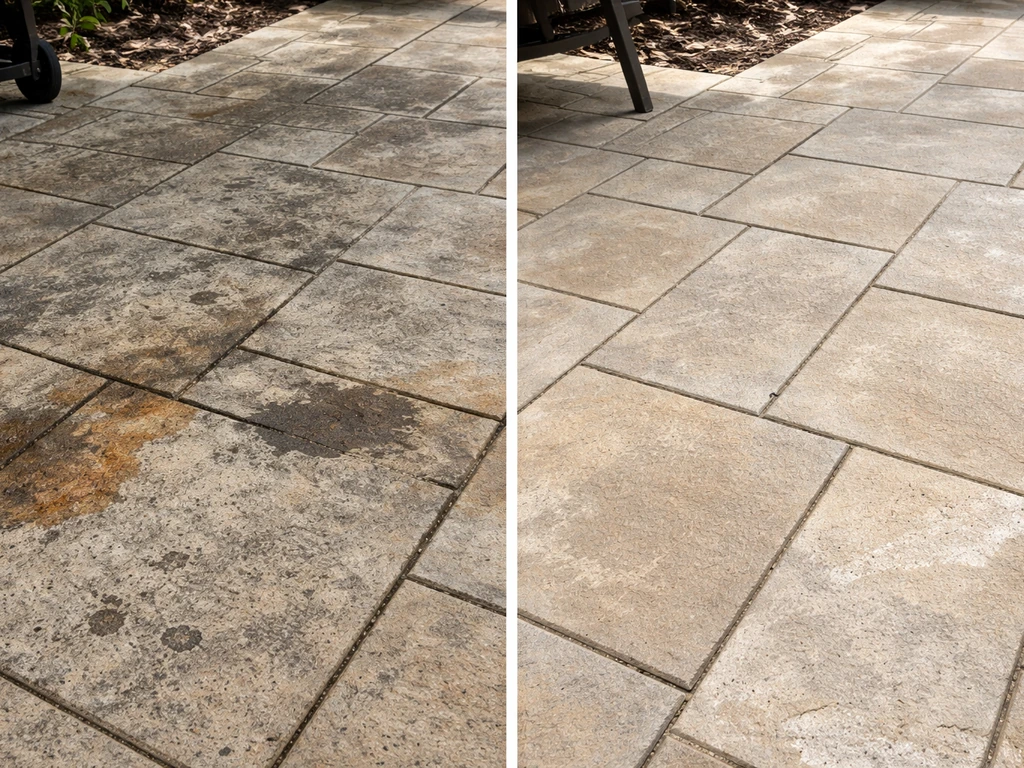
How to Maintain a Patio: Clean, Seal, and Prevent Stains
Identify patio material, remove mold rust grease stains, deep clean, and choose the right seal to prevent future damage.
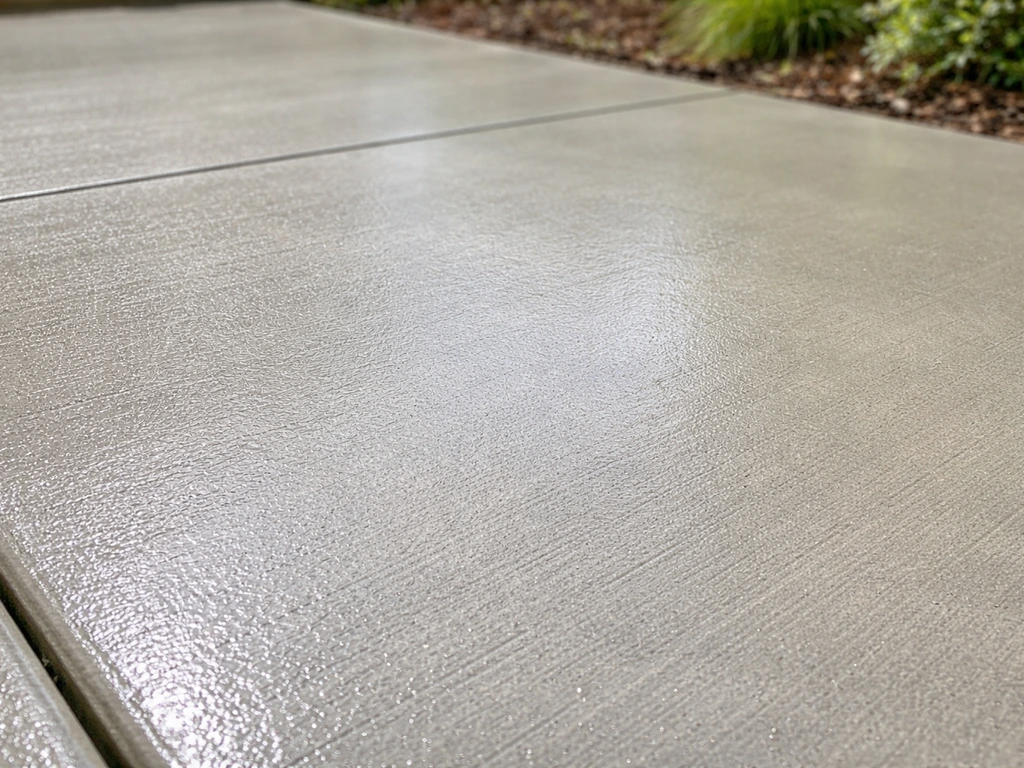
How to Maintain a Concrete Patio: Clean, Seal, Protect
Step-by-step how to maintain concrete patio: clean stains, avoid damage, seal correctly, and follow seasonal care checkl