You can remove paint from patio tiles using a combination of mechanical scraping, the right chemical remover for your paint type, and a thorough rinse. Fresh spills come off in minutes with warm soapy water and a stiff brush. Cured paint takes more effort: a citrus-based or caustic paint stripper, dwell time of 20 to 40 minutes, and a scraper or pressure washer will handle most situations. This Old House, How to remove paint from concrete (procedural guidance, test patches, stripper selection) provides practical, tested workflows and product comparisons for fresh versus cured paint and for choosing strippers and dwell times This Old House — How to remove paint from concrete (procedural guidance, test patches, stripper selection). The single biggest variable is what the tile is made of. Concrete and brick tolerate aggressive methods; travertine and flagstone do not. Get that identification right first, and the rest of the process follows logically.
How to Remove Paint from Patio Tiles: Step-by-Step Guide
What this guide covers and who it's for
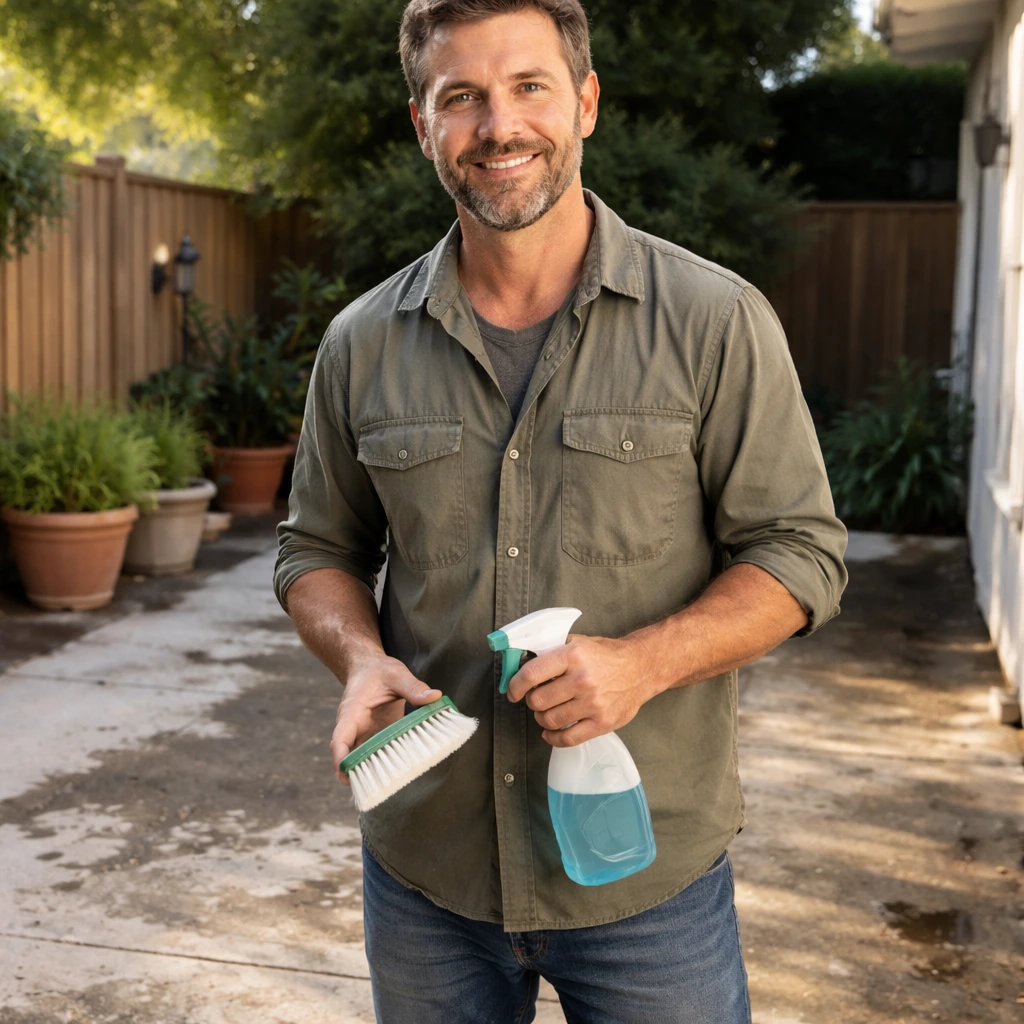
This guide is for homeowners and renters who have paint on outdoor patio tiles and need it gone without destroying the surface underneath. It covers every common scenario: a dripped latex splash from a weekend painting project, a cured oil-based spill that's been sitting for months, masonry paint applied to the wrong area, or a chalk mark you're not sure will actually wash off. I've structured it to work whether you own a pressure washer or just have a bucket and a scrubbing brush. I'll also flag the moments where calling a professional is the genuinely smarter call.
The techniques here apply to concrete tiles, brick, concrete pavers, travertine, flagstone, and other common hardscape materials. Where the method differs meaningfully by material, I've called that out directly rather than burying it in a footnote. If you're dealing specifically with masonry paint, paint on pavers, or paint on natural stone, this guide touches all three, and there are dedicated deep-dives on each of those topics worth reading alongside this one.
Before you start: quick decision checklist
Answering four questions before you open a single product will save you from damaging your tiles or wasting an afternoon on the wrong method.
- What type of paint is it? Latex (water-based), oil-based/alkyd, masonry paint, or chalk/washable mark. Each needs a different remover.
- What material is the tile or hardscape? Concrete, brick, sealed pavers, travertine, flagstone, or another natural stone. Porosity and acid sensitivity change everything.
- How large is the spill? A drip the size of a dinner plate is a spot job. An area over roughly 4 to 5 square feet is a zone treatment and takes longer.
- Are you a renter? If so, avoid anything irreversible. Stick to methods that cannot permanently alter the surface, and get written confirmation from your landlord before using any chemical stripper.
There is one more question worth asking if your patio is attached to a building constructed before 1978: could the paint contain lead? The U.S. EPA requires that work disturbing more than 20 square feet of exterior painted surface on a pre-1978 structure be carried out by EPA-certified lead-safe renovators. For a DIY homeowner, buy an EPA-recognized lead test kit before you scrape or sand anything, or send a paint chip to an NLLAP-accredited lab. EPA guidance advises homeowners to use EPA‑recognized lead test kits only as specified or to send paint samples to an NLLAP‑accredited laboratory, and to treat paint on pre‑1978 buildings as lead until tested. If there is any doubt, treat the paint as lead-containing until proven otherwise.
How to identify the paint: latex, oil-based, masonry paint, or chalk
Knowing your paint type is not guesswork. There is a simple sequential solvent test I use every time I'm unsure. Dampen a clean white rag with denatured alcohol (rubbing alcohol works for a quick check) and rub it firmly over the paint. If colour transfers to the rag, the paint is water-based or latex. If nothing transfers, wet a second rag with mineral spirits and repeat. Colour transfer this time points to an oil-based or alkyd paint. If neither solvent shifts the paint, you are likely dealing with a mineral-based masonry coating or a cured two-part epoxy, both of which require either a dedicated masonry paint remover or mechanical methods. Always confirm against the original paint can label or manufacturer TDS if you still have them.
| Paint Type | Field Test Result | Best Removal Approach |
|---|---|---|
| Latex / water-based | Transfers to rag with denatured alcohol | Warm water, detergent, scrubbing; citrus stripper for cured paint |
| Oil-based / alkyd | Transfers with mineral spirits only | Mineral spirits or caustic stripper; longer dwell time needed |
| Masonry paint / mineral coating | Neither solvent moves it | Dedicated masonry paint remover or mechanical scraping |
| Chalk / washable marks | Smears with plain water | Water and stiff brush; usually no chemicals needed |
Chalk and washable paint deserve a special mention here because they look like paint but behave completely differently. A garden hose and a stiff deck brush will typically remove chalk within minutes. If you are unsure whether you are dealing with chalk or a genuine paint, wet a small corner with plain water and scrub. Chalk will dissolve almost immediately. Actual latex paint will soften slightly but will not disappear under plain water alone. There is a separate detailed look at chalk marks on patios that covers this exact scenario if you want to go deeper. For a quick check on whether chalk will wash off your patio, see does chalk wash off patio.
Assessing your tile material and porosity
The tile material determines how aggressive you can afford to be. Pour a small amount of water onto the surface. If it absorbs within 30 seconds, the tile is porous and unsealed. If it beads up, you have a sealed or low-absorption surface. Porous tiles absorb paint deeper into the substrate, making removal harder, but they also tolerate alkaline cleaners better than acid-sensitive stones do.
Concrete tiles and brick
Concrete and brick are the most forgiving materials to work with. They tolerate scraping, wire brushing, and chemical strippers without permanent surface damage in most cases. Muriatic acid (diluted 1 part acid to 10 parts water) can remove some stubborn residues from concrete, but always wet the surface first, work in short contact times under 5 minutes, and neutralise immediately with a baking soda solution. Do not use muriatic acid on any tile that might be calcareous (limestone-based), and never use it on travertine.
Concrete pavers
Concrete pavers vary more than most people realise. Dense pavers used in driveways behave like concrete; permeable/porous interlocking pavers used in patios are designed to allow water through and may have polymeric sand in the joints that can be dislodged by high pressure or caustic chemicals. Avoid pressure washing permeable pavers above around 1,500 PSI, and be cautious with any product that dwells in the joints for longer than 10 minutes. For step-by-step instructions on how to get paint off patio pavers, see the dedicated guide. Dedicated coverage on paint removal from pavers explores these nuances further.
Travertine and natural stone (flagstone, limestone, sandstone)
Travertine and limestone are calcium carbonate-rich stones and will etch instantly on contact with acid. That means no muriatic acid, no vinegar, and no acidic tile cleaners of any kind. Even mild acids will dissolve the surface and leave a dull, rough patch that cannot be buffed out without professional restoration. Flagstone and sandstone can be similarly sensitive depending on their mineral composition. The Natural Stone Institute's care guidance is consistent on this: test any cleaner on a hidden area, use only pH-neutral or mildly alkaline products, and consult a stone-care specialist for anything beyond a small spot. For a step-by-step walkthrough specific to stone surfaces, see our guide on how to get paint off stone patio (c35f18de-be07-43a4-aab7-10ae7bf5cd47).
| Material | Porosity | Acid Safe? | High-Pressure Safe? | Notes |
|---|---|---|---|---|
| Concrete tiles | Medium to high if unsealed | Yes (diluted, with care) | Yes, 2,000–3,000 PSI | Seal after treatment |
| Brick | Medium | Yes (diluted, rinse fast) | Yes, 1,500–2,500 PSI | Old soft brick: use lower pressure |
| Concrete pavers | Low to medium | Yes (diluted) | Yes, up to 1,500 PSI on permeable types | Protect polymeric sand joints |
| Travertine | High (unfilled), Low (filled) | No — will etch | No, 800–1,000 PSI maximum | pH-neutral products only |
| Flagstone / limestone | Medium to high | No — will etch | Low, test first | Stone-specific cleaners only |
| Sealed tiles (any material) | Very low | Check sealer type first | Yes, with care | Strippers may lift sealer |
Safety and environmental precautions
I always do this step before I open a single product. Chemical paint removers and pressure washing create hazards that are easy to underestimate when you're impatient to get started.
Personal protective equipment (PPE)
- Chemical-resistant gloves (nitrile for most strippers; heavy rubber for caustic or acid products)
- Safety glasses or goggles, not just sunglasses
- Long sleeves and long trousers; avoid synthetic fabrics that can melt with solvent contact
- A P100 respirator or at minimum an N95 mask when scraping dried paint or using solvent-based products outdoors
- Closed-toe shoes, especially when using a pressure washer or muriatic acid
Note on methylene chloride: paint strippers containing dichloromethane (methylene chloride) were banned for consumer sale in the United States under an EPA final rule that took effect in 2019. If you find an old product at the back of a garage shelf, do not use it. Modern alternatives including citrus-based, NMP-based, and benzyl alcohol gels are effective and far safer for outdoor DIY use.
Protecting plants and controlling runoff
Wet down any plants, grass, or garden beds bordering the patio with plain water before you start. This dilutes any chemical splash that reaches them. Cover sensitive plants with plastic sheeting and weigh down the edges. After the job, rinse the patio with plenty of clean water and direct the runoff away from storm drains wherever possible. Chemical stripper residues and paint particles should be contained and disposed of according to your local hazardous waste rules, not poured down the drain. If you used bleach (sodium hypochlorite), neutralize the rinse water with a sodium thiosulfate dechlorinator solution before it enters any planting bed or watercourse.
Testing and spot-check procedure
Every chemical remover, and even pressure washing, should be tested on a hidden area before full treatment. This is not optional caution, it is the standard practice recommended by the National Park Service for masonry cleaning and by every stone and paver manufacturer I have seen guidance from. A test patch takes five minutes and can prevent permanent damage to a surface you spent money on.
- Choose a spot that is out of sight: under outdoor furniture, behind a planter, or at the far corner of the patio.
- Apply the chemical remover or run the pressure washer exactly as you plan to use it on the full area. Same concentration, same nozzle, same dwell time.
- Rinse thoroughly and allow the test patch to dry completely (at least 1 to 2 hours, preferably overnight for natural stone).
- Inspect the test area in good light for colour change, etching, surface roughness, discolouration, or joint disruption.
- If the test patch looks the same as the surrounding surface, proceed. If there is any change, switch to a gentler method and re-test.
Tools and supplies to have ready
You do not need professional equipment for most patio paint removal jobs. Here is what I keep on hand, broken down by category.
Manual tools
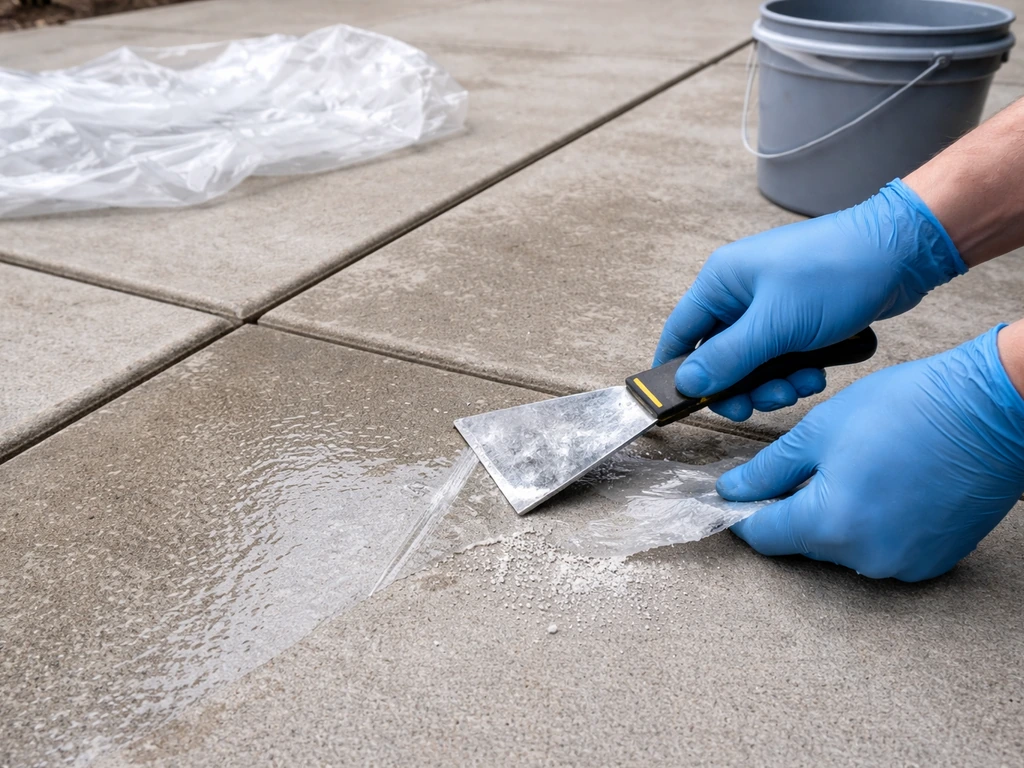
- Plastic paint scraper: safe on almost all tile surfaces and the first tool to reach for
- Metal scraper or 5-in-1 tool: for concrete and brick only; do not use metal scrapers on natural stone
- Stiff nylon brush or deck brush: general scrubbing, works well with detergent on fresh or semi-fresh paint
- Bronze wire brush: for textured concrete and brick; gentler than steel and less likely to leave metal marks
- Steel wire brush or rotary wire cup on a drill: for stubborn cured paint on concrete only; wear eye protection and a dust mask
- Painter's scraper pad / abrasive nylon pad: good for flat sealed tiles where you want light abrasion without scratching
Pressure washer guidance
A pressure washer speeds up removal significantly. Keep the nozzle 8 to 24 inches from the surface as Generac and Kärcher manuals both specify, and use a 25-degree (green) or 40-degree (white) fan nozzle for tile and pavers. The 0-degree (red) and 15-degree (yellow) nozzles can etch concrete and will damage natural stone and brick mortar joints. For most patio tile work, 1,500 to 2,500 PSI is sufficient. Travertine and soft stone: 800 to 1,000 PSI maximum, and even then, test first.
Chemicals and removers
| Product Type | Best For | Avoid On | Notes |
|---|---|---|---|
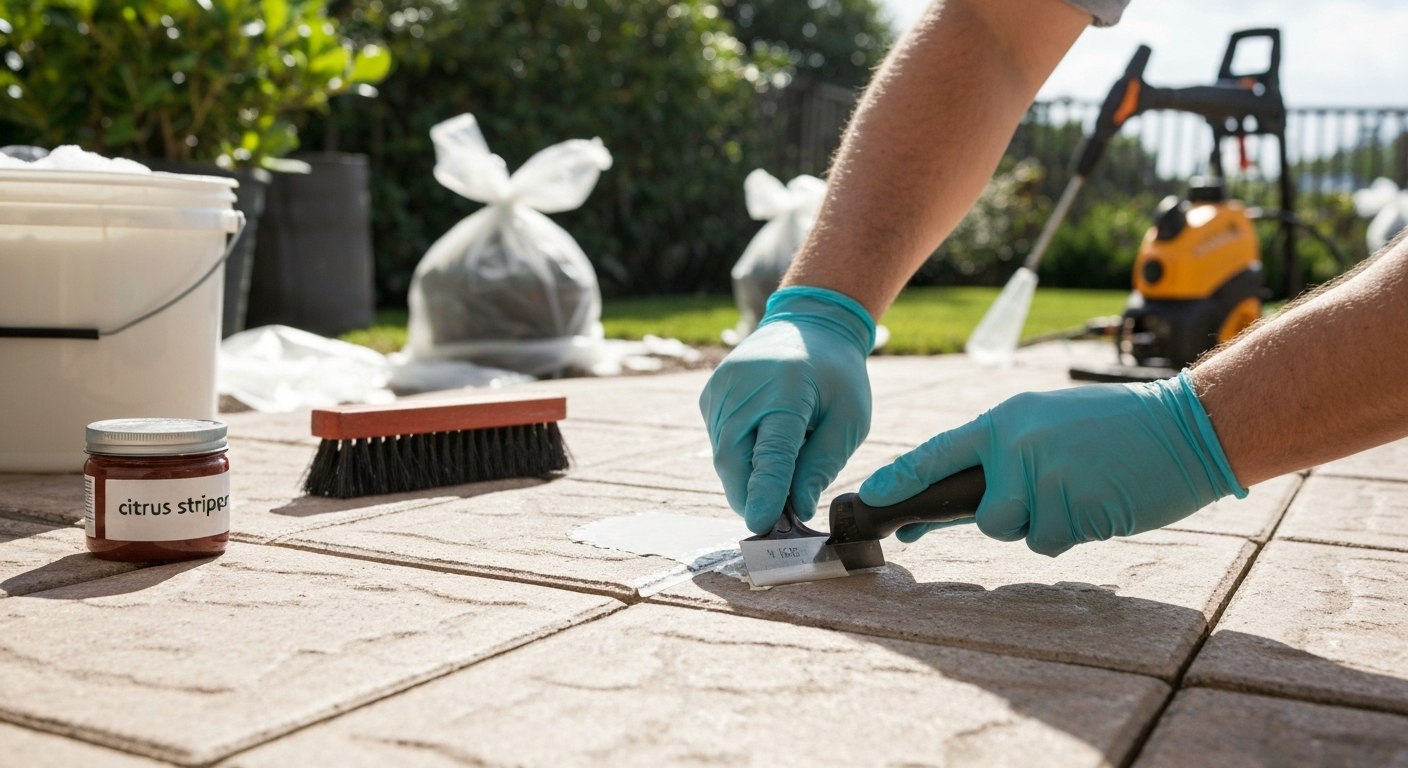
| Citrus/orange-based stripper (e.g., Citristrip) | Latex and oil-based paint on most surfaces | Filled travertine (may stain grout) | Low toxicity; slower acting; 30–60 min dwell |
| Caustic (NaOH/lye-based) gel stripper | Multiple layers of oil-based or latex paint on concrete | Natural stone, painted sealed tiles | Rinse thoroughly; neutralise with dilute acid wash on concrete |
| Mineral spirits | Softening fresh oil-based paint | Anywhere fire risk exists; do not pressure-wash while wet | Good for hand-wiping small spots |
| Denatured alcohol | Fresh latex paint removal | Any surface that is already stained or sensitive | Fast-evaporating; ventilate well |
| Sodium hypochlorite (bleach, 5–10%) | Mildew/organic staining alongside paint residue on concrete | Natural stone, coloured pavers (may bleach) | Use at 1:3 to 1:6 dilution; neutralise runoff |
| Muriatic acid (HCl, diluted 1:10) | Final cement/mortar smear removal on concrete | Travertine, limestone, brick with calcium mortar joints | Wet surface first; rinse immediately; neutralise with baking soda |
| pH-neutral stone cleaner | Paint residue on travertine and flagstone | N/A — safe for all stone | Paired with plastic scraper for best results |
| White vinegar | Light latex on non-calcareous surfaces only | Travertine, limestone, marble — will etch | Gentle; may need multiple applications |
Manual methods for fresh spills: act fast
Fresh paint is dramatically easier to remove than cured paint. If you catch a spill within the first 30 minutes, you can often get full removal with nothing more than a rag, warm water, and a stiff brush. I've found that the recovery rate drops sharply after about two hours for latex and even faster for oil-based paint on porous tiles, because the paint starts wicking into the surface as it dries.
- Blot immediately: use a dry cloth or paper towel to lift as much wet paint as possible. Do not rub side to side, as that spreads and presses paint further into the tile surface. Press, lift, discard the cloth, and repeat with a fresh section.
- Scrape the bulk: for thicker drips, use a plastic scraper held at a low angle to shave off the paint before it levels out. Work from the outside edges of the spill toward the centre.
- Detergent wash: add a squirt of dish soap or a capful of concentrated degreaser to a bucket of warm water. Scrub the affected area with a stiff nylon brush using circular motions. For latex paint, this alone is often enough on sealed or low-porosity tiles.
- Rinse and assess: rinse with clean water. If staining remains, move to a targeted solvent: denatured alcohol on a cloth for latex residue, mineral spirits on a cloth for oil-based residue. Work the cloth in small circles and check frequently.
- Repeat once more and rinse: a second pass with detergent after the solvent wipe usually removes the last traces. Rinse the area thoroughly with clean water.
For renters who cannot use chemical strippers without permission, this manual fresh-spill method is also your safest route. Warm water, dish soap, and a plastic scraper cause no surface damage and leave no residue that could affect a security deposit. If the paint has already cured before you can act, the next step is a test patch with a citrus-based stripper, which is the gentlest of the chemical options and appropriate to ask landlord approval for rather than something like muriatic acid.
FAQ
What primary research questions must be answered to write an accurate, safe, and practical how‑to on removing paint from patio tiles and surrounding hardscape?
Identify paint types (latex/water‑based, oil/alkyd, masonry coatings, chalk/washable) and reliable field tests to distinguish them; determine substrate characteristics (porosity, calcareous vs siliceous stone, filler/grout type) and damage risks for concrete, brick, pavers, travertine, flagstone; define separate workflows for fresh spills vs cured paint and for small spots vs large areas; evaluate mechanical, chemical, and eco‑friendly removal options and which match paint + substrate; establish safe pressure‑washing parameters and alternatives when equipment isn’t available; compile stepwise testing/spot‑check and test‑patch protocols; list PPE, runoff control, neutralization, disposal and plant protection measures; specify renter‑friendly, non‑destructive choices; create troubleshooting steps for persistent staining, ghosting and grout discoloration; define aftercare (neutralize, rinse, repair, reseal/stain‑match) and durable finish recommendations; and set clear referral criteria for when to call a professional or conservator (historic stone, suspected lead, large area or hazardous chemistries).
What authoritative source types are required to validate paint identification methods and stripper selection?
Manufacturer Technical Data Sheets (TDS) and Safety Data Sheets (SDS) for paints and strippers; paint manufacturer support pages; industry how‑to publications / trade mags (e.g., This Old House) for proven workflows; academic or industry research on solvent/enzyme efficacy for hard coatings; and product regulatory notices (e.g., EPA bans/restrictions such as methylene chloride). Include field solvent test guidance from reputable paint makers (Sherwin‑Williams, PPG) to justify simple on‑site solvent rub tests.
What sources are necessary to address lead paint risks and legal/regulatory obligations?
U.S. EPA guidance on lead testing and the RRP rule, EPA‑recognized lead test kit instructions, and NLLAP laboratory protocols. State/local building code or environmental agency documents where applicable. These determine when to treat paint as lead, when testing or certified lead‑safe practices are required, and referral thresholds for professionals.
Which references should be used to assess substrate sensitivity and select safe cleaning methods for natural stone and masonry?
Natural Stone Institute and stone care manufacturers (Laticrete/STONETECH) for calcareous stone care and porosity guidance; Portland Cement Association or PCA tech briefs for concrete and acidic cleaner warnings; National Park Service preservation cleaning guidance for historic/fragile masonry; and supplier instructions for specific paver/stone products. These sources support guidance on avoiding acids on travertine/limestone and on safe test‑patching.
What evidence is needed to recommend chemical removers, dilutions, dwell times, neutralizers, and PPE?
Product TDS and SDS for each stripper/cleaner to extract recommended dilutions, dwell times, temperature limits, incompatibilities and PPE; manufacturer application guides and case studies; EPA and OSHA guidance for chemical handling and PPE; and independent lab or university studies evaluating efficacy/toxicity of greener/enzymatic alternatives. Cite regulatory bans (e.g., methylene chloride) to limit recommendations to legal and safe products.
What technical guidance must be reviewed to give safe pressure‑washing and mechanical removal instructions?
Pressure washer manufacturer manuals (nozzle, safe standoff distances, PSI ranges), paver/stone supplier maintenance guides, FHWA/ICPI guidance on permeable and interlocking pavers, OSHA standards and tool manufacturer safety literature for grinders/brushes/abrasive wheels, and National Park Service or conservation recommendations for test‑patch soft‑washing on historic surfaces.
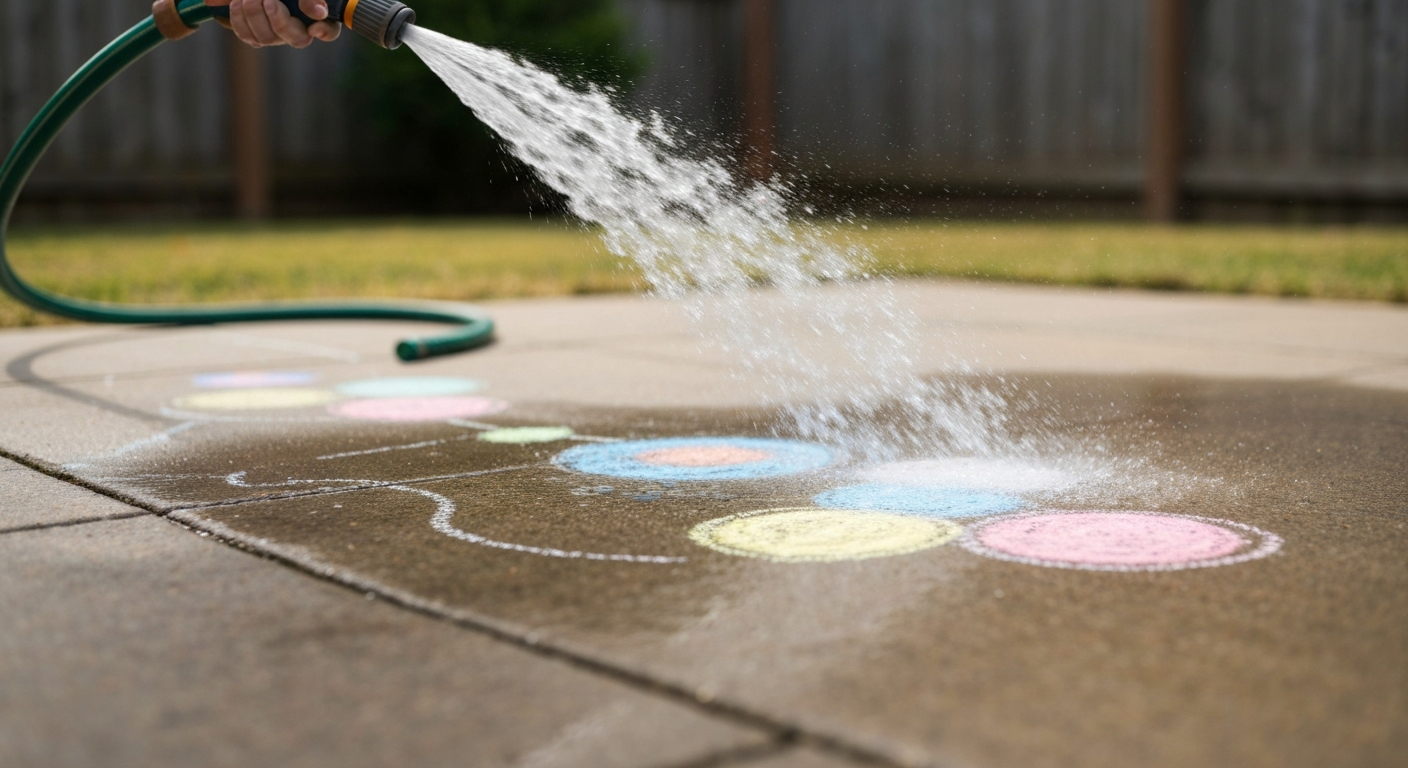
Does chalk wash off patio? Learn quick answers, material-specific cleaning steps, renter-safe and stronger options.
Step-by-step removal of Thompson’s patio sealer on concrete, brick, pavers, and stone, with safety, tests, and cleanup.
Learn if you can remove patio sealer and how to strip it safely by type, material, and method.