
The fastest way to get paint off a patio is to start with a plastic scraper for fresh spills or a stiff wire brush for dried paint, then bring in a chemical stripper if manual work isn't cutting it. Which product and how aggressive you need to be depends on two things: what your patio is made of and whether the paint is still wet or fully cured. Get those two answers first, and the rest of the process becomes pretty straightforward.
How to Get Paint Off Patio Slabs: Step by Step
Dylan Hale
10 Jun 2026
Step one: know your patio material and your paint type
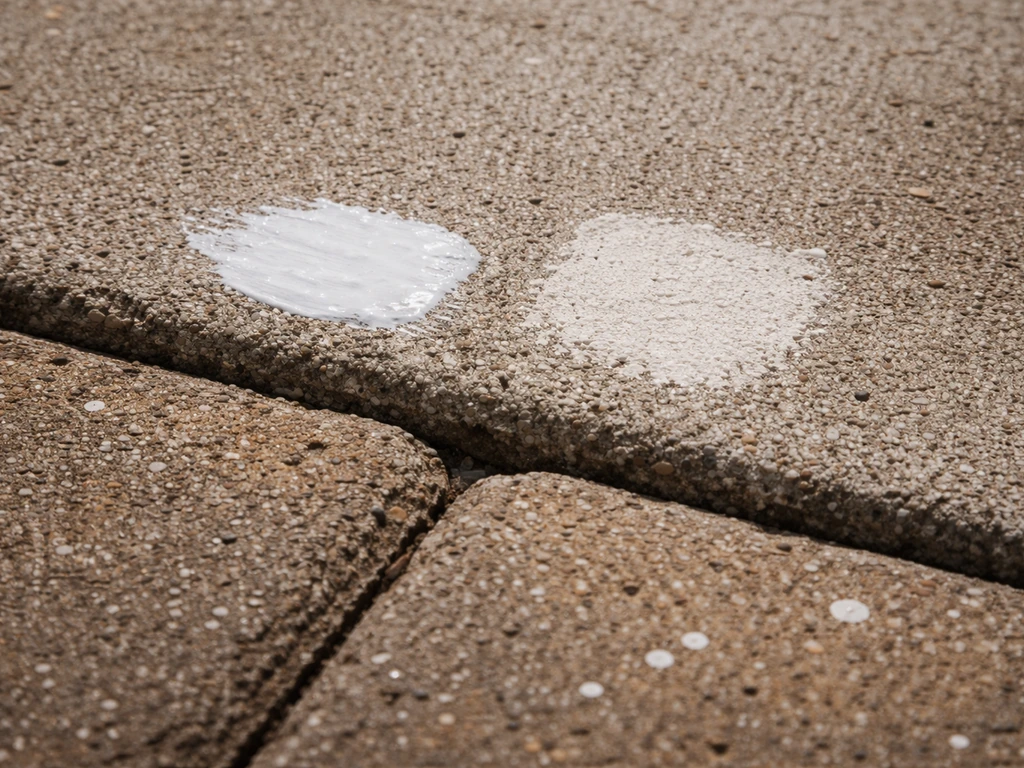
Before you touch anything, figure out what you're working with. Using the wrong stripper on the wrong surface can cause more damage than the paint itself, especially on natural stone.
For patio material, you're most likely dealing with one of these: concrete slabs, brick, natural stone (flagstone or sandstone), pavers (concrete or clay), travertine, or a mixed hardscape. Concrete and brick are the most forgiving and can handle stronger chemical treatments. Travertine and most natural stones are calcium-carbonate based, which means acids will etch them badly. Pavers sit somewhere in the middle depending on whether they're clay or concrete-based.
For paint type, the main split is latex (water-based) versus oil-based. Latex paint technically dries in hours but doesn't fully cure for 2 to 4 weeks. Oil-based paint takes up to 30 days to fully cure. Fresh, uncured paint is much easier to remove. If the paint has been sitting for months or years, you're dealing with a fully bonded coating and will need a proper stripper or extended dwell time.
- Latex/water-based paint: usually easier to remove, responds well to hot soapy water when fresh, needs a dedicated stripper when dried
- Oil-based paint: harder to budge once dried, typically needs a solvent-based or alkaline paint stripper
- Spray paint or primer: often penetrates porous surfaces faster; may need a poultice or gel-based remover to draw it out
- Multi-layer or heavy accumulation: expect multiple applications and more dwell time regardless of product
Quick safety prep before you start
Paint strippers are genuinely hazardous, and that's not just label-speak. The CPSC strongly advises against using any strippers containing methylene chloride (also called DCM), and the EPA has been moving to ban it in consumer products entirely because of how dangerous it is in low-ventilation conditions. Even the safer alternatives require real precautions. I'd rather spend five minutes gearing up than deal with chemical burns or fumes.
- Wear chemical-resistant gloves (nitrile or neoprene, not latex) and safety goggles
- Put on closed-toe shoes and old long-sleeved clothing; a Tyvek coverall is worth it if you're doing a large area
- Use an organic vapor respirator with an N95 particulate filter if working with solvent-based strippers
- Work in fresh air; if your patio is enclosed or under a covered structure, set up a fan to move air through
- Keep kids and pets off the area until the surface is fully rinsed and dry
- Check mortar joints on brick patios before you start: if any joints are cracked or open, repoint them first to stop chemicals from soaking into the masonry structure
- Cover nearby plants and drains with plastic sheeting; paint stripper runoff will harm both
Fresh paint vs. dried paint: start with manual scraping
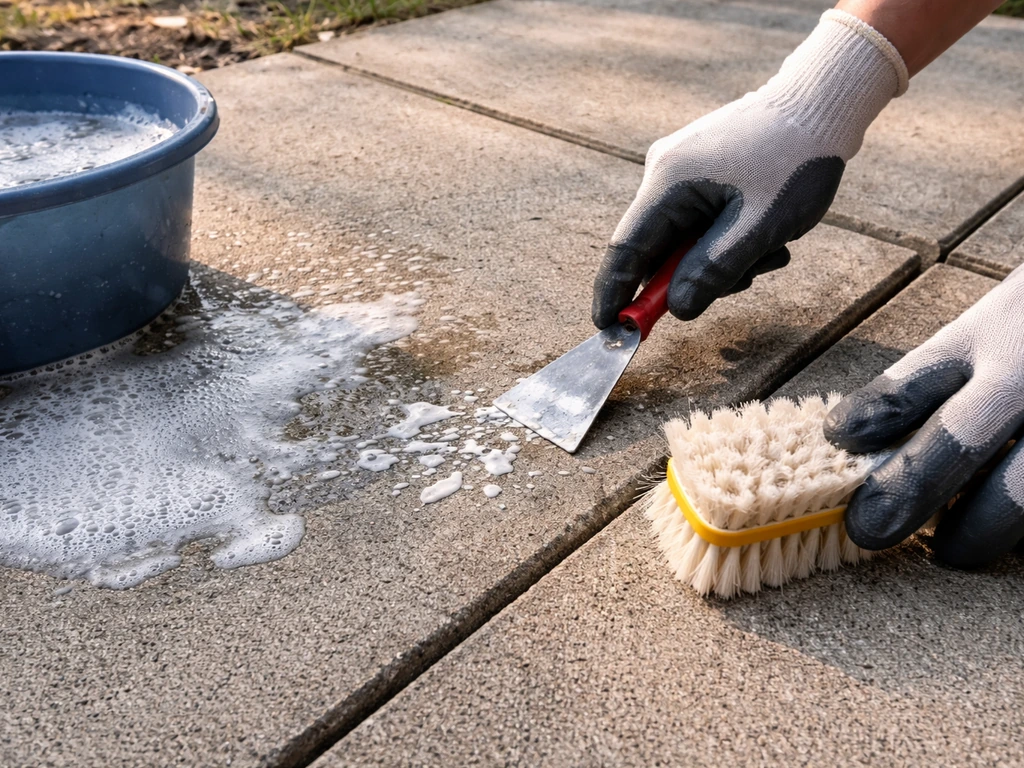
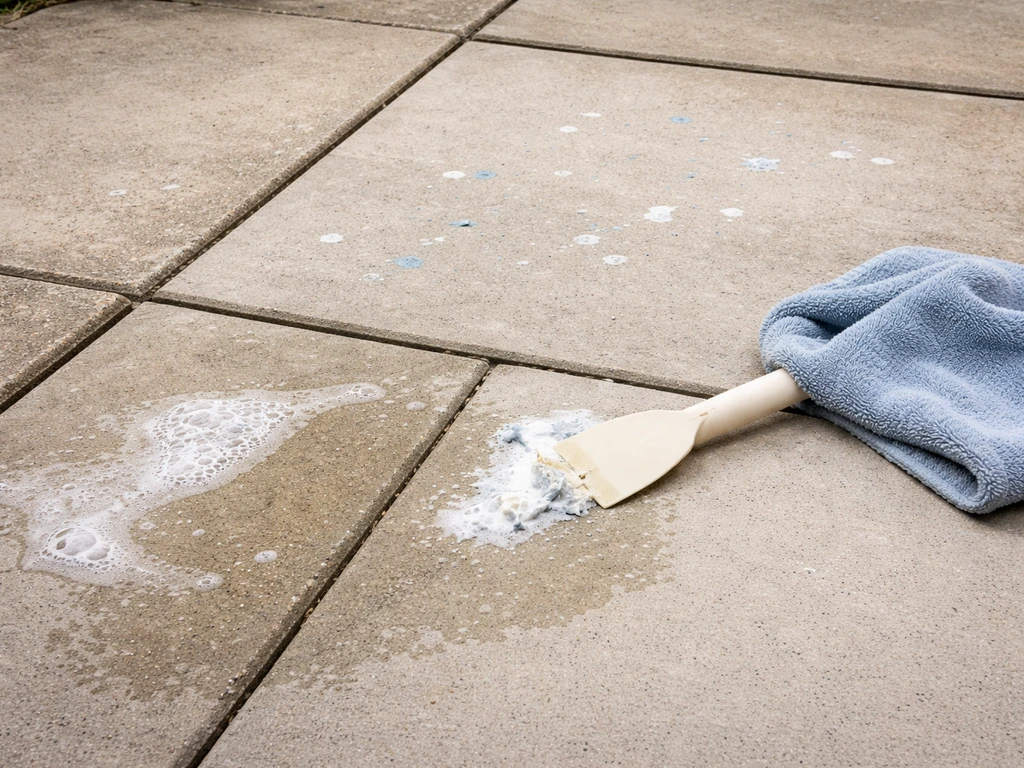
If the paint is still wet or only a few hours old, act immediately. Blot as much as you can with a rag, then scrub with hot water and dish soap using a stiff nylon brush. For latex paint, this alone is often enough. Don't let it cure if you can help it.
For paint that has dried but not fully cured (within the first couple of weeks), warm soapy water plus firm scrubbing with a nylon or natural-bristle brush will still lift a lot of it. Avoid wire brushes on stone surfaces at this stage since they can scratch.
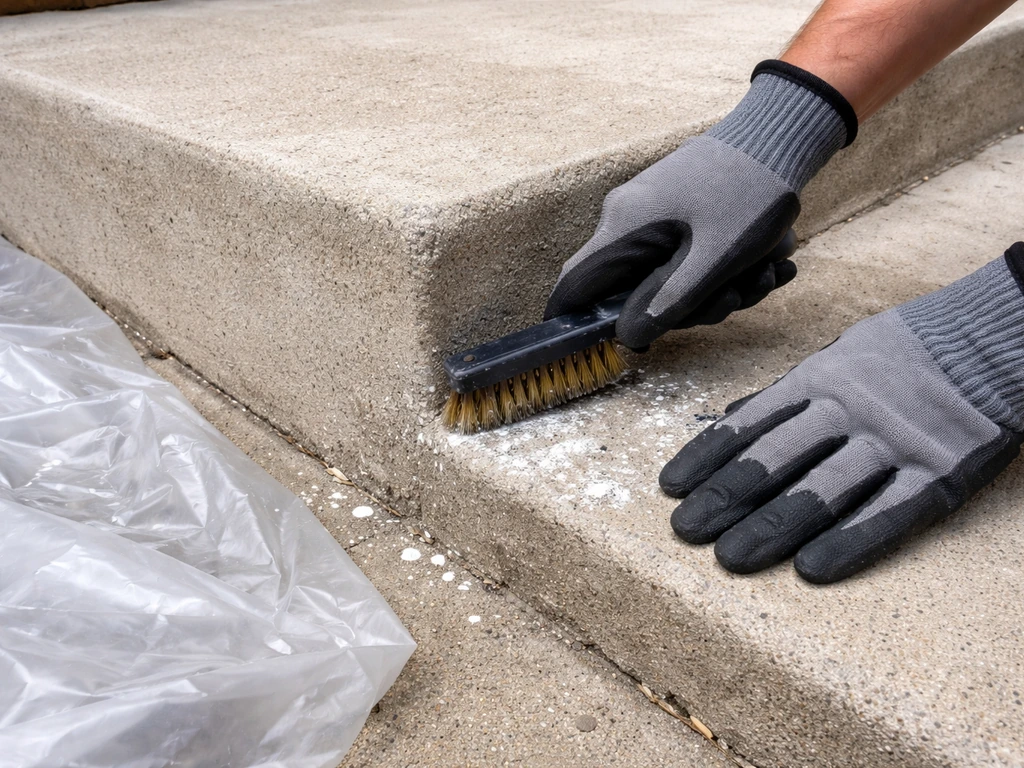
For fully dried and cured paint, start with physical removal before reaching for chemicals. This reduces how much dissolved paint soaks into the porous surface, which matters a lot on brick and stone. Use a plastic scraper first to lift any thick, dimensional paint sitting on the surface. Then follow up with a razor blade scraper (held at a low angle) on concrete or a stiff wire brush on brick. Nylon scrub pads work well for thinly spread paint on pavers. The goal here is to remove as much of the bulk as possible so the chemical stripper only has to deal with the residual staining.
- Use a plastic scraper at a low angle to lift raised paint edges without gouging the surface
- Follow with a razor blade scraper on flat concrete slabs (skip this on stone or pavers)
- Scrub remaining paint film with a stiff nylon brush and warm soapy water
- Rinse with clean water and assess what's left before moving to chemicals
- If a visible stain or thin paint film remains, that's when you bring in a stripper
Chemical options: from gentle to serious
Once manual scraping has taken you as far as it can, chemicals do the rest. I always recommend starting with the gentlest option that matches your surface and working up from there. Using something too aggressive on a soft stone can cause permanent etching that's worse than the original paint stain.
Gentle option: vinegar and dish soap
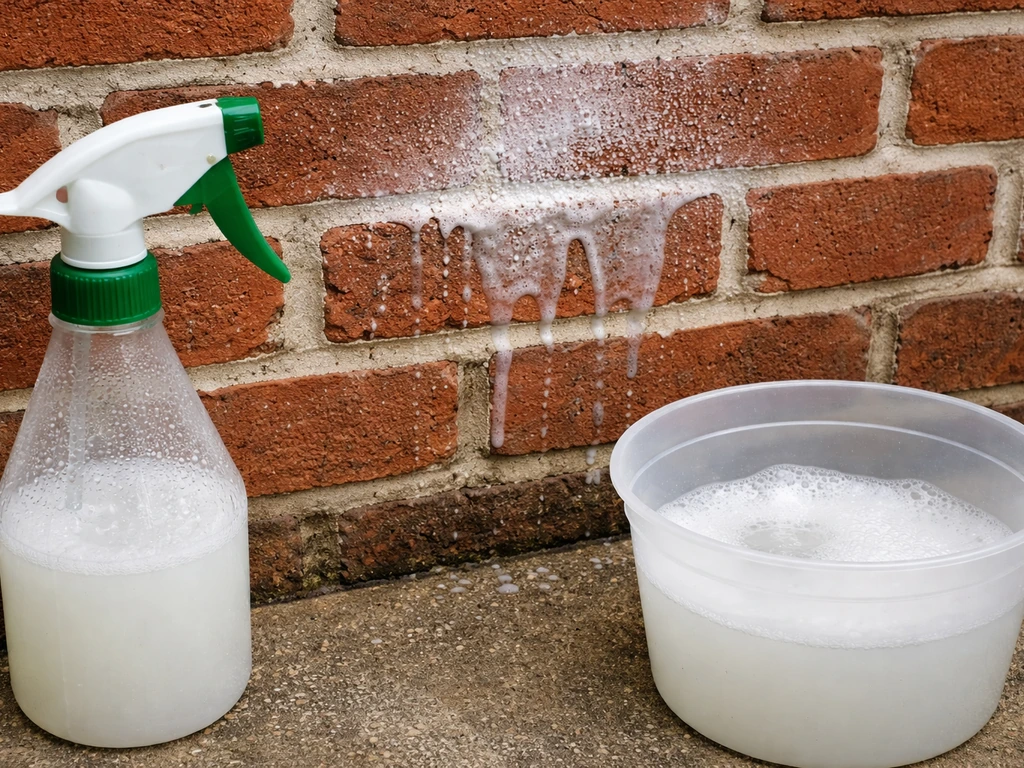
White vinegar works on fresh or lightly dried latex paint on concrete and brick. It's acidic enough to soften water-based coatings but won't damage a robust surface. Soak the area, let it sit for 10 to 15 minutes, then scrub hard with a stiff brush. This takes longer and more elbow grease, but it's completely safe for pets and plants and won't harm mortar joints. Do not use vinegar on travertine, limestone, or other calcium-carbonate stones since the acid will etch them.
Mid-range option: dedicated masonry paint strippers
For dried or oil-based paint on concrete, brick, or pavers, a purpose-built masonry paint stripper is the most reliable route. Products like PROSOCO SafStrip are formulated without methylene chloride or methanol, making them a much safer choice for homeowners. SafStrip is designed for masonry, concrete, wood, and metal. For harder cases involving multiple paint layers, PROSOCO's Heavy Duty Paint Stripper or Safety Peel 1 are options worth considering.
SEK Surebond SureStrip is another solid option specifically designed for hardscape surfaces including concrete and clay pavers, stamped concrete, natural and manufactured stone, and retaining wall blocks. The dwell time is typically 10 to 15 minutes. Apply it with a brush or low-pressure sprayer, let it work, then scrub and rinse. For stubborn coatings, a second application is normal.
Gel or poultice approach for porous surfaces
On highly porous surfaces like brick or unpolished stone, a gel or poultice-style remover is worth the extra effort. Gels stay on the surface longer and don't run, which controls how deep the solvent penetrates into masonry pores. Apply the gel, cover it with plastic sheeting to extend the dwell time, then remove and scrub. This method takes more time but does a better job pulling paint out of deep pores rather than just dissolving it and letting it re-soak in.
What to avoid
- Any stripper containing methylene chloride (DCM): avoid entirely for consumer use
- Muriatic acid on natural stone, travertine, or brick: it will etch and discolor the surface
- Bleach as a paint remover: it doesn't remove paint, it just lightens the color temporarily and can discolor your patio
- Acetone or nail polish remover: fine for tiny spots on concrete but not suitable for large areas and can leave residue
| Chemical Option | Best For | Avoid On | Dwell Time |
|---|---|---|---|
| White vinegar | Fresh latex paint on concrete/brick | Travertine, limestone, any natural stone | 10–15 min |
| PROSOCO SafStrip | Dried latex or oil-based paint on masonry/concrete | Polished natural stone (test first) | Per label, typically 15–30 min |
| SEK SureStrip | Coatings/sealers on pavers, concrete, masonry, stone | Check TDS before using on travertine | 10–15 min |
| Heavy Duty Paint Stripper (e.g., PROSOCO) | Multi-layer or heavily built-up paint on concrete/brick | Soft stone, travertine | Per label |
| Gel/poultice stripper | Porous brick, rough stone with deep paint penetration | Polished surfaces (can dull finish) | 30 min to several hours |
Pressure washing vs. manual scrubbing: which is right for your situation
Pressure washing is genuinely useful for rinsing off stripped paint and chemical residue, but it's not always the best tool for the removal itself. I've found the best approach is to use manual scraping and chemicals to break the paint bond first, then use the pressure washer to flush everything away. Using high pressure straight onto paint often just pushes it around rather than removing it.
When you do use a pressure washer, use the lowest pressure that actually does the job. For brick patios, the GSA recommends staying around 300 to 800 PSI maximum to avoid damaging mortar joints. For pavers, 1,200 to 1,800 PSI is generally workable, but direct high-pressure jets at joints will dislodge sand and jointing compound. Always use a wide fan-tip nozzle (40-degree) rather than a narrow or turbo nozzle, and keep the wand moving rather than holding it in one spot.
When to skip the pressure washer entirely
- Travertine: pressure washing can force water into natural voids and cause internal cracking
- Cracked or spalling flagstone: high pressure will worsen existing damage
- Loose or open mortar joints on brick: water at pressure will undermine the joint
- Soft or weathered sandstone: surface will erode faster than the paint comes off
- If you're a renter and don't own a pressure washer, manual scrubbing plus garden hose rinsing works perfectly fine for most paint stains
Material-by-material guidance
Concrete slabs
Concrete is the most forgiving patio surface for paint removal. You can use mechanical scraping, wire brushes, dedicated masonry strippers, and pressure washing. For heavily stained concrete, a stronger alkaline stripper applied with a brush and covered with plastic for extended dwell time gives the best results. Pressure washing at 1,500 to 3,000 PSI is generally fine for plain concrete. If you want the full detailed walkthrough for concrete specifically, there's a dedicated guide on removing paint from concrete patios that goes deeper on this surface. For a concrete patio, follow the steps in our dedicated guide on removing paint from concrete patios.
Brick patios
Brick is porous and the mortar joints are softer than the brick face, so both of those factors shape what you can do. Repoint any damaged joints before you apply chemicals. Use a gel-based stripper to keep the product on the surface rather than letting it run into joints or soak deep into the brick. Keep pressure washing at or below 800 PSI and use a fan tip. Multiple applications are often needed, especially if the paint has been on there for years. Avoid acid-based cleaners since they can affect the mortar. There's a separate detailed guide on removing paint from brick patios if you want brick-specific depth. If your patio is brick, that brick-specific walkthrough can help you choose the right stripper and avoid damaging the mortar joints removing paint from brick patios.
Natural stone and flagstone
Natural stone varies hugely in hardness and porosity. Flagstone, bluestone, and slate are generally tougher and can handle non-acidic chemical strippers. Sandstone is softer and more porous, so use gentler products and avoid wire brushes. Always test any stripper on a hidden corner before treating the whole area. Avoid anything acidic. Stick to alkaline or solvent-based strippers rated for natural stone, and rinse very thoroughly.
Travertine
Travertine is calcium carbonate, which means acids dissolve it. That rules out vinegar, muriatic acid, and any acid-based cleaner entirely. Use only pH-neutral or alkaline paint removers specifically labeled as safe for natural stone. Apply gently with a soft brush, not a wire or stiff nylon brush. Avoid pressure washing unless you keep pressure very low (under 500 PSI) and use a wide fan tip. After removing the paint, rinse thoroughly with clean water and dry quickly to prevent moisture sitting in the natural voids.
Concrete and clay pavers
Pavers respond well to products like SEK SureStrip, which is specifically designed for both concrete and clay pavers. Apply with a brush or low-pressure sprayer, allow the 10 to 15 minute dwell time, scrub, and rinse. For pressure washing, stay at 1,200 to 1,800 PSI and aim the nozzle parallel to joints rather than straight at them to protect the jointing sand. After rinsing, check whether the joint sand needs topping up since both strippers and pressure washing can displace it.
Mixed or tiled patio slabs
If your patio includes ceramic or porcelain tiles, those surfaces are non-porous and the most forgiving of all. A plastic scraper and warm soapy water will handle most fresh paint. For dried paint, a non-acidic stripper or even a small amount of acetone on a cloth works well for spot treatment. Avoid anything abrasive that could scratch the tile glaze.
Aftercare: neutralizing, rinsing, and keeping the patio looking uniform
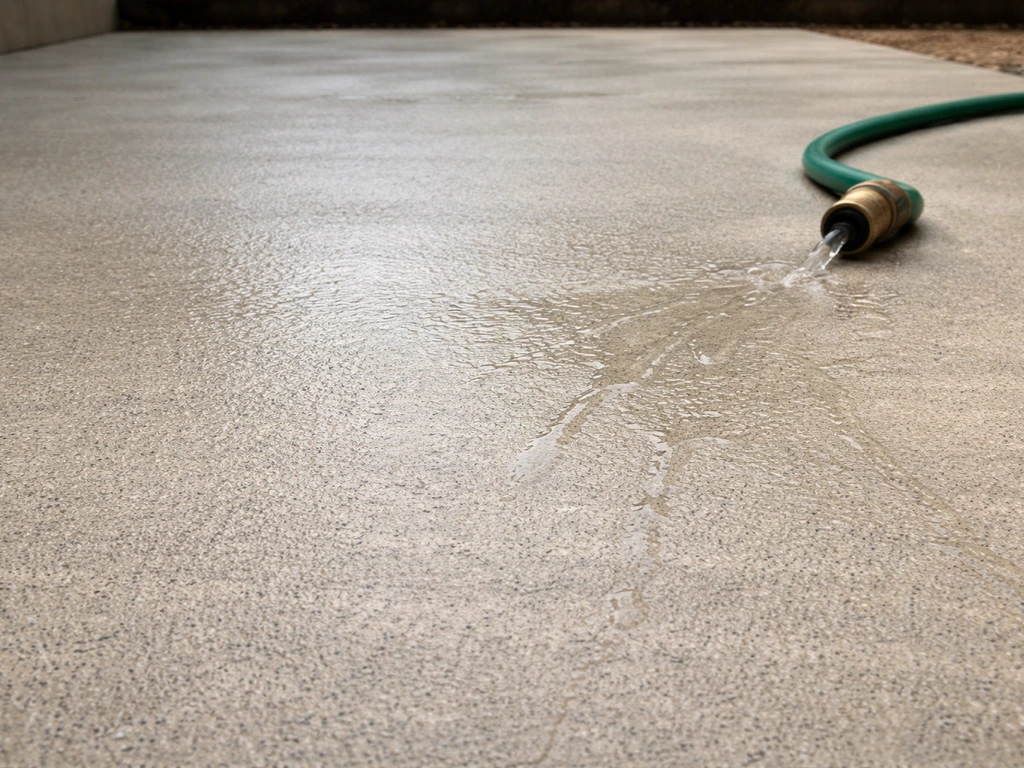
This step gets skipped too often and it really matters. If you've used a chemical stripper, you need to neutralize and rinse the surface properly or you'll be left with a residue film that causes discoloration and can interfere with any future sealer or coating you want to apply.
- Rinse the entire treated area thoroughly with clean fresh water immediately after scrubbing off the stripper: don't let the residue dry back onto the surface
- For alkaline strippers, a diluted acidic rinse (like a very mild citric acid solution) neutralizes the surface; for acid-based products used on appropriate surfaces, a diluted alkaline rinse (baking soda and water) does the opposite
- Scrub the rinse solution in with a stiff brush to lift any remaining residue film
- Rinse again with plain clean water and allow the surface to dry fully before assessing the result
- If a faint stain or shadow remains, a second application of stripper is usually more effective than going harder with abrasives
- Once dry, check pavers and brick for displaced joint sand and top up as needed
- If the treated area looks lighter or more porous than the surrounding surface, applying a penetrating sealer appropriate for your material will help even out the appearance and protect against future staining
For prevention going forward: seal your patio surface with an appropriate penetrating or film-forming sealer once it's clean and dry. Sealed surfaces are much easier to clean if paint lands on them in the future since the paint bonds to the sealer rather than directly to the porous material. If you're painting nearby fence panels or walls, lay down canvas drop cloths over the entire patio surface first rather than relying on newspaper or plastic, which shift and leave gaps. That's the easiest version of this job: not having to do it in the first place.
FAQ
How do I get fresh paint off my patio if I notice it quickly?
Yes, but the key is to treat it like a spill, not like paint that can sit. Blot immediately, then remove with hot soapy water and a nylon brush. If any residue remains, wipe with a clean damp rag and dry. Don’t apply a stripper to wet paint without identifying the surface and paint type first, because liquids can wick into joints and increase staining later.
What should I do if I’m not sure what material my patio is made of?
Use a test spot before committing to any chemical, and prioritize gentler options first. If you know the patio type, match the stripper to it (for example, avoid acid on calcium carbonate stones like travertine). After the test, check for two things after drying, surface dulling or etching, and lingering discoloration that suggests the stripper residue was not rinsed out well.
How many times will I need to strip and scrub dried, cured paint?
Don’t rely on one pass. With cured, bonded paint on porous surfaces, expect multiple rounds of physical removal plus reapplication of stripper, especially on brick, unpolished stone, and textured pavers. A common mistake is scrubbing too hard before most of the bulk is lifted, which just grinds paint deeper into pores.
My paint is gone, but I still have a stain. What do I do next?
If your paint was sprayed (like for signs or touch-up work), it often forms a thin misty layer that “feels” like it’s gone but stains remain. Focus on thorough rinsing and then look for a color difference under bright light. If staining persists, use a gel or poultice style remover again, because it spends more dwell time at the surface rather than letting dissolved paint re-settle.
Can I use a chemical stripper and then seal the patio right away?
Yes, but you need to neutralize and rinse immediately after stripper use, and use plenty of clean water. For products that have specific rinse or neutralizing instructions, follow those for that exact chemical. Skipping this step can leave a film that attracts dirt and can interfere with later sealing.
What household cleaners should I avoid because they can damage my patio?
Avoid solvents or cleaners that don’t match the surface chemistry. For instance, vinegar and other acids should not be used on travertine, limestone, or sandstone, and even “gentle” acids can dull the finish. If you’re unsure, choose a non-acidic option labeled for the specific surface and confirm on a hidden area first.
Is it okay to use pressure washing to remove paint directly?
Pressure washing can work as a final rinse, but the removal usually comes from scraping plus stripper dwell time. If you blast before the bond is loosened, paint often smears or gets forced into joints and pores. When you do wash, keep the nozzle wide and use the lowest pressure that removes residue, then inspect joints for displaced sand.
Do I need to do anything to jointing sand after stripping a paver patio?
Yes, and it’s especially important on brick and pavers. If you have sand-filled joints, stripper and pressure washing can dislodge sand and leave gaps. After rinsing and drying, check jointing sand level and top up if needed so weeds and water intrusion don’t start in those voids.
What’s the safest method for removing paint from travertine?
For travertine or other natural stone that can etch, use a stone-safe, non-acidic remover, apply gently, and skip aggressive brushing. Pressure washing should be minimal, under about 500 PSI with a wide fan if you use it at all, because forcing water into voids can leave moisture trapped and increase spotting.
Latex paint has been on the patio for a day. Will vinegar or soap still work?
For latex paint that’s only a few hours old, warm soapy water and scrubbing is often enough, but timing matters. If you find paint that’s already started to cure, your “still work” window narrows quickly, and you may need dwell time with an appropriate remover. Don’t use a wire brush on stone surfaces because it can cause scratches that later trap stains.
Next Articles
How to Get Fence Paint Off Patio Slabs Safely
Step-by-step fence paint removal from patio slabs, from gentle scraping and vinegar to safe solvents and pressure wash.
How to Remove Paint From a Patio: Step-by-Step Guide
Step-by-step guide to remove patio paint from concrete, brick, stone, pavers, travertine, flagstone, or wood safely.
How to Remove Paint Off a Concrete Patio Step by Step
Step-by-step methods to remove paint from a concrete patio, including spray paint, old paint, scraping, sanding, and saf