
To remove paint from a patio, start by identifying your surface material and paint type, protect the surrounding area, then work through mechanical removal first (scraping, sanding, or a heat gun), escalate to a chemical stripper if needed, and finish with a thorough rinse and residue cleanup. The exact products and pressure you use depend heavily on whether you're working with concrete, pavers, brick, natural stone, or a wood deck, since what works great on concrete can destroy travertine or flagstone.
How to Remove Paint From a Patio: Step-by-Step Guide
Dylan Hale
21 May 2026
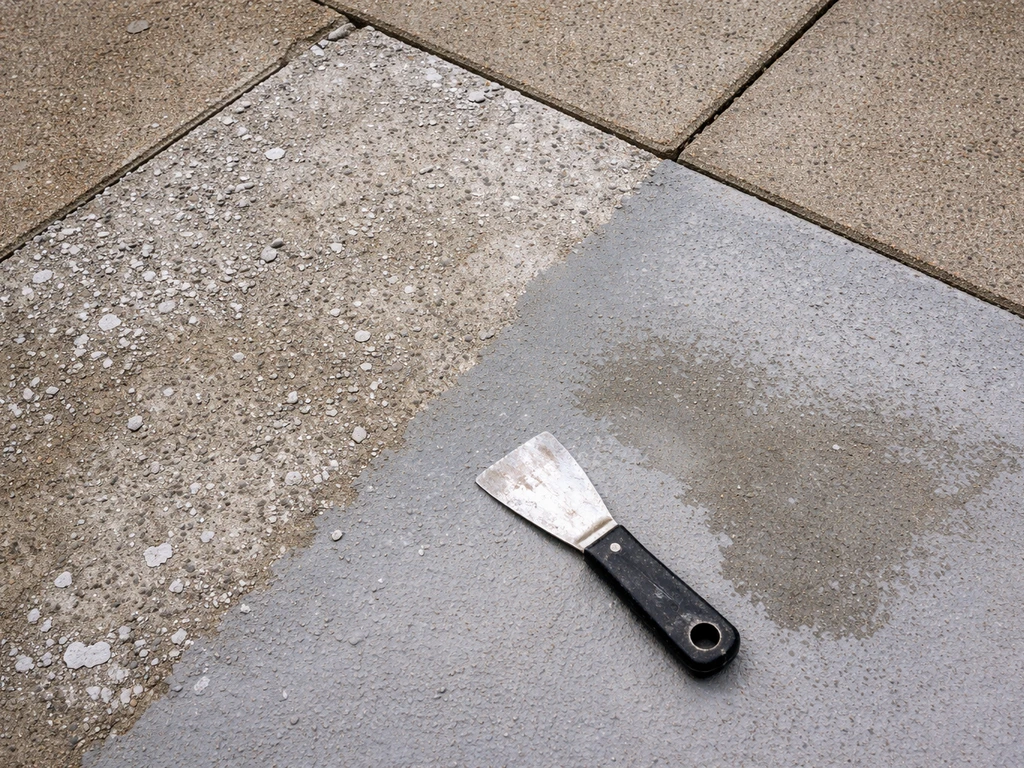
Identify your surface and figure out what kind of paint you're dealing with
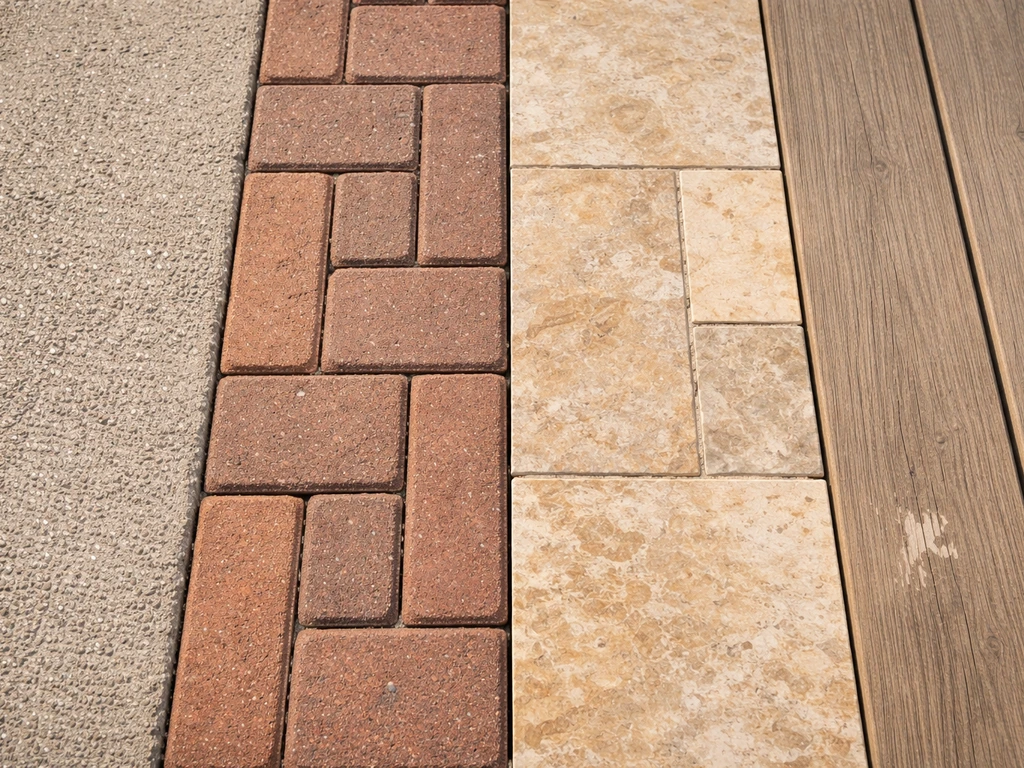
Before you touch anything, take five minutes to nail down two things: what your patio is made of and what kind of paint you're removing. These two factors determine every product and technique you'll use.
For surface material, check whether you have poured concrete (smooth or brushed), concrete pavers, clay brick, natural stone (travertine, flagstone, slate, bluestone), or a wood or composite deck. If you're unsure, concrete is typically one continuous slab; pavers have individual units with visible joints; brick has that classic reddish texture; and natural stone usually has an irregular, slightly porous look. Wood decks have visible grain.
For paint type, latex (water-based) paint is the most common for patios and is the easiest to remove, especially if it's relatively fresh. Oil-based paint is harder and more resistant. Epoxy floor paint (common on concrete slabs) is the toughest of all and usually requires a dedicated floor stripper. Spray paint or graffiti tends to sit on the surface and responds well to solvent-based removers. If you're not sure, rub a small spot with rubbing alcohol on a rag. If paint comes off on the rag, it's latex. If it doesn't budge, it's oil-based or epoxy.
Protect plants, pets, and nearby surfaces before you start
This step gets skipped constantly and it's a mistake. Chemical strippers and paint residue can kill plants, stain adjacent surfaces, and harm pets or kids who wander through. Spend ten minutes here and save yourself a bigger cleanup.
- Cover nearby plants and grass with plastic sheeting or drop cloths. Even water-rinsed chemical runoff can damage roots.
- Move outdoor furniture, cushions, and potted plants well away from the work zone.
- Use painter's tape and plastic sheeting to mask off house walls, fences, and any adjacent surfaces you don't want stripped.
- Keep pets and children out of the area until the surface is fully rinsed and dry.
- If you're working near a garden bed, water the soil around it thoroughly before you start. Wet soil dilutes chemical runoff more effectively than dry soil.
- Have a garden hose ready so you can rinse any accidental splashes on plants or skin immediately.
Mechanical removal: scraping, sanding, and heat
Mechanical removal is always the safest starting point, especially on sensitive surfaces like natural stone or brick where harsh chemicals can cause serious damage. It's also the best first pass on concrete and pavers before you apply any chemical stripper, because removing the bulk of the paint mechanically means your stripper has less to work through and produces better results.
Scraping
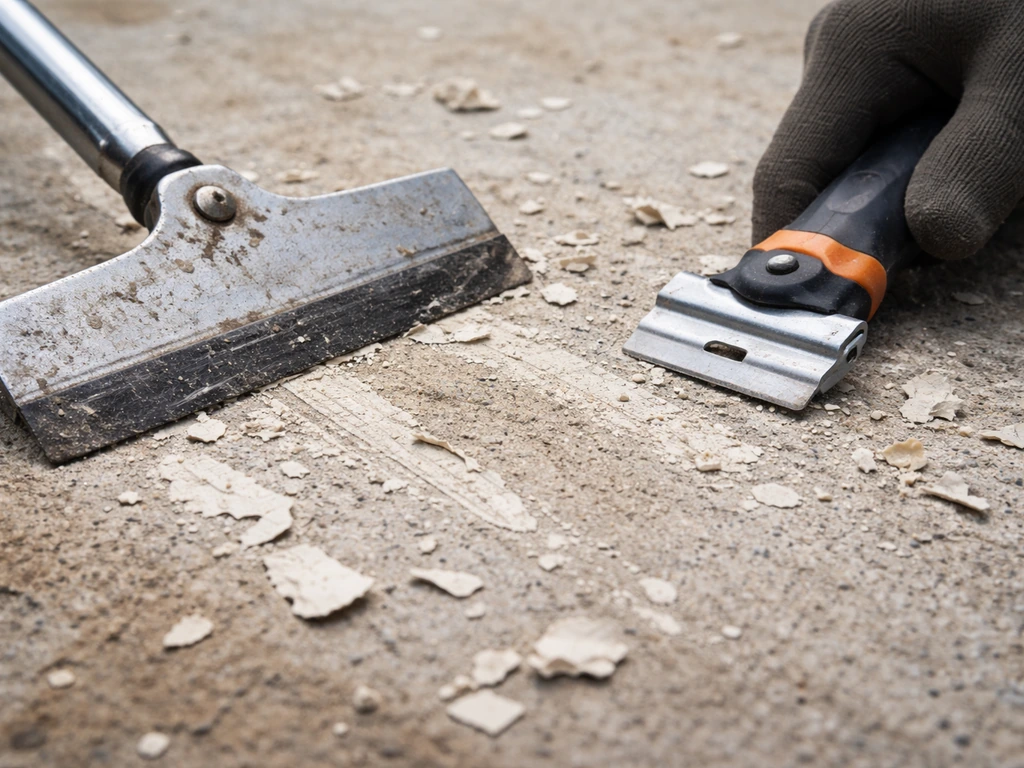
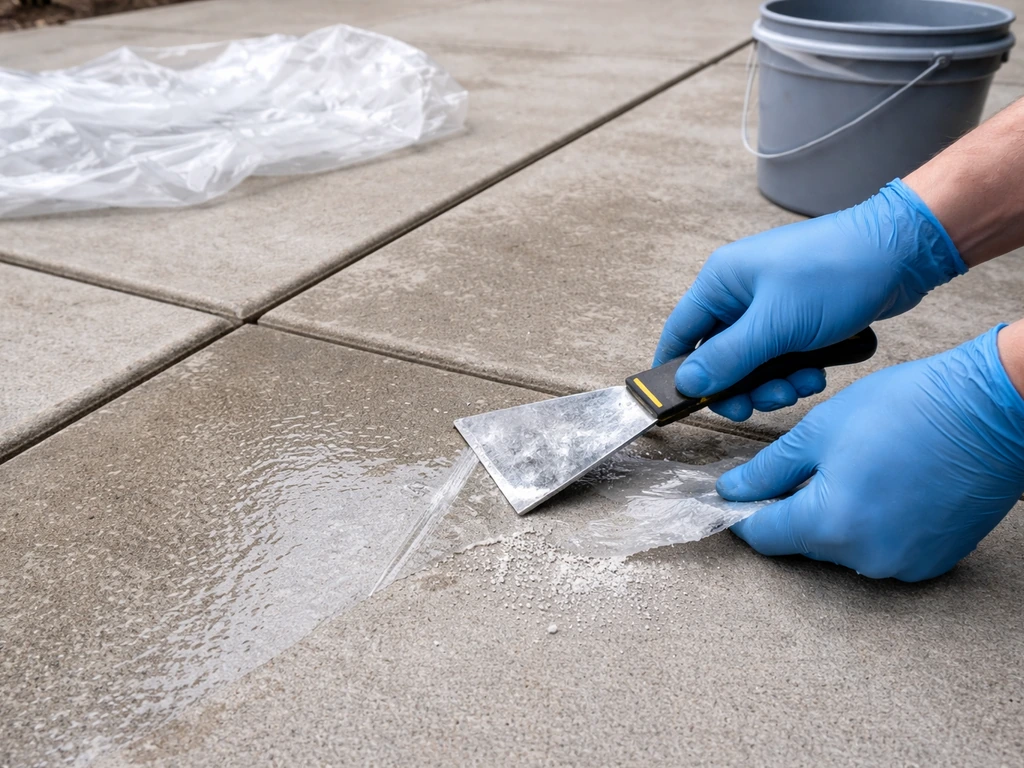
A stiff-bristle brush, a floor scraper, or a razor blade scraper (on flat surfaces) will take off loose, flaking, or bubbling paint quickly. For concrete, a metal floor scraper or chisel scraper works well. For stone and brick, use a plastic scraper or a non-metallic scraper first to avoid scratching the surface, then switch to a metal one only if necessary. Always scrape at a low angle, roughly 20 to 30 degrees, to lift the paint rather than gouge the surface beneath.
Sanding and wire brushing
A wire brush or angle grinder with a wire wheel attachment works fast on concrete for tougher paint. Floor sanders (drum or orbital) are useful for large painted deck areas. On pavers and brick, be careful with wire brushing because it can scratch or erode the surface. On natural stone, skip the wire brush entirely and stick to hand scraping or soft nylon brushes. For wood decks, a belt sander with 40 to 60 grit paper removes paint effectively, then follow up with 80 grit to smooth things out.
Heat guns
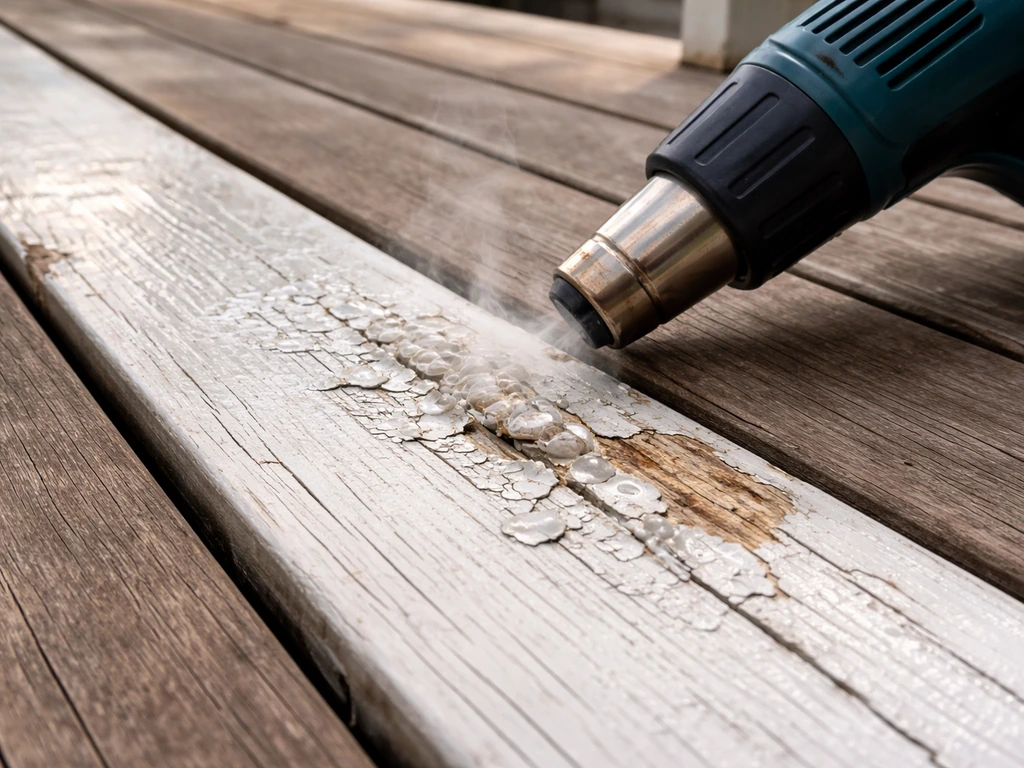
A heat gun (set between 400 and 600 degrees Fahrenheit) softens paint so you can scrape it off easily. This method works great on wood decks and is reasonably effective on concrete. Keep the heat gun moving constantly, roughly 2 to 3 inches from the surface, and scrape immediately while the paint is still soft. Do not use a heat gun or open flame on natural stone or travertine. The Natural Stone Institute is explicit on this: flame tools should never be used to strip paint from stone because thermal shock can crack or spall the surface.
Chemical paint strippers: how to choose the right one and use it safely
If mechanical removal gets most of the paint but leaves a stubborn layer, or if you're dealing with a large area of thick or epoxy paint, a chemical stripper is your next move. Choosing the right one matters a lot, both for effectiveness and for avoiding surface damage.
Stripper types at a glance
| Stripper Type | Best For | Avoid On | Notes |
|---|---|---|---|
| Citrus/soy-based gel (e.g., Citristrip, Franmar Blue Bear 600GL) | Wood decks, concrete, pavers, brick | Polished stone (test first) | Safest option; longer dwell time (up to 24 hrs); good for renters and eco-conscious users |
| Alkaline (caustic) stripper | Concrete, brick, some pavers | Natural stone, travertine, flagstone | Requires surface pre-wetting and post-neutralization; can damage mortar joints |
| Solvent-based stripper | Concrete, epoxy paint, graffiti/spray paint | Unfinished wood (can raise grain), sensitive stone | Faster acting; requires strong ventilation and PPE |
| Methylene chloride (MC) strippers | Not recommended for consumer use | All surfaces | EPA has issued a final rule restricting MC in consumer paint removal products due to serious injury risk; avoid these |
| Ready-to-use graffiti/paint remover (e.g., Zinsser ZNR-11) | Masonry, concrete, brick, pavers | Polished or honed stone without testing | Use undiluted; non-caustic and non-MC formulation |
For most homeowners, a citrus or soy-based gel like Citristrip or Franmar Blue Bear Soy Gel 600GL is the best starting point. These products are effective on latex and oil-based paint on wood, metal, and masonry, they're far safer to handle than solvent-based options, and they're genuinely renter-friendly. The trade-off is time. They need a thick application (Citristrip specifically says apply the gel several times thicker than the paint film) and a dwell time of anywhere from 30 minutes to overnight. Scrape once the paint starts to buckle and lift.
For epoxy floor paint on concrete, you'll likely need a dedicated floor paint stripper like Rust-Oleum ROC-112 or a similar solvent-based product. These are more aggressive and work faster, but require proper ventilation and full PPE.
On brick and masonry, if you go with an alkaline stripper, wet the surface with water first (this prevents the masonry from soaking up the stripper too aggressively), apply the stripper, let it dwell per the product instructions, then rinse from the bottom up. Always follow alkaline strippers with a neutralizer. A diluted white vinegar solution works as a simple neutralizer on brick, or use a proprietary product. Keep testing with litmus paper until the surface reads neutral before you consider the job done.
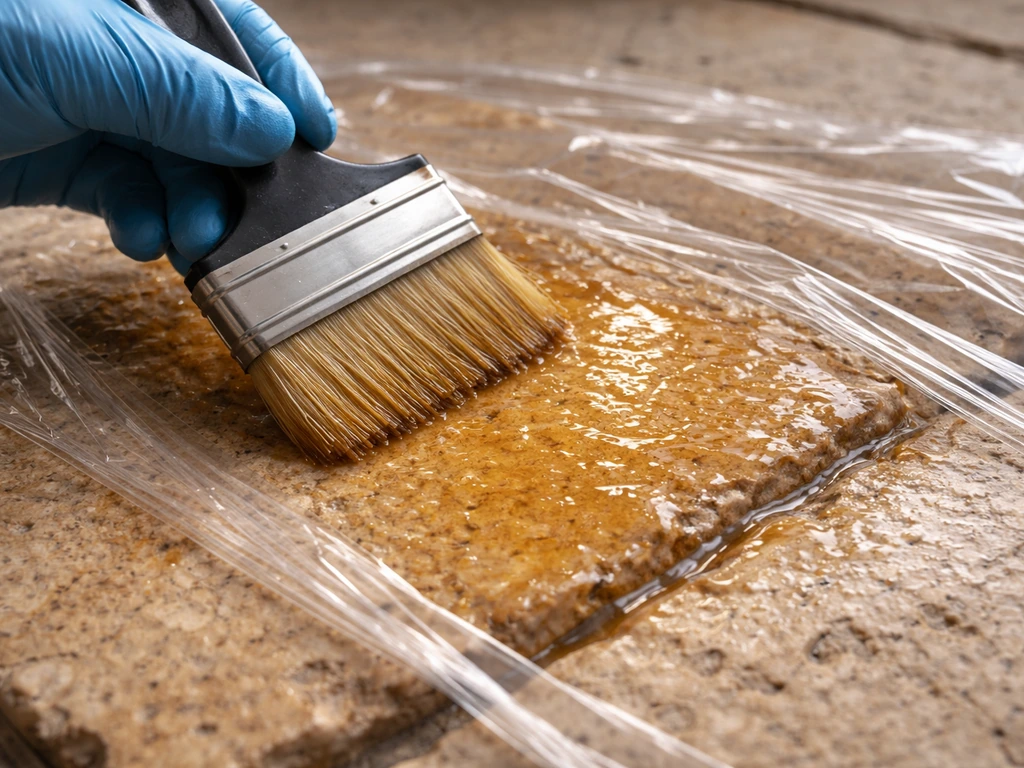
For tricky or uneven surfaces like brick or rough stone, gel-type strippers applied as a poultice work best. Mix the gel stripper with an absorbent material like shredded paper or clay, apply it in a thick layer, cover with plastic wrap to slow evaporation, and let it sit. This controls where the chemical goes and keeps it in contact with the paint longer. It's a technique borrowed from historic masonry preservation work and it genuinely produces better results on porous or textured surfaces.
Pressure washing vs. hand cleaning: when to use each
Pressure washing after scraping or stripping is satisfying and effective, but it can cause real damage if you use the wrong settings on the wrong surface. Hand cleaning takes longer but gives you more control and is the right call for delicate materials.
When pressure washing works
Concrete is the most forgiving surface for pressure washing. Use 3,000 to 3,500 PSI with a 25-degree nozzle, keeping the tip 6 to 12 inches from the surface. A 15-degree nozzle is more aggressive and useful for stubborn paint but can etch or gouge if you hold it too close. Always keep the nozzle moving in sweeping strokes, never stationary. For brick, stay at or below 3,000 PSI and use a 25 to 40 degree nozzle to protect mortar joints. Pavers can handle pressure washing but keep it under 2,500 PSI and avoid blasting directly at the joints.
When to stick to hand cleaning
Natural stone including travertine, flagstone, and slate should be hand cleaned. Pressure washing at high PSI can widen cracks, erode the surface, and damage the finish. Use a soft-bristle brush, warm water, and a compatible cleaner instead. The same applies to older or deteriorating brick where mortar joints are already soft. Composite decking (often found on newer patio decks) can handle light pressure washing but check the manufacturer's maximum PSI recommendation first, as many composites cap out at 1,500 PSI. For painted wood decks, use 1,200 to 1,500 PSI with a fan tip, or skip the pressure washer and use a scrub brush with soapy water to avoid raising the wood grain.
Removing leftover residue and doing a proper final cleanup
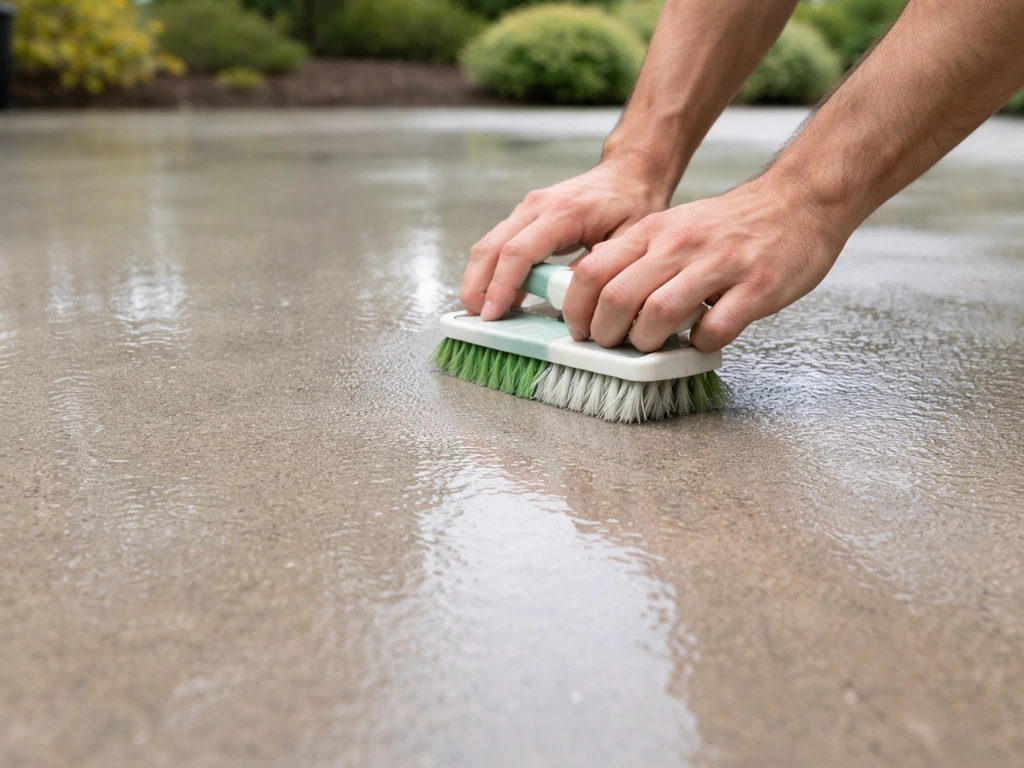
After the bulk of the paint is gone, you'll almost always have a thin layer of stripper residue, paint haze, or sticky film left on the surface. Don't skip this step. Leaving stripper residue on the surface can interfere with any new sealer or paint you apply later and can continue to slowly damage the material underneath.
- Wipe or scrub the surface with a stripper wash or after-wash product. Products like Klean-Strip Paint Stripper After Wash or Zinsser Stripper Wash are designed specifically to dissolve the remaining residue from chemical strippers and leave the surface clean and ready for refinishing.
- For masonry surfaces where an alkaline stripper was used, apply your neutralizer (diluted white vinegar or a proprietary neutralizer) and scrub it in with a stiff brush. Test with litmus paper. You're done when the paper reads neutral.
- Rinse thoroughly with clean water. For concrete and pavers, a garden hose on a jet setting or a low-pressure wash works well. For stone, use a soft cloth or mop with clean water.
- Let the surface dry for at least 24 hours before applying any new sealer, paint, or finish. Rust-Oleum's floor stripper guidance specifically calls for a minimum 24-hour dry time before refinishing, and that's a good rule regardless of the product you used.
- Inspect in good daylight for any remaining paint spots or haze and touch up with a scraper or spot-treat with stripper as needed before the surface is considered done.
What works best by material
Concrete
Concrete is the most forgiving surface for paint removal, and you have the full toolkit available: floor scrapers, angle grinders, solvent-based strippers, alkaline strippers, and pressure washing up to 3,500 PSI. For epoxy paint, go straight to a dedicated floor paint stripper and a floor scraper or stiff wire brush. For latex or oil-based paint, a citrus gel stripper with a 30-minute to several-hour dwell time, followed by scraping and pressure washing, handles the job reliably. Removing paint from a concrete patio specifically is one of the more detailed topics on this site if you want a deeper dive into concrete-only methods.
Wood and composite decks
For wood decks, citrus-based strippers like Citristrip work very well and won't raise grain the way strong solvents can. Apply thickly, cover with plastic wrap, and give it at least a couple of hours. Scrape with a plastic or wood scraper (metal scrapers can gouge soft wood), then sand with 40 to 60 grit to remove residue and smooth the surface. Avoid alkaline (caustic) strippers on wood because they can darken the grain and are hard to fully neutralize in wood fibers. Pressure wash with a wide fan tip at 1,200 to 1,500 PSI max, or hand scrub with warm soapy water and a stiff brush.
Pavers
Concrete pavers respond well to the same approach as concrete, but take care around the joints. Gel strippers are safer than liquid strippers here because liquids can seep into joints and affect the bedding sand or mortar. Pressure wash at 2,000 to 2,500 PSI, using a surface cleaner attachment if you have one to avoid blowing out joint sand. Avoid concentrated muriatic acid on pavers unless you really know what you're doing, as it can etch and discolor some paver finishes. If you're dealing with fence paint that dripped onto your pavers, the approach is similar but you may need a more targeted spot-treatment rather than treating the whole surface. If the paint is from a fence, focus on treating only the affected drips first so you don’t strip or damage surrounding patio areas fence paint dripped onto your pavers.
Brick
Brick is porous and holds paint tenaciously, which makes it one of the trickier surfaces. A gel-type poultice stripper (mixed with an absorbent material as described earlier) is the most controlled approach. Wet the brick thoroughly before applying any alkaline stripper. Let the poultice dwell for the full recommended time, then scrape and rinse from the bottom up to prevent cleaned areas from being recontaminated by dripping stripper. Finish with a white vinegar neutralizer and test with litmus paper. Avoid pressure washing above 2,500 PSI and protect the mortar joints. Removing paint from a brick patio has enough nuance that it deserves its own detailed treatment.
Natural stone: travertine, flagstone, and slate
Natural stone demands the most caution. The Natural Stone Institute is clear: heavy paint on stone should be removed only with a commercial heavy-duty liquid paint stripper, and you must not use acids or flame tools on stone. No muriatic acid. No heat gun. No aggressive pressure washing. Use a plastic scraper to remove loose paint first, then apply a pH-neutral or gentle paint stripper (test in a hidden spot first), let it dwell, and hand scrub with a soft nylon brush. Rinse with clean water and a mop. If paint is deeply embedded in a porous stone like travertine, a poultice method is your best option. On stone, patience beats aggression every time.
Safety, disposal, and what not to do
Personal protective equipment
For any chemical stripper, wear chemical-resistant gloves (nitrile or neoprene), safety goggles, and closed-toe shoes at minimum. For solvent-based strippers or when pressure washing in an enclosed or semi-enclosed patio, add an organic vapor respirator with an N95 particulate filter. Work in well-ventilated conditions. If you're indoors or under a covered patio, point a box fan toward the exterior to move fumes out and fresh air in.
Disposing of paint and chemical waste
Liquid stripper residue mixed with paint is considered hazardous waste in most jurisdictions. Collect it in a sealed container and dispose of it per your local, state, or federal regulations. Many municipalities have household hazardous waste (HHW) drop-off days or permanent facilities. Don't pour it down a storm drain or into a garden bed. Dried paint chips from scraping can often go in the regular trash if they're fully dried, but check local rules. The EPA's restrictions on methylene chloride in consumer products exist precisely because improper handling causes serious injury, so treat all stripper waste with the same respect you'd give paint thinner or used solvents.
What to avoid so you don't make things worse
- Don't use muriatic acid on natural stone, travertine, flagstone, or slate. It causes irreversible etching and discoloration.
- Don't use a heat gun or torch on stone surfaces. Thermal shock can crack or spall the material.
- Don't use methylene chloride strippers. The EPA has a final consumer restriction rule on these products for good reason.
- Don't apply alkaline strippers to dry masonry. Pre-wet the surface first or you risk uneven penetration and damage.
- Don't use a zero-degree (red tip) pressure washer nozzle on any patio surface. It concentrates too much force in one spot and will gouge concrete, destroy pavers, and completely wreck stone or brick.
- Don't skip neutralizing after alkaline strippers on masonry. Residual alkalinity continues to damage the surface over time.
- Don't refinish or seal the surface until it's fully dry, at least 24 hours after final rinsing.
- Don't apply chemical strippers in direct hot sunlight. They dry out too fast and don't get enough dwell time to work properly.
If you take one thing from all of this: match the method to the material, protect your surroundings before you start, and never skip the neutralizing and cleanup steps. Work through scraping first, then strippers if you need them, and finish with a proper after-wash before anything goes back on the patio. That sequence works whether you're a renter dealing with a few paint drips on pavers or a homeowner stripping a fully painted concrete slab.
FAQ
Can I remove paint from a patio without using chemicals at all?
Yes, for fresh latex or small areas. Start with scraping and sanding, then use warm water plus a patio-safe cleaner and hand scrubbing. If paint is oil-based, epoxy, or has fully cured into pores, you’ll usually need a targeted stripper or mechanical removal that may still require a solvent-based product on concrete.
What should I do if the paint is old and already chalky or flaking?
Treat it as a mechanical job first. Scrape until you reach stable material, then spot-sand the edges to remove raised paint film. If there’s still a stained haze afterward, use a gentle gel stripper or cleaner rather than immediately escalating to a strong solvent, especially on brick and natural stone.
Is it safe to use a paint scraper on natural stone or brick?
Yes, but use the right tool. Keep to plastic or non-metallic scrapers first to avoid micro-gouges that later trap more paint. Only switch to metal if you’re not seeing scoring, and scrape at a shallow angle so you lift paint instead of shaving the surface.
How do I protect grass, plants, and nearby surfaces from stripper damage?
Before you apply any chemical, fully cover plants and soil with plastic sheeting and keep edges sealed with tape or weighted barriers. Also shield adjacent surfaces like siding, decking rails, or garage floors with drop cloths, because runoff and residue can cause discoloration even after you rinse.
How can I tell whether my “patio” is actually concrete, pavers, brick, or stone?
Look for seams and continuity. Concrete is usually one continuous slab with saw cuts, pavers are separate units with visible joints and leveling sand, brick has uniform units with mortar lines, and natural stone often has irregular shapes with variable porosity. If the surface is patchy or multiple materials were used, test a small hidden spot with the least aggressive method first.
What’s the best way to handle a paint spill from a fence on pavers?
Spot-treat only the affected drips. Use a gel stripper in a thick layer so it stays on the paver face, avoid soaking joints, and rinse carefully. If the paint penetrated into joint sand, you may need controlled re-cleaning and possibly joint-sand touch-up after the surface is fully neutral and dry.
Can I pressure wash to remove all paint after stripping?
Usually not completely on delicate surfaces. Pressure washing is good for dislodging loosened residue, but high PSI can widen cracks or erode finishes on brick and natural stone. Use hand cleaning for stone, and if you do pressure wash, start lower than the maximum listed and keep the nozzle moving in sweeping passes.
What nozzle and PSI should I use if I’m between “stubborn paint” and “risk of damage”?
Start at the gentler end: for concrete, begin around the lower portion of the recommended PSI range and increase only if paint won’t budge. If you see etching, dulling, or surface pitting, stop and switch back to scraping or a gel stripper. For pavers and brick, do not chase it with higher pressure at the joints.
How do I make sure stripper residue is fully removed before sealing or painting?
Do a residue check after rinsing and drying. If the surface feels sticky, looks glossy where it should be matte, or continues to attract dirt, it still needs cleaning. For alkaline stripper situations, confirm neutrality by testing with litmus paper before you consider resealing, and allow the patio to fully dry before any new coating.
Can I use vinegar to neutralize any stripper on brick?
Vinegar neutralization is common for alkaline strippers on brick, but only if the stripper is designed to be neutralized that way. Always follow the product label, then verify neutrality with litmus paper. If the label calls for a specific neutralizer, use that product instead of improvising.
What should I do if a heat gun accidentally gets used on stone or travertine?
Stop immediately and let the area cool naturally. Inspect for cracking, spalling, or surface flaking. If damage appears, avoid further heat and switch to gentle hand methods and appropriate mild strippers, since thermal shock may already have weakened the stone.
Is it normal to see paint haze or staining after the paint flakes off?
Yes, on porous surfaces like brick and travertine. Haze can be embedded pigment and may not fully lift with scraping alone. Use a controlled gel poultice or a gentle, pH-appropriate stripper with thorough rinsing and neutralizing, then reassess after dry time.
How should I dispose of paint chips and stripper leftovers from the cleanup?
Most authorities treat wet stripper residue as hazardous waste, and you should collect it in a sealed container for local HHW handling. Dried paint chips often qualify for regular trash, but only if fully dry and allowed by your local rules. Never dump liquid stripper waste into storm drains or garden beds.
What PPE is the minimum I should use for patio paint removal?
At least chemical-resistant gloves, safety goggles, and closed-toe shoes. If you’re using solvent-based products, working in a covered or enclosed patio, or smell strong fumes, add appropriate respiratory protection and ensure air movement with fans directed outward.
Next Articles
How to Remove Paint Off a Concrete Patio Step by Step
Step-by-step methods to remove paint from a concrete patio, including spray paint, old paint, scraping, sanding, and saf
How to Remove Thompson’s Patio Sealer Step by Step
Step-by-step removal of Thompson’s patio sealer on concrete, brick, pavers, and stone, with safety, tests, and cleanup.
Can You Remove Patio Sealer? How to Strip It Safely
Learn if you can remove patio sealer and how to strip it safely by type, material, and method.