
Fence paint on patio slabs is one of those frustrating accidents that looks worse than it usually is. Whether it dripped while you were painting a panel, splattered in the wind, or transferred from a freshly painted fence your sleeve brushed against, the fix is almost always the same: match your removal method to the paint type, start gentle, and escalate only if you need to.
How to Get Fence Paint Off Patio Slabs Safely
Dylan Hale
31 May 2026
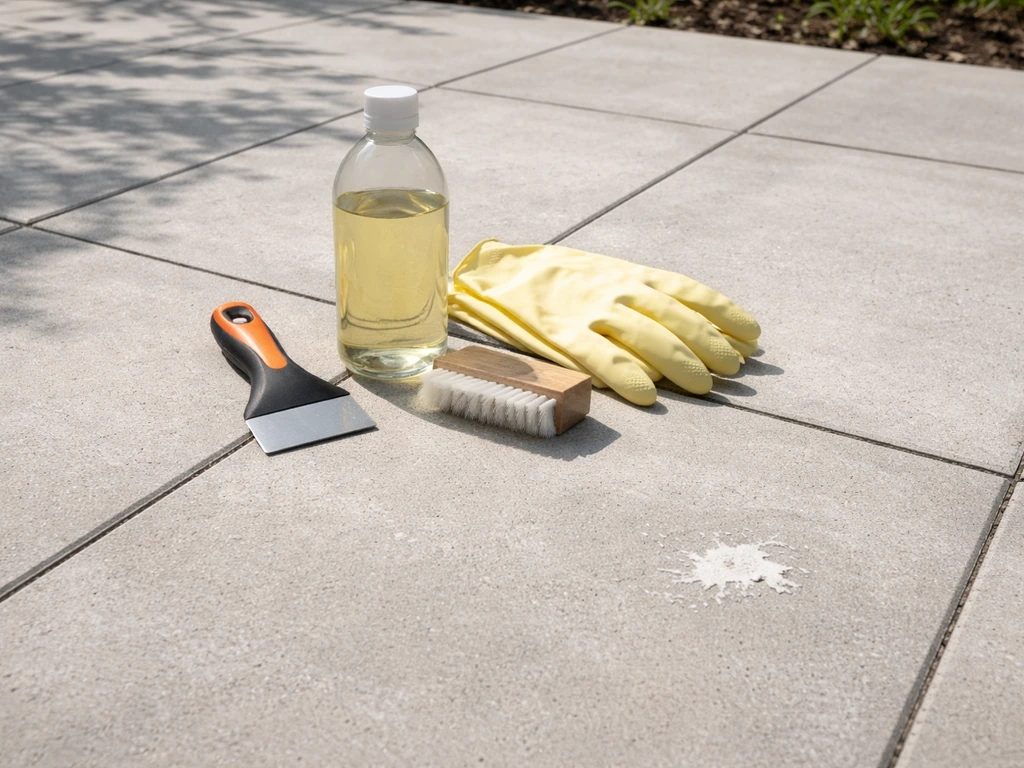
Most fence paint splatter on concrete or stone slabs comes off with scraping, detergent, and some elbow grease. If you need a step-by-step approach, our guide on how to get paint off a patio walks through choosing the right method and working from gentle to stronger options how to get paint off patio. Dried-on or fully cured paint takes a bit more, but it rarely needs professional intervention.
First, Figure Out What You're Dealing With
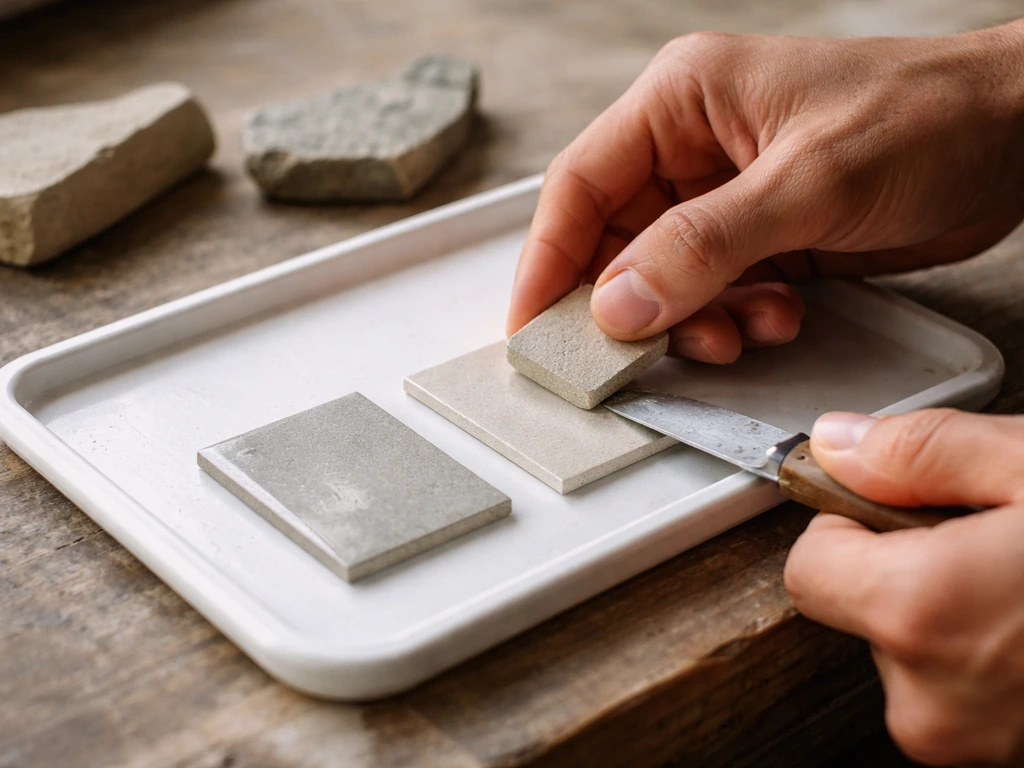
Before you grab anything from under the sink, spend two minutes working out what type of paint you're removing and what your slabs are made of. These two factors completely determine which method to use and which ones to avoid.
Water-based or oil-based fence paint?
Most modern fence paints and wood stains sold today are water-based (also called latex or acrylic). They dry by water evaporation, leaving behind a flexible polymer film. Oil-based fence paints and traditional wood preservers use solvent carriers and oil or alkyd binders instead. Why does this matter? Water-based paint responds well to water, detergent, and latex-specific removers. Oil-based paint resists all of that and needs a solvent-based stripper to break down the binder. If you're not sure which you used, check the tin: it will say 'clean brushes with water' (latex) or 'clean brushes with white spirit/turpentine' (oil-based).
What are your slabs made of?
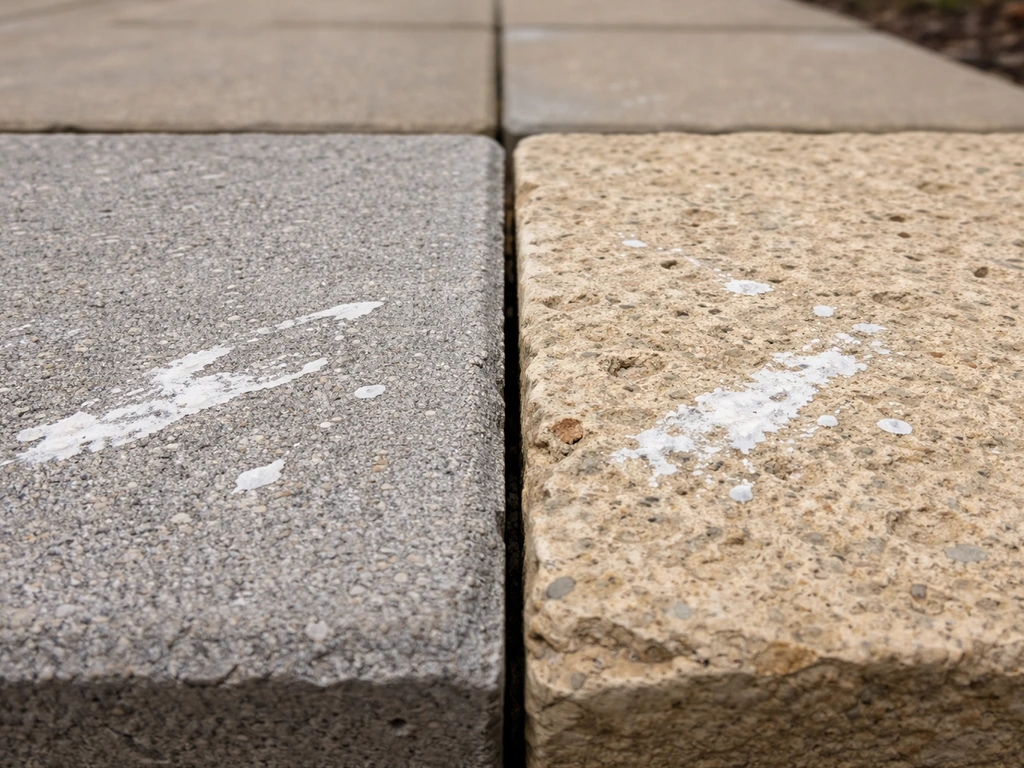
Concrete and cement-based patio slabs are the most forgiving and can handle most chemical removers when used correctly. Natural stone (sandstone, limestone, travertine) is porous and sensitive to acids and strong solvents, so you need to be more careful. Porcelain and glazed pavers have a hard, non-porous surface that makes removal easier but can scratch if you're too aggressive. Brick is porous like natural stone and absorbs paint quickly, so the sooner you act the better.
If you're working on brick specifically, there's more detailed guidance in our article on how to remove paint from a brick patio. For concrete specifically, the process overlaps closely with general paint removal covered in guides on how to remove paint off a concrete patio.
Stop the Spread Before You Do Anything Else
If the paint is still wet, your first job is containment, not cleaning. Rubbing a wet paint spill just spreads it further and pushes it deeper into porous slab surfaces. Here's what to do in the first few minutes:
- Blot, don't wipe. Use an old rag or paper towels to lift as much wet paint as possible with a dabbing motion. Work from the outside edge of the spill toward the center.
- Scrape the bulk. Once you've blotted the excess, use a plastic scraper or old credit card to gently lift remaining wet paint. A metal scraper is too aggressive on most slabs at this stage.
- Protect the surrounding area. If there's a larger spill or the slabs are porous, lay an old towel or cardboard around the edge of the stain to stop it running further.
- Don't hose it down yet. Flooding a wet paint spill with water before you've removed the bulk just dilutes and spreads it across a wider area.
If the paint has already dried by the time you notice it, skip the blotting and go straight to scraping. Dry paint doesn't spread.
Start Gentle: Scraping, Soap, and Vinegar
Always start with the gentlest method that has a realistic chance of working. On concrete slabs especially, you'll often be surprised how much you can shift without resorting to harsh chemicals.
Dry scraping for hardened paint
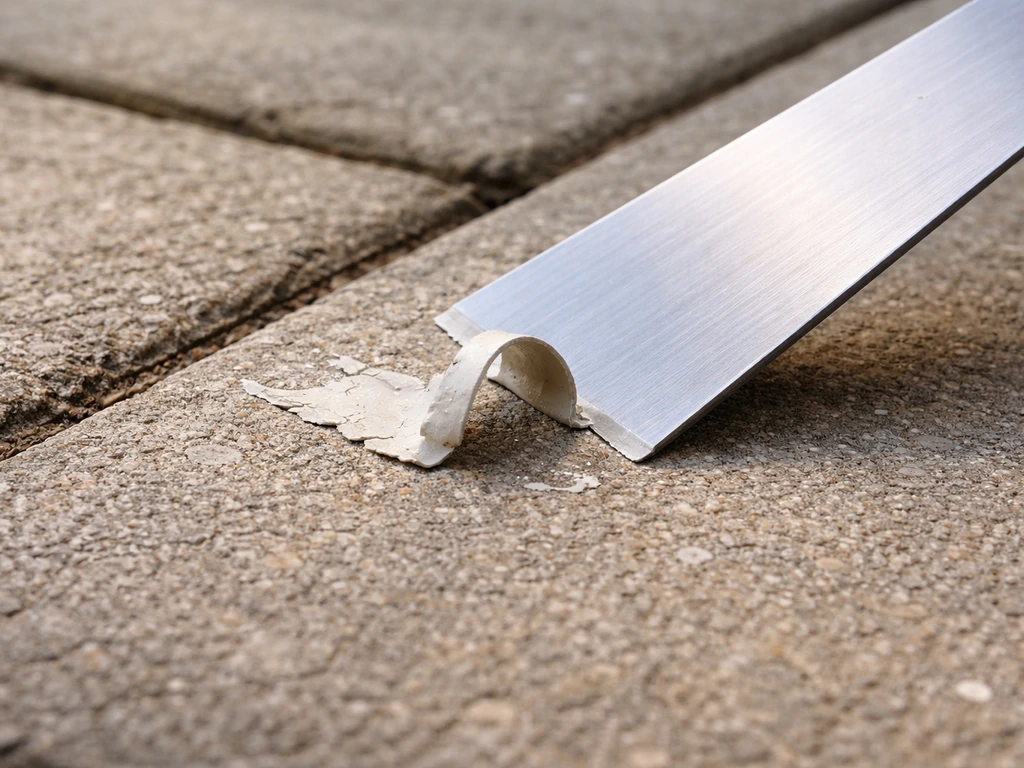
For paint that's dried into a film or flaking blob, a stiff plastic scraper or a metal paint scraper held at a low angle (around 30 degrees) can lift a significant amount off smooth concrete or porcelain. Work in short strokes and sweep the flakes away as you go. On textured or riven slabs, scraping alone won't get into the grain, so use it to remove the surface bulk and then follow up with a cleaning solution.
Hot soapy water for water-based paint
For latex or acrylic fence paint, hot water and a strong dish soap or washing-up liquid is often all you need, especially if the paint is recent rather than months-old cured paint. Mix a generous squirt of washing-up liquid into a bucket of very hot water, pour it directly onto the stain, and let it soak for five minutes. Then scrub with a stiff-bristled brush. Rinse and repeat. I've found this alone removes fresh water-based fence paint splatter on smooth concrete more often than not.
White vinegar for light staining and residue
Undiluted white vinegar works as a mild paint softener for thin or partially dried latex paint residue, and it's a genuinely useful option if you have children, pets, or a preference for avoiding chemicals. Pour it onto the stain and let it sit for 10 to 15 minutes, then scrub with a stiff brush. It won't shift thick layers or fully cured paint on its own, but it's excellent for the last 20 percent of staining that remains after the bulk is removed. Avoid using vinegar on natural stone slabs like limestone, sandstone, or travertine as it can etch and dull the surface.
Rubbing alcohol for small spots
Isopropyl alcohol (rubbing alcohol) from a pharmacy is a useful spot-treatment for small splatter marks of both water-based and oil-based paint. Saturate a cloth, press it onto the spot for a minute, then scrub. It evaporates quickly and won't leave residue. This is a good first move for pinhead-sized splatter drops you notice before they fully cure.
When Gentle Isn't Enough: Chemical Removers and Solvents
If you've scraped and scrubbed and there's still a clear paint stain on your slabs, it's time to bring in something stronger. The right product depends on whether you're dealing with water-based or oil-based fence paint.
For water-based (latex/acrylic) fence paint: latex paint remover
A dedicated latex paint remover like Krud Kutter Latex Paint Remover is purpose-built for this job and is significantly safer to use on patio slabs than solvent strippers. Apply it directly to the stain, let it soak for 2 to 5 minutes until you see the paint starting to loosen and look slightly bubbly or soft, then scrub and rinse. For fully cured paint that's been on the slabs for weeks or months, you may need to let it soak longer. Because concrete and natural stone are porous, rinse the area thoroughly with clean water immediately after removal to flush the product out of the surface. Don't let it dry on the slab.
For oil-based fence paint: solvent-based strippers
Oil-based paint uses oil and alkyd binders that water and latex removers simply can't dissolve. You need a solvent-based paint stripper (look for products containing methylene chloride alternatives like benzyl alcohol or N-methyl-2-pyrrolidone, as older methylene chloride strippers are increasingly restricted). White spirit or paint thinner can soften fresh oil-based paint that hasn't fully cured, but for older, cured paint you'll want a proper gel-based paint stripper. Apply the gel, cover it with plastic sheeting to prevent evaporation, and leave it for the time specified on the tin (usually 15 to 30 minutes for concrete). Scrub, scrape, and rinse well.
Safety and surface warnings
- Always wear chemical-resistant gloves and eye protection when using strippers or solvents.
- Work in a ventilated area, especially with solvent-based products.
- On natural stone slabs (sandstone, limestone, travertine), test any chemical remover on a hidden corner first. These surfaces can be permanently damaged by strong strippers.
- Do not use muriatic (hydrochloric) acid to remove paint from patio slabs. It is sometimes suggested for concrete cleaning, but it can etch and discolour the surface and is not effective at dissolving paint film.
- Keep chemical removers away from surrounding grass and plants. Lay down plastic sheeting if your slabs border a lawn or garden bed.
Quick comparison: which method for which paint?
| Method | Water-based fence paint | Oil-based fence paint | Safe on natural stone? |
|---|---|---|---|
| Scraping (plastic/metal) | Yes | Yes (hardened only) | Yes, careful with metal |
| Hot soapy water | Yes | No | Yes |
| White vinegar | Light residue only | No | No (etches stone) |
| Rubbing alcohol | Yes (small spots) | Light residue only | Yes (test first) |
| Latex paint remover (e.g. Krud Kutter) | Yes | No | Test first, rinse immediately |
| Solvent-based stripper | Yes (overkill but works) | Yes | Test first, high risk on limestone/sandstone |
| White spirit / paint thinner | Minimal effect | Yes (fresh/uncured) | Test first |
Pressure Washing: Useful Tool, Not a Magic Fix
A pressure washer is a great follow-up step after chemical treatment, but it's almost never sufficient on its own for removing paint from patio slabs. Paint film bonds to the surface, and water pressure alone can't break that bond unless the paint is already loosened or flaking. That said, once you've done the chemical or manual work, pressure washing does an excellent job of blasting away the softened residue and flushing it off the slab surface.
How to pressure wash after paint removal
- Use a fan-tip nozzle (25-degree or 40-degree), not a zero-degree pinpoint nozzle which can etch concrete and cut into softer stone.
- Keep the nozzle at least 30 cm (12 inches) from the slab surface to start, moving closer only if needed.
- Work in sweeping strokes rather than holding the jet in one spot.
- For natural stone or older, weathered concrete, keep pressure below 1500 PSI to avoid surface damage.
- On smooth, well-sealed concrete, up to 2500 PSI is generally safe and effective.
When to skip the pressure washer
If you're a renter, don't have access to a pressure washer, or your slabs are fragile (thin natural stone, old grouted pavers with crumbling joints), skip it. Everything in this guide can be done with a stiff brush, a bucket, and a garden hose for rinsing. Pressure washing is faster and more satisfying, but it's not essential. Using a pressure washer on loose or damaged grout joints between pavers will almost certainly make the damage worse.
Rinse, Neutralize, and Protect Your Slabs Afterward
Whatever method you used, the aftercare step matters more than most people realize. Skipping it can leave chemical residue in porous slabs that continues reacting, causes discolouration over time, or makes the surface slippery.
- Rinse thoroughly with clean water. After any chemical treatment, flush the entire treated area with plenty of fresh water, ideally with a garden hose or pressure washer on a low setting. Do this even if the product label doesn't explicitly say to, as porous concrete and stone will hold onto chemical residue.
- Neutralize after solvent-based strippers. If you used a strong solvent stripper, give the area a final wash with a diluted solution of baking soda and water (about one tablespoon per litre) to help neutralize any remaining acidity or alkalinity, then rinse again with clean water.
- Let it dry fully before inspecting. Paint stains often look worse when wet. Let the slabs dry completely (at least a few hours, ideally overnight) before deciding whether you need to repeat a treatment.
- Consider sealing the slabs. If your concrete or stone slabs are unsealed, they will absorb spills and stains much more readily. A penetrating concrete or stone sealer applied after cleaning creates a barrier that makes future paint drips, moss, and general staining far easier to clean up. This is especially worthwhile if you're planning to paint the fence again.
- Protect during future fence painting. Lay dust sheets or plastic sheeting over the adjacent patio slabs before your next painting session. It takes five minutes and saves hours of cleaning work.
The general approach here, starting gentle and escalating only when needed, applies to most paint-on-patio situations. If you're dealing with paint on other surfaces around the patio rather than specifically fence paint drips onto slabs, the process for how to remove paint from a patio more broadly follows the same logic. The key is always to identify the paint type first, contain what you can, and give yourself time rather than reaching for the strongest thing you own and hoping for the best.
FAQ
How can I tell if my patio slabs are going to be damaged by the remover before I use it on the stain?
Test any cleaner or stripper in a hidden spot first, then wait 10 to 15 minutes and rinse thoroughly. This catches issues like etching on limestone or dulling on travertine, and it also shows whether the paint is actually loosening (water-based) versus staying rigid (oil-based).
What common household products should I not use to get fence paint off patio slabs?
Avoid bleach, and avoid strong alkalis like drain cleaner. For water-based paint residue, stick to hot water with dish soap, vinegar only for thin latex residue, and a latex paint remover for stubborn spots. For oil-based paint, use a proper gel-based stripper instead of kitchen degreasers that will just spread the stain.
Why does my patio still look stained or slippery even after I scrubbed and scraped?
Don’t wait for the “after” to cool down. If you use vinegar, alcohol, latex remover, or a stripper, rinse with clean water immediately after the paint loosens, then keep rinsing until you don’t feel any slickness. Letting residue dry is a frequent cause of lingering discoloration and slipperiness.
How long should I let removers sit, and should I scrub right away?
Use a firm, continuous dwell time rather than repeated dry scrubbing. For gel strippers, follow the stated contact time, and keep the area covered with plastic sheeting so it doesn’t evaporate. For latex removers, letting it soak the full 2 to 5 minutes, then scrubbing once, is usually more effective than attacking it too early.
What’s the best rinsing approach after chemicals to prevent residue from soaking deeper?
For porous slabs, keep rinsing until runoff water looks clear, then do a second rinse a few minutes later. For stone especially, use minimal water pressure and avoid letting excess liquid pool in seams where it can carry loosened paint deeper.
Can I use a pressure washer first to save time?
Yes, but only if the paint is already loosened. If you pressure wash before scraping or chemical softening, you can spread paint and embed flakes into grout lines. If your grout is intact, use a wide fan nozzle on low to medium pressure, and work from the edge toward the center of the stain.
What changes when the fence paint has been fully cured for a long time?
If the paint is already cured for weeks or months, plan on a two-stage process: scrape off loose film first, then use the correct remover type (latex remover for latex, solvent gel stripper for oil-based), then rinse. For oil-based paint on porous concrete or brick, expect more soak time or a second application rather than one aggressive pass.
What’s the easiest way to remove pinhead-sized paint splatters without making the whole slab wet and messy?
For tiny splatter dots, skip big buckets and go with spot treatment. Saturate a cloth with isopropyl alcohol, press for about a minute, then scrub lightly with a stiff brush. Once you see the paint soften, switch to the appropriate remover for any remaining ring.
Is it safe to remove fence paint from old, fragile pavers or crumbling grout lines?
Yes, especially on pavers with damaged joints. If grout is crumbling or you see gaps, avoid pressure washing and avoid soaking too long. Use brushing methods, limited-area poultice-style application, and careful rinsing so loosened paint doesn’t migrate into deteriorating joints.
How do I remove a “ghost” stain that won’t come off after the paint itself is gone?
If a dark outline remains after removal, it’s often a trapped tint in pores or a residue film. Re-clean with warm water and dish soap, then if needed use a dedicated remover again (latex remover for water-based, gel stripper for oil-based). Avoid repeating solvent treatments blindly on natural stone without a spot test.
Next Articles
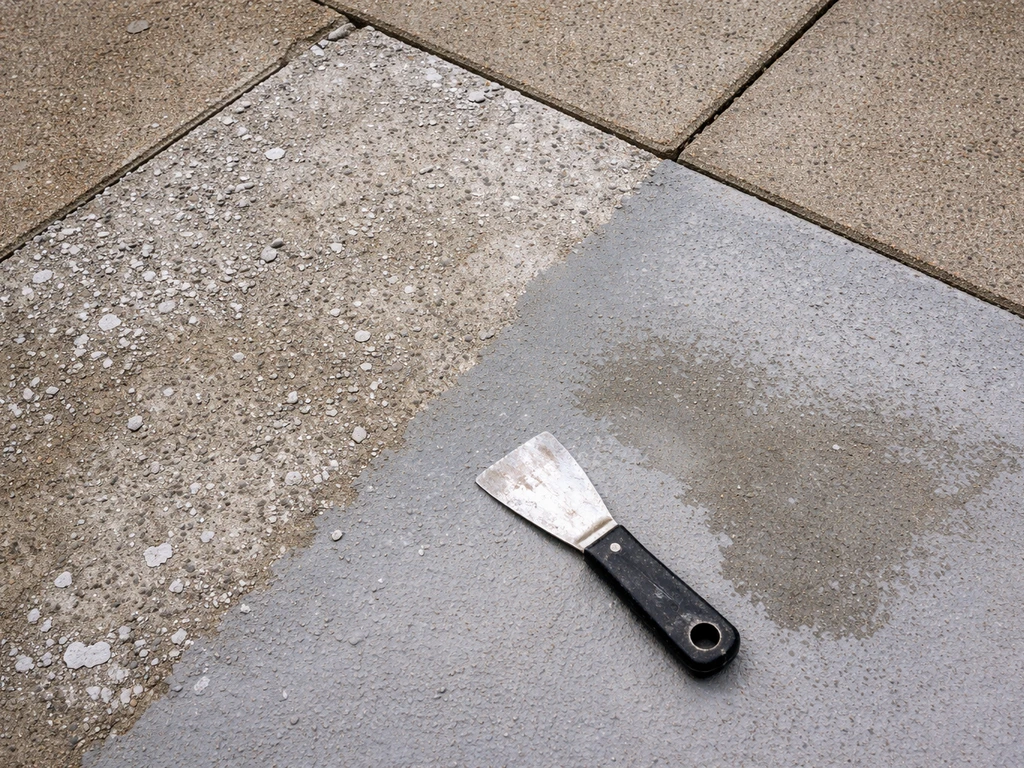
How to Remove Paint From a Patio: Step-by-Step Guide
Step-by-step guide to remove patio paint from concrete, brick, stone, pavers, travertine, flagstone, or wood safely.
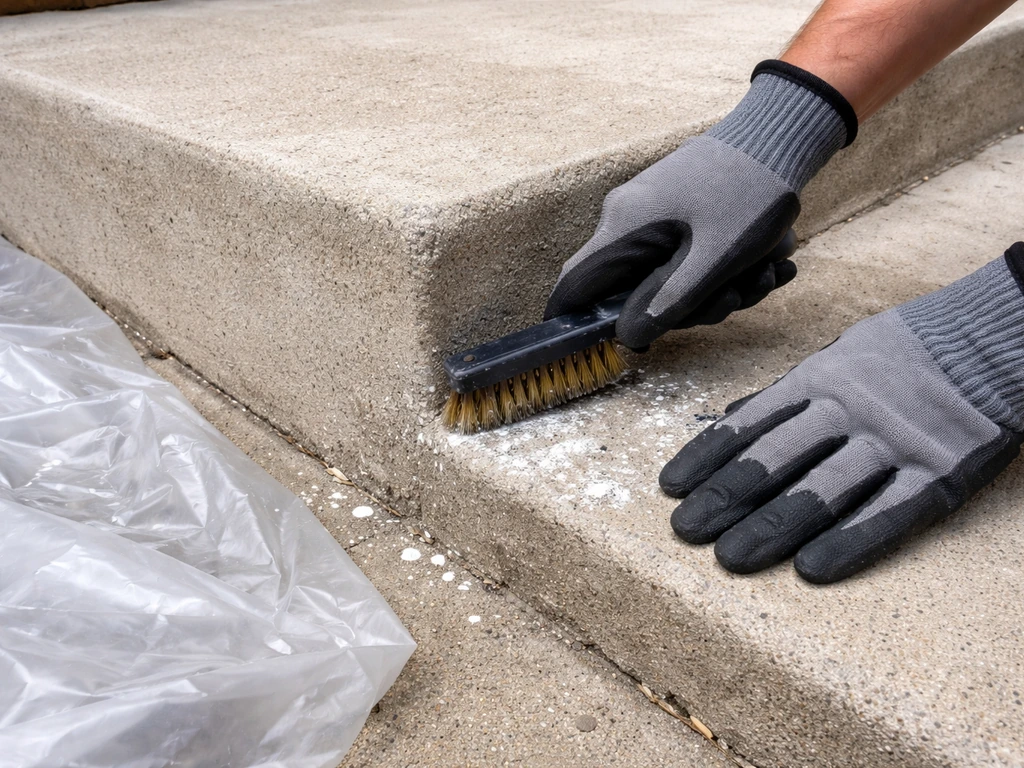
How to Remove Paint Off a Concrete Patio Step by Step
Step-by-step methods to remove paint from a concrete patio, including spray paint, old paint, scraping, sanding, and saf
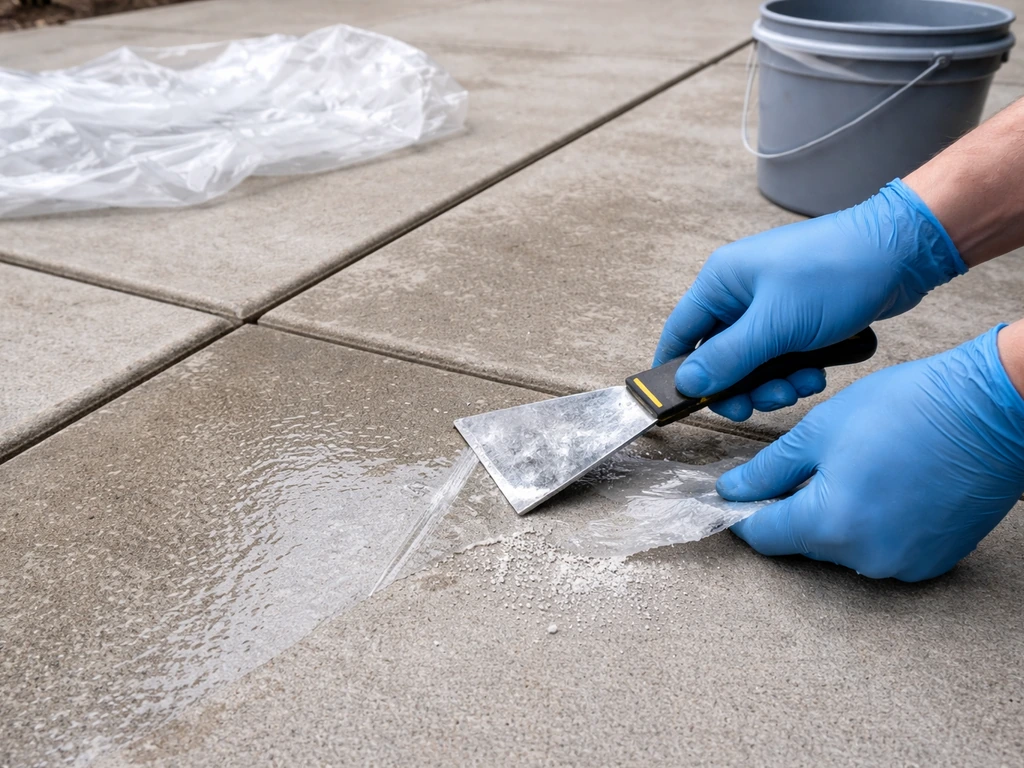
How to Remove Thompson’s Patio Sealer Step by Step
Step-by-step removal of Thompson’s patio sealer on concrete, brick, pavers, and stone, with safety, tests, and cleanup.