
BBQ grease on a patio comes off best with a degreaser, some scrubbing, and a good rinse, but how you do it depends entirely on what your patio is made of. If you still need WD-40 removed instead of grease, use the same material-first approach, then follow a dedicated WD-40 cleanup method for patio slabs how to get WD-40 off patio slabs. Concrete and brick can handle strong alkaline degreasers, stiff brushes, and even a pressure washer. Natural stone like travertine, marble, or flagstone needs a much gentler approach because acids (vinegar, lemon) and bleach can etch or permanently discolor the surface. If the spill just happened, blot it now before you read another word. The faster you act, the better your results.
How to Get BBQ Oil Off Patio: Clean Grease Fast
Dylan Hale
12 Jun 2026
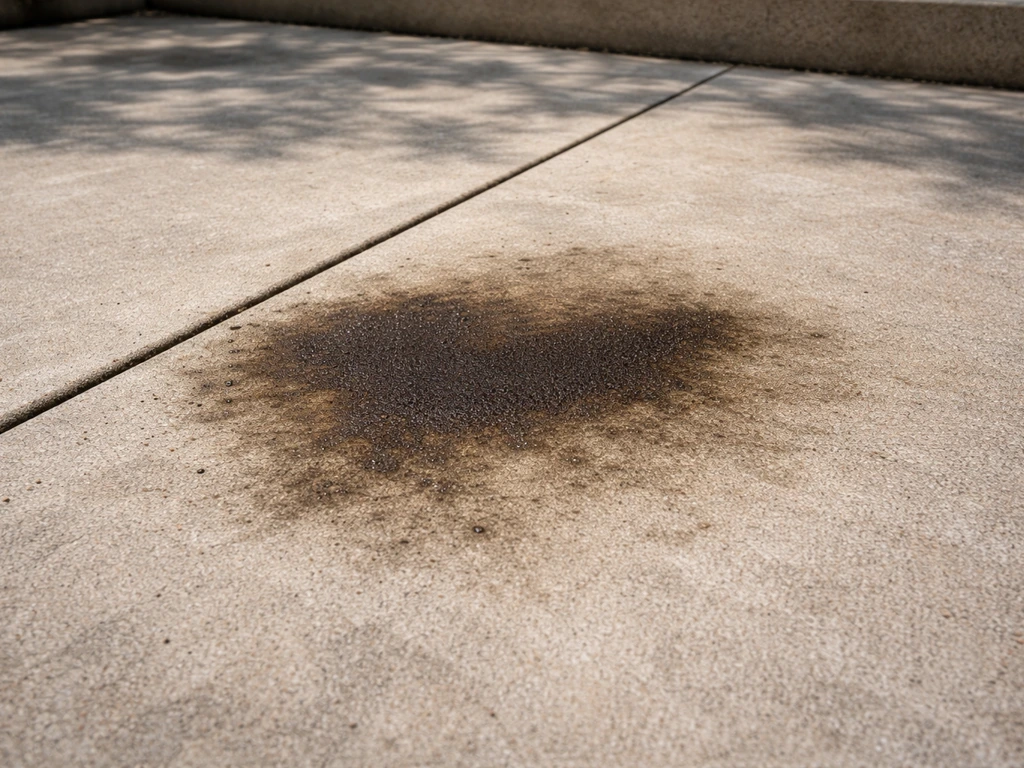
Know your patio material before you reach for a cleaner
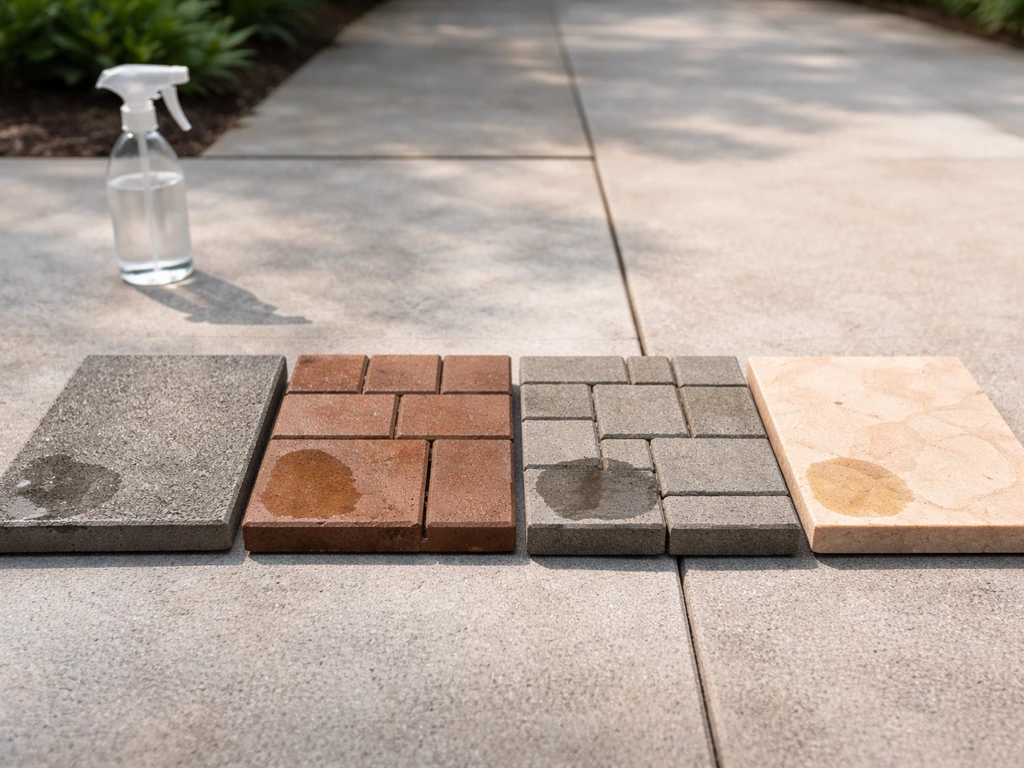
This is the step most people skip, and it's where things go wrong. The wrong cleaner on the wrong surface can leave you with a worse problem than the grease stain. Here's a quick breakdown of what your patio can and can't handle:
| Patio Material | Safe Cleaners | Avoid |
|---|---|---|
| Concrete | Alkaline degreasers, dish soap, diluted bleach, vinegar (diluted) | Muriatic acid unless etching intentionally |
| Brick | Alkaline degreasers, dish soap, diluted bleach | Straight undiluted acid cleaners |
| Pavers (concrete-based) | Alkaline degreasers, dish soap, mild bleach solution | Strong acids that can strip sealer |
| Natural Stone (granite, slate, sandstone) | pH-neutral stone cleaner, alkaline degreaser (stone-safe) | Vinegar, lemon, bleach, ammonia |
| Travertine / Marble / Limestone | pH-neutral stone cleaner, poultice method only | Vinegar, bleach, ammonia, any acid — these cause permanent etching |
| Flagstone | pH-neutral cleaner, mild alkaline degreaser | Acids, bleach (test first — composition varies) |
If you're not sure what your patio is made of, assume it's sensitive and start with the gentlest method. You can always go stronger, you can't undo etching on travertine. A good rule of thumb: if your patio tiles look creamy, beige, or have natural veining, treat them like travertine and skip the vinegar entirely.
Act fast: prep the area and remove excess grease first
Before you apply any cleaner, do this. It takes two minutes and makes everything else work better.
- Blot — don't wipe — the fresh grease with paper towels or a clean cloth. Press down and lift straight up. Wiping just spreads the oil into a larger area and pushes it deeper into porous surfaces.
- Scrape off any solid or semi-solid residue (burnt bits, congealed fat) with a plastic scraper or an old credit card. Avoid metal scrapers on stone — they scratch.
- Cover nearby plants or grass with a tarp or wet them down first if you're planning to use a chemical degreaser. Runoff matters, especially on a sloped patio.
- Put on rubber gloves now. Even dish soap irritates skin after repeated scrubbing, and anything stronger warrants protection. If you're using bleach, add eye protection.
- Check that the area is dry enough to work on but not baking in direct sun — hot surfaces cause cleaners to evaporate too fast before they can dwell and work.
For old, dried BBQ grease, the kind that's been sitting since last weekend's cookout, skip the blotting and go straight to scraping, then apply your degreaser. The soaking time does the work that blotting would have done if you'd caught it fresh.
Manual cleaning: soap, degreaser, and scrubbing
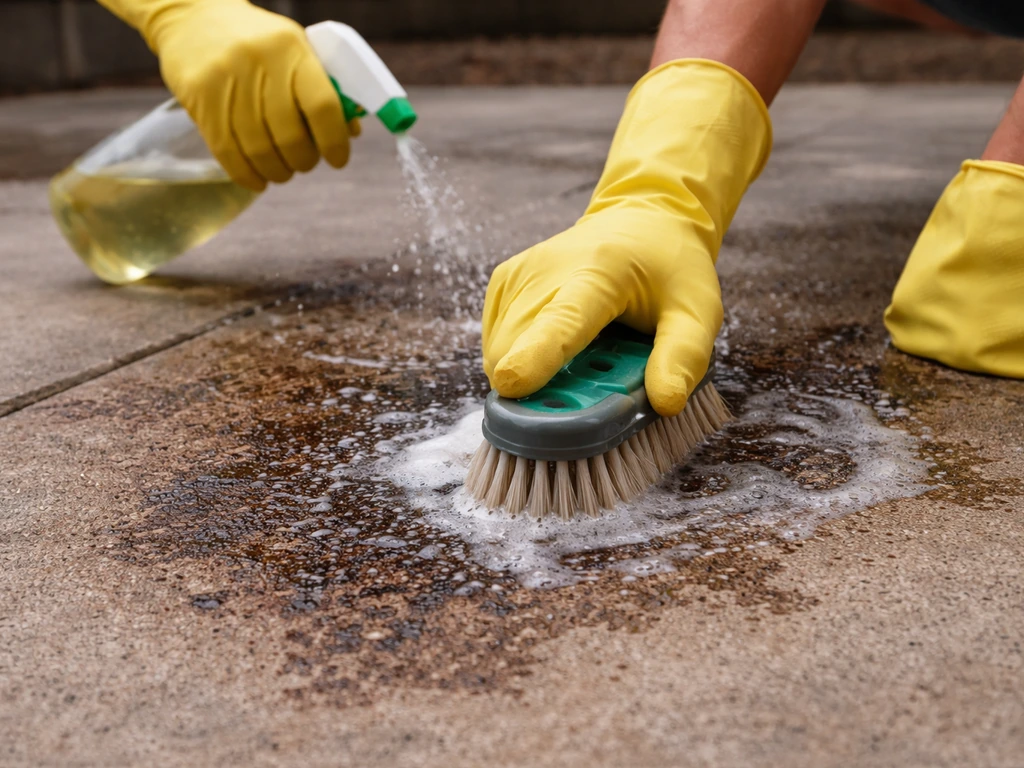
This is the method I'd use first on almost any patio, because it gives you control and it's low risk. Here's how to work through it:
- Apply your degreaser directly to the stained area. For concrete or brick, a concentrated alkaline degreaser (like Krud Kutter, Kick-Ass Degreaser diluted to about 1:10, or even concentrated dish soap) works well. For natural stone, use a pH-neutral stone-specific degreaser only.
- Let it dwell. This is the step people rush. A good alkaline degreaser needs 2 to 5 minutes of contact time to break down cooking oil and grease. Some products specify 2 to 3 minutes minimum — check your label. Thicker or older grease deposits need more time.
- Scrub with a stiff-bristle brush (nylon bristles for stone, stiffer for concrete). Work in a circular motion and apply real pressure on concrete or pavers. On travertine or marble, use a soft brush only.
- Add a little warm water as you scrub to help lift the emulsified grease to the surface rather than pushing it deeper.
- Rinse thoroughly with clean water and check the stain. Repeat the dwell-and-scrub cycle if grease is still visible — most moderate stains need two rounds.
For budget-conscious readers or renters who don't want to buy specialist products, undiluted dish soap (the kind that cuts grease, like Dawn) combined with near-boiling water works surprisingly well on concrete and brick for fresh spills. For sunscreen, the goal is to break down the oily ingredients first, then lift the residue with the right cleaner for your patio material. Pour it on, wait 3 minutes, scrub hard, rinse. It won't tackle old, set-in stains as well as a proper degreaser, but it's a solid first attempt.
Pressure washing: when it helps and when it makes things worse
Pressure washing accelerates everything, including damage, if you use the wrong settings. For heavy grease removal, effective pressure typically sits in the 3,500 to 4,500 PSI range, but most residential machines top out around 2,000 to 3,000 PSI. That's usually enough for concrete and brick if you use the right nozzle and technique. Northern Tool’s pressure washer nozzle selector suggests typical nozzle angles of 15° for heavy-duty concrete and brick, 25° for general cleaning, and 40° for delicate surfaces. The key decisions are nozzle angle and distance.
Nozzle selection
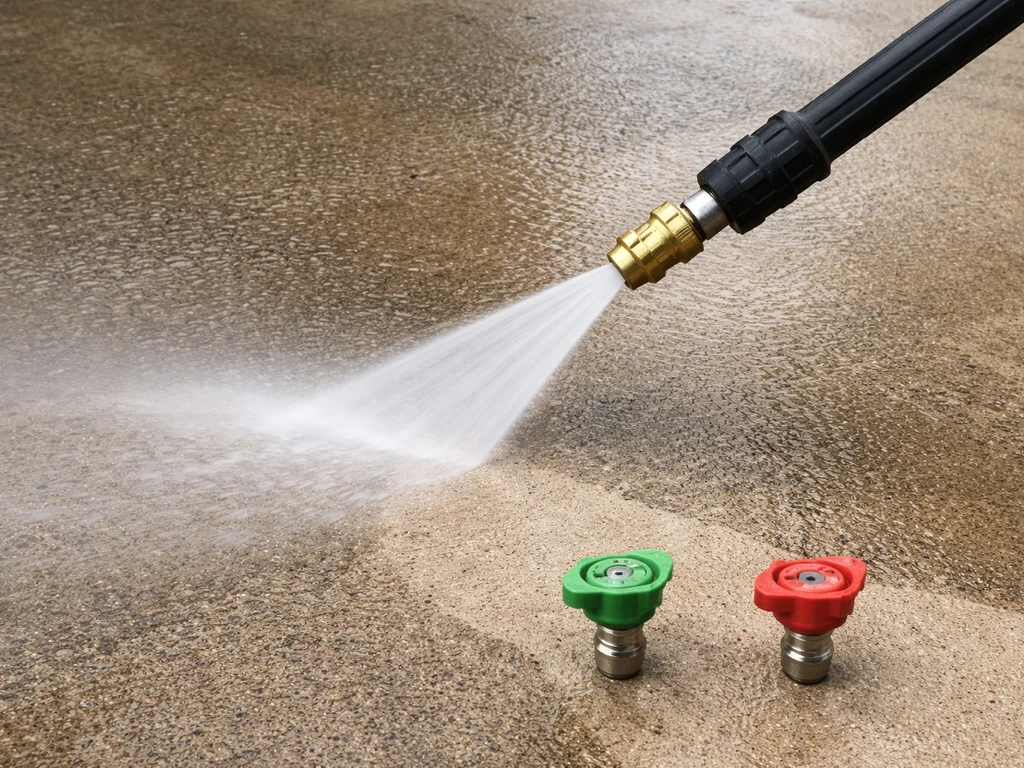
- 25-degree nozzle (green): Best starting point for most concrete and paver patios. Good general cleaning power without the surface damage risk of narrower nozzles.
- 15-degree nozzle (yellow): Use for tough, set-in grease on concrete or brick where the 25-degree isn't cutting it. Keep the wand moving constantly.
- 40-degree nozzle (white): Choose this for more delicate surfaces, painted pavers, or aged brick where mortar joints are soft. Lower impact.
- 0-degree nozzle (red): Avoid this for patio cleaning. It's too concentrated and will damage almost any patio surface, including concrete.
A surface cleaner attachment (the spinning disc accessory) is genuinely the best tool for large concrete or paver areas. It distributes pressure evenly, prevents the stripe marks you get from a handheld wand, and cuts cleaning time significantly. If you're renting a pressure washer, ask if they have one.
When to skip pressure washing entirely
- Travertine, marble, limestone, and most polished natural stone: High pressure can widen existing pits, erode the surface, and blast out grout or filler between tiles.
- Patio surfaces with existing cracks: Pressure washing can extend cracks and force water into subsurface layers.
- Surfaces with a fresh sealer: Give any newly sealed patio at least a few weeks before pressure washing.
- Soft or aged mortar joints in brick or stone: Pressure can blast the mortar out, which is expensive to repair.
One thing I've seen happen too often: someone pressure washes a grease stain without pre-treating it with degreaser first, and the high pressure just drives the oil deeper into the pores. Always apply and dwell your degreaser, then use the pressure washer to rinse and lift, not to substitute for the chemistry.
Chemical spot treatments for stubborn grease
When scrubbing and basic degreasing aren't enough, you have a few escalation options, but which one depends on your surface.
Vinegar (for concrete and brick only)
White vinegar diluted with water can help cut through grease residue on concrete or brick. Apply it, let it sit for 5 minutes, scrub, and rinse well. It's worth trying if you want something gentler than bleach and you're working with kids or pets nearby. Important: do not use vinegar on travertine, marble, limestone, onyx, or any calcareous stone. It will cause etching and discoloration that cannot be reversed.
Diluted bleach (concrete and brick, with caution)
A solution of sodium hypochlorite (household bleach, around 1 part bleach to 10 parts water) can help break down organic residue from cooking fat on concrete and brick. Apply it, wait 5 minutes, scrub, and rinse thoroughly. Bleach can irritate skin and cause blistering of the eyes and mucous membranes, so use rubber gloves, eye protection, and work in a ventilated area. Never mix bleach with ammonia, the combination creates toxic gas. And never use bleach on natural stone. On travertine in particular, it causes discoloration that's difficult or impossible to fix.
Concentrated alkaline degreasers (most surfaces except sensitive stone)
Products like Kick-Ass Degreaser (used at full strength for tough stains or diluted up to 30:1 for lighter work), Pro Chem Dominator, or similar commercial alkaline cleaners are the most effective option for heavy grease on concrete and pavers. Apply at the concentration recommended for your stain severity, allow sufficient dwell time per label directions, agitate with a stiff brush, and rinse well. These are safe on most concrete, brick, and paver surfaces. For stone, check that the product is pH-neutral or stone-safe before applying.
Poultice method (best for natural stone and set-in stains)
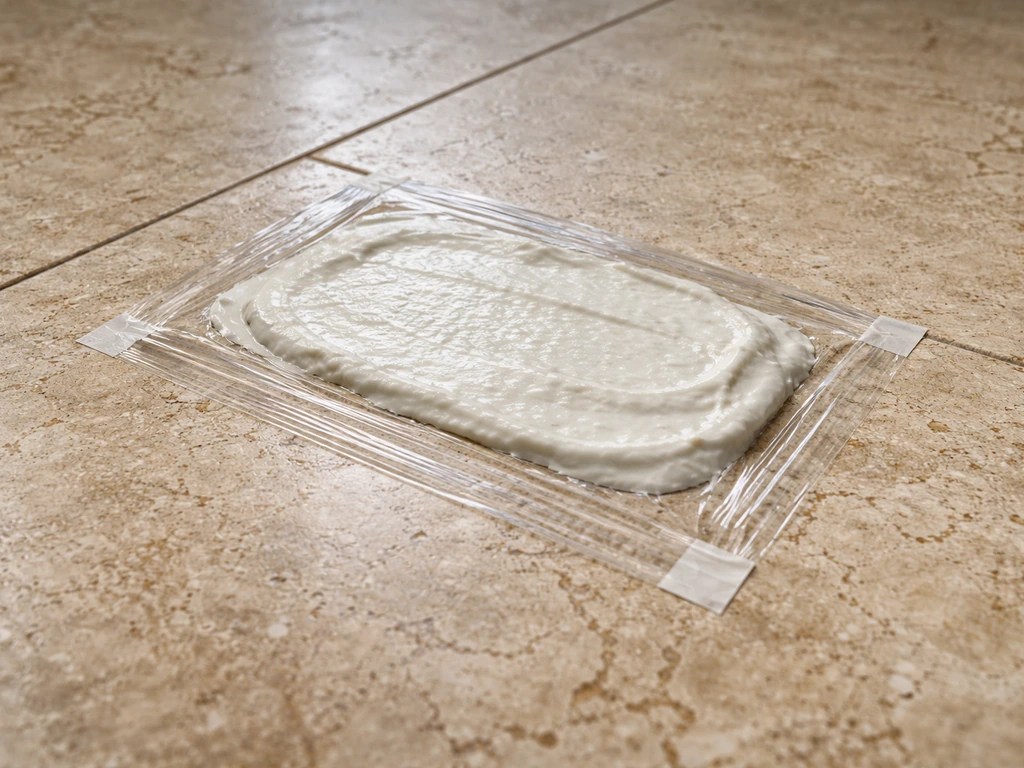
If you have travertine, marble, slate, or flagstone, the poultice method is your safest option for grease. A poultice is a paste that draws the oil out of the stone rather than dissolving it with acid or bleach. You can buy purpose-made products like STONETECH Oil Stain Remover, or make a basic version using baking soda mixed with a small amount of dish soap and water to form a thick paste. Apply about a quarter to half an inch thick over the stain, cover it with plastic sheeting and tape the edges down, and leave it for 24 to 72 hours. The paste absorbs the oil as it dries, pulling it out of the pores. Remove it, rinse, and repeat if needed. For very deep or old stains, a purpose-formulated product will outperform a DIY mix.
Rinse thoroughly, then protect against future stains
After any chemical treatment, flush the area thoroughly with clean water. This isn't optional, residual cleaner left on the surface can cause discoloration over time or continue reacting with porous material. Rinse twice if you used bleach or a strong degreaser.
Once the patio is dry, sealing is the single best thing you can do to prevent future BBQ grease stains from penetrating. A penetrating sealer (also called an impregnating sealer) fills the pores of concrete, pavers, and stone, making future spills bead on the surface instead of soaking in. For concrete and pavers, a solvent-based or water-based penetrating sealer applied every one to three years works well. For travertine and natural stone, use a sealer specifically formulated for that material. A properly sealed patio gives you enough time to blot a fresh grease spill before it becomes a stain, which changes the whole cleaning equation.
For day-to-day prevention around the BBQ, a heavy-duty rubber or silicone mat placed under the grill catches drips before they hit the patio. Some people also keep an absorbent cat litter or baking soda on hand to dump onto a fresh spill immediately, both draw oil out before it can penetrate, and you just sweep them up once they've done their job. If teak oil or other wood finishes have splashed onto your patio, use a method matched to the surface so you can lift the oily residue without damaging it how to remove teak oil from patio.
What to do when the grease won't lift
Sometimes you do everything right and the stain is still there. Here's how to think through what to try next.
The stain looks lighter but isn't gone
This usually means the treatment is working but the stain has penetrated deeper than one cleaning cycle can reach. Repeat the degreaser dwell-and-scrub process two or three more times over a couple of days. On natural stone, repeat the poultice application, this often takes two or three pulls to fully lift a deep oil stain. Don't rush to escalate to harsher chemicals before you've given the right product enough attempts.
The stain is completely unchanged after two attempts
If a basic degreaser has had zero effect after two proper attempts on concrete or pavers, step up to a concentrated commercial degreaser used at full strength. If you're dealing with a stain on natural stone that hasn't responded to a DIY poultice, switch to a professional-grade poultice product like STONETECH Oil Stain Remover and follow the full 48 to 72 hour dwell time. A single overnight application of a weak mix rarely works on a set-in stain.
The stain has been there for weeks or months
Old, deeply set grease is genuinely harder to remove. On concrete, a product specifically designed to absorb and lift oil (like Krud Kutter Oil Grabber, which works on a poultice-style absorption principle) combined with pressure washing afterward is worth trying. On natural stone, be honest with yourself: if the stain has been sitting for a long time and you've run through multiple poultice applications, it may be permanently absorbed into the stone. The Natural Stone Institute acknowledges that deep, old stains can become permanent. At that point, options include professional stone restoration services, or in some cases, strategic placement of outdoor furniture.
The surface looks worse after cleaning
If you see new discoloration, etching, or a dull patch after cleaning, stop immediately. This typically means the cleaner reacted with the stone, most often an acid (including vinegar) on travertine or marble, or bleach on a sensitive surface. Flush with plenty of clean water to stop the reaction and contact a stone restoration specialist. The same kind of surface damage can happen with other oily residues too, if you've ever dealt with teak oil or WD-40 on patio surfaces, you'll recognize that the wrong removal method creates new problems fast. A professional stone restorer can often re-hone or re-polish an etched surface, but it's a cost you want to avoid by using the right cleaner from the start.
FAQ
Can I use the same oil-removal method for all patio types (concrete, pavers, and stone)?
Yes, but only if you match the cleaner to the surface and protect the patio finish. For most concrete and brick, a detergent or alkaline degreaser can be used with careful dwell time and thorough rinsing. For travertine, marble, limestone, and other calcareous stones, avoid vinegar, bleach, and most harsh “kitchen” acids, use a stone-safe poultice approach instead.
What should I do if the grease stain still won’t lift after I clean it?
A grease stain that feels like it is “burned in” often needs more dwell time, not more pressure. Try repeating degreaser with the recommended dwell, scrub with a stiff brush, then rinse twice. If there is still no improvement after a couple correct cycles, step up to a stronger, concrete-safe degreaser on concrete and pavers, or use a second round of poultice on natural stone.
Is it okay to just pressure wash BBQ grease off my patio?
Don’t rely on pressure washing alone, because high pressure can push oil deeper into pores, especially on concrete, pavers, and textured surfaces. The safer sequence is chemical pre-treatment (degreaer or poultice), dwell and agitation, then pressure washing mainly for rinsing and lifting, not for doing the chemistry.
How long should I leave the cleaner on before scrubbing and rinsing?
Wait time is about dwell and reaction, not just “until it dries.” For most degreasers and oxidizers, keep to the product’s dwell directions, typically a few minutes to avoid surface damage. If you used bleach or a strong alkaline product, rinse as soon as dwell is done, then rinse again, especially if the patio is near plants or pets.
How can I tell if the cleaner damaged my patio while I was removing the grease?
Immediately rinse off excess cleaner if you see unexpected whitening, dark blotches, or a rough, dull patch. For suspected etching from acid cleaners on travertine or marble, flush with plenty of water to stop the reaction, then switch to a stone-safe process like a poultice and consider a stone restoration specialist for repairs.
Will sealed patio surfaces come clean differently than unsealed ones?
For sealed patios, degreasers often work faster because the oil cannot penetrate as deeply. Still, avoid bleach and acids on stone, and rinse well to prevent residue buildup that can interfere with the sealer. If you are not sure the patio is sealed, test in a small hidden area before going full-strength.
What if it’s not just grease, it also has sauce or sugary residue from the BBQ?
Yes, especially if the spill contains food oils plus other residues. Start with the gentlest approach that matches the patio material, then step up only after rinsing thoroughly. If grease is mixed with barbecue sauce or sugar-based marinades, you may need a degreaser rather than just dish soap, because sugar can leave sticky residue that attracts more dirt.
Are there safety steps I should take for plants, pets, and nearby surfaces?
For outdoor furniture or accessories near the work area, protect them and then treat the patio. If you used bleach, keep kids and pets away during application, wear gloves and eye protection, and do not let runoff hit nearby plants. After rinsing, give the area time to dry before moving items back.
What’s the best way to use a pressure washer without causing stripe marks or more staining?
You can, but choose the right “tool” based on your patio size and risk. A surface-cleaner attachment reduces streaking and gives more even results on large concrete or paver areas. A handheld wand is fine for spot work, but keep nozzle distance and angle controlled, and never skip pre-treatment with degreaser.
When can I seal the patio after removing BBQ oil, and how do I avoid sealing over residue?
Sealing matters, but timing matters too. Only apply a penetrating sealer after the patio is fully cleaned, rinsed, and completely dry, and after you confirm the surface is not still greasy. If you seal over detergent residue or an unremoved oil film, the sealer may fail or cause uneven darkening.
Next Articles
How to Get Sunscreen Off Patio Fast Without Damage
Fast steps to remove sunscreen from patio safely by surface, from scraping and gentle cleaners to tough stain lifts.
How to Remove Thompson’s Patio Sealer Step by Step
Step-by-step removal of Thompson’s patio sealer on concrete, brick, pavers, and stone, with safety, tests, and cleanup.
Can You Remove Patio Sealer? How to Strip It Safely
Learn if you can remove patio sealer and how to strip it safely by type, material, and method.