WD-40 on your patio is a greasy, oily mess that needs to come up fast before it soaks deeper into the surface. The basic process is the same regardless of material: blot up the excess immediately, apply an absorbent, then work in a degreasing detergent and rinse thoroughly. What changes is how aggressive you can be with your cleaner and tools depending on whether you have concrete, brick, pavers, travertine, or natural stone. Get that wrong and you can etch, discolor, or permanently damage the surface while trying to fix it.
How to Remove WD40 From a Patio by Surface Type
Dylan Hale
16 Jun 2026
Know your patio material before you reach for a cleaner
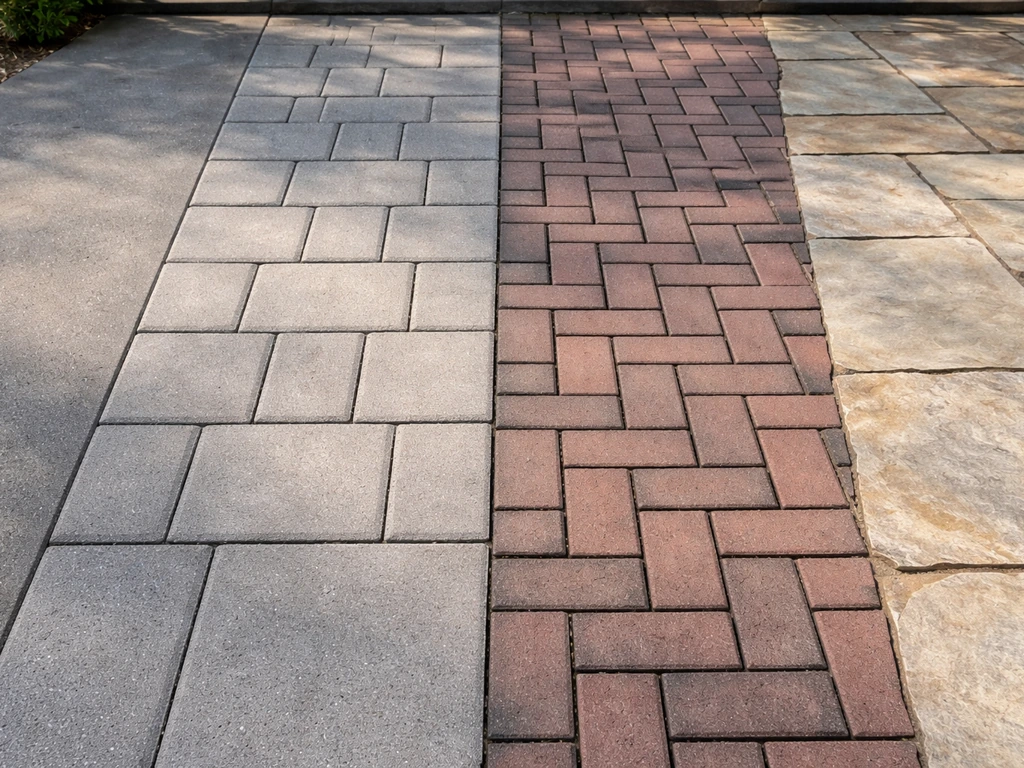
This step matters more than most people realize. A cleaner that works perfectly on concrete can permanently etch travertine or limestone. So before you do anything, figure out what you're dealing with.
- Concrete: usually gray, smooth or textured, feels almost like a road surface. Very common and fairly forgiving with most degreasers.
- Brick: reddish-brown individual units set in mortar. More porous than concrete, and the mortar joints need gentle treatment.
- Pavers: similar look to brick but often uniform in size, can be concrete-based or clay-based. Porous, and WD-40 soaks in fast.
- Natural stone (flagstone, slate, sandstone): irregular shapes, rough texture. Acid sensitivity varies widely by stone type.
- Travertine: a form of limestone with a distinctive pitted surface. Highly acid-sensitive. Treat it gently.
- Marble: polished or honed, calcium carbonate-based just like travertine. Etches easily with anything acidic.
Once you know your material, check whether it's sealed. A quick water-drop test tells you: drip a small amount of water onto the surface and watch what happens. If the water beads up and sits on top, the surface is sealed. If it soaks in within a minute or two, the surface is unsealed and porous. This matters because sealed surfaces let you wipe WD-40 away quickly before it penetrates, while unsealed surfaces absorb the oil and require a deeper cleaning approach. You can also look for a slight sheen or film on the surface as a visual clue, though penetrating sealers can be nearly invisible.
Safety prep and what to avoid
Put on chemical-resistant gloves and eye protection before you start, especially if you plan to use any commercial degreaser or stronger cleaner. Work in a ventilated area, and if you're cleaning near garden beds, grass, or planters, wet them down thoroughly first to dilute any runoff. Laying down a plastic sheet or old towels along the patio edge helps contain the runoff, which is especially important if you have a drain nearby that leads to a storm system.
Here's what not to do, and I want to be direct about this because these mistakes are easy to make:
- Do not use a wire brush on any surface. The metal wires scratch and pit the surface, especially concrete, and can leave metal fragments that rust later.
- Do not use vinegar, lemon juice, or any citrus-based cleaner on travertine, marble, limestone, or flagstone. Even diluted, acid etches these calcium carbonate-based stones and leaves permanent dull, chalky spots.
- Do not use bleach or products containing bleach on travertine, marble, or other polished natural stone. It causes etching and discoloration that can't be reversed.
- Do not use acetone or harsh solvent-based cleaners on natural stone. They can damage the surface and degrade any existing sealer.
- Do not skip the spot test. Always try your chosen cleaner on a small, hidden section first and wait 5 to 10 minutes to see if there's any reaction before treating the full stain.
- Do not let cleaning solution dry on the surface. Keep the area damp and rinse promptly.
The first thing you should do: quick removal steps
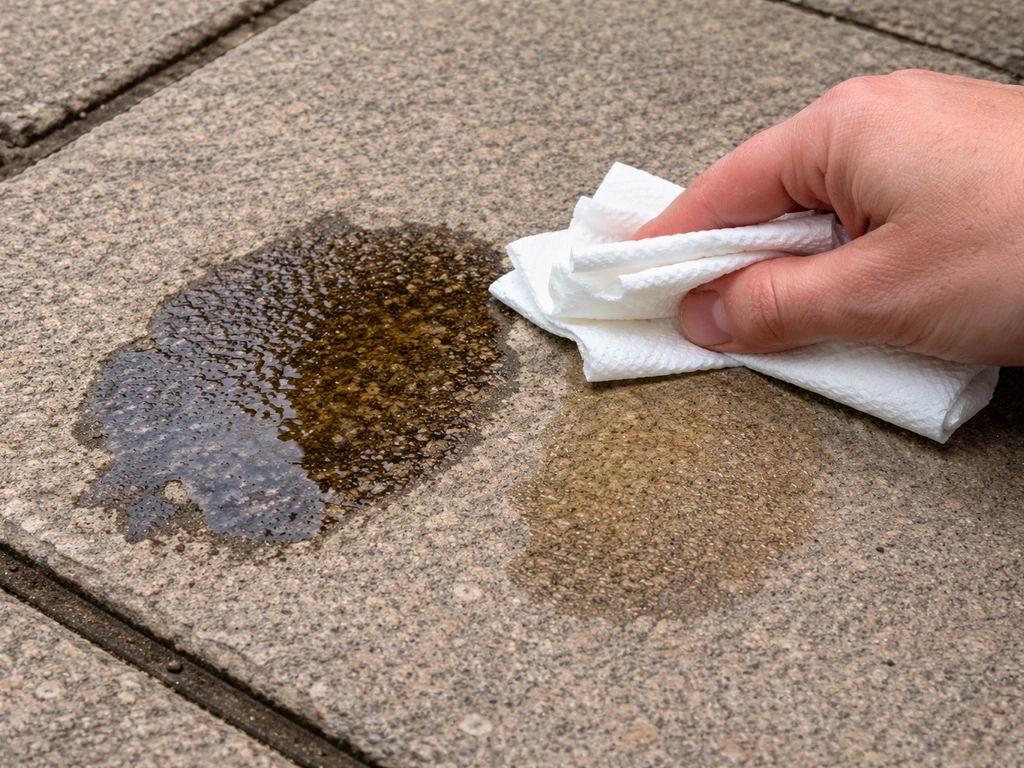
Speed matters here. The longer WD-40 sits, especially on unsealed or porous surfaces, the deeper it penetrates and the harder it is to remove. If you want a more detailed walkthrough, follow the material-specific deep cleaning steps for concrete, brick, pavers, and natural stone WD-40. Follow these steps in order before moving on to any material-specific deep cleaning.
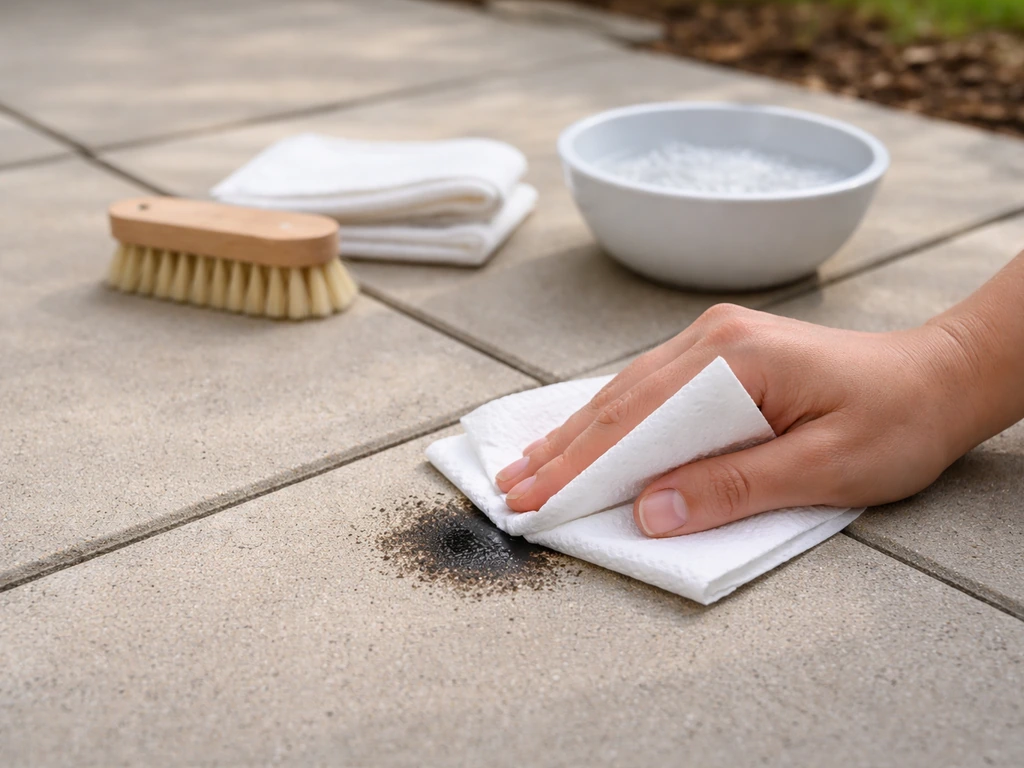
- Blot, don't spread. Use rags or paper towels to blot up as much WD-40 as you can. Press firmly and lift straight up. Wiping it sideways just pushes the oil into a bigger area.
- Apply an absorbent. Cover the remaining stain with cat litter, baking soda, cornstarch, or sawdust. Pour on a generous layer and press it gently into the stain. Let it sit for at least 15 to 30 minutes to draw the oil out of the surface.
- Sweep it up. Remove the absorbent material with a dustpan and stiff-bristle brush (not wire). You should see the absorbent has picked up a visible amount of the oil.
- Apply dish soap or a degreasing detergent. Squirt a generous amount of high-surfactant dish soap (Dawn is a common go-to) directly onto the stain, then add a little hot water to work up a lather. Scrub with a stiff nylon brush in circular motions.
- Let it dwell for 5 to 10 minutes. Don't let it dry, but give it time to work on the oil residue.
- Rinse with hot water. Flush the area thoroughly. Check the stain. For light or fresh spills on a sealed surface, this may be all you need.
If the stain is older, heavier, or on an unsealed porous surface, you'll need the deeper cleaning steps below based on your specific material.
Deep cleaning by patio material
Concrete
Concrete is the most forgiving surface to clean, but it's also highly porous when unsealed, so WD-40 can soak in deep fast. After your initial blot-and-absorb steps, apply a generous coating of dish soap or a dedicated concrete degreaser mixed with hot water. Scrub in circular motions with a stiff nylon brush. For stubborn stains, a paste of baking soda and dish soap applied directly to the stain and left for 20 to 30 minutes works well. Rinse with hot water and repeat if needed. Avoid wire brushes entirely on concrete, as they damage the surface.
Brick
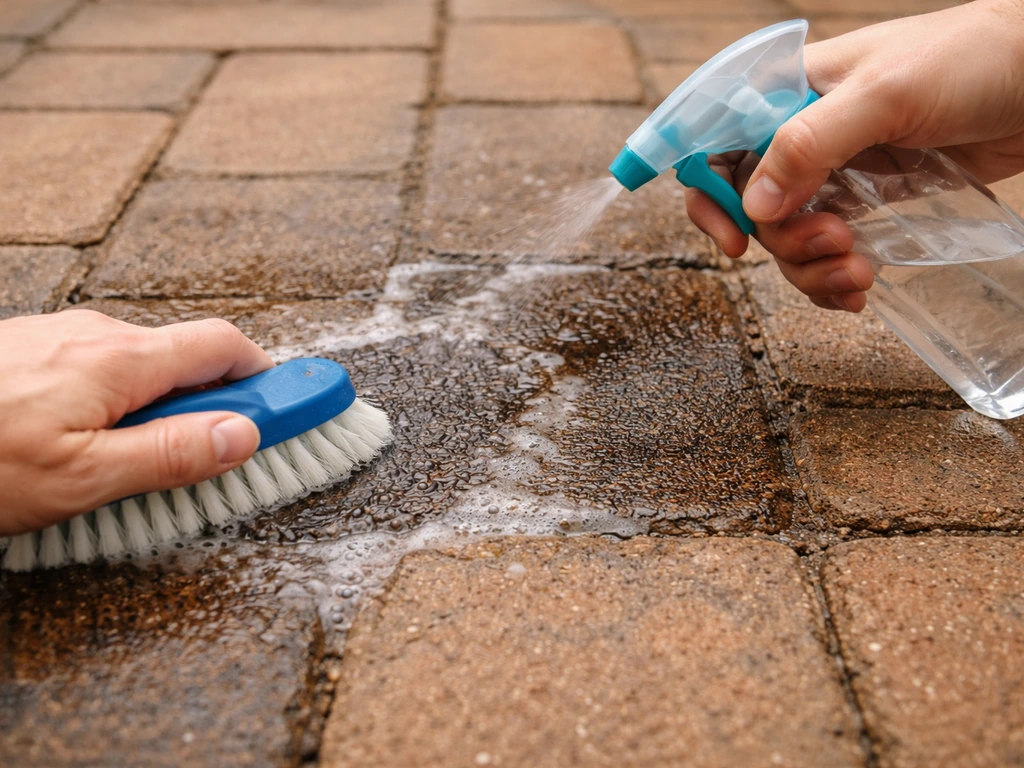
Brick is porous and the mortar joints are even more absorbent, so act fast. After blotting and absorbing, use a heavy-duty dish soap or a commercial brick cleaner diluted according to label directions. Scrub with a medium-stiffness nylon brush, paying attention to the mortar joints. Rinse thoroughly. Avoid very strong acid-based cleaners on brick unless you're specifically removing mineral deposits (not an oil stain), and always follow manufacturer recommendations for any commercial brick cleaning product since some contain corrosive compounds.
Pavers
Pavers behave similarly to brick in terms of porosity. Get the absorbent on the stain as fast as possible. For the degreasing step, dish soap with hot water and a good nylon scrub brush works well. If the stain has set in, a commercial patio degreaser or a surfactant-heavy cleaner will help. Be mindful of the joints between pavers, which can hold oil, and scrub those individually. Rinse very thoroughly since any soap residue left behind will attract dirt and leave a new mess.
Natural stone (flagstone, sandstone, slate)
Natural stone is where you really have to slow down and be careful. The acid sensitivity of stone varies: sandstone and slate are more tolerant than limestone-based flagstone. Use a pH-neutral cleaner specifically designed for stone and tile, like Miracle Sealants Tile & Stone Cleaner or a similar product. Mix according to label directions, apply to the stain, scrub gently with a soft nylon brush, and rinse well.
Avoid anything acidic (that includes vinegar), bleach, and harsh solvents. Dynamic Stone Tools also notes that acidic cleaners with a pH of about 0 to 6 can remove mineral deposits and rust, but they etch and permanently damage marble, limestone, travertine, and some granite. If you're unsure whether your flagstone is calcium carbonate-based, treat it as though it is and stay with pH-neutral options.
Travertine
Travertine is limestone, and that means it etches fast. Use only a pH-neutral stone cleaner, applied gently with a soft cloth or soft-bristle brush. Do not use vinegar, bleach, hydrogen peroxide, citrus cleaners, or any acidic or strongly alkaline product. Scrub very lightly and rinse immediately. Travertine's pitted surface can trap oil in those holes, so you may need a few repeated applications of neutral cleaner with gentle scrubbing to fully lift the grease. If the stain has been sitting for days and is deeply set, consider calling a stone restoration professional rather than trying a stronger chemical and risking permanent damage.
Choosing your degreaser: eco-friendly vs. stronger options
You have real options here, and the right choice depends on your surface and how bad the stain is. I always recommend starting with the gentler option and stepping up only if it doesn't work.
| Cleaner | Best for | Avoid on | Notes |
|---|---|---|---|
| Dish soap (high-surfactant, e.g. Dawn) + hot water | Concrete, brick, pavers, sealed stone | Travertine with etching risk if repeated aggressively | Gentlest option; good first step on any surface |
| Baking soda paste (mixed with dish soap) | Concrete, brick, pavers | Polished stone (mild abrasion risk) | Eco-friendly; let dwell 20-30 min for best effect |
| pH-neutral stone/tile cleaner | Natural stone, travertine, flagstone, marble | Not needed on concrete but won't hurt it | Only safe degreaser option for acid-sensitive stone |
| Commercial concrete degreaser | Concrete, brick, pavers | Natural stone, travertine | Follow label dilution; rinse very thoroughly |
| Sodium hypochlorite (diluted bleach solution) | Concrete, brick (biological growth + staining) | Travertine, marble, natural polished stone | Primarily for mold/algae; treat stone with neutral cleaner afterward to neutralize |
| Vinegar solution | Concrete only, if no sealer risk | All natural stone especially travertine, limestone, marble, flagstone | Avoid on stone entirely; limited use on concrete |
A note on sodium hypochlorite and bleach: these are sometimes useful on concrete or brick when there's biological growth (algae, mildew) combined with the oil stain, but they are not primarily degreasers. If you use a bleach-based product on concrete or brick, follow up with a thorough rinse and then a neutral cleaner to neutralize any residue. Never use bleach on travertine, marble, or natural polished stone.
For readers also dealing with other grease-based spills, similar material-by-material caution applies when removing things like BBQ oil or teak oil from patio surfaces. If you’re dealing with teak oil on your patio, use the same approach of blotting up the excess and working with a degreasing detergent, then rinse thoroughly. If you're dealing with BBQ oil, follow the same material-by-material caution so you lift the grease without damaging your patio surface.
On the subject of muriatic acid: it has no role in removing WD-40 or oil stains. It's a tool for removing mineral deposits, efflorescence, or heavy rust from concrete or brick, and it will permanently destroy acid-sensitive stone. Don't reach for it here.
Pressure washing vs. scrubbing by hand
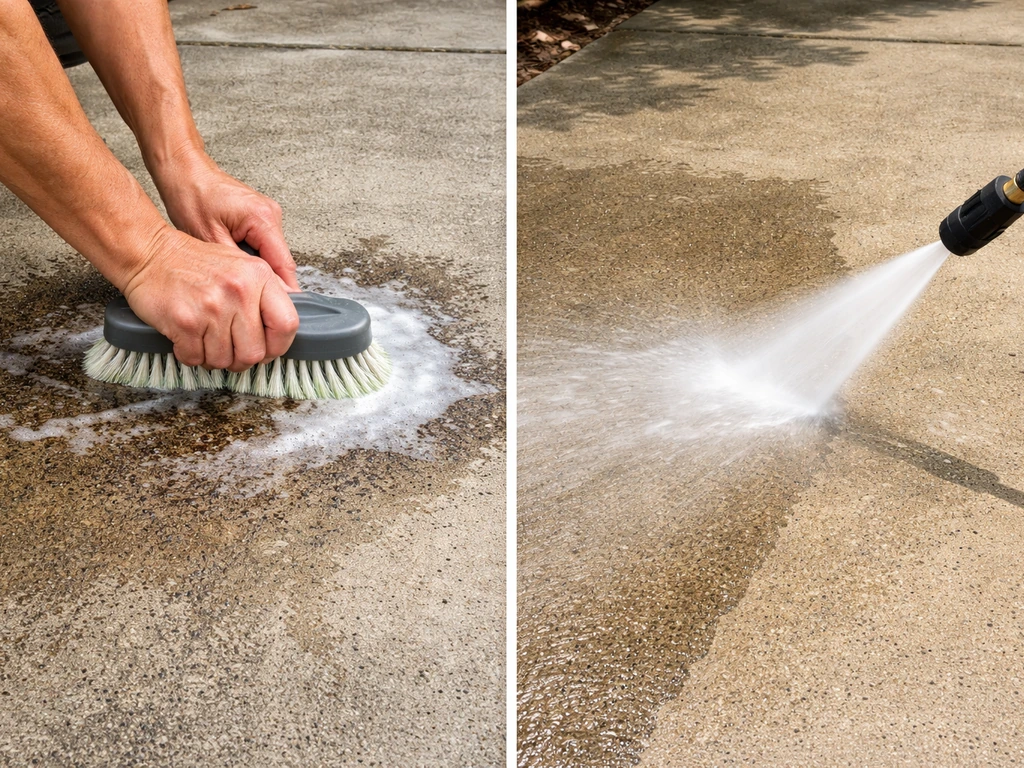
Both methods work, but they work differently and carry different risks. For most WD-40 stains, I'd start with manual scrubbing because it gives you more control, especially on stone or sealed surfaces. Pressure washing is great for rinsing and for shifting residue on concrete and brick after the detergent has done its job.
Pressure washing tips
- For concrete: a maximum of 2,500 to 3,000 PSI is safe, using a 25-degree or 40-degree fan tip. Stay 12 to 18 inches from the surface.
- For brick and pavers: use a lower setting, around 1,200 to 1,500 PSI, to avoid blasting out mortar or joint sand.
- For natural stone and travertine: use the lowest setting available, typically 1,000 PSI or under, with a wide fan tip. High pressure can chip, pit, or dislodge pieces.
- Never use a 0-degree (turbo/red) tip at close range. If you do use a narrow tip, start from a full arm's-length distance and approach slowly.
- Keep the nozzle at an angle (around 45 degrees) rather than pointing straight down at 90 degrees. This reduces the risk of surface damage.
- Do a test patch first on a small hidden area to confirm the pressure setting doesn't strip your sealer or damage the surface.
- Pressure washing alone won't remove oil. Apply your degreaser first, let it dwell, then use the pressure washer to rinse.
Manual scrubbing tips
- Use a stiff nylon brush for concrete, brick, and pavers.
- Use a soft nylon brush or a cloth for stone, travertine, and sealed surfaces.
- Never use a wire brush on any patio surface.
- Scrub in circular motions rather than straight back-and-forth to work the cleaner into the pores more effectively.
- For deep stains in porous materials, use a poultice: mix an absorbent powder (diatomaceous earth, baking soda, or pool filter powder) with a degreasing cleaner into a thick paste, spread it over the stain, cover with plastic wrap, tape the edges, and leave it for 24 hours. The poultice draws the oil up as it dries.
Rinsing, repeat passes, and keeping it from happening again
Rinsing is not optional. Any soap or degreaser residue left on the surface will act like a magnet for dirt, and on some surfaces it can leave a film or cause degradation of the sealer over time. Rinse the treated area with clean water, then rinse again. On concrete and brick, this means a full flush with a garden hose at decent pressure. On stone, rinse gently but thoroughly.
If the stain is still visible after the first round, don't panic. Repeat the degreaser-scrub-rinse cycle. WD-40 that has been sitting for more than a day in an unsealed porous surface may need two or three passes before it fully lifts. Between passes, check the stain under dry conditions (let it fully dry out, since oil stains are harder to see when wet). If after three passes there's still a clear dark oil stain, try the poultice method described above. For sunscreen stains on patios, act fast and use the right cleaner for your patio material before the residue soaks in.
Preventing future WD-40 stains
- Seal your patio if it isn't already. A penetrating sealer on concrete, brick, or pavers creates a barrier that slows oil absorption dramatically and makes future spills much easier to wipe up before they set.
- Keep a roll of paper towels or rags near the area where you use WD-40 so you can blot immediately.
- Put a drip mat or old cardboard under anything you're lubricating on the patio.
- Re-apply sealer every one to three years depending on traffic and product specs. Test with the water-drop method annually to check sealer integrity.
- If your stone is unsealed, consider applying a stone-appropriate penetrating sealer. Do the water-drop test first to confirm it needs it, then use a sealer rated for your specific stone type.
One honest caveat: if you have travertine or marble that has been stained by WD-40 and it's been sitting for a while, and especially if you've already tried a cleaner that may have caused some etching, it's worth consulting a stone restoration professional. Re-polishing or honing etched natural stone is not a DIY job, and trying to fix it yourself with the wrong product tends to make the damage worse. For most other patio surfaces though, the steps above will get you back to a clean patio without any professional help.
FAQ
Can I use a pressure washer to remove WD-40 from my patio?
Yes, but do it carefully. Start by checking whether the patio is sealed (water-drop test). If it is sealed, try blotting and degreasing first, then pressure rinse on a wide, low-to-medium setting from a distance. If it is unsealed or the surface is natural stone, avoid high pressure because it can force oil deeper into pores or lift grout and joint sand on pavers.
Is vinegar or bleach a good option for WD-40 on a patio?
Don’t rely on vinegar, bleach, or other acidic kitchen products for WD-40. WD-40 is an oil-based film, so acidic cleaners are not the right chemistry, and on travertine or limestone-based stone they can etch or permanently dull the surface. Use pH-neutral stone cleaners on stone, and dish soap or a purpose degreaser on concrete, brick, and pavers.
What’s the quickest safe method to remove WD-40 without damaging the patio?
On most patios, the fastest route is staged cleaning: blot up, absorb, then scrub with hot water plus dish soap or a degreaser, followed by a thorough rinse. Avoid jumping straight to commercial heavy-duty cleaners on natural stone or travertine, since you can cause discoloration or etching before the WD-40 is even removed.
What should I do if the WD-40 stain won’t come out after scrubbing?
If WD-40 is still dark after two to three rounds, use a poultice-style absorb-and-lift step rather than stronger chemicals. Only move to more aggressive products if you already know the material and you matched the cleaner to that material type. For travertine or marble with repeated attempts, consider professional restoration if you suspect etching.
Does it matter if the WD-40 has already dried on the patio?
Try to remove it before it dries fully. If the WD-40 has already dried, you can still recover it, but you usually need more dwell time with degreasing detergent and more scrubbing passes. Keep the area wet with cleaner (not water alone), and rinse only after each scrubbing cycle to avoid pushing oil around.
How do I get WD-40 out of the joints between pavers or brick?
Yes, especially on pavers and brick. Oil can wick into joints and settle under edges, so you may need to scrub mortar lines or grout joints individually and rinse along the joint channels. If you only clean the flat surface, the stain can reappear after the area collects dirt.
Can I use a wire brush to scrub WD-40 off concrete?
You generally should not. Wire brushes can scratch or roughen concrete surfaces, which makes future cleaning harder and can increase staining. Use nylon bristles (stiff for concrete if needed), and for stone use soft brushes or cloths with pH-neutral cleaners only.
How can I tell if I missed WD-40 residue after cleaning?
If you see a slippery feel or a rainbow sheen after cleaning, that usually means soap or degreaser residue remains. Rinse again with clean water, and if you used an unsealed surface, repeat the rinse once the area fully dries and re-check under dry conditions to confirm the oil film is gone.
How do I safely clean WD-40 from a patio near garden beds?
Protect plants and grass by watering them before you start, then keep runoff contained with towels or plastic at the patio edge. Afterward, rinse the patio thoroughly and avoid letting concentrated degreaser solution pool on soil, since it can stress plants and encourage uneven discoloration around the treated spot.
Should I re-seal my patio after removing WD-40?
Yes. If you discover after cleaning that the patio is sealed, future spills are easier to remove because the oil tends to sit on top instead of soaking in. For unsealed surfaces, consider sealing after the area is fully clean and completely dry, so trapped oil is not sealed underneath and causing lingering dark spots.
Next Articles
How to Get BBQ Oil Off Patio: Clean Grease Fast
Step-by-step ways to remove bbq oil and grease from concrete, brick, stone, pavers, and travertine safely fast.
How to Get Sunscreen Off Patio Fast Without Damage
Fast steps to remove sunscreen from patio safely by surface, from scraping and gentle cleaners to tough stain lifts.
How to Remove Thompson’s Patio Sealer Step by Step
Step-by-step removal of Thompson’s patio sealer on concrete, brick, pavers, and stone, with safety, tests, and cleanup.