Sunscreen comes off patio surfaces, but you need to match your method to the material and the type of sunscreen you're dealing with. Oily mineral sunscreens and greasy chemical SPF lotions behave like a grease stain and respond well to dish soap or a degreaser. Waxy or tinted sunscreens leave a film or discoloration that needs rubbing alcohol or an oxygen bleach soak to lift. Most sunscreen stains on concrete or pavers will come out with dish soap, warm water, and some scrubbing. Travertine, flagstone, and natural stone need a much gentler touch. Start with the steps below before reaching for anything harsh.
How to Get Sunscreen Off Patio Fast Without Damage
Dylan Hale
11 May 2026
First: figure out what you're dealing with
Before you grab a cleaner, spend one minute identifying your surface and your stain. The wrong approach on the wrong material can make things worse, and some cleaners that work great on concrete will etch or bleach natural stone permanently.
What's your patio made of?
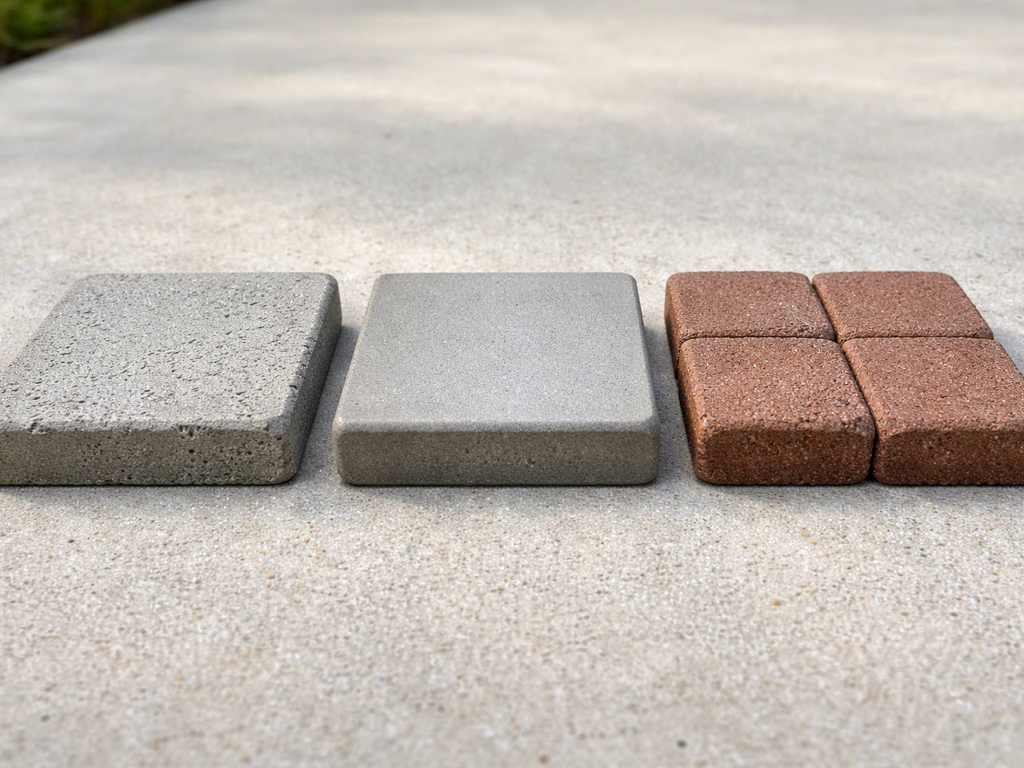
| Material | Key trait | Sensitivity level |
|---|---|---|
| Concrete | Porous, usually sealed or unsealed | Low to moderate |
| Brick / clay pavers | Absorbent, textured surface | Moderate |
| Concrete pavers | Denser than brick, often sealed | Low to moderate |
| Travertine | Natural limestone-based, acid-reactive | High |
| Flagstone | Variable (sandstone, slate, limestone) | High if limestone-based |
| Natural stone (bluestone, slate) | Layered, can flake or etch | High |
What type of sunscreen stain is it?
- Greasy or oily streaks: typical of lotion-based chemical SPF sunscreens. Treat this like a grease stain.
- Waxy residue or white film: common from mineral sunscreens (zinc oxide, titanium dioxide) or sport sticks. The white tint can look almost like efflorescence on concrete.
- Orange or pinkish tint: often from avobenzone in chemical sunscreens reacting with minerals in your patio surface. This is the hardest type to remove and usually needs an oxygen bleach soak.
- General slick discoloration with no clear color: usually a buildup of lotion residue over time, treated as an oil stain.
Stop the stain from spreading before you clean anything
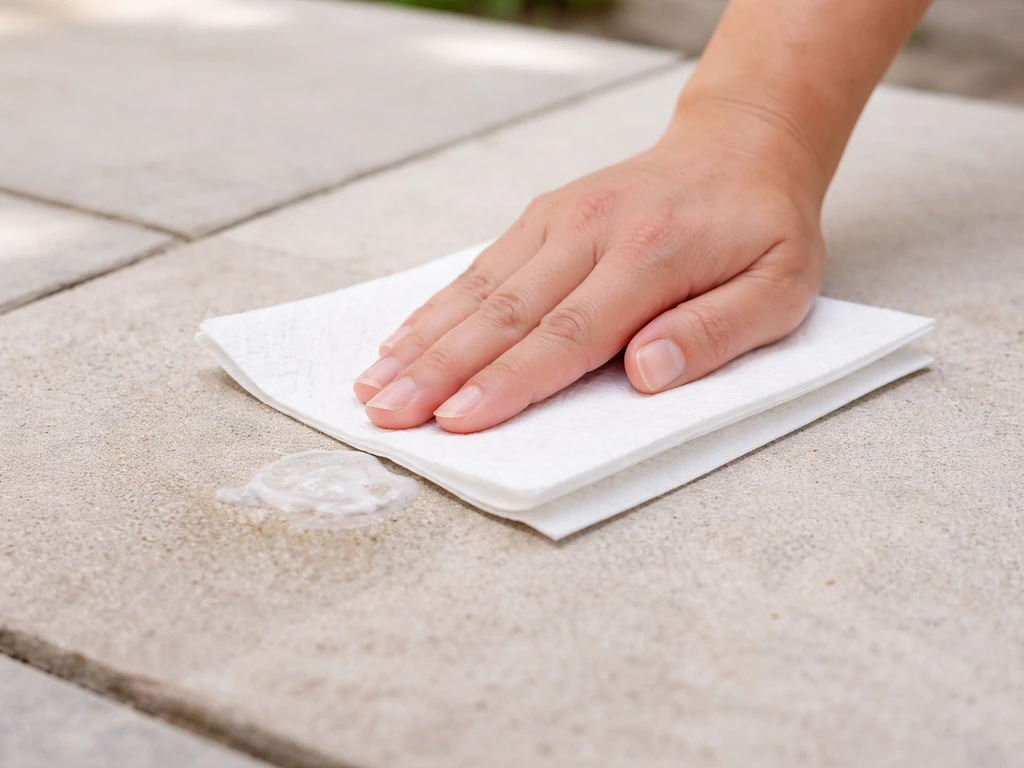
This step gets skipped constantly and it's a mistake. If the sunscreen is still wet or semi-fresh, spreading it with water or a mop will push it deeper into porous surfaces like brick and travertine. Do these steps first.
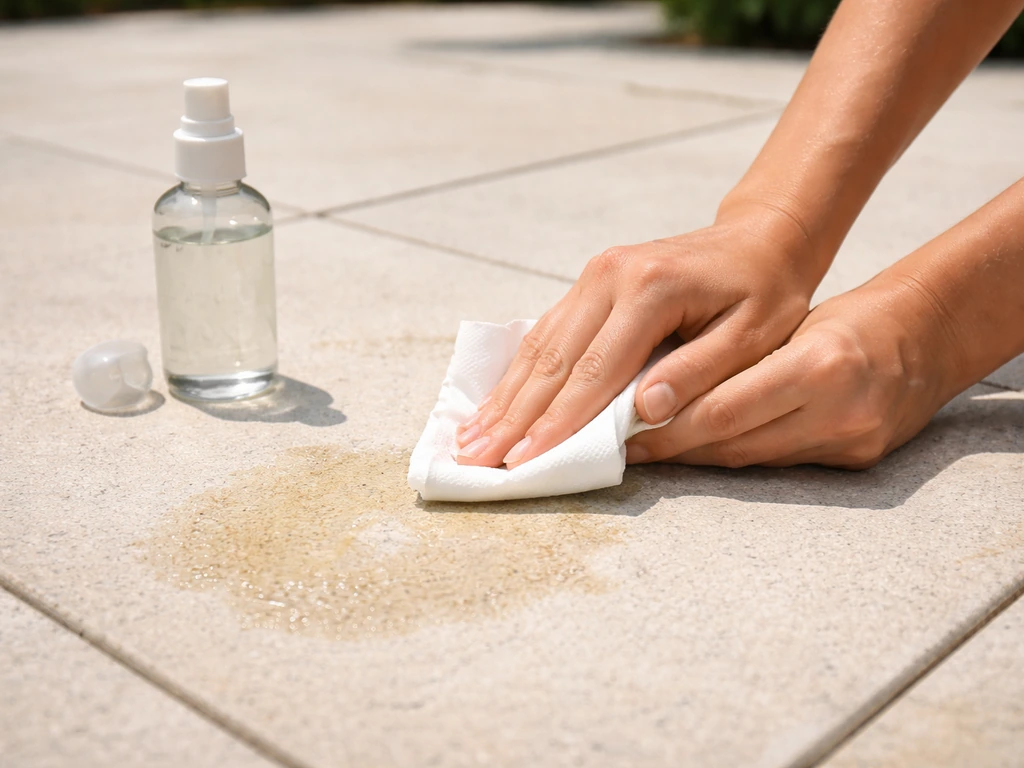
- Blot, don't wipe. Use a dry paper towel or clean rag and press straight down to absorb as much sunscreen as possible. Rubbing smears it into the pores of the surface.
- Absorb the excess. Cover the stain with baking soda, cornstarch, or cat litter. Let it sit for 10 to 15 minutes, then sweep it off dry. This pulls residual oil out of the surface before you add any liquid.
- Don't rinse yet with a hose. A blast of water right over a fresh sunscreen stain spreads it over a larger area. Wait until you've absorbed as much as you can.
- If the stain is old and dried, skip straight to the cleaning methods below. The absorption step won't help much on a cured stain.
Start with the gentlest cleaners
I always start here, even on stubborn stains, because these options are safe on every patio surface including travertine and flagstone. They won't damage sealers, won't etch stone, and they're safe for pets and plants. Most fresh sunscreen stains will come off with one of these three.
Dish soap (best all-around first try)
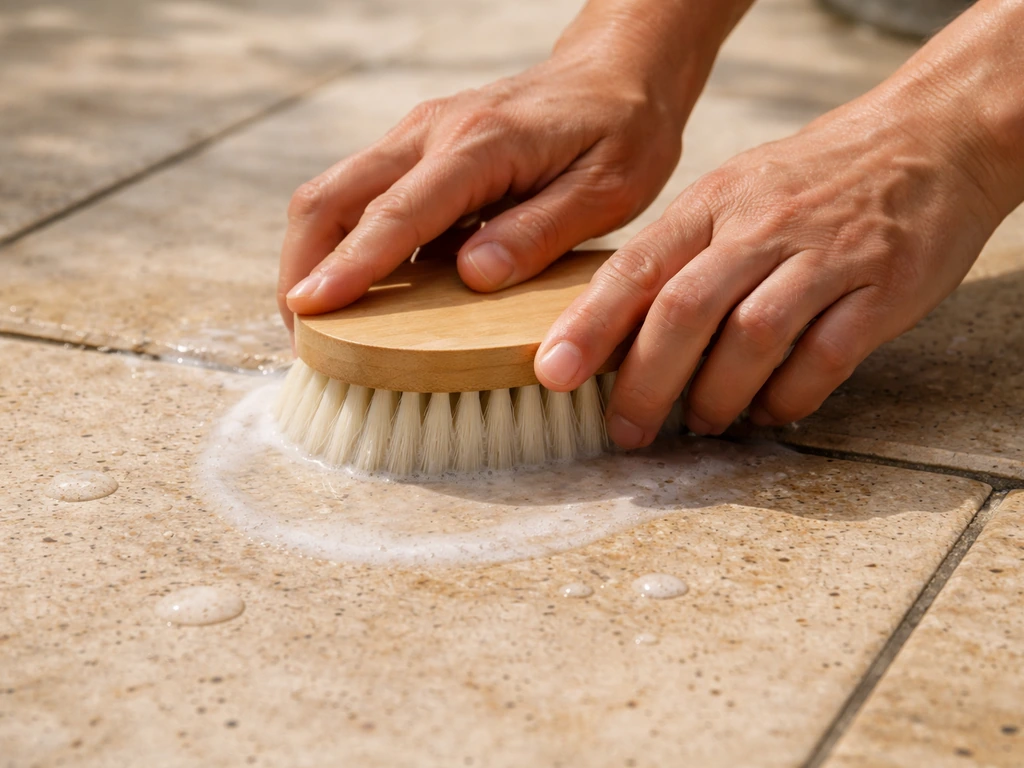
- Squeeze a generous amount of grease-cutting dish soap (Dawn or similar) directly onto the stain. Don't dilute it yet.
- Add just enough warm water to work up a lather. Use a stiff-bristle brush on concrete or pavers, and a softer brush or non-scratch scrub pad on travertine and natural stone.
- Scrub in circular motions for 2 to 3 minutes and let it sit for another 5 minutes.
- Rinse thoroughly with clean water. You should see the stain lifting during the rinse.
Rubbing alcohol (best for waxy film and mineral sunscreen)
Rubbing alcohol (70% isopropyl) cuts through the waxy residue from mineral sunscreens and sport sticks better than soap alone. Because DailyMed’s 70% isopropyl alcohol label warns it is flammable and should be kept away from fire or flame, treat it like a solvent around ignition sources. Apply it directly to the stain, let it sit for 3 to 5 minutes, then scrub and rinse. It's safe on all the materials listed above, including sealed surfaces and natural stone. Don't use it on painted concrete without spot-testing first, as it can lift paint.
White vinegar (for film and light discoloration on non-reactive surfaces)
A 50/50 mix of white vinegar and water works well on concrete and brick for cutting through the film left by sunscreen. Apply it, let it dwell for 5 to 10 minutes, then scrub and rinse. However, do not use vinegar on travertine, limestone-based flagstone, or any natural stone that reacts to acid. Vinegar is acidic enough to cause etching on those surfaces, which leaves permanent dull marks that can't be scrubbed out. If you're not sure whether your flagstone is limestone-based, skip the vinegar and stick with dish soap or rubbing alcohol.
Treating sunscreen as the oil stain it really is
Sunscreen is essentially a cosmetic formulation built on oil or wax carriers, which means the stain behaves a lot like a cooking oil or grease spill. The same approach you'd take with BBQ grease or other oily spills on a patio applies here. If WD-40 got onto your patio slabs instead, use the same oil-degreasing approach and then rinse thoroughly to pull the residue out of the pores how to get WD40 off patio slabs. If dish soap hasn't fully cleared it after one or two rounds, it's time to target the oily components more aggressively. If the stain you're dealing with is WD-40, use a degreasing approach suited to your patio material, then rinse thoroughly degreaser.
Oil-based sunscreen stains
- Apply a dedicated patio-safe degreaser or a citrus-based degreaser directly to the stain.
- Let it dwell for 10 to 15 minutes. Don't let it dry out. If conditions are hot, mist it lightly with water to keep it active.
- Scrub with a stiff brush, working the degreaser into the stain.
- Rinse thoroughly. Repeat once if needed.
Film-based or discolored stains (including avobenzone orange staining)
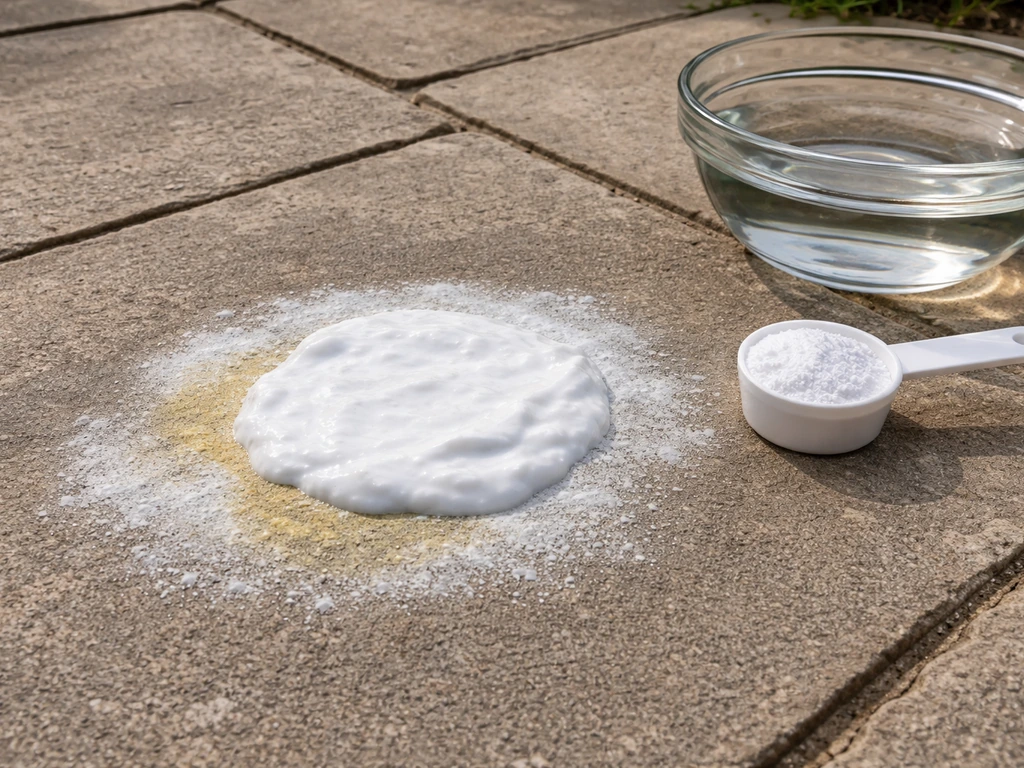
- Make a paste from oxygen bleach powder (like OxiClean) and warm water. Mix to a thick paste consistency.
- Apply the paste over the stain, spreading it about a half-inch beyond the stain edges.
- Cover with plastic wrap or a damp cloth to keep it from drying. Let it sit for 30 minutes to 1 hour.
- Scrub and rinse with clean water. Oxygen bleach is safe for all patio surfaces including brick and pavers, and won't bleach out your surface color the way chlorine bleach can.
Pressure washing vs. hand scrubbing: what works where
Pressure washing is faster and more effective for concrete and pavers, but it's genuinely risky on natural stone and mortared surfaces. GSA guidance for using high-pressure cleaning equipment on masonry recommends adjustable pressure ranges commonly between 500 and 2,000 psi, rather than using maximum pressure pressure washing is genuinely risky on natural stone and mortared surfaces. Here's how to approach each.
Pressure washing guidance by surface
| Surface | Recommended PSI | Nozzle | Notes |
|---|---|---|---|
| Poured concrete | 1000–1500 PSI | 25-degree fan tip | Pre-wet the surface; apply cleaner first before washing |
| Concrete pavers | 1000–1500 PSI | Turbo/rotary nozzle | Keep nozzle about 18 inches from surface to prevent scarring |
| Brick (unmortared) | 500–1000 PSI | 25 or 40-degree fan tip | Wet the surface first; avoid blasting joints |
| Clay pavers (mortared) | 30–50 PSI | 50-degree fan tip | Very low pressure required to protect mortar joints |
| Travertine | Not recommended | N/A | Hand scrub only; pressure can pit or crack the surface |
| Flagstone / natural stone | Use with caution only if not limestone-based | 40-degree fan tip at max 500 PSI | Safer to hand scrub; test on a hidden spot first |
When using a pressure washer, always pre-wet the stained area with clean water first, then apply your cleaner with a spray bottle and let it dwell before washing. This gives the cleaner time to break down the sunscreen before the pressure rinse. Skipping the dwell time and going straight to pressure washing often just spreads the stain rather than removing it.
Hand scrubbing: when it's the right call
For travertine, flagstone, or any natural stone, hand scrubbing is not a backup plan, it's the correct method. Use a soft-bristle brush or non-scratch scrub pad. Stiff wire brushes will scratch polished stone surfaces and create micro-abrasions that trap future stains. For concrete and pavers, a stiff nylon deck brush with good pressure is often all you need on a fresh stain and is a perfectly valid approach if you don't own a pressure washer.
Spot-test first, protect your finish, and rinse properly
Always spot-test a new cleaner
Before applying any cleaner to the main stain, test it on a small hidden area first, like the back edge of a slab or a paver that's normally covered by a planter. Apply the cleaner, wait the full dwell time, then rinse and check. You're looking for any color change, surface dulling, or texture change. This is especially important with rubbing alcohol on painted concrete, any acidic cleaner near natural stone, and any bleach-based product on colored or dyed pavers.
Protecting sealed surfaces and finishes
If your patio is sealed, aggressive scrubbing or strong chemicals can strip the sealer along with the stain. For sealed concrete or sealed pavers, start with dish soap and rinse quickly. If you end up using a degreaser or oxygen bleach, inspect the surface after it dries to see if the sealer looks dulled or uneven. If the sealer is compromised, that section will need to be re-sealed after cleaning to protect the surface going forward.
Rinsing and disposal
Rinse thoroughly after every cleaning attempt. Soap and cleaner residue left on the surface attracts dirt and can cause its own discoloration over time. Use plenty of clean water and make sure runoff flows away from planted areas if you've used a degreaser or stronger cleaner. For disposal of rags soaked in rubbing alcohol or degreaser, let them air dry completely before putting them in a trash bag, as damp solvent-soaked rags can be a fire risk in a sealed bin.
When gentle methods aren't enough
If you've run through dish soap, rubbing alcohol, a degreaser, and an oxygen bleach soak and the stain is still there, it's time to consider stronger chemistry. Teak oil spills can be treated similarly to other oil-based stains, but it's important to use the right degreasing steps for your patio surface remove teak oil from patio. But this step is not for every surface, and you need to know the limits.
Sodium hypochlorite (chlorine bleach-based cleaners)
A diluted sodium hypochlorite solution (1 part bleach to 10 parts water) can help with stubborn discoloration on concrete and brick, particularly if the stain has developed any mildew or biological growth alongside it. Apply it, let it dwell for 10 minutes, scrub, and rinse completely. Do not use chlorine bleach on colored or dyed pavers, as it will strip the color. Do not use it on travertine, marble, or any natural stone. And keep it off any metal furniture, fasteners, or edging nearby.
What about muriatic acid?
Muriatic acid is sometimes mentioned for concrete stain removal, but it's the wrong tool for sunscreen stains. Sunscreen is an oil-based stain, and acid does not dissolve oils. Muriatic acid is effective for mineral deposits, efflorescence, and rust, not grease or wax. More importantly, it will destroy travertine, limestone flagstone, and any acid-reactive stone. It also damages concrete sealers and grout. Unless you're a very experienced DIYer dealing with a completely different problem on a bare concrete surface, leave the muriatic acid out of this job.
Quick escalation guide
| Stain type | Surface | Escalation option | Avoid |
|---|---|---|---|
| Oil/grease residue | Concrete, pavers, brick | Patio degreaser or citrus degreaser | Muriatic acid |
| Waxy film | Concrete, pavers, brick | Oxygen bleach paste | Vinegar on stone |
| Orange/pink discoloration | Concrete, pavers | Oxygen bleach soak + degreaser combo | Chlorine bleach on colored pavers |
| Any sunscreen stain | Travertine, flagstone (limestone) | Dish soap + rubbing alcohol only | Acid, chlorine bleach, vinegar, pressure washing |
| Any sunscreen stain | Natural stone (slate, bluestone) | Dish soap + oxygen bleach paste | Acid, wire brushes, high-pressure washing |
How to prevent sunscreen stains next season
Once you've cleaned the stain, a few simple habits will keep this from being a recurring problem every summer.
- Seal your patio. A quality penetrating sealer on concrete, pavers, or brick creates a barrier that prevents sunscreen oils from soaking into the pores. Reapply every one to three years depending on traffic and sun exposure.
- Use outdoor rugs or mats in high-traffic areas. Placing a mat near lounge chairs or the pool steps catches most sunscreen drips before they hit the patio.
- Apply sunscreen away from the patio surface. Have family members apply SPF on grass or inside before coming onto the patio. This eliminates most of the drip-and-smear problem at the source.
- Rinse the patio with plain water at the end of each day during summer. A quick hose-down before sunscreen residue has a chance to dry and set makes weekly cleaning much easier.
- Blot spills immediately. Keep a few old rags or paper towels near the patio door during summer. A 30-second blot right after a spill is far easier than dealing with a cured stain later.
Sunscreen stains are genuinely one of the more common oily-residue problems on patios in summer, in the same category as cooking oil from the grill and product drips from furniture maintenance. The same logic that applies to removing greasy stains from patios applies here: absorb first, use a grease-cutting cleaner, escalate carefully based on your surface. If you’re dealing with BBQ oil, the same degreasing approach and dwell time rules apply so you can lift the greasy residue without damaging your patio surface removing greasy stains from patios. Stick to the hierarchy above and you'll have most stains cleared up in under an hour.
FAQ
What should I do if the sunscreen is still wet or recently applied?
For wet sunscreen, blot or wipe first, then treat quickly with dish soap and warm water. If it is already smearing, avoid mopping with plain water because it pushes wax and oils deeper into pores. After wiping, use a short dwell with rubbing alcohol for mineral or sport-sticks (3 to 5 minutes), then scrub and rinse thoroughly.
Can I use a degreaser immediately, or should I stick to dish soap first?
Yes, but it depends on the surface. On unsealed concrete or pavers, a degreaser often works faster than soap when the stain looks slick or greasy. On sealed surfaces, start with dish soap, then only escalate to degreaser or oxygen bleach, and inspect after drying for sealer dulling before assuming the stain is gone.
Is it safe to combine different sunscreen cleaners like bleach and rubbing alcohol?
Do not mix cleaners. For example, using alcohol or soap is fine alone, but switching to chlorine bleach or other oxidizers right after could cause uneven reactions and make discoloration harder to fix. Rinse well between steps, wait for the area to dry, then choose the next single product.
Will pressure washing ruin my patio seal?
If the patio is sealed, pressure washing can strip or tunnel the sealer if you use high pressure or skip dwell. Keep pressure moderate, pre-wet, apply cleaner with a dwell time, and avoid lingering on grout lines or edges where sealer breaks down first. If you cannot confirm the sealer type, hand scrubbing and a controlled cleaner dwell are safer.
My sunscreen stain looks better after cleaning but darkens again after it dries. What now?
If the stain lightened but returned darker after drying, it usually means oils or wax remain in pores. Repeat with dish soap and warm water first, then try rubbing alcohol (for waxy/mineral) or a vinegar solution only on acid-safe surfaces. If it still persists after two to three rounds, switch to an oxygen-bleach soak on concrete or a suitable degreasing step on pavers, then rinse until runoff looks clear.
Can I use vinegar on sealed concrete or sealed brick?
If you have sealed concrete, vinegar can be risky only when the surface reacts or the sealer is compromised, because acid can create dull spots that look like etching. A safer default on uncertain stone is dish soap and warm water, then rubbing alcohol with a spot test.
Will rubbing alcohol remove sunscreen and also damage painted concrete?
For painted or coated concrete, spot-test every cleaner. Rubbing alcohol can lift or soften paint, so test on a hidden spot first and stop if you see color transfer or matte dulling. If alcohol changes the finish, switch to dish soap and a non-scratch scrub pad and proceed more slowly.
When is chlorine bleach actually worth using, and where is it not allowed?
Chlorine bleach can strip color and harm stone, so use it only on appropriate, light-colored concrete or brick and only if needed for biological growth or deep discoloration. Even then, keep it away from metal furniture and rinse extremely thoroughly after the dwell period. If you have dyed pavers or natural stone nearby, oxygen bleach is usually the safer alternative.
What if there is still a dull mark on travertine or flagstone after cleaning?
If the stain is causing persistent dullness on natural stone, it often means the sunscreen oils bonded with the surface finish, or an acid cleaner etched it earlier. Start with gentle hand scrubbing using dish soap and warm water, then re-check after drying. If dull spots appear after any treatment, avoid repeated aggressive scrubbing and consider a professional stone-cleaning approach.
How do I properly test a cleaner on a hidden spot before treating the full stain?
Use the test area both ways: check before you apply widely (baseline), then after dwell and rinse (immediate), and again after it fully dries (final). This catches changes to sheen, discoloration under drying, and sealer dulling that you may not see right away.
How can I prevent runoff from harming grass or plants when cleaning sunscreen?
If runoff is staining nearby landscaping, stop the treatment, scoop up as much residue as possible, then rinse with plenty of clean water while directing runoff away from plants. For future attempts, use smaller application zones, slower dwell times, and protect beds with plastic sheeting or temporary barriers if you know you will use a degreaser or oxygen bleach.
Why do I get streaks after cleaning sunscreen off my patio, and how do I stop them?
Yes. Sunscreen residue behaves like grease, so microfiber rags can leave spreading streaks if you do not remove residue first. Blot off excess, treat with the right cleaner, scrub, then rinse until the surface no longer feels slick. If streaks remain, do a final dish-soap rinse and dry with clean towels.
Next Articles
How to Remove Thompson’s Patio Sealer Step by Step
Step-by-step removal of Thompson’s patio sealer on concrete, brick, pavers, and stone, with safety, tests, and cleanup.
Can You Remove Patio Sealer? How to Strip It Safely
Learn if you can remove patio sealer and how to strip it safely by type, material, and method.
How to Remove Resin From Patio Safely by Surface Type
Step by step guide to remove resin from patio by surface type with safe scraping, softening and solvent methods.