
Teak oil on a patio comes off cleanly if you act fast and match your method to the surface. For help removing WD-40 without damaging the surface, follow the WD-40 on patio slabs removal steps for your material how to get WD-40 off patio slabs. Fresh spills blot up and degrease out within an hour. Older, absorbed stains need a poultice or a stronger degreaser, and sometimes a few rounds of treatment. The one thing that really determines what you can safely use is your patio material, so that's the first thing to nail down before you reach for any product.
How to Remove Teak Oil From Patio: Step-by-Step Guide
Dylan Hale
28 Jun 2026
Quick check: what's your patio surface and how old is the stain?
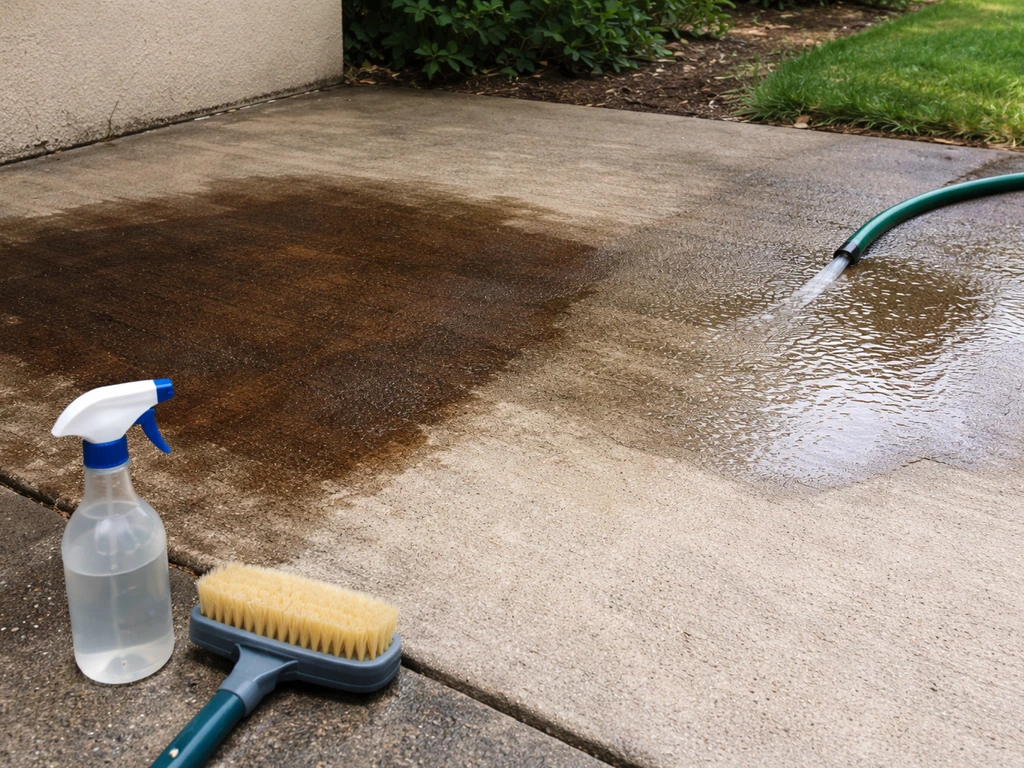
Not all patios respond the same way to degreasers and scrubbing. Concrete and brick are the most forgiving: they're dense, durable, and can handle stronger chemicals if needed. Pavers sit in the middle, depending on whether they're sealed. Natural stone, especially travertine and limestone, is the most sensitive and needs careful handling because acidic cleaners will etch and dull the surface permanently. Flagstone varies by type but generally tolerates mild degreasers well. If you're not sure what you have, look for a slightly porous, cream or tan surface with filled holes (travertine), a rough-textured split surface (flagstone), or smooth grey slabs (concrete).
The age of the stain matters just as much. A teak oil spill from today is still sitting near the surface and will lift with standard degreasing. A stain that's been there a week or more has wicked into the pores and will need a poultice or repeat treatment. Be honest with yourself about this: if you're looking at a dark, slightly tacky patch that's been there through rain, you're dealing with an absorbed stain and the gentle route alone probably won't cut it.
| Surface Type | Porosity | Safe Chemicals | Avoid |
|---|---|---|---|
| Concrete | Medium-High | Degreasers, TSP, dilute bleach, alkaline cleaners | Nothing special, but rinse well |
| Brick | Medium | Dish soap, degreasers, dilute bleach | Muriatic acid near joints |
| Sealed Pavers | Low (sealed) | Mild degreaser, dish soap | Solvents that strip sealant |
| Unsealed Pavers | High | Degreasers, alkaline cleaners | Acidic cleaners |
| Travertine / Limestone | High | pH-neutral stone cleaner, poultice | Vinegar, citrus, acidic products of any kind |
| Flagstone | Medium | Mild degreaser, dish soap, dilute bleach | Strong acid, avoid on polished surfaces |
First move: contain the spill, blot, and stop it spreading
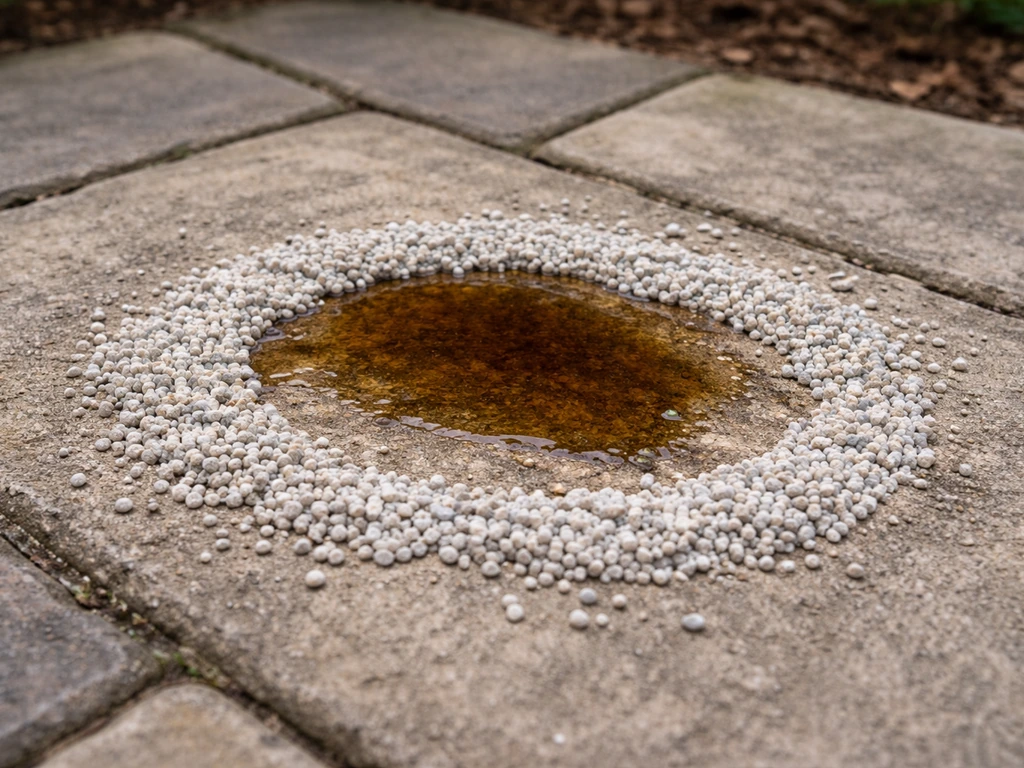
If the teak oil spilled recently, your first job is to keep it from spreading or soaking in deeper. Do not wipe it. Wiping smears the oil over a larger area and pushes it further into the surface. Instead, blot it. Grab paper towels, old rags, or absorbent cloth and press down firmly, then lift straight up. Repeat with clean material until you're not picking up any more oil.
Once you've blotted as much as you can, cover the remaining stain with an absorbent material. Kitty litter, baking soda, cornstarch, or sawdust all work. Pour a generous layer over the whole stain, press it in lightly, and leave it for at least 30 minutes (an hour is better). This draws oil out of the surface before it sets. Sweep it up and bin it, then move to degreasing.
Before you start applying any cleaner, protect surrounding plants by wetting them thoroughly with plain water. This dilutes anything that runs off. Move pots out of the way if possible. If your patio has grout lines or mortar joints, avoid letting strong degreasers sit in those joints for extended periods, as it can soften and discolor the mortar over time.
Gentle degreasing: start here before escalating
For fresh stains and most standard patio surfaces (concrete, brick, pavers, flagstone), a dish soap degreaser is the right first step. For a greasy BBQ oil splatter, the process is similar: degrease first, then rinse and repeat if any residue remains dish soap degreaser. I've found that the thick, concentrated formulas designed for cutting kitchen grease do better than standard dish soap. Dawn or any similar concentrated dish detergent works well.
- Mix a solution of about 2 tablespoons of concentrated dish soap or a purpose-made outdoor degreaser in a bucket of warm water.
- Pour or apply directly to the stain and let it dwell for 10 to 15 minutes. Don't let it dry out: if it starts to dry, add a little more solution.
- Scrub with a stiff-bristle brush (not wire on stone or pavers as it can scratch). Use firm, circular strokes working from the outside of the stain inward so you don't spread it.
- Rinse thoroughly with clean water. Check the stain. If it's lighter but still visible, repeat the process once more before moving to a stronger method.
For travertine and polished limestone, skip regular degreasers and use only a pH-neutral stone cleaner at this stage. Teak oil is alkaline-based, so an alkaline or neutral cleaner is your friend here. What you must avoid entirely on these surfaces is anything acidic: no vinegar, no lemon juice, no citrus-based degreasers. Cleaning Travertine Do's & Don'ts (Countertop Specialty) similarly cautions that acidic cleaners and other etching products can dull travertine’s finish and leave staining or marks anything acidic: no vinegar, no lemon juice, no citrus-based degreasers. Vinegar is often recommended for general patio cleaning and it works well on concrete and sealed surfaces, but it will etch and permanently dull travertine and limestone, which is a much worse problem than the oil stain.
For concrete and brick, a diluted white vinegar solution (1 part vinegar to 2 parts water) can help lift oil residue after the initial degreaser treatment. It works as a mild acid to cut through the remaining oily film. Apply, let it sit for 5 minutes, scrub, and rinse well. It takes longer but is a safer choice if you have pets or kids using the patio.
Stronger methods when the stain won't budge
If you've run through the gentle degreasing route twice and the stain is still clearly visible, you're dealing with oil that's soaked into the surface. This is where you need to escalate, and the right escalation depends on the surface.
Poultice treatment (best for stone, pavers, and deep concrete stains)
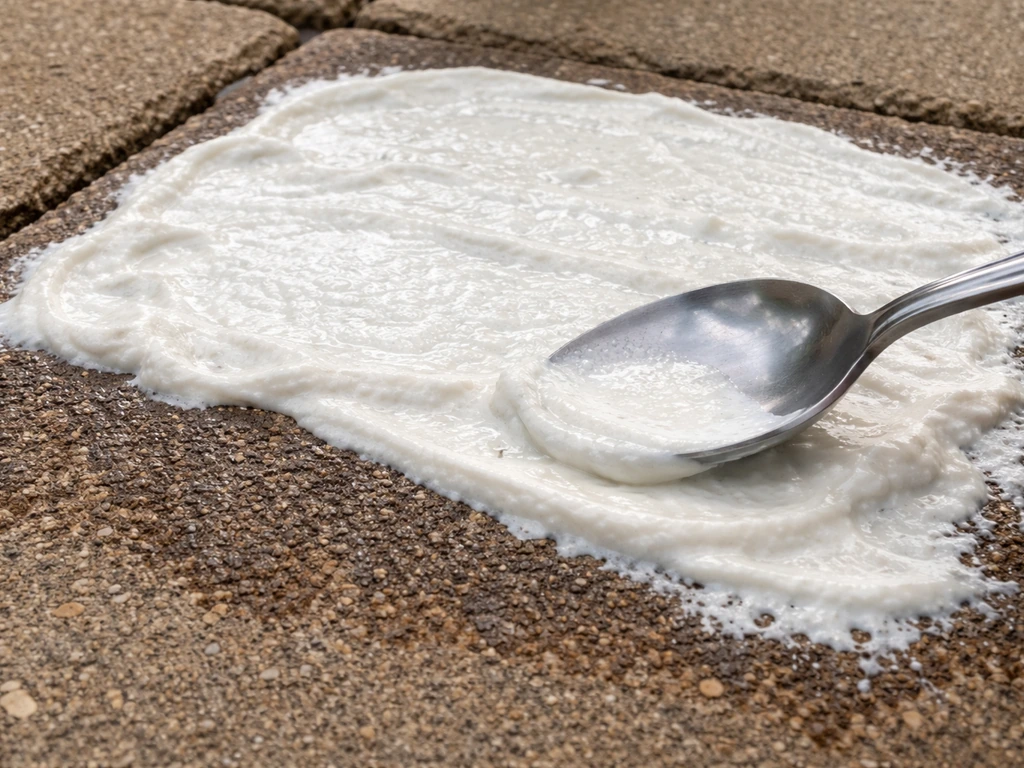
A poultice is a paste that draws oil back out of porous material as it dries. It's the most effective method for deep-set stains on any surface, and it's the go-to for sensitive stone like travertine where you can't use aggressive chemicals. Products like Aqua Mix Poultice Stain Remover are clay-based and designed specifically for this: you apply a thick paste over the stain, cover it with plastic wrap, and leave it to work. Aqua Mix Poultice Stain Remover is marketed as a clay-based absorbent paste intended to remove deep-set oil and grease stains without scrubbing.
- Apply the poultice paste thickly over the entire stain, about 1/4 to 1/2 inch deep.
- Cover the paste with plastic cling wrap and tape the edges down to slow drying.
- Leave it in place for 24 to 48 hours. The longer dwell time is better for older or deeper stains.
- Remove the plastic, allow the poultice to dry fully (it will lighten in colour as it dries), then scrape it off with a plastic scraper.
- Rinse the area thoroughly and assess. Deep stains may need a second or third application.
If you're making a DIY poultice rather than buying a ready-made product, you can mix an absorbent powder (diatomaceous earth, baking soda, or fine clay) with a solvent suited to your surface. For concrete and stone, mineral spirits work well as the solvent component. Mix to a peanut butter consistency and apply as above. Acetone works faster but has stronger fumes, so ventilate the area well and keep it away from flames.
Heavy-duty degreaser or TSP for concrete and brick
For stubborn stains on concrete and brick, trisodium phosphate (TSP) is one of the most effective options. Mix about 1/2 cup of TSP per gallon of hot water, apply it to the dry stain, scrub vigorously with a stiff brush, and let it dwell for 15 to 20 minutes before rinsing. Wear rubber gloves and eye protection as TSP is a strong alkaline cleaner. Rinse the area extremely thoroughly afterwards, especially if plants are nearby, as TSP is not something you want sitting in soil. This is not suitable for travertine or limestone.
Commercial concrete degreasers (available at hardware stores) are another solid option for concrete and brick. Look for products labelled as oil and grease removers for concrete driveways: they're formulated for exactly this type of stain. Apply per the product instructions, but generally you're looking at a 10 to 20 minute dwell time with scrubbing.
Pressure washing vs manual scrubbing: which to use and how
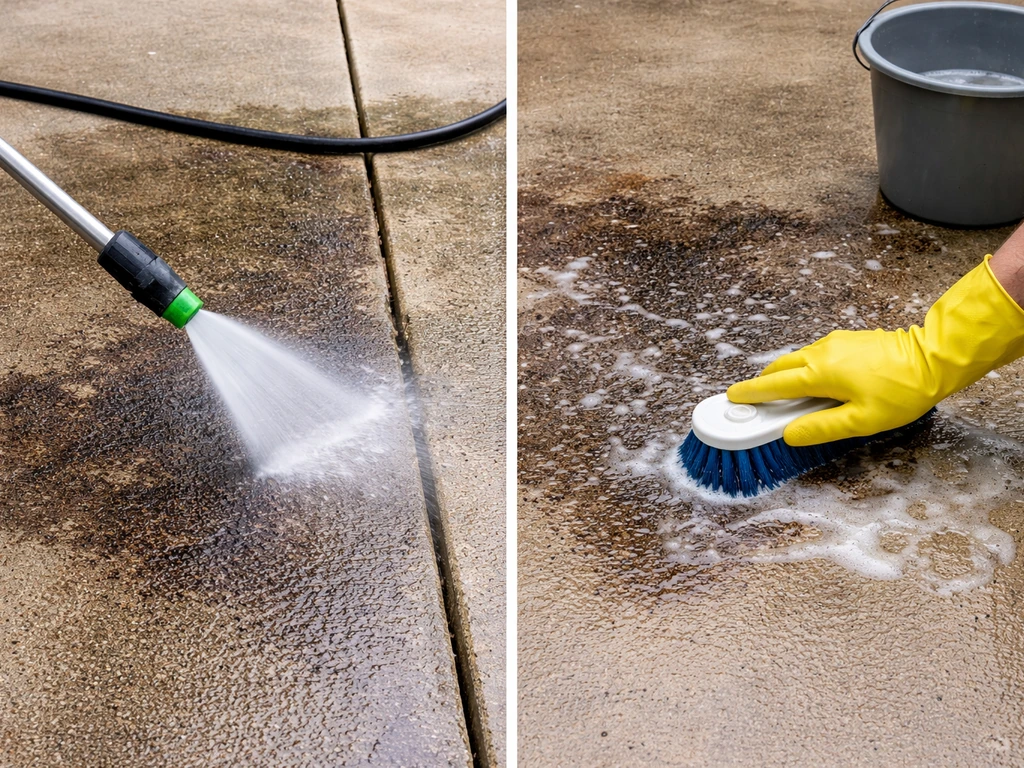
A pressure washer is a useful tool here but it's not always the right first move, and using it incorrectly can make things worse. High-pressure water alone will not remove an oily stain: oil is hydrophobic and water just runs around it. You need to apply a degreaser first, let it work, then use the pressure washer to rinse and lift the loosened oil out of the pores. Used that way, it's very effective on concrete, brick, and most pavers.
For concrete and brick, use a 25-degree (green) or 40-degree (white) tip at around 1,500 to 2,500 PSI. Hold the wand about 8 to 12 inches from the surface and work in consistent overlapping strokes. Don't linger in one spot as this can etch even concrete at high pressure. For pavers, check whether they're sealed first: high-pressure washing can strip sealant, so use a lower pressure (under 1,500 PSI) and a wider-angle tip.
For travertine, limestone, or any polished stone, I'd avoid a pressure washer entirely unless you're using very low pressure (under 800 PSI) and a wide fan tip held well back from the surface. The risk of etching or chipping the surface at higher pressures isn't worth it when manual scrubbing with the right cleaner will do the job safely.
If you don't have a pressure washer, manual scrubbing works just as well for most situations, it just takes more effort. Use a stiff-bristle deck brush or a long-handled scrubbing brush. The key is applying enough cleaner and giving it enough dwell time so the stain is already loosened before you start scrubbing. Scrubbing a dry or barely-wetted stain just moves it around.
| Method | Best For | Not Recommended For | Notes |
|---|---|---|---|
| Manual scrubbing | All surfaces including sensitive stone | Nothing excluded, always safe if technique is right | Use stiff nylon brush, not wire |
| Pressure washer (high, 1500-2500 PSI) | Concrete, brick, unsealed pavers | Travertine, polished stone, sealed pavers | Always degrease first |
| Pressure washer (low, under 1000 PSI) | Sealed pavers, flagstone, general rinse | Polished travertine (risk of chipping) | Wide fan tip, hold back 12+ inches |
| Poultice | All surfaces, especially stone and deep stains | Not excluded, just slower | Best for old or absorbed stains |
What not to do: protect sealers, grout, plants, and sensitive stone
A few common mistakes can turn a teak oil stain into a bigger, more expensive problem. Here's what I'd tell anyone tackling this for the first time. If you tried WD-40 at any point, follow the right removal steps so residue doesn't keep attracting grime.
- Do not use vinegar, lemon juice, citrus cleaners, or any acidic product on travertine, limestone, or marble. These will etch the stone and dull its finish permanently. This is irreversible without professional resurfacing.
- Do not use wire brushes or metal scouring pads on stone, pavers, or brick. They leave scratches and metal fragments that rust and create new stains.
- Do not apply bleach to natural stone. Bleach can discolour and weaken the surface. It's fine on concrete and brick but even there it should be diluted (no more than 1 part bleach to 10 parts water) and rinsed extremely well.
- Do not let degreasers or TSP pool in grout lines or mortar joints for extended periods. These products can soften and discolour mortar over time if left to soak.
- Do not skip protecting your plants. Even mild degreasers can harm grass and garden beds. Wet surrounding plants before you start and rinse runoff areas with plain water after.
- Do not pressure wash before applying a degreaser. Water alone won't shift oil and may push it deeper into porous surfaces.
- If your patio has a sealer, check the sealer manufacturer's guidelines before using any solvent-based product. Some solvents (including acetone and mineral spirits) can strip or cloud certain sealers.
This is especially important if your teak oil stain sits near a barbecue or sunscreen spill area. Next time you get sunscreen on the patio, focus on degreasing it promptly and avoid acidic cleaners on sensitive stone surfaces sunscreen spill area. Oil-based stains from different sources can overlap and tempt you toward using multiple strong products at once. Stick to one method at a time and rinse completely between applications.
If it's still there: repeat, troubleshoot, and confirm removal
Most teak oil stains on concrete and brick will lift fully after one or two rounds of degreasing and rinsing. Stone surfaces with deep absorption may need three or four poultice cycles. The key thing to understand is that each cycle pulls more oil out of the pores, even if the stain looks the same after the first round. Don't give up after one attempt.
- Repeat the degreasing or poultice process at least twice before concluding a method isn't working. Let the surface dry completely between cycles so you can accurately assess how much the stain has lifted.
- If the stain has lightened significantly but won't fully disappear after three rounds, try escalating from dish soap to a commercial concrete degreaser or from a DIY poultice to a commercial product like Aqua Mix.
- For old, stubborn stains on concrete, a diluted muriatic acid wash (1 part acid to 10 parts water) is the last resort. Use gloves, eye protection, and work in a ventilated space. Never use this on stone.
- After the stain is gone, let the surface dry for 24 hours and check in different lighting. Oil stains can look gone when wet but reappear as the surface dries. If a shadow remains, do one more treatment cycle.
- Once fully removed, consider resealing the affected area. Teak oil stains often indicate a gap in sealant coverage, and a fresh coat of appropriate sealer will protect against future spills.
If you've done four or more cycles of treatment and the stain hasn't shifted at all (not even lightened), it's worth calling a professional stone or patio restoration service. Some deeply absorbed oil stains in very porous travertine or unsealed sandstone need grinding or professional poulticing with commercial-grade equipment. On concrete, a professional can use a hot water pressure washer with commercial degreaser injection, which is significantly more powerful than anything available to rent.
The next logical step after fully removing the stain is prevention. Re-apply sealant to any bare patio areas, and when oiling teak furniture in future, lay down a canvas drop cloth or old towels under the furniture legs and armrests. Most teak oil stains happen during routine furniture maintenance, and a bit of drop cloth goes a long way.
FAQ
Can I just use a pressure washer to remove teak oil from my patio?
Yes, but only if you treat it as a chemical stain and not as a general rinse. Use a dedicated degreaser first, let it dwell, then pressure wash only after the oil is loosened. If you blast oil first, it can spread sideways because oil repels water.
What should I avoid on travertine or limestone when removing teak oil? (
For travertine, limestone, and other polished stone, avoid bleach, vinegar, and citrus cleaners. Stick with pH-neutral stone cleaner and, if the oil is already deep-set, use a clay poultice approach. Acidic products can permanently dull the stone even if the oil stain fades.
Do absorbent powders like baking soda or kitty litter really work, and how long should I leave them?
Yes. Kitty litter, baking soda, cornstarch, and sawdust are all dry absorbents, but they work best when you cover the entire stained area and keep it pressed flat to maximize contact. Don’t let the absorbent dry out and bake on, instead reapply if it stops picking up oil after the first pass.
How can I tell whether the teak oil stain is still on the surface or already soaked in?
If the patch is dark and feels slightly tacky after you clean, it usually means oil is still near the surface rather than fully extracted. Try one more full degrease cycle, including thorough rinsing, before escalating to poultice. If you see no change after two to three cycles, switch methods because repeated scrubbing alone won’t pull out absorbed oil.
How do I safely test a cleaner before treating the whole patio?
Use the smallest, least noticeable test spot and wait. Apply the cleaner in an inconspicuous area, let it sit for the same dwell time you plan to use, then rinse and check for color change, dullness, or residue. This is especially important for sealed pavers, where stronger chemicals can dull or strip the finish.
Why does my stain look like it returned after cleaning?
Yes, but rinse is the decision point. After any degreaser, rinse until runoff no longer feels slippery, then let the area dry and re-evaluate. If residue remains, it can re-attract dirt and make the stain look like it is coming back even when oil is already removed.
My pavers are sealed, what changes when removing teak oil?
For sealed pavers, start with the mildest effective option because harsh degreasers and long dwell times can break down sealant. Use dish-soap-type degreasing first, rinse well, and only escalate if the stain truly persists. If the seal is already compromised, some stains will require poulticing even on pavers.
Does temperature or direct sun affect how well teak oil comes out?
It can, because oil plus heat can drive the stain deeper or make it harder to lift. Work when the patio is cool to the touch, avoid treating right after heavy sun exposure, and give dwell times as directed rather than rushing. If you must clean in warm weather, shorten dwell carefully and rinse more thoroughly to reduce streaking.
What if I cannot rinse the patio thoroughly after degreasing?
If you cannot rinse thoroughly, you should pause and improve drainage rather than pushing forward with harsher chemicals. Many treatments depend on complete removal of both degreaser and dissolved oil, otherwise you leave behind oily film. Use a wet-dry method to collect rinse water and avoid letting concentrated runoff pool near plants.
Should I re-seal my patio right after removing the teak oil stain?
Yes. If you used an absorbent poultice or any strong cleaner, remove it completely and let the patio dry before sealing. Applying sealant while oil or solvent remains trapped can trap residue under the new layer and cause blotchy reappearance.
When is it time to call a professional instead of trying more DIY cycles?
Professionals are especially worth it when the stain does not lighten after several cycles (for example, four or more), or when it is on porous, high-value stone like travertine or unsealed sandstone. Grinding and commercial-grade poulticing can be the difference between cosmetic fading and full extraction.
Next Articles
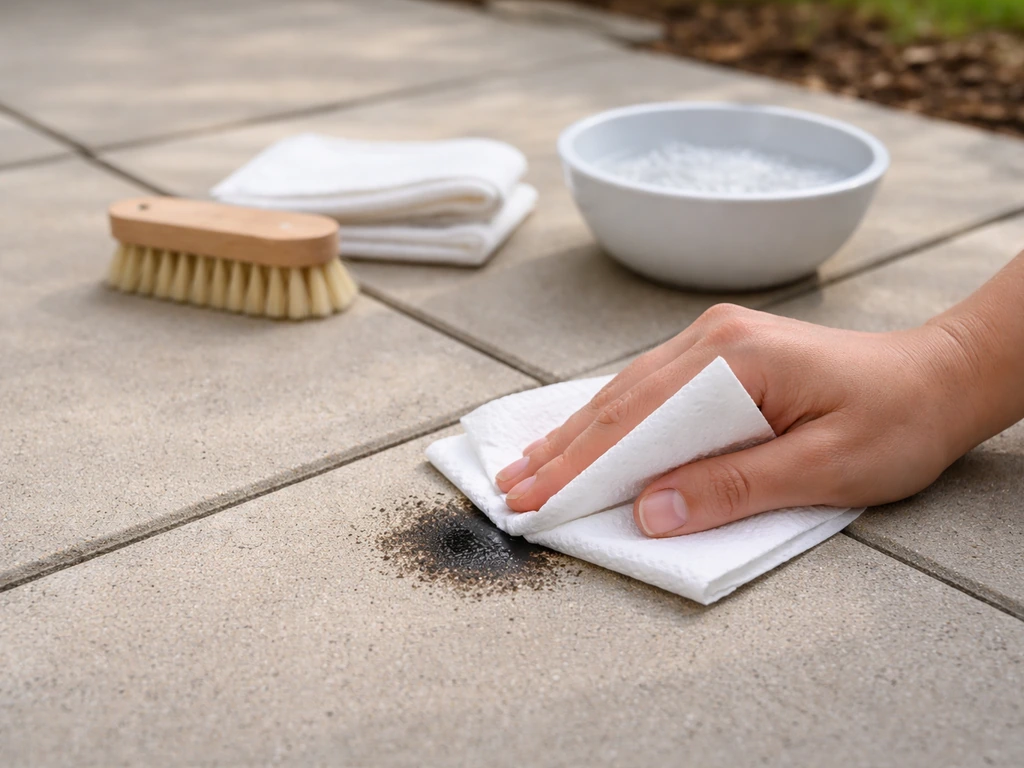
How to Remove WD40 From a Patio by Surface Type
Learn how to remove WD-40 from patio surfaces with safe, surface-specific steps for concrete, pavers, brick, stone
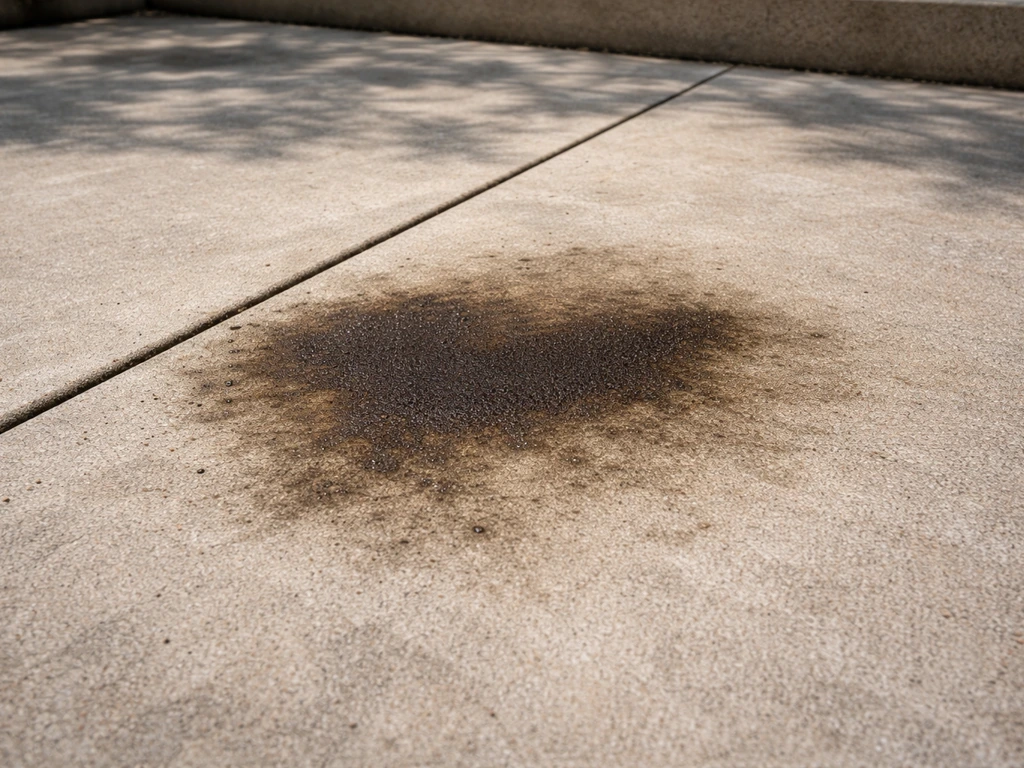
How to Get BBQ Oil Off Patio: Clean Grease Fast
Step-by-step ways to remove bbq oil and grease from concrete, brick, stone, pavers, and travertine safely fast.
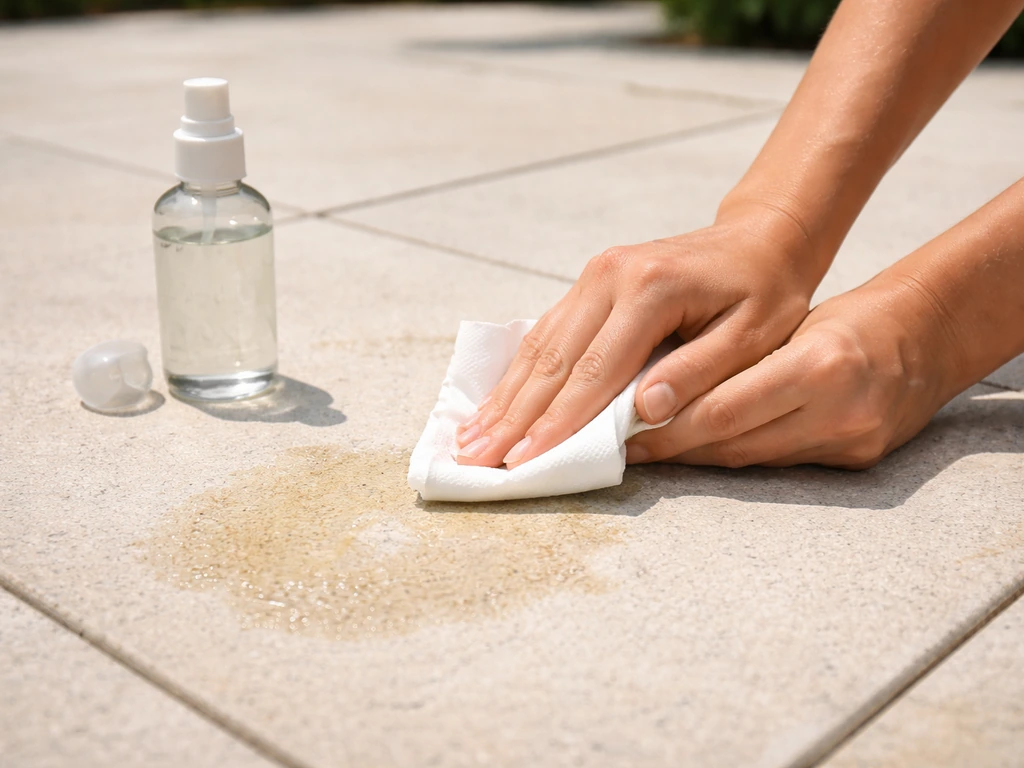
How to Get Sunscreen Off Patio Fast Without Damage
Fast steps to remove sunscreen from patio safely by surface, from scraping and gentle cleaners to tough stain lifts.