Yes, you can clean a patio with bleach, and it works really well for mold, mildew, algae, and general organic grime on hard surfaces like concrete and brick. The catch is that bleach is not safe for every patio material, and using it wrong can etch stone, strip sealers, bleach out colored grout, or harm nearby plants. Get the dilution right, give it the correct dwell time, rinse thoroughly, and bleach is one of the most effective tools you have for a grimy outdoor surface. Use it on the wrong stone (travertine, limestone-based flagstone) and you'll create dull, permanent etching marks that no amount of scrubbing will fix.
Can You Clean a Patio With Bleach? Safety and Steps
Dylan Hale
23 May 2026
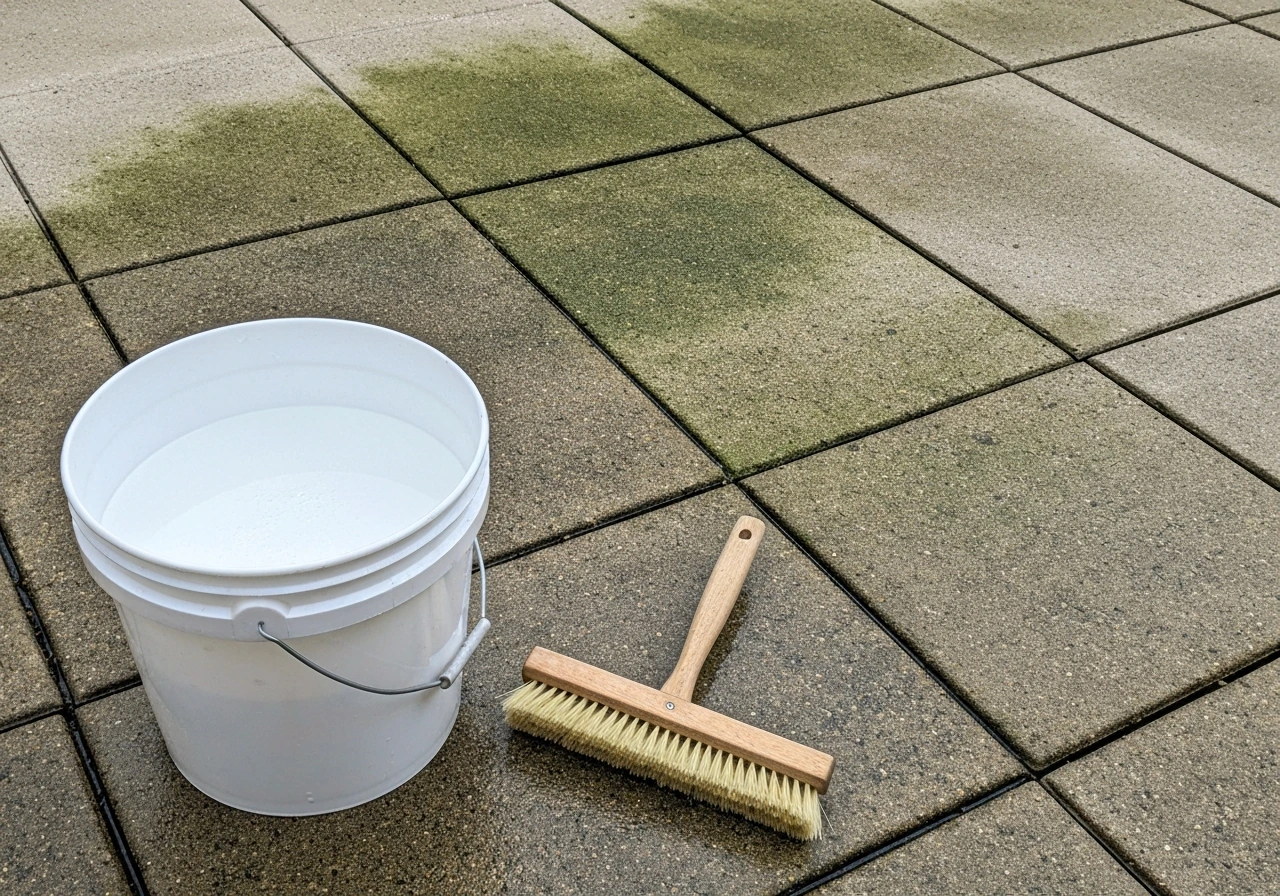
Is bleach safe and effective on common patio materials?
The answer depends almost entirely on what your patio is made of. Bleach (sodium hypochlorite) is strong enough to kill mold spores, cut through algae, and brighten weathered surfaces, but it's also reactive enough to damage certain stones and finishes. Here's where it stands on the most common patio surfaces.
| Patio Material | Bleach Safe? | Notes |
|---|---|---|
| Concrete | Yes | Handles bleach well; great for mold, mildew, and staining |
| Brick | Yes, with care | Dilute properly; avoid on colored or painted brick |
| Clay/Concrete Pavers | Generally yes | Test first; colored pavers may fade with repeated use |
| Natural Stone (granite, slate) | Limited | Check pH tolerance; some siliceous stones handle diluted bleach |
| Travertine | No | Calcium-based stone; bleach causes etching and discoloration |
| Limestone Flagstone | No | Same risk as travertine; bleach damages calcareous surfaces |
| Sandstone | No | Porous and reactive; use only pH-neutral cleaners |
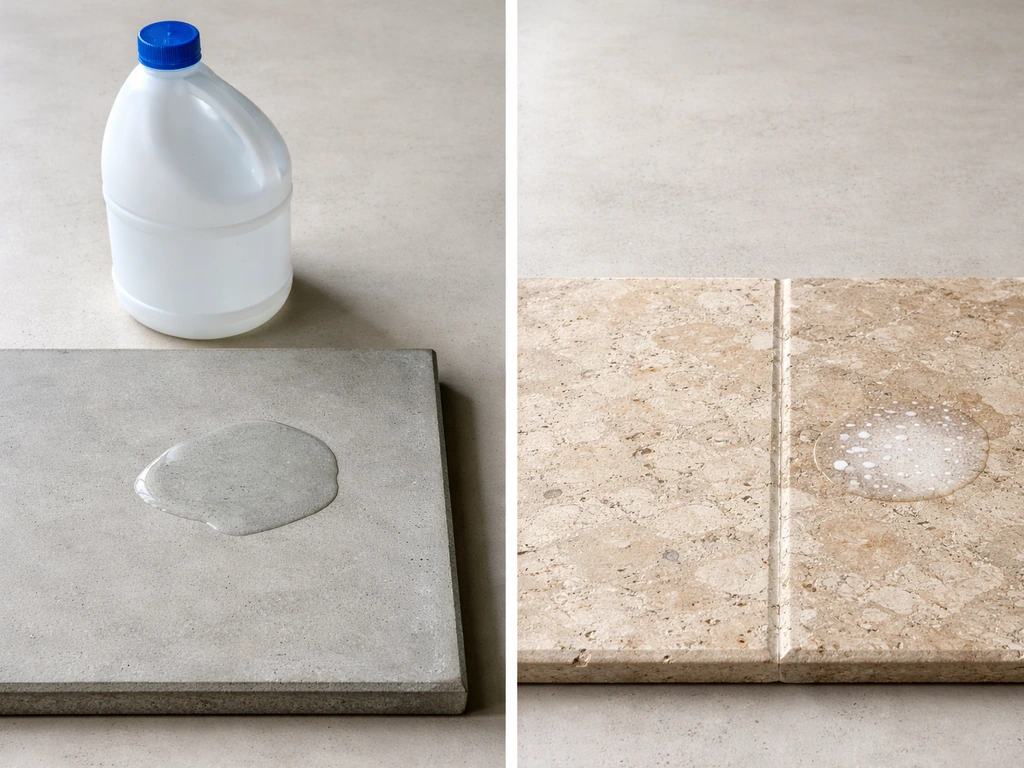
The key distinction is between siliceous stones (granite, slate, quartzite) and calcareous stones (travertine, limestone, marble, most sandstone). Calcareous stones are made largely of calcium carbonate, which reacts chemically with harsh cleaners including bleach, leading to surface etching, dulling, and over time, structural degradation. If you're not sure what type of stone you have, treat it as calcareous and skip the bleach entirely.
Step-by-step: how to clean a patio with bleach
Before you start, sweep the patio to remove loose debris, move any furniture or pots, cover or thoroughly pre-water any plants near the work area, and put on your protective gear (more on that below). Then follow these steps.
- Mix your bleach solution: for general cleaning, use 1 cup of household bleach (5.25–6.15% sodium hypochlorite) per gallon of water. For heavy mold or mildew, you can go up to 1.5 cups per gallon, but don't go stronger than that for patio surfaces.
- Pre-wet the patio surface with plain water from a garden hose. This prevents the bleach from soaking in unevenly and gives you more control over where it goes.
- Apply the bleach solution to one section at a time (roughly 4–6 square feet). Working in sections lets you stay within the recommended dwell time and rinse properly before moving on.
- Let it dwell for 5–10 minutes. You should see mold or algae begin to lighten visibly. Don't let it dry on the surface.
- Scrub with a stiff-bristle brush, deck brush, or push broom for stubborn spots. For large areas, a pump garden sprayer makes application much easier than pouring from a bucket.
- Rinse that section thoroughly with a garden hose before moving to the next one. Rinse until the water runs clear and there's no bleach smell coming off the surface.
- Repeat section by section until the whole patio is done, then do a final full rinse of the entire area including any surrounding surfaces that may have been splashed.
Dilution, dwell time, and how to apply it
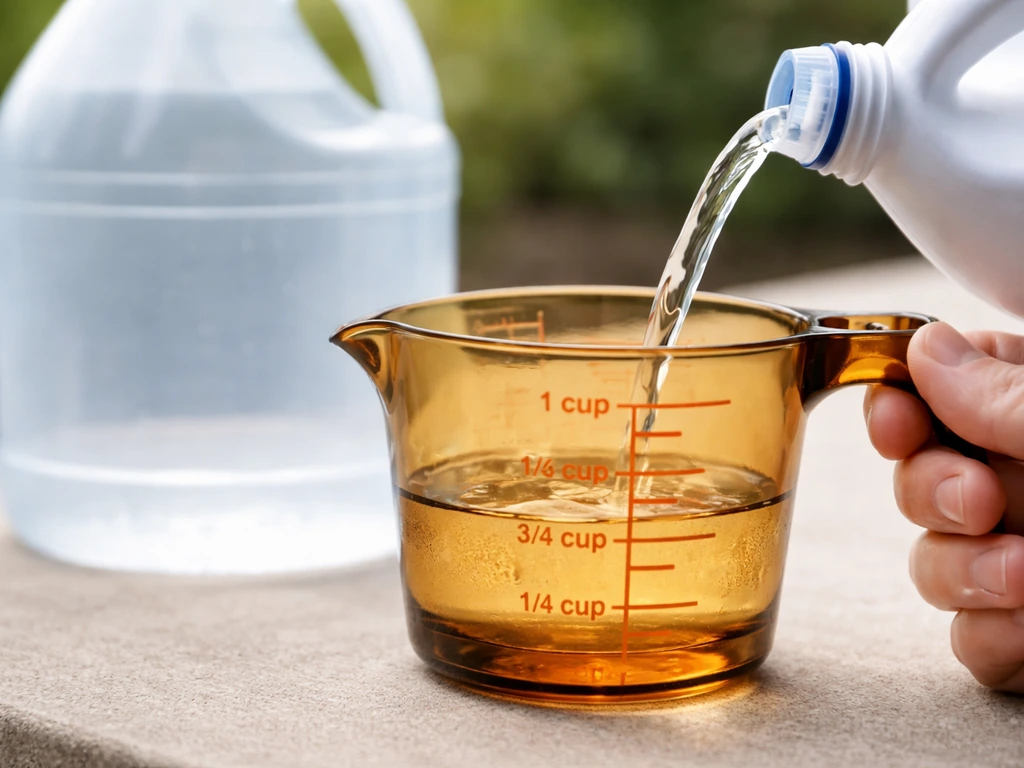
Standard household bleach in the U.S. contains about 5.25% to 6.15% sodium hypochlorite. That's your starting point. For most patio mold and mildew jobs, a 1:10 dilution (one part bleach to ten parts water) is effective and safe for compatible surfaces. For very heavy biological growth (thick algae, black mold), you can push to a roughly 1:6 ratio, but I'd always start weaker and go stronger only if needed.
Dwell time is where a lot of people go wrong. Five to ten minutes is the sweet spot for most outdoor surfaces. Less than that and you're not giving the sodium hypochlorite enough contact time to actually kill mold spores. More than that (especially if it starts to dry) increases your risk of residue and surface damage. If you're working on a hot sunny day, the solution will evaporate faster, so mist lightly with water if you see it drying before your dwell time is up.
For application, a pump garden sprayer gives you the most control and the most even coverage, especially on textured concrete or between pavers. To apply sodium hypochlorite on a patio, start by sweeping away debris, dilute bleach correctly, apply it evenly, let it dwell, then rinse thoroughly pump garden sprayer. A watering can works for small areas. For heavy scrubbing on concrete, pour directly from a bucket and use a stiff deck brush. I've found that spraying on and brushing after a few minutes gives better results than either method alone.
Rinsing, ventilation, and keeping plants, pets, and surfaces safe
Rinsing is not optional and it's not just a quick splash. Bleach residue left on concrete or brick can interfere with sealers, damage surrounding vegetation over time, and remain a hazard for pets walking on the surface. After each section, rinse thoroughly with a garden hose until the runoff water is clear. Then do a full rinse of the whole patio when you're done.
Plants are vulnerable. Even diluted bleach hitting soil or foliage can damage or kill plants. Before you start, water all nearby plants and garden beds heavily to saturate the soil. During the job, keep the spray directed away from plant beds. After you're done, rinse any adjacent planters, grass, or garden areas that may have received runoff. This takes longer but it's worth it if you have any landscaping worth protecting.
Keep kids and pets off the patio until it has been fully rinsed and is dry, usually at least an hour after you finish. Work in a well-ventilated area (outdoor bleach use is generally fine, but avoid working in a completely enclosed courtyard or patio area where fumes can concentrate). And never mix bleach with any other cleaning chemicals, especially acid-based products like muriatic acid or vinegar. The combination produces toxic chlorine gas.
Safety gear: don't skip this
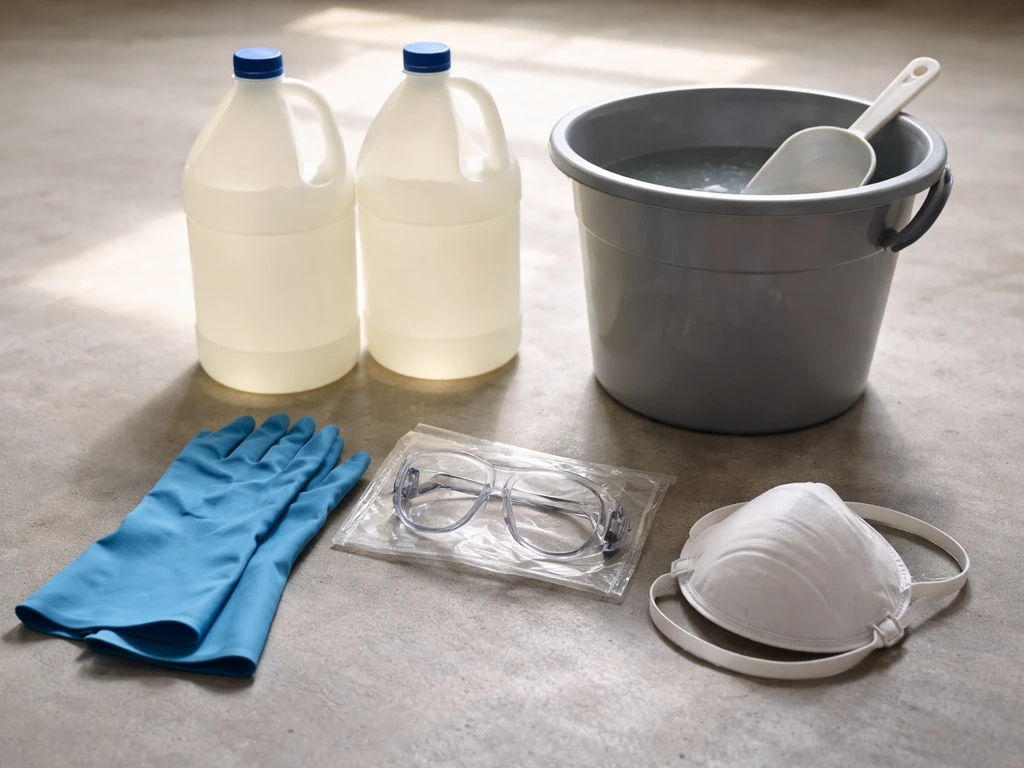
Bleach is corrosive and can cause serious skin and eye irritation on contact. Even at standard dilutions you're working with sodium hypochlorite, which has real chemical hazard potential. Wear nitrile gloves (not thin latex), safety glasses or goggles (especially when scrubbing or if there's any splashback), and old clothes you don't mind ruining. If you're using a sprayer, wear long sleeves. This isn't overcautious, it's just smart.
What bleach actually works well for (and where it falls short)
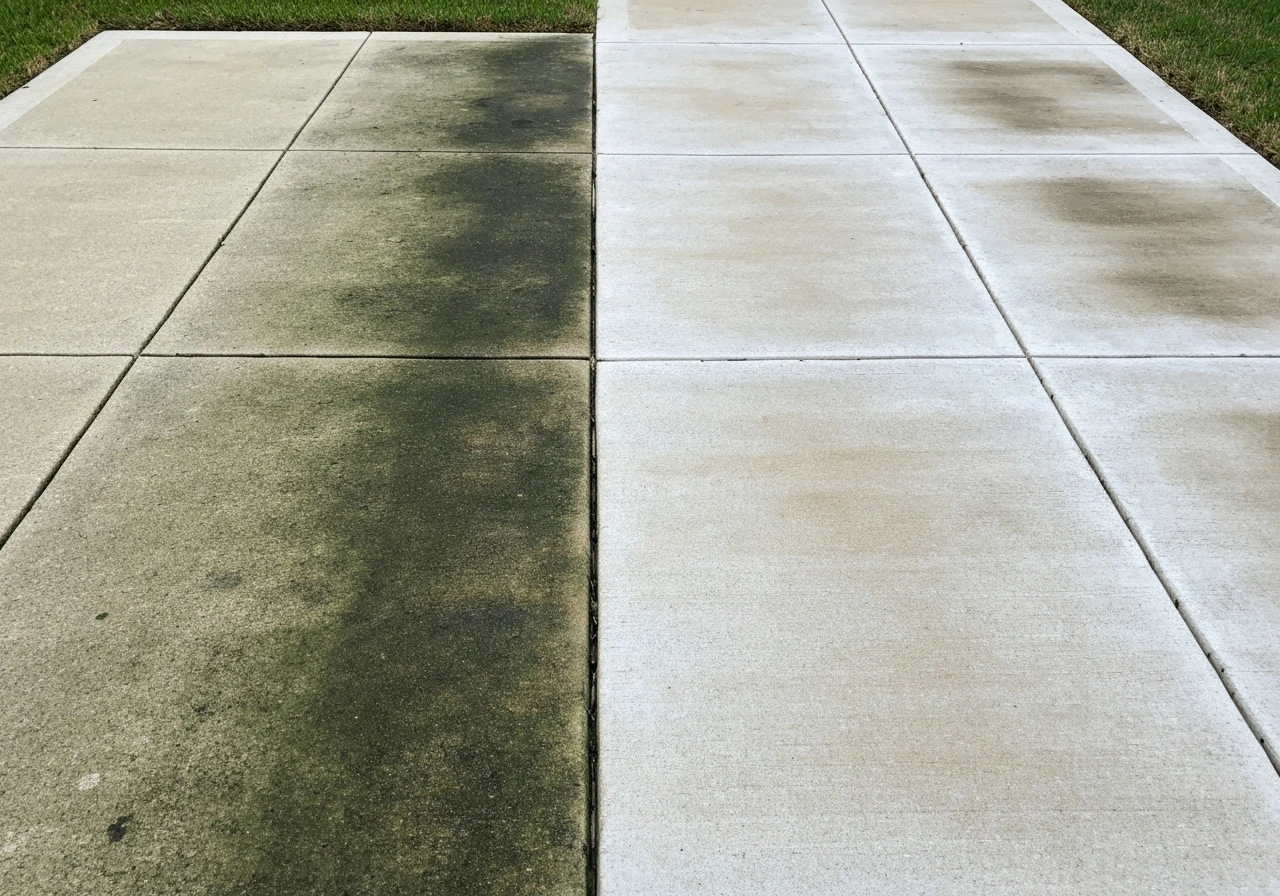
Bleach is genuinely excellent at a specific category of patio problems: biological growth. Mold, mildew, algae, lichen, moss, and general green or black organic staining respond very well to sodium hypochlorite. It kills the spores rather than just removing the surface layer, which means results last longer than scrubbing alone. It also works for general disinfection and brightening weathered concrete that's gone grey from years of grime accumulation.
Where bleach fails: rust stains, oil or grease, paint, efflorescence (mineral salt deposits), and any stain driven by a chemical or mineral process rather than biology. Bleach won't touch rust, and it has no effect on efflorescence because those white mineral deposits come from water carrying salts up through the stone, which is a physical process bleach can't reverse. For rust, you'd need an oxalic acid-based treatment. For grease, a degreaser or alkaline cleaner is far more effective.
- Bleach works best for: mold, mildew, algae, moss, lichen, general organic discoloration, green or black biological staining
- Bleach does not work for: rust stains, oil and grease, paint, tire marks, efflorescence/mineral deposits, deep embedded dirt
Material-specific cautions: what to know before you pour
Concrete
Concrete is the most forgiving surface for bleach cleaning. A standard 1:10 dilution, 5–10 minute dwell time, and thorough rinse is a reliable method that won't damage the surface. If your concrete is sealed, be aware that repeated bleach use can degrade certain sealers over time. Check with your sealer manufacturer if you're unsure. For heavily stained concrete, the step-by-step process above is exactly what you need.
Brick
Standard red clay brick handles diluted bleach reasonably well. The main risk is with colored or painted brick, where bleach can cause uneven fading. Always test in an inconspicuous area first. Also pay attention to the mortar joints: older or damaged mortar can be weakened by repeated bleach exposure. Use a diluted solution, don't let it pool in the joints, and rinse quickly.
Pavers
Concrete pavers behave similarly to poured concrete and are generally bleach-compatible. Clay pavers are usually fine with diluted bleach but, again, spot-test colored pavers before treating the whole surface. Natural stone pavers are a different story entirely and need to be treated like the stone they're made from.
Travertine
Do not use bleach on travertine. Travertine is a form of limestone, meaning it's a calcareous stone made primarily of calcium carbonate. Bleach and other pH-extreme products cause chemical etching on these surfaces, leaving dull, irreversible marks. The Natural Stone Institute is clear that calcareous stones require pH-neutral cleaners. Stick to products specifically formulated for travertine or use plain water and a soft brush for routine maintenance.
Flagstone
Flagstone varies widely. Bluestone and slate (siliceous) can sometimes handle diluted bleach, while flagstone that is limestone or sandstone-based absolutely cannot. If you're not certain what type of flagstone you have, don't use bleach. The stakes are high: etching damage is permanent and expensive to repair or replace.
Natural stone (general)
The Natural Stone Institute recommends matching cleaners to specific stone types and using pH-neutral products as the baseline for routine care. Some light-colored siliceous stones can tolerate diluted bleach for specific stain removal, but this is a case where knowing exactly what stone you have matters enormously. When in doubt, choose a stone-safe enzymatic or oxygen-based cleaner instead.
Sealers and grout
If any part of your patio has been sealed or has colored grout, bleach can strip or degrade those sealers and fade or discolor the grout. This is especially common on decorative concrete, paver joints, and stone tile installations. Check your sealer's compatibility before using bleach, and be extra careful around grouted joints.
Gentler alternatives when bleach isn't the right call
If you have a stone patio where bleach is off the table, or you're working around pets, kids, or a vegetable garden and want something less aggressive, there are real alternatives that actually work.
Oxygen bleach (sodium percarbonate) is my go-to alternative for most organic staining jobs. It breaks down into water and oxygen, making it significantly safer for surrounding plants and pets once it's rinsed. It takes a bit longer to work (sometimes 15–30 minutes of dwell time) but is effective on mold, algae, and mildew on concrete, pavers, and even some stone surfaces. Mix according to the product label, apply, let it fizz and work, then rinse.
White vinegar is a common eco-friendly option and it does have some effectiveness against mold and mildew on concrete surfaces. Apply undiluted, let it sit for 10–15 minutes, and scrub. It won't be as powerful as bleach on heavy infestations, and it takes longer, but it's genuinely safer if you have pets or children nearby. One important note: never use vinegar on natural stone patios, including travertine, limestone flagstone, or marble. Vinegar is acidic and causes the same etching damage as bleach on calcareous stones.
Non-bleach outdoor wash products (like oxygen-foaming mold removers) are another solid option. These use enzymatic or peroxide-based chemistry to attack mold and algae without the harshness of sodium hypochlorite. They typically include instructions to rinse surrounding plants with water after use, which is a good habit regardless of which cleaner you choose.
For stone patios specifically, a pH-neutral stone cleaner is the right call for routine maintenance and most stain situations. For severe biological growth on travertine or flagstone, consult a stone restoration professional rather than experimenting with DIY chemical approaches.
Quick guide: matching your problem to the right cleaner
| Patio Problem | Best Cleaner | Avoid |
|---|---|---|
| Mold/mildew on concrete | Diluted bleach or oxygen bleach | Muriatic acid |
| Algae/moss on pavers | Diluted bleach or oxygen bleach | Vinegar on stone pavers |
| Mold on travertine or limestone | pH-neutral stone cleaner or oxygen bleach | Bleach, vinegar, acid-based products |
| Rust stains | Oxalic acid-based rust remover | Bleach (ineffective) |
| Grease/oil | Alkaline degreaser | Bleach (ineffective) |
| Efflorescence (white mineral deposits) | Efflorescence cleaner or diluted muriatic acid (concrete only) | Bleach (ineffective) |
| General organic discoloration (concrete/brick) | Diluted bleach | Nothing to avoid if rinsed properly |
If you're dealing specifically with a concrete patio and want to go deeper on sodium hypochlorite concentrations and exactly how long to leave it on, the principles around sodium hypochlorite dwell times and application methods are worth understanding in more detail before you start. For stone patios, always identify your stone type first, because that one decision changes everything about how you should clean it.
FAQ
Can I use bleach to clean a patio that has been sealed recently?
You can try bleach on sealed concrete only if the sealer is known to tolerate sodium hypochlorite. Even compatible sealers can degrade with repeated exposure, so do a small test patch first and use the weakest effective dilution (about 1:10) for the minimum dwell time, then rinse thoroughly. If the seal looks cloudy or sticky afterward, stop and switch to an oxygen-based cleaner.
How do I know if my patio cleaner is failing because the growth is gone, or because the surface needs more scrubbing?
If the black or green staining remains after dwell time and a full rinse, bleach may have killed the biological matter but the residue can be embedded in pores or on surface film. For concrete and pavers, follow up with a stiff brush after the solution sits (not before) and rinse again. If staining is chalky white instead of dark/green, that is likely mineral efflorescence, and bleach will not fix it.
Is it safe to power wash after using bleach, or will I damage the surface?
Power washing right away can help remove remaining residue, but high pressure can also drive bleach solution deeper into porous concrete and worsen damage to sealers or joints. Let the bleach dwell, then rinse with a hose first, and only power wash after the runoff runs clear. Keep pressure moderate and avoid concentrating the spray in mortar joints or around edges.
Can I spot-clean only the stained area with bleach to avoid changing the rest of the patio color?
Spot treatments can work, but they can leave a lighter or uneven brightened area if the rest of the patio is not similarly cleaned and rinsed. To reduce visible boundaries, treat a slightly larger section than the stain, keep the dwell time consistent across the whole treated zone, and do a wider rinse, then blend by rinsing adjacent sections until runoff looks the same.
What should I do if bleach dries on the patio before the dwell time ends?
If it dries, you increase the chance of residue, uneven whitening, and faster wear on sealers. Re-wet the area with clean water, then rinse thoroughly again, and if residue is visible, do a second light rinse. In future applications, avoid hot windy conditions, mist lightly to keep the surface wet during the dwell window.
Can I use bleach on painted surfaces like patio furniture or painted pavers nearby?
Bleach can fade paint and can leave patchy discoloration on colored or coated surfaces. Move furniture off the patio, protect items you cannot move with plastic sheeting, and always direct spray away from painted areas. If paint is accidentally splashed, rinse immediately with plenty of water and reassess after it dries.
Will bleach remove rust stains from concrete or brick?
Bleach is not effective for rust because rust stains are chemical oxides, not biological growth. If the stain looks orange, reddish brown, or rusty at the same spots after rinsing, switch to a dedicated oxalic-acid rust remover instead of repeating bleach.
Can I mix bleach with detergents to boost cleaning power?
Do not mix bleach with other cleaners, even “safe” household products, because the combination can create harmful fumes or create unpredictable reactions with sealers and stone. Stick to bleach diluted in water only, then use a brush and rinse. If you want extra cleaning, use a separate step with a mild detergent after the bleach is fully rinsed and dry.
How long should I keep pets and kids off the patio after using bleach?
Avoid foot traffic until the surface is fully rinsed, dry, and you are confident there is no slick residue. Practically, this usually means at least an hour after rinsing on warm days, longer if runoff was heavy, if joints hold moisture, or if you used a stronger dilution. If possible, do a quick sniff and visual check for odor or residue before allowing access.
Next Articles
Can You Bleach Concrete Patio? Safe Step-by-Step Guide
Yes, learn if bleach suits concrete patios and follow a safe dilution, wetting, dwell, scrub, and rinse step-by-step.
How to Bleach Concrete Patio: Step-by-Step Guide
Step-by-step how to bleach concrete patio with sodium hypochlorite, from prep and dilution to scrubbing, dwell time, and
How to Remove Thompson’s Patio Sealer Step by Step
Step-by-step removal of Thompson’s patio sealer on concrete, brick, pavers, and stone, with safety, tests, and cleanup.