Mix 8 oz of household bleach (sodium hypochlorite) into 1 gallon of water, apply it to your damp concrete patio, let it sit for 5 to 10 minutes, scrub with a stiff brush or rinse with a pressure washer, and then rinse thoroughly with clean water. That process removes mildew, algae, and most organic dark staining from concrete, and it's what I reach for first when a patio looks dingy, green, or covered in black spots.
How to Bleach Concrete Patio: Step-by-Step Guide
Dylan Hale
7 May 2026
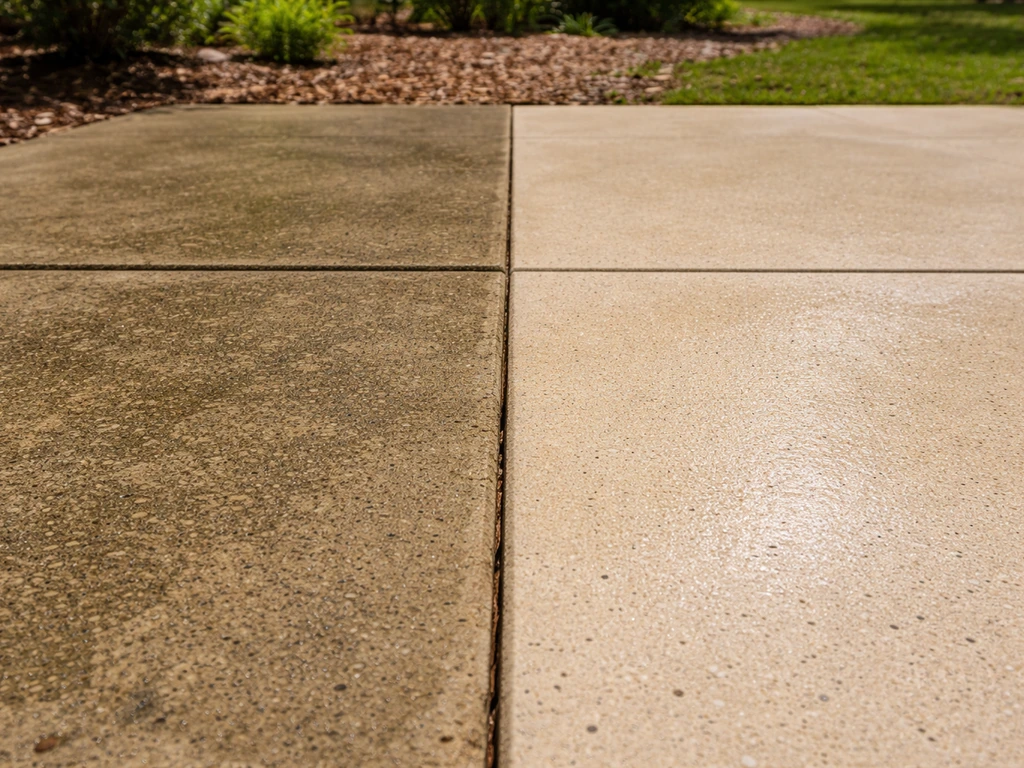
That said, bleach only works on biological and organic discoloration. Before you mix anything, it helps to spend two minutes figuring out what you're actually dealing with, because rust stains, efflorescence, and oil won't budge with bleach no matter how long you leave it on. The sections below walk through the whole process, from safety gear to rinsing, plus what to do when bleach isn't enough. Can you clean a patio with bleach?
Safety prep before you open the bleach
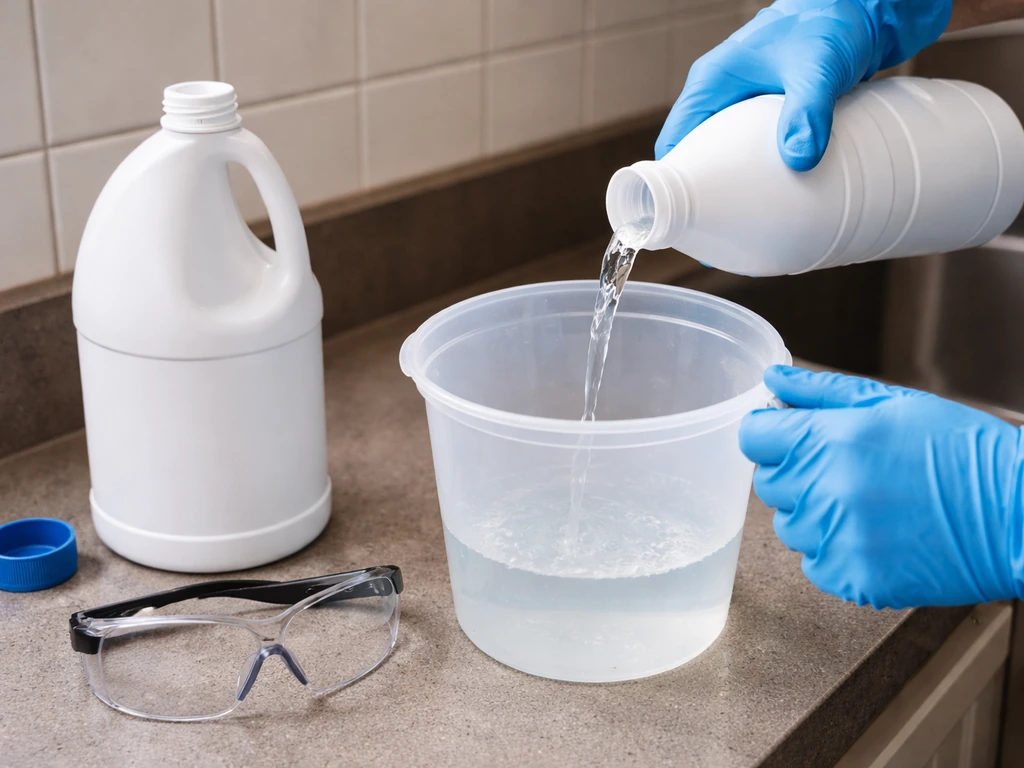
Bleach is effective but it's not something to be casual with. A few minutes of prep prevents damage to your plants, your skin, and nearby surfaces.
- Wear chemical-resistant gloves (nitrile or rubber) and safety glasses. Bleach splashed in the eyes is a real hazard, especially when you're scrubbing.
- Put on old clothes you don't mind ruining. Even diluted bleach can strip color from fabric.
- Work in a well-ventilated area. Outdoors is already better than inside, but avoid doing this on a still, windless day in a enclosed courtyard.
- Wet down any plants, grass, or shrubs near the patio with plain water before you start. The pre-soak dilutes any bleach runoff and protects roots.
- Cover nearby flower beds with plastic sheeting if they're very close to the work area.
- Never mix bleach with vinegar, ammonia, rust removers, toilet bowl cleaners, or any acid-based concrete cleaner. Mixing bleach with an acid produces chlorine gas — which is genuinely dangerous. This also means you can't use vinegar as a rinse or follow-up treatment right after bleaching.
- Make your bleach solution fresh each time you use it. Bleach loses strength quickly once diluted, so a day-old mix won't perform as well.
Figure out what's actually causing the discoloration
Bleach is highly effective against organic and biological growth but does nothing for mineral or metal-based staining. Identifying the problem first saves you a wasted afternoon.
Mold, mildew, and algae (bleach works great here)
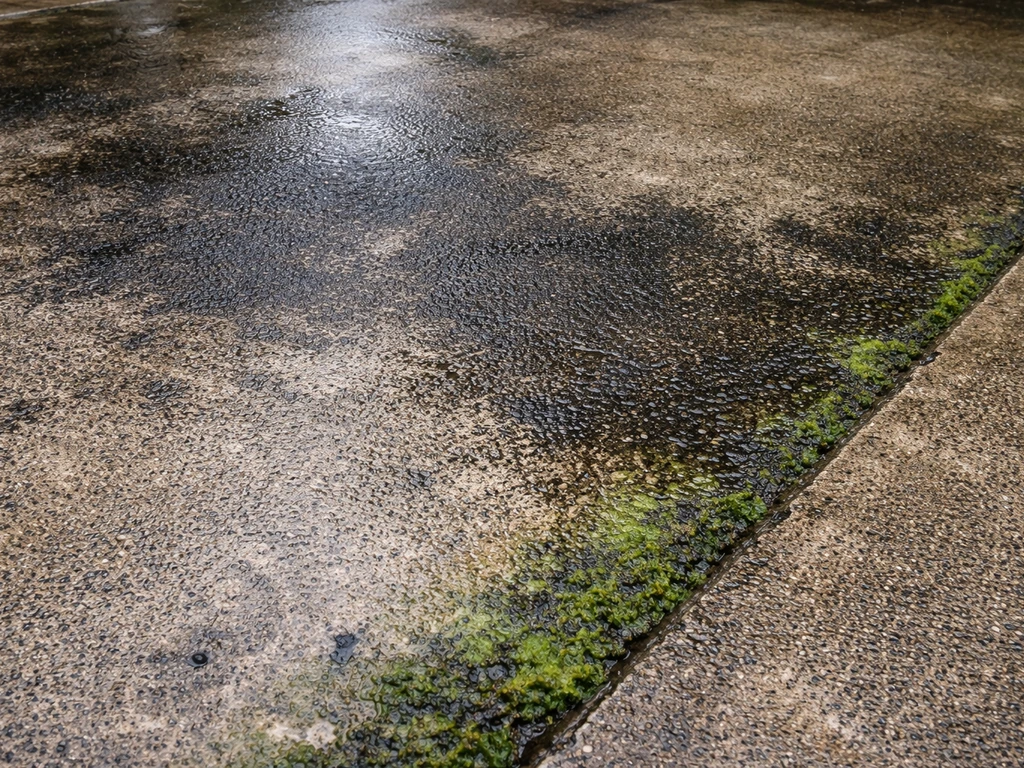
These are the most common culprits on shaded or damp patios. Mold and mildew usually show up as black, grey, or greenish patches, often in low spots or along edges where water sits. Algae is typically a slick green or dark green film. All of these are organic growth and respond well to sodium hypochlorite.
General grime and organic staining (bleach works)
Leaf tannins, dirt, and general darkening from foot traffic and weathering are usually organic in nature. Bleach lightens these well, especially when combined with scrubbing.
Efflorescence, white, chalky deposits (bleach won't help)
If you see a white, powdery, or chalky film on the concrete surface, that's efflorescence, mineral salts that have migrated to the surface as moisture evaporates. Bleach has no effect on it. A dilute acid solution (like a 1-part-vinegar-to-4-parts-water rinse as a test, or a proper concrete efflorescence remover with phosphoric or hydrochloric acid) is what actually dissolves these deposits. Just make sure you fully rinse the bleach away and let the concrete dry before switching to any acid-based approach, because mixing the two is dangerous.
Rust stains (bleach won't help, may make it worse)
Orange or reddish-brown stains near metal furniture legs, planters, or pipe outlets are iron oxide (rust). Bleach doesn't remove rust and can actually make it look more vivid orange. You need a rust-specific concrete remover, more on that in the troubleshooting section.
Grease and oil (bleach is limited here)
Dark, oily spots from a grill or car overhang are hydrocarbons. Bleach won't dissolve them. A degreaser or a baking soda paste scrub works better as a first step, though bleach can help clean up residual discoloration afterward.
The bleach process, step by step
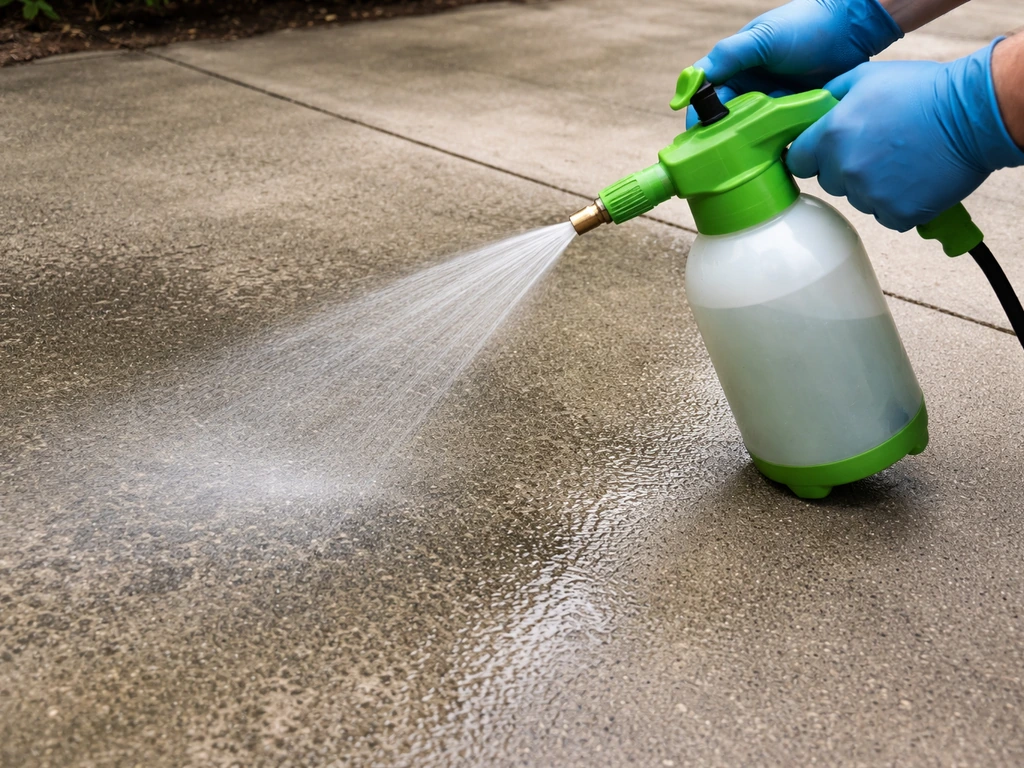
This is the method I use for mildew, algae, and general organic darkening. It works on plain concrete patios and sealed concrete. If you have stamped or colored concrete, test in a small hidden area first because pigmented concrete can be sensitive to bleach at higher concentrations.
What product to use
Standard household bleach (around 5.25 to 6.15% sodium hypochlorite) works well. Clorox also makes an Outdoor Bleach line specifically formulated for exterior mold and mildew work, which is what I'd recommend if your patio is heavily affected. Avoid splash-free or scented bleach for this, they often have additives that leave residue on concrete. Whatever you buy, check the label for sodium hypochlorite as the active ingredient.
Dilution
The right mix is 8 oz (one cup) of bleach per 1 gallon of water. CDC notes that bleach solutions made with sodium hypochlorite work best when properly diluted and that their effectiveness decreases after they have been mixed with water for more than 24 hours 8 oz (one cup) of bleach per 1 gallon of water. This lands you in a safe and effective concentration range, strong enough to kill biological growth, dilute enough that you're not risking surface damage or creating an overwhelming chemical environment. Don't go straight bleach on concrete. It's overkill, harder to rinse, and can leave streaks or interfere with the surface over time. Mix the solution in a plastic bucket (not metal) or a garden sprayer.
Application
- Wet the concrete surface with plain water first. This helps the bleach solution spread evenly and prevents it from being immediately absorbed into dry concrete before it has time to work.
- Apply the bleach solution using a garden sprayer, a mop, or a stiff-bristled brush. Work in manageable sections — around 50 to 100 square feet at a time — so the solution doesn't dry out before you rinse.
- Make sure you get even coverage. Uneven application is the most common reason patios end up with lighter patches or streaks.
- Let the solution dwell on the surface for 5 to 10 minutes. For heavy mildew or stubborn algae, you can push to 10 minutes, but watch the surface — if it starts to dry out, mist it lightly with more solution. Don't let it sit for 30+ minutes and walk away.
- While the solution is dwelling, agitate the surface with a stiff deck brush. This is the step most people skip, and it makes a real difference on textured concrete. For heavy growth, put some elbow into it.
- Rinse thoroughly with clean water. Start at the highest point and work down toward drains or the lawn edge.
Dwell time, scrubbing, and pressure washing options
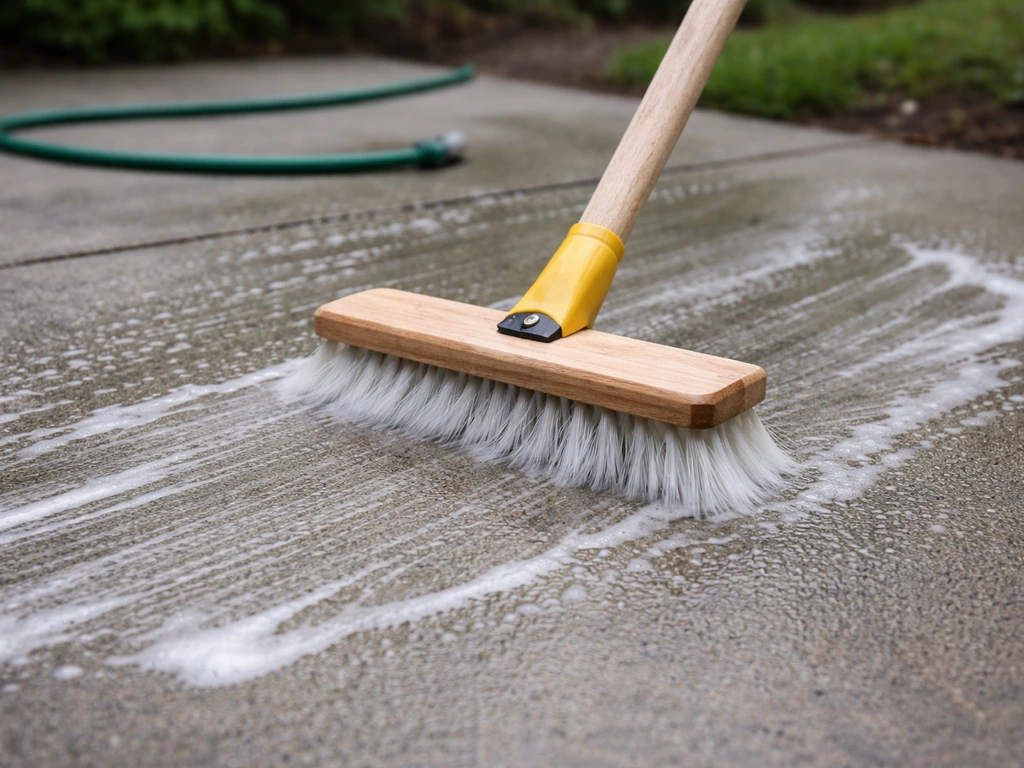
The 5-to-10-minute dwell time is a practical sweet spot. If you are wondering how long to leave sodium hypochlorite on your patio, stick with the dwell-time guidance in the next section and reapply only if the surface starts to dry how long to leave sodium hypochlorite on patio. Some guidance extends this to 15 minutes for heavily soiled surfaces, but the key rule is that the solution should stay wet on the surface the whole time, if it dries, it can leave residue and uneven results. In direct sun or dry heat, you may need to reapply partway through.
For scrubbing, a stiff-bristled deck brush (the kind with a long handle) is your best tool without power equipment. Put real pressure on it and scrub in a back-and-forth motion, not circles, to avoid swirl marks on smoother concrete. Let the bleach do the chemical work and the brush do the mechanical work together.
If you have a pressure washer, use it on the rinse step rather than the application step. Apply the bleach solution by hand or sprayer, let it dwell, scrub if needed, then pressure wash at a medium setting (around 1200 to 1500 PSI works well on standard concrete) to blast off the loosened growth and bleach residue. Avoid concentrating the nozzle in one spot too long on older or pitted concrete, it can etch the surface.
Rinsing, neutralizing, and avoiding streaks
Rinsing is where a lot of people rush and then end up with a streaky or blotchy patio. Rinse the entire treated area generously with clean water, working from the top of any slope toward the drain. Don't stop at a quick spray, you want enough water flow to fully flush the bleach residue off the surface. If the concrete surface still feels slippery after the first rinse, go again.
You don't need to neutralize bleach on concrete as a mandatory step the way you might with muriatic acid. Bleach breaks down relatively quickly, and a thorough water rinse is the standard finish. That said, if you want to be cautious (especially near plants), a second flush of plain water over the surrounding soil after you're done helps dilute any runoff that reached the edges.
To avoid streaks: apply evenly, keep the solution wet during the dwell period, and rinse in long consistent strokes rather than random bursts. Streaks usually happen when bleach dries unevenly on the surface before it's rinsed, or when you apply too much in one spot. Working in sections and rinsing each section before moving on helps a lot on large patios.
Keeping it clean longer
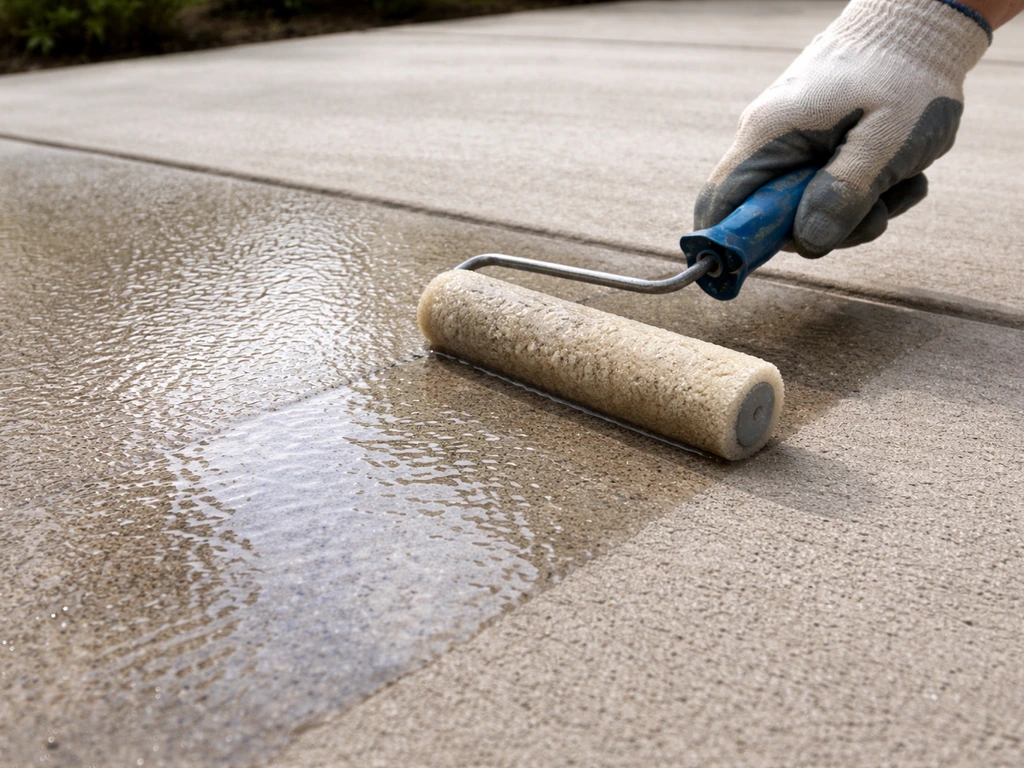
Once the patio is clean and dry (give it a full 24 to 48 hours), applying a concrete sealer is the best thing you can do to slow regrowth. Sealers reduce water absorption, which is what mildew and algae thrive on. Even a basic penetrating sealer makes a noticeable difference. Trim back any overhanging trees or shrubs that keep sections of the patio in constant shade, shade and moisture are the main reasons mildew keeps coming back.
Alternatives to bleach
Bleach is the most effective option for biological staining on concrete, but there are real reasons to consider alternatives, pets that walk on the patio, nearby vegetable gardens, or just a preference for less aggressive chemistry.
| Option | Best For | Effectiveness on Mildew/Algae | Notes |
|---|---|---|---|
| Sodium hypochlorite (diluted bleach) | Mold, mildew, algae, general organic staining | Excellent | Best choice for biological growth; rinse plants thoroughly after use |
| White vinegar (undiluted or 1:1 with water) | Light mildew, mineral deposits, efflorescence testing | Moderate | Safer for surrounding plants; do NOT use right after bleach — wait and rinse thoroughly first |
| Baking soda paste | Grease spots, light grime | Low for mildew | Very gentle; good pre-treatment for oil before bleaching |
| Oxygen bleach (e.g., OxiClean) | General organic staining, wood-adjacent areas | Good | Less harsh than chlorine bleach; slower acting; safer around plants |
| Commercial enzyme cleaners | Organic matter, pet waste staining | Moderate | Slow but plant-safe; not ideal for heavy mildew |
| Pressure washing (water only) | Surface dirt, loose debris | Low alone | Combine with a chemical solution for real biological staining |
If you want to avoid bleach entirely, oxygen bleach (sodium percarbonate-based products like OxiClean) is my go-to recommendation. It works more slowly than sodium hypochlorite and needs a longer dwell time, but it's considerably gentler on surrounding vegetation and still targets organic growth effectively. Mix per the product directions, apply to wet concrete, let it sit 15 to 20 minutes, scrub, and rinse. You may need a second application for heavy mildew.
Vinegar is fine for light surface mildew or as a DIY test for efflorescence, but it's genuinely limited on heavy algae or dark mildew staining on concrete. It also can't be used right after bleach, if you want to switch to vinegar for any reason, rinse the concrete thoroughly and wait for it to dry completely before applying any acid-based solution.
Troubleshooting: when bleach doesn't fully work
Patchy or uneven results
This is almost always an application problem. If some areas lightened and others didn't, you likely had uneven coverage or the solution dried in spots before rinsing. Re-wet the whole surface, apply another round of fresh bleach solution with careful attention to even coverage, scrub thoroughly, and rinse completely. A garden sprayer gives much more consistent coverage than a mop for large areas.
Stains fading slowly or not at all
If organic staining is very deep-set or the concrete is heavily textured, one treatment may not be enough. A second application after the first one dries is fine and usually handles persistent mildew. If after two rounds you're still not seeing improvement, consider whether the stain is actually organic, rust, efflorescence, and oil won't respond to bleach no matter how many times you apply it.
Rust stains that bleach won't touch
Use a dedicated rust remover for concrete, products containing oxalic acid or a similar rust-dissolving agent are formulated for this. Follow the product directions carefully and do not apply on a surface that still has bleach residue (rinse, let dry). Rust removers are acid-based and the mixing hazard with bleach is real.
Efflorescence that bleach left behind or made visible
If your concrete has a white, chalky film after bleaching, that's efflorescence, not bleach residue. The bleach removed the biological growth that was masking the mineral deposits. An acid-based efflorescence remover (phosphoric or hydrochloric acid, diluted per label directions) is what you need. Again, fully rinse the bleach and let the concrete dry before applying anything acid-based.
Surface etching or texture change
If the concrete surface looks rougher or pitted after treatment, that's unlikely to be from diluted bleach at the recommended concentration. More commonly, this happens from using muriatic acid or from aggressive pressure washing at too close a range. Bleach at 8 oz per gallon is generally safe for concrete surfaces when rinsed properly.
When to consider muriatic acid
Muriatic acid (dilute hydrochloric acid) is sometimes used for heavy-duty concrete cleaning, especially for efflorescence or to etch concrete before sealing or painting. It is significantly more aggressive than bleach and requires a higher level of safety precautions: full eye protection, acid-resistant gloves, and careful neutralization with a baking soda solution after treatment. Never use muriatic acid on the same visit as bleach without complete rinsing and drying in between. If your patio has staining that survives two rounds of bleach treatment and you've ruled out rust and efflorescence, a professional cleaning service with the right equipment and chemistry is worth the call rather than jumping straight to muriatic acid without experience.
FAQ
Can I use bleach to clean stamped, colored, or painted concrete patios without damaging the surface?
You can, but test first. Pigmented or sealed decorative concrete can show fading or uneven lightening, even at the recommended 8 oz per gallon. Apply the mix to a hidden small spot, wait the full dwell time, scrub, rinse, and check the color after it dries. If the test spot lightens or dulls more than expected, switch to an oxygen-bleach product and/or use a lower concentration per label directions.
What if my patio is sealed, and the bleach starts beading up instead of soaking in?
That usually means the seal is reducing absorption, which can lead to patchy results. Still keep the solution wet for the full dwell time, apply more evenly, and plan on scrubbing more aggressively before the rinse. If the surface keeps beading and the mildew returns quickly, consider cleaning with oxygen bleach first (longer dwell) and then re-seal after the concrete is fully dry.
How do I avoid killing nearby plants when I use bleach on the edges?
Shield the soil and manage runoff. Apply bleach carefully around planters, avoid overspraying, and rinse thoroughly after the dwell time. After the rinse, give the surrounding soil a generous flush with plain water to dilute any stray bleach, then let the patio dry fully before watering plants again.
Is it okay to apply bleach in direct sun or on a hot day?
It can work, but hot sun increases drying and uneven dwell, which causes streaking or blotches. If the patio is heating up, work in smaller sections so the solution stays wet for the full 5 to 10 minutes, and consider early morning or late afternoon for more even results.
Do I need to neutralize bleach with vinegar or another chemical after cleaning?
Normally, no. A thorough water rinse is the standard finish because sodium hypochlorite breaks down and is removed by rinsing. Avoid vinegar or other acids right after bleach, because mixing different chemicals can create hazardous reactions and also prevents proper rinsing and breakdown.
Can I use bleach and pressure wash back-to-back, or should I scrub first?
Apply bleach first, let it dwell, then scrub if needed. For rinsing, use the pressure washer on the rinse step rather than blasting the surface immediately after application. Keep the nozzle moving and use a medium setting (around 1200 to 1500 PSI) to reduce the risk of etching older or pitted concrete.
How much time can the bleach solution sit before I apply it?
Mix it fresh and use it the same day, ideally soon after preparation. Diluted bleach can lose strength over time, especially in heat and sunlight, which can reduce cleaning performance. If you prepared it and it sat for hours, remix for best results.
My patio smells strongly after cleaning and feels slick. What should I do?
That usually means bleach residue or remaining organic film. Re-rinse the entire treated area generously with clean water, then check again after it dries. If it’s still slippery, wait for full drying and repeat with the same method (even coverage, keep it wet during dwell), then re-rinse.
How can I tell whether a stain is algae/mildew versus rust or efflorescence before I waste time?
Look for patterns. Algae and mildew tend to form dark green, grey, or black growth in damp shaded areas and may look like film or spots. Rust is typically orange or reddish near metal hardware. Efflorescence is white, powdery, or chalky mineral deposits and appears as a surface film, which bleach will not remove.
What’s the best way to reapply if only parts of the patio got lighter?
Treat it as a coverage problem. Re-wet the whole area, then apply a fresh bleach solution with consistent coverage (a garden sprayer helps). Keep the surface wet for the entire dwell time, scrub thoroughly, and rinse each section before moving on to reduce drying streaks.
Can I bleach concrete if it has oil or grease spots from a grill or car?
Do it in two steps. First, address hydrocarbons with a degreaser or an abrasive paste method (like baking soda paste), rinse, and let it dry. Then you can use bleach afterward for remaining organic darkening. Bleach alone typically cannot dissolve oily residues.
How long should I wait before sealing the patio after bleaching?
Wait until the concrete is completely dry, generally 24 to 48 hours. If you seal while moisture is still present, you can trap contaminants and speed up regrowth. Once dry, consider a quick water-absorption test (water should soak in rather than sit on top) to confirm the surface is ready for sealer.
Next Articles
How to Remove Thompson’s Patio Sealer Step by Step
Step-by-step removal of Thompson’s patio sealer on concrete, brick, pavers, and stone, with safety, tests, and cleanup.
Can You Remove Patio Sealer? How to Strip It Safely
Learn if you can remove patio sealer and how to strip it safely by type, material, and method.
How to Remove Resin From Patio Safely by Surface Type
Step by step guide to remove resin from patio by surface type with safe scraping, softening and solvent methods.