Yes, you can absolutely bleach a concrete patio, and it works really well for mold, mildew, algae, and general grime buildup. The standard dilution is 1/3 cup of regular household bleach per gallon of water, let it sit for up to 15 minutes, scrub with a stiff brush, then rinse thoroughly. That's the core of it. The rest of this guide is about doing it safely, getting the best results on specific stain types, and knowing when bleach isn't the right tool.
Can You Bleach Concrete Patio? Safe Step-by-Step Guide
Dylan Hale
19 May 2026
When bleach works great on concrete (and when to skip it)
Bleach is one of the most effective cleaners you can use on a concrete patio for biological growth. Mold, mildew, algae, green slime, and general dark discoloration from organic material all respond well to sodium hypochlorite, which is the active ingredient in standard household bleach. Concrete is a hard, non-porous surface (unless it's been sealed with a coating that could be affected), so it tolerates bleach without issue in most cases.
That said, bleach is not the answer for every patio stain. It won't do much against rust, oil, or grease. For rust, oil, and grease, sodium hypochlorite is not the answer and you should switch to a different cleaner designed for those stains rust, oil, or grease. Those need a different approach entirely, like a degreaser or oxalic-acid-based cleaner for rust. Bleach also won't fix efflorescence, which is the chalky white salt deposit you sometimes see on concrete. Efflorescence forms when moisture carries salts to the surface, and bleach can actually make that worse by adding more moisture. For those problems, you'll want a different product.
One more situation to be careful about: if your concrete patio has a colored or stamped finish, bleach can lighten or strip the pigment over time. I'd always test a small, hidden area first before going all in. And if your patio is sealed with a penetrating or film-forming sealer, check the sealer manufacturer's guidance before using bleach, since some sealers can be damaged by repeated chemical exposure.
What bleach actually does (and what never to mix it with)
Standard household bleach contains about 5% to 9% sodium hypochlorite. CDC says most household bleach contains about 5% to 9% sodium hypochlorite, and recommends following the bleach-bottle dilution instructions, using at least a 1-minute dwell time for diluted bleach before wiping or removing it. That active ingredient is what kills mold spores, breaks down algae, and lifts organic staining from concrete. It's a sanitizer and a mild oxidizer, which is why it's so effective on biological growth specifically.
The biggest safety rule with bleach, and I can't stress this enough, is to never mix it with ammonia or any other cleaner. The CDC, OSHA, and basically every safety organization are consistent on this: mixing bleach with ammonia-based cleaners or other household disinfectants releases toxic fumes that can seriously harm you. This matters because some patio cleaners and detergents contain ammonia. If you used another cleaner on the patio recently, rinse the surface thoroughly with plain water before applying any bleach solution. Also worth noting: the GSA warns that sodium hypochlorite can corrode metals and bleach colors, so keep it off any metal furniture, decorative elements, or colored surfaces nearby.
The EPA's guidance actually notes that bleach is not recommended as the first-line approach for large mold cleanups, partly because of the fume hazard and partly because killing surface mold doesn't always address the underlying moisture cause. For a concrete patio where you can work outdoors with good airflow, those concerns are much more manageable, but the ventilation point still matters. Always work in open air, not an enclosed patio with no airflow.
What you need before you start
Getting the supplies together before you start saves a lot of back-and-forth. Here's what I'd have ready:
- Household bleach (5%–9% sodium hypochlorite, standard brands work fine)
- A bucket and measuring cup
- A stiff-bristled scrub brush or deck brush with a long handle
- A garden hose with a spray nozzle
- Non-latex gloves (vinyl, nitrile, or rubber) and safety goggles that fully protect your eyes
- Old clothes you don't mind bleach splashing on
- Plastic sheeting or a tarp to cover any plants, grass, or landscaping right next to the patio
On dilution: the Clorox-recommended ratio for concrete patio cleaning is 1/3 cup of bleach per gallon of water. For heavier mold situations, the CDC's mold prevention guidance goes up to 1 cup of bleach per gallon of water. I usually start at the lighter ratio and bump it up only if the first pass doesn't get results. More bleach doesn't always mean better results, and it does mean more risk to surrounding plants and surfaces.
Before mixing anything, protect your landscaping. Wet down any grass, plants, or garden beds adjacent to the patio with plain water first. This dilutes any bleach that might run off during cleaning. Cover especially sensitive plants with plastic sheeting if they're right at the patio edge.
Step-by-step: how to apply bleach to your concrete patio
- Clear the patio completely. Move furniture, planters, and anything else off the surface.
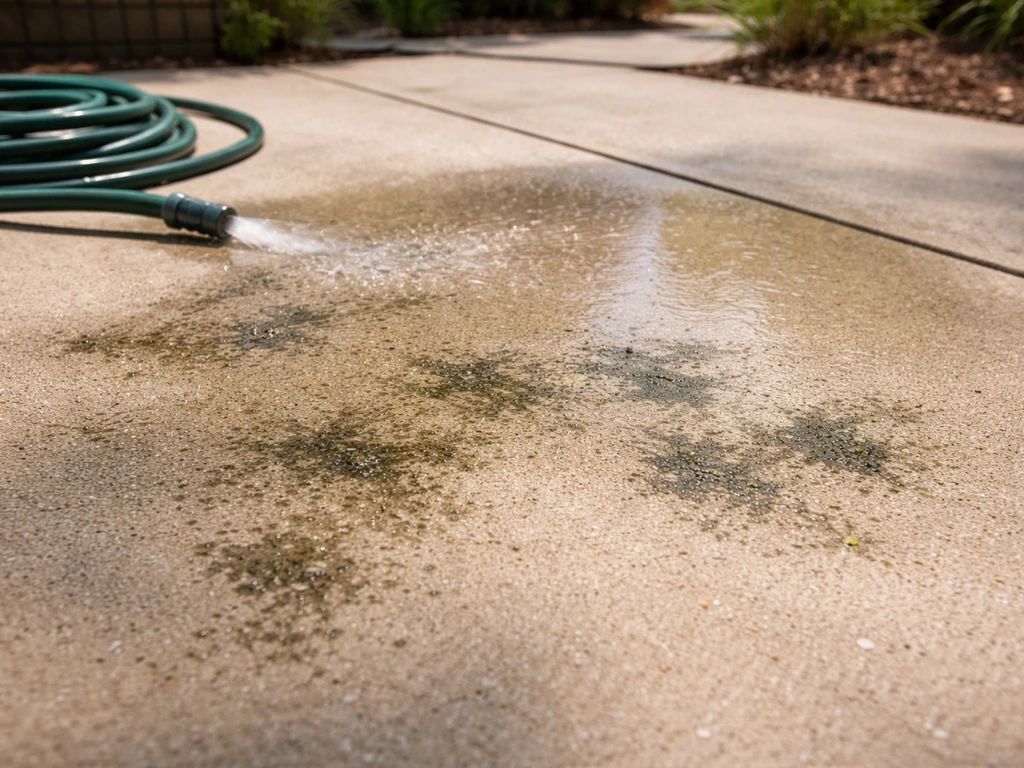
- Pre-wet the concrete with your garden hose. This prevents the bleach solution from being absorbed too quickly into dry concrete and helps it work more evenly across the surface.
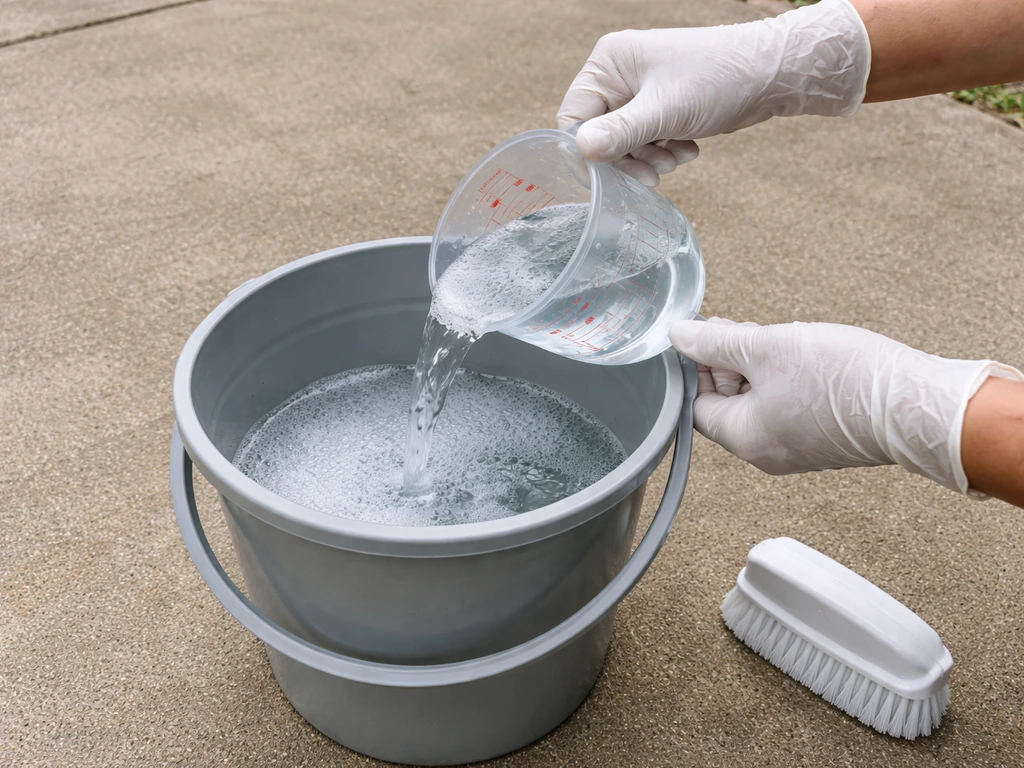
- Mix your solution: 1/3 cup of bleach per gallon of water (or up to 1 cup per gallon for heavy mold). Mix in a bucket, not directly on the patio.
- Put on your gloves and goggles before handling the solution.
- Apply the bleach solution to the concrete. You can pour it from the bucket directly or use a brush to spread it. Work in sections if your patio is large.
- Let it sit for up to 15 minutes. That's the dwell time Clorox recommends for patio cleaning, and it's enough time for the bleach to break down mold, algae, and surface grime. Don't let it dry on the surface.
- Scrub with your stiff deck brush, working in sections and paying extra attention to any heavily stained or discolored areas.
- Rinse thoroughly with your garden hose. You want all the bleach solution off the concrete before it dries.
- Re-water any plants or grass that were near the patio to further dilute any runoff.
After rinsing, let the concrete air dry fully before putting furniture back or walking on it in bare feet. The surface is safe once it's dry and the bleach smell has dissipated.
Matching the approach to the specific problem
Mold and mildew
This is where bleach genuinely excels on concrete. The sodium hypochlorite kills mold spores and lifts the dark staining they leave behind. Use the full 1 cup per gallon ratio for visible mold patches, let it sit the full 15 minutes, and scrub well. You should see the dark spots lighten significantly during scrubbing. If you're dealing with how to apply sodium hypochlorite more precisely or how long to leave it on, those topics are covered in detail separately on this site.
Algae and green slime
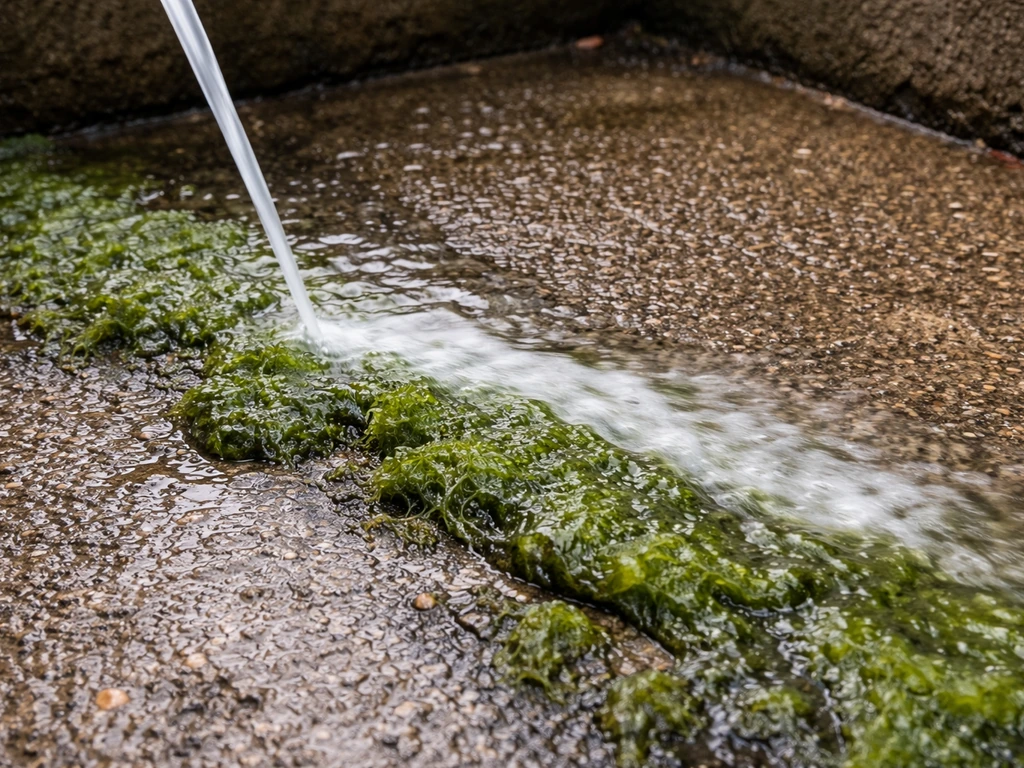
Green algae on a patio, especially in shaded or damp areas, comes off well with bleach. The 1/3 cup per gallon dilution is usually enough. The key here is really wetting the surface first so the algae doesn't just smear around. Scrub firmly after the dwell time, then rinse.
General discoloration and grime
For a patio that just looks dingy and gray with general dirt buildup, bleach works but it's doing more surface brightening than deep cleaning. The lighter 1/3 cup per gallon mix is fine here. You might be surprised how much brighter a patio looks after one bleach treatment when the discoloration is primarily biological in origin.
Rust, grease, and oil stains
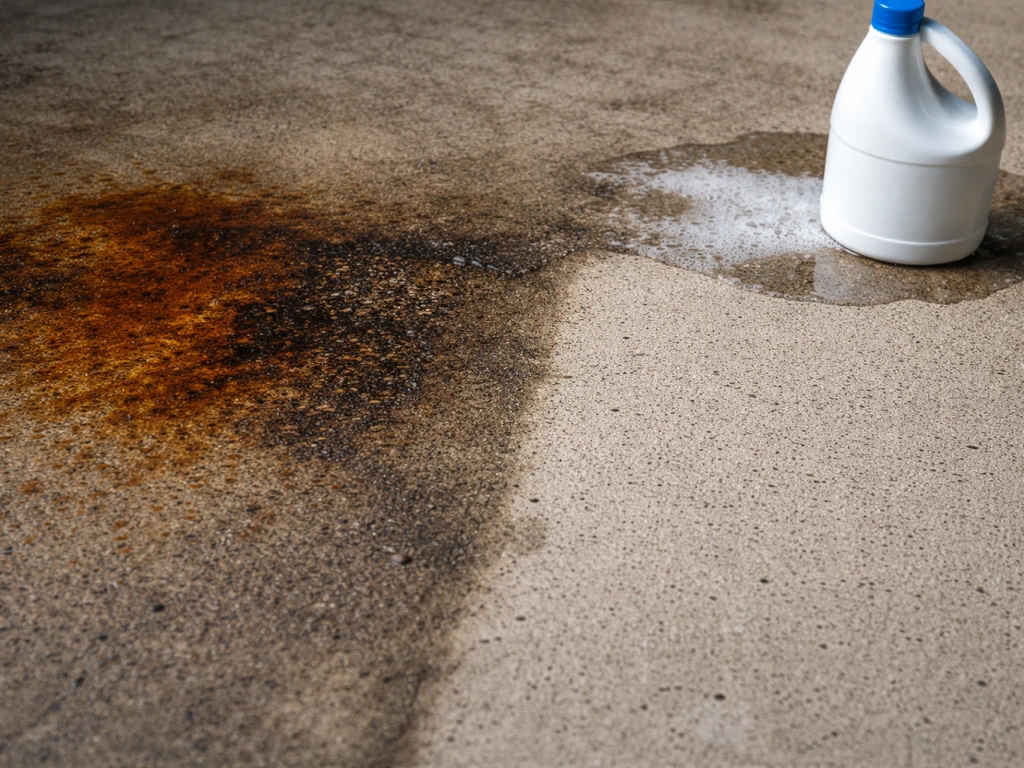
Bleach will not remove rust stains, grease, or motor oil. I've tried it, and it just doesn't work on those because bleach is an oxidizer, not a degreaser or acid. For rust, you need an oxalic-acid-based product. For grease and oil, a heavy-duty degreaser applied before the surface dries is the better path. Save the bleach for after you've handled those stains separately.
Efflorescence (white chalky deposits)
Skip bleach entirely for efflorescence. Those white salt deposits are caused by moisture carrying salts to the surface, and bleach adds moisture without addressing the salts. An acidic cleaner is the right call for efflorescence.
What to do if bleach doesn't work
If you've done one treatment and the staining is still there, don't just keep pouring on straight bleach. Here's a logical progression to work through:
- Try a second application at the stronger ratio (up to 1 cup bleach per gallon of water) and extend the dwell time slightly, but still rinse before it dries on the surface.
- Make sure you pre-wet the concrete thoroughly before the second application. Dry concrete absorbs the solution too fast for it to work properly.
- Scrub more aggressively during the dwell period. Sometimes the mechanical action of scrubbing matters more than the concentration.
- If two treatments haven't moved the stain, consider whether bleach is even the right tool. Rust, oil, and efflorescence won't respond to bleach no matter how many times you try.
- For stubborn organic staining that bleach isn't fully lifting, a commercial mold and mildew remover with a higher sodium hypochlorite concentration (sometimes labeled as outdoor bleach) can help. These are formulated specifically for outdoor surfaces.
If you're getting inconsistent results across the patio, check whether part of the surface has a sealer on it. Sealed concrete repels liquids, so the bleach solution beads up rather than penetrating. You'll need to either strip the old sealer or use a cleaner formulated to work on sealed surfaces.
Gentler alternatives and when to pressure wash instead
If you have pets or kids who use the patio regularly and you're worried about bleach residue, or if your patio is right next to a vegetable garden, white distilled vinegar is a reasonable gentler option. It won't kill mold spores as reliably as bleach, but it can handle surface grime, light algae, and general discoloration without the chemical concerns. Apply it undiluted, let it sit for 15 to 30 minutes, scrub, and rinse. It works more slowly and may need repeat applications, but it's safer around plants and won't bleach surrounding surfaces.
There are also non-bleach patio cleaners on the market, often enzyme-based or oxygen-bleach-based (sodium percarbonate), that are gentler on landscaping and work well for general cleaning. These are worth considering if you're doing routine seasonal maintenance rather than tackling a serious mold problem.
Pressure washing is another option that's worth knowing about. A pressure washer with enough PSI can physically remove algae, mold, and surface grime without any chemicals at all. It's especially effective when combined with a bleach pre-treatment: apply the bleach solution, let it dwell, then rinse with the pressure washer instead of a garden hose. The mechanical force clears residue much more effectively. If you don't own a pressure washer, many hardware stores rent them by the hour, and it's genuinely worth it for a badly stained large patio.
| Problem | Best approach | Does bleach work? |
|---|---|---|
| Mold and mildew | Bleach solution (1 cup per gallon), 15-min dwell, scrub | Yes, very well |
| Algae and green slime | Bleach solution (1/3 cup per gallon), scrub and rinse | Yes, works well |
| General grime and discoloration | Bleach solution or oxygen bleach cleaner | Yes, for organic discoloration |
| Rust stains | Oxalic-acid-based rust remover | No |
| Grease and oil | Heavy-duty degreaser | No |
| Efflorescence (white deposits) | Acidic cleaner (not bleach) | No, avoid bleach |
| Light surface dirt (pet-safe priority) | Vinegar or enzyme cleaner | Bleach works but may be overkill |
The bottom line: bleach is a genuinely useful tool for a concrete patio when you're dealing with biological growth, and the process is simple enough to do in an afternoon. Dilute it properly, protect yourself and your landscaping, give it the full dwell time, scrub thoroughly, and rinse well. If bleach doesn't solve the problem after two tries, you're almost certainly dealing with a stain type that needs a completely different product. If you're wondering how to bleach concrete patio areas for the best results, follow the safety steps and dwell times in the guide above. Knowing that distinction saves a lot of wasted effort and chemical use.
FAQ
How can I tell if the dark spots are mold or something bleach will not fix?
If the staining looks like green, black, or slimy growth that gets worse in shade and dampness, bleach usually helps. If the discoloration is oily, rainbow-like, or smells like petroleum, it is likely grease or oil and you should switch to a degreaser. Rust-related areas tend to be reddish-brown and won’t lighten with sodium hypochlorite.
Should I use regular bleach or “splash-less,” “concentrated,” or “non-scented” versions?
Use plain household bleach that contains sodium hypochlorite, and check the label for concentration. If the product is more concentrated than typical household bleach, you may need a stronger dilution safety adjustment. Avoid products with added cleaners, thickeners, fragrances, or metal-safe formulas unless you confirm they still contain sodium hypochlorite and no additives that conflict with other patio chemicals.
What if my patio has a sealant, stain, or paint layer over the concrete?
Bleach can lighten colored coatings or degrade some sealers, especially film-forming or pigmented finishes. Test an inconspicuous spot and observe after the concrete dries. If you notice color loss or uneven lightening, stop and use a cleaner specifically labeled for sealed surfaces or plan on resealing after cleaning.
Can I apply bleach with a pump sprayer, and how do I prevent uneven blotches?
You can use a sprayer, but control drift and runoff. Wet the surface first, apply evenly, and keep the area visibly wet during the dwell time. If some areas dry early, you can get patchy results, so re-wet those sections before scrubbing and rinsing.
Is it safe for nearby metal furniture, drains, or concrete edges?
Bleach can corrode metals and can also damage painted or colored elements. Move or cover metal furniture, grill parts, and decorative metal near the work zone. Direct rinse water away from metal and flush nearby hardware thoroughly after cleaning.
How long should I rinse and how do I know I rinsed enough?
Rinse until you no longer see suds or feel slickness, then do a second rinse of the treated zone. Even if the patio looks clean, residual bleach can keep reacting with dust and grime. Let the surface dry completely before stepping on it barefoot or replacing cushions.
Can I use bleach if the patio is already pressure washed or recently cleaned with another product?
Do not apply bleach to a surface that still has detergent, mildew remover, or ammonia-containing cleaners on it. Rinse thoroughly with plain water and allow it to dry enough that you do not have chemical residue mixing. If you used any cleaner with “disinfectant,” “ammonia,” or “quaternary” in the ingredients, wait and rinse more than usual.
Will bleach harm plants if there is runoff, even if I wet the grass first?
Pre-wetting helps dilute runoff, but it does not eliminate risk. Keep a buffer strip between the treated area and plantings, cover sensitive plants if they are close, and avoid heavy spraying that creates puddles. After rinsing, consider watering the adjacent soil lightly to remove residual solution.
What should I do if the algae comes back after a bleach treatment?
Regrowth usually means the underlying moisture problem or shading pattern is unchanged. Improve drainage, trim overhanging plants, and increase airflow where possible. If it returns quickly, use a recurring maintenance cleaner after initial remediation, and avoid relying on bleach repeatedly as your only long-term strategy.
Is vinegar a good first choice, and how do I decide between vinegar and bleach?
Vinegar is better when you need a gentler option around plants or pets and you are dealing with light grime or light algae. Choose bleach when you have visible mold patches, thick biological staining, or strong mildew. Vinegar may require multiple repeat treatments and usually takes longer for the same visual impact.
Can I use bleach on efflorescence or white chalky deposits?
No, efflorescence is salt carried to the surface, and bleach does not remove the salts. In many cases it can worsen the appearance by adding extra moisture. Use an efflorescence-specific acidic approach instead, and address the moisture source so it does not keep returning.
Next Articles
How to Bleach Concrete Patio: Step-by-Step Guide
Step-by-step how to bleach concrete patio with sodium hypochlorite, from prep and dilution to scrubbing, dwell time, and
How to Remove Thompson’s Patio Sealer Step by Step
Step-by-step removal of Thompson’s patio sealer on concrete, brick, pavers, and stone, with safety, tests, and cleanup.
Can You Remove Patio Sealer? How to Strip It Safely
Learn if you can remove patio sealer and how to strip it safely by type, material, and method.