
Your concrete patio is almost certainly turning black because of organic growth, specifically mold, mildew, or algae embedding into the pores of the concrete. That is the cause in the vast majority of cases. The second most likely culprits are iron or rust staining from metal furniture, planters, or rebar bleed-through, and in some spots near a grill or fire pit, soot and grease. The good news is all of these are fixable today with products you can pick up at any hardware store, and you do not need a pressure washer to get results.
Why Is My Concrete Patio Turning Black? Causes and Fixes
Dylan Hale
26 Jun 2026
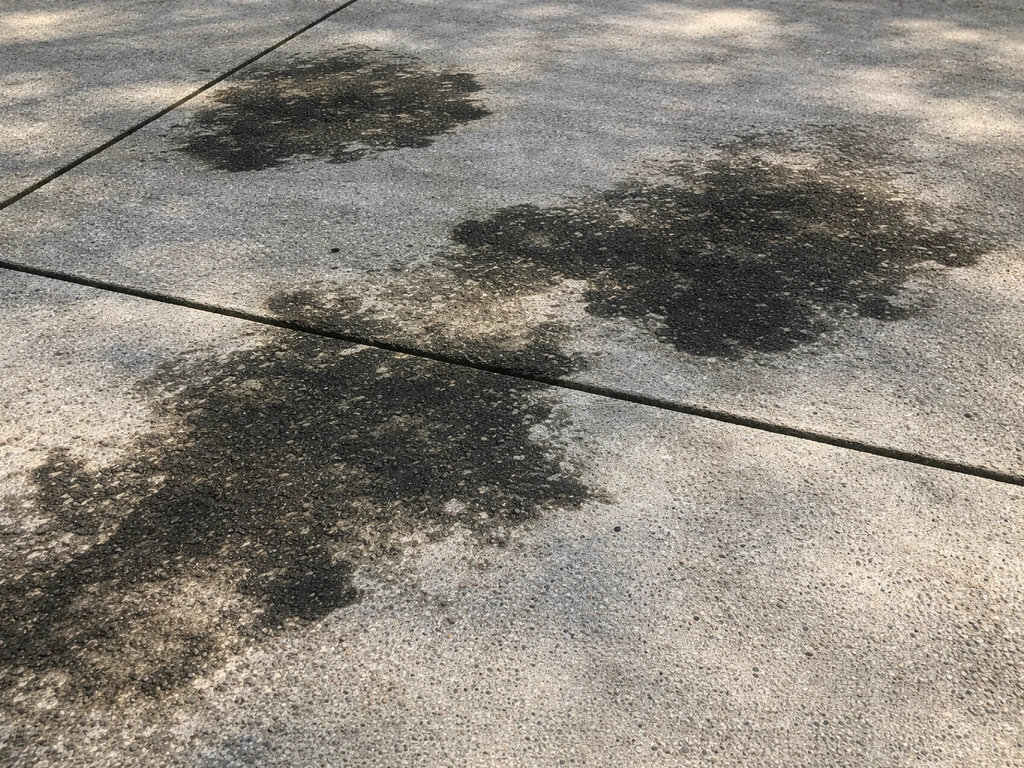
Why concrete patios turn black: the most common causes
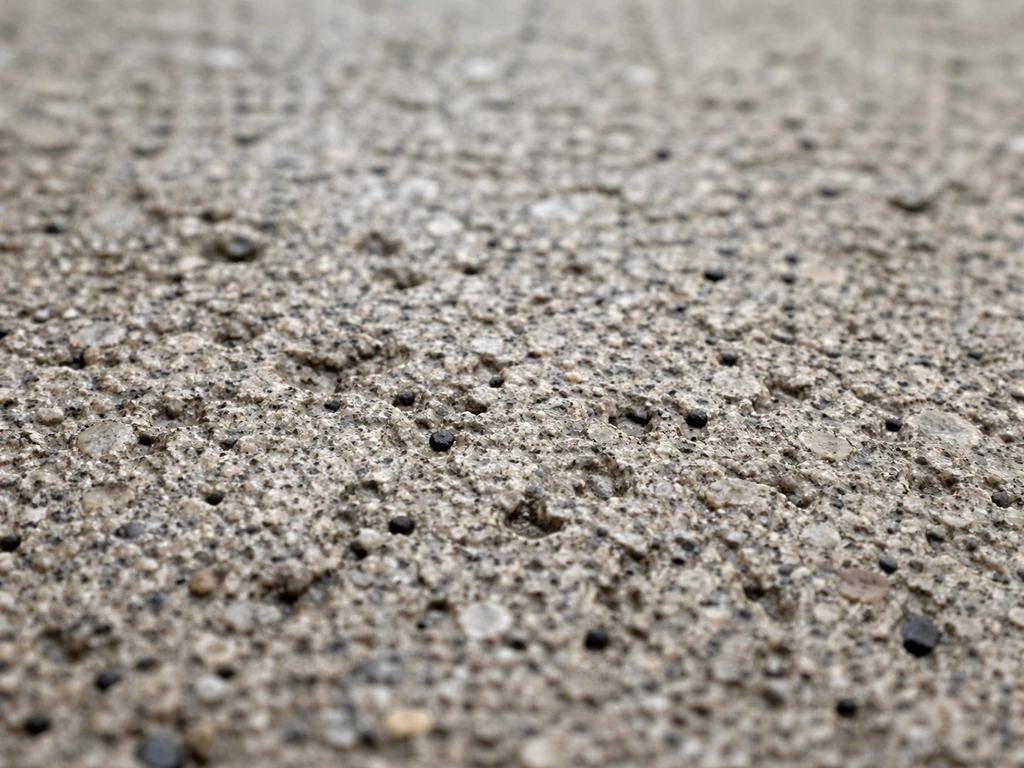
Concrete looks solid, but its surface is actually full of tiny pores. Moisture, dirt, and organic material settle into those pores and get comfortable. Once organic growth takes hold, it spreads fast, especially in humid summers or shaded corners that never fully dry out. Here is what you are most likely dealing with:
- Mold, mildew, and algae: The single most common cause of black discoloration on concrete. Spores land on the surface, find moisture trapped in the pores, and grow into dark patches or a widespread black film. Shaded areas and low spots where water pools are prime territory.
- Lichen and bacteria: Less talked about but equally stubborn. These tend to look like dark, crusty patches that feel slightly raised or rough rather than slimy.
- Iron and rust staining: Metal patio furniture, steel planter rings, or rebar that sits close to the surface can leach iron oxide into the concrete, leaving dark reddish-brown to black spots directly under or around the metal source.
- Soot and smoke residue: If the blackening is concentrated near a grill, fire pit, or outdoor kitchen, soot is likely the issue. It sits on the surface rather than growing into it.
- Oil and grease: Drips from a grill or a parked vehicle leave dark spots that look slightly transparent or wet even when dry. These do not grow or spread the way organic staining does.
- Dirt and pollution buildup: In high-traffic areas or near roads, general grime can accumulate into a dull gray-black film, especially if the patio has not been cleaned in a few years.
Figure out what you are actually dealing with before you clean
Using the wrong cleaner wastes time and can damage your concrete, so take two minutes to diagnose before you grab anything. The location and look of the black area tells you almost everything.
Mold, mildew, or algae
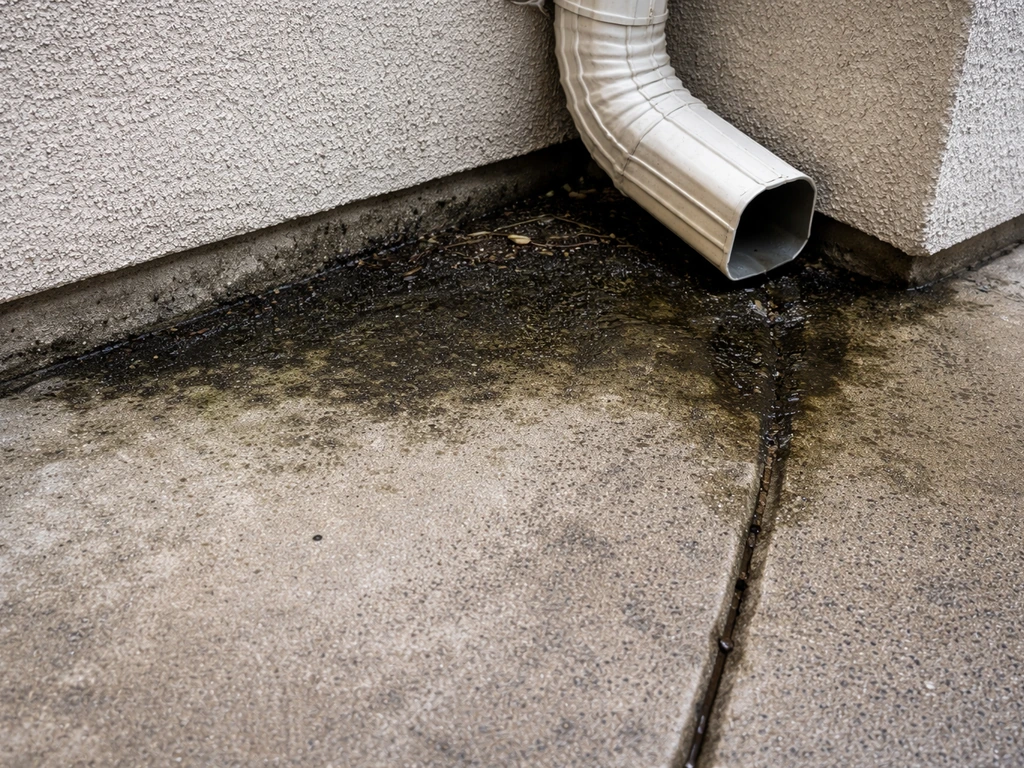
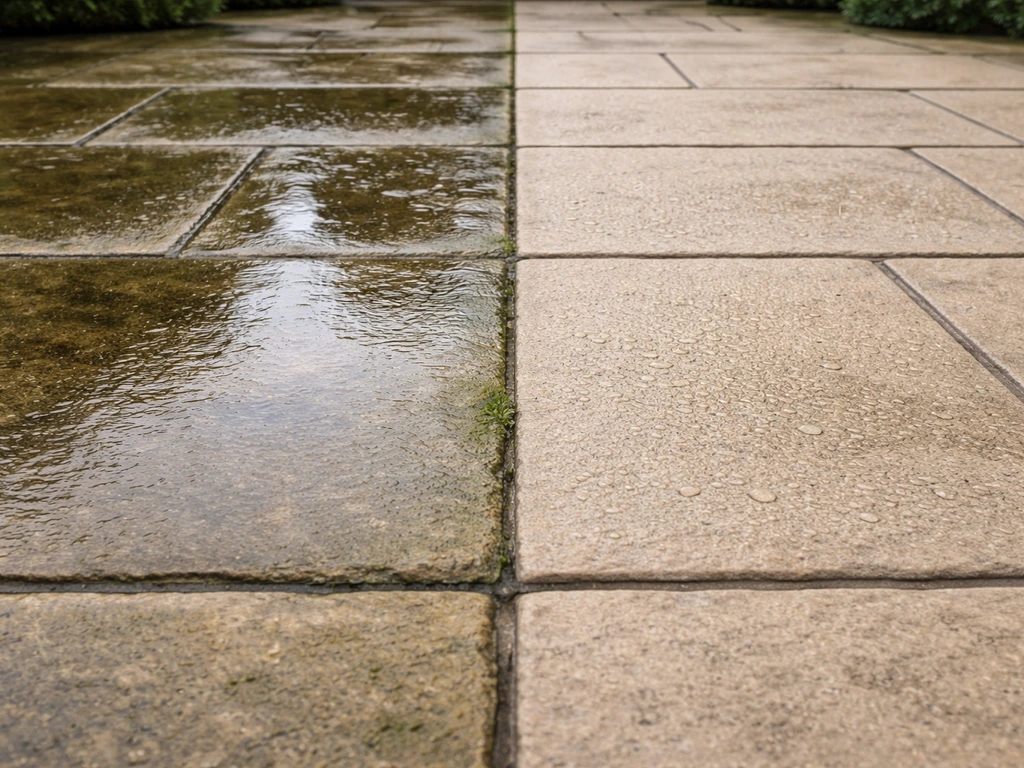
Look for dark gray or black patches in consistently shaded areas, along the edges of the patio where water runoff hits the concrete, near downspouts, and in low spots where water sits after rain. The surface often feels slightly slick or slimy when wet. If your patio is slick when wet, you can also take steps to make patio surfaces less slippery and safer to walk on, especially after rain or cleaning feels slightly slick or slimy. If your patio stays partly shaded or gets poor airflow, organic growth is almost certainly what you are seeing. It tends to spread outward in soft, irregular shapes rather than following hard edges.
Iron or rust staining
Rust stains have a very specific look: they are reddish-brown to dark brown or black, and they sit directly underneath or immediately around a metal object, such as a chair leg, a planter with a steel base, or a steel-edged garden bed. If you move the furniture and the stain matches the shape of what was sitting there, it is iron staining. These do not scrub off with a general cleaner, which is how you know you need a different approach.
Soot and smoke
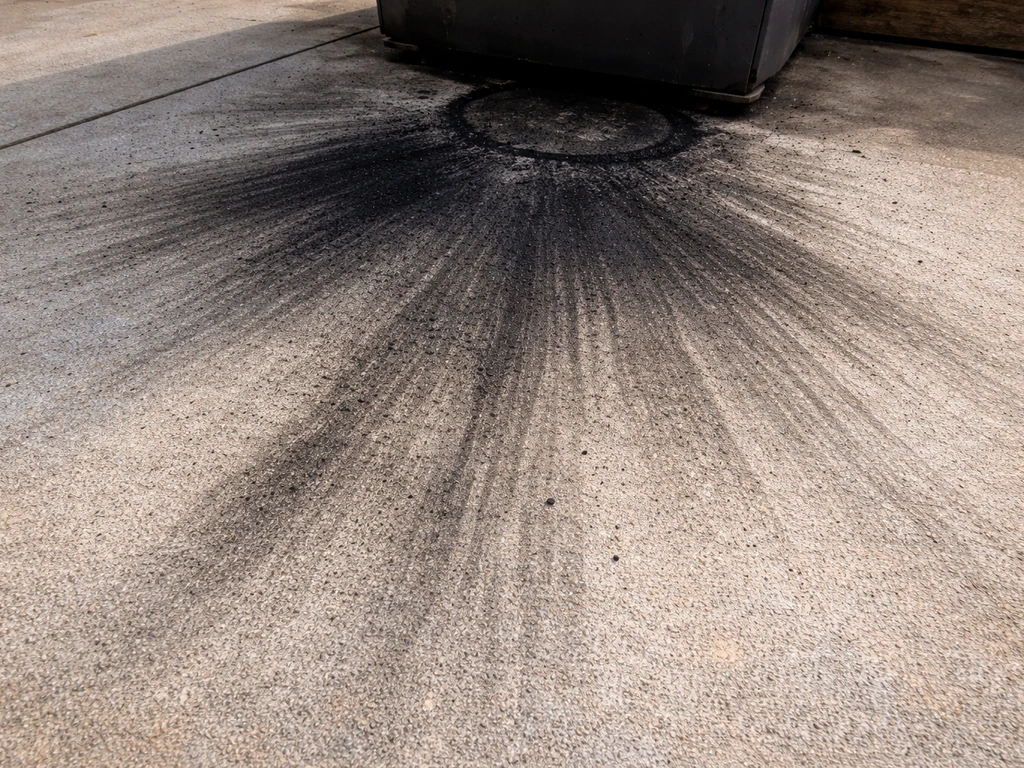
Soot staining concentrates in a specific zone around a grill or fire pit and often has a fan-shaped or directional spread based on prevailing wind. The black residue sits on top of the concrete rather than growing into it, so it does not feel slick. If you rub a dry paper towel across it and it comes away black or gray, that is a surface deposit, not a growth.
Oil and grease
Oil stains look darker and slightly transparent, almost like a wet patch that never dries. They do not have fuzzy or irregular edges like organic growth. If the black spot is right under where your grill sits or near a vehicle, and it has that slightly glossy look even when the rest of the patio is dry, you are dealing with grease.
Before you start cleaning: prep, safety, and protecting your yard
A little prep goes a long way, especially if you are using any chemical cleaners. Here is what to do before you wet anything down.
- Move furniture, planters, and anything else off the patio surface completely. You want clear access and you do not want cleaner sitting under a chair leg.
- Wet down any plants, grass, or garden beds bordering the patio with plain water before you start. This dilutes any cleaner that splashes onto them. Cover nearby delicate plants with plastic sheeting if you are using a strong bleach solution.
- Check the weather. Do not clean in direct hot sunlight if you can avoid it because cleaners evaporate too fast to do their job. Aim for overcast skies or early morning. Also avoid cleaning if rain is expected in the next few hours.
- Put on rubber gloves and eye protection. Bleach, iron removers, and acid-based products can all irritate skin and eyes.
- Sweep or blow off any dry debris first. Loose dirt, leaves, and pollen sitting on the surface will just dilute your cleaner and make it less effective.
- Pre-wet the concrete with plain water before applying any chemical cleaner. This stops the porous concrete from absorbing the cleaner too fast before it has time to work.
The right cleaner for the right stain
This is where most people go wrong. They grab whatever is under the sink and scrub away without matching the product to the problem. Here is exactly what to use depending on what you found during your diagnosis.
For mold, mildew, and algae: bleach solution or hydrogen peroxide
A diluted bleach solution is the most effective and fastest option for organic growth on concrete. Mix 1 cup of household liquid bleach per 1 gallon of water. Apply it to the pre-wetted concrete, let it sit for 10 to 15 minutes (you will often see the black start to lift and fade during this time), then scrub with a stiff nylon brush or deck brush and rinse thoroughly with a garden hose. For heavily infested areas, you can let it dwell for up to 20 minutes, but do not let it dry on the surface.
One hard rule: never mix bleach with vinegar, ammonia, or any other household cleaner. Combining them produces toxic fumes and does not clean better. Use bleach on its own, diluted in water, and nothing else.
If you have pets that use the patio regularly or you prefer to avoid bleach, a 3% hydrogen peroxide solution (the kind from the pharmacy, applied undiluted) is a gentler option. It takes longer and may need a second application on heavier growth, but it is safer around animals and plants. Apply, let it bubble for 15 to 20 minutes, scrub, and rinse.
For lighter organic staining or if you prefer a gentler approach: white vinegar
White vinegar works on light mildew and surface algae, especially if you catch it early. Apply undiluted white vinegar directly to the stained area, let it sit for 30 minutes, scrub, and rinse. I have found it takes more elbow grease than bleach and sometimes needs two rounds on darker staining, but it is a solid choice if you want to avoid stronger chemicals. It is also a reasonable option near vegetable gardens where bleach runoff concerns you. Just be aware that vinegar will not cut through heavy, embedded mold the way bleach does.
For oil, grease, and soot: a degreaser
Bleach and vinegar will not touch oil or grease staining because the chemistry is wrong. You need a degreaser, either a dedicated concrete degreaser from the hardware store or a strong dish soap like Dawn applied generously and worked in with a stiff brush. Apply the degreaser to the dry or barely damp stain (check your product label, as some degreasers work better on dry surfaces), let it dwell for the time specified on the label (usually 5 to 15 minutes), scrub aggressively with a stiff brush, and rinse with hot water if possible. For older, set-in grease stains, you may need to repeat this two or three times. Soot responds to the same degreaser approach, though it often lifts more easily since it sits on the surface.
For rust and iron staining: an oxalic acid or iron-removing product
Rust stains need a specific type of chemistry that dissolves iron oxide. Look for a product containing oxalic acid or labeled as a rust stain remover for concrete and masonry surfaces. Dampen the stained area with plain water first, then apply the product according to the label instructions. Most products benefit from a dwell time of 15 to 30 minutes; keeping the area damp during that time helps the chemistry work deeper into the pore. After the dwell time, scrub thoroughly with a deck brush or stiff nylon scrubbing pad, then rinse completely. Rinse promptly and completely because strong iron-removing solutions can cause discoloration if left too long after the dwell period. For deep, old rust stains, a second application is often needed.
| Black stain type | Best cleaner | Concentration or product | Dwell time | Rinse method |
|---|---|---|---|---|
| Mold, mildew, algae | Household bleach solution | 1 cup bleach per 1 gallon water | 10 to 20 minutes | Thorough hose rinse |
| Light organic / early mildew | White vinegar | Undiluted | 30 minutes | Hose rinse, may need 2 rounds |
| Oil, grease, soot | Degreaser or dish soap | Per label or full strength dish soap | 5 to 15 minutes | Hot water rinse if possible |
| Rust / iron staining | Oxalic acid or iron remover | Per label, keep surface damp | 15 to 30 minutes | Thorough immediate rinse |
Pressure washing vs. scrubbing by hand: what actually works
You do not need a pressure washer to clean a concrete patio effectively. Hand scrubbing with the right cleaner will handle most organic staining, grease, and surface rust without any special equipment. That said, a pressure washer does speed things up significantly for large patios or heavy buildup, and the combination of chemical treatment plus pressure washing gives the best results on stubborn staining.
If you are hand scrubbing
Use a stiff nylon deck brush or a scrub brush with synthetic bristles. Avoid wire brushes on concrete because they can leave metal fragments that rust and cause new staining. Apply your cleaner, let it dwell, then scrub in overlapping circular passes. Put real pressure into it, especially on embedded organic growth. Rinse well with a garden hose using a high-pressure nozzle attachment if you have one.
If you are using a pressure washer
For concrete, use around 3000 to 3500 PSI with a 25-degree nozzle tip. Keep the wand about 6 to 12 inches from the surface and use steady, overlapping passes. Moving in a consistent direction helps avoid stripe marks. Do not hover the wand in one spot or drop below a 25-degree tip because you can etch or gouge the concrete surface. Always apply your cleaning solution first, let it dwell, and then rinse with the pressure washer rather than trying to clean by water pressure alone.
One thing worth knowing: pressure washing can make concrete look very clean but leave organic growth spores behind in the pores if you skip the chemical treatment step. Those spores will regrow within weeks. Always pair pressure washing with the appropriate cleaner for lasting results.
What to do if the black does not fully lift after the first attempt
Let the concrete dry completely, then assess what is left. Stubborn organic growth often needs a second application at full dwell time. For rust staining that does not fully respond, a rust stain remover paste applied and kept wet for 15 to 20 minutes tends to work better than a liquid rinse-off product for deep stains. If a significant black area remains after two proper treatments, the growth or stain may have penetrated deeply enough that professional cleaning is worth considering.
Stopping the black from coming back
Cleaning the patio solves today's problem. Preventing it from happening again takes a few extra steps, but they are straightforward and will save you significant scrubbing time in future seasons. If you want patio stones to look wet longer, the same idea applies: clean and seal them so moisture cannot penetrate and re-stain the surface preventing it from happening again.
Fix drainage and moisture issues first
If water pools on your patio after rain, organic growth will always come back. If you are wondering why your concrete patio is wet, start by fixing the drainage so water is not lingering on the surface why is my concrete patio wet. Check that downspouts are directing water away from the patio surface, clear any debris from drains or edges that might be slowing drainage, and if a specific low spot keeps collecting water, it may be worth filling it with a concrete patching compound to level the surface. Reducing the time water sits on the concrete is the single biggest thing you can do to prevent recurring blackening.
Seal the concrete after cleaning
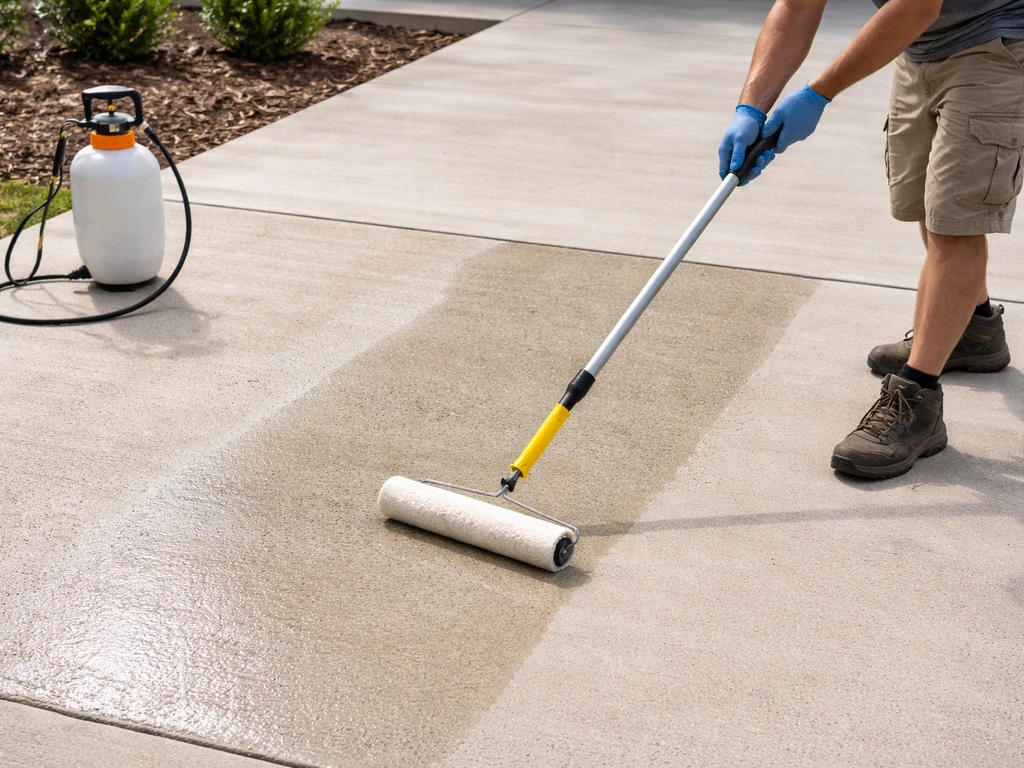
A good concrete sealer keeps moisture and contaminants from penetrating the pores, which is what makes them so hospitable to mold, algae, and rust. Sealing after a proper cleaning significantly reduces the chance of the black coming back. If you are trying to revive the look of patio pavers so they appear wet, sealing is the key step that locks in a richer, darker finish how to make patio pavers look wet. The key requirements are that the concrete must be completely clean and dry before you apply sealer. Do not rush this: wait at least 48 to 72 hours of dry weather after cleaning, and check the forecast. If there is any moisture in the substrate, the sealer will not bond properly and can develop a cloudy or peeling appearance. Follow the product label for application technique, and blank" rel="noopener noreferrer">avoid solvent-based or acid-based cleaning products close to sealing time because they can interfere with adhesion.
Set a simple maintenance routine
You do not need to deep-clean constantly. A light rinse and sweep every few weeks keeps organic material from building up. Once or twice a year (spring and fall work well), do a proper cleaning with a diluted bleach solution or hydrogen peroxide even if you do not see obvious blackening yet. Catching growth early means it never gets deeply embedded. Move metal furniture occasionally and check underneath it for early rust staining. If you have planters with metal bases or rings, put rubber feet or pads under them. These small habits make a real difference over time.
One more thing worth noting: if your cleaned patio looks noticeably wet or darker in some spots after drying, that can be a moisture issue in the concrete itself rather than a stain. A moisture issue like this is often the key to figuring out how to make your patio look wet the right way without causing lasting damage patio looks noticeably wet. A patio that stays visibly damp long after it should have dried is a different situation worth investigating before you seal over it.
FAQ
How can I tell if the black is mold/algae growth or just dirt staining on the surface?
Check wet vs dry behavior. Organic growth often looks dark and fuzzy or slightly blotchy and may feel a bit slick when wet. Surface deposits like soot usually lift with light scrubbing, and a dry paper-towel rub typically comes away gray or black without leaving a slick feel after it dries.
Will bleach or hydrogen peroxide remove rust, or do I need a separate product?
Bleach and peroxide are for organic growth, they will not dissolve iron oxide. For rust, use a concrete-safe rust remover that contains oxalic acid (or is specifically labeled for rust on masonry), damp the area first, and rinse promptly after the dwell time to prevent lingering discoloration.
Can I use a pressure washer by itself to get rid of the black?
It often does not last. Pressure washing can make the patio look clean while leaving spores or growth material in the pores, so the blackness returns quickly. For best results, apply the right chemical first, let it dwell, then rinse, and only consider pressure washing to speed up heavy buildup.
Why does the patio look cleaner right after washing, but the black returns within weeks?
This usually happens when the growth inside the pores was not killed or the cleaner chemistry did not match the stain type. It can also be from recurring moisture pooling. Confirm drainage is fixed, then repeat with the correct treatment (bleach or peroxide for organic, degreaser for grease, rust remover for iron staining).
Is it safe to use bleach if I have nearby plants or pets?
It can be, but control overspray and protect runoff paths. Pre-wet the concrete, avoid puddling, and rinse thoroughly. If you are trying to minimize chemical exposure, 3% hydrogen peroxide is usually a gentler alternative, but it may require a second application.
How long should I wait after cleaning before sealing the concrete?
Do not seal immediately. Let the patio dry completely, then wait at least 48 to 72 hours of dry weather, and check that the concrete is not still damp underneath. If moisture remains, sealer can turn cloudy or peel because it will not bond properly.
What should I do if the black spots come back only in one corner or along the same edge?
That pattern usually points to persistent moisture and airflow differences, not random growth. Recheck downspout direction, clean out drainage channels, and look for a recurring low spot. If water keeps collecting, leveling with a concrete patching compound can reduce the return more than re-cleaning does.
How do I avoid damaging the concrete when scrubbing or pressure washing?
Use a stiff nylon brush for scrubbing, avoid wire brushes (they can leave metal that rusts and causes new stains), and do not let cleaners dry on the surface. With a pressure washer, keep distance and nozzle angle controlled, use moderate pressure for concrete, and never try to skip chemical dwell time by relying only on water force.
Why does my patio look darker in patches even after I fully cleaned it?
That can indicate lingering moisture in the concrete rather than a stain. If sections stay visibly damp or darker long after drying, investigate moisture intrusion and drainage before sealing, because trapping moisture can lock in discoloration or cause sealer failure.
What if I tried the bleach method but the patio is still black?
First, confirm what the black actually is. If the area is slick when wet and in shaded or runoff zones, another dwell time at full concentration is reasonable. If the spots are near metal furniture with a matching shape, switch to an iron-rust remover approach. If the black is glossy or looks oily under a grill or vehicle, use a degreaser instead of bleach.
Can I mix cleaners to make them work faster if the problem seems mixed (mold plus rust)?
No. Never mix bleach with vinegar, ammonia, or other household products. If you truly have multiple stain types, treat one category at a time, rinse thoroughly between steps, and let the surface dry enough before switching chemistries.
Next Articles
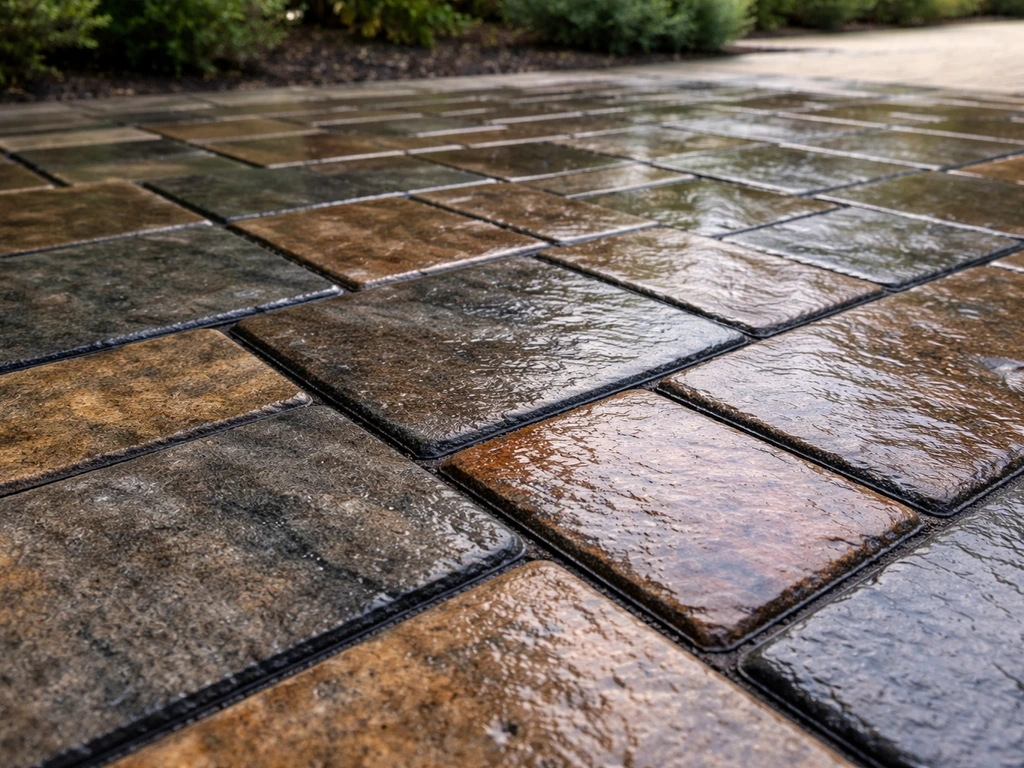
How to Make Patio Stones Look Wet: Step by Step
Clean, treat stains and algae, then apply the right wet-look sealer or finish for your patio stone, safely and streak-fr
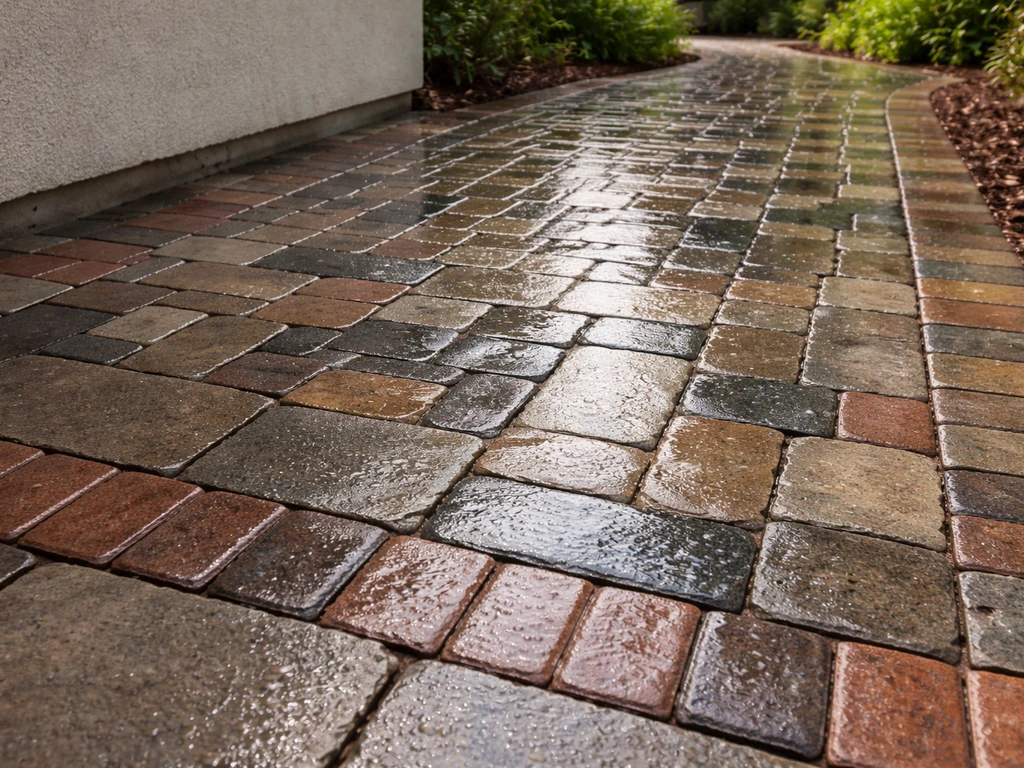
How to Make Your Patio Look Wet: Clear, Step by Step
Step-by-step wet look patio guide for concrete, brick, stone, pavers and travertine with safe cleaning, sealers, and fix
How to Make Patio Less Slippery: Clean, Treat, Prevent
Step-by-step fixes for a slippery patio: clean mold and algae, choose safer treatments for concrete, brick, stone, paver