To scrub a concrete patio, wet the surface, apply a cleaning solution suited to your stain type (dish soap and water for light grime, a 1-cup-per-gallon bleach solution for mold, or an alkaline degreaser for oil), let it dwell for 5 to 15 minutes, then scrub with a stiff-bristle brush in overlapping strokes and rinse thoroughly with a hose or pressure washer. That covers about 90% of what most patios need. The rest of this guide handles the harder jobs: rust, paint, efflorescence, and deep grease, plus safe acid-wash instructions for when scrubbing alone isn't enough.
How to Scrub Concrete Patio: Complete DIY Guide & Tips
Dylan Hale
12 Aug 2026
Goals, risks, and picking the right approach
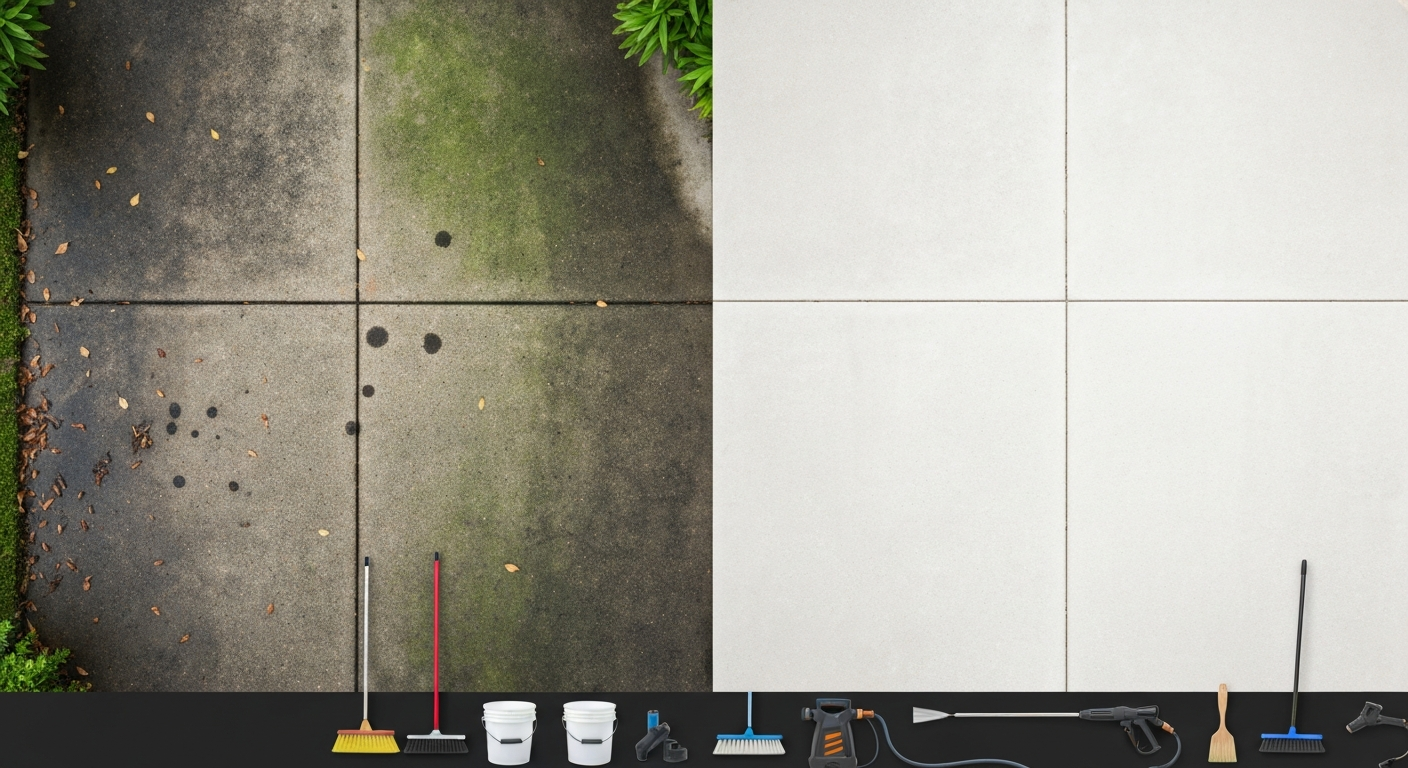
Before you grab a brush or fire up a pressure washer, spend two minutes figuring out what you're actually dealing with. Concrete looks tough, but the wrong cleaner or too much PSI can etch the surface, strip a sealer you didn't know was there, or push staining deeper into the pores. The good news is that most concrete patios respond well to a straightforward manual scrub. The stronger methods, pressure washing, acid washing, and professional grinding, are for specific situations.
| Situation | Best approach | Avoid |
|---|---|---|
| General dirt, pollen, algae | Manual scrub with dish soap or oxygen bleach | Muriatic acid (overkill) |
| Mold or mildew staining | Diluted sodium hypochlorite or oxygen bleach + scrub | Mixing bleach with any acid cleaner |
| Grease or oil | Alkaline degreaser (Krud Kutter, Simple Green) + stiff brush | Plain water (won't cut grease) |
| Rust stains | Oxalic-acid-based rust remover | Bleach (won't touch rust) |
| Efflorescence (white haze) | Dilute muriatic acid or specialty efflorescence cleaner | Pressure only (spreads salts) |
| Large area prep for paint or sealer | Acid etch or pressure wash + neutralize | Sealing over dirty concrete |
| Deep embedded stains, spalling | Professional cleaning or grinding | DIY acid at high concentration |
If you're renting and can't use a pressure washer or strong acids under your lease, the manual scrubbing method in this guide works perfectly well and leaves no permanent changes to the surface. Renters can tackle 95% of patio cleaning issues with a brush, a bucket, and a degreaser or oxygen-bleach product.
Everything you need: tools, supplies, and chemicals
Having the right gear before you start saves you from stopping mid-job with wet concrete and no neutralizer on hand. Here's what I keep ready for a full patio cleaning.
Brushes and scrubbing tools
- Stiff-bristle push broom or deck brush (at least 18-inch head for open areas)
- Hand scrub brush with stiff nylon or polypropylene bristles (for edges and stains)
- Nylon scrubbing pads for light buildup without scratching
- Wire brush — concrete only, never use on pavers or stone
- Long-handle mop or floor scrubber for rinsing and spreading neutralizer
Pressure-washer parts and settings
- Electric pressure washer (1,500 to 2,800 PSI for most residential concrete) or gas unit (up to 3,000 PSI for heavy work)
- 25-degree (green) nozzle for general washing
- 15-degree (yellow) nozzle for stubborn stains, held at a safe distance
- Rotating or turbo nozzle for large flat surfaces (use carefully — can etch soft concrete)
- Soap/detergent injector or downstream chemical injector for applying cleaners
- Surface cleaner attachment (bar-style spinning head) for consistent, streak-free results
Cleaners and chemicals
- Dish soap or trisodium phosphate (TSP) for general degreasing
- Oxygen bleach / sodium percarbonate (e.g., Simple Green Oxy Solve) for organic stains, algae, mildew
- Sodium hypochlorite (household bleach, ~5 to 6%) for mold — dilute 1 cup per gallon of water
- Alkaline degreaser concentrate (e.g., Krud Kutter, Simple Green, Oil Eater) — typical dilution 1:10 for general cleaning, stronger for heavy oil
- Muriatic acid (~28 to 31% HCl) for acid washing or efflorescence — dilute per product label, always add acid to water
- Oxalic acid or commercial rust remover for rust stains
- Baking soda (sodium bicarbonate) for neutralizing acid residue — about 1/2 to 1 cup per gallon of water
Personal protective equipment (PPE)
- Chemical-splash goggles (not safety glasses — goggles seal around eyes)
- Full face shield when using muriatic acid
- Acid-resistant nitrile or neoprene gloves (heavy-gauge, not thin latex)
- Rubber boots or waterproof work boots
- Old clothes or a waterproof apron — chlorine bleach and muriatic acid will ruin fabric
- Half-face respirator with acid-gas (HCl-rated, white-band) cartridges when using muriatic acid — note that particulate-only filters do not protect against acid gases
- At minimum, N95 or better dust mask when dry-sweeping concrete dust
Neutralizers and disposal supplies
- Baking soda (several boxes if acid washing a large area)
- pH test strips (pool test strips work fine) — check that rinse water reaches neutral pH 7 before draining
- Plastic sheeting or tarps for protecting plants and adjacent surfaces
- Bucket, measuring cups, and a separate mixing container for acids (plastic only, never metal)
- Garden hose with adjustable nozzle for rinsing
PPE and site safety: don't skip this
I'll be direct: the number one injury in DIY patio cleaning is chemical splash to the eyes. The second is slipping on a wet, freshly scrubbed surface. The checklist below covers both.
- Wear chemical splash goggles any time you're mixing or applying bleach, degreaser, or acid — not sunglasses, not safety glasses, actual goggles.
- Add a full face shield on top of goggles when working with muriatic acid. Acid mist can travel farther than you expect on a windy day.
- Use acid-resistant gloves. Thin latex gloves are not adequate for muriatic acid or concentrated degreasers.
- For muriatic acid: wear a half-face respirator with acid-gas (HCl) cartridges. The OSHA/NIOSH ceiling for hydrogen chloride exposure is 5 ppm. A particulate filter alone will not protect you from acid fumes. Never work indoors with muriatic acid.
- For bleach and degreasers used in confined or poorly ventilated spaces, a full-face respirator with acid-gas cartridge is recommended; outdoors with good airflow, chemical-splash goggles and gloves are the minimum.
- Never mix bleach with muriatic acid or any acid-based cleaner. This reaction produces chlorine gas, which is extremely dangerous even in small concentrations.
- Keep a garden hose running nearby for emergency flushing. If acid or bleach contacts eyes or skin, flush immediately for 15 to 20 minutes and seek medical attention.
- Wear rubber boots or waterproof footwear. A wet concrete patio becomes slippery the moment you apply soap or cleaning solution.
- Keep children and pets away from the work area until the patio is fully rinsed and dry.
- Work in the early morning or on a cloudy day when possible. Hot concrete dries cleaning solutions too quickly, reducing effectiveness and increasing fume concentration.
Preparing the area before you start
Good prep takes 10 minutes and prevents an hour of cleanup problems later. I've learned this the hard way after a bleach rinse ran into a flower bed.
- Remove all furniture, planters, rugs, grills, and decorations from the patio surface. Even items you plan to move back should be off the concrete so you can clean the full area.
- Sweep or blow off loose debris, leaves, and dirt with a broom or leaf blower. Scrubbing over loose debris wastes your cleaning solution and clogs your drain.
- Wet any plants, grass, or soil bordering the patio thoroughly before applying chemicals. A well-saturated plant bed is less likely to absorb chemical runoff. Cover delicate plants with plastic sheeting weighed down at the edges.
- Seal or cover any nearby floor drains, garage door gaps, or basement window wells that could direct runoff somewhere problematic. Tape plastic sheeting over them if needed.
- Close or seal exterior doors and windows adjacent to the patio, especially when using acid or bleach, to prevent fumes from entering the home.
- Check that your garden hose can reach the full patio area before you start. Re-routing it mid-job with wet, soapy gloves is a nuisance.
- Pre-wet the entire concrete surface with plain water. This opens the pores slightly, improves cleaning solution penetration, and prevents the cleaner from being absorbed too quickly and drying out.
Always spot-test first
Concrete patios aren't all the same. Older concrete, colored or stamped concrete, or concrete with a sealer or coating reacts differently to strong cleaners. A spot test takes five minutes and can save you from stripping a finish or bleaching a tinted surface across the whole patio.
- Pick a small, inconspicuous area, ideally a corner or edge that's partially hidden by furniture. The test spot should be at least 12 by 12 inches so you get a meaningful result.
- Mix your chosen cleaning solution at the intended working concentration.
- Apply it to the test spot, let it dwell for the full planned time, then scrub and rinse as you would for the real job.
- Wait for the spot to dry completely before evaluating. Wet concrete always looks different from dry concrete. Check for discoloration, etching (a dull, rough texture where there wasn't one before), or surface damage.
- If you're using a pressure washer, test your chosen nozzle and distance on the spot first. Move the wand at the same speed you'll use for the main job.
- For muriatic acid: watch for an immediate fizzing reaction when you apply it to a dry spot. Some fizzing is normal (it's reacting with carbonation on the surface). Heavy sustained fizzing or rapid color change means the acid is too strong or the concrete is softer than typical.
- If the spot test shows damage, dial back concentration, switch to a gentler cleaner, or reduce pressure before proceeding.
Manual scrubbing: step-by-step
Manual scrubbing is the right method for renters, anyone without a pressure washer, moderate staining, or situations where you want precise control over where the cleaning solution goes. It takes more physical effort but gives excellent results and is gentler on the concrete surface.
Mixing your cleaning solution
Match the cleaner to the problem. For general grime and surface dirt, a few squirts of dish soap per gallon of warm water is enough. For mold or mildew, mix 1 cup of household bleach (5 to 6% sodium hypochlorite) per gallon of water. For oil or grease, use an alkaline degreaser concentrate at roughly 1 part concentrate to 10 parts water for moderate soil, or a stronger ratio per the product label for heavy buildup. Always mix in a plastic bucket, never a metal container, and always add concentrated chemicals to water rather than the other way around.
Scrubbing technique and dwell times
- Pre-wet the surface with plain water so the concrete is damp but not pooling.
- Apply your cleaning solution generously with a mop, watering can, or garden sprayer. You want the surface visibly wet with the solution, not just misted.
- Let the solution dwell. General soap: 3 to 5 minutes. Degreaser: 5 to 10 minutes. Bleach for mold: 10 minutes. Oxygen bleach: 10 to 30 minutes per the product label. Do not let any solution dry on the surface, especially on a warm sunny day.
- Scrub with a stiff-bristle push broom using firm, overlapping strokes. Use a hand brush for edges, corners, and tight spots. Work in sections of about 4 by 4 feet so you can control dwell time without sections drying out.
- For stubborn spots, apply a second dose of cleaner directly to the spot, let it dwell again for 5 minutes, then scrub with a hand brush using circular motions.
- Rinse the section with a strong stream of water from your hose before moving to the next section. Don't let dirty solution from one area dry and re-deposit on clean areas.
- After the full patio is scrubbed and rinsed, do a final full-surface rinse from the high end of the patio toward the drain or lawn edge, pushing rinse water off the surface completely.
What success looks like
When you've done the job right, the rinsed concrete should look uniformly lighter in color (you're seeing clean concrete, not dust-coated concrete), the surface should feel slightly rough and gritty rather than slippery, and there should be no visible soap residue or foam once fully rinsed. If large areas still look gray and dingy after drying, a second pass or a stronger solution is warranted.
Pressure-washing method: step-by-step
A pressure washer dramatically speeds up the job and does a more thorough rinse. I've found that most residential concrete patios clean up well at 1,500 to 2,500 PSI with a 25-degree nozzle. Going harder than 3,000 PSI on older or softer concrete risks etching or surface damage, especially if you pause or hold the wand too close.
PSI, nozzle, and distance guidance
| Nozzle (color) | Spray angle | Best use on concrete | Working distance from surface |
|---|---|---|---|
| Red (0°) | Pinpoint stream | Do not use on concrete — will etch and damage | N/A |
| Yellow (15°) | Narrow fan | Heavy stains, only with constant movement | 10 to 12 inches |
| Green (25°) | Medium fan | General washing, best all-around choice | 8 to 12 inches |
| White (40°) | Wide fan | Rinsing, light grime on older concrete | 6 to 10 inches |
| Black (65°) | Low-pressure fan | Applying soap/detergent only | 6 to 8 inches |
| Rotating/turbo | Spinning pencil jet | Tough stains, experienced users only | 12 to 15 inches minimum |
Step-by-step pressure-wash process
- Connect your pressure washer and test the water supply line — you need at least 4 gallons per minute of flow for most electric units.
- Start with the soap/detergent injector and a black (65°) or downstream soap nozzle. Apply your cleaning solution (oxygen bleach concentrate or pressure-washer degreaser) across the full surface or in sections.
- Let the cleaner dwell for 5 to 10 minutes without letting it dry. If the sun is hot, work in smaller sections.
- Switch to your 25-degree (green) nozzle for washing. Hold the wand 8 to 12 inches from the surface and keep it moving in long, overlapping strokes parallel to the longest edge of the patio.
- Overlap each pass by about 50% so you don't leave visible lines or streaks. Move at a consistent pace — pausing in one spot concentrates pressure and can etch the surface.
- Work from the house outward toward the yard or drain so you're always pushing dirty water ahead of you, not back over clean areas.
- For edge details and corners, switch to the 15-degree (yellow) nozzle but keep it moving constantly and hold it slightly farther away (10 to 12 inches) than you think you need.
- Final rinse: make one or two passes with the 25-degree or 40-degree nozzle over the entire surface to clear all detergent residue. Residual soap left on concrete creates a slippery film when dry.
- Let the patio dry fully (at least 24 hours) before inspecting stains, applying sealer, or moving furniture back.
Safety tips specific to pressure washing
- Never point the wand at yourself, another person, or a pet — even water at 2,000 PSI causes serious lacerations
- Wear rubber boots, not sneakers; wet soapy concrete and high-pressure spray create significant slip risk
- Keep bystanders at least 10 feet away while the washer is running
- Do not use a red (0-degree) nozzle on concrete under any circumstances
- When using a chemical injector, flush the system with plain water before switching nozzles to avoid spraying concentrated cleaner unexpectedly
Stain diagnostics: identify before you treat
Using the wrong cleaner on a stain doesn't just fail to remove it, it can set the stain permanently or damage the concrete. Here's how I identify the five most common concrete patio stains before reaching for any chemical.
Mold and mildew
Mold and mildew appear as black, green, or gray patches, often in shaded, moist areas of the patio. The growth usually has a fuzzy or slightly raised texture when you look closely. It's most common near planters, along fence lines, or under overhanging trees. Mold stains often appear as irregular splotches, while algae tends to form a broader, more uniform green film. Treatment: sodium hypochlorite (bleach) or oxygen bleach. A 1-cup-per-gallon bleach solution with 10 minutes of dwell time is effective on hard, non-porous concrete. EPA guidance recommends detergent and mechanical scrubbing as the first choice for mold on hard surfaces, with bleach used as a secondary disinfection step. Do not mix bleach with any acid-based cleaner.
Grease and oil
Grease and oil stains are typically darker than the surrounding concrete, often brownish-black, and may have a shiny or slick appearance when fresh. They absorb into the concrete pores and won't respond to plain water or bleach. The stain boundary is usually well-defined. Fresh oil stains (within a few hours) can sometimes be lifted by covering with dry cat litter or sawdust for several hours to absorb the oil before cleaning. For set stains, an alkaline degreaser concentrate (diluted 1:10 for moderate staining, stronger for heavy buildup per the label) left to dwell for 10 to 15 minutes, then scrubbed with a stiff brush, is the right approach. Rinse completely, because degreaser residue on concrete becomes a slip hazard.
Rust
Rust stains are orange-brown to reddish-brown, often appearing in patterns that match a metal object: a circular stain under a patio chair leg, a streak from a downspout, or a spreading stain from a fertilizer bag left on wet concrete. Bleach will not remove rust and may actually darken it. The right product is an oxalic-acid-based rust remover or a commercial concrete rust stain remover. Apply per product directions, allow the recommended dwell time, scrub, and rinse. For deep or old rust stains, a second application is usually needed. Avoid muriatic acid for rust removal specifically, it can remove the stain but it etches the surrounding concrete unevenly.
Paint
Paint on concrete is usually obvious by its defined edges and uniform color. The removal method depends on whether the paint is latex (water-based) or oil-based. For fresh latex paint, hot water, dish soap, and scrubbing work well. For dried latex or oil-based paint, a chemical paint stripper labeled safe for concrete is more effective than mechanical scrubbing. A pressure washer with a 15-degree nozzle can chip away flaking paint but won't remove paint that's fully adhered. For large paint spills or multiple coats, this becomes a job that overlaps with concrete grinding, the kind of prep work covered in more depth when looking at how to refresh or polish a concrete patio. For step-by-step instructions on refreshing and polishing a concrete patio, see how to refresh your patio (9411ac58-5976-4286-ad80-f6d3548d9acb). For detailed steps on how to refresh a concrete patio, see the dedicated section on refreshing and polishing a patio.
Efflorescence
Efflorescence shows up as white, chalky, or powdery deposits on the concrete surface. It's not mold, and it's not a stain from something external. It's crystallized mineral salts (primarily calcium carbonate) that migrate from inside the concrete to the surface as water evaporates. It often appears after heavy rain, near expansion joints, or on newer concrete. Dry brushing removes light efflorescence temporarily, but it usually comes back because you haven't addressed the salts embedded in the pores. A dilute muriatic acid solution is the most effective treatment: the acid reacts with and dissolves the calcium carbonate deposits. This is essentially the same process as acid washing, which is covered more fully in the acid wash guide for concrete patios. After treatment, thorough rinsing and neutralization with a baking soda solution are essential to prevent residual acid from continuing to react with the concrete.
Treating stains with the right chemistry
Now that you've identified the stain type, here's how to apply the matching treatment effectively.
Mold and mildew treatment
- Mix 1 cup of household bleach per gallon of water in a plastic bucket. Do not use more concentrated bleach than this for scrubbing — it does not improve results and increases hazard.
- Pre-wet the affected area with plain water.
- Apply the bleach solution to the moldy area with a brush or sprayer and let it dwell for 10 minutes.
- Scrub with a stiff nylon brush. You should see the mold breaking up and the concrete lightening.
- Rinse thoroughly with a hose. Confirm no bleach residue remains before allowing children or pets back on the surface.
- For persistent mold, oxygen-bleach products (sodium percarbonate) are a good alternative that are less harsh on nearby plants. Follow the product label for dilution and dwell times (typically 10 to 30 minutes). Keep the surface wet while the product works.
Grease and oil treatment
- For fresh oil: cover the stain with cat litter, sawdust, or baking soda. Leave for several hours or overnight. Sweep up the absorbent material before applying cleaner.
- Apply an alkaline degreaser at the manufacturer's recommended ratio (commonly 1: 10 for moderate staining with products like Krud Kutter or Simple Green).
- Dwell for 10 to 15 minutes. Do not let the product dry on the surface.
- Scrub aggressively with a stiff brush. On older, set stains, you may see the stain lighten but not disappear completely on the first pass.
- Rinse completely with hot water if available, otherwise cold water with a strong stream.
- For very old or large grease stains, a poultice method works well: mix degreaser with an absorbent powder (flour, diatomaceous earth) into a thick paste, apply over the stain, cover with plastic wrap, and leave for 24 hours. The paste draws the oil out of the pores as it dries.
Rust treatment
- Apply an oxalic-acid-based rust remover or a commercial concrete rust stain remover per product directions.
- Allow the recommended dwell time, usually 5 to 15 minutes. You'll often see the orange color shift toward yellow or disappear as the acid reacts.
- Scrub with a stiff brush, then rinse thoroughly.
- Check pH with test strips and verify the surface is neutral before sealing. Most oxalic-acid products require thorough rinsing but not a separate baking-soda neutralization step — check your product label to confirm.
Efflorescence and acid-wash treatment
Muriatic acid is ~28 to 31% HCl with a pH below 1.0. It's effective but genuinely dangerous if mishandled. Always wear chemical-splash goggles plus a face shield, acid-resistant gloves, rubber boots, old clothes, and a half-face respirator with acid-gas (HCl) cartridges. Work outdoors only. OSHA/NIOSH list the ceiling exposure for hydrogen chloride at 5 ppm, you cannot smell or feel that level until you're already overexposed, which is why respiratory protection matters even for short jobs.
- Pre-wet the entire concrete surface with water. Acid applied to dry concrete reacts too aggressively and unevenly.
- Mix the acid solution in a plastic bucket. Dilution ratios vary by purpose: Quikrete's guidance for carbonation removal cites a 4:1 water-to-acid ratio; general etching commonly ranges from 1:3 to 1:10 acid to water. Follow the specific product label. Always add acid to water, never the other way around. The reaction is exothermic and adding water to acid can cause dangerous spattering.
- Apply the solution to a small section at a time (about 10 square feet). You should see a gentle fizzing reaction on the concrete surface.
- Allow a brief dwell time (2 to 5 minutes per most product instructions). Do not let it sit longer than labeled.
- Scrub with a stiff-bristle brush, then rinse thoroughly with a strong stream of water.
- Neutralize: mix 1/2 to 1 cup of baking soda per gallon of water and apply across the treated area. Allow 5 minutes, then rinse again. Test the rinse water with pH strips — target pH 7 (neutral) before draining.
- Dispose of rinse water following local wastewater rules. Never pour concentrated acid or even diluted acid wash directly into a storm drain without checking regulations. Neutralized, heavily diluted rinse water is typically acceptable to drain to a sanitary sewer in most jurisdictions, but confirm locally.
Gentler alternatives to acid and bleach
If you have pets, children, or sensitive plants near the patio, or if you just prefer to avoid strong chemicals, these alternatives handle most common concrete cleaning jobs without muriatic acid or sodium hypochlorite. Manufacturer and retailer guidance for oxygen‑bleach (sodium percarbonate) cleaners like Simple Green Oxy Solve recommends dissolving per label directions, applying to a wet surface, keeping the area wet for about 10–30 minutes, then scrubbing and rinsing; these products are commonly recommended for organic stains, mildew, and algae and are less corrosive to plants and metals than muriatic acid or chlorine bleach The Home Depot — Simple Green Oxy Solve (product listing / directions & reviews).
- White vinegar (5% acetic acid): effective on light efflorescence and mineral deposits; apply undiluted, let dwell 10 to 15 minutes, scrub and rinse. Much weaker than muriatic acid so results on heavy deposits will be limited, but it won't harm plants if rinsed off.
- Baking soda paste: mix baking soda and water into a thick paste and apply to grease spots, scrub with a brush. Good for light oil on newer concrete.
- Oxygen bleach (sodium percarbonate): the best plant-safe alternative to chlorine bleach for organic stains, algae, and mildew. Releases hydrogen peroxide when mixed with water — effective without the fume hazard of chlorine bleach. Follow the product label for dilution and dwell times.
- Dish soap and hot water: underrated for general grime and pollen buildup on regularly maintained patios. A cup of dish soap per gallon of hot water, a good push broom, and a thorough rinse gets most clean patios through their annual refresh.
Refreshing and polishing after cleaning
Once your concrete is clean, you have several options to improve its appearance and protect it going forward. Sealing is the most practical step for most homeowners: a penetrating concrete sealer (silane/siloxane type) soaks into the pores and repels water and oil without changing the surface appearance. Film-forming sealers add a slight sheen and extra protection but require periodic reapplication. Apply sealer only to fully dry, clean concrete, typically 24 to 48 hours after the final rinse.
Concrete densifiers (sodium or lithium silicate products) react chemically with the concrete to harden and densify the surface. They're commonly used before polishing and are worth considering if your concrete is older and showing porosity issues or dusting. Polishing concrete, using progressively finer diamond grinding pads to create a smooth, reflective surface, is a more involved process covered in detail in the guide on how to polish a concrete patio. Similarly, if your patio needs more than a clean, filling cracks, resurfacing, or re-coloring, those steps are part of a broader refresh approach covered separately.
Renter-friendly approaches
If you're renting, the manual scrubbing method with dish soap, oxygen bleach, or a diluted degreaser is your go-to. These leave no permanent changes to the patio surface, don't require special equipment, and are safe for landlord notification (or none at all for basic cleaning). Avoid acid washing or grinding without your landlord's written permission, these physically alter the concrete surface. A garden hose with a spray nozzle provides enough water pressure for rinsing in most cases. If you need more power, consider renting an electric pressure washer by the day, which typically costs $40 to $80 and requires no specialized skill to operate at the PSI settings described in this guide.
Maintenance schedule to avoid heavy cleaning jobs
The single biggest thing I've found that keeps concrete patios looking clean is a quick monthly sweep and a light rinse with a hose. That 10-minute habit prevents the buildup that eventually requires serious effort to remove.
| Frequency | Task |
|---|---|
| Monthly | Sweep off leaves, debris, and dirt; hose down surface; check for new stains |
| Every 3 months | Spot-treat any mold, algae, or stain growth immediately with appropriate cleaner |
| Annually (spring) | Full scrub with degreaser or oxygen bleach; inspect sealer condition |
| Every 2 to 3 years | Reapply penetrating sealer after thorough cleaning and 48 hours drying time |
| As needed | Treat rust stains, efflorescence, or oil spots as soon as they appear — fresh stains are always easier to remove |
When to call a professional
Most concrete patio cleaning is a legitimate DIY job. But a few situations genuinely warrant hiring a professional, and pushing through them yourself can cost more in damage repairs than the cleaning job would have.
- The concrete is spalling (surface flaking or crumbling): aggressive scrubbing or acid washing can accelerate damage on already deteriorating concrete
- The stain covers a large area and you're uncertain of the type: professional concrete cleaners can test and identify stain chemistry before treating
- Mold infestation is extensive or appears to penetrate deeply: EPA guidance recommends professional assessment for large mold problems, as surface treatment alone may not address the moisture source
- You need to acid wash and have respiratory or health conditions that make respirator use impractical: muriatic acid is not suitable for anyone who can't use proper respiratory protection in a well-ventilated outdoor area
- The concrete has an existing coating, paint, or decorative finish you're unsure about: a professional can identify the coating and recommend a compatible cleaning approach
- The patio needs resurfacing, crack repair, or grinding in addition to cleaning: combining cleaning with structural restoration is faster and more cost-effective when done by a professional with the right equipment
Troubleshooting common problems
| Problem | Likely cause | Fix |
|---|---|---|
| Patio looks streaky after pressure washing | Uneven nozzle passes or cleaner dried before rinsing | Re-wet and rinse with 25° nozzle using consistent overlapping strokes |
| White residue after cleaning | Soap or mineral deposits not fully rinsed | Rinse again with plain water; for persistent white haze, try dilute white vinegar |
| Stain came back after treatment | Stain penetrated into pores; surface was treated but not the depth | Use a poultice method or longer-dwell application; very old stains may need repeated treatment |
| Concrete surface looks rough/etched after acid wash | Acid concentration too high or dwell time too long | Neutralize, rinse, and allow to cure; a concrete densifier can help stabilize a lightly over-etched surface |
| Mold returns within a few weeks | Underlying moisture source not addressed | Improve drainage, trim shade-causing vegetation, and consider a penetrating sealer after cleaning |
| Cleaning solution dried before you could scrub | Too large a section tackled at once, or working in direct sun | Work in smaller sections; pre-wet more thoroughly; work in early morning or shade |
FAQ
What are the basic steps for manually scrubbing a concrete patio?
Sweep and remove debris; protect nearby plants/surfaces with plastic and wet the soil. Pre-wet the patio. Apply an appropriate cleaner (mild detergent/alkaline degreaser for general dirt and grease; oxygen bleach or diluted bleach for organic growth). Let dwell per label (5–15 minutes), scrub with a stiff-bristle brush or push broom in sections, then rinse thoroughly with a garden hose or pressure washer on low. Repeat stubborn spots and allow to dry before sealing or heavy use.
How do I clean a patio with a pressure washer safely and effectively?
Start with a wide spray nozzle (25–40°) and keep the wand 12–18 inches from the surface; test an inconspicuous area first. Use a detergent/soap tank or apply a recommended pressure-washer concrete cleaner (follow dilution and dwell-time instructions). Work downhill in overlapping passes, rinse with a narrower nozzle only if necessary, and avoid pointing the wand at joints, edges, or softer materials. Use PPE (gloves, eye protection, closed shoes); avoid excessive pressure that can etch or damage the concrete (stay under ~3000 psi unless trained). Keep bystanders and plants protected and rinse runoff away from storm drains if required by local rules.
What cleaners and dilution ratios should I use for common stains?
General dirt: mild dish soap or an all-purpose cleaner diluted per label. Grease/oil: alkaline degreaser or commercial concrete degreaser (follow product dilution; light soils ~1:10, heavier soils stronger per label). Mold/mildew: oxygen bleach (sodium percarbonate) or household bleach (≈1 cup bleach per gallon water) for nonporous areas—use caution and follow dwell times (~10 minutes). Rust: commercial rust remover (follow label) or oxalic acid products; test first. Paint: mechanical removal, paint stripper labeled for masonry, or pressure washing after softening. Always follow manufacturer label/SDS for exact dilutions and PPE.
When and how should I use muriatic (hydrochloric) acid on concrete?
Use muriatic acid only for heavy etching, severe efflorescence, or when a manufacturer specifically recommends it. Typical household muriatic acid is ~28–31% HCl and can be very dangerous. Follow the product label exactly; common practice is to dilute acid with water (ratios vary widely—follow the specific product/etcher instructions; many guides cite 1:3 to 1:10 acid:water depending on task). Always add acid to water, never water to acid. Work outdoors, upwind, protect plants/surfaces with plastic, and neutralize and rinse thoroughly after treatment (baking soda solution or other neutralizer). If you feel unsure or face heavy application, hire a pro.
What PPE and respiratory protection do I need for muriatic acid or strong cleaners?
Minimum PPE: chemical-resistant gloves (nitrile/Butyl or acid-rated), chemical splash goggles plus a face shield, long sleeves, pants, and closed chemical-resistant footwear. For muriatic acid and significant fumes, use a NIOSH-approved respirator with acid-gas cartridges (not just particulate filters) or supplied-air/SCBA if exposures could be high. Respirator use should follow OSHA/NIOSH guidance: medical evaluation, fit testing, and a written program for workplace use; homeowners should avoid high-exposure tasks and consider hiring a pro if they cannot meet safety requirements.
How do I neutralize muriatic acid spills and rinse safely?
For small spills, dilute with lots of water first (keep flow away from storm drains), then neutralize with sodium bicarbonate (baking soda) or crushed limestone applied gradually—neutralization is exothermic, so add neutralizer slowly. Contain and collect rinse water when practical and consult local wastewater rules before discharging large volumes to sewers. For skin/eye contact, flush with water for 15–20 minutes and seek medical attention. Remove contaminated clothing.
Next Articles
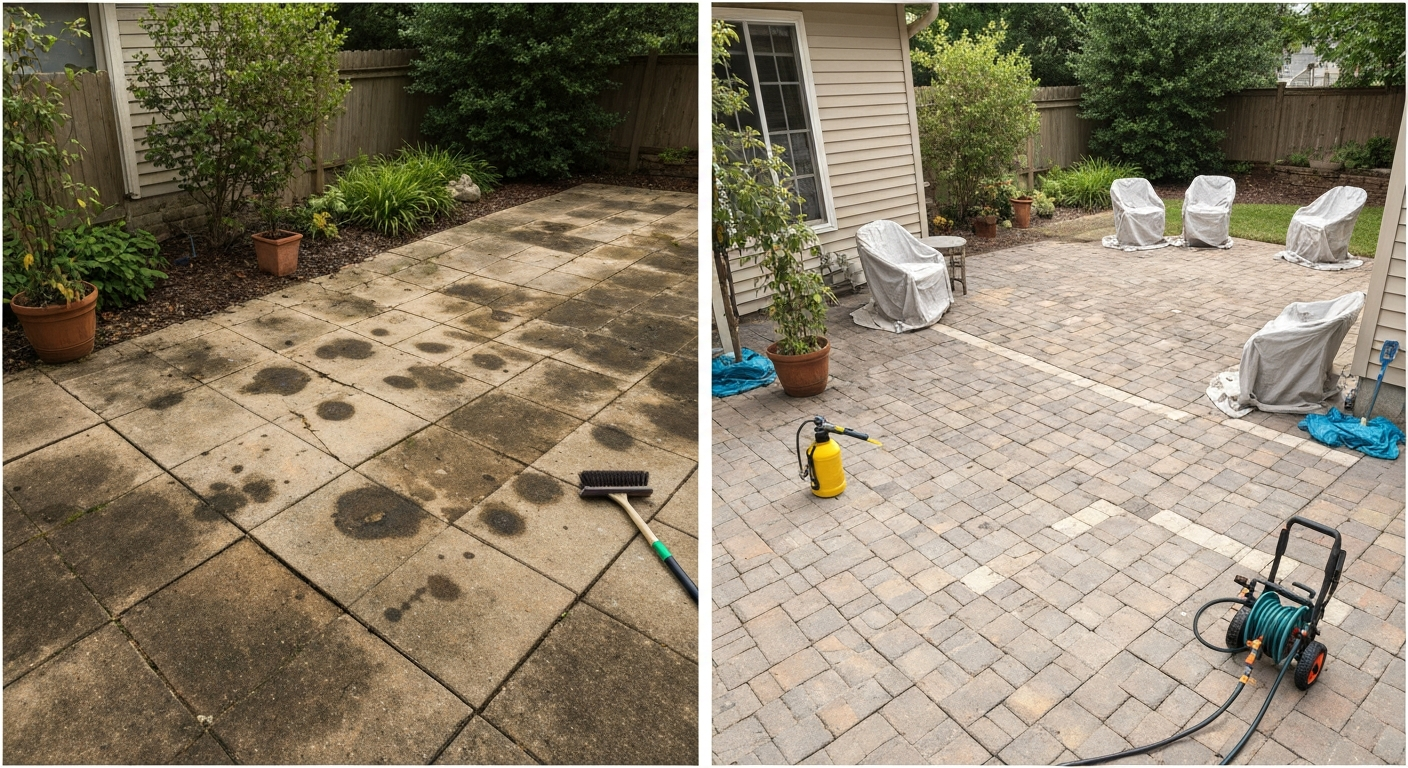
How to Refresh Your Patio: Guide for Concrete, Brick, Stone & Renters
How to refresh your patio: step-by-step cleaning, stain removal, sealing, renter-friendly tips & cost estimates
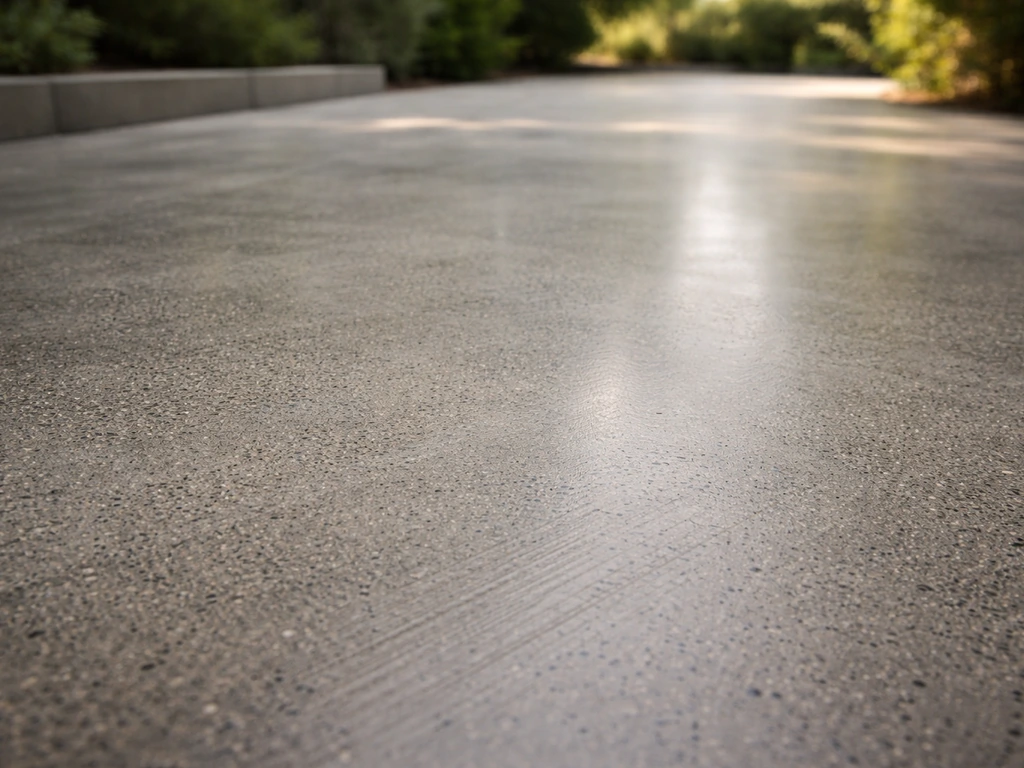
How to Polish Concrete Patio: Step-by-Step Guide
Step-by-step guide to polish a concrete patio for smooth, stain-resistant results, from prep and grits to sealing and fi
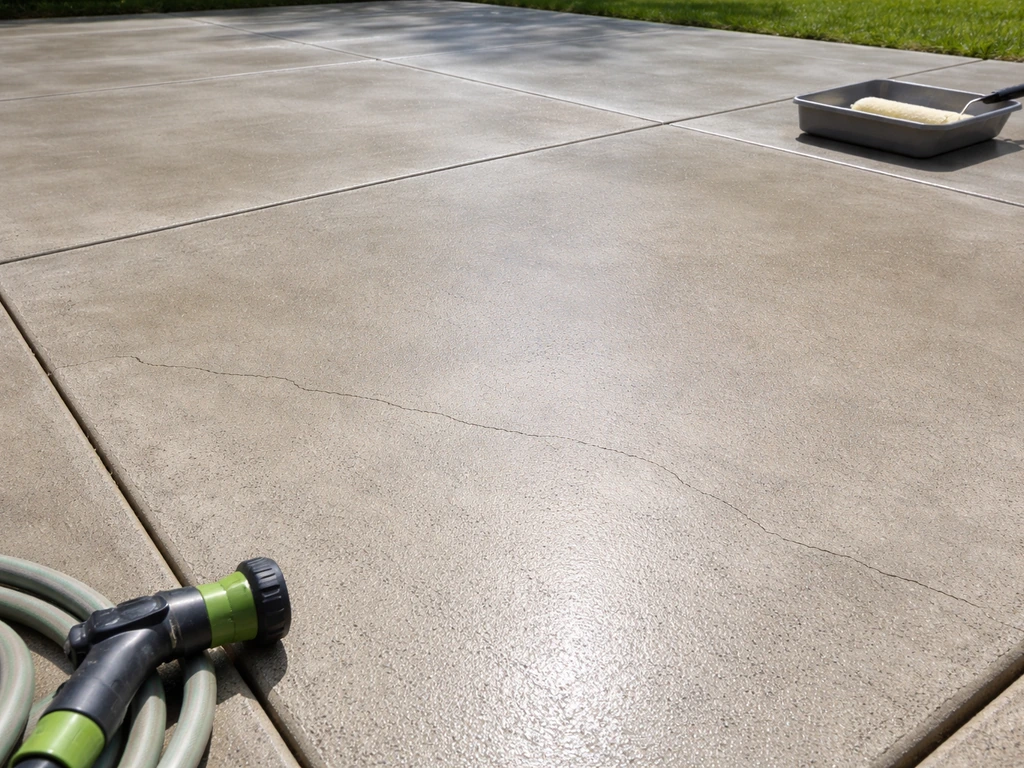
How to Refresh Concrete Patio: Step by Step Guide
Step-by-step how to refresh a concrete patio: assess damage, clean stains, repair cracks, then seal for protection.