You can get rust off a concrete patio using white vinegar for light stains, oxalic-acid-based products like Bar Keepers Friend for moderate stains, or a diluted muriatic acid solution for stubborn, deep-set rust. The method you pick depends on how bad the stain is, whether you have kids or pets nearby, and how much time you want to spend. Most rust stains on concrete come out completely with the right product, the right dwell time, and a stiff-bristle scrub brush.
How to Get Rust Off a Concrete Patio: Step-by-Step
Dylan Hale
11 May 2026
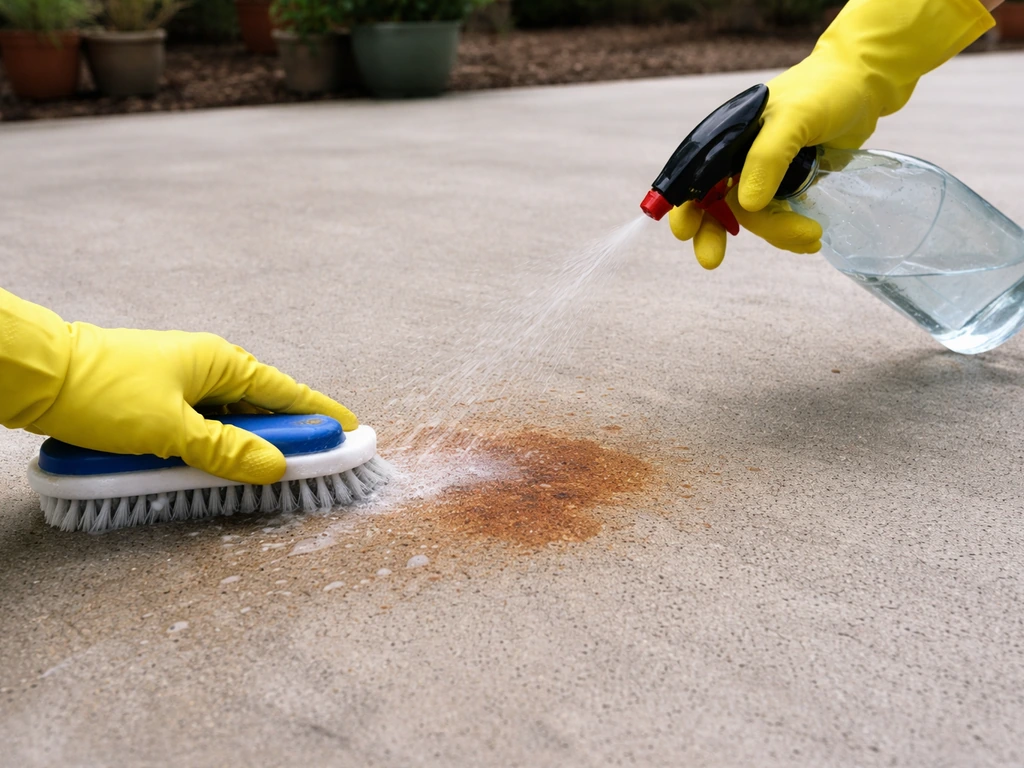
Figure out what's causing the rust before you start
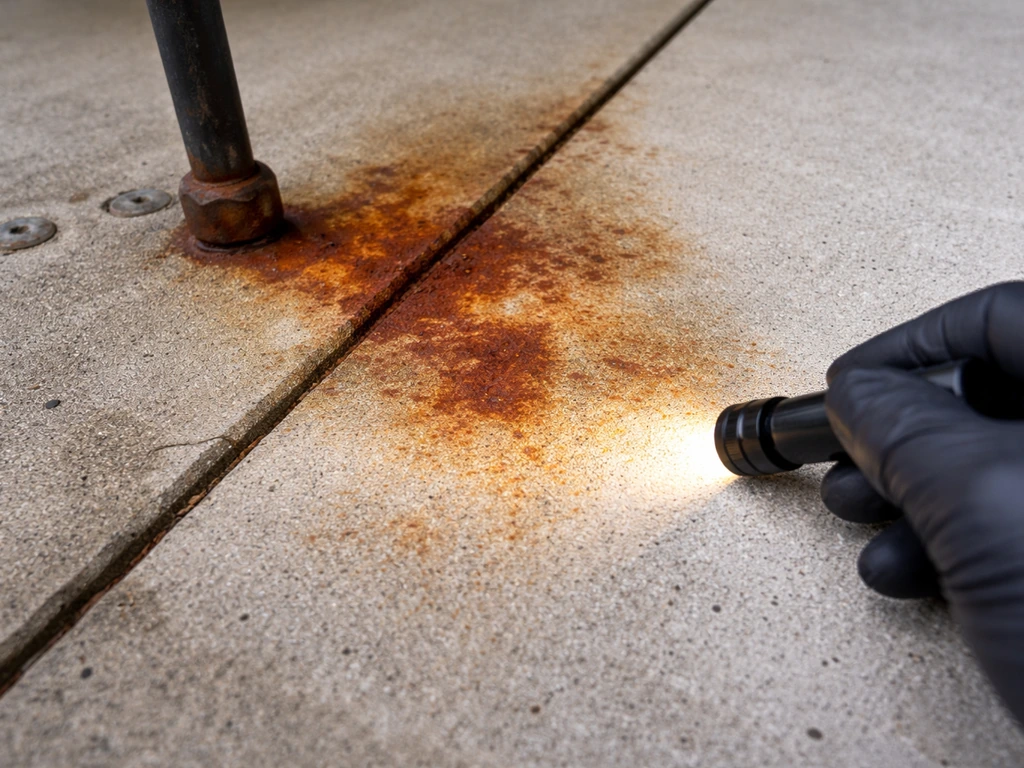
Before you grab a cleaner, take a minute to identify where the rust is actually coming from. Rust stains on concrete don't come out of the concrete itself. They transfer onto the surface from something sitting on top of it or draining across it. The most common culprits are metal patio furniture legs, grill bases, pot saucers with metal rims, steel nails or fasteners sitting on the surface, and irrigation sprinklers that hit metal objects before spraying water onto the concrete. If you don't remove or address the source, the stain will come back within weeks.
The stains themselves look orange, brown, or reddish-brown and tend to follow the shape of whatever metal object caused them. A round ring means a metal pot or furniture leg. A streak running toward a drain usually points to a sprinkler or runoff from a rusted fence post. Knowing the shape and pattern helps you work out the root cause. Don't confuse rust with efflorescence, which is a white powdery deposit that leaches out of the concrete itself and needs a completely different treatment.
Safety prep and protecting what's around the stain
Even gentle acid-based products can harm plants, discolor nearby pavers or brick edges, and irritate skin. Spend five minutes on prep and you'll avoid a headache later.
- Put on chemical-resistant gloves, safety glasses, and old clothes before handling any cleaner, including vinegar-based products.
- Wet any nearby plants, grass, or garden beds thoroughly with plain water before you apply anything. A saturated plant absorbs less chemical if overspray lands on it.
- Move or cover any outdoor cushions, rugs, or furniture that could be discolored by acid or rust remover runoff.
- If you're using muriatic acid, also wear a respirator or N95 mask and work when there's a breeze. Do not work in an enclosed or poorly ventilated space.
- Keep pets and kids away from the work area until you've fully rinsed and neutralized the surface and it's dry.
If your patio is sealed with a decorative coating or color, test any cleaner on a small inconspicuous spot first. Acid-based products can strip or dull certain sealers. Plain concrete without a coating is much more forgiving.
Start gentle: vinegar and low-impact options
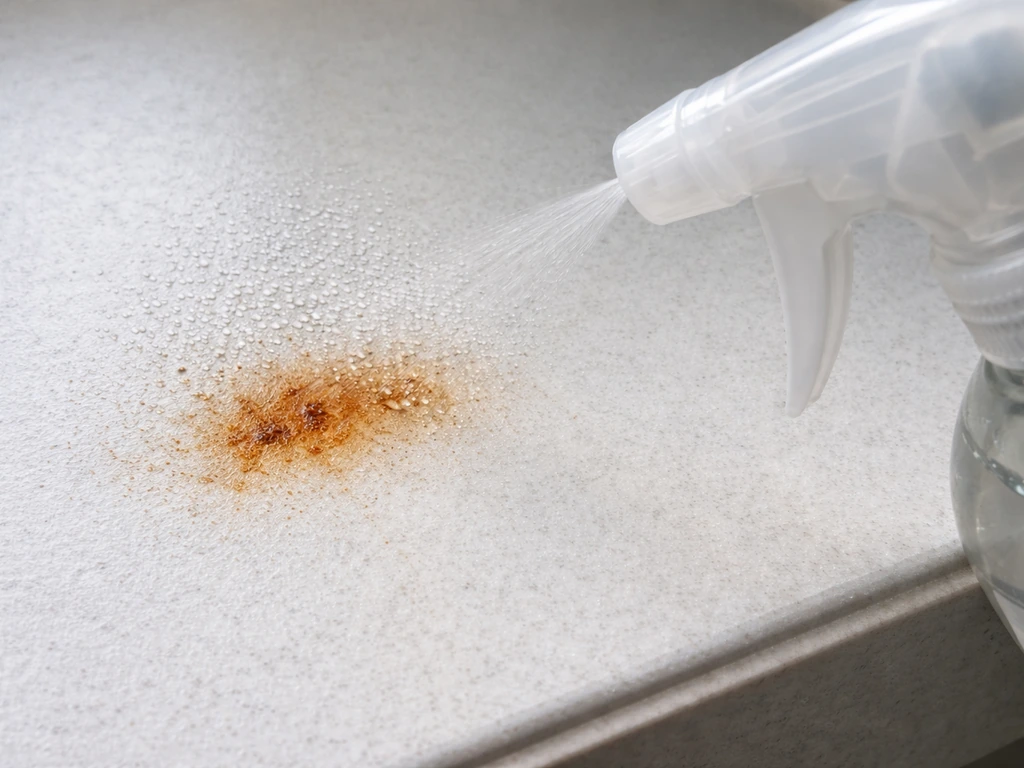
If the rust stain is relatively fresh or light, start here. Vinegar is genuinely effective on surface-level rust stains and it's the safest option if you have pets or kids, or if you're renting and don't want to risk damaging the surface. I've found that a 50/50 mix of white vinegar and water works well enough for most newer stains that haven't fully set into the concrete.
- Mix equal parts white vinegar and water in a spray bottle.
- Saturate the rust stain thoroughly so it's visibly wet.
- Let it dwell for about one hour. Don't let it dry out. If it's a hot day, reapply partway through.
- Scrub hard with a stiff-bristle nylon brush in a circular motion.
- Rinse with clean water.
One thing to watch: apply vinegar only to the stained area, not the whole patio. Vinegar is mildly acidic and can slightly etch or dull concrete if you use it broadly or too frequently. Keep it targeted. If the stain lightens but doesn't fully disappear after one round, try a second application before moving up to a stronger product.
Another solid low-impact option is Bar Keepers Friend (the powder or soft cleanser version). Its active ingredient is oxalic acid, which is a well-known rust and mineral deposit remover. Sprinkle it on a damp stain, work it into a paste with a wet brush, scrub, and rinse within about a minute. It's stronger than vinegar but still gentle enough to use without heavy PPE. This is my go-to for moderate stains that I know haven't fully soaked in.
When you need the stronger stuff: acid-based and commercial rust removers
For older, deeper, or darker rust stains that vinegar doesn't shift, you need a real rust remover. There are two main routes: commercial concrete rust removers and muriatic acid. Both work, but they're not the same and they aren't interchangeable with every surface.
Commercial concrete rust removers
Products formulated specifically for concrete rust stains (often oxalic-acid or phosphoric-acid based) are the safest upgrade from vinegar. The best rust remover for patio slabs is typically a concrete-rated product that dissolves iron oxide without harming the surface, so check the label before you buy. Brands like Rust-Oleum, Iron Out, and similar concrete-rated rust removers are designed to dissolve iron oxide without aggressively attacking the concrete itself. Follow the product's label for dilution and dwell time. One important note: some rust removers designed for pavers and patio slabs are not intended for poured or raw concrete. For example, Techniseal's Rust Remover is formulated specifically for pavers and should not be used on poured concrete. Always read the label and confirm the product is rated for your surface.
Muriatic acid
Muriatic acid (hydrochloric acid) is the heavy artillery. It removes even stubborn, deeply set rust stains and is often used to clean and etch concrete before sealing. But it can damage the concrete surface if used undiluted, and it will hurt you if you handle it carelessly. A typical dilution for rust stain removal is 1 part muriatic acid to 10 parts water. Always add acid to water, never the other way around. Work in sections, apply only to the stained area, and have your neutralizing solution ready before you start.
| Option | Best For | Strength | Safety Level | PPE Needed |
|---|---|---|---|---|
| White vinegar (50:50 mix) | Fresh, light surface stains | Low | Very safe | Gloves recommended |
| Bar Keepers Friend (oxalic acid) | Moderate stains, metal furniture marks | Moderate | Safe with precautions | Gloves, eye protection |
| Commercial concrete rust remover | Moderate to heavy set-in stains | Moderate-High | Use with care | Gloves, eye protection |
| Muriatic acid (1:10 dilution) | Old, deep, stubborn stains | High | Hazardous | Gloves, goggles, respirator, old clothes |
Scrubbing, dwell time, and rinsing the right way
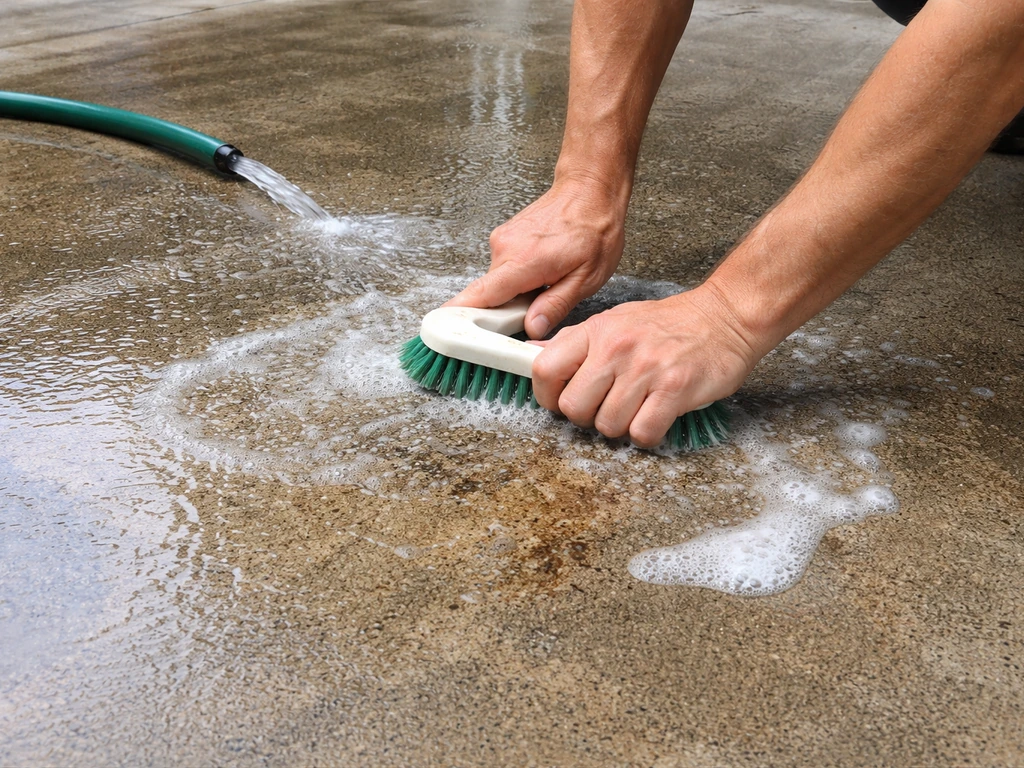
How you apply and remove the cleaner matters as much as which cleaner you choose. Getting this part right is what separates a clean result from a frustrating re-do.
- Pre-wet the concrete around the stain with plain water. This slows the cleaner from spreading beyond the stained area and helps dilute any runoff before it reaches plants or drains.
- Apply your chosen cleaner directly to the rust stain and make sure it's fully saturated.
- Respect the dwell time. Vinegar needs about an hour. Commercial removers typically need 5 to 15 minutes. Muriatic acid works faster, often 5 to 10 minutes. Don't let any acid-based product dry on the surface.
- Scrub with a stiff-bristle nylon brush, not a wire brush. Wire brushes can leave small metal fragments in the concrete that will rust and create new stains.
- Rinse thoroughly with clean water. For muriatic acid, rinsing alone is not enough — you need to neutralize first.
- To neutralize muriatic acid, mix about 1 pound of baking soda into 5 gallons of water and pour it over the treated area. Let it fizz and react, then rinse again with clean water. You can check the rinse water with a pH strip if you want to confirm it's back to neutral.
The neutralization step is non-negotiable if you used muriatic acid. Skipping it leaves acid residue in the concrete that continues to work after you walk away, which can weaken the surface over time and potentially discolor or damage anything placed on it. Baking soda or sodium carbonate both work for this. After neutralizing and rinsing, let the surface dry fully before you put furniture back.
Pressure washing: when it helps and when to skip it
A pressure washer is a great rinsing tool after chemical treatment, but it's not a substitute for the chemical step when dealing with rust. Pressure alone won't dissolve iron oxide that has bonded to concrete. What it will do is help blast away loosened rust deposits after scrubbing, speed up rinsing, and strip any surface debris that might be masking the stain.
Concrete can generally handle pressures in the 2,500 to 4,000 PSI range. For rinsing after rust treatment, staying in the 2,500 to 3,000 PSI range with a 25-degree fan nozzle is a safe approach. The risks come when people use ultra-high PSI or hold the nozzle too close to the surface. That causes etching, spalling, and surface flaking, especially on older or already-weathered concrete. Keep the nozzle at least 12 inches from the surface and keep it moving.
- Use a pressure washer for rinsing after chemical treatment and scrubbing, not as the primary cleaning method.
- Stick to 2,500 to 3,000 PSI with a 25-degree or 40-degree nozzle for concrete.
- Avoid pressure washing if the concrete is old, cracked, or spalling — the force will make those problems worse.
- If you don't have a pressure washer, a garden hose with a jet nozzle and thorough flushing works fine for rinsing. It just takes a bit longer.
What to do when the stain won't budge
Some rust stains have been sitting for months or years and have really penetrated the concrete. If your first treatment doesn't get a full result, don't just scrub harder. Try these escalation steps instead.
- Repeat the same treatment a second time before switching products. Dwell time is often the issue. Try letting the product sit for the full maximum time on the label, or push vinegar to 90 minutes instead of 60.
- If vinegar isn't cutting it, step up to an oxalic-acid product like Bar Keepers Friend or a commercial concrete rust remover. Don't skip straight to muriatic acid if you haven't tried this middle step.
- If a commercial remover hasn't worked after two applications, muriatic acid (properly diluted and safely applied) is usually the answer for deep, stubborn stains.
- For very old stains that have fully penetrated the surface, a poultice method can help. Mix your rust remover into a thick paste with an absorbent powder like talc or baking soda (using a non-reactive powder if using acid), apply it thickly over the stain, cover with plastic wrap, and let it dwell for several hours. The paste draws the stain out as it dries.
- If nothing works, the stain may be too deep to remove from the surface entirely. At that point, concrete resurfacer or a patio coating can cover it, or consider whether the area needs professional grinding.
It's also worth knowing that rust stains on textured or porous concrete are harder to remove than those on smooth, dense concrete because the iron deposits get into the micro-pores of the surface. The same methods apply, but expect to repeat treatments more often. If you're dealing with rust on other patio surfaces, the approach changes, since stone patios and patio pavers each have their own quirks and material sensitivities. If you're specifically trying to remove rust from a granite patio, see the dedicated guide on how to get rust marks off granite patio for the surface-specific approach other patio surfaces. If you are asking how to get rust off patio tiles, treat it as a similar adjacent rust-removal problem but match the cleaner strength to the tile material and grout so you don't damage the finish. If you're working on patio pavers instead of plain concrete, stick to paver-safe rust removers and always verify the product rating before you start rust stains on patio pavers. If your rust is on a stone patio, use a stone-safe cleaner and start with gentler options before moving to stronger removers how to remove rust from stone patio.
Keeping rust stains off your concrete patio for good
Getting the stain out is satisfying, but prevention is what keeps your patio looking clean long-term. Rust stains almost always come back if you don't deal with the source. If you want rust marks to stay gone, remove or protect the metal items that are causing the staining and rinse the area regularly Rust stains almost always come back if you don't deal with the source..
- Put rubber or plastic caps or felt pads on all metal furniture legs. This is the single most effective thing you can do. The contact between wet metal and concrete is what creates the stain.
- Move metal furniture, grills, and fire pit bases periodically to air dry the concrete underneath and inspect for early rust transfer.
- Check your irrigation system. Sprinklers that hit metal fences, railings, or planters before spraying onto the patio are a common source of rust streaks. Adjust heads or add rust-inhibitor tablets to your irrigation system.
- Sweep the patio after storms. Leaves and metal debris like nails, staples, or wire left on wet concrete will stain quickly.
- Seal the concrete. A penetrating concrete sealer won't make the surface immune to rust, but it does reduce porosity so stains sit on the surface longer rather than soaking in, which makes them far easier to clean up early. Reapply sealer every two to three years depending on wear.
- Inspect metal planters and pot saucers. Any metal item that holds water or moisture against the concrete is a rust source. Use plastic trays or elevate planters on rubber feet.
If you deal with the source and seal the surface, even if you get a rust mark again, catching it early means a quick vinegar treatment handles it in under an hour. The heavy-duty acid work is usually only needed when small stains have been ignored for a full season or more. Stay on top of it and concrete patio rust becomes a minor annoyance rather than a recurring project.
FAQ
How do I tell if the stain is rust or something else on my concrete patio?
Look for a metal trace pattern. Rust usually matches the shape of the object (ring, streak, drips) and is orange, brown, or reddish-brown. Efflorescence is white and chalky and comes from salts inside the concrete, so it will not respond to vinegar or rust removers the same way. If the material is powdery, try dry brushing first before applying any cleaner.
Will vinegar etch concrete if I use it to remove rust?
Yes, vinegar can dull or slightly etch if you spread it across the whole patio, use it repeatedly, or let it dwell too long. Keep it targeted to the stained area, use a short dwell time, and rinse thoroughly after the stain lightens.
Can I mix vinegar with other cleaners to speed things up?
Avoid mixing. Do not combine vinegar with muriatic acid or other acids, and do not mix with bleach or ammonia-based products. If you move from vinegar to a stronger rust remover, rinse and fully dry first, then start with the new product as directed on the label.
What should I do if the rust stain keeps coming back after I clean it?
Recheck the source. Rust returns when the same metal item is still feeding iron to the concrete, or when water runoff from another rusted area keeps crossing the slab. Lift and inspect furniture legs, grill bases, nearby fasteners, and sprinkler patterns, then address or block the transfer, not just the stain.
How long should I wait before repeating a treatment?
Treat in rounds rather than continuously scrubbing. After applying the cleaner, rinse well and let the concrete dry fully. If you still see orange or brown after drying, repeat once before escalating to a concrete-rated rust remover. If it never improves after two solid attempts, it likely needs an oxalic or phosphoric-acid product.
Do I need to neutralize anything if I use muriatic acid?
Yes. Neutralization is important so acid residue does not keep reacting in the concrete. Use baking soda or sodium carbonate as directed, then rinse thoroughly and allow full drying before replacing furniture. Without neutralization, you also increase the risk of discoloration and long-term surface weakening.
Is it safe to use a pressure washer right after applying rust remover or vinegar?
Rinse after the product has completed its dwell time, then scrub if needed. For muriatic acid, make sure you neutralize before high-pressure rinsing. Keep the nozzle moving and use a moderate range, about 2,500 to 3,000 PSI with a fan tip, to reduce etching and spalling risk.
What PSI should I avoid to prevent damaging my concrete?
Avoid ultra-high PSI or very close nozzle distance. Even on concrete, holding the nozzle too close or using excessive pressure can cause surface flaking and etching, especially on older or already-weathered slabs. Keep at least 12 inches away and use a fan nozzle rather than a narrow pinpoint spray.
Can I use a rust remover meant for pavers on poured concrete?
Not automatically. Some products are formulated specifically for pavers and can be unsuitable for poured or raw concrete because of differences in how they react with the surface and what binders or finishes they protect. Always confirm the label states it is safe for your exact concrete type and finish level (sealed vs unsealed).
What if my concrete is sealed or has a coating, will these cleaners still work?
They might, but you need caution. Test any cleaner on a hidden spot first, because acid-based products can dull, strip, or damage sealers and colored coatings. If the test spot shows dulling or streaking, switch to a milder, label-approved concrete-safe rust remover and proceed in small sections.
How do I protect plants, pets, and surrounding materials during rust removal?
Keep treatments localized to the stain, and rinse any runoff promptly. Even “safer” rust removers can irritate skin or harm plants if they contact leaves, soil, or grass in quantity. Use barriers or cardboard shielding around the area, wear gloves, and avoid windy conditions so product does not drift.
Next Articles
How to Remove Thompson’s Patio Sealer Step by Step
Step-by-step removal of Thompson’s patio sealer on concrete, brick, pavers, and stone, with safety, tests, and cleanup.
Can You Remove Patio Sealer? How to Strip It Safely
Learn if you can remove patio sealer and how to strip it safely by type, material, and method.
How to Remove Resin From Patio Safely by Surface Type
Step by step guide to remove resin from patio by surface type with safe scraping, softening and solvent methods.